
Wizz Air: passenger numbers plunge 69% in October

Wizz Air (LON: WIZZ) reported a 69% fall in passengers over October compared to the year previously.
The low-budget carrier reported a dramatic fall in passenger numbers, which is expected to fall further as the UK prepares for a second lockdown.
Wizz Air flew 1.15 million passengers in October this year, compared to the 3.7 million in October 2019.
On Tuesday morning, the airline reported three new bases in Italy and Norway.
Owain Jones, Managing Director, Wizz Air UK: ‘Wizz Air UK continues to lead the way in getting the UK flying again, safely We are delighted to be announcing yet more new routes for our UK customers, who we know want to travel, especially with the winter months looming. That’s why we are wasting no time by introducing exciting holiday destinations to our UK network, with genuinely affordable fares.”
Airlines have been among the hardest hit amid the pandemic. Yesterday, Ryanair reported a €200m loss and EasyJet warned it is on track to its first-ever full-year loss.
Ryanair’s chief executive Michael O’Leary told the BBC: “We’ve already stripped out the schedule for most of November and the December, we have really just a skeleton schedule for the services between UK airports and continental European destinations.”
Wizz Air shares (LON: WIZZ) have climbed 3.7% this morning.
FTSE 100 jumps ahead of US election

The FTSE 100 has rallied ahead of the US election up 79 points or 1.4% at 5735.
Almost every stock on the FTSE 100 opened higher on Tuesday morning, recovering from the 7-month lows.
The FTSE 250 rose 1.35% to 17,412.93.
It wasn’t just London that opened higher. Stocks across Europe climbed on Tuesday with Germany’s DAX index and France’s CAC both climbing around 0.6% on opening representing a one-week high.
Connor Campbell from Spreadex commented on the markets ‘blue wave’ on Tuesday: “The markets tempted fate on Tuesday morning, forgetting the lessons of 2016 as they pre-emptively celebrated a Joe Biden victory.
“The Democrat is the clear favourite – though Trump, that unkillable movie monster, can never be counted out, especially since Biden’s chances tightened over the weekend according to SpreadEX’s prices.
“Since last Friday, the Democrat has moved from a fixed odds price of 4/11 to 1/2, with Trump going in the other direction, from 15/8 to 7/5.
“Choosing to ignore the slim – but not slim enough – likelihood of Trump winning a 2nd term, the markets continued to aggressively rebound on Tuesday. This also meant they were fairly sanguine in the face of the idea that Trump may not react well to defeat, and the myriad horrible ways that could play out.
“The main reason why a Biden win is so sought after from a market-perspective, is that a ‘blue wave’ – i.e., the Democrats crucially taking the Senate – would see a stimulus plan far greater than anything Republicans would be willing to go for.
“That’s why you have the FTSE up 1.2%, and the DAX and CAC up 1.5% apiece – investors have gotten a sniff of stimulus, overriding any fears over uncertain results, recounts or a refusal to move out of the White House by the incumbent,” he added.
In Asia, stocks were also strong. China’s CSI 300 index climbed 1.2%, and Hong Kong’s Hang Seng increased by almost 2%Primark profits plunge 60% to £362m
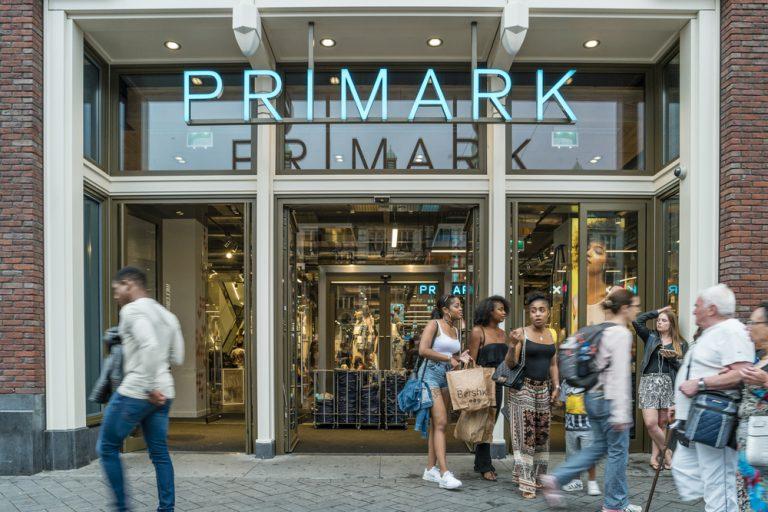
Primark owner Associated British Foods (LON: ABF) has posted a 60% drop in profits to £362m.
The retailer saw a 24% fall in revenue in the year ended September 12, which was driven by store closures in the third quarter during the lockdown.
Since reopening sales have recovered but are still down 12% in the UK and 17% lower across European stores.
Thanks to the government’s furlough scheme and reducing expenditures, Primark cut costs of 50% during the lockdown.
The group warned yesterday that a second lockdown would hit sales by £375m.
“As of today, all Primark stores in the Republic of Ireland, France, Belgium, Wales, Catalonia in Spain and Slovenia are temporarily closed, which represent 19% of our total retail selling space,” said the group.
“The announced period of closure varies by market. The UK Government announced its intention to close non-essential shops in England for one month from 5 November to 2 December. Assuming that this will be passed by the UK Parliament on 4 November, 57% of our total selling space will be temporarily closed from 5 November.”
“Our estimated loss of sales for these stores, including the stores in England, for the announced periods of closure is £375m.”
Chief executive of ABF, Geroge Weston, commented on the latest trading update:
“I am proud of how our people have responded to the many challenges presented by Covid-19.
“Throughout, we have provided safe, nutritious food under the most extraordinary conditions, proving the value and resilience of our supply chains. Our food businesses delivered an adjusted operating profit increase of 26 per cent, driven by high demand and improved productivity.
“Following a three-month closure, Primark delivered a robust performance, receiving an overwhelmingly positive response when it safely welcomed customers back to its stores. Uncertainty about temporary store closures in the short-term remains, but sales since reopening to the year end of £2bn demonstrate the relevance and appeal of our value-for-money offering.
“We have the people and the cash resources to meet the challenges ahead and we are investing for the future.”
ABF shares (LON: ABF) are trading -1% at 1.704,00 (0942GMT).
With business borrowing up over 500%, is extending loan schemes the right move?

On Monday the Treasury announced that it would be extending its emergency business loan schemes to enable SMEs to ‘top up’ their borrowing, in an effort to help companies survive the new English (and perhaps soon UK-wide) COVID lockdown.
As per the new amendments announced by the Chancellor, businesses will have until the end of January to apply for loan schemes, including bounce back loans (BBLS) and the COVID business interruption loans (CBILS and CLBILS). These two month extensions knock the date back from the end of November and also apply to the start-up-oriented Future Fund. On Twitter, Rishi Sunak stated:
The top up will mean that businesses who have already claimed some of the low-interest loans will be able to borrow more money, and is designed to help firms who previously borrowed less than the maximum sum – up to 25% of their turnover up to the £50,000 cap – to avoid adding to their debt. Thus far, the bounce back loan scheme has allocated £40.2 billion to 1.3 million UK businesses, with new research from EY ITEM Club highlighting that business borrowing in 2020 will be more than five times the level of the previous year. This underlines the first problem, which, according to Conister Director, Douglas Grant, is that: “The latest lockdown measures in England will sadly be the last nail in the coffin for many companies which simply cannot receive capital quickly enough. We are therefore determined and absolutely focussed on protecting those robust businesses operating in sectors that are resilient and ultimately will grow stronger with the necessary capital in the long term.”To help more businesses access additional support, deadlines for applications to our government-backed loan schemes and the Future Fund have been further extended until 31 January 2021. pic.twitter.com/UhrZZtQKxQ
— Rishi Sunak (@RishiSunak) November 2, 2020
“Conister received an initial allocation limit of £10m for the BBLS scheme and so far, we have received 4,607 applications with a total amount of £162,739,000. Without doubt, the scale of applications is enormous and while SMEs are the lifeblood of the economy and where innovation and creativity happens, it is crucial that priority is given to resilient businesses to allow them to pivot their business models for the new normal.”
So, in the view of Conister, the key issue is that loans need to be focused on the most viable businesses. The issue many would take with that approach is politically intuitive: support loans can’t be viewed as a hand-out, they’re a pre-requisite for lockdown. As we saw in Northern England, when not offered what might be deemed sufficient support, lockdown policies will be resisted and down the line, perhaps even broadly ignored. In this sense, extending the loan schemes makes sense, as it provides businesses with the bare minimum needed for them to shut their doors. The second, and perhaps more pressing issue, is the one raised by analysts from non-profit research group, Positive Money. The organisation states that between lenders making up to £26 billion during the lifespan of the bounce back loan scheme, and SMEs being forced to take on more debt in order to survive, the entire exercise of locking down boils down to a cynical transfer of wealth away from small businesses. Positive Money’s executive director, Fran Boait, comments on the extension of the bounce back loan scheme, saying that: “We should be wary of banks’ sudden keenness to pile on more debt to small businesses, especially after figures revealed that lenders are set to rake in more than £1bn from the government in the first year of interest payments on Bounce Back loans issued so far.”“Yet more debt, which many will struggle to repay, is not the right way to help struggling businesses at this time. Debt should be for investment, while emergency support should take the form of grants and other direct assistance.”
The alternative, Boait might argue, would be for the UK to adopt the Swiss model that the UK’s bounce back loan scheme is based on, with the key difference being that banks are not allowed to charge SMEs interest on fully-government-backed loans. The fact that small businesses won’t be charged a rate of 2.5% interest in Switzerland, could see a faster recovery in the balance sheets of smaller enterprises post-COVID.
Global equities romp ahead of US election and COVID lockdowns

Shrugging off some of last week’s losses, global equities decided Monday was a time to be bullish. Given the broad macroeconomic and political outlook, you’d think they wouldn’t have much to be positive about, but perhaps that’s just it – they priced in potential downsides too hard before trading. Alternatively, things are set to get messy later in the week, and they just took an opportunity to let loose.
Having opened excitedly, the Dow Jones now sits up was up over a percent, sitting at around 26,780 and managing to shrug off some losses posted by big tech, which saw the Nasdaq fall around 0.60%.
Regardless, tomorrow we’ll sit through the most tense US presidential election in recent history, with claims of pre-mature declarations of victory, postal voting and delays set to make the outcome a messy, contested and likely prolonged affair.
This uncertainty will likely lead to days if not weeks of volatility, which would make us wonder: why were people buying equities on Monday? Echoing that sentiment, IG Senior Market Analyst, Joshua Mahony, commented:
“The expectation is that we will see a fresh bout of stimulus unlocked once the US election has been overcome. Until then, traders will likely lessen their exposure given the significant uncertainty over what could turn out to be one of the messiest elections of all-time should Trump fail to respect the mail-in vote.”
Likewise in Europe, and ignoring the blaring warning lights of a COVID second wave and new lockdown restrictions, equities soared. Storming ahead and seemingly taking their lockdown restrictions in their stride, French and German stocks flourished, with the CAC and DAX up by 2.11% and 2.01%, to 4,691 and 11,788 points apiece. Following behind was the FTSE, up 1.39% to 5,654 and spurred on by notable rallies from Rolls-Royce, Fresnillo, and most importantly, Ocado (LON:OCDO). The latter increased its profit guidance for the full-year by 50% and announced two robotics acquisitions worth over $300 million, as it gears up to meet online shopping demand during lockdown part two. On the other hand, and leading the fallers during Monday trading, were FTSE travel stocks, who are likely to keep shedding points as lockdown begins (and perhaps even extends). Mr Mahony adds on travel equities:“Perhaps unsurprisingly, we are seeing travel-related stocks under pressure in response to expected second-lockdown due to come into effect on Thursday night.”
“The incessant rise in Covid-cases in the UK made a nationwide policy highly probable, with a number of mainland-European nations leading the way over recent weeks.”
“However, the fear from a UK perspective is just how long we will see this policy take hold, with Michael Gove already highlighting the possibility of an extended lockdown that will last beyond the intended four-week period.”
“With many suffering from lockdown fatigue, the potential for a less diligent approach in the UK could lead to an extended closure of businesses as they try to get the virus under control in time for Christmas.”
“With the government stating that travel is advised against, the declines seen for both national bus travel and international air travel stocks reflect the fact that most journey will have to be cancelled until these restrictions are lifted.”
PPHE Hotel Group shares down as revenue plunges 74%

PPHE Hotel Group shares (LON: PPH) were down almost 7% on Monday morning after the group revealed a sharp fall in revenue.
In the three months ended September 30, the group’s revenue was 74% from £121m to £31.2m.
Most properties were closed between March and May and demand for the following months fell amid the travel restrictions.
For the nine months to September, total revenue was down 66% at £93.1 million from GBP276.3 million the year previously.
“Following the onset of COVID-19 and its unprecedented impact on the trading environment, including enforced lockdowns in some of our markets, we were pleased with the Group’s improved performance throughout the summer months which was driven predominantly by domestic leisure travel and resulted in market outperformance,” Boris Ivesha, President and chief executive of the group said.
“Whilst this demand unfortunately slowed following further government restrictions imposed during the second half of August and September, the performance during this period is testament to the Group’s excellent customer proposition, flexible model and readiness to capitalise on customer demand once the trading environment normalises.
“While our operations continue to be impacted by ongoing uncertainty across markets, the Group has clearly proven its ability to anticipate, react, adapt, and has ultimately, demonstrated resilience.
“Looking ahead, we remain focused on positioning the business well for long-term growth, underpinned by our unique model, well-invested portfolio and strong customer proposition,” added Ivesha.
PPHE Hotel Group shares (LON: PPH) are trading -6.67% at 938,00 (1621GMT).
Pathfinder Minerals shares fall with litigation against Mozambican Government likely

Zircon and titanium-focused mining company, Pathfinder Minerals PLC (LON:PFP), announced on Monday that should it fail to reach an amicable arrangement on disputed licences, it will seek recourse to the Bilateral Investment Treaty (BIT) between the UK and Mozambique, signed in 2004.
The news follows a move by local actors in 2011, to take away Licences covering approximately 32,000 hectares of land on the Indian Ocean coast of the Zambezia province of Mozambique, from Pathfinder Resources. In the company’s view, the Government of Mozambique has acted improperly by allowing this to occur, without its knowledge or consent. And in which case, it says, the action to remove its licences ‘had no legal validity’.
In 2014 the Group said that it was advised that it has a valid claim under the terms of the 2004 BIT that would ‘most likely succeed’ and that the most most likely outcome of successful litigation proceedings would be the return of Licences to its control as well as a cost award in its favour.
In 2015, Pathfinder Minerals served a Notice of Dispute under the BIT on the Government of Mozambique. Having demonstrated that that all legal avenues in the UK and Mozambique have been exhausted – including the Mozambique Supreme Court’s rejection of the Company’s rejection of an English High Court judgment – the company will now continue to attempt diplomatic resolution before commencing litigation proceedings.
Members of the Board have met with the UK Government to seek support for their diplomatic efforts. Should these fail, and in preparation for formal proceedings, the company has performed an analysis of its likelihood of success, and its Board has commenced discussions with prospective litigation funders. Considering a benchmark for a potential claim, a 2019 Scope Study conducted by independent technical consultants estimated: “pre-tax net present value at a 10 per cent discount rate of US$1.05 billion; with projected annual revenues of US$323 million over a mine life of 30 years; and a project internal rate of return of approximately 25 per cent.”Speaking on the strategic update, Peter Taylor, Chief Executive Officer of Pathfinder, commented:
“Having satisfied all conditions prior to initiation of BIT proceedings, and exhausted attempts to negotiate an amicable resolution with the Former Local Partners, Pathfinder has no option but to look to the Government of Mozambique to put right the transfer of the Licences which we believe was unlawful.”
“It remains our preference to avoid treaty litigation by resolving the dispute through constructive dialogue with the Government of Mozambique and to conclude such resolution swiftly. Such a timely resolution would allow us to resume development of the Licences which, in turn, is expected to deliver substantial associated social and economic benefits to the region through employment, infrastructure, royalties and taxation.”
In anticipation of the expected return of the Licences to the company’s control, the Group has engaged with prospective partners whose financial and technical capabilities may aid in the future development of the licences. Following the news, Pathfinder Minerals shares are down by over 22%, at around 0.52p on Monday afternoon 02/11/20. This is well short of its year-to-date high of 0.98p, but ahead of its nadir of 0.43p a share. Marketbeat reports that company “insiders have bought more of their company’s stock than they have sold. Specifically, they have bought £276,800 in company stock and sold GBX 0 in company stock.” The Marketbeat community has a 54.12% “underperform” rating on the stock.Serco shares implode as it loses its stake in nuclear weapons management
Service-provider and logistics giant, Serco Group plc (LON:SRP), announced on Monday that it will be losing its stake in managing the Atomic Weapons Establishment – the body responsible for the supply and upkeep of the UK’s nuclear warheads.
The AWE plc consortium, made up of Serco (24.5%), Lockheed Martin (51%) and Jacobs (24.5%), was informed by the Ministry of Defence that control of the Atomic Weapons Establishment back under the direct management and control of the MoD from 30 June 2021.
The news comes after Serco and its consortium partners managed the nuclear weapons body since the year 2000, with the company’s statement reading: “Serco is proud to have been involved with AWE for the last 20 years, and will work with the other shareholders and the Ministry of Defence to ensure a smooth transition to the new arrangements.”
The company added that it expects the AWE to make a contribution to its underlying trading profit, and profit after tax, of approximately £17 million in 2020. It added:
“Whilst our budgeting process is yet to be completed and the pandemic makes forecasting extremely difficult, assuming a smooth transition of AWE at the end of June 2021, we would expect both Group Underlying Trading Profit and Profit after Tax in 2021 to remain broadly in line with current consensus and at similar levels to our expectations for 2020, representing growth of around 35% over 2019.”
The news follows something of a mixed 2020 for the company. While growth and lucrative contracts for the UK Government’s Test and Trace can be seen as positive, their reputation with British consumers doesn’t appear to have moved in a positive trajectory, and today’s nuclear weapons management development takes one contract off of the company’s roster. Following the update, Serco shares fell at one point by more than 13%, though moving roughly between 112p and 113p for most of the day on Monday. Its current price is some 58% beneath analysts’ target of 178.38p a share and higher only than its March nadir. Marketbeat has the company’s p/e ratio at 11.50 while Hargreaves Lansdown cites it as 19.79, both of which are below the services sector average of 26.03. Analysts currently have a consensus ‘Buy’ stance on the stock, while the Marketbeat community gives it a 70.98% ‘Underperform’ rating.Superdry shares down as retailer appoints new CFO

Superdry shares (LON: SDRY) were down 7% on Monday as the group announced the appointment of Benedict Smith as Interim Chief Financial Officer.
Smith has 18 years of experience as CFO of a wide range of both quoted and privately owned businesses, most recently served as the Interim CFO at the Dennis Publishing Group.
His previous experience has been at businesses including Harrods, Hunter Boots, Game Digital and Spirit Group.
Smith will commence his role at Superdry from today.
Peter Williams, Chairman of the Board of Superdry, said: “I am delighted we have secured an Interim CFO with such extensive experience in senior finance roles in the retail sector. This is an important step in giving Superdry leadership and stability in a critical area of the business during an important time.”
In September, the group warned that the coronavirus pandemic would continue to affect its trading after profits dropped 210% in the year to April 25.
The retailer posted a pre-tax loss of £166.9m in the 52 weeks to 25 April.
“We remain cautious on the shape of the economic recovery, and the impact this may have on our ability to turnaround performance in line with our plan. Consequently, we recognise there is a material uncertainty, and are not providing formal guidance,” said Superdry.
Superdry shares (LON: SDRY) are currently down 7.60% to 13.60p. This year, shares have fallen from highs of 525.50p.
Whisky Casks Outperform Bitcoin, Gold And S&P 500

Sponsored by Tomoka Casks
During one of the most challenging years in recent decades, whisky is one of the few investments bringing comfort and cheer both to investors’ pockets and to their glasses. Whisky is now a top-performing alternative asset, with Scotland exporting £4.9 billion-worth of this literal liquid gold each year.
“According to the Knight Frank Rare Whisky Index the whisky sector has surged 586% over the last 10 years, the highest growth of any luxury asset”, explains Jass Patel, CEO of whisky investment company Tomoka Casks. “Even during the ongoing Covid-19 pandemic whisky has remained very buoyant with consistent 5% growth across the sector..”
While investors may be familiar with the burgeoning market for rare whisky bottles, the most lucrative and secure part of the sector is whisky cask investment. Returns on whisky casks over the past two years have outperformed Bitcoin, gold and the S&P. “By purchasing a cask of whisky direct from a well-known distillery”, Jass elaborates, “investors are able to enter the market at the earliest possible moment. Owning your own bespoke cask of whisky not only appeals to whisky connoisseurs and collectors, it also makes very sound economic sense.”
A key advantage of investing in cask whisky over bottles is the remarkable transformation that the whisky undergoes as it ages in the cask. Unlike bottled whisky, cask whisky continues to evolve and develop in the barrel. As the whisky takes on the rich, smoky character of the barrel, it becomes both more complex and more desirable, driving an average annual gain by value of at least 9%.
Along with this remarkable transformation of the liquid itself, cask whisky also increases in rarity as it ages as the number of similar casks in existence dwindles. A cask of whisky is truly a unique work of art since the whisky inside will mature slightly differently in each individual cask. Purchasing a cask of whisky gives you access to something no one else on the planet has, and that rarity factor commands a premium on the secondary market if you do eventually decide to sell.
Jass notes that the whisky cask market also offers investors much greater peace of mind and security. “Most of our casks are securely stored at the original distillery which ensures impeccable provenance and authenticity. This also comes with significant tax benefits as VAT only becomes payable when the whisky is actually bottled and moved from the distillery.”
If you’re thinking about investing in a cask of whisky, Jass points out that another important consideration is the age of cask that you choose to invest in. “New make casks will provide a higher growth rate by percentage of around 15% per annum, whereas older casks will typically provide a larger monetary return. The caveat is that the initial investment required to acquire a more mature cask will be significantly higher compared with a younger cask.”
Investors should also carefully consider the origins of their whisky cask. While Scotch remains the classic choice for many collectors and Japanese whisky has surged in value in recent years, the highest-performing casks right now actually come from the Emerald Isle. “Irish new make is providing an even better return closer to 16% as Japanese whiskey is in such short supply”, explains Jass, “so we would definitely advise spreading your bets across a range of investments to get both medium- and long-term returns.”
Knowing exactly which cask to invest in to secure the highest returns can be tricky for those of us who aren’t seasoned whisky experts. Jass strongly recommends that investors speak with a trusted whisky investment company like Tomoka Casks who can guide you through every step of acquiring your very own cask.
“Purchasing your own cask isn’t as simple as approaching a distillery with an offer,” Jass explains. “At Tomoka Casks our team has decades of experience in the whisky sector and we use our industry-leading network of contacts to source high-performing casks for our clients. I always recommend that investors do their homework when deciding to invest in whisky casks. That is why our door is always open to those wanting to discover more about whisky investment.”
For more information about investing in whisky casks, please visit www.tomokacasks.com.