Blackbird revenues jump 49% with video-makers working from home

Developer of cloud video editing service, Blackbird PLC (AIM:BIRD), booked notable improvements in its financial fundamentals, as media outlets opted to use its software while working from home. The company recorded ‘record’ revenues of £714,000 during the six month period ended 30 June 2020, up 49% year-on-year from £479,000 for the previous first half period. Similarly, the group noted a 54% jump in contracted but unrecognised revenues, up from £1.21 million to £1.86 million.

This progress was led by developments such as; A+E broadcasting doubling the volume of videos edited using the Blackbird platform; a three-year deal signed with esports specialists Venn; Liverpool FC and Arsenal FC using the platform for remote working solutions; and deal renewals with Deltatre, MSG Networks and Gfinity.

Further, the company also recorded reductions across its loss margins. Indeed, its EBITDA loss fell by 30% year-on-year, from £1.02 million, to £714,000. Similarly, net losses before tax fell from £1.19 million during H1 2019, to £942,000 for H1 2020.

Aside from improvements in demand, the company’s trajectory towards profit-making has been led by its ability to better-conserve cash. Indeed, it reduced its operating costs from £1.42 million to £1.36 million year-on-year. Also, it reduced its cash burn rate by 31% – excluding proceeds form share issues – which saw it fall to £846,000 for the six month period, down from £1.24 million.

Blackbird response

Commenting on the performance, company CEO Ian McDonough stated:

“I am pleased to deliver record revenues for the six-month period of £714k, up 49% year on year. This accelerated performance has come despite the Covid lockdown, proving the resilience of our operating model and whilst moving the Blackbird team fully to remote working. It has also enabled our customers to continue their operations remotely and, at the same time, ensure the safety of their staff. I am genuinely excited about the future prospects for the Company and made a further significant investment in the Company in April 2020. As we continue to execute the next stage of our strategy and Blackbird becomes more widely adopted, I look forward to delivering further good news and strong results to the market.”

Investor notes

Following the update, Blackbrid shares fell 5.33% or 1.15p, to 20.36p a share 07/09/20 12:50 BST. This is down from its year-to-date high of 21.50p on 4 September 2020, but far ahead of its year-to-date low of 7.25p 07/09/20 13:21 BST. The company’s p/e ratio is -29.23.

Destiny Pharma receives grant for Covid-19 treatment, shares soar

Clinical biotechnology firm Destiny Pharma plc (AIM:DEST) has seen its shares soar by more than 14% after the company announced it has received an £800,000 grant from the country’s leading innovation agency Innovate UK to help develop a novel, preventative treatment for COVID-19. The programme will see Destiny Pharma work alongside London-based biotechnology research company SporeGen® Limited to co-develop its SPOR-COVTM product into a potential treatment as part of the global effort to find effective treatment and a vaccine for the pervasive coronavirus infection. Both Destiny Pharmacy and SporeGen® have announced that they will share “any costs and commercial returns” from SPOR-COV, with the aim to enter the first human clinical trials “within 18 months”.

What is SPOR-COV?

SPOR‑COV, already produced by SporeGen®, is a proprietary formulation of Bacillus bacteria that can be administered nasally as a spray to infected patients.

Although the product is still in development, SPOR-COV has already been shown to provide 100% protection in pre-clinical models of influenza-type viruses.

It is unique to current vaccines on the market in that it utilises the “innate immune system” in order to develop COVID-19 protection just a few days after the initial dose. SporeGen® has described SPOR-COV as an “easy to use first line of defence” with “the potential to reduce COVID-19 infection rates and transmission significantly”. It is hoped that the final product will be “straightforward to produce at high volumes and at low cost”, with the added bonus that it can be stockpiled for an almost indefinite length of time as it does not require refrigeration. In addition, SPOR-COV could be made available globally as “a cost-effective measure in the fight against COVID-19 as well as new COVID strains and other respiratory viral infections”.

Details of the £800,000 grant

Destiny Pharma and SporeGen® have received an £800,000 grant from Innovate UK to help fund the SPOR-COV programme, which will make up the vast majority of the initial £1 million cost of production. The “preclinical efficacy work” will be undertaken in collaboration with esteemed Professor Aras Kadioglu (University of Liverpool, Professor of Bacterial Pathogenesis in the Department of Clinical Infection, Microbiology & Immunology), who is currently head of Liverpool’s Bacterial Pathogenesis and Immunity group and is a “leading expert in respiratory infection models and host immunity to infection”. The “manufacturing and formulation development work” will be carried out by HURO – an “experienced manufacturer of bacterial product formulations based in Vietnam” – best known for their chewable probiotics dummies, and a subsidiary of food-processing firm PAN Group. The programme aims to complete the necessary pre-clinical safety studies over the next 18 months before moving onto human trials.

Destiny Pharma and SporeGen® react

Both firms have welcomed the grant, expressing their gratitude towards Innovate UK as well as their hopes that SPOR-COV can be developed into an effective treatment for COVID-19.

Professor Simon Cutting, Chief Executive of SporeGen®, stated:

“The SPOR-COV platform has already been shown to be effective against pandemic flu by targeting the innate immune system. As such, SPOR-COV potentially has value as a universal system for combatting other viral diseases such as COVID-19. If successful, we foresee a novel approach against COVID-19 and for future, similar pandemics. […] Prima facie our approach is simple and offers a potential new approach in the fight against one of the most serious diseases to afflict mankind”.

Neil Clark, Chief Executive Officer of Destiny Pharma, said:

“We are excited to announce the collaboration with SporeGen to co-develop their SPOR-COV product to prevent COVID-19 infections and the concurrent award of significant grant funding from Innovate UK. […] The ongoing coronavirus pandemic has highlighted powerfully the need for innovation in developing new treatments to prevent and manage both viral and bacterial infections and Destiny Pharma remains committed to developing cost-effective products that meet this medical need”.

Investor insight

Destiny Pharma’s share price has soared 14.08% to 55.90p at BST 13:01 07/09/20, hitting its highest point all year and clambering from its annual low of 29.00p at the end of July.

Touchstar shares drop more than 12% as revenues fall

Mobile data computing solutions company Touchstar PLC (AIM:TST) saw its shares slide during Monday trading, with first half sales hampered by ‘crisis conditions’. Revenues for the first half of the year ended 30 June 2020 finished at £3.18 million, down from the previous first half sales figure of £3.64 million. Similarly, its revenue from continuing operations also fell, down from £3.37 million to £3.18 million. Despite these falls, Touchstar pulled off a remarkable turnaround, swinging from a £518,000 operating loss during H1 2019, to a £139,000 profit during H1 2020. Further, it swung from a trading loss before exceptional items of £215,000 and a loss after tax of £357,000, to a trading profit before exceptional items of £139,000 and a profit before tax of £150,000. Shareholders also enjoyed a turnaround in fortunes, with basic earnings per share swinging from a 4.21p loss to a 1.77p profit year-on-year. Also, the company’s overall balance sheet was far more upbeat at the end of the recent half-year period, with £1.46 million in cash versus a £204,000 overdraft at the end of the previous half-year.

Touchstar response

Responding to a challenging period of pandemic trading, and the turnaround in the Group’s financials, company Chairman, Ian Martin, commented:

Touchstar came into 2020 with momentum from a strong order book, clear strategic plans and a solid balance sheet. In the six months ended 30 June 2020 we have had to demonstrate resilience under crisis conditions. It is a real achievement that Touchstar traded profitably, generated cash, supported customers and most importantly looked after staff in a period of a global pandemic and the largest economic contraction in a generation – these are not normal times.”

“We continue to outperform the road map we put in place in February to navigate the business through until 2022.”

“Our motivation is not just to be a survivor of this crisis, the ambition is to emerge with solid finances, improved products, all our talent and renewed energy – we remain on track.”

Investor notes

Despite some considerable and positive takeaways, the downturn in Touchstar revenues saw the company’s shares fall 12.38% or 6.50p, to 46.00p per share 07/09/20 12:00 GMT, following the publication of its results on Monday. This price is well ahead of its year-to-date nadir of 22.50p on March 24, but shy of its year-to-date high of 61.50p on August 19. The company’s market cap currently stands at £3.98 million.

ValiRx shares climb 12% as fund raising rises and costs fall

2
Biotechnology and life sciences company ValiRx plc (AIM:VAL) saw its shares bounce on Monday morning, as the company booked a rise in placings and reduced costs during the six month period ended June 30 2020. The company noted that it raised £1.4 million in its share placings, up from £1.2 million for the previous first half period in 2019. Most notable, however, were the company’s cost reductions, with R&D costs down from £207,000 to £100,000 year-on-year, and administrative expenses falling from £865,000 to £792,000 during the same comparison. The company did note a £118,000 loss on the disposal of FitBio and Trac, and in turn a total comprehensive loss of £805,000, widening from £751,000 for H1 2019. However, its losses before income tax narrowed from £927,000 to £885,000 year-on-year, while shareholders’ loss per share fell from 13.57p to 4.43p.

Also positive is that the company’s cash position at period end was positive £259,000, up from £171,000 at the end of the previous first half.

ValiRx response

Commenting on the results, company Non-Executive Chairman Dr Kevin Cox commented:

“Throughout the reporting period, ValiRx experienced a number of significant changes, including changes to the Board, the management team, the underlying cost base and the long-term strategy. Having raised additional funds, the Company is now in a strong position to continue development of existing products and create a pipeline of novel compounds for further development and partnering. I look forward to working with the Board to continue building value in the Company and delivering on the mission of developing innovative medicines to improve the lives of patients.”

Investor notes

Following the news, ValiRx shares bounced 12.00% or 24.70p, to 28.00p per share 12:00 GMT 07/09/20. This price represents a 24.44% jump from the share price one year ago on this day. The company currently has a market cap of £16.13 million.

Primark sales “exceed expectations” amid encouraging trade update

1
Primark owner Associated British Foods plc (LON:ABF) has released its pre-close trading update for the full year ending September 2020, with emphasis on Primark’s “strong” performance in the fourth quarter, despite the looming impact of the coronavirus pandemic on retail sales. All Primark stores across the UK were reopened in staggered phases between May, June and July. AB Foods has remained steadfast on its promise not to reduce prices to help shift stock that piled up during lockdown, and despite some initial criticism, the move appears not to have significantly hurt Primark’s reopening sales. Cumulative sales are predicted to reach £2 billion by the end of the year, and AB Foods was keen to praise Primark’s warm welcome back onto the high street. Nevertheless, sales were still down 12% year-on-year, no doubt as a result of nationwide store closures during the peak of the coronavirus pandemic. “We have traded strongly, attracting customers with our value-for-money offering and a welcoming and safe store environment. […] We have seen increasing numbers of transactions driven by footfall. The average basket size was initially significantly higher than last year, reflecting some pent-up demand, and while this outperformance has reduced in recent weeks it remains higher than a year ago. We have continued our policy of offering the best prices, and markdowns for the period since reopening have been low”. The retailer’s adjusted operating profit is now expected to emerge “at the top end” of AB Foods’ previous projected range of £300-350 million. Last year, the equivalent figure stood at £913 million. Despite the pandemic, AB Foods said that Primark’s performance since reopening has been “reassuring and encouraging”, but emphasised that its largest city centre stores – in London, Manchester and Birmingham – were especially hard hit due to the decline in tourism and commuting. Primark’s 16 largest stores across the UK made up 13% of total pre-coronavirus sales, and have only managed to claw back some 8% since reopening. However, the latest four-week UK Market data collated by AB Foods indicates that Primark has achieved its highest ever value and volume shares for this time of year, and “stronger than expected trading” has allowed the retailer to sell the majority of its summer stock. As a result, the book value of Primark’s spring/summer 2021 inventory is now expected to be around £150 million – much lower than previous estimates – and total year-end inventory levels will also be lower than predicted. Meanwhile, Primark has launched a recycling programme across the UK, stationing collection boxes across its UK stores for customers to deposit “pre-loved clothes, textiles, footwear and bags from any brand”, with all donated items to be “reused, recycled or repurposed, with nothing going to landfill”. Profits from the programme are to be distributed to global children’s charity UNICEF. Shares at AB Foods have jumped 2.02% to 2068.00p at BST 11:40 07/09/20 on the back of the encouraging trading update, still significantly down from the year-high of 2,730.00p and nearly 15% less year-on-year, but overall up 9.18% over the past month.

Pret A Manger comeback scheme offers five coffees per day for £20 a month

1
Ailing coffee and sandwich chain Pret A Manger announced on Friday that it would be launching its ‘YourPret Barista‘ digital scheme, offering up to five coffees per day to consumers for a mere £20 monthly subscription. The offer, which will allow customers to buy up to 150 coffees per month, with up to five per day at thirty minute minimum intervals, is an effort to bring commerce back to coffeehouses which have suffered from greatly reduced footfall in city-centres. Pret A Manger Chief Executive, Pano Christou, stated that: “There’s no doubt that workers will come into the office less often than beforehand […] Pret needs to adapt itself to the changes of customer patterns and that’s where we’ve been very focused.” Further, the company’s Director of Coffee and Packaging, Briony Raven, added that, “It’s Pret’s way of doing loyalty […] It’s about giving people an easy choice, when they come back into their everyday routine.” In Raven’s view, the YourPret Barista scheme was about making Pret the default choice for consumers looking for a convenient cup of coffee, whether they’re in the City or in the suburbs – the new initiative will act as something of a ‘Netflix for coffee’. With plans to close 30 of its outlets and lay off a third of its staff, Pret A Manger has been hardest-hit in its London outlets, where sales have fallen 60% year-on-year for the year-to-date. The company added that it will focus its recovery on London suburbs and the home counties, where 40% of its business are currently based, and where normality was returning “far more swiftly” according to Christou. The new scheme will also help to springboard the company’s other, new digital platform services, which NBK retail analyst Natalie Berg claims will allow customers to tailor spending according to their habits. Further to its pipeline of new products, the company added that consumers should also look out for extensions to its evening meal offer and deliveries, as well as its partnerships with Amazon, Ocado and Waitrose.  

CMA to investigate housebuilders over ‘fleeceholding’

The Competition and Markets Authority – CMA – announced it would be reaching out to major housebuilders for information, as part of an ongoing investigation into misinformation and mis-selling of leasehold properties. The four housebuilders currently identified by the CMA are Barratt Developments, Countryside Properties, Taylor Wimpey and Persimmon Homes, with the CMA demanding information from each of the developers which could see them in court.

Fleeceholding now part of UK housing market culture

According to preliminary estimates, some 100,000 people have been impacted by ‘fleeceholding’, with some 18,000 National Leasehold Campaign members welcoming the MCA action and many contributing evidence to the investigation. The practice, which many fear will become more widespread with continuing deregulation of development, involves large housebuilding firms selling leaseholds to unassuming consumers, while intentionally obscuring their intentions to exploit the terms of the lease. In ideal conditions, a buyer would pay for the lease on a property – which might normally be between 99 and 125 years – and then have the opportunity to buy the freehold (the permanent ownership of the land the property sits on) for a reduced price. The reality for consumers now lauding the CMA invetsigation, though, is that representatives of developers would pressure buyers into making purchases quickly, would misinform them by saying that purchasing the freehold of a property wasn’t possible or would later be possible for a small sum, and then use that lie to exploit the new homeowner. This ‘exploitation’ is threefold. First, homebuilders will sell freeholds onto investment companies, who have been known to increase land rent (paid on top of a mortgage) by as much as 100% every ten years. Second, with land ownership belonging to investors, homeowners have to pay extortionate permission fees to perform even basic home improvements, such as repainting the front door of a property. Ultimately, the freehold owner will know that residential buyers will be desperate to improve or personalise their homes, and will happily take advantage of this fact. Third, realising that owning the freehold on a property would likely resolve many of their problems, homeowners may wish to attempt to buy the freehold. The issue, having not originally bought the freehold, is that investment companies will now grossly overcharge for the leaseholder’s right to do so at a later date, in some cases asking up to five times what the consumer would have paid, had they bought the freehold when they bought the property leasehold. These patterns of behaviour, according to the National Leasehold Campaign, meant that many people were unable to either improve their home or had to save for long periods to pay the legal fees to win their freeholds. the result, they said, was that many now find it impossible to sell their homes, and are trapped paying extortionate land rent, in a property with a lease value which depreciates with each passing year.

Who has this happened to?

One example of these practices occurring, as reported by the BBC, is to Pediatric Nurse Kate Kendrick, who bought her “forever home” in Cheshire six years ago. The Nurse, who now runs the National Leasehold Campaign, was informed when she bought her property’s leasehold, that she would be able to buy the freehold in future for between £2,000-£4,000. Now, she is being asked to pay £13,000. Calling the CMA investigation a ‘massive step forward, Kendrick stated that: “Thousands of leaseholders face continued uncertainty from the leasehold scandal and its long-term financial burden. It is time these developers do the right thing. Their profits and executive bonuses prove they can afford to put things right,” She added that she hoped the investigation, “shamed developers and investors into action”. Similarly, Liverpool-based builder Ian Rice told the BBC: “We feel we’ve been caught in a leasehold trap. The developers weren’t honest with us. They told us we had to use their solicitors, who didn’t warn us about any of the hidden service charges in the lease” Rice says he will now have to pay £20,000 plus legal fees to buy the freehold on his property, after developers sold the freehold on to new owners, who have since more than doubled the original asking price. This was after Mr Rice was told, “there wasn’t much point buying the freehold”.

What are the CMA going to do about it?

The watchdog’s Chief Executive, Andrea Coscelli, stated that: “It is unacceptable for housing developers to mislead or take advantage of homebuyers.” “Everyone involved in selling leasehold homes should take note: if our investigation demonstrates that there has been mis-selling or unfair contract terms, these will not be tolerated.” Previously, CMA Senior Director for Consumer Enforcement, George Lusty, had said that: “Our investigation will shed light on potential misleading practices and unfair terms to help better protect people buying a home in future”. The investigation is set to cover ‘potential mis-selling’ – whether buyers have been given an accurate depiction of expectations and financial obligations – and ‘potential unfair terms’ – people paying unfair fees for contract terms, such as admin, service and permission charges. It follows calls by MPs in the Housing, Communities and Local Government Committee, who claimed that the leasehold system had left a number of homeowners in properties that were unmortgageable and in turn unsellable.    

Plug-N-Go surpass halfway mark for EV charging crowdfunding campaign

Most people think that electric vehicles are a recent development. However in 1900 40% of all cars sold were electric (the balance was made up of 40% steam and 20% petrol). Also in 1900 most New York taxis were electric and there were many companies producing electric trucks. A taxi driver bought the car and rented the battery, which could be swapped for a fully charged one in a conveniently located depot.
Left : 1903 Columbia Electric Right : Nissan Leaf
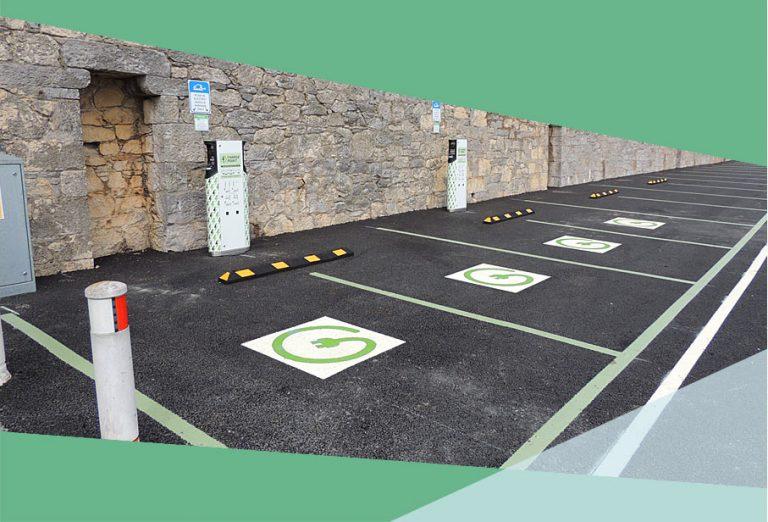
Due to public concerns about climate change and with considerable nudging from Government, the electric vehicle is having a renaissance. The sale of petrol and diesel vehicles (and hybrids) could be banned in the UK as early as 2032. But 64% of drivers say that lack of EV charge points available to the public is preventing them from buying an electric car. Of those that do take the leap, 94% still rely at least partly on public charging networks. (Source: Zap-Map) Enter the Plug-N-Go Group which is making it easy for businesses across the UK to install charging stations. PNG’s goal is to install 3,000 EV charge points for public use in 5 years, at sites where drivers are already parking. They currently operate almost 60 charge points, with a further 198 in the immediate pipeline. Plug-N-Go offers a range of solutions including, for viable sites that are open to the public and where the site owner agrees to grant a lease, a funded solution, facilitating and covering the entire cost of the installation from start to finish with on-going support. Plug-N-Go then receives the charging revenue from our charge points for 10 years and pays over a 10% share of net operating profit to the site owner, by way of rental. Plug-N-Go’s USPs are : • PNG specializes in destination charging. Destination charging is appropriate on sites where drivers spend between 1 and 3 hours, such as supermarkets, sports clubs, shopping malls and Local Authority car parks. • PNG only operates fast charging AC chargers (and a very few low level rapid DC chargers). Fast chargers are typically 22 kWh. We do not operate rapid DC chargers (60 – 350 kWh) which are aimed at transit drivers e.g. on motorways, for three reasons : unit cost (typically £120,000 per installation compared to an average of £18,000 per installation for PNG’s fast charge points) ; electricity supply constraints ; and fierce competition from the large DC operators. • PNG installs in large market towns, outside major cities. PNG’s business is based on establishing partnerships with site owners and avoids the cheek-by-jowl competition in the major conurbations. • PNG is not a manufacturer of hardware. PNG is hardware agnostic, choosing the best, future-proofed hardware from a panel of manufacturers. This avoids expensive development costs and legacy problems. Plug-N-Go are raising £250,000 through Crowdcube at a pre-money valuation of £3,250,000, which will give investors 7.14% of the company. The group holding company, Plug-N-Go EV Limited, has received EIS advance assurance from HMRC, meaning that eligible investors can receive 30% income tax relief and will receive further tax benefits on exit, provided they hold the shares for 3 years. More details are available on Crowdcube.

CyanConnode shares rally over 7% despite revenues effectively halving

Narrowband Radio Frequency Mesh Networks specialist CyanConnode (AIM:CYAN) saw its shares rally during Friday trading, with difficult full-year results being offset by bright horizons. The company usually posts results for every full year, and despite extending its FY19 results to a 15 month period, versus the 12 month period for FY18, revenues were almost half what they were the previous year. Indeed, revenues for FY18 at December 31 2018 stood at £4.47 million, whereas FY19 revenues at March 31 2020 finished at £2.45 million. Further, the company’s losses before interest, tax, depreciation and amortisation widened from £4.81 million to £4.92 million year-on-year. And despite its operating loss narrowing from £6.32 million to £6.23 million, this was likely led by a decrease in R&D and staff costs – down from £2.47 million to £2.38 million – including two staff leaving the company. Looking ahead, however, the CyanConnode outlook appears to be more hopeful. Post period-end, the company declared a resumption of its its 1 billion Indian Rupee contract, for the inspection and dispatch of 40,000 units. It added that it had commenced the roll-out of projects in India and Thailand, which have delivered more than 30,000 units since period-end. Further, it added that it had delivered 34,000 modules in its Sweden projects, with a further 5,000 modules delivered to Larsen & Toubro for legacy projects. Overall, it stated that it had received £1.3 million in cash from customers since period-end.

CyannConnode difficulties and bright future

Commenting on the previous, mixed results, and the positive outlook for the company’s trading, Executive Chairman, John Cronin, stated:

“In 2019 we were disappointed not to achieve the Board’s expectations as a result of a delayed contract for the Indian Utility, Jaipur Vidyut Vitran Nigam Ltd (“JVVNL”) . The positive news in the first half of 2020 is that this significant contract has resumed and we are receiving cash payments for the rollout. We are also encouraged to see demand for our products increasing.”

“CyanConnode has adapted to working under COVID-19 conditions and continues to remain on track with its current development plans. Nevertheless, the Company has encountered challenging circumstances in the markets in which it operates, which are reflected in these historical figures.”

“During 2020, as existing contracts started to roll out, the Company began to utilise Letters of Credit to meet its working capital requirements, thereby mitigating the need to raise further funding. The Company is focused on delivering significant volumes of its products to customers and we are pleased to report that we are at an advanced stage of agreeing a significant contract for a large number of units.”

Investor notes

Following the update, CyanConnode shares rallied 7.69% or 0.30p, to 4.20p a share 04/09/20 12:09 BST. This is far above its year-to-date nadir of 1.40p on May 15, but shy of its high of 5.00p on July 9.  

Berkeley Group Holdings maintains profit guidance

Berkeley Group Holdings (LON:BKG) has reaffirmed their guidance of pre tax profit for the full year in a trading statement released on Friday. The house builder said they saw pre tax profit at £500m with sales being weighted to the second half of the year due to coronavirus pandemic. Berkeley Group shares had gained 1.5% in morning trade on Friday following the news. The company also said it remained committed to returning £140 million to shareholders through dividends and share buy backs by 31st March 2021. “We now anticipate a more even split of profit between the first and second halves of the year, reflecting levels of production that have been better than initially anticipated and our decision not to furlough staff,” Berkeley Group Holdings. “Production continues to be impacted by the need for modified working practices and increased supervision, with the health, safety and well-being of our people remaining uppermost in our minds at all times. However, the experience and expertise of our construction teams and subcontractors, supported by our Health and Safety professionals, means that disruption has been minimised and efficiency levels are now at around 90% of normal.”