
World Health Organisation: China provides “hope for rest of world”

The leader of the World Health Organisation has said China provides “hope for rest of world” following the resumption of normal everyday activities in some province across the world’s second largest economy.
The spread of Coronavirus started in Wuhan in late 2019 and has officially recorded 81,000 cases and 3,270 deaths.
Despite scepticism around the validity of the official Chinese figures, the measures taken by China have certainly slowed the spread of Coronavirus to the extent people can now leave their houses and President Xi recently felt confident enough to visit the epicentre of the outbreak.
There have also been reports of traffic jams building up in Beijing once more.
However, whilst China has passed the worse of their initial COVID-19 outbreak, many western countries are still moving towards the peak.
Italy has now sadly recorded 5,476 deaths while the UK and Germany have recorded 281 and 84 respectively.
There is however a big variation in the death rate of those tested positive for COVID-19 between different countries.
This is starkly highlighted by the difference between Italy’s death rate of 9.2% where there have been 59,000 cases of Coronavirus, and Germany, where the death rate is just 0.33% from 25,000 cases.
The large discrepancy has been attributed to a number of factors including the higher levels of testing in Germany and the fact they had more time to prepare for an outbreak, having witnessed the devastating spread throughout Italy.
Although this hasn’t been confirmed officially, it has also been suggested Germany are only reporting Coronavirus deaths where there were no underlying health issues. A statistically interesting point is an Italian study found that 48.5% of people who died following testing positive for Coronavirus had three underlying illnesses.
Spain has also been heavily hit with 1,700 deaths in people testing positive for COVID-19.
BP share price: will they cut their dividend?
The BP share price (LON:BP) has crashed over 50% from the recent highs and the BP dividend now provides one the highest yields the oil giant has ever recorded.
With a BP share price of 237p, the oil & gas company is yielding a bumper 14.7%.
This yield is of course based on last year’s dividend and isn’t necessarily the yield investors will get going forward, if BP decide to amend their payouts.
The sell off in oil prices induced by coronavirus and a production war between Saudi Arabia and Russia now brings the BP dividend into question. In particular, whether BP will have to cut their dividend.
The increase in the quarterly dividend in Q4 from 10.25 cents to 10.5 cents means BP paid out $8.3 billion in dividends in 2019, up from $8.1 billion in 2018.
The affordability of this payout will dictate whether the BP has to cut the dividend in 2020. Key to the affordability of the dividend is BP’s profit in 2020 and BP’s cash reserves.
BP Financial Outlook
BP’s profitability is likely to be severely dented in 2020, and this would be after 2019’s net profit more than halved to $4.2 billion from $9.6 billion in 2018. BP recorded an average Brent oil price of $64.21 in 2019. With oil price trading below $30 and Goldman Sachs analysts predicting oil could fall as low as $20, it is likely BP profits will gain be lower in 2020. This would mean that BP would be paying dividends out of retained earnings if it were to maintain current payout levels. To measure the affordability of making payments from BP’s cash reserves one must look at BP’s cash and equivalents which stood at $22.5 billion as of 31st December. Such a strong level of cash would provide support for the dividend for some time and the company also has signifiants cope to reduce Capex to help conserve cash. BP opted for this strategy during the oil price decline in 2015/2016 and maintained dividend payouts throughout.Share Buybacks
In addition to the dividend on ordinary shares, BP allocated $1.5 billion to share buybacks. This provides some buffer against the dividend as the board would rather reduce or cancel share buy back before dreaming of cutting the dividend. A reduction or elimination of share buy-backs would mirror the move by peer Royal Dutch Shell, who announced they would be ceasing their share buyback program.BP Dividend Cut
Investors must question whether the market has already priced in a dividend cut and everyone should be prepared for a reduction in payout. However, if BP halved their dividend to 5 cent, investors who purchased shares at current price would still receive a 7% yield. This is yield would still be than the long term FTSE 100 average that fluctuates around 4% – 6% and vastly more than you will now receive from a cash ISA after the Bank of England cut rates to 0.1%.Exchange Rate Fluctuations
Investors must also take into consideration the exchange rate. The BP dividend is paid in US dollars and with the pound at record lows against the dollar, this has increased the historic dividend yield which will naturally decrease increase GBP/USD moves to the upside. If GBP/USD were to stay at 1.1640, BP’s 10.5 cent dividend would be worth 9.02p after the recent decline in sterling. This is roughly 10% more than the 8.155p investors received from the 2019 Q4 dividend based on GBP/USD of $1.28742 set on exchange rates 10th March to 13th March 2020.BP Share Price
There are a number of factors driving the BP share price and with shares down over 50% YTD, investors biggest concerns will be a dividend cut which will ultimately dictate shares in the medium term. It is almost certain a dividend cut would be negative for BP shares. However, with BP’s past record of maintaining dividend through tough times and predictions of a the economic slowdown limited to one of two quarters, it would take something catastrophic for BP to cut its regular dividend payments.


JD Wetherspoon profit climbs but COVID-19 hits current sales
JD Wetherspoon plc (LON:JDW) shares soared on Friday after it posted a rise in profit for the half year.
Shares in the pub company were up by over 30% during trading on Friday.
For the 26 weeks ended 26 January 2020, profit before tax rose by 15.2% to £57.9 million, up from the £50.3 million figure recorded during the same period a year prior.
Meanwhile, revenue grew by 4.9% to £933 million and like for like sales were up by 5%.
Commenting on the future, the Chairman of JD Wetherspoon Tim Martin said that it is “very difficult” to make predictions as the COVID-19 outbreak continues to develop.
Sales have been declining at the pub company as people are being told to social distance.
“In the early part of the current week, following the Prime Minister’s advice to avoid pubs, sales have declined at a significantly higher rate,” Tim Martin said.
“It is obviously very difficult to predict, in these circumstances, how events will unfold in future weeks and months, but we now anticipate profits being below market expectations, so long as the current health scare continues. As a result of this uncertainty, it is impossible to provide realistic guidance on our performance in the remainder of the financial year,” the Chairman added.
“The company has decided to delay most capital projects and to reduce expenditure, where possible, including the cancellation of the interim dividend. As a result of these actions, combined with the Government’s proposals on business rates relief and credit guarantee facilities, the company believes it has sufficient liquidity to maintain operations at a substantially lower level of sales.”
“As many companies and commentators have noted, the current health crisis places the hospitality industry, in particular, under great pressure. Wetherspoon, like our peers, will be working closely with all parties, including employees, banks, landlords and suppliers, in order to emerge from the situation in the best shape.”
The government has accelerated measures to contain the virus this week, telling individuals to avoid social gatherings and non-essential travel, which has put significant strain on the hospitality sector.
Shares in JD Wetherspoon plc (LON:JDW) were up on Friday, trading at +31.56% as of 12:59 GMT.
COVID-19: Marks and Spencer expects trading hit
Marks and Spencer Group plc (LON:MKS) issued a warning on Friday concerning the business impacts related to the evolving COVID-19 outbreak.
Shares in the British retailer were down during trading on Friday.
Marks and Spencer warned that trading over the next 9-12 months in its clothing and home and international business will be “severely impacted” by the illness.
“As a result, it is not possible to provide meaningful guidance on future earnings, although we are taking every step to secure future value for shareholders, colleagues, and suppliers,” the retailer continued.
The company’s food business has remained strong so far, and it is expected to trade profitably throughout. However, Marks and Spencer added that it is not benefitting from stockpiling as much as other major grocers are.
Marks and Spencer said that the final result of profit before tax could be at or below the bottom end of the £440 million to £460 million range, as trading in clothing and home is likely to be “very depressed”.
“We are preparing for the contingency that some stores may have to close temporarily,” warned the retailer.
Marks and Spencer said: “M&S has served customers without cease through two world wars, terrorist bombings and numerous local disasters and we are determined to support our customers now as we always do.”
“We have one of the most loyal and committed workforces in retailing and are very grateful for the extraordinary cheerfulness and dedication they are showing in difficult times. We are seeing substantial sales declines in Clothing and Home and we have to manage our costs accordingly but expect to be able to redeploy significant numbers of colleagues to support the Food business,” it continued.
Shares in Marks and Spencer Group plc (LON:MKS) were down on Friday, trading at -0.60% as of 11:51 GMT.

Government closes schools to contain COVID-19
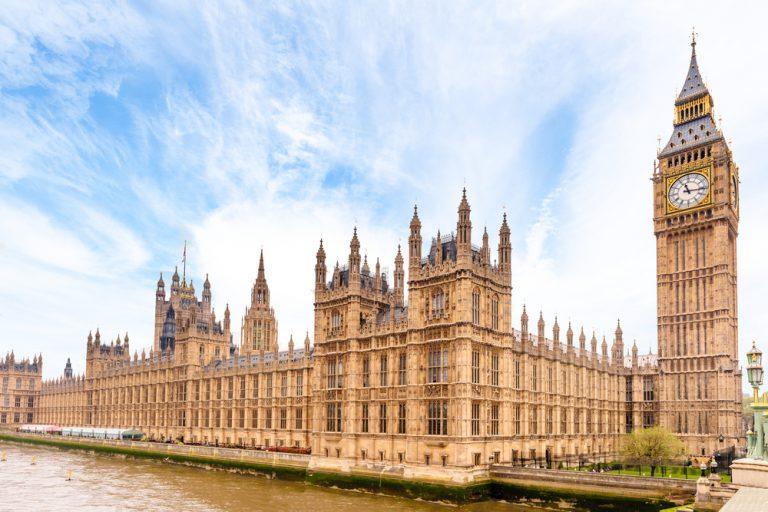
Boris Johnson revealed yesterday that all schools in the UK are to close from Friday in order to help contain the spread of COVID-19.
“The objective is to slow the spread of the virus and as I say we judge that this is the right moment to do that,” the Prime Minister said in a press conference.
However, in order to help support key workers who are also parents, such as health workers, police officers and supermarket workers, schools are required to make provisions for their children.
School closures across the UK means that exams will not take place in May and June.
“We will make sure the pupils get the qualifications they need and deserve for their academic career,” Boris Johnson continued.
Many students were relying on these exams to secure their place at university in September.
https://platform.twitter.com/widgets.jsThe government has announced that schools will close from Monday https://t.co/PY1RobCHyb pic.twitter.com/TZALqMUZgf
— UK Prime Minister (@10DowningStreet) March 18, 2020
https://platform.twitter.com/widgets.js The UK government has been accelerating measures this week to contain the spread of the illness. On Tuesday, plans to help businesses were revealed, including at least £330 billion in loans – equivalent to 15% of GDP. Many businesses are struggling as the COVID-19 outbreak continues to evolve. Indeed, during a time when people are being told to stay indoors and avoid all non-essential travel, footfall and demand is decreasing.If you have questions about coronavirus in an education setting, you can contact our helpline.
Our helpline will offer guidance for anyone with education related questions – from early years up to universities, plus parents. #Coronavirus pic.twitter.com/qv2QgFOEx4 — Department for Education (@educationgovuk) March 18, 2020
Next warns “greatest challenge” will be demand
Next plc (LON:NXT) warned on Thursday that the “greatest challenge” it faces concerning the evolving COVID-19 outbreak is the risk it poses to demand.
The company said that it must prepare for a “significant downturn” in sales as the situation continues to develop.
Shares in Next rose by over 10% on Thursday. The company did see total group sales for the year ending January 2020 rise by 3.3% to £4.36 billion, with group profit ahead of its guidance at £728.5 million.
However, Next is unable to predict the extent that COVID-19 will hit its retail and online sales looking ahead.
Though the virus is likely to impact its operations, Next does not expect this to be as damaging as the “very significant drop” in both retail and online sales.
“Online sales are likely to fare better than Retail but will also suffer significant losses. People do not buy a new outfit to stay at home,” read the Chief Executive’s review.
Indeed, as the government accelerates its measures to contain the spread of the illness, people are being advised to stay at home and avoid all non-essential travel.
“We have included a detailed stress test that gives the likely cash and profit impact for different levels of sales decline,” the Chief Executive’s review continued.
“The conclusion of our stress test is that the business could comfortably sustain the loss of more than £1bn (25%) of annual full price sales, without exceeding our current bond and bank facilities. This accounts for the business rates holiday announced by Government but excludes any use of Government lending or any measures that may be introduced to help with wages during closure.”
Elsewhere in retail, Laura Ashley (LON:ALY) collapsed earlier this week as the COVID-19 outbreak immediately hit trading.
Shares in Next plc (LON:NXT) were up on Thursday, trading at +10.05% as of 11:11 GMT.
Burberry sales fall as COVID-19 spreads
Burberry Group plc (LON:BRBY) saw its shares fall on Thursday after the luxury fashion brand updated the market on COVID-19 related business impacts.
Shares in the company were down by over 3% during Thursday morning trade.
Burberry said that trading has “deteriorated significantly” since 24 January.
Over the last six weeks, the company has seen comparable retail store sales decline between 40% to 50%.
In February, sales losses were predominantly recorded in Burberry’s Asian markets.
Currently, over 60% of Burberry stores in Europe, the Middle East and Africa and roughly 85% of stores in the Americas are closed.
Those which remain open are operating with reduced hours and experiencing very weak footfall, the luxury fashion brand said.
During a time when people are being encouraged to stay indoors and self-isolate, it is not wonder footfall has reduced.
Burberry said that, in total, roughly 40% of its directly operated stores across the world are closed, with further closures expected.
Burberry continued to add that comparable retail store sales in the final weeks of its financial year are expected to decline by 70% to 80%.
Many companies have been hit by the evolving COVID-19 outbreak as governments are restricting non-essential travel in order to contain the illness.
“Since our February update, the material negative effect of COVID-19 on luxury demand has intensified and is now impacting the industry in all regions,” Marco Gobbetti, Chief Executive Officer, commented.
“Our primary concern is the global health emergency and we continue to take every precaution to help prevent the spread of the virus and ensure the safety and wellbeing of our employees, partners and customers,” said the Chief Executive Officer.
“We are implementing mitigating actions to contain our costs and protect our financial position, underpinned by our strong balance sheet. We remain confident in our strategy and the strength of our brand and I am exceptionally proud of our teams’ resilience and commitment.”
Shares in Burberry Group plc (LON:BRBY) were down on Thursday, trading at -3.26% as of 09:58 GMT.