
UK rental markets: where is the most affordable place to rent?
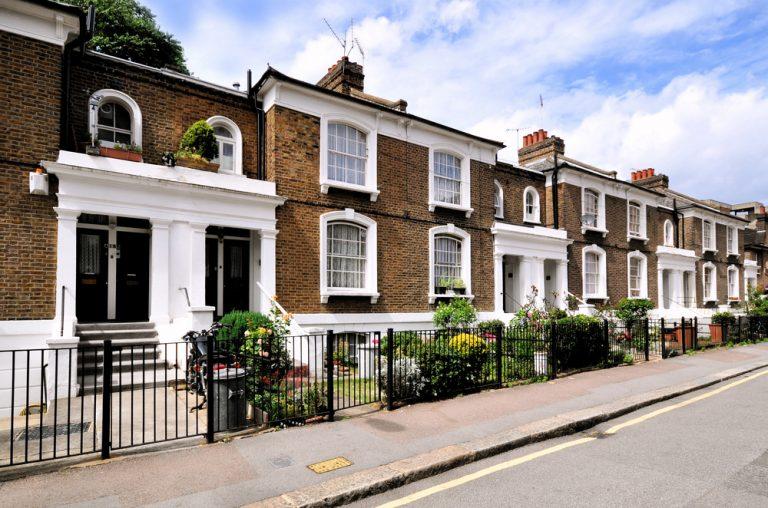
Latest research for the lettings platform Howsy reveals that 34% of income is spent on rent across the UK.
The data looks at where in the UK is home to the most affordable rental markets by the amount of income dedicated to rent, with Wales as the most reasonably priced region at just 30% of income.
The figures double for London making it the UK’s most unaffordable region, as expected, with 65% of the average salary spent on renting.
The data reveals that Hackney is the least tenant friendly with 83% of the average salary in the borough spent on renting. Brent is second at 77%, Newham third at 75%, followed by Southwark at 70%, Haringey at 67%, Barking and Dagenham at 65%, Enfield at 64% and Barnet at 63%.
As for the most affordable locations to live in London, Bromley and Bexley are the best options with the average rental cost amounting to 46% of the average salary. These locations are, however, still above the average price across the UK.
Average rental costs by country leave England at the top, with 42% of the average salary spent on rent. Scotland comes in second at 39%, Northern Ireland at 35% and Wales at 30%.
“We tend to put a lot of focus on the negatives of the UK lettings market but while top-line affordability may be an issue for many, there are plenty of areas where renting isn’t such a financial burden,” Calum Brannan, Founder and CEO of Howsy, commented on the data.
“Maximising your disposable income in any part of the UK is the key to living a happy life in the rental sector and it pays to do your research before making a move to ensure you can not only cover the cost of renting, but you aren’t left high and dry once you have,” Calum Brannan continued.
At the beginning of June, data by Halifax revealed that UK house prices rose 5.2% during the three months to May 2019.
Pressure Technologies share price falls despite H1 profit

Specialist engineering and industrial valve manufacturing company Pressure Technologies (LON: PRES) booked a modest first half profit with improving oil and gas sector conditions helping to drive sales.
The company’s revenue jumped 59% to £14.5 million while pre-tax profit for the six months through March came to £0.1 million, up from a £1.5 million loss the year before.
This news follows updates from elsewhere in the energy sector, with Petrofac (LON: PFC) providing guidance updates this morning, and Eco Oil and Gas (LON: EGO) and Mayan Energy (LON: MYN) providing operations updates.
Company comments
“I am pleased with the progress we have made over the past six months in what has proved a very busy period, one that signals a return to profitability for the group,” said chief executive Chris Walters. “The sale of our alternative energy division, which completed in June 2019, was a key milestone.” “We now have a clear strategic focus and are making good progress with the management, operational and cultural changes that will help accelerate organic growth and performance improvements in target markets.” “Our results for the first half of the year reflect the delivery of major defence contracts and improving conditions in the oil and gas sector.” “We are pleased with the growth in our order book and the increasing diversity of our customers and products.” “I have confidence in the outlook for the group as we approach the next phase of our strategy.”Pressure Technologies trading update
The Company did not declare an interim dividend alongside this latest update. Further – following today’s update – the company’s shares have dipped sharply so far during trading on Tuesday morning, down 8.27% or 11p to 122p per share 25/06/19 09:45 GMT.Petrofac shares dip with reserved guidance expectations

Oilfield services provider Petrofac Limited (LON: PFC) has said it expects its annual margins to be at the lower end of its guidance range for its engineering and construction businesses.
Falls in on-year production
The Company’s integrated energy division stated that it expected a fall in net production on-year, from 3.1 million barrels of oil equivalent to 2.1 million boe; this being in line with expectations and reflecting divestments during the second half of 2018. The separate engineering and production services division was performing in line with expectations for the first half, with lower activity from operations being offset by growth in projects. Engineering and construction revenue was expected to be around $4.5 billion for the full year, while overall new order intake for the year to-date stands at $1.7 billion, the company stated.Petrofac comments
“We are trading in line with our prior guidance reflecting solid operational performance across the business,” said chief executive Ayman Asfari. “We continue to maintain excellent client relationships in all of our markets, although new order intake in the year to date reflects our recent challenges in Saudi Arabia and Iraq.” “Looking forward, the group has a busy tendering pipeline in other markets with around US$15bn of bid opportunities due for award in the second half of the year.” “We are making good progress delivering our strategic objectives.” “We continue to target best-in-class delivery for our clients and are improving our competitiveness by reducing costs, driving digitalisation, increasing local content and investing in talent.” “Furthermore, we are well positioned in the second half with good revenue visibility, a strong balance sheet and high levels of tendering activity.”Trading notes
The Company’s shares are currently trading down 4.89% or 21.22p at 412.28p per share. Analysts were not in consensus with their ratings, with Credit Suisse reiterating their ‘neutral’ stance and Numis reiterating their ‘Buy’ stance on Petrofac stock.Supermarket sales rise modestly as poor weather kick-starts summer

Supermarket sales grew by 1.4% over the 12 weeks to mid-June, new data published by Kantar reveals, as the weather across the UK fails to match last year’s heatwave.
During the 12 weeks to 16 June, supermarket sales rose by 1.4% year on year as a result of the wet weather to kick-start the summer period.
Last year’s summer heatwave and the lead up to the men’s FIFA World Cup made 2018 a difficult year to outperform.
According to Kantar, the poor weather to hit the UK is reflected in sales of typical summer categories such as ice cream, beer and burgers.
In the last four weeks, ice cream sales were £15 million lower than this time last year, beer was down £17 million and burgers £6 million.
Despite a decline in sales of typical summer products, shoppers seem to have spent more on comfort foods as fresh and tinned soup sales rose.
As for specific supermarkets, Aldi attracted an additional 883,000 shoppers across the 12-week period, growing its market share to 7.9%.
Lidl, which recently announced plans for a flagship store on central London’s Tottenham Court Road, rose its market share to 5.7%.
Tesco (LON:TSCO), whose market share fell over the period, still remains the nation’s largest retailer.
Sainsbury’s (LON:SBRY) came in second, whilst Asda’s (NYSE:WMT) overall market share declined to 14.9%. The two supermarkets recently had their potential merger blocked by the Competition and Markets Authority (CMA), claiming that consumers would not benefit from the merger. The CMA said that this was due to an expected increase in prices, reductions in the quality and range of products on offer and a poorer overall shopping experience for consumers across Britain.
Shares in Tesco plc (LON:TSCO) were down 2.41% on Tuesday as of 10:06 BST. J Sainsbury plc (LON:SBRY) were also down at -0.69% (10:07 BST) and shares in Walmart Inc (NYSE:WMT), owner of Asda, were up 0.099% as of 19:56 GMT-4.
Carpetright posts narrower loss in full year results
Carpetright (LON:CPR) posted a narrower loss in its full year results on Tuesday, returning to like-for-like sales growth in its new financial year.
Shares in the business were up 9.35% following the announcement.
The carpet retailer said that it made a statutory loss before tax of £24.8 million, which is less than the £69.8 million figure from the previous year.
Group revenue amounted to £386.4 million, 13.4% lower than last year’s £446.3 million.
Carpetright experienced a challenging first half in the UK, with like-for-like revenues down 12.7% as the business implemented the CVA restructuring plan.
Last year, its shareholders supported a Company Voluntary Arrangement (CVA) restructuring plan which closed 80 underperforming stores.
Its UK performance in the second half saw a significant improvement with its like-for-like sales decline reduced to 5.4%, reducing even further in the fourth-quarter to 2.3%.
2018-2019 has been a “transitional” year for the business, Chief Executive Wilf Walsh said.
“We took tough but necessary action to address our legacy property issues and restructure the UK store estate. This difficult task was carried out against the backdrop of a challenging trading environment but was essential to put the business back on the path to sustainable profitability,” the Chief Executive continued.
Indeed, several retailers across the UK have struggled for survival amid the challenging trading environment to hit the retail sector.
Last April, the retailer issued its fourth profit warning in five months.
“From a trading standpoint it was, as expected, a year of two halves, with the first six months reflecting the impact of the CVA implementation, followed by a significant improvement in the second half and, in particular, during Q4.”
The company added that the business has returned to like-for-like sales growth in the first eight weeks of the period, with UK like-for-like sales ahead by 8.5%.
Shares in Carpetright plc (LON:CPR) were trading at +9.35% as of 09:22 BST Tuesday.


Boots switches to brown paper bags
Boots switched to brown paper bags on Monday, aiming to remove all plastic bags from stores by 2020.
On Monday 53 Boots stores will stop using plastic bags and begin offering unbleached brown paper bags. These will be rolled out across all of its 2,485 outlets by next year.
The switch is said to eliminate 900 tonnes of single-use plastic each year, converting to 40 million plastic bags.
The decision to stop using single-use plastics was also recently made by McDonalds, which will remove plastic lids from its McFlurry ice cream in all UK restaurants from September, in an attempt to align itself with more environmentally friendly practices.
Single-use plastics are only used once by consumers before being thrown away or recycled, with items such as plastic bags, straws, bottles and food packaging falling under this category.
These disposable plastics are petroleum based and non-biodegradable, harming the natural environment.
Since the government introduced a small 5p fee on plastic bags back in 2015, usage has started to drop.
Alternative products that consumers can buy, such as reusable coffee cups, shopping bags, drinking straws, water bottles and cutlery, have been on the rise. These can be used more than once and, when brought along with users, and can replace single-use plastic products.
“We are changing our plastic bags to 100% recyclable brown paper bags,” the company announced on Twitter.
https://platform.twitter.com/widgets.js “Plastic waste is undoubtedly one of the most important issues around the world today with TV shows like Blue Planet highlighting the effects of plastic pollution,” Seb James, Senior Vice President and Managing Director of Boots UK commented, according to Sky News. “This year, we are transforming Boots as we celebrate 170 years, and the move to unbleached paper bags is another pivotal moment in that journey,” Seb James continued. “There is no doubt that our customers expect us to act and this change signifies a huge step away from our reliance on plastic.”We are changing our plastic bags to 100% recyclable brown paper bags, with all profits going to @BBCCiN. pic.twitter.com/w8df8FP7wl
— Boots (@BootsUK) June 24, 2019
Lufthansa reveals turnaround plan for Eurowings
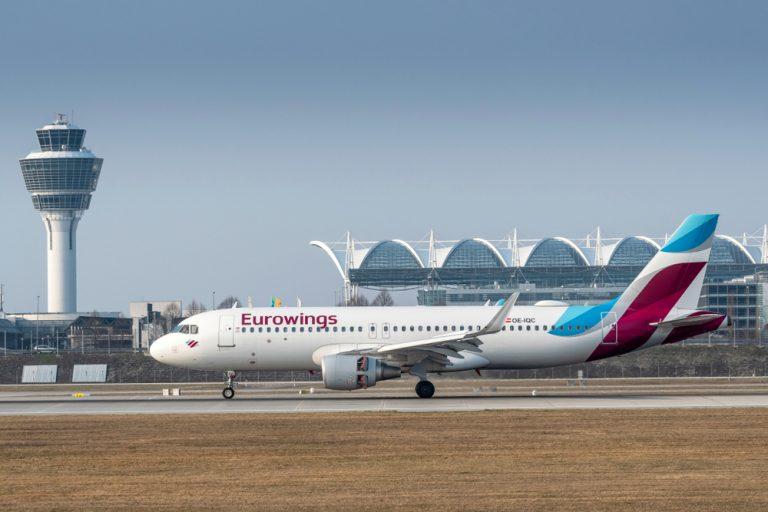
Lufthansa (ETR:LHA) has revealed the measures it will take to turn around its Eurowings on Monday, aiming for it to generate profit as quickly as possible.
Shares in Deutsche Lufthansa AG were trading almost 2% lower on Monday.
Recently, the German airline posted a deeper loss for its first-quarter of the year, blaming higher fuel costs. It revealed a loss that was almost nine-times deeper than that of the first-quarter a year earlier.
On Monday, Lufthansa announced that it has changed its current dividend policy, saying that in future, 20-40% of its net income should be regularly distributed to shareholders.
Its medium term aim is to raise its free cash flow to at least €1 billion per year.
The German low-cost airline Eurowings, in future, will focus on short-haul flights. The Eurowings fleet will be standardised on the Airbus A320 family, and a 15% reduction in unit costs will be sought by 2022.
“With the airlines in our Group we are excellently positioned in our home markets, which are among the strongest in the world,” says Carsten Spohr, Chairman of the Executive Board & CEO of Deutsche Lufthansa AG.
“Our Group’s service companies are also world leaders in their fields. We want to translate this market strength even more consistently into sustainable profitability and value creation. And it is to this end that we are presenting concrete actions today which will enhance our efficiency and generate value for our shareholders,” Carsten Spohr continued.
Lufthansa also said that a turnaround plan can be expected for Brussels Airlines, another of its subsidiaries, in the third quarter of 2019.
Brussels Airlines, which recently made the news for a flight facing operational difficulties, will not be integrated into Eurowings, the company added.
Elsewhere in aviation, Ryanair (LON:RYA) grew its passenger volume by 13% in May, whilst Wizz Air’s (LON:WIZZ) passenger numbers rose 22.4%.
Shares in Deutsche Lufthansa AG (ETR:LHA) were trading at -1.38% as of 11:50 CEST Monday.
RA International wins government contract and updates on trading

RA International (LON:RAI), a leading remote services provider in Africa and the Middle East, announced on Monday that it has won a government contract, in addition to providing an update on trading.
Shares in the company were up 4.34% on Monday morning.
The company said that it has won a government contract with a value of up to $9 million.
The contract, which was originally expected to be signed in H2 2018, will see construction and facilities management services provided over the next three years.
The project is set to commence in H2 2019.
In addition to the contract announcement, RA International also issued an update on its current trading.
It said that the year-to-date has been encouraging and further progress has been made in line with its strategy of bidding for larger contracts across three service channels, diversifying its geographical presence and broadening its customer base.
RA International added that continued investment is being made in infrastructure and personnel in order to enable the company to pursue further expansion.
“As last year, we expect financial performance to be weighted in the second half of the year, but we are confident in delivering on market expectations for 2019. The outlook for RA International is positive; we have been shortlisted to tender for several major contracts and we have the platform from which to capitalise on the opportunities available to us,” Soraya Narfeldt, CEO of RA International, commented in a statement.
In the first half of the year, RA International was awarded several contracts, such as construction works at the US embassy in Denmark and a long-term contract with the United Nations.
Its UNSOS contract, awarded earlier this year in May, will see it provide vehicle and equipment fleet operation and first in line maintenance services to UNSOS in up to 10 locations in Somalia.
Shares in RA International Group plc (LON:RAI) were up 4.34% as of 09:44 BST Monday.
Cake Box profits rise on new store openings

The egg free cake shop company Cake Box (LON:CBOX) posted a 14% rise in its annual profits on Monday.
Its results were driven by a strong pipeline of new store openings.
Shares in the cake retailer were up 3.45% during early trading.
Profit before tax amounted to £3.8 million for the full year ended 31 March, 14% higher than the £3.3 million figure recorded the year earlier.
During the period, 27 new franchise stores were added, with 113 franchise stores in operation as of the end of March.
Franchisee total turnover came to £30.7 million, up 18% from the £25.9 million figure previously.
Additionally, group revenue was up 33% to £16.9 million, compared to the £12.7 million figure from the year before.
Cake Box, which entered the Alternative Investments Market (AIM) last June, first began in East London back in 2008.
“This has been a landmark year for Cake Box, due to both the successful completion of our initial public offering and the significant expansion of our family of franchisees,” Neil Sachdev, Non-Executive Chairman of Cake Box, commented on the results.
“Although we have only been on AIM for a short period, we have made a huge amount of progress. New store openings have kept pace with our plans, our franchisees are enjoying good performance and we have a solid platform for growth with two new warehouse and distribution centers secured. As such, we look forward with great confidence,” the Non-Executive Chairman continued.
“The new financial year has started well and we have already opened four new franchise stores, with two more expected to open before the end of June 2019. The Group is well placed for further progress and the Board is confident of another successful year of growth,” Chief Executive Officer Sukh Chamdal also commented.
In March 2018, Cake Box became recognised as one of the 100 fastest growing UK companies by turnover in the 2018 Sunday Times Virgin 100 Fast Track league.
Shares in Cake Box Holdings plc (LON:CBOX) were up 3.45% as of 09:14 BST Monday.