Tui issues profit warning after Boeing 737 Max grounding
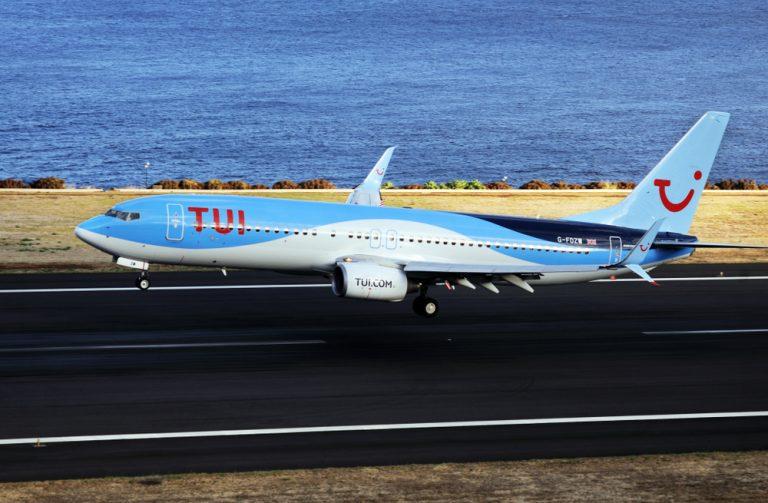
Tui has warned on the adverse impact the grounding of the Boeing 737 max fleet will have upon profits.
The travel company said it may cost it as much as €300 million (£258 million), as it looks to find alternative arrangements for its customers who will be affected.
Tui said some of these measures included leasing additional planes, extending expiring leases that were supposed to be replaced by the 737 Max, as well as using spare aircraft in its fleet.
Moreover, the firm added that a ‘considerable amount of uncertainty’ remained regarding when the Boeing 737 Max will return to flight.
In the statement, Tui said that its Executive Board have decided to revise guidance to an underlying EBITA for the full-year of approximately -17%, as opposed to previous “broadly flat” expectations.
The grounding of the Boeing fleet occurred after safety concerns were raised over the aircraft.
Various aviation authorities opted to ground the fleet after two separate plane 737 max crashes occurred in the space of five months.
Tui has a fleet of about 150 aircraft, including 15 of the grounded 737 Max.
An additional eight of the Boeing aircrafts are due for delivery by the end of May.
Tui is one of the largest travel companies in Europe, it is headquartered in Hannover and Berlin in Germany.
It operates 1,600 travel agencies, 150 aircraft as well as 16 cruise liners and 380 hotels and resorts.
Tui shares (ETR: TUI1) are currently trading -6.59% on the back of the profit warning.
The Independent Group applies to become an official party
The Independent Group have applied to become an official party, in anticipation of the European Parliamentary elections.
The Independent Group have now adopted the name Change UK, with former Conservative MP Heidi Allen as its interim leader.
The application has been submitted in a bid to stand in the European elections on the 23 May, should the UK not withdraw from the EU beforehand.
Addressing the application, the group tweeted the following:
https://platform.twitter.com/widgets.jsThe Independent Group is a breakaway group, which currently consists of 8 former Labour MPs and 3 Conservatives. Allen issued the following statement: “If we are to deliver on our ambition to change politics for the better, it is vital that we attract support from people from every walk of life, every political background and none. Coming into the House of Commons from running my manufacturing business in 2015, I have seen with my own eyes how improved our political system would be if it harnessed the diverse skills and experience of our country. “We in Change UK, as we hope to be known, don’t just dream about a fairer and better future for our country, we are determined to unleash it through hard work, passion and shared endeavour.” In a statement, Chuka Umunna, one of the first deflectors to the Independent Group commented: “There is clearly an appetite for an alternative to our broken politics which needs fundamental change, as shown by the disastrous Brexit process which has occurred under the watch of the two main parties. A new party will shake up the two-party system and provide people with an alternative that can change our country for the better. This is what Change UK will be aiming to do at any European elections if our application for registration is accepted in time. “The Independent Group is a diverse group of MPs which reflects modern Britain, drawn from different generations and backgrounds including a former GP, teacher, lecturer, social worker, solicitor and TV presenter. We intend to draw on all the voices of our group in any European election campaign. We will seek to put forward a substantial number of MEP candidates with backgrounds from outside of politics.”We’ve done this in order to stand candidates in any European elections that come about as a result of a long extension of the Article 50 process, and we hope to shake up the two-party system and provide people with an alternative that can change our country for the better.
— The Independent Group (@TheIndGroup) March 29, 2019
Travis Perkins announces departure of CEO
Travis Perkins announced the departure of chief executive John Carter, the company announced on Friday.
Travis Perkins said that Carter, who has been at the helm for five years, is set to be replaced by Nick Roberts as of July the 1st.
Carter will however, remain at the building materials retailer until the end of 2019 to ensure a smooth transition.
Before his appointment at Travis Perkins, Roberts was chief executive at Atkins, an engineering and project management consultancies.
Stuart Chambers, Chairman of Travis Perkins commented on the directorship change:
“On behalf of the Board I would like to thank John for his exceptional leadership which leaves Travis Perkins well placed to meet its customers’ needs and to continue to deliver long term value growth for its shareholders and other stakeholders. John has given over 40 years of dedicated service to Travis Perkins, serving as a Director for 18 years and as CEO for the last 5 years, substantially improving the business during his tenure as CEO. ”
Welcoming the new appointment, he added:
“We are delighted to announce Nick’s appointment. Nick joins us from his role as CEO of Atkins where he has been running a significant relationship-led global engineering, design and project management business. Nick has the breadth of skills needed to grow the business and to build on the strategy outlined in December.He has deep experience of the construction, design and engineering industries; which coupled with his successes in the adoption of digital, will prove invaluable in driving the Group’s strategy into the future.”
Shares in Travis Perkins (LON:TPK) are currently down -0.22% as of 11:07AM (GMT).

Rose Petroleum shares slide 7% after company update

Rose Petroleum shares fell during Thursday trading after the company issued an update on its operations and announcing changes to its board.
The oil and gas firm said in the statement that subject to funding and rig availability it was at “advanced stage” at the GV 22-1 well on its acreage in the Paradox Basin in Utah.
The company also said that it had secured a drilling permit for the GVU29-1 well within the Gunnison Valley Unit alongside the Paradox acreage.
In addition to updating investors on progress at its drilling operations, Rose Petroleum announced the appointment of David Sefton and James Berwick to its board.
The firm said that David will assume the role of Non-executive Chairman, whist James will serve as Non-executive Director.
Accordingly, current board members Philip Jeffcock and Kelly Scott will resign from their roles.
Matthew Idiens, CEO, Rose Petroleum plc, commented: “While we share shareholders’ frustration at the length of time it is taking to secure a farm-in partner for the Paradox project, the level of interest shown does reinforce our views as to the underlying value and potential in our asset.
In this context, I am very pleased that David and James have agreed to join the Board. This is a critical time for the Company. We have an asset capable of delivering real value for shareholders and we realise that we need to add certain skills and networks to unlock that value. David and James are the right people to help us do so. I look forward to working with them and delivering on the trust and confidence that you have given to the Company.”
Meanwhile David Sefton, added: “When James and I were approached to help, our starting position was that shareholders had funded this Company in order to realise the value in the Paradox asset and that therefore any plan had to be based on realising that value. We think that while there are clearly challenges, and James and I still have more work to do to understand all aspects of the Paradox, this is a situation where we can see several potential solutions. ”
Shares in Rose Petroleum (LON:ROSE) are currently -7.85% as of 14:09 as shareholders react to the announcement.
Swedbank CEO fired amid money laundering allegations
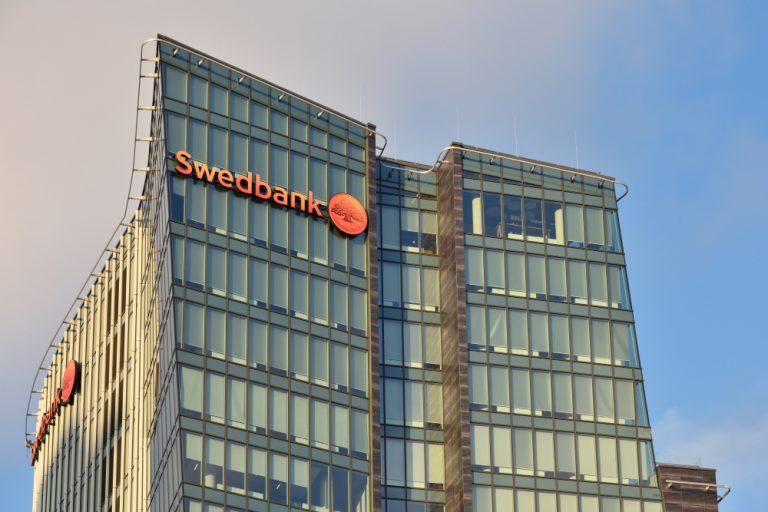
Swedbank has dismissed its chief executive Birgitte Bonnesen amid money laundering allegations.
The Stockholm-based bank announced Bonnesen’s departure ahead of its Annual General Meeting on Thursday.
She is set to be temporarily succeeded by Anders Karlsson as it sees out the fallout from the allegations.
The decision came after “enormous pressure” had been put on the bank in the wake of the scandal.
“The developments during the past days have created an enormous pressure for the bank,” the Swedbank chairman, Lars Idermark, commented.
He continued: “Therefore, the board has decided to dismiss Birgitte Bonnesen from her position. With that said, Birgitte Bonnesen has during her three years as CEO made an important contribution by creating a leading digital bank with physical presence.”
Swedbank was raided on Wednesday by Swedish authorities over allegations of aggravating fraud and violating law relating to insider information. It is also set to face an investigation by US regulators over the claims.
Swedbank is a Nordic-Baltic bank which is based in the Swedish capital of Stockholm.
It was founded back in 1820, nearly 200 years ago, it now one of Sweden’s largest lenders.
Shares in the embattled bank (STO: SWED-A) are currently down -3.70% was of 13:54PM (GMT) on the back of the announcement.
Goldman Sachs fined £34m by city watchdog
Goldman Sachs has been dealt a £34.3 million penalty by the Financial Conduct Authority (FCA), as a result of historic reporting failures at its London unit.
The FCA identified “serious and prolonged failures” in its reporting of transactions over the course of 10 years.
The fine is the largest the city watchdog has imposed thus far, in relation to transaction reporting shortcomings as determined under the European Mifid legislation.
Mark Steward, the head of enforcement at the FCA, commented on the decision: “The failings in this case demonstrate a failure over an extended period to manage and test controls that are vitally important to the integrity of our markets. These were serious and prolonged failures. We expect all firms will take this opportunity to ensure they can fully detail their activity and are regularly checking their systems so any problems are detected and remedied promptly, unlike in this case.”
Meanwhile, Goldman Sachs issued a statement addressing the penalty:
“We are pleased to have resolved this legacy matter. We dealt with the issues proactively at the time and have made significant investments across the period to develop and enhance our reporting procedures.”
Because Goldman Sachs cooperated with the FCA’s proceedings, the bank received a 30% discount on the fine, otherwise the fine would have totalled £49,063,900.
Shares in the investment bank (NYSE:GS) are currently steady during pre-market trading as of 13:04PM (GMT).
WOW Air suspends flights amid financial difficulties
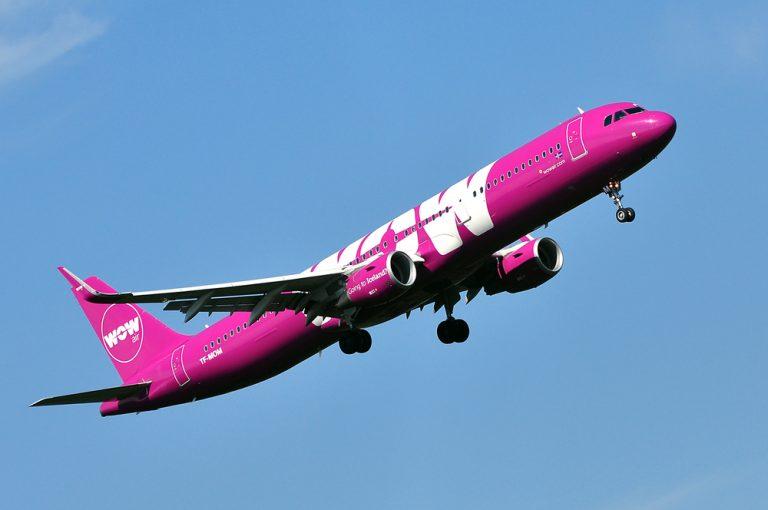
Icelandic low-cost airline WOW Air has grounded its flights leaving thousands of passengers stranded on Thursday morning.
The heavily in debt airline has been searching for a financial backer for the past few months. According to the Independent, the airline is believed to owe roughly £150 million.
The carrier operates between Iceland, Europe and North America. Founded in 2011 by entrepreneur Skúli Mogensen, it employs roughly 1,000 people.
In a statement published on its website the Icelandic carrier said that it was in the final negotiation stages with a group of investors.
“WOW air is in the final stages of finalising equity raise with a group of investors. All flights have been postponed until documentation with all parties involved have been finalised,” the message read.
It said that further information will be delivered at 9 am local time, which is 10 am GMT.
The company informed all of its passenger via text message/email. It said that passengers scheduled to fly to and from Iceland with the airline on Thursday are entitled to cancelling their reservation for a full refund, or change their flight to the next available WOW air flight.
The suspension of flights disrupts the travel plans of thousands of its passengers. It still remains unclear how long the disruption is set to last.
Elsewhere in aviation, EasyJet (LON:EZJ), Delta Air Lines (NYSE:DAL) and Italy’s state controlled railway entered in discussion to form a consortium in order to rescue the struggling Italian carrier, Alitalia.
Ryanair (LON:RYA) posted a loss for its third quarter, joining a list of airlines facing rising costs and overcapacity that are both weakening margins.
Equally, Hungarian Airline Wizz Air (LON:WIZZ) saw its profits plummet in the third quarter of 2018 amid rising fuel and staff costs.
Canopy Growth backs Seth Rogen’s cannabis brand
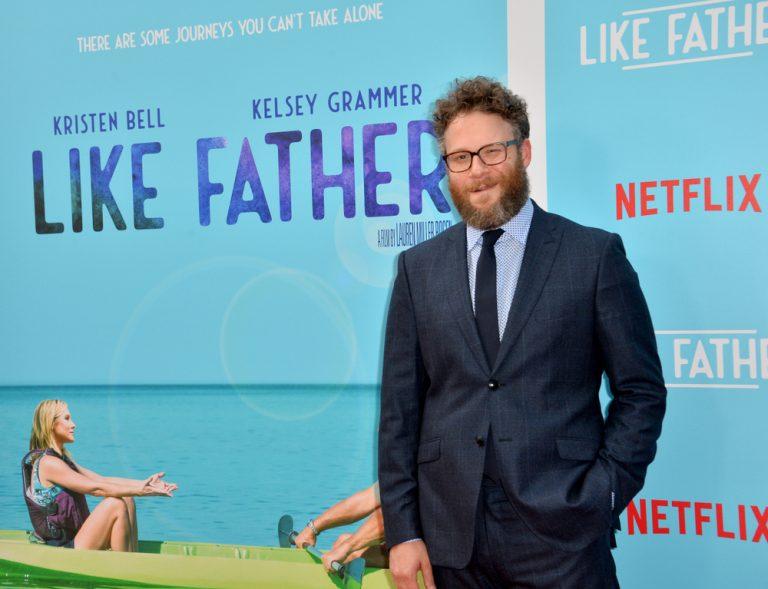
Actor, stand-up comedian, writer, producer and director Seth Rogen has partnered with Canopy Growth Corporation (TSE:WEED) to launch a new cannabis brand in Toronto – Houseplant.
Canopy Growth Corporation said in a statement that “it is pleased to welcome Houseplant, a new brand of Canadian cannabis, to the Canopy Growth family today.”
“Founded by Seth Rogen and Evan Goldberg, Houseplant represents years of product expertise and an unmatched attention to detail within each strain that has been carefully selected and grown,” it continued.
According to Houseplant, Canopy Growth Corporation owns 25% of the business.
“We could not be more excited to partner with Seth, Evan and the entire Houseplant team. Together we will make Houseplant a cannabis brand synonymous with quality everywhere it is available,” Mark Zekulin, President and Co-CEO of Canopy Growth Corporation commented.
The 36-year-old Pineapple Express star is not the only celebrity active in the cannabis industry. Snoop Dogg, who recently invested in a Swedish fintech start-up, has a venture capital firm named Casa Verde. It is best known for adding cannabis companies to its portfolio.
As countries around the word begin to change their perception of, and policies regarding, the drug, cannabis is emerging as one of the hottest sectors to invest in.
In Canada, where Seth Rogan’s Houseplant will be based, the use of medical cannabis has been permitted since 1999. As for the United States, cannabis for medical reasons is legalised in 29 states.
Over in Europe, countries have begun decriminalising usage of the drug for recreational purposes, but it is still illegal in the UK for recreation use. Medically speaking, however, the British government has begun making certain exemptions that allow specialist GPs to prescribe cannabis.
At 16:00 GMT -4 yesterday, shares in Canopy Growth Corporation (TSE:WEED) were trading at -3.75%.