
https://platform.twitter.com/widgets.js The incident demonstrates the sheer level of disruption that can take place when one large technology firm controls several others. “We need to stop this generation of big tech companies from throwing around their political power to shape the rules in their favour and throwing around their economic power to snuff out or buy up every potential competitor,” the democratic candidate in the next US presidential election, Elizabeth Warren, told the New York Times. Elizabeth Warren’s plans include forcing rollback of certain acquisitions by tech giants, such as Facebook’s purchase of WhatsApp and Instagram. At 11:05 GMT-4, shares in Facebook, Inc. Common Stock (NASDAQ:FB) were trading at -2%, and shares in Twitter Inc (NYSE:TWTR) were trading at -0.22% (11:07 GMY-4).We’re focused on working to resolve the issue as soon as possible, but can confirm that the issue is not related to a DDoS attack.
— Facebook (@facebook) March 13, 2019
Facebook faces most severe disruptions yet, cyber-attack denied

Facebook (NASDAQ:FB) faced over 14 hours of disruption yesterday to all of its products as many users across the world were unable to access them.
Shares in Facebook were trading just 2% lower despite the “partial outage”.
Beginning Wednesday afternoon, problems that arose were only truly resolved early Thursday morning. The primary platforms used across the globe to connect individuals and allow them to communicate with one another were essentially futile. This sent users into a social media frenzy, turning to other platforms such as Twitter (NYSE:TWTR) to stay connected.
Social media and communication services Instagram and WhatsApp, owned by Facebook, also experienced issues related to Facebook’s problems.
The last time the social media network experienced disruption anywhere near the same scale was in 2008. However, just over ten years ago, the site had 150 million users. Today this figure is a staggering 2.3 billion across the globe.
On its Twitter account, Facebook confirmed that the issues had no relation to a DDoS attack.
A Distributed Denial of Service attack (DDoS) was ruled out by Facebook. This sort of cyber-attack entails targeting a service and overwhelming it with extremely high traffic numbers.
Lufthansa issues wary outlook amid price difficulties
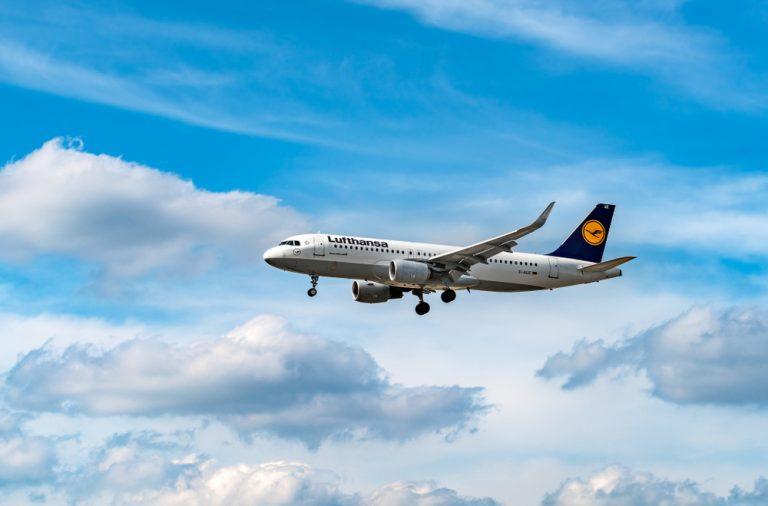
Lufthansa (ETR:LHA) revealed on Thursday a wary revenue and profit guidance for this year after reduced fares and higher fuel prices dampened its 2018 earnings.
The German carrier said that it will slow capacity increases to 1.9% over the summer period. This reduced figure compares to the 3.8% previously predicted, and is an attempt to strengthen prices.
Overall, the group has set its operating margins forecast at 6.5-8%. Additionally, revenue is expected to grow by 4-6%.
The company has said that it will be focusing on achieving sustainable quality growth in 2019.
The stock dropped the most in 4.5 months on Thursday on the back of the announcement.
Last year, adjusted earnings before tax dropped 7% to €2.8 billion, just above the average estimate by analysts of €2.75 billion. The €2.8 billion figure is slightly less than the €3 billion recorded the year before. Lufthansa has said that rising fuel costs and expense incurred through delays and cancellations weighed the figure down.
Germany’s biggest airline also revealed a 1.9% increase in its February passengers when compared to the month prior.
With Boeing’s 737 MAX aircraft grounded across the world following last week’s Ethiopian Airlines crash, Lufthansa will avoid disruption as it does not fly the model.
“We continue to work on further reducing our unit costs year by year,” Ulrik Svensson, Chief Financial Officer of Deutsche Lufthansa AG said. “We managed to do so in 2018 for the third year in a row. We are well equipped to invest in profitable growth and simultaneously further enhance our cost efficiency in the future, too.”
Low-budget carrier Ryanair (LON:RYA) recently warned last month that conditions could get worse. The biggest discounter in region revealed that average fares fell and cost rose, driving a €19.6 million loss during its third quarter.
Many of these costs were attributed to higher fuel costs. Lufthansa warned on Thursday that it expected its fuel costs to rise by €650 million. Its cost reduction is a significant attempt to offset the additional fuel costs it expects to incur.
At 15:22 CET Thursday, shares in Lufthansa (ETR:LHA) were trading at -6.61%
Jaguar Land Rover recalls 44,000 cars over carbon dioxide emissions
Jaguar Land Rover is recalling 44,000 cars over carbon dioxide emission levels, the car maker announced.
The decision came after UK regulators found that 10 Jaguar Land Rover models were emitting more greenhouse gases than indicated.
Affected models include the Land Rover Discovery and Discovery Sport; the Range Rover Evoque, Sport and Velar; and the Jaguar E-Pace, F-Pace, F-Type, XE and XF.
Jaguar Land Rover said it will contact owners to schedule repairs free of cost.
The firm said in a statement:
“Affected vehicles are being rectified to ensure the correct CO2 performance is dependably achieved. The modifications made to affected vehicles will be made free of charge and every effort will be made to minimise inconvenience to the customer during the short time required for the work to be carried out.”
Jaguar Land Rover is not the only car manufacturer to face controversies regarding emissions.
Back in 2015, Volkswagen became embroiled in an emissions scandal after the United States Environmental Protection Agency (EPA) found that cars had been deliberately fitted with devices to cheat testing.
Jaguar Land Rover has been struggling as of late, with falling car demand pushing profits down.
In February, the car manufacturer reported a record quarterly loss of £3.4 billion.
The company cited the economic slowdown in China as a key reason for the disappointing figures.
Jaguar Land Rover is owned by Tata Motors. The firm was formed following a merger between Jaguar and Land Rover back in 2013.
It was previously owned by American car giant Ford.
Shares in Tata Motors (NSE:TATAMOTORS) are currently trading -1.27% as of 12.19PM (GMT).
Savills annual profits fall, shares down
Savills reported its final 2018 results for the year to December-end, sending shares downwards during Thursday morning trading.
The real estate company posted a 10% rise in group revenue to £1.76 billion.
However, statutory profit before tax across the period fell 3% to £109.4 million.
Meanwhile, underlying basic earnings per share was up 3% to 77.8p, compared to 75.8p in 2017.
Savills said it enjoyed strong growth in North America with revenue up 18% and underlying profit up 64%.
Meanwhile, Europe and the Middle East also generated growth across the period.
Commenting on the results, Mark Ridley, Group Chief Executive, said:
“Savills delivered both revenue and underlying profit growth in 2018, driven by a robust second half of the year. In addition to maintaining or growing our share of transactional markets, the performance of our less transactional business lines was key to this performance.
He also warned on the year ahead, emphasising political and economic uncertainty as a key concern for the company looking forward. He continued:
“We have made a solid start to 2019; however, the year ahead is overshadowed by macro-economic and political uncertainties across the world. It is difficult accurately to predict the impact of these issues on corporate expansionary activity and investor demand for real estate.”
In particular, real estate companies such as Savills have suffered from the downturn in the property market in the South-East and in particular the capital.
According to official figures, London house prices fell 1.2 % month-on-month in November, as economic uncertainty continued to deter buyers.
As a result, Ridley warned that sales could fall during the year. He added:
“At this stage, we expect to see declines in transaction volumes in a number of markets and growth in our less transactional business lines; accordingly we retain our expectations for the Group’s performance in 2019.”
Shares in Savills (LON:SVS) are currently -3.79% as of 11:31AM (GMT).
Cadence Minerals shares rise after identifying targets

Cadence Minerals shares rose on Thursday after the company announced it had identified potential targets at its Torrens East Copper Project.
The mineral mining company said that it had completed a review historical geophysical, geological and drilling data at the South Australian project, identifying the targets.
The review indicated that Auroch’s exploration tenure a ‘likely eastern extension of the large Torrens JV gravity anomaly.’
Cadence Minerals CEO Kiran Morzaria commented: “Aidan Platel and his team continue to build the Auroch investment case. As stated in the announcement, recent peer exploration in the region has provided a blueprint for Auroch’s exploration plans, which all contribute towards refining possible future drill targets at Torrens East. We look forward to further developments”
Earlier this month, Cadence Minerals shares ticked up after the firm announced it had acquired three “highly prospective” Lithium Assets in Australia.
The acquisition involved the Picasso, Litchfield and Alcoota projects.
At the time of the announcement, shares rose more than 4%.
Other projects include Sonora lithium, Cinovec lithium, Auroch Minerals, San Luis Lithium, Yangibana Rare Earth project, Macarthur Minerals projects and Greenland Rare Earth Project.
Cadence Minerals is listed on the junior AIM market of the London Stock Exchange.
Shares in the firm (LON:KDNC) are currently +14.29% as of 10:54AM (GMT), as investors react to the update.
Cineworld profits soar on strong US performance

Cineworld (LON:CINE) posted its full-year results on Thursday, revealing a rise in its pre-tax profits boosted by performance in the U.S. Shares in the business were up by over 6.5% during early trading on Thursday on the back of the cinema chain’s strong results.
Beginning operations in 1996, the aquisition of US-based Regal Entertainment earlier last year has made the chain a global operator. The FTSE 250 firm is the second largest cinema chain in the world following the £2.7 billion deal.
In cinema, 2018 saw the release of Avengers: Infinity War, Aquaman, Deadpool 2, Bohemian Rhapsody, Mamma Mia: Here We Go Again, and many more titles.
Pre-tax profits increased by 125% to $349 million for the 12-month period to 31 December. Additionally, revenue soared by 259.1% coming in at $4.12 billion. Its US, UK and Rest of the World divisions grew 8.6%, 3.3% and 3.6% respectively.
In its U.S segment, box office revenue represented 60.5% of total revenue. Hits such as Black Panther, Avengers: Infinity War and the Incredibles 2 drove performance in America. These top three films throughout the year together grossed $1,797 million.
In 2017, the top U.S titles were Star Wars: The Last Jedi, Beauty and the Beast and Wonder Woman, grossing $1285.5 million together.
In the UK, box office revenue represented 65% of total revenue. The three top grossing films for the year were Avengers: Infinity War, Mamma Mia: Here We Go Again and the Incredibles 2.
“2018 was a transformative year for the Cineworld Group,” Anthony Bloom, Chairman of Cineworld Group, commented in its full-year results.
“The acquisition of Regal on 28 February made us into a global operator and the second largest cinema chain in the world. By the end of 2018, the Group was operating 9,518 screens in 790 sites across 10 countries,” he continued.
Cineworld also reported strong figures last year after an increase in demand during 2017.
2019 is set to be an exciting year for cinema as The Lion King, Toy Story 4, Avengers: Endgame and Star Wars are ready to hit screens. The Lego Movie 2, Dumbo, Aladdin, X-Men: Dark Phoenix and Men In Black: International are also being released this year.
Cineworld has said that trading for the current full year remains in line with expectations.
At 09:30 GMT Thursday, shares in Cineworld Group plc (LON:CINE) were trading at +6.71%.
Sports Direct fires back with £150 million Debenhams loan offer
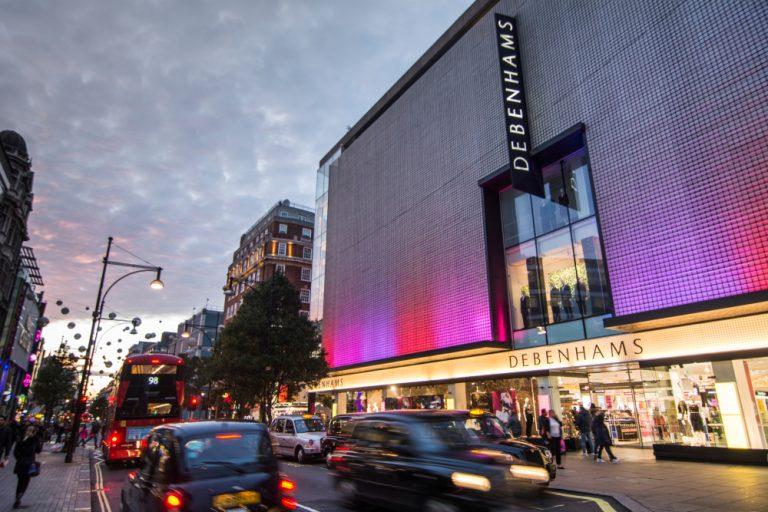
Debenhams (LON:DEB) has been offered a £150 million loan by Sports Direct, latest development in the struggle for control show. In return for the interest free loan, Sports Direct has requested an additional 5% stake in the business and the appointment of Mike Ashley as Chief Executive.
Sports direct (LON:SPD), 61% owned by entrepreneur Mike Ashley, currently owns almost 30% of the struggling department store.
The department store chain announced only two days ago that it was in “advanced” talks with banks to borrow £150 million, in attempt to snatch back control from Mike Ashley. This comes after Mike Ashley moved forward with his attempts to control the department store last week.
In response to Debenhams’s bank loan announcement, it appears that Sports Direct has fired back with an offer to fund the £150 million themselves.
“Sports Direct wishes to confirm that it has made an alternative proposal to Debenhams,” a company statement published yesterday reads.
“Sports Direct would make a £150m unsecured term loan (of 12 months) to Debenhams. Of the total amount of the lending, £40m would be used to repay Debenhams’ £40m bridge facility with an attendant release of security. The remaining £110m would be available for general working capital,” the statement continues.
Sports Direct has offered an interest free loan under the conditions that if Sports Direct increases its share to 35% (by an additional 5%), it will not have to bid for the rest of the company. If its stake is not increased, then the loan would bear a 3% interest.
Regulations demand that a shareholder with a 30% or more stake in a business must make a bid for the entire group. However, this can be avoided through a “whitewash agreement” that requires approval from Debenhams’ independent shareholders. If a whitewash agreement is made, then the Sports Direct loan will be interest free.
In a final sentence, Sports Direct reveals its last request to the department store chain:
“Mr Mike Ashley would become a director and the CEO of Debenhams.”
On Thursday Debenhams issued a spate statement acknowledging the proposal.
As Debenhams continues to struggle amid a tough trading climate, will it give in to Mike Ashley’s demands and lose further control or will it continue to seek funding from banks?
Shares in Debenhams (LON:DEB) were trading at +8.1% at 08:53 GMT Thursday, whilst Sports Direct (LON:SPD) shares were up 1.2%.
Philip Hammond delivers Spring Statement after MPs reject Brexit deal
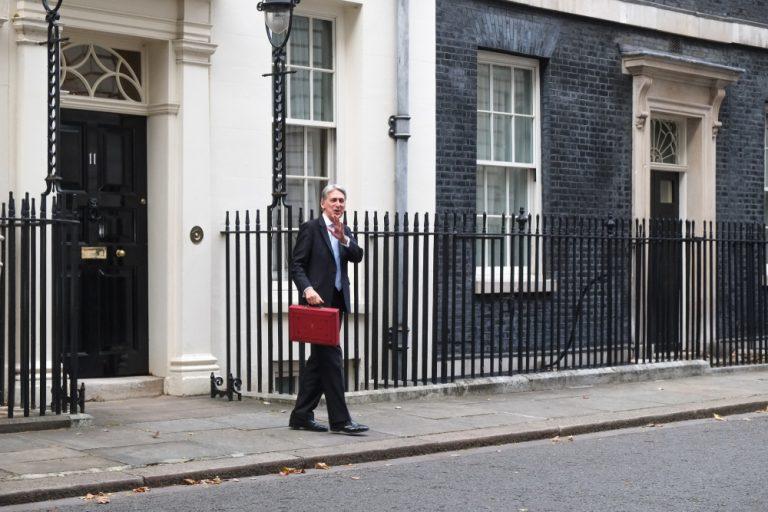
Philip Hammond delivered his Spring Statement on Wednesday afternoon, a day after MPs voted to reject the government’s revised Brexit deal.
In a blow to Prime Minister Theresa May, MPs voted down the prime minister’s deal by 149, a sight improvement from the initial vote back in January.
MPs will next get to vote on whether the UK will depart the EU without a deal.
The PM has said that her Conservative MPs will get to vote freely, without the imposing of a whip.
However, despite Brexit dominating the headlines and Westminster for the past week, the Chancellor presented his highly anticipated Spring Statement to Parliament today, detailing a series of measures.
https://platform.twitter.com/widgets.js Here are some of the key points to take away from today’s Spring Statement: The Economy The chancellor said that the UK economy continued to grow, with nine consecutive years of growth and growth forecast for the next five years. The Office for Budget Responsibility (OBR) also expects inflation to stay close to targets. Nevertheless, Hammond warned that the economy is set to grow at the slowest pace since 2009, back at the height of the financial crisis. Employment Hammond also appeared optimistic regarding employment figures, noting an unemployment figure of 4.0%, which is the lowest rate since 1975. In addition, Hammond said that wages continued to grow faster than inflation. Public Finances The chancellor said that government debt fell last year, with forecasts also indicating further falls to 73.0% of GDP in 2023-24, compared to a high of 85.1% in 2016-17. Tech Another key focus in the Spring Statement was developing the nation’s tech industry. Nevertheless, the chancellor acknowledged the need to challenge the dominance of tech giants in the UK, particularly following the Furman review, an independent study into competition in the digital economy. Hammond said: “The UK will remain a great place to do digital business… …but it will be a place where successful global tech giants pay their fair share… …where competition policy works in consumers’ interests… …and where the public are protected from online harms,” Hammond said he has accordingly asked the Competition and Markets Authority (CMA) to conduct a market study into digital advertising as soon as possible. Hammond also announced the investment of £81 million in Extreme Photonics (state-of-the-art laser technology) at the UK’s cutting-edge facility in Oxfordshire. Alongside this, he announced the setting aside of £45 million for Bioinformatics research in Cambridge as well as £79 million of funding for a new supercomputer in Edinburgh. Keeping Britain Open Despite ongoing uncertainty regarding Brexit, the chancellor flagged keeping the UK open to visitors as a key priority. As a result, the chancellor announced that from June of this year, citizens of the US, Canada, New Zealand, Australia, Japan, Singapore and South Korea will be permitted to use e-gates airports and at the Eurostar terminals, alongside the ending of the use of landing cards. The chancellor said this will minimise airport queues and make the UK a more attractive location for business. The environment Another key focus for this year’s Spring Statement proved the environment. Alongside encouraging smaller businesses to reduce their emissions, the chancellor said it was looking into how to ensure wildlife would be suitably protected when delivering necessary infrastructure and housing. Among other environmentally-friendly measures, Hammond said the government would be introducing a ‘Future Homes Standard by 2025’, which will ensure that new new build homes have low low carbon heating and are energy efficient. Education The Spring Statement also addressed improving Education and Skills. A key measure announced was the provision of free sanitary products in secondary schools to tackle poverty. Housing and Infrastructure Hammond also pledged to deliver on remedying the nation’s housing shortage. He announced that through the Affordable Homes Guarantee Scheme, the government will set permit up to £3 billion of borrowing by housing associations to ensure delivery of approximately 30,000 affordable homes.I’m on my way to Parliament to deliver the #SpringStatement – the government’s response to the forecast from @OBR_UK. I’ll be setting out how we’ll invest in infrastructure, technology, housing, skills, & green energy, to capitalise on the post-Brexit opportunities ahead. pic.twitter.com/bnrwfDBmQl
— Philip Hammond (@PhilipHammondUK) March 13, 2019
88 Energy disappoints investors with Alaska results

88 Energy shares fell on Wednesday after the company updated investors on results from its oil and gas operations in North Alaska.
The company said it had completed the comprehensive wireline logging program at Wink-1, alongside beginning a full petrophysical analysis and review.
According to the results, 88 Energy said provisional analysis indicated ‘low oil saturations in the primary Nanushuk Topset objectives’. As a result, testing and fluid sampling suggested that reservoir quality and fluid mobility proves ‘insufficient to warrant production testing’.
In addition, areas of interest in the Torok formation exhibited similarly low oil saturations.
As a result, the company said that whilst the results indicate that oil is present in the investigated areas, it is not sufficiently mobile.
88 Energy Ltd’s Managing Director, Dave Wall, commented on the analysis: “The early encouragement seen at Winx has not been confirmed by the results from the wireline logging program, despite many of the hallmarks of a successful Nanushuk play being present. Analysis of the data is ongoing; however, it is deemed unlikely to change the current view in a material fashion.
We appreciate that this is disappointing for investors but, at the same time, we look to the future and continue our forward path to ultimate success at our projects in Alaska.
An update will be provided on the broader Alaska project portfolio in the near term.”
Earlier this month, shares in 88 Energy soared more than 20% after the company announced it had reached total depth in Alaska.
Shares in the Australian-based energy company (LON:88E) are currently trading down -34.75% as of 13:15PM (GMT).
Carphone Warehouse hit by £29m fine for mis-sold insurance
Carphone Warehouse has been hit by a £29 million fine after the UK’s financial watchdog said it had mis-sold insurance to its customers.
The Financial Conduct Authority (FCA) found that the mobile phone retailer had encouraged customers to to sign up to its Geek Squad insurance even if they already had alternative cover.
Mark Steward, the executive director of enforcement and market oversight at the FCA, commented on the decision:
“The Carphone Warehouse and its staff persuaded customers to purchase the Geek Squad product, which in some cases had little to no value because the customer already had insurance cover. The high level of cancellations should have been a clear indicator to the management of mis-selling.”
According to the investigation, which covered the period of 1 December 2008 and 30 June 2015, the FCA found that Carphone Warehouse sold £444.7 millions worth of Geek Squad policies to its customers.
In addition, the FCA said a large portion of these plans were subsequently cancelled,
“High cancellation rates are an indicator of a risk of mis-selling which The Carphone Warehouse failed to properly consider,” The FCA said.
Current Dixons Carphone chief executive Alex Baldock, commented on the news:
“We’re obviously disappointed that Carphone Warehouse fell short in the past. But we’re a very different business today; as the FCA acknowledges, we’ve made significant improvements since 2015. We’re committed to stay on that trajectory and to make sure all customers enjoy the right technology products and services for them.”
Baldock has been chief executive of Dixons Carphone as of April of 2018.
Dixons Carphone was formed following a merger between electrical retailer Dixons and Carphone Warehouse in 2014. It is London-listed, and a constituent of the FTSE 250 Index.
Shares in the company (LON:DC) are currently down marginally at -1.05% as of 12:34PM (GMT).