
Vegan sausage roll boosts Greggs sales
Greggs (LON:GRG) has said that the launch of its vegan sausage roll helped boost an exceptional sales performance.
In the seven weeks to 16 February, like-for-like sales surged 9.6%. The launch of its vegan sausage roll and the subsequent publicity surrounding it, helped boost sales as the baked goods company delivered a very strong start to the year.
The vegan-friendly sausage roll is made from meat substitute quorn. It was launched at the start of the year as part of the Veganuary campaign.
Greggs has said that social media channels played a fundamental role in driving its brand awareness strategy. The recent vegan-friendly sausage roll campaign had a strong online presence and was boosted by engagement on social media.
Veganuary is a campaign that encourages consumers to lead a vegan-lifestyle for one month. In this month, consumers are able to observe the health benefits that come with the lifestyle for themselves. Restaurants up and down the country added special vegan-friendly products to their menu for the month as part of the campaign in order to cater for the consumers taking on the challenge.
Hundreds of thousands of vegan sausage rolls were sold in the first week of the product’s launch.
“Whilst there are significant uncertainties in the months ahead, Greggs has started 2019 in great form, helped in part by the publicity surrounding the launch of our vegan-friendly sausage roll,” Chief Executive Roger Whiteside said.
The retailer outlined the growing consumer interest in healthy food choices and the environment which, as a result, is driving the demand for on-the-go snacks that suit different dietary requirements, such as veganism.
The company has said that it has a key role to play in encouraging the turn to healthier food options. It is widening its range of products as gluten-free and vegan-friendly snacks hit its shelves. These products sit alongside Greggs’ Balanced Choice range that offers snacks with less than 400 calories and have strong nutritional values.
Greggs is not the only food retailer to alter its product portfolio to meet the growing health consciousness of consumers.
Last year, the food confectionary business Nestle (SWX:NESN) announced that it was set to make additional cut to sugar, salt and saturated fat quantities in its products, in an attempt to draw in more health-conscious customers. Pepsi also announced that it would purchase the drink-machine maker SodaStream for $3.2 billion to compete against rival Coca-Cola for healthy beverages.
Despite the success of its vegan sausage roll, Greggs has warned of the potential disturbance Brexit could have on its business. The company is stockpiling materials with a long shelf life in case a no-deal disrupts imports.
ECB announces new loan stimulus as it cuts eurozone forecasts
The European Central Bank (ECB) has opted to keep interest rates on hold until 2020 after slashing its forecast for eurozone growth.
The central bank revised its 2019 growth downwards to 1.1%, a significant revision from 1.7%.
Meanwhile, the bank now expects growth of 1.6% as opposed to 1.7% for 2020.
Inflation forecasts were also slashed to 1.2% in 2019, down from from 1.8%, 1.5% in 2020 (down from 1.6%) and 1.6% in 2021, as opposed to the 1.7% initially anticipated.
In addition, the ECB announced low rate multiyear loan measures as it looks to encourage growth in the European economy.
The stimulus, which has been named Targeted Longer-Term Refinancing Operations, will commence in September and end in March 2021, with a two-year maturity.
With regards to future interest rates, the ECB said the following:
“The governing council now expects the key ECB interest rates to remain at their present levels at least through the end of 2019, and in any case for as long as necessary to ensure the continued sustained convergence of inflation to levels that are below, but close to, 2% over the medium term.
Back in December, the European Central Bank announced the end to its quantitive-easing programme.
The bank began the €2.5 trillion stimulus programme back in 2015, following suit from similar actions set in place in the UK and the U.S.
ECB President Mario Draghi is set to speak at a press conference today to answer question on the latest monetary policy decision.
Watch the conference live below:
https://platform.twitter.com/widgets.jsWatch ECB press conference live: President Mario Draghi explains today’s monetary policy decisions https://t.co/ZLG9NjYvfk
— European Central Bank (@ecb) March 7, 2019
Countrywide losses widen, shares dip
Countrywide reported its preliminary results for the year ending December 31 on Friday, with losses widening.
The real estate agent said that group income for the 12-month period was £627.1 million, falling 7%.
Meanwhile, group adjusted earnings before depreciation interest, tax and amortisation halved to £32.7 million.
This was inclusive £2.2 million of charges from a review of assets and liabilities.
Overall, Countrywide said profit after tax totalled £218.2 million, compared to £207.3 million reported back in 2017.
The firm said that this stemmed from £245.4 million of ‘principally non-cash exceptional charges for goodwill, intangible and other asset impairments.’
In addition, net debt at the end of December came in at £70.7 million, an improvement from £196.4 million a year ago.
Executive Chairman, Peter Long commented on the figures:
“We have been encouraged by the progress made in 2018 in resetting the business as part of our return to growth strategy. The principles within “back to basics” in Sales and Lettings resulted in growth in the register and the sales pipeline in the UK, coupled with an increase in market share of listings.
Mr Long added that market weakness in the final quarter of the year was largely as a result of uncertainties relating to Brexit, with headwinds continuing into the new year.
He said: “As a result, we are experiencing further slow-down in residential and commercial property transactions particularly in London and the South, which will affect our H1 EBITDA by some £3 – £5 million.”
Countrywide is headquartered in Chelmsford, Essex. It operates over 850 estate agents and letting offices across the country. It is listed on the London Stock Exchange.
Shares in Countrywide are currently -9.11% as of 13:39PM (GMT).
Calvin Klein to end Ready-To-Wear collection
Calvin Klein has announced the end of its runway fashion collection, fresh on the heels of the departure creative director Raf Simmons late last year.
The American fashion brand has said it will instead focus its efforts on its more profitable underwear and jeans categories.
Earlier this month, the company said it would be closing the doors of its 654 Madison Avenue store.
According to reports, the decision to end the Calvin Klein Collection entirely will potentially result in the loss of 100 jobs across New York and Milan.
In December last year, Chief Creative Officer Raf Simmons left Calvin Klein after two years at the company.
During his time at the company, Simmons opted to change the name of the Calvin Klein Collection to Calvin Klein Collection to Calvin Klein 205W39NYC.
However, Simmons eventually announced his departure after the CEO of parent company PVH Corp, Emanuel Chirico, said he was “disappointed by the lack of return on our investments in our Calvin Klein 205W39NYC halo business.”
Prior to his time at the company, Simmons lead the creative vision at Dior and Jill Sander.
In its third quarter results for 2018, the brand said pre-tax earnings fell to $121 million, compared with $142m for the same period a year ago.
Meanwhile, revenues increased 2% to $963 million over the course of the year.
Quiz shares crash after profit warning

Quiz issued a profit warning for the year, sending shares in the clothing retailer downwards.
The fashion company said in a trading update that sales between January 1 and March-end had witnessed a ‘significant shortfall’. This was attributed to an ‘uncertain consumer spending backdrop’.
Whilst sales were boosted by an increase in online revenue of 16.2%, Quiz noted that this was offset by an 11.1% decrease in revenue from standalone stores and concessions.
As a result, group revenue during the period fell by 1.7%, compared to the a year ago.
Consequently, Quiz said it now expects full-year profits of £4.5 million, as opposed to the £8.2 million originally anticipated.
Tarak Ramzan, Chief Executive Officer, commented:
“Whilst the Board remains confident in the strength and appeal of the QUIZ brand, as demonstrated by our continued sales growth online, this has been a highly disappointing trading period for the Group. As a result, the Board will be reviewing all aspects of the business over the coming months to ensure that we can deliver the Group’s long-term potential despite the changing consumer backdrop and challenging trading conditions.”
Alongside weaker sales, brands such as Quiz are also faces a backlash over the ethics of so-called fast fashion, with many questioning its sustainability.
Moreover, traditional retailers are facing increased competition from their online only rivals, with brands such as PrettyLittleThing, Boohoo and ASOS (LON: ASC) all dominating the market.
Quiz was founded back in 1993 in Scotland. It has over 250 shops across the UK, Europe and Asia.
Shares in the retailer (LON:QUIZ) are currently trading -52.96% as of 10:28AM (GMT), as the market reacts to the trading update.
Cobham resumes dividend but profits fall

Defence and aerospace business Cobham (LON:COB) has announced its plans to reinstate a progressive dividend, despite latest reports of a fall in profits.
The british manufacturing company based in Dorset said that over the 12-month period to 31 December, underlying operating profits dropped to £196 million from £213.1 million a year prior.
Revenue came in at £1.86 billion, but was impacted by divestments and “adverse” currency translation, the company said.
Cobham has, however, outlined its intention to reinstate a progressive dividend, with full-year dividend expected to be 1.0p a share. It overall expectations for its 2019 progress remains unchanged.
The FTSE 250 company is the third largest defence firm in the UK behind Rolls Royce (LON:RR) and BAE Systems (LON:BA).
“We can see the benefits of our improvement actions starting to come through across most of the business, particularly so in Mission Systems. However, Advanced Electronic Solutions underperformed. We have strengthened its management, increased the focus on execution and formulated an overhead cost reduction plan,” Cobham Chief Executive Officer, David Lockwood, commented.
“We have also set out a new capital allocation policy, which establishes a prudent approach to gearing and prioritises organic investment. We anticipate resuming dividend payments with our next interim results,” he continued.
He said that the board’s expectation for progress this year remain unchanged, and continues “to believe that there are considerable opportunities to improve the performance of the Group over the medium term and our continuing focus on customers, culture, operational improvement, business simplification and cash will allow us to realise this potential.”
In February, Cobham said it would take an additional £160 million profit hit following its settled dispute with the aircraft giant Boeing (NYSE:BA). The dispute over its delayed KC-46 refueling program comprised of £86 million relating to settlement of the dispute, and £74 million in additional costs to complete the contract.
At 09:44 GMT Thursday, shares in Cobham plc (LON:COB) were trading at -2%.
Nationwide set to invest in ex-Barclays boss’ fintech start-up

Nationwide (LON:NBS) is set to take a £15 million stake in the fintech start-up founded by Antony Jenkins, the ex-Barclays boss.
The announcement is set to be revealed later today by both parties, but was learnt in advance by Sky News.
Last year the UK building society unveiled its £50 million fintech fund, which was set to be invested in promising financial technology start-ups. Nationwide said that the fintech fund is part of its plan to remain ahead of innovation in order to start ahead of its rivals on the high street and its growing digital competitors.
The fund it not only to profit financial support to the selected fintech start-ups, but it also comes with direct product development support.
“By investing in early stage startups, we can be at the forefront of helping develop innovative products and services that will benefit our members both now and in the future,” Nationwide deputy CEO Tony Prestedge commented.
Today, it is set to announce its purchase of a minority shareholding in 10x Future Technologies, the fintech start-up founded by the former Barclays Chief Executive. It will be part of a larger funding round established by the start-up in order to raise capital and drive expansion.
The start up was established by Antony Jenkins in 2016, who saw the opportunity to establish a technology business as high street banks struggled.
Nationwide itself has 650 branches across the UK. The partnership intends to pave Nationwide’s way into small banking which is being significantly moulded by technology.
Currently companies such as Monzo and Revolut are leading the way in UK fintech. The former is a mobile-only bank that operates through a mobile app and a prepaid payment card, whilst the latter of the two offers banking services including currency exchange and similarly operating with a prepaid card.
Brexit: insurers Aviva and Admiral warn of risks
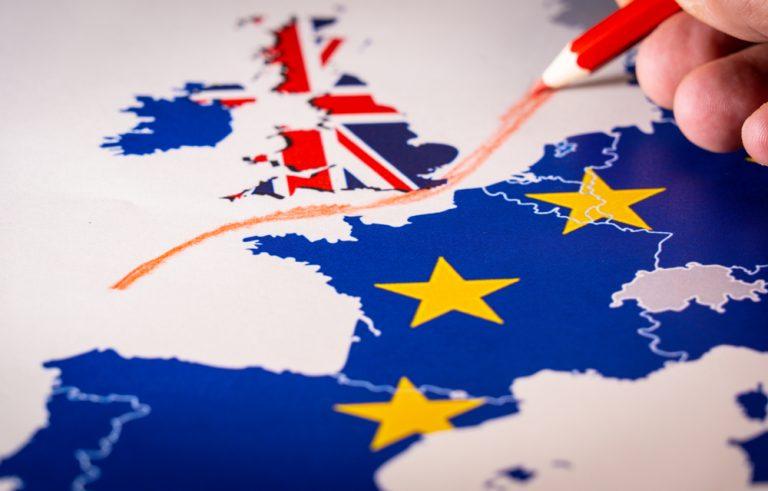
Insurers Aviva (OCTCMKTS:AVVIY) and Admiral (LON:ADM) have both warned of the impacts Brexit could have on their businesses.
With three weeks to go until the official departure date, Aviva has warned that the uncertainty surrounding Brexit, and its unknown future impacts, on the British and European economy, has “muted” its near-term outlook.
Additionally, the insurer said it would be difficult to sustain the same momentum of growth that it has seen in each of the past two years.
Aviva’s warning comes amid a 2% rise in its 2018 adjusted operating profit to £3.1 billion, which was driven by a strong performance across its major market.
Elsewhere in the sector, car insurance specialist Admiral also issued a Brexit-related warning, predicting the potential economic chaos that could arise if a “hard Brexit” is pursued.
Admiral reported an 18% jump in pre tax profit to £479.3 million, but did say it was bracing itself for a potential Brexit-induced recession.
“[The] group has performed a stress exercise for its Brexit assessment of the impact of a recession through 2019 on the UK insurance business,” Admiral said.
Market volatility, free movement of people between the UK and EU, impacts on the import of car parts, capital position and future dividend payments were all flagged as potential risks of the departure from the EU.
Both FTSE 100 insurers are not alone in expressing their fears surrounding Brexit uncertainty.
Outside of the insurance industry, Aston Martin (LON:AML) became the latest company to outline its Brexit contingency plan. It said that it would reserve up to £30 million as part of its no-deal plan. Whilst Ford (LON:F) said in January that a hard Brexit could cost it up to £615 million in 2019 alone.
As the nation braces itself for the UK’s departure from the EU, growing economic uncertainty looms.
At 08:35 GMT Thursday, shares in Admiral Group plc (LON:ADM) were trading at -3.29%.
Paragon Entertainment shares slide after revising guidance
Paragon Entertainment shares took a tumble during Wednesday trading after the firm revised its 2018 guidance downwards.
According to the update, the firm said it now expects revenue of £8.8 million to £9.2 million, compared to previous guidance of £9.5 million to £9.8 million.
As a result, Paragon Entertainment now expects earnings before interest, depreciation and amortisation of £2.3 million to £2.5 million, widening from previous expectations of £2.1 million.
Pre-tax losses are now expected to be in the region of £2.5 million to £2.7 million.
Paragon Entertainment is set to report its full year results later this year in May.
Looking ahead, the company said it expects to return to growth in 2019, with its order book remaining ‘strong’.
Paragon Entertainment is the holding company of Paragon Creative. Paragon Creative specialises in providing design and building for museums, theme parks, as well as aquariums and zoos.
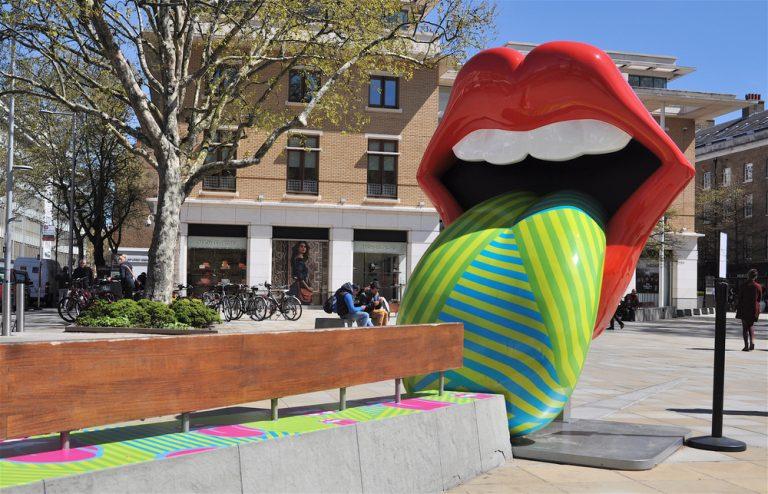
Some of its projects have included the Rolling Stones Exhibitionism at the Saatchi Gallery in London, designing and building Kidzania, London, the Olympic Museum in Lausanne, Switzerland as well as the Dig It concepts all over the globe.
Paragon Entertainment (LON:PEL) shares are currently down -15.15% as of 14:21PM (GMT).
Elsewhere in the markets, Paddy Power Betfair (LON:PPB) announced it is considering a name change to Flutter Entertainment, sending shares upwards.
Meanwhile in the energy sector, 88 Energy shares (LON:88E) rallied after the firm confirmed it had reached total depth at its well operations in Alaska.
Paddy Power Betfair considers name change
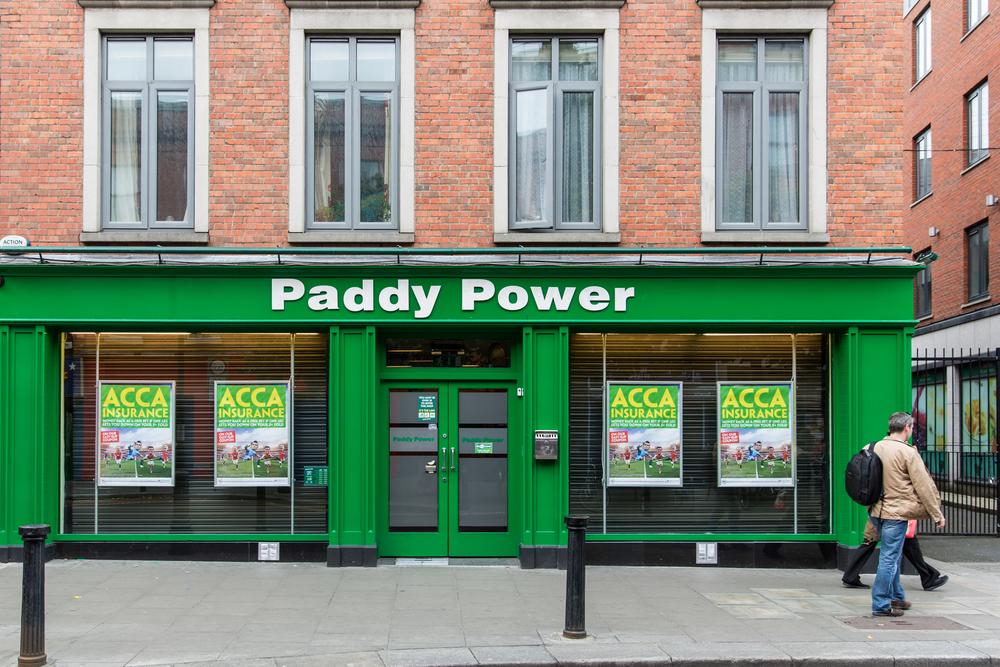
Paddy Power Betfair announced on Wednesday it is considering changing its name to Flutter Entertainment in a bid to “reflect the increased diversity of our brands and operations”.
The betting firm announced the proposal in its preliminary annual results for 2018.
According to the figures, revenue was up 7% to £1.9 billion on a year-to-year and 9% on a currency currency basis.
Paddy Power Betfair said revenue was up 5% on online channels and 6% in Australian markets.
However, pre-tax profits were down 11% to £219 million compared to £247 million a year ago.
The company added that reported earnings per share were 6% lower, largely as a result of investment in the US.
Peter Jackson, Chief Executive, commented:
“I’m really pleased with the way that the Group performed in 2018 in what was a challenging year for the sector with regulatory and tax changes. Our collection of challenger brands are well positioned in their local markets.
Paddy Power has regained its mojo, taking share following product improvements and some of our “classic” marketing. Betfair, our unique combination of product that appeals to customers around the world, will be improved by our ongoing investments in languages and localisation.”
Introducing the intended name change, Jackson said: “With a growing portfolio of brands, we plan to rename the Group as Flutter Entertainment plc. There are no plans to use this historical name for consumers, and we will seek shareholders permission for the change at our forthcoming AGM.”
Paddy Power Betfair (LON:PPB) are currently +1.20% as of 13:00PM (GMT), as investors react to the announcement.