
Shield Therapeutics appoints new chairman

Pharmaceutical company Shield Therapeutics (LON:STX) released a stock market announcement on Tuesday outlining the appointment of a new Chairman. Indeed, James Karis has been appointed as the new non-executive Chairman of Shield Therapeutics.
James Karis has been on Shield Therapeutics’ board of directors for almost three years. He brings to the pharmaceutical company over 35 years of experience in the pharmaceutical, healthcare services, technology and medical device industries.
The former Chairman, Andrew Heath, stood down from his position at the company’s AGM.
James Karis commented on his appointment as Chairman of Shield Therapeutics:
“It is exciting to take on an expanded role as Chairman of Shield Therapeutics during a time when the Company has several important milestones on the horizon. I look forward to working with the rest of the Board and management team in continuing our efforts to provide a unique therapy benefiting patients around the world while making Shield a success for its shareholders.”
Sirius Minerals restructures financing for Yorkshire potash project

Sirius Minerals plc (LON:SXX) announced a fourth-quarter trading update on Tuesday. In the update, Sirius Minerals has agreed to revise the terms of a potential $3 billion funding round for its flagship fertilizer projects in Yorkshire, United Kingdom.
The company said it has been communicating with prospective lenders throughout the process, revising certain aspects of the proposed $3 billion “stage 2” senior debt financing. This is in order to modify the credit risk allocation amongst the company’s prospective lenders.
The original financing structure planned to equally divide the financing between one commercial bank tranche, and one IPA (Infrastructure and Projects Authority) guaranteed tranche. The latter is a scheme from the British government that aims to support infrastructure projects. The new structure will divide the financing in three ways – the first will be an uncovered debt capital markets tranche, the second a commercial bank tranche, and the third will be the IPA guaranteed bond tranche.
What the new financing structure essentially indicates is that the UK government will play a smaller role in financing the project.
On the 31st December 2018, Sirius Minerals’ cash balance was £290 million.
£230 million of which is unrestricted, providing sufficient liquidity to fund project progress. Managing Director and CEO of Sirius Minerals, Chris Fraser, commented on the trading update: “2018 was a year of significant progress for the Company. Completion of procurement to support the stage 2 financing and the signing of an additional 4.8 Mtpa of take-or-pay supply agreements, have been substantial achievements. Considerable progress has been made across all our construction sites and development activities are advancing at pace. More than 800 people are now employed on the Project, demonstrating the transformational potential for jobs and growth in the local area. “Executing our stage 2 financing plan remains our priority. We continue to make progress towards obtaining stage 2 financing commitments and are working constructively with all relevant parties to achieve this. The process with the lenders is continuing this quarter as we work through the due diligence reports with the lending group and progress discussions on the revised debt structure.” In September, Sirius Minerals agreed a potash supply deal with Cibra. Recently, it showed off its mineral transport tunnel at its £4 billion Woodsmith fertiliser project. At 09:33 GMT Tuesday, shares in Sirius Minerals plc (LON:SXX) were trading at -2.55%.Gatwick drone sightings cost EasyJet £15m
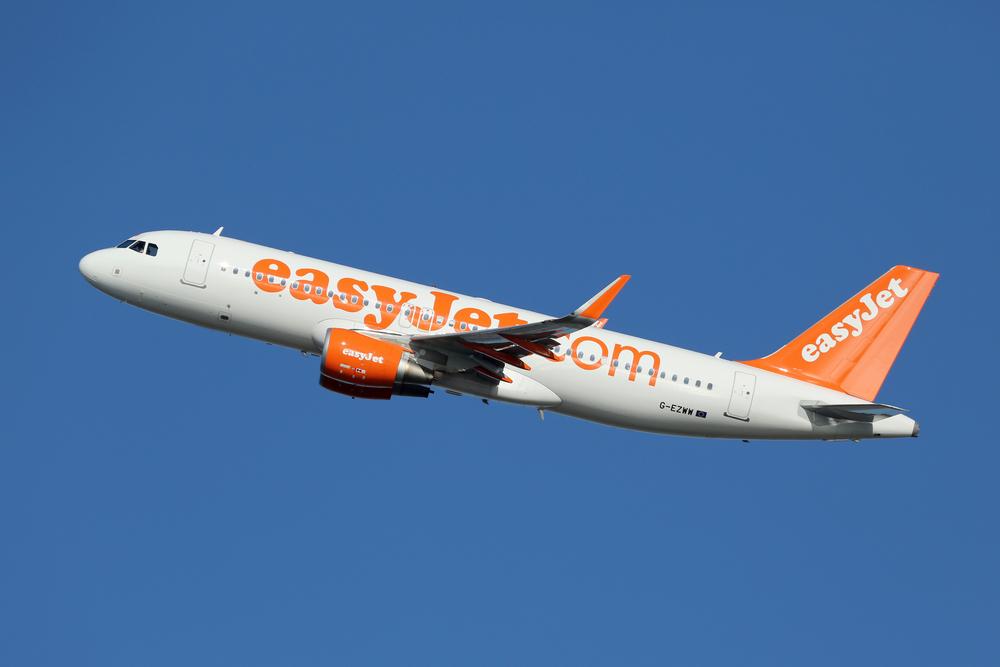
EasyJet revealed on Tuesday that the Gatwick drone sightings cost the airline £15 million.
In a trading update, the budget airline said that it spent £10 million in customer welfare costs and lost £5 million in revenue.
The chaos around the drone sightings forced the airline to cancel 400 flights over the Christmas period, affecting 82,000 passengers.
“With 82,000 customers disrupted we were disappointed it took such a long time to resolve. It was a criminal act, an illegal activity, and to some extent, you can’t always protect yourself from that,” said Johan Lundgren, the chief executive.
“We can never guarantee these things won’t happen again but the airports now are better prepared – Gatwick has acquired the sound system that is in place and there is general readiness and preparedness in place by the authorities,” he added.
Despite sharing the financial hit of the drone chaos, the EasyJet trading update shared positive news and confidence amid Brexit uncertainty.
The airline said it has seen a “robust” demand from passengers, with numbers rising by 15% to 21.6 million for the last three months of 2018. Passenger revenue grew by 12.2%.
Pre-tax profit is expected to be in line with market expectations of £580 million.
“For the first half of 2019, booking levels currently remain encouraging despite the lack of certainty around Brexit for our customers,” said Lundgren.
“Second half bookings continue to be ahead of last year and our expectations for the full year headline profit before tax are broadly in line with current market expectations.”
Shares in the group (LON: EZJ) are trading +4.22% (0925GMT).
Time Out sells Flyt stake to Just Eat

Global media and entertainment business, Time Out (LON:TMO), announced on Tuesday that it has completed the sale of its stake in Flyt Limited. Indeed, it has sold its share in the leading systems integration platform provider to the global online takeaway delivery market place, Just Eat.
Time Out has received £9.6 million proceeds for its entire stake in Flyt Limited, which represents a £4.5 million profit on disposal.
Tom Weaver, CEO of Flyt, said:
“I would like to thank the team at Time Out for their support over the last three years. During this period, we have significantly grown the business which now supports thousands of restaurants in both Europe and North America. We are excited to be part of Just Eat and look forward to working with them and our other partners to further develop the business”.
Time Out invested in Flyt back in July 2015. Over the period of Time Out’s investment, Flyt significantly scaled its operations. Its revenues have grown and it expanded to more than 3,000 quick service and branded restaurants.
The company has said it will use its proceeds from the sale to invest in one of its leading strategic priorities – the global rollout of Time Out Market. This is following the success of the first site in Lisbon, attracting 3.6 million visitors in 2017.
Time Out is set to open five new Time Out Markets in North America alone in 2019. These will be located in Miami, New York, Boston, Chicago and Montreal. The company has lined up “some of the cities’ top chefs” for the loction set to open in Miami, New York and Boston.
CEO of Time Out, Julio Bruno, commented on the sale:
“We would like to thank Flyt founders Tom Weaver and Chris Evans and the wider team for their excellent work in developing their business during the last three years. Just Eat’s investment announced today proves that this is a success story and we are proud to have been part of it. We wish them all the very best as they take the business forward to the next phase of growth in partnership with Just Eat”.
Just Eat has been in the spotlight recently following the unexpected resignation of its chief executive. Shares fell 2.3% on the back of the announcement, following a trend of decline as shares dip 18% over the past year. Despite this, Just Eat has remained positive on its trading, suggesting that group earnings will be ahead of market expectations.
Pets at Home third-quarter revenue grows

Veterinary and pet product business, Pets at Home (LON:PETS), released a trading statement on Tuesday outlining it figures for its third-quarter. For the 12 weeks to the 3rd January, revenue increase has put the company in a strong position to meet its annual profit guidance. Shares in the company began to rise during early Tuesday trading.
Group revenue grew 6.3%, compared to the same period a year earlier, up to £237.2 million. For its retail division, revenue was up 5.5% to £213.4 million. Additionally, its vet group revenue increased 13.6% to £23.8 million.
Group like-for-like revenue grew 5.1%. Retail like-for-like revenue grew 4.7% whilst vet group like-for-like revenue increased by 9.1%.
Pets at Home has said that it may consider increasing its inventory, holding by up to £8 million, in light of the uncertainty surrounding Brexit.
These results are an initial sign of recovery compared to the 81% crash in profits during the first half of the company’s financial year. The 81% drop meant that profit before tax fell from £40.8 million a year earlier to just £8 million. Likewise, its full-year results for its previous financial year were also disappointing, with a 17% fall in pre-tax profits. The company still expects to produce an annual pre-tax profit between £80 million – £85 million. Peter Pritchard, Croup Chief Executive Officer, commented on the results: “Momentum in Retail accelerated over the festive period, culminating in the biggest trading day of our entire history on the Saturday before Christmas. Our omnichannel business delivered exceptional performance, benefitting from investments made earlier in the year, including a new mobile website. This resulted in 4.7% like-for-like growth in Retail, an impressive 11% growth on a two year basis. In such a challenging climate, this performance was only made possible through the hard work of our colleagues across the business.” “We saw good customer revenue growth across our entire Vet Group. In November, we reiterated the big opportunity to accelerate the maturity of our vet practices, but this needs to be achieved in a more sustainable way. As such, I am particularly pleased with how the recalibration of the Vet Group is taking shape; the engagement from JVPs has been positive and we have made good progress in our discussions with buyback practices.” “We also celebrated another milestone as we reached £10m raised for national and local animal charities through our VIP loyalty club since its launch in 2012, another fantastic achievement.” “We are working closely across the Group to maximise our assets and data as a pet care business, delivering initiatives that are resulting in an even better experience for customers. With the Executive Team appointments now complete, I know that we enter 2019 with growing momentum and we are well placed to deliver on our plans and commitments.” At 08:28 GMT Tuesday, shares in Pets at Home Group plc (LON:PETS) were trading at +5.99%.House of Fraser sales fall 60% over Christmas
House of Fraser has revealed a sharp drop in sales over the Christmas trading period.
Figures from Kantar Worldpanel, as reported by The Sunday Telegraph, reported a 60% fall in sales in the 12 weeks to 18 December.
This is the first Christmas results from House of Fraser since Sports Direct (LON: SPD) boss Mike Ashley bought the chain in 2018 in a £90 million deal.
Ashley has also recently acquired Evan’s cycles and is in talks to buy music chain HMV.
Evans was bought by Ashley in October. He said at the time: “We are pleased to have rescued the Evans Cycles brand.”
“However, in order to save the business we only believe we will be able to keep 50% of stores open in the future. Unfortunately some stores will have to close.”
Christmas sales were generally weak across the board, with Debenhams (LON: DEB) reporting a 5.7% fall in like-for-like sales over the festive period.
Just Eat positive on trading, forecasts revenue higher than market estimates

Just Eat (LON:JE) released a trading on Monday that suggested the groups earning were going to be ahead of market estimates.
The group also announced Peter Plumb would be stepping down as CEO to be replaced by Peter Duffy as interim CEO. Peter Duffy is currently the chief customer officer.
Just Eat said 2018 had been ‘transformational’ and now expected full year revenue to be £780 million. This would represent a near doubling in revenue from just two years ago (2016FY revenue £375m)
Revenue growth is to be driven by an anticipated 221 million orders.
Just Eat predicts the grow in orders and revenue will produce EBITDA in the region of £172 -£174 million.
Chairman Mike Evans commented on the update:
“The Board would like to thank Peter Plumb for setting Just Eat on a new course which better places it to address a much larger and rapidly expanding market. We wish him well for the future.
“Peter Duffy and the senior leadership team will continue to drive the execution of our strategy, which has the full backing of the Board. Peter Duffy and Paul Harrison, Chief Financial Officer, will provide a full update to the market at our full year results.”
Peter Plumb, outgoing CEO said:
“2018 was another year of strong growth for the Group. The business is in good health, and now is the right time for me to step aside and make way for a new leader for the next exciting wave of growth.”
Following pressure from shareholders, Just Eat said it will exclude joint venture operations in Brazil and Mexico from 2019 FY results onwards.
Despite this omission, the group expects revenue for 2019FY to be in the £1 billion – £1.1 billion region, representing a slowing in top line sales from prior year’s growth.
Just Eat is set to release 2018 full year earnings 6th March.
William Hill warns of lower annual profits, shares fall
William Hill shares fell on Monday morning after the betting firm said annual profits are likely to be lower than last year.
The group has blamed tighter laws on customer due diligence online and a fall in high street sales.
William Hill chief executive, Philip Bowcock, said:
“2018 was a pivotal year for both William Hill and the wider industry. We now have greater clarity around the key challenges and opportunities for our business.
“In 2019 we will remodel our retail offer while building a digitally-led international business, underpinned by a sustainable approach as part of our nobody harmed ambition.”
Russ Mould, who is the investment director at AJ Bell, said: “Sympathy is likely to be thin on the ground but the latest update from William Hill shows it is not easy being a bookmaker in the UK. Confirmation that profit fell in 2018 should not be a major shock give the regulatory challenges faced by the company, perhaps most notably with the cut in maximum stakes on fixed odds betting terminals.”
“This will necessitate a big restructuring of the company’s high street business in 2019. Key to its hopes of returning to a sustainable growth path are its efforts to expand in the US, where the rules are generally being loosened, rather than tightened as they are in the UK. It is no surprise to see investment being poured into this expansion,” he added.
Shares in William Hill (LON: WMH) are trading -3.09% at 170,20 (1329GMT).
Just Eat shares dip on CEO resignation

The chief executive of Just Eat has unexpectedly resigned.
The takeaway ordering website revealed the news on Monday morning that Peter Plumb will be leaving the group with immediate effect.
Plumb is leaving the group just 16 months after joining from MoneySavingExpert.com.
Shares fell 2.3% on the back of the news and have fallen 18% over the past 12 months.
Peter Duffy, Just Eat’s chief customer officer, will replace Plumb whilst the group searches for a replacement.
In the trading update released on Monday, Just Eat said that it expects a 2018 revenue of £780 million and underlying core earnings between £172 million and £174 million, ahead of analysts’ consensus forecast.
In a statement, Plumb said: “2018 was another year of strong growth for the group. The business is in good health, and now is the right time for me to step aside and make way for a new leader for the next exciting wave of growth.”
Chairman Mike Evans said: “The board would like to thank Peter Plumb for setting Just Eat on a new course which better places it to address a much larger and rapidly expanding market. We wish him well for the future.”
“Peter Duffy and the senior leadership team will continue to drive the execution of our strategy, which has the full backing of the board. Peter Duffy and Paul Harrison, chief financial officer, will provide a full update to the market at our full year results.”
Russ Mould, who is an investment director at AJ Bell, said on the news: “The departure of Peter Plumb as chief executive of Just Eat after less than a year and a half in the job is the latest hiccup for the previous stock market darling. At first glance, remarks from Plumb that now is the right time for him to step aside seem a bit odd given the short amount of time he’s been in the role. However, his departure isn’t a surprise given how the company’s share price had lost upward momentum under his tenure, plus the business had come under attack from activist investor Cat Rock.”
“Cat Rock had complained that Plumb had been in the job for more than a year and that shareholders were still waiting for Just Eat to announce appropriate financial goals and for the board to hold management accountable with a properly aligned remuneration package. Although there is no reference to the activist investor in Plumb’s departure announcement, one can certainly speculate the events are linked,” he added.
Shares in the group (LON: JE) are currently trading down 0.73% at 653,60 (1256GMT).
How the internet has opened up investment

The past two decades have seen the number of active traders grow from a few thousand to an astonishing 9.6 million. What has made this possible? Academics can give you lots of different reasons but most of them boil down to one thing: the internet. By making trading more accessible, improving traders’ skills and supplying the information they need for success, it has enabled many more to get involved and stay involved, radically changing the financial markets. How did it happen and what does it mean for traders operating today?
Access to trading
There used to be a lot of barriers making it difficult for the average person to be involved in investing, but a combination of technology and consumer pressure has begun the process of breaking them down.
- Affordability – investors used to need around $150,000 just to get started. Now you can start with just $150, including the cost of paying broker fees, though it’s wise to spend more if only to ensure that you have good equipment.
- Location – it’s no longer necessary to be in a city with a stock exchange – the internet lets you trade from anywhere you can get a connection. This also cuts down costs because you don’t need to be able to afford big city accommodation.
- Time – Traders used to be restricted to trading nine to five – or fewer hours – in their own countries. Now you can trade through exchanges all around the world and there’s almost always somewhere open for business, so it’s easier to do it alongside a day job.