Despite a mixed set of figures, Chief Executive, Rowan Gormley, said it was a “pivotal moment” for the firm.
“We are at a crossroads in the Company’s history. As laid out in March, we have taken the difficult but important decision to focus on Naked and exit from Majestic. As at the date of this announcement, our intention is to sell the business and we are at an advanced stage with multiple bidders. A further update will be provided if and when negotiations conclude at which point we will seek shareholder approval to move ahead.”
Gromley added that if they were unable to complete the process by the summer, Majestic will continue to operate the businesses independently.
Majestic Wine swings to loss, shares plunge

Majestic Wine reported its results for the full-year, swinging to a £8.5 million loss, amid a “tough market”.
The specialist wine retailer revealed that group revenue rose 6.3% to 506.1 million during the 52-week period to April 1.
Nevertheless, Majestic Wine ultimately reported a loss, down from a £8.3 million profit the year before.
This was attributed to increased investment in its Naked Wines business, as well as lower year-on-year retail profitability.
Ultimately, the company said that its Naked Wines acceleration plan remained “on track”, with underlying revenue growth of 1.5%.
Back in March, the firm announced it would be closing stores, and instead shifting its focus on developing Naked Wines, which it purchased back in 2015 for £70 million.
On Wednesday, shares in Majestic Wine jumped amid speculation of a takeover by US hedge fund Elliot Advisors.
Elliot Advisors currently owns Waterstones, and it recently acquired US bookstore chain Barnes & Noble.
Investors proved less than impressed with the figures, with shares falling.
Shares in Majestic Wine (LON:WINE) are currently trading -6.92% as of 11:27PM (GMT).
Arcadia saved from admistration as landlords back rescue plan

Arcadia avoided collapsing into administration this week after landlords and creditors voted in favour of Sir Philip Green’s rescue plan.
The restructuring deal will see Arcadia close 48 stores, costing thousands of jobs.
It will also mean rents for its locations will be cut by as much as 70%.
However, this aspect of the deal proved the most controversial, with landlords such as Intu, the owner of various shopping centres, opposing the company voluntary arrangement (CVA).
Intu said: “We firmly believe that the terms . . . are unfair to our full-rent-paying tenants and not in the interests of any of our other stakeholders.”
Arcadia owns various retail brands such as Topshop, Burton, Miss Selfridge and Dorothy Perkins.
The retail giant has been struggling to compete amid an increasingly saturated market and the rise of online competitors such as Asos (LON:ASC), Boohoo and PrettyLittleThing (LON:BOO).
Whilst Topshop has continued to attract shoppers, some of its other brands such as Dorothy Perkins and Wallis have lost relevance among its target market.
Sales fell by 16.6% year on year in the three months to 18 November 2018, and in 2017, the group posted a £10.9 million loss.
Meanwhile, its chairman Sir Philip Green has been under intense scrutiny amid a series of controversies, in particular the company’s handling of the closure of BHS.
Sir Green came under fire after the collapse of BHS led to a pension deficit estimated at £571 million, with many calling for his knighthood to be removed.
Rt Hon Frank Field MP, Chair of the Work and Pensions Committee, commented on the landlord’s decision: “Now that, thankfully, Arcadia’s life has been extended, the Committee will try to ensure that the Pensions Regulator gets an effective programme in place to ensure that Arcadia staff receive in full the pensions that Sir Philip and Lady Green have promised them.”
Conservative leadership race: What have the frontrunners pledged so far?
It has proved a busy week for the Tory party and Westminster, with various Conservative leadership hopefuls launching their official campaigns.
So, what have some of the key contenders promised thus far?
Boris Johnson
Boris Johnson is widely considered the favourite to succeed May, with an estimated 79 MPs backing him so far.
This means the former Foreign Secretary has more than enough support to succeed to the next round of the race.
After weeks of uncharacteristic silence from Johnson, who is well known for his often superfluous use of language, he finally launched his campaign on Wednesday.
Earlier this week Johnson’s camp unveiled his first policy – tax breaks for high earners – which has garnered a rather flat reception, and raised questions over the Eton alumni’s priorities.
At Wednesday’s speech, Johnson was keen to projected a more considered and statesman-like image, with a prepared and measured speech.
Whilst vague on details, Johnson said that he thinks that the country must prepare for a no-deal, however it is not something he would be aiming for.
He did however pledge to take the UK out of the EU by the 31st October deadline.
Jeremy Hunt
Foreign Secretary Jeremy Hunt also launched his bid to become Conservative leader this week.
He was heavily criticised over the weekend after Hunt said he was in favour of a shortened abortion termination limit.
Nevertheless, Hunt has since secured the backing of some heavy hitters such as Amber Rudd and Penny Mordaunt, who both introduced Hunt at his lunch.
Despite campaigning in flavour of Remain in the referendum, Hunt pledged to deliver Brexit, and securing the backing of Mordaunt, an ardent leaver, will no doubt bolster the credibility of this claim.
In addition, Hunt committed to abolishing illiteracy and increasing defence spending.
Michael Gove
Despite early momentum, Gove’s campaign was almost derailed on the weekend after the Former Education Secretary admitted to cocaine use.
However, Gove attempted to bounce back this week insisting that he was “in it to win it”.
Among many of his policy proposals, Gove said he would abolish business rates for small and medium-sized businesses (SMEs).
He also took aim at rival Johnson’s tax cut plans, stating:
“One thing I will never do as prime minister is to use our tax and benefits system to give the already wealthy another tax cut.”
Despite various veiled digs aimed at former ally Johnson, Gove was careful not to mention his opponent by name.
With respect to Brexit, Gove said that whilst he would aim for a 31 October exit from the EU, he would not hesitate to extend the deadline if it proved necessary.
He also criticised current leader Theresa May for triggering the Article 50 process too soon. Famously, Gove was seen as one of the key figure in the VoteLeave campaign.
Dominic Raab
With the support of some 23 MPs thus far, former Brexit Secretary Dominic Raab is also considered to be a key contender.
As an ardent Brexiteer, he will appeal to the Eurosceptic wing of the Conservative party, and perhaps more crucially, the growing support base of Nigel Farage’s Brexit Party.
At his launch, Raab said he would prioritise tax cuts for lower paid workers, perhaps alluding to Boris Johnson’s much criticised tax cut policy.
He also took aim at the Hunt campaign, stating that he would not change the time limit on abortion. However, Raab has also openly stated that he is “probably not” a feminst.
Regarding Brexit, Raab said he would not rule out suspending parliament.
Sajid Javid
Home Secretary Sajid Javid is set to officially launch his campaign later today.
Thus far Javid has focused his campaign message on family and on delivering Brexit.
He has also pledged to make UK schools “the envy of the world”.
Thus far, he has secured the backing of Conservatives MPs such as Caroline Nokes and former 2016 leadership hopeful Stephen Crabb.
Rory Stewart
Perhaps not seen as a frontrunner in terms of numbers, Stewart has however been dominating the media in recent weeks, making him worth a mention.
This is perhaps thanks to his social media presence and his #RoryWalks strategy, which has gained him many fans.
At his launch, Stewart criticised the “fairy stories” of his opponents.
Stewart is one of the few Conservative leadership contenders that has openly rejected the idea of a no-deal Brexit.
He also took to highlighting the need to bolster public services as well as defence and security.
What next?
The first ballot of the leadership race will take place on the 13th of June. The 10 candidates will then be narrowed down after a series of party hustings.
The Conservative party are expected to decide on its new leader and the next Prime Minister by the 22nd of July.
UK government commits to “net zero” emissions

The UK government has become the first G7 nation to write into law a target for “net zero” emissions.
The term “net zero” means that means the UK’s emissions will have to be halted, or offset by methods such as planting trees.
The target will mean the UK will need to cut greenhouse gas emissions to the level by 2050.
However, whilst many environmental groups have praised the decision, many have said that the provision may prove too late to save our planet.
The new legislation will amend the Climate Change Act in 2008, which currently commits the UK to reducing emissions by 80%.
Prime Minister May said of the target: “As the first country to legislate for long-term climate targets, we can be truly proud of our record in tackling climate change. We have made huge progress in growing our economy and the jobs market while slashing emissions.
“Now is the time to go further and faster to safeguard the environment for our children. This country led the world in innovation during the industrial revolution, and now we must lead the world to a cleaner, greener form of growth.
“Standing by is not an option. Reaching net zero by 2050 is an ambitious target, but it is crucial that we achieve it to ensure we protect our planet for future generations.”
https://platform.twitter.com/widgets.jsNet zero emissions by 2050.
Let’s do it.#NetZero pic.twitter.com/5biCiVi8N8 — UK Prime Minister (@10DowningStreet) June 12, 2019
Facebook to create 500 tech jobs in London
Facebook (NASDAQ:FB) has announced that it will create 500 new tech jobs in the capital by the end of the year.
The social network also said that it would employ more than 3,000 people in London by the end of the year.
Facebook’s investment into the capital will prove a welcome development for post-Brexit Britain. Indeed, Facebook said that the UK remains its largest base outside of the US.
“Safety is our top priority at Facebook and over the last two years we’ve substantially increased our investment in this area,” said Nicola Mendelsohn, Facebook’s vice president for Europe, the Middle East and Africa at a London Tech Week event.
“These hundreds of new jobs demonstrate not only our commitment to the UK but also our determination to do everything we can to keep Facebook safe and secure.”
“Many of these new roles will accelerate our artificial intelligence work in London as we continue developing technology to proactively detect and remove malicious content,” she also said.
The company has come under fire in recent years amid renewed public concern over privacy and data protection.
Famously, the social network came under intense scrutiny after it was revealed that Cambridge Analytica harvested the data of 87 million users on its site.
Shares in firm are currently trading +1.88% as of 11:49AM (GMT).
Lidl unveils £500 million London investment
Lidl unveiled a plan to invest £500 million into opening new stores across London on Wednesday.
The supermarket chain intends to open 40 new stores over the next five years, creating 1,500 jobs.
Lidl also has plans to open its first central London store on Tottenham Court Road, near to Warren Street tube station.
Christian Härtnagel, chief executive of Lidl GB, commented: “Our £500 million investment reflects the scale of opportunity we have to bring our quality produce to even more of the capital’s communities, at prices that make it affordable to everyone.”
London’s deputy mayor for business, Rajesh Agrawal, also welcomed the news: “Lidl’s commitment to the capital is great news for London shoppers, a big boost for the jobs market and a further show of confidence in the London economy.”
The investment will also include a new headquarters in Tolworth, south west London for employee heads.
Lidl and Aldi have continued to gain market share in the UK, at the expense of the big four supermarkets.
Lidl has grown to a 5.8% market share, whilst Aldi has also increase to 8.0%, according to the latest figures from Kantar Worldpanel.
As a result, in recent years the bigger supermarkets have unveiled initiatives to help mitigate the challenge of both emerging food retailers.
Tesco (LON:TSCO) opened its first Jack’s location in 2018, a new discount store concept with own brand products.
Meanwhile, Sainsbury’s and Asda proposed a £7.3 billion merger that would have seen the creation of the UK’s largest supermarket.
However, the Competitions and Markets Authority (CMA) ultimately blocked the deal.
Boohoo group revenue up 39%
Boohoo posted a trading statement on Wednesday revealing a 39% rise in group revenue.
For the three months ended 31 May 2019, group revenue amounted to £254.3 million, up 39% compared to the same period last year.
The UK based online fashion retailer experienced a strong revenue growth across all geographies, with the UK up 27% and international up 56%.
Aimed at 16-30 year olds, Boohoo offers low-cost clothing, shoes and accessories. Alongside Boohoo, the company also owns the brands PrettyLittleThing and Nasty Gal.
As for its Boohoo brand, revenue was up 27% to £123.5 million, with growth accelerating from last year. PrettyLittleThing saw a revenue growth of 42% to £112.1 million, and the Nasty Gal brand’s revenue was up 153% to £18.2 million.
“The Group has made a strong start to the year as we continue to disrupt and capture market share in the UK and internationally across all our brands. I’m delighted that the Group topped the UK Hitwise rankings in May for the first time, demonstrating how our multi-brand strategy is really capturing our customers’ attention. We have ambitious plans for the Group, and continue to invest to ensure that our scalable multi-brand platform is well-positioned to disrupt, gain market share and capitalise on the global opportunity in front of us,” John Lyttle, company CEO, commented on the results.
Given that trading in the first quarter has been strong, the company continues to expect group revenue growth to lie between 25-30%, additionally predicting an adjusted EBITDA margin of roughly 10% for the year.
The founder of Boohoo is currently being sued for £118.5 million by a web developer, recent reports reveal.
In April, the company revealed its final results, posting a 38% rise in pre-tax profits. The company also rallied over Christmas, updating its full-year sales projection following the strong set of Christmas sales.
As of 09:17 BST Wednesday, shares in Boohoo Group plc (LON:BOO) were trading at -2.24%.
Zara owner posts 10% rise in net profit for Q1

The owner of Zara revealed its first-quarter results on Wednesday, posting a 10% rise in its net profit.
The Spanish multinational clothing company and owner of Zara, Inditex (BME:ITX), announced that net profit amounted to €734 million. This figure is 10% higher than the €668 million from the first-quarter of last year.
Inditex’s Chairman and CEO, Pablo Isla, said that these figures reveal “the solidity of the company’s model, whose profitability and cash flow generation continues to grow owing to the Group’s commitment to customer-driven quality fashion.”
The Chairman and CEO also emphasised the “strong momentum in the digital transformation of the integrated store and online sales platform and in sustainability as a key pillar of the company’s strategy”.
Indeed, Inditex also announced the launch of nine new online market, with Zara online going live in Brazil during the first-quarter.
Moreover, during Autumn, Zara is planning to launch online sales in South Africa, Qatar, Kuwait, Bahrain, Oman, Jordan, Colombia, the Philippines and Ukraine, the company added.
Inditex, which posted a 9.5% growth in local currencies in in-store and online sales between 1 May and 7 June, is headquartered in Arteixo in Galicia.
In April, Inditex distributed €32 million to 92,000 employees as part of its “extraordinary” profit-sharing scheme.
In addition to Zara and Zara Home, Inditex owns the well-known fashion brands Pull & Bear, Stradivarius and Bershka.
At the end of last year, the Spanish group became the latest retailer to reveal a knock to its profits following last summer’s heatwave. Additionally, the number of people taking to the high-street decreased at the end of last year, with footfall dropping to the lowest level since the 2008 recession, according to researchers.
Since then, several fashion brands have had to battle with the tough trading climate, with Ted Baker (LON:TED) warning only yesterday of the “extremely difficult” trading conditions that continue to impact its business’s performance.
As of 09:02 CEST Wednesday, shares in the clothing company Inditex SA (BME:ITX) were trading at +0.67%.
Reckitt Benckiser appoints PepsiCo executive as new CEO
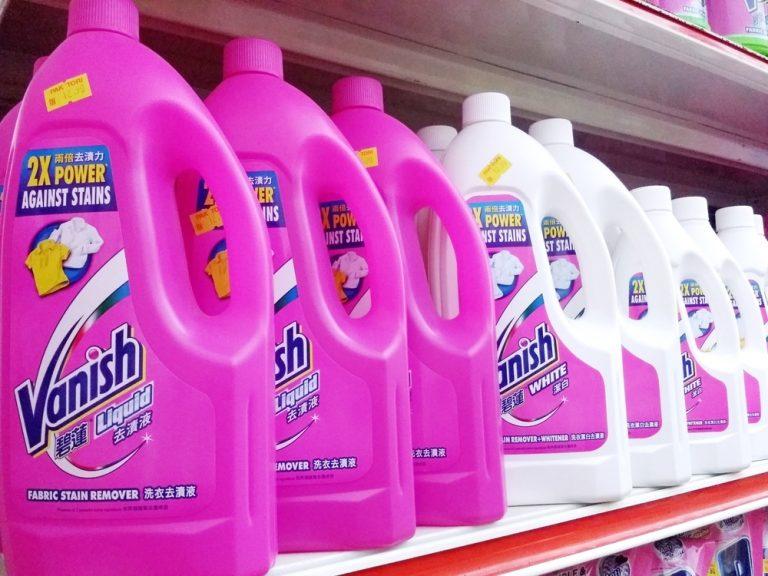
Reckitt Benckiser (LON:RB) announced the appointment of PepsiCo Executive as its new CEO on Wednesday.
Laxman Narasimhan will succeed Rakesh Kapoor as Chief Executive Officer. He will join the British consumer goods company as CEO-designate and is due to be appointed to the board as an Executive Director from 16 July. Laxman Narasimhan will become group CEO from 1 September.
Laxman Narasimhan is currently the Global Chief Commercial Officer for PepsiCo (NASDAQ:PEP), where he is responsible for the company’s integrated long-term growth strategy.
He has held a place on the PepsiCo executive committee for the past four years.
In addition to serving as Chief Executive Officer at Reckitt Benckiser, he will also directly lead the health business unit, the company added in a statement.
Laxman Narasimhan will receive a salary of £950,000 for his new role as CEO, the company added.
“Laxman has exceptional strategic capabilities and consumer insight with a proven track record in developing purpose-led brands and driving consumer centric and digital innovation. This, combined with his excellent people engagement and leadership skills, gives the Board confidence that he will continue to evolve the strong culture of RB and deliver outperformance,” Chris Sinclair, Chairman of the Board, commented on the new appointment.
“I’m delighted to be joining RB as the next Chief Executive Officer at an exciting time for the business. It is a special company with a long history of outperformance, creating innovative products and iconic brands which improve the health and lives of people across the globe. I’m looking forward to working with an exceptional group of leaders over the coming years to continue to transform RB,” Laxman Narasimhan also added.
Just last month, Reckitt Benckiser saw a 1% rise in its first-quarter sales, expecting to see “improving growth” during the remainder of the year. At the start of the year, the company posted a 65% drop in its annual profit as a result of one-off gains from the previous year.