
Sir Philip Green’s Arcadia hangs in the balance as landlords vote on restructuring

Sir Philip Green’s Arcadia empire has been thrown into doubt today, as it awaits a vote on a proposed restructuring deal.
The retail group was dealt a blow after sources revealed that Intu, the owner of various shopping centres, would oppose the plan.
Intu is expected to vote against a proposed company voluntary arrangement (CVA) at a meeting with creditors later today.
The CVA would see landlords such as Intu (LON:INTU) agreeing to lower rents and store closures.
However, it has been reported that other landlords are likely to support the arrangement.
If creditors do not agree to the restructuring, Green’s Arcadia group could enter administration as early as this evening.
So far, Sir Green has agreed to pay another £25 million into the group’s pension fund in a bid to ensure this would secure the backing of regulators. The figure is half the £50 million initially proposed.
The Pensions Regulator commented on the additional funding: “We recognise that the best support for any pension scheme is a trading employer and we feel the CVA [company voluntary arrangement] proposals now provide the right balance between security for the pension schemes and the chance of sustainability for the company.”
Arcadia owns the Topshop and Topman brands, as well as Miss Selfridge, Wallis, Evans, Burtons and Dorothy Perkins.
As a result, chairman Philip Green has often been dubbed ‘the King of the High Street’.
Nevertheless, the businessman’s crown has lost its shine in recent years, amid a series of controversies such as the handling of the demise of the BHS chain
Card Factory quarterly sales rise 6.4%
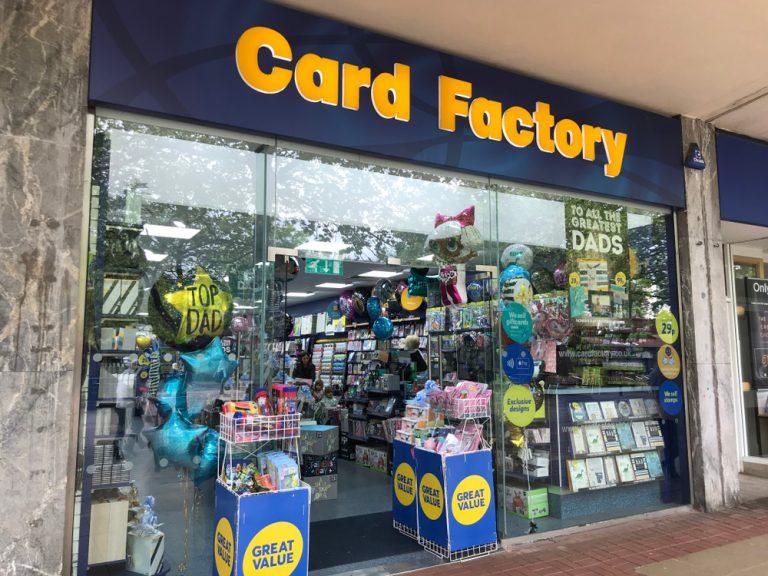
Card Factory reported a rise in sales for the first quarter of 2019, despite a challenging trading environment for UK retailers.
According to the trading update, the first quarter saw total Group sales growth of 6.4%.
Like-for-like sales were up 2.3% during the quarter, boosted by the opening of 14 net new stores.
Card Factory also said that there was strong cash generation across the period, and expectations for the year remain unchanged.
Karen Hubbard, Card Factory’s Chief Executive Officer, commented on the quarter:
“We have had a positive start to the year with like-for-like sales growth despite challenging consumer sentiment and negative footfall on the High Street. We have seen a good customer reaction to our seasonal card ranges over the quarter, with yet again record card sales in volumes and value for both Valentine’s Day and Mother’s Day. We continue to improve the range and quality of card and non-card options. Our store opening programme remains on track and we are pleased with the performance of recent openings.
“Overall, Card Factory remains in a strong position, continuing to grow market share, with lessening cost headwinds and a platform for medium term growth.”
The results prove encouraging against a backdrop of a record number of retailers closing their doors. Just today, it was reported that Sir Philip Green’s Arcadia empire is hanging in the balance, as it looks to get lenders to agree to a rescue deal.Card Factory was founded by Dean Hoyle and his wife, Janet back in 1997. It is listed not the London Stock Exchange and is a constituent of the FTSE 250 Index.
Shares in the company (LON:CARD) are up +0.62% as of 12:58PM (GMT).BT to close 270 of its UK offices
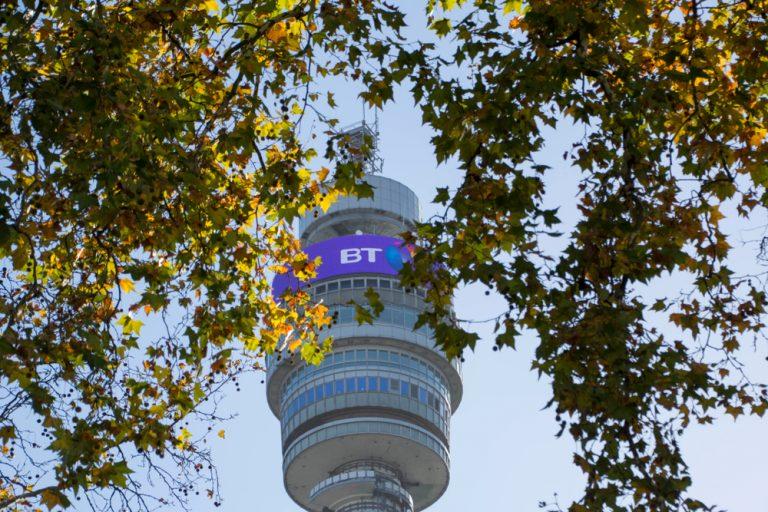
BT is set to close more than 270 of its locations across the UK, as the company looks to streamline costs in the years ahead.
The telecommunications giant said it will reduce its 300 offices to just 30 as part of its ‘Better Workplace Programme’.
Nevertheless, Ipswich, Edinburgh, Belfast, Birmingham, Bristol, Cardiff, London and Manchester have been named as key cities for the business.
BT is also looking to finalise a deal to sell its London headquarters in St Pauls, where it has been located since 1874.
Last year, the FTSE 100 group announced it would be cutting as many as 13,000 jobs, in a bid to save £1.5 billion in costs.
The firm has also recently welcomed a new chief executive, Philip Jansen, who has been at the helm since February of this year.
Jansen took over from Gavin Patterson, who had been chief executive of BT from 2013 until 2019.
In May, the telecoms provider reported a 1% fall in reported and adjusted revenue in its final results, as consumer growth was offset by price regulations for OpenReach.
As it stands, BT employees 52,000 people across the UK.
Shares in the London-listed firm (LON:BT.A) are currently down 11:38AM (GMT).
Tiffany Q1 sales hit by lower tourist spending
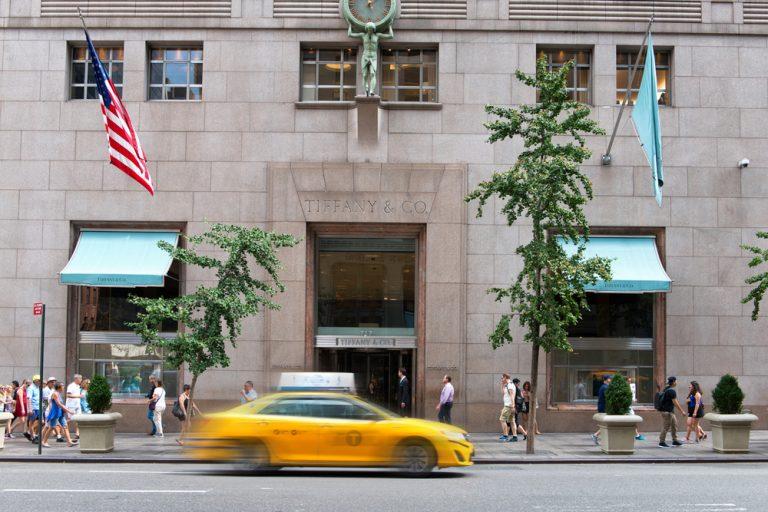
Tiffany reported a fall in sales for the first quarter of the year, as lower tourist spending impacted profits.
The New York jewellery company said global sales fell by 3% to $1 billion (£787 million) for the three months until the end of April.
Tiffany revealed that net earnings totalling $125 million marked a 12% decline on the previous year.
In addition, net earnings per diluted share were $1.03, down from $1.14 the year before.
In the U.S, net sales fell 4% to $406 million, whilst comparable sales declined 5%. The decline was blamed on lower spending by foreign tourists across the period.
Similarly, in the Asian-Pacific region, net sales slipped 1% to $324 million and comparable sales also fell 5%, as a result of the effect of foreign currency translation.
Meanwhile in Japan, total net sales declined 4% to $145 million and comparable sales also fell 4%. This was also attributed to a decline in tourist spending.
In Europe, total net sales dropped 4% to $102 million and comparable sales declined 7%.
Alessandro Bogliolo, Tiffany Chief Executive, commented on the figures: “Our first quarter results reflect significant foreign exchange headwinds and dramatically lower worldwide spending attributed to foreign tourists. That said, we were pleased that, at the core of our business, global sales attributed to local customers, led by sales in China, grew over last year’s very strong sales results. We believe this growth in sales to local customers reflects progress in executing our strategic priorities, including innovations across products, communications and the customer experience, and that Tiffany is positioned for improving trends in the second half of 2019.”
Tiffany is a luxury jeweller that also sells sterling silver, china, fragrances and some leather goods.
Its New York Fifth Avenue flagship store was immortalised in the American film classic, Breakfast at Tiffany’s, staring Audrey Hepburn.
Shares in Tiffany (NYSE:TIF) are currently trading +2.60% as of 10:57AM (GMT).
UK new car market declines in May

The UK new car market has fallen again in May 2019, according to data provided by the Society of Motor Manufacturers and Traders.
Across the month, new car registrations in the UK dropped by 4.6%, with 183,724 units registered. The decrease is a reflection of ongoing uncertainty surrounding diesel and clean air zones, in addition to the removal of incentives for plug-in hybrid vehicles, the industry body said.
The prevailing economic and political instability to veil the UK was also highlighted as a reason for the decline as it continues to have an impact of consumer and business confidence.
“Confusing policy messages and changes to incentives continue to affect consumer and business confidence, causing drivers to keep hold of their older, more polluting vehicles for longer,” Mike Hawes, Chief Executive of the Society of Motor Manufacturers and Traders, commented on the data.
“New cars are safer, cleaner and more advanced than ever and, with sophisticated safety, efficiency and comfort features as well as a host of attractive deals on offer, there has never been a better time to invest in a new car,” Mike Hawes continued.
Declines occurred across all sales types in May. Registrations by private consumers fell 5%, fleets by 3% and business buyers by 29%.
The modest growth in petrol registration and alternatively fuelled vehicles was not significant enough to offset the considerable decline in demand for diesel, which dropped for the 26th consecutive month, the industry body revealed.
As a result of the significant industry investment in new technology, the latest diesel models are safer and cleaner than before, and do not face charges of restrictions at any locations in the UK.
Among the best sellers for the month, Ford Fiesta and Ford Focus (NYSE:F) came in at first and second place respectively, followed by Volkswagen Golf (ETR:VOW3) in third and Vauxhall Corsa in fourth.
Ryanair passenger numbers grow 13% in May
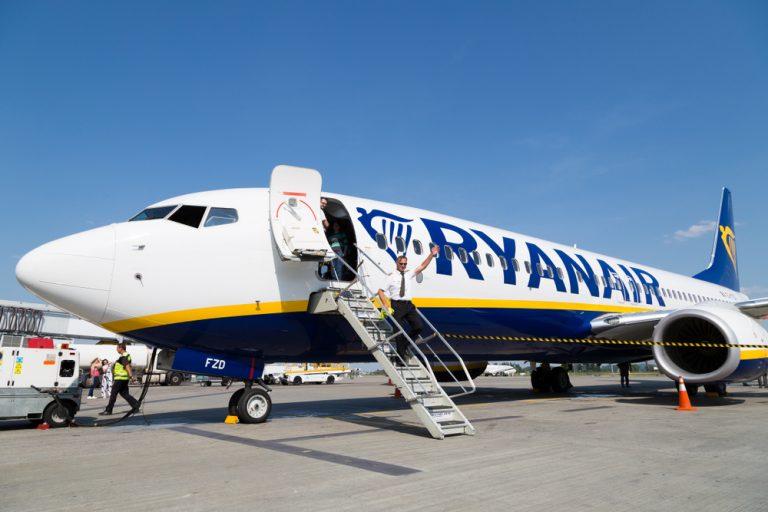
Ryanair (LON:RYA) posted its traffic statistics on Tuesday, growing its May passenger volume by 13%.
Founded in 1984, the Irish low-cost airline is headquartered in Swords, Dublin, with its primary operational bases located at Dublin and London Stansted airports.
Passenger numbers grew to 14.1 million in May, which is 13% higher than that of the same month a year prior.
Numbers were boosted by an 8% growth at Ryanair, in addition to the 0.6 million passengers from the acquisition of Lauda, a subsidiary of Ryanair Holdings fully acquired at the start of the year.
Additionally, the low-cost airline operated roughly 78,000 flights in the month of May.
Ryanair’s passenger statistics come just a day after those posted by Wizz Air, the largest low-cost airline in Central and Eastern Europe.
The Hungarian airline, Wizz Air, saw a 22.4% rise in its May passengers, flying 3,470,889 people.
Over in Germany, Lufthansa (ETR:LHA) revealed its first-quarter loss of €342 million, citing higher fuel costs. This figure is nine times deeper than that of its first-quarter period a year prior.
In aviation across the world, the recent global grounding on the Boeing 737 MAX fleet has taken its toll on certain airlines. American Airlines (NASDAQ:AAL) posted its first-quarter results, citing the $350 million blow it has had on the major American airline.
Travel company Tui (ETR:TUI) also warned that the global grounding of the model may cost it as much as £258 million.
Since the two Boeing 737 MAX crashes, airlines and governments across the globe have grounded the model, triggering investigations into the accident.
Shares in Ryanair Holdings plc (LON:RYA) were trading at -0.14% as of 09:20 BST Tuesday. Wizz Air shares (LON:WIZZ) were also down, trading at -0.6% as of 09:22 BST. Shares in Tui (ETR:TUI) were up 1.18% as of 10:08 CEST, as were shares in Deutsche Lufthansa AG (ETR:LHA) trading 0.37% higher as of 10:15 CEST.
Card Factory first-quarter sales grow, full year profit outlook unchanged
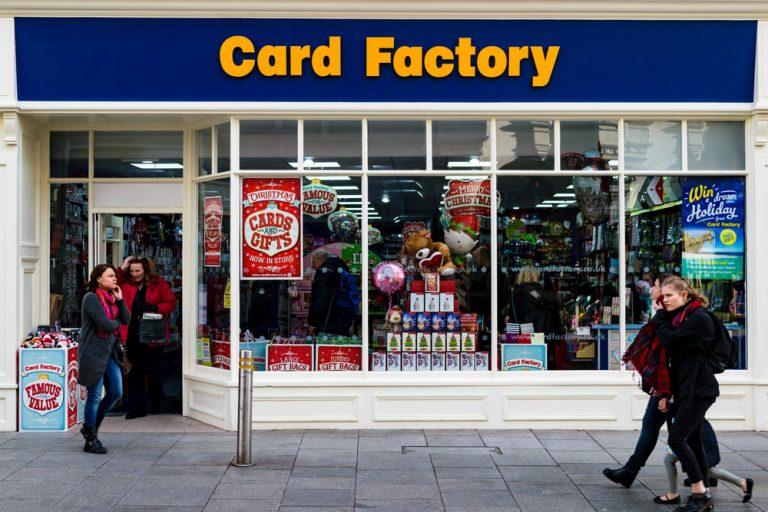
Card Factory (LON:CARD), the UK’s leading specialist retailer of greeting cards, said on Wednesday that sales for the first-quarter grew 6.4%, citing however the difficult trading environment which has limited growth.
Like-for-like sales grew by 2.3% and, in the context of the continued challenging consumer environment, this performance demonstrates strength of its quality and value offer, Card Factory said.
During the quarter, Card Factory opened 14 net new stores in the UK, bringing its total store figure to 979. The company has confirmed that it remains on target to open roughly 50 net new stores in the current financial year, with a number to be opened in the Republic of Ireland and retail parks – locations where its stores continue to perform well.
Its online shop also had a good start to the year seeing continued revenue growth. Online success for Card Factory was driven by the popularity of new ranges and designs across its personalised and non-personalised products.
“We have had a positive start to the year with like-for-like sales growth despite challenging consumer sentiment and negative footfall on the High Street,” Karen Hubbard, Chief Executive Officer of Card Factory, commented on the results.
Indeed, the challenges to hit the high street are by no means unknown, as various retailers have warned of conditions over recent months.
“We have seen a good customer reaction to our seasonal card ranges over the quarter, with yet again record card sales in volumes and value for both Valentine’s Day and Mother’s Day,” the Chief Executive Officer continued.
Karen Hubbard also confirmed that the company’s store opening program remains on track, and the business as a whole considers itself in a strong position as it continues to grow its market share.
As for its outlook, Card Factory has warned that given the continuation of challenging consumer conditions, it expects like-for-like sales for the year to be marginally positive. Full year profit expectations remain unchanged.
Earlier this year, Card Factory posted its preliminary results for the year to January, in which it revealed a decrease of like-for-like sales by 0.1%, attributed to a drop in footfall.
At 08:44 BST Wednesday, shares in Card Factory plc (LON:CARD) were up 3.58%.


Gooch and Housego cuts outlook, COO to depart

Gooch and Housego reported its interim results for the six months to March-end on Tuesday, with shares falling on the back of the announcement.
The company, which specialises in manufacturing optical components and systems, warned that full-year profits would be between £3.5 million and £4 million.
Whilst revenue for the period grew by 7.4%, the company said that the industrial laser market had proved ‘challenging’.
This was attributed to risks in the microelectronics sector, alongside geo-political uncertainties such as the ongoing US/China trade dispute.
In addition, Gooch & Housego said it would increase its interim dividend increased to 4.3p, up slightly from 4.2p the year before.
This was said to be ‘reflective of the Board’s longer term confidence in the business’ whilst also recognising ‘challenging industrial laser trading conditions’.
Mark Webster, Chief Executive of the firm, commented:
“Trading in the last six months has reflected trends previously reported. G&H has long been aware of the risks associated with the cyclical nature of the microelectronics sector and more recently the continued impact of the US/ China trade dispute. Our industrial laser order book has increased since our last update, but we now forecast the industrial laser business will not return to ‘normal’ levels in FY 2019.
In a separate release, it was also announced that its chief operating officer Alex Warnock is to step down from his role.
Gooch & Housego said in the statement that they would not replace Warnock, and instead the three manufacturing heads would report directly to the chief executive of the company.
Shares in the firm (LON:GHH) are currently trading down -22.52% as of 13:43PM (GMT).
888 shares rise on trading update
888 issued a trading update for the period from 1 January to 18 May on Tuesday, causing shares to rise.
The online gaming company said that group revenue climbed 6% on a like for like basis, and 2% increase on a reported basis.
888 attributed this to increased marketing investment, alongside the launch of the Group’s Orbit Casino platform.This in turn aided new acquisition, which was boosted by 20% year on year.
Overall, growth was driven by a 29% increase in Sport and a 13% jump in Casino, which partly offset by flat growth in Bingo, and a 28% decline in Poker.
Itai Pazner, CEO of 888, commented:
“888 has enjoyed a solid start to the year with strong momentum in Casino and Sport across a number of the Group’s major regulated markets. Whilst Poker has remained challenging, we were pleased to see an improving revenue trend in Q1 2019 against Q4 2018. In addition, we are very encouraged by a 20% increase in first time depositors across the Group’s B2C business in the Period; this reflects 888’s outstanding marketing capabilities and is a key indicator of our growth prospects.
As a diversified operator that owns its own technology, the Board continues to believe that 888 has a unique platform to deliver continued growth in the dynamic global online gaming industry.”
888 was founded back in 1999. It is headquartered in Gibraltar and is listed on the London Stock Exchange.
Shares in the firm (LON:888) are currently trading up +4.39%, as investors react to the latest trading update.