
Flybe boss announces departure

Flybe announced the departure of its chief executive Christine Ourmières-Widener on Tuesday.
Christine Ourmières-Widener will stand down as chief executive on 15 July following Flybe’s sale to Connect Airways, a consortium founded by Virgin Atlantic, Stobart Aviation and Cyrus Capital Partners.
The airline was sold to the consortium for £2.8 million after weeks of speculation.
It has been struggling in recent years amid a tough trading environment for the aviation industry.
In particular, rising fuel prices, increased competition and currency movements have impacted the low-cost airline’s margins.
Many rival carriers such as Monarch and Primera Air both fell into administration amid these mounting pressures.
Ourmières- Widener commented on her departure: “It has been a privilege to lead Flybe over the past two years and to work with such an outstanding and dedicated team of professionals.
“Together, we have been able to secure the jobs of our loyal Flybe employees with the sale to Connect Airways and provide our customers and the UK with the vital transport and travel infrastructure they rely on, while preparing Flybe for a bright future under its new ownership.”
Flybe flies to 85 airports in the world and has a fleet size of 76. It has two hubs in the UK including Manchester and Birmingham.
Highlands Natural Resources announces cannabinoid collaboration

Highlands Natural Resources announced today it is collaborating up with analytical chemist Stephen Goldman to develop its cannabinoid business, Zoetic.
The company said that it is teaming up with Goldman to ‘examine, develop and file patents and other intellectual property on behalf of Company’ relating to agricultural genetics, pharmaceutical and wellness products based involving cannabinoids.
The collaboration will relate to the company’s CBD focused venture, Zoetic, which it is seeking to expand.
Back in April Highlands announced it would be advancing its strategy for the company, in light of particularly strong demand for cannabis-based products.
Robert Price, Executive Chairman and CEO of Highlands Natural Resources, said: “Our progress at Zoetic continues at pace and we remain on track to achieve our first revenues in June from deliveries to Schrader Oil convenience stores and the launch of our own direct sales website.
“Our collaboration with Stephen Goldman significantly advances our expertise in seed development and agricultural genetics and underpins our strategy to develop high quality feminised seeds for sale to hemp producers, a strategy which has significant revenue potential.”
Shares in the natural resources company (LON:HNR) are currently +3.62% as of 12:27PM (GMT).
Galliford Try rejects £950m Bovis takeover bid

Galliford Try has rejected a £950 million takeover bid from rival housebuilder Bovis, sending shares soaring on the back of the news.
The house builder confirmed it had received a bid from Bovis, however it said it had rejected the offer after concluding that ‘it does not fully value the Linden Homes and Partnerships & Regeneration divisions and is not in the interests of all shareholders.’
Earlier this year, shares in Galliford Try plummeted after the company issued a profit warning.
At the time, the firm said it expects profits to be £30-£40 million lower than previously expected.
As a result, Galliford Try said it was putting its construction unit under “strategic review”.
The house builder was formed in 2000 and it has gone on to be a constituent of the FTSE 250 Index on the London Stock Exchange.
Its construction projects have included the restoration of the London St.Pancras Renaissance hotel, the centre court of Wimbledon and the recently completed Aberdeen Western Peripheral Route.
The Aberdeen Western Peripheral Route had been delayed amid to weather issues and the collapse of Carillion last year.
Shares in the firm (LON:GFRD) are currently trading +3.53% as of 11:50AM (GMT). Meanwhile, Bovis shares (LON:BVS) are trading broadly flat on the announcement.
Paddy Power Betfair changes name to Flutter Entertainment
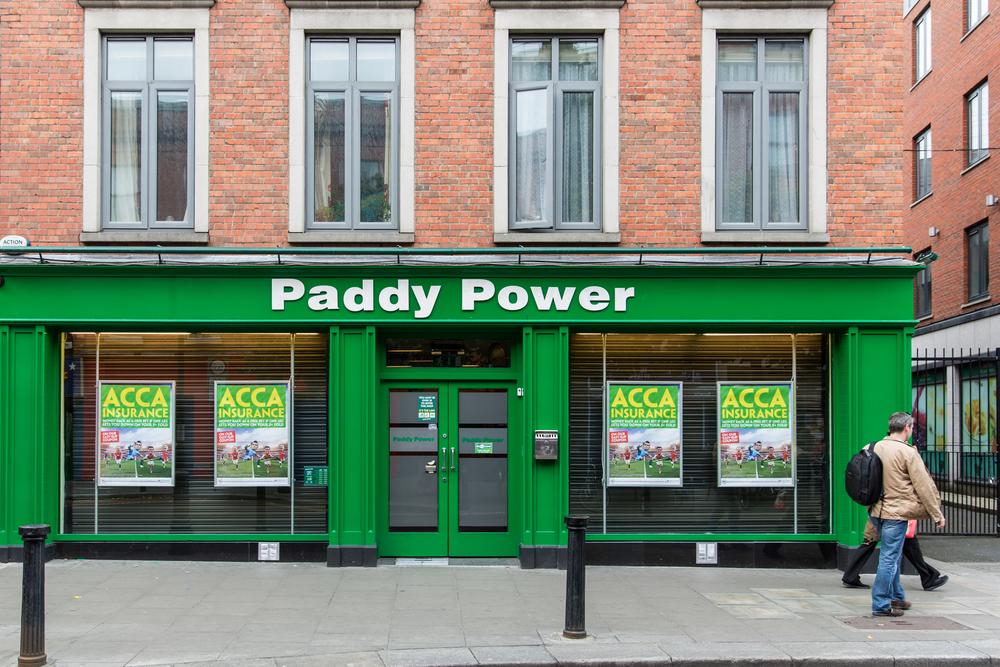
Paddy Power Betfair announced it is changing its name to Flutter Entertainment as of Tuesday, as it looks to rebrand its expanding business.
As a result, the betting company is set to trade under a new stock ticker on both the London Stock Exchange and Euronext Dublin.
The name change was first announced back in March, and shareholders have since voted in favour of the name change.
At the time, the company said that the name change would better “reflect the increased diversity of our brands and operations”.
In the firm’s latest results, Paddy Power Betfair said that revenues jumped by almost a fifth, amid strong growth in the US market.
Paddy Power Betfair was formed following a merger between Paddy Power and Betfair in 2015.
As well as operating an online and retail business in the UK, the firm also operates in Australia and the United States.
The London-listed company is a constituent of the FTSE 100 Index. It owns various brands including Sportsbet, TVG and FanDuel.
Shares in Flutter Entertainment (LON:FLTR) are currently trading +1.56% as of 11:25AM (GMT).
SVS Securities morning call and market round-up 28th May

- Stocks in London ended higher on Friday while awaiting further US-China trade war developments.
- Prime Minister Theresa May’s resignation now triggers a contest against the background of a devastating EU Parliamentary Election outcome.
- US stocks cut back their early gains on Friday, but still managed to close modestly higher.
- Asian stocks mostly rose in dull, light volume trading on Tuesday.
- Today’s UK financial updates include finals from: Altitutde Group, Amigo Holdings, First Sentinel, Kainos and Renolds, with interims from Oxford Biodynamics and quarterlies from AFI Development, plus AGM scheduled for Bonhill Group, Comptoir Group, Emmerson, Eddie Stobart Logistics, Gulf Marine Services, IP Group, Smart Metering Systems and Triple Point Social Housing REIT.
- SVS expects the FTSE 100 to fall around 40 points in this morning’s opening trade. While concerns over the seemingly deepening US-China trade crisis continues to dominate international markets, UK equities are seen pulling back further on Thursday as the Brexit crisis deepens following the resignation of a senior government minister. Yesterday afternoon Federal Reserve Minutes suggested officials remained content with their standstill stance on interest rates at their April 30-May 1 policy meeting, leaving US markets falling for the third day, with chip makers hit by a US federal Judge ruling and compounded fears surrounding Huawei’s blacklisting and Chinese export tariffs. Late trading in Asia is seeing stocks tumbled with semiconductor stocks, tech and telecoms all hit after the UK’s ARM also suspended business with Huawei in response to the US imposition. Yesterday, the FTSE 100 closed up 0.07% yesterday helped by Sterling weakness, while the FTSE250 lost 0.66%. Marks & Spencer Group shares fell 9.4% after it reported disappointing 2019 profits had been hit by restructuring costs and announced details of a £601 million rights issue, originally signalled in February, to fund its JV with online grocer Ocado Group. Royal Mail by contrast jumped +5.0% despite confirming a cut in its dividend to fund investment. As expected, UK’s annual inflation rate rose to 2.1% in April, ahead of the Bank of England’s annual target, from 1.9% in March. European stocks yesterday had a quieter session, with the Stoxx Europe 600 ending down 0.1%.

Tory leadership: who’s in the running?
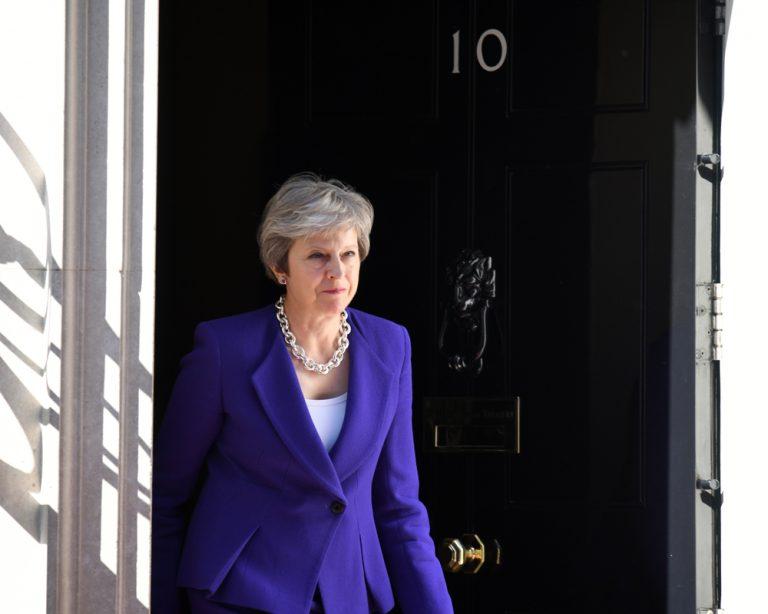
The Tory leadership is well and truly underway after Prime Minister Theresa May announced her resignation week last week.
After a tumultuous three years as Prime Minister, May took on the challenge of delivering Brexit, a task which many had deemed a ‘poison chalice’.
Despite various setbacks, including a reduced majority after the 2017 election, a vote of no confidence and a series of cabinet resignations, the Prime Minister refused to back down.
However, in the end, she has eventually gave in to mounting pressure from the party, agreeing to step aside to allow for a new leader to emerge.
So, who is in the running to succeed May to become Tory leader?
Boris Johnson
Arguably the frontrunner, it has been no secret that Boris Johnson has harboured ambitions to take the reigns at No.10 for quite some time.
After a failed leadership bid in 2016, Johnson has been a vocal critic of the government despite his time in Theresa May’s cabinet as Foreign Secretary.
Michael Gove
Former Johnson ally and ardent Brexit supporter, Michael Gove has also thrown his hat into the ring of a particularly crowded leadership race.
Michael Gove has held various cabinet positions, including his role as Environment Secretary.
Famously, Gove dashed the hopes of Boris Johnson’s leadership bid in 2016, when he spoke out about his candidacy.
Jeremy Hunt
Often regarded as a safe pair of hands, Jeremy Hunt holds the title of the longest serving Health Secretary.
Nevertheless, there is some residual public distrust over his controversial decision to impose a junior doctor’s contract, which led to mass strikes at the time.
Hunt currently holds the post of Foreign Secretary, having succeeded Boris Johnson.
Dominic Raab
Another contender is Dominic Raab. Formerly the government’s Brexit secretary, he resigned amid disagreements over the Prime Minister’s withdrawal deal.
Raab campaigned in favour of leave in the run-up to the EU referendum, favouring a pivot towards trading with other markets such as Asia and Latin America.
However, his campaign has already got of to a shaky start, after he was forced to defend comments he made in 2011, in which he called feminists ‘obnoxious bigots’.
Matt Hancock
At 40 years old, he is the youngest contender in the running – thus far.
Hancock has been a member of the Conservatives since 1999 and has held numerous ministerial posts, including his current role as Health Secretary as well as Energy Secretary and the minister for Digital and Culture.
Esther McVey
One of only two women in the race, McVey is also one of the least experienced having held one ministerial post as the Secretary for Work and Pensions.
Prior to her role as MP for Tatton, McVey was a journalist and co-presenter alongside Eamonn Holmes for GMTV.
McVey recently launched the Blue Collar Conservatism Group, a movement designed with the aim of reconnecting the party with working people.
Andrea Leadsom
Having previously run back in 2016, Leadsom will be keen to build upon momentum from her previous bid.
Leadsom recently resigned from her role as Leader of the Commons, confirming her bid on Sunday.
She supported Brexit back in 2016, and has said she will be a “decisive and compassionate leader”.
Rory Stewart
Rory Stewart is the current International Development Secretary, having taken over from Gavin Williamson, after he was dismissed in connection to the Huawei national security leak.
Eton educated and a former tutor to Prince William and Harry, Stewart may have difficulties connecting with a wide support base, representing much of the ‘establishment’.
Nonetheless, Stewart has pledged to ‘tackle Britain’s everyday injustices’, as he launched his campaign to become PM.
Sajid Javid
Last but not least, Home Secretary Sajid Javid has also recently confirmed his bid.
Javid has already taken to twitter to announced his candidacy, pledging to unite and bring opportunities across the UK.
Javid will be facing criticism over his handling rising knife crime in London, with a record number of offences in the capital in 2018. Opinions are also divided over Javid’s tough stance on Shamima Begum, an ISIS bride whom he stripped of her UK citizenship back in March.I’m standing to be the next leader of @Conservatives & Prime Minister of our great country. We need to restore trust, bring unity and create new opportunities across the UK. First and foremost, we must deliver Brexit. Join @TeamSaj to help me do just that #TeamSaj pic.twitter.com/qfH1lLNusQ
— Sajid Javid (@sajidjavid) 27 May 2019
EU Elections 2019: Brexit party dominates, as Conservatives fall behind Greens
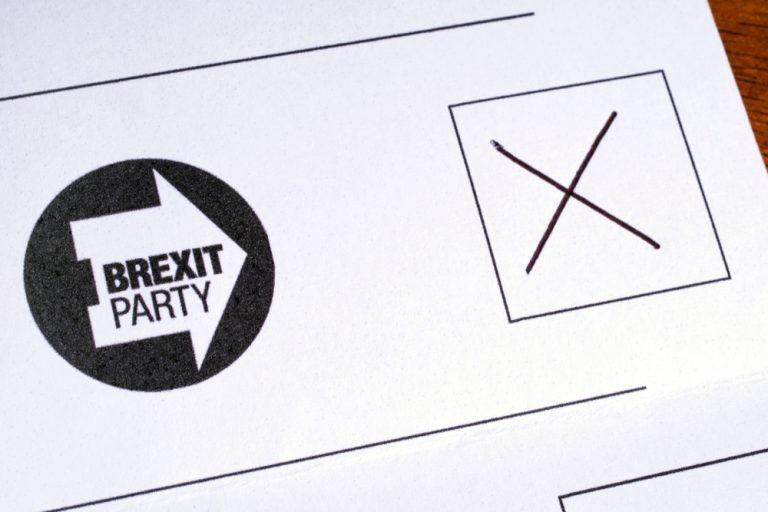
EU Elections 2019: It proved a successful night for Nigel Farage’s Brexit Party and the Liberal Democrats, with both making gains over Labour and The Conservatives.
The Brexit party secured 31.6% of the vote, gaining a total of 29 MEPs, whilst the pro-remain Liberal Democrats followed with 20.3% of the vote, bringing its total MEPs to 16.
Meanwhile, it proved a particularly disappointing evening for the UK’s two main political parties – Labour and The Conservatives.
The Conservatives, who are in the midst of a leadership contest, were down 14.84 percentage points, loosing 15 MEPs, and falling behind the Green party.
Labour also performed disappointingly in the EU elections, securing just 14.1% of the vote and losing 10 MEPs.
Meanwhile, both national parties in Scotland and Wales increased their share, with the SNP commanding 3.6% and Plaid Cymru with 1.0%. Votes are yet to be announced for Northern Ireland.
A good night for Leave or Remain?
Whilst overall The Brexit Party came out on top, suggesting Leave remains ahead, many have pointed out that the Remain vote was splintered across various different parties.
Alongside the Liberal Democrats, Change UK, The Green Party, The SNP and Plaid Cymru all campaigned in favour of remain in the lead-up to the EU elections.
Collectively, remain parties secured 40.4% share of the vote, ahead of Brexit supporting parties such as The Brexit Party and UKIP with 34.9%.
This does not factor in the votes of Labour and The Conservatives, which although both committed to delivering on the EU referendum result, they have supporters from both sides of the spectrum.
Whilst Brexit has proved one of the most divisive issues in the UK for the last decade, turnout did not significantly improve.
In total, 36.7% of the UK took the polls, an increase of just 1.8 percentage points.
UK retail sales flat in April, says ONS

UK retail sales in April remained flat on March, according to the latest figures from the Office For National Statistics (ONS).
Retail sales rose by 1.8% in the three months to April, largely driven by a strong quarter for online sales.
Despite remaining unchanged from March, the figures proved ahead of economists expectations of a 0.3% decline.
In particular, online retail increased in April year-on-year, now making up 18.7% of total sales.
Conversely, sales at department retail stores fell by 0.5%, alongside a further 2.9% decline in household goods sales during their period.
Overall however, alongside strong demand online, sales were boosted by warmer weather, particularly for clothing.
The figures suggest that the UK economy is coping better with Brexit related uncertainty than anticipated.
Nevertheless, it has proved a challenging few years for the UK high street, with a record number of stores closing in 2018.
Retailers have been struggling with a host of troubles including rising rents, currency movements and lower footfall.
Earlier this week, Marks and Spencer’s (LON:MKS) announced the closure of an additional 110 stores, as it looks to transform its business in an era of weaker consumer confidence.
Head of retail sales at the ONS, Rhian Murphy, commented on the figures: “Retail growth was strong in the three months to April with a record quarter for the online sector, driven mainly by clothing purchases, with warmer weather boosting sales.”
“Elsewhere, department stores continued to see their sales fall,” she said.
However, it’s not just retailers that prioritise the traditional brick and mortar model that are feeling the pressure.
Whilst online retailers such as Amazon (NASDAQ:AMZN) go from strength to strength, others such as ASOS (LON:ASC) have still seen profits take a hit in recent quarters.
Raj Badarinath, Vice President of RichRelevance, attributed these difficulties to issues such as the digital tax proposed in the UK, alongside changing privacy legislation in Europe.
Raj told UK Investor Magazine:
“A 2% tax rate sales made by ‘large digital companies’ would affect income in that it taxes all revenue, and not just profits. If this does indeed go ahead in April 2020, companies such as Amazon and eBay will need to rethink the way they sell.”
He continued: “In addition, GDPR affects all companies with respect to customer acquisition due to data privacy issues”.
Uber set to trial electric bike rental service in the capital

Uber (NYSE:UBER) is set to launch the electric bike service JUMP in London.
The taxi app will be trialling the scheme in the capital, offering bikes available to rent through its app. 350 red JUMP electronic bikes will take to Islington as part of the trial, which will expand across more London boroughs across the next few months.
Uber has said that the JUMP bikes are pedal-assist electric bikes with an integrated GPS and lock which allows riders to find locate a bike close by and rent it out.
Riders must simply launch their app and select a bike located nearby to unlock it. They will then receive a PIN to unlock the JUMP bike, with prices depending on the city. The bike will then unlock and can be taken for a ride.
London is not the first city to experience the service – countries across the world such as the US and Canada, in addition to European cities such as Berlin and Paris, have the bikes already available to them.
According to the Guardian, Local Councillor Claudia Webbe said the “shared electric bikes are accessible to many people of different ages and fitness levels and can help encourage even more people to switch to cycling, which is healthier and more environmentally friendly.”
Elsewhere for Uber, it recently launched its initial public offering on the New York Stock Exchange under “UBER”.
Its drivers across the UK were set to strike against pay and working conditions just days before its IPO was unveiled, in addition to drivers in New York, San Francisco, Chicago, Los Angeles, San Diego, Philadelphia and Washington DC in the US.
From its work place culture, in which certain sexual harassment and discriminatory practices have occurred, to the treatment of its drivers, Uber’s past involves several controversies.
At 19:59 GMT-4 Thursday, shares in Uber Technologies Inc (NYSE:UBER) were trading at -1.89%.