
Tesla reports $312m profits in Q3

Tesla beat analyst expectations and made a profit of $312 million in the last three months.
Despite the turbulent few months for the electric company, the group announced surprisingly high profits sending shares up 10% in after-hours trading.
Musk told analysts that it was an “incredibly historic quarter”.
“Customers actually cared about the future of the company so much that they volunteered their time to help the company succeed. It chokes me up, actually,” he said.
Over the past three months, when the group saw an increase in profits, Musk found himself in the headlines many times.
Musk is currently being sued by a British diver, who he called a “pedo”. He fined and sanctioned by the US Securities and Exchange Commission (SEC) and also smoked cannabis live on a radio show.
Jeremy Acevedo, who is the manager of industry analysis at Edmunds, said: “The third quarter in many ways serves as Elon Musk’s redemption – you may not agree with his approach, but you can’t argue with the numbers.”
“Between the SEC battle, controversial interviews and Twitter feuds, Elon’s antics hit a zenith in the third quarter, yet Tesla managed to exceed production goals and the Model 3 outsold many of the most popular cars in America. Achieving profitability is a huge milestone, and one that even the most staunch Tesla skeptics would have to give them a little bit of kudos for,” he added.
The company has said that it expects to generate a profit during the fourth quarter. Tesla has had just two profitable quarters before Wednesday’s results.
Tesla said: “We will focus even further on cost improvements while continuing to increase our production rate” in the fourth quarter.
Shares in Tesla (NASDAQ: TSLA) are currently trading -1.92% (1037GMT).
Debenhams to close 50 stores, risking 5,000 jobs
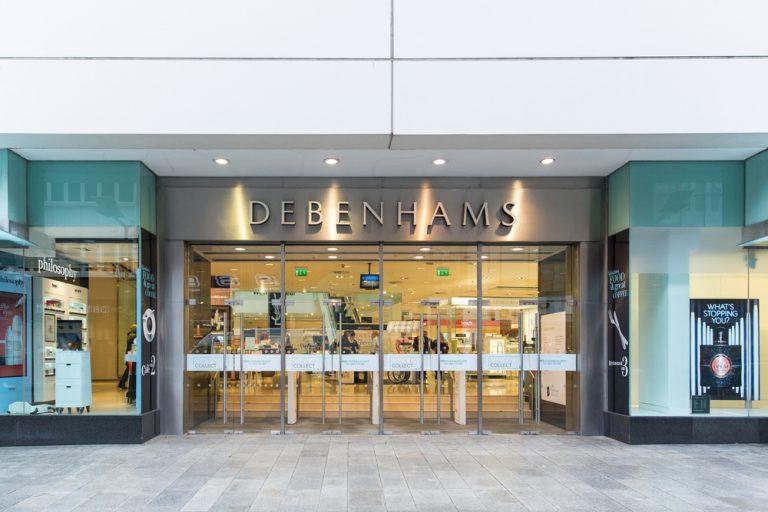
Debenhams has posted record losses and said that it plans to close 50 retail stores, risking up to 5,000 jobs.
The struggling department store revealed a £491.5 million loss compared to profits of £59 million the year before.
Sergio Bucher, the group’s chief executive, said: “It has been a tough year for retail in 2018 and our performance reflects that. We are taking decisive steps to strengthen Debenhams in a market that remains volatile and challenging.”
“Working with our new chief financial officer Rachel Osborne, and the board, I am determined to maintain rigorous cost and capital discipline and to prioritise investment to achieve profitable growth. At the same time, we are taking tough decisions on stores where financial performance is likely to deteriorate over time.”
“With a strengthened balance sheet, we will focus investment behind our strategic priorities and ensure that Debenhams has a sustainable and profitable future.”
The group currently has 165 stores and employs 27,000 people. It said that the closures will take place over three to five years.
The retailer is struggling to adapt to consumer changes, where shoppers are moving away from the traditional high street and buying more online.
Debenhams has issued three profit warnings this year and the group’s share price has dived by 75% in the past year.
Richard Lim, chief executive of Retail Economics, said: “Put simply, department stores are incredibly expensive to run.”
“The combination of too much space, inflexible leases and spiralling operating costs are set against a backdrop an accelerating behavioural shift towards online and experiences. This is eroding their profitability and changes in the business need to occur at a pace if they are to survive.”
Earlier this year House of Fraser was bought out of administration by Mike Ashley’s Sports Direct in a £90 million deal.
David Birne, business recovery and insolvency partner at H W Fisher & Company, commented:
“That Debenhams has announced the closure of as many as 50 stores and losses of £500m suggests it has done a pretty good job of keeping the reality of its dire financial situation from markets.”
“Still the circumstances Debenhams found itself in, having issued three profit warnings this year already, made restructuring inevitable. The only question was which route the chain would go down.”
“That it has taken the decision to close nearly a third of its current stores rather than take the option of putting in place a Company Voluntary Arrangement (CVA) suggests Debenhams was unable to put forward a CVA that its creditors felt able to agree to. That said rent reductions appear to have been agreed and the strategy announced today could see the chain survive.”
Shares in the group are trading +9.15% (0935GMT).
Patisserie Valerie £40m black hole but wins court case
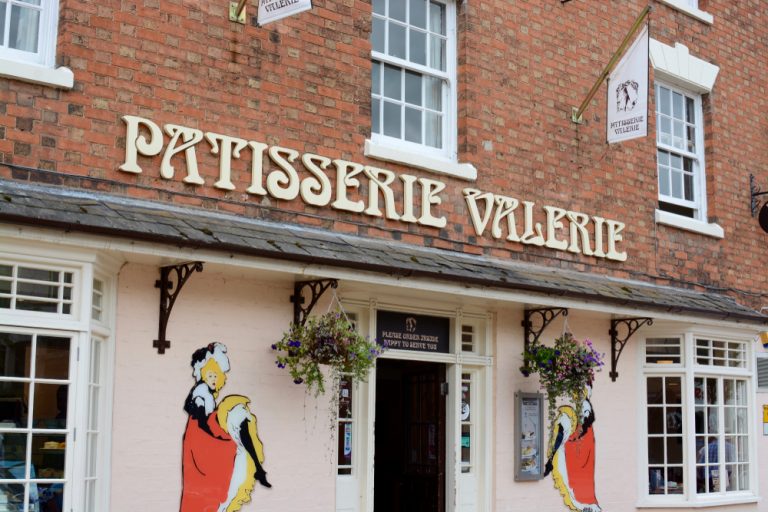
Patisserie Holdings Plc (LON:CAKE) has today won its court case, with the firm surviving a winding-up petition served by HMRC.
The petition came amid claims that the company’s subsidiary, Stonebeach, had an unpaid tax bill of £1.14 million. To the relief of the company’s board and investors, the petition was dismissed by the High Court of Justice, Business and Property Courts.
In a less fortunate turn of events, the company are still in the midst of a fraud scandal and audit failure, which has left a £40 million hole in the firm’s accounts. While Patisserie should be £28 million to the good, the firm’s owner Luke Johnson has had to invest as much as £20 million of his own money just to keep the company afloat.
On the brink of insolvency, the company brought in forensic accountants from PricewaterhouseCoopers to trawl through its accounts and uncover the fraudulent activity that left it close to collapse. As part of the financial black hole is the mishandling and distribution of shares to company board members, which represents a serious failure by the auditing services of Grant Thornton.
Similarly, the ongoing investigation remains in its “preliminary” stages, but has uncovered severe and repeated malpractice by company board members amongst others, as the Serious Fraud Office have opened a case against an indiviudal – and finance director Chris Marsh was arrested and then released without bail.
In an official statement, Directors of Patisserie Valerie launched an investigation into “significant, potentially fraudulent accounting irregularities” on October 10.
However, a source close to major shareholder, Invesco, said, “Shareholders are concerned the board has given itself supervision of the investigation into [its] own conduct and potential incompetence.”
Luke Johnson has said “determined to understand the full details of what has happened” and the board would conduct a “full investigation with its legal and professional advisers into its true financial position”.
Gourmet Burger Kitchen to close 17 stores

Gourmet Burger Kitchen has announced plans to close 17 of its 85 restaurants.
The casual dining chain is the latest to file for a Company Voluntary Arrangement (CVA), risking 250 jobs.
“We are having to take tough but necessary actions to reduce our fixed-cost base and restore long-term profitability,” said Derrian Nadauld, the firm’s managing director.
Gourmet Burger Kitchen is owned by South Africa’s Famous Brands (JSE: FBR), which also owns Wimpy and the bakery Paul.
The difficult trading conditions have led to several dining chains close outlets. Byron has closed 20 of its 67 sites through a CVA.
Jamie’s Italian, Carluccio’s and Prezzo have all used a CVA to shut outlets and cut hundreds of jobs during this year.
Earlier this year Prezzo announced plans to close 94 restaurants, including all 33 outlets in its TexMex chain Chimichanga.
The process for Gourmet Burger Kitchen is being run by Grant Thornton.
Under the terms of the deal, the restaurant chain will close 17 outlets and every effort will be made to redeploy staff.
Matthew Richards, a director at Grant Thornton, said: “The casual dining trading environment in the UK remains extremely challenging, driven by a change in dining behaviour, long-term consumer trends and increased competition.”
“It is important to stress that no restaurants will close immediately and employees and suppliers will continue to be paid on time and in full.”
The chain has said it has worked on restructuring the business operations through reducing head office costs and refurbishing offices.
May rules out two-tier backstop amid Brexit debacle
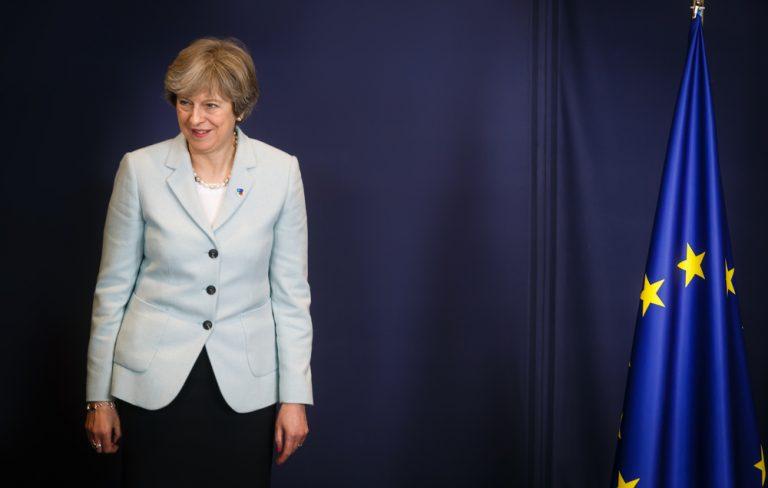
With Brexit ‘divorce talks’ well under way, prime minister Theresa May reaffirmed her position that no deal would be made that sets Northern Ireland apart from the rest of the UK, regarding trade relations.
In the forever-hindering and sensitive saga that are customs negotiations, May has categorically ruled out a customs deal that puts regions of the UK on different tiers.
Much to the comfort of her DUP counterparts, the prime minister has said a deal to keep the Northern Irish ‘backstop upon a backstop’ in place would be a deal that no UK prime minister could ever accept.
Despite the apparent elephant in the room, May has said in a speech to MPs that an EU Withdrawal Agreement is 95% complete.
‘the shape of the deal across the vast majority of the Withdrawal Agreement is now clear.’The prime minister now calls for a substantive attitudinal shift from her colleagues in the EU27, while turning back to her DUP peers to tell them that she will not cross the ‘blood red line’ that could topple her government, nor would any backstop or transition deal be never-ending. This latest deal offering – which would have to be a separate legal agreement to the Withdrawal Agreement – was tabled by the EU to reignite stalled talks, but in spite of the EU27’s best efforts to play down the divisive nature of the legal article, UK politicians look set to stand firm against a deal which practically amounts to extra electronic controls on goods passing between mainland Britain and Northern Ireland. Yesterday in Commons, the prime minister laid out four conditions that must be met for an agreement to be reached. Among which, May demanded there be a “commitment to a temporary UK-EU joint customs territory legally binding, so the Northern Ireland only proposal is no longer needed”. In the next draft of the Withdrawal Agreement, it is understood that references to Northern Ireland being part of the EU’s “customs territory” will be dropped, however the possibility of a Northern Ireland-only backstop has been noted for the future, the parameters of which would be set out in a separate annexe abiding by the EU’s Union Customs Code. In regards to ruling out a Northern Irish backstop within the Withdrawal Agreement itself, EU sources told RTE News this would not be possible on grounds of temporal constraints. “That’s complicated,” one EU source said, “It’s much more complicated than it sounds.” “The first point is the legal basis. You can’t do it under Article 50. That’s always been our stance. The second point is the practical aspects. It’s very complicated to work out all the details in a short period of time. These things need to be negotiated properly.” Setting aside the boorish mindset of the UK’s inflated worth, what the EU is asking is for the UK to clarify which parts of the UCC it is willing to compromise on – for instance, whether the UK plans to sign its own trade agreements or profit off of the EU’s FTA’s, and whether the UK will be part of new trade negotiations during its limbo period. Similarly, time pressure makes the task of resolving regulatory issues nigh-on impossible. For a comprehensive single tier backstop to be put in place, there would have to be an alignment of the EU’s single market rules, and the time-frame of current negotiations do not allow for such adjustments to an entrenched legal framework. The only solution would be for the UK to take an ad hoc approach and adopt an off-the-shelf model such as the trade arrangement the EU has with Turkey – the terms of which the UK would never accept. Going into the next round of talks in Brussels, the head of the UK negotiating team, Olly Robbins, will surely hope Mrs May will quit her trigger finger on the bravado gun. While she faces stern opposition at home, arrogant and empty promises in Commons will only serve to antagonise any progress with the EU negotiating team. With the gift of hindsight, one can bleat in futility that the UK should have had some plan going into the Brexit referendum. However, the reality today is that a happy medium needs to be found between a practical compromise behind closed doors and quasi-nationalist fodder to drown out the baying of Commons critics of all persuasions.
Daily Round-Up: FTSE 100 recovers from Tuesday’s losses
The FTSE 100 has recovered 57 points to 7,012 on Wednesday morning, boosted by the weak pound, which is down to below $1.30.
Wednesday saw the third-quarter results for various lenders, sending shares both up and down for different banks.
Barclays
Shares in Barclays (LON: BARC) edged up just over 3% on latest results showing profits were up to £1.5 billion in the three months to September 30. “In spite of macroeconomic uncertainty and particularly concerns over Brexit, which weigh heavily on market sentiment, 2018 is proving to be a year of delivery on our strategy at Barclays. We remain focused on generating improved returns and on distributing a greater proportion of excess capital to shareholders over time,” said Jes Staley, the bank’s chief executive. Despite the increase in profits this year, profits were dampened by the £2.1 billion fines for alleged malpractice. Shares are currently trading +2.82% at 170,44 (1600GMT). Meanwhile, Metro Bank’s (LON: MTRO) 197% rise in profits was not enough to impress investors. Shares fell over 11% lower to 2,276p this morning after the lender’s net interest margin fell from 1.94% to 1.77%.Antofagasta
Antofagasta (LON: ANTO) reported a 15% quarter-on-quarter increase in copper production for the third quarter of 2018. The firm has, however, downgraded its full-year guidance following a 4% dip in copper production for the first nine months. CEO, Iván Arriagada, said: “As expected, copper production increased 15% quarter-on-quarter, reaching 188,300 tonnes in Q3. Production volumes will continue to grow, with the fourth quarter expected to be particularly strong.” “While we benefited from higher production in the quarter, our disciplined approach to costs has allowed us to combat inflationary pressures during the year which, combined with the strong molybdenum market, has contributed to a 15% fall in our net cash costs to $1.27/lb and for the full year guidance remains unchanged at $1.35/lb.” Shares remained largely flat at 757.6p on Wednesday morning’s opening.FTSE 100 spurred on by the weak pound
The FTSE 100 has largely recovered from the losses it suffered earlier this weak, helped by the pound which has fallen to its lowest level in almost two months. The pound fell below $1.291. Connor Campbell, an analyst from Spreadex, said: “It appears that the currency has been spooked by Theresa May’s impending meeting with the 1922 Committee of Tory backbenchers, with whom the PM hardly has the best relationship with at the moment.” “The outcome of that address may impact how the Brexit negotiations move forward – or don’t, as the troublesome case may be,” he added. The biggest riser of the FTSE 100 on Wednesday was BT (LON:BT.A), up 3.5% to 249.1p, ahead of results next week.Yu Group shares collapse following profit warning

Yu Group shares plunged as much as 80% on Wednesday morning, after the company warned on profits.
The energy supplier warned that profits for the financial year would be down by £10 million, signalling a loss.
According to the company statement, Yu Group flagged historic accrued income and higher levels of trade debt as key concerns.
The company cut its profit guidance after a series of accounting issues, which meant it had invoiced for more money than energy it had actually supplied.
As a result, the firm said it did not expect to return to profitability until 2019.
Nevertheless, the company affirmed that it has “significant cash reserves” of £11.5 million, with no outstanding debts.
Bobby Kalar, Chief Executive Officer, commented:
“As founder and majority shareholder, nobody is more disappointed in this development than me. Our booked revenue from new sales remains strong and contracted revenue for 2019 is already GBP67 million as at the end of September 2018. We have improved internal controls around working capital management and the Board is absolutely focused on restoring the profitability of the business.”
Russ Mould, investment director at AJ Bell commented on the announcement: “Coming hot on the heels of the scandal at cake seller Patisserie, accounting problems at small-cap gas and electricity supplier Yü Group will do little to improve investor sentiment towards AIM, London’s junior stock market.”
He added: “It is worth saying the issues at Yü do not look as serious as those at Patisserie where finance director Chris Marsh was arrested and released on bail as part of a probe into potential fraud.
“However, it will be difficult for Yü’s management to regain their credibility as fixing problems with the way ‘historic accrued income’ is recognised and higher than expected non-payments from trade debtors are set to hurt reported earnings.
“You have to question why companies aren’t prepared to be very conservative with their accounting as, if they are not, it seems inevitable that at some point an event like this will arise.”
Yu Group is an independent supplier of gas and electricity. It is currently listen on the AIM sub-market of the London Stock Exchange.
Shares in Yu Group (LON:YU) are currently trading -78.54% as of 12.51AM (GMT).
The company was the largest faller in the London Stock Exchange during Wednesday trading.
Barclays profits hampered by misconduct fines
Banking firm Barclays Plc (LON:BARC) have had their profits hit by fines for alleged malpractice, with the bulk of payments going out to the US Department of Justice.
Despite statements of confidence in the face of Brexit woes, expansion of its Irish operations and profits on target – Barclays has today reported the hits it has suffered as a result of misconduct fines.
The fines amount to some £2.1 billion, with £1.4 billion going to the US DoJ concerning the bank’s mortgage charges, and charges of £400 million due to Payment Protection Insurance in the first quarter of 2018. Remaining PPI provision to September, which would cover claims up until August 2019, stands at £1.1 billion.
Excluding litigation, the group’s profits before tax are up 23% to £5.3 billion, with its UK division seeing profits jump 18% to £794 million.
Barclays Group CEO, James Staley, said, “Our Group RoTE for the nine months of 11.1%, and 10.2% in the third quarter, excluding litigation and conduct, demonstrates we are well placed to meet our targets of a greater than 9% Group RoTE for 2019, and greater than 10% for 2020, based on a CET1 ratio of c.13%,”
“During the third quarter our Corporate and Investment bank outperformed peers again in Markets, with a 19% increase in income, and, in Banking, while we saw a dip in income, we have seen strong completion activity in October. Barclays was advisor on three of the largest M&A transactions executed in the period. Barclays UK PBT, excluding litigation and conduct, grew 18% in Q3 to £794 million, on revenues up 2% to £1.9 billion compared with last year, resulting in positive jaws of 1%.”
“In spite of macro-economic uncertainty, and particularly concerns over Brexit which weigh heavily on market sentiment, 2018 is proving to be a year of delivery on our strategy at Barclays.”
Analysts from UBS, Shore Capital and HSBC have reiterated their ‘Buy’ stance on Barclays stock, while Berenberg analysts have upgraded their stance from ‘Hold’ to ‘Buy’.
Antofagasta lowers guidance but molybdenum booms
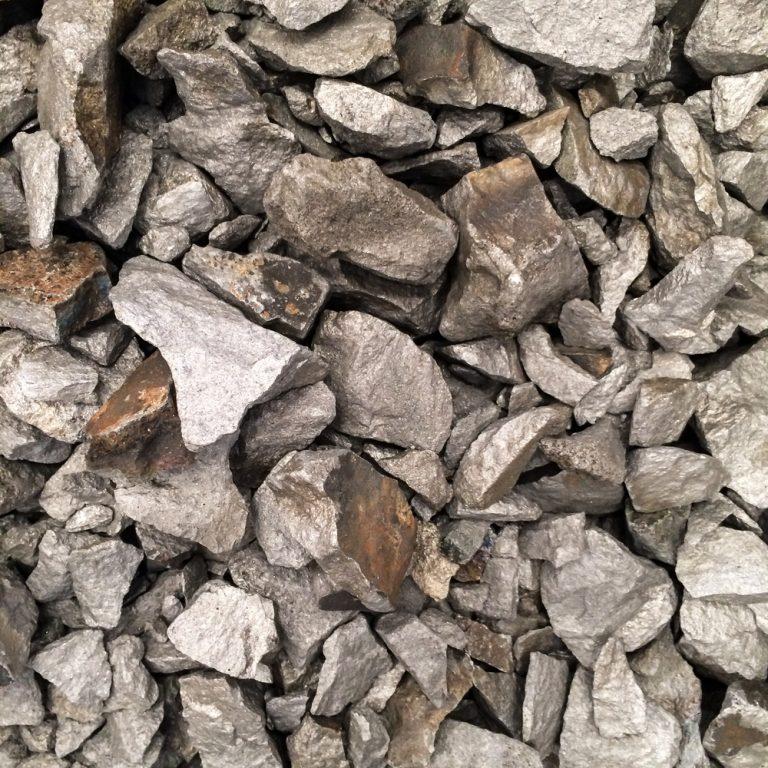
Mining firm Antofagasta Holdings (LON:ANTO) have announced a downgrade in their full-year output guidance for copper, following an on-year production and grade dip in copper and gold.
Despite a 15.4% quarterly jump in copper production and a 21.2% jump for gold from the second to third quarter, and predictions of “particularly strong” production in the final quarter for copper, the firm have downgraded their full year guidance following a 4% dip in copper production in the first nine months, and a dip of 30.1% for gold.
While much of this year’s bad news has come as a result of lower grades of gold at their Centinela site, the same site has been responsible for a boom in molybdenum, as it began production of the mineral during the last quarter. Similarly, higher grades and recoveries at the Los Pelambres site helped the firm’s molydenum output to spike 57.1% – to 4,400 tonnes – in Q3.
The firm’s production cost for molybdenum dropped 15.3%, to $1.27 a pound, between the second and third quarters. As a result, the firm are expected to finish well within their $1 billion expenditure forecast for the year.
While pointing out that it expected to share the fortune of its competitors, with an improved year for copper in 2019, Antofagasta have stated on its latest results,
“As expected, copper production increased 15% quarter-on-quarter, reaching 188,300 tonnes in Q3. Production volumes will continue to grow, with the fourth quarter expected to be particularly strong,’ said CEO Iván Arriagada.
“While we benefited from higher production in the quarter, our disciplined approach to costs has allowed us to combat inflationary pressures during the year which, combined with the strong molybdenum market, has contributed to a 15% fall in our net cash costs to $1.27/lb and for the full year guidance remains unchanged at $1.35/lb.”
The company’s share price has dipped 3.2p or 0.42% to 753.4p. Analysts from RBC Capital Markets have upgraded their stance on Antofagasta stock to ‘Outperform’, while UBS analysts were unchanged in their ‘Sell’ stance, stating that the firm offer inferior dividends to its peers.
Fresnillo updates output guidance for gold and silver

Precious metals mining company Fresnillo Plc (LON:FRES) have upgraded their output guidance for gold for the fourth quarter, whilst downgrading silver.
One of the London-listed go-to precious metal players has today announced that it has seen a 1.7 % on-year increase in gold output, as well as an on-year increase of 8.5% in silver output to date.
While guidance for gold has been upgraded from 900,000-930,000 to 920,000 to 940,000 ounces, silver has been downgraded from 64.5-67.5 million to 62.0-64.5 million ounces. This comes after a dip in output for gold in the third quarter, which saw the firm’s Q3 gold output drop 3.5% on-year, while silver output grew 6.3%.
Output has been boosted by strong performance from the firm’s Pyrites Plant and higher volumes of ore milled at the San Julian site. The firm’s current standing represents a return to form after its blip in June, but does not represent the same ground-breaking success enjoyed by other miners.
“Gold production continues to beat expectations and we are once again revising our guidance upwards following another strong quarter, in particular at our Saucito and Noche Buena mines where volumes exceed targets,” said Octavio Alvídrez, Fresnillo CEO.
“Though silver production is up against all comparable periods, we are revising full year silver guidance following continued challenges at the Fresnillo and Saucito mines. These are world class, tier one silver assets, and we remain both determined, and confident, given the actions we are taking, that we will deliver a better performance in the last quarter and in 2019.”
While year-to-date silver output is up 8.5%, ongoing concerns have seen the firm’s share price dip 1.9% or 18.6p in morning trading to 958.6p. RBC Capital Markets analysts have reiterated their ‘Top Pick’ stance on Fresnillo stock, having upgraded the stokc earlier in the month. Citigroup have reiterated their ‘Neutral’ stance.