
Greg Clark: Extension of transition period is an “option”
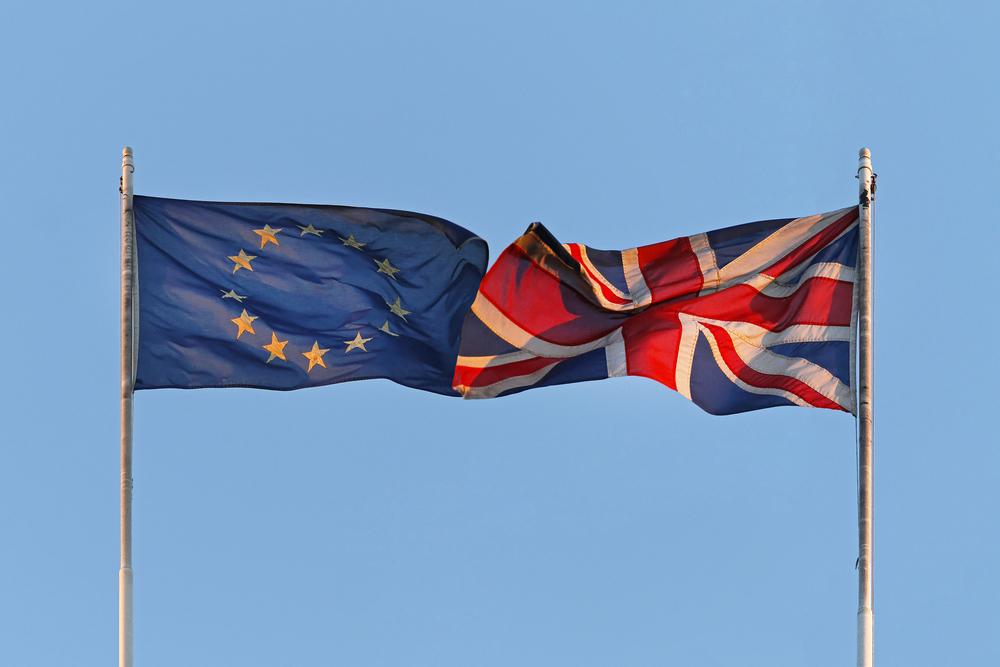
Greg Clark, the business secretary, has said that extending the Brexit transition period is an “option”.
Clark told the BBC Radio 4’s Today programme on Monday that the transition period could extend until the end of 2022, giving the UK two more years to negotiate a relationship.
“Businesses, especially small businesses, have said very clearly that they would much prefer to have one change, rather than have to change things twice, to two different regimes,” said Clark on Monday.
“It would be at our request, and that would be a maximum period. But it would be for this purpose – if the negotiations are making good progress but haven’t quite been finalised, to have the option – and it would be an option for us, and there is value in having an option – in rather than going in for a temporary period into the backstop and having a second change, to have the option, if the UK wanted, to extend the transition period,” he added.
The business secretary did not rule out an extension and said: “The point is that if we have the option we don’t have to use it. Our strong preference is clearly to complete the negotiations.”
Currently, the plan remains the same and the UK is still on track to leave the EU on 20 March 2019.
Prime Minister Theresa May will go to Brussels this week, whilst hoping to garner support for the deal from her own party who hope to remove her this week.
Last week saw the appointment of a new Brexit Secretary after Dominic Raab resigned on Friday. Stephen Barclay said he was “delighted to accept” the role.
“We now need to keep up the momentum to finalise the withdrawal agreement and outline political declaration and deliver a Brexit that works for the whole UK,” said the former minister of state in the health and social care department.
“Looking forward to working with a talented team of ministers and officials to do just that.”
TSB names new chief executive
Debbie Crosbie has been named as the new TSB chief executive after Paul Pester stepped down in September.
Crosbie is leaving CYBG where she has been the chief operating officer since January 2015. She will start her new role next year.
Pester stepped down earlier this year following the IT meltdown that took place in April this year, which left 1.9 million customers locked out of their accounts.
The meltdown cost the group £176 million and also the loss of thousands of customer accounts.
Crosbie’s salary will be £914,000 and she will also be eligible for a bonus scheme.
Richard Meddings, who has been temporarily running TSB since Pester stepped down, said: “In an impressive field of candidates, Debbie stood out. With over two decades of experience, superb retail and SME banking expertise, and a genuinely open and engaging style of leadership, we have found an outstanding new chief executive.”
“Debbie’s appointment is another step forward against the three priorities we set out in September, namely: completing the work of putting things right for customers; achieving full functionality across all TSB products and services and appointing the right chief executive for the next chapter of the group. As we look to the new year, TSB can now look forward with renewed ambition.”
The new chief executive said: “The exciting thing about TSB is just how much potential the bank has to redefine banking to better serve customers and their changing financial needs. Thanks to the skill of TSB Partners, the strength of TSB’s network, and the capabilities within the bank to deliver, TSB has all the right ingredients to be the leading challenger bank in the UK.”
The banking group used to be owned by used to be part of Lloyds Banking Group (LON: LLOY) but was bought by the Spanish group Sabadell (OTCMKTS: BNDSY).
Brexit: What do we know about Stephen Barclay?

Following the resignation of Dominic Raab, Stephen Barclay was named as the new Brexit Secretary on Friday.
Barclay’s appointment comes as Theresa May attempts to replace various resignations as ministers quit following the publication of the proposed Brexit agreement.
Friday saw two senior ministers and junior ministers and aides quit following the proposed Brexit agreement.
So who is the new Brexit secretary?
Barclay has been the minister of state in the health and social care department since January and a public Leave voter.
It was reported that before Barclay was appointed, Environment Secretary Michael Gove and Attorney General Geoffrey Cox declined the role.
Barclay said he was “delighted to accept” the role.
“We now need to keep up the momentum to finalise the withdrawal agreement and outline political declaration and deliver a Brexit that works for the whole UK,” he said.
“Looking forward to working with a talented team of ministers and officials to do just that.”
For some, the new addition to the Brexit party means very little.
“Stephen Barclay’s appointment changes absolutely nothing,” said Labour’s shadow Brexit secretary Sir Keir Starmer.
“After two years of negotiation, the prime minister has failed to deliver a Brexit deal that can command the support of Parliament.”
“A new face in the Brexit department will do nothing to bring this divided government back together,” he added.
Meanwhile, Amber Rudd replaced Esther McVey and has been named the new work and pensions secretary.
Rudd resigned as home secretary seven months ago.
On the news, Dianne Abbot tweeted: “Amber Rudd resigned because of her mismanagement of Windrush scandal. Now Theresa May puts her in the DWP. Let’s hope she shows more concern for the victims of this department’s unfairness and cruelty than she did at the Home Office.”
EE & Virgin Media fined £13.3m by Ofcom
Industry watchdog Ofcom has fined EE and Virgin Media for overcharging customers.
The regulator fined EE and Virgin Media £13.3 million for charging 500,000 customers who wanted to leave contracts early.
EE faced a £6.3 million fine for overcharging 400,000 customers and Virgin media faced a £7 million fine for overcharging 82,000 people.
“EE and Virgin Media broke our rules by overcharging people who ended their contracts early. Those people were left out pocket and the charges amounted to millions of pounds,” said Gaucho Rasmussen, who is the director of investigations and enforcement at Ofcom.
EE racked up a total of £4.3 million from overcharging customers.
Virgin Media hs not taken the fine lightly and said that it plans to appeal the decision made by the watchdog.
“We profoundly disagree with Ofcom’s ruling. This decision and fine is not justified, proportionate or reasonable,” said the chief executive of Virgin Media, Tom Mockridge.
“A small percentage of customers were charged an incorrect amount when they ended one or more of their services early and for that we are very sorry.”
“As soon as we became aware of the mistake we apologised and took swift action to put it right by paying refunds, with interest, to everyone affected.”
“For those few people we could not locate, we have made an equivalent donation to charity,” he added.
A spokesperson from EE said that recognised the mistake and apologised.
“We accept Ofcom’s findings and recognise that we have made a mistake,” said the spokesperson.
“We apologise to customers with discounted tariffs who paid more than they should have when cancelling their contracts early.”
“We’ve already refunded customers and changed the way we calculate early termination charges, and we will continue to focus on ensuring our policies are clear and fair for all customers.”
Johnston Press falls into administration, group plans rescue
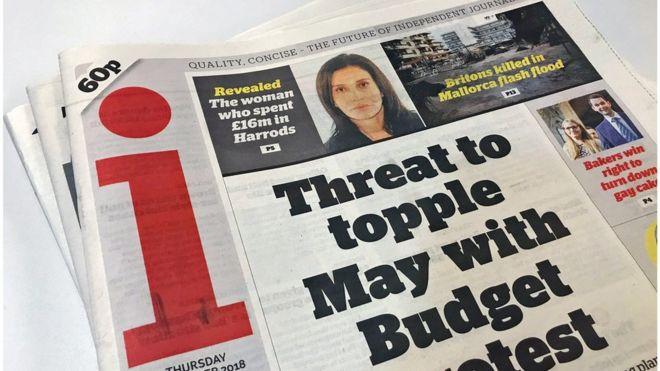
Johnston Press has fallen into administration after failing to address debts of £220 million.
The group, which owns titles including the i, the Scotsman and Yorkshire Post put itself up for sale last month but was unable to find a suitable buyer.
David King, Johnston’s chief executive, said: “There were offers for the whole group, as well as for some individual titles.”
“Each approach was examined carefully. Yet none of these offers, or combinations of offers, would have raised enough money to repay the £220 million debt that we are obliged to settle in June 2019, nor did they allow the defined benefit pension scheme to remain attached to the company.”
According to an email sent out to staff from the chief executive, the jobs of the company’s 2,000-plus staff remain safe for the moment.
“Our operations will continue uninterrupted and so it is important that you turn up for work as normal – your employment contract will be transferring to the new company and you will continue to be paid as normal,” King said in the email.
“The newspapers and websites will continue to be published as usual. As I have stressed on several occasions, our business is profitable with good margins. Our debt has constrained us,” he added.
Since administration, the group has revealed a detailed rescue plan. The group plans to file for administration and believes that the firm’s assets will then immediately be bought by its lenders.
Johnston Press said in a statement: “This is the best remaining option available as it will preserve the jobs of the group’s employees and ensure that the group’s businesses will be carried on as normal.”
“The group hopes that this transfer will be completed within the next 24 hours.”
Johnston Press was founded in 1767 and has been listed on the London Stock Exchange since 1988.
Shares in the group (LON: JPR) closed -30.56% on Friday’s close.
AstraZeneca cancer medicine fails to meet main objective
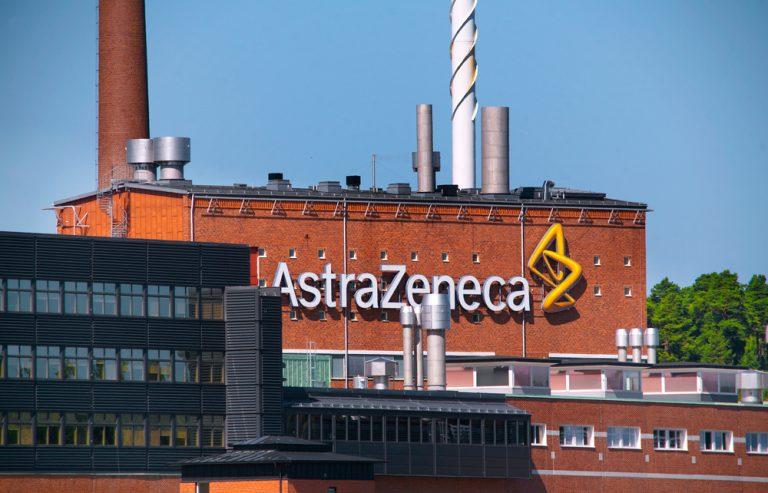
AstraZeneca has published an update on its cancer drug Friday morning.
AstraZeneca and Medlmmune, its global biologics research and development arm, said that data showed its cancer treatment failed to meet its primary objective. The primary objective of the trial was to improve overall survival compared with the standard of care.
The trial aimed to examine the efficiency of Imfinzi monotherapy and the Imfinzi and tremelimumab combination in previously-untreated patients with Stage IV non-small cell, inoperable lung cancer. However, data shows that the cancer treatment did not improve overall survival, which is one of the key metrics measured by the trial.
AstraZeneca has an abundance of experience in oncology. Indeed, the biopharmaceutical company boasts an impressive portfolio of innovative treatments. Between 2014-2020, the company has planned to launch six new medicines in this field. Equally, the company has a committed focus on lung, ovarian, breast and blood cancer medicines.
In addition to its commitment to oncology, the company also focuses on cardiovascular, renal and metabolism and respiratory treatments.
AstraZeneca currently operates in over 100 countries and its treatments are impacting the lives of millions.
Executive Vice President, Global Medicines Development and Chief Medical Officer, Sean Bohen, commented on the failed treatment: “We are encouraged to see that Imfinzi monotherapy activity is in-line with that of the anti-PD-1 class in previously-untreated patients with Stage IV non-small cell lung cancer; however, we are disappointed that these results missed statistical significance. We remain confident in Imfinzi as the cornerstone of our IO programme and continue to evaluate its potential in ongoing non-small cell lung cancer trials, including Imfinzi and Imfinzi plus tremelimumab in combination with chemotherapy.” Earlier this week, AstraZeneca announced that it will sell its US rights to its respiratory tract infection treatment to a Swedish company. Moreover, it also sold the rights to its acid-reflux medicine Grunenthal at the end of last month. Furthermore, it recently published its third quarter earnings and outlines a Brexit contingency plan. At 12:42 GMT today, shares in AstraZeneca plc (LON:AZN) were trading at -3.09%.US retail sales up by 0.8%, markets concerned with Brexit

The release of the US retail sales for October should have been one of today’s major market movers. However, the markets remain concerned with the developments in the UK concerning Brexit.
US retail sales surged last month following the first back-to-back declines since 2015.
The retail sales data implies that the US economy is on a strong path of growth.
The data has revealed that motor vehicle and building material sales soared. Some have connected this trend to the rebuilding of infrastructure following the disastrous Hurricane Florence.
US retail sales increased by 0.8% in October.
Additionally, September’s data was revised down to a 0.1% decrease instead of the 0.1% increase previously disclosed. October’s 0.8% increase is above the predicted 0.5% by economists. The total figure of retail and food services sales is 5.4% higher than this time last year. In comparison to this time last year, furniture and home furniture store sales were up by 4.3%. Equally, electronics and appliance store sales increased by 4.3%. The highest jump from this time last year is sales from Gasoline stations, jumping by 15%. Interestingly, spending at sporting goods, hobby, musical instrument and book stores dropped by 3.6%. The strong US labour market, with unemployment levels at only 3.7%, is driving consumer spending. With the lowest unemployment rate in almost 49 years, wages are being boosted. Today, the GBP has suffered a significant loss as a result of Brexit chaos. The GBP/USD is trading below 1.2800, a decrease of almost 1%. With all eyes on Theresa May, the markets seem ultimately concerned with UK press releases. Against the EUR, the USD is trading round 1.1300. The pair also remains impacted by the UK’s political chaos, but moving to a lesser extent. The Italian budget crisis has been placed on hold until next week. However, US retail sales did come in mixed here. Though the October figure was above the 0.5% expectation, the September statistic was downwardly revised. Elsewhere in the markets, the USD/JPY continue to slide towards 113. This is despite the positive US retail sales, which were not taken advantage of. The pair have been losing roughly 0.4% on a daily basis.Cineworld reveals 11.6% revenue growth but shares drop

Cineworld announced an 11.6% growth in revenue on Thursday. Indeed, for the period from 1 January to 11 November, revenue grew with the assistance of a strong performance in the US. Despite the growth in revenue, shares have dropped today by over 5%.
Total US revenue increased by 13.2%, boosted by successful films. The success of “Black Panther”, “Avengers: Infinity War”, “Venom”, “Mission: Impossible Fallout” and “Ant-Man and the Wasp” drove US revenues across the year.
Likewise, the company’s European markets saw a promising performance in the second half of the year. UK and Irish revenue was recorded at 7.1%, driven by box-office hits. “Mamma Mia: Here We Go Again!”, “Incredibles 2” and “Bohemian Rhapsody” drove sales.
Moreover, locally produced films also performed well. Indeed, “Kler” broke records in Poland, becoming the highest grossing film of all time.
In addition to box-office hits, Cineworld revealed in a trading update that the group continued to expand. It expanded across four new sites in the second half of the year, opening 31 new screens. Of these four new sites, two are located in the US and two in the UK. Equally, in the first half of the year it opened six new sites. Currently, the group has 789 sites in total boasting 9,526 screens.
In May, Cineworld recorded a 10% revenue boost for the full year, and expected full year performance to be in line with expectations.
With the latest 11.6% figure, the group remains in line with expectations. The group will continue to invest in the latest technology to fulfil its strategy. Across the period, Cineworld announced a deal to install 100 ScreenX auditoriums. Facilities of this kind offer an immersive viewing experience with a 270-degree panoramic view. As the end of 2018 approaches, new releases are expected to further drive revenue. “Fantastic Beasts: The Crimes of Grindelwald”, “Aquaman” and “Mary Poppins Returns” are all expected to drive the next year’s revenue for the group. At the start of the year, the group’s shares increased following its strong 2017 figures. Shares in Cineworld Group plc (LON:CINE) are trading at -5.59% (1508GMT).Royal Mail reveals 25% drop in first-half profits
Royal Mail plc has revealed a 25% drop in first-half profits on Thursday morning. The company’s half-year results outline that the company suffered from lower UK revenue. Following the announcement, shares in Royal Mail dropped over 6%.
The 25% drop in profits was as a result of declining letter volumes, weak UK productivity performance and higher than expected cost pressures at the GLS European logistics arm.
Revenue was up 1% on an underlying basis. Equally, GLS revenue increased 9%. Adjusted operating profit margin, after transformation costs of 3.9%, were down by 150 basis points. Moreover, adjusted basic earnings per share of 13.6p decreased by 6.5p.
Interim dividend per share was 8.0p, 4% down from the 7.7p recorded in the 2017 first-half results.
Adjusted operating profit, prior to transformation costs of £242 million, had decreased by 25% on an underlying basis.
At the beginning of October, Royal Mail released a profit warning and saw its shares plunge by almost 18%.
Group Chief Executive Officer, Rico Back, commented on the half-year results ended 23 September: “We have put in place a range of actions to improve our performance. We are reconfirming our commitment to our revised £100 million cost avoidance target and adjusted Group operating profit before transformation costs of £500 million – £550 million for the financial year.” “We will update the market next year on our strategy. There will be a greater emphasis on how we connect customers, companies and countries through our domestic and international businesses. There will be a clearer focus on financial performance and management accountability. In March, we will host our first Capital Markets day since IPO in 2013. We will share more detail then about our direction for the next five years.” In September, the company purchased the Canadian parcel delivery firm, Dicom Canada, for roughly £213 million. Later in the month, the Chairman stepped down in order to focus on the estate agent Countrywide (LON:CWD). Shares in Royal Mail plc (LON:RMG) are currently down by 6.91% (1423GMT).Oilex shares surge 40% on Cambay field high court decision

Shares in Oilex (LON:OEX) jumped over 40% on Thursday following the decision from an Indian high court relating to their joint venture with Gujarat State Petroleum Corporation (GSPC).
Oilex is drilling for gas in the Cambay field located in the Indian state of Gurjarat.
The project is a joint venture between Oilex and Gujarat State Petroleum Corporation and the court ruling relates to the non-payment by GSPC for their shares of costs.
The case has held back the progress in Cambay field and today’s release paves the way for the resumption of the drilling program.
The high court has issued a judgement that delays an Event of Default notice on condition GSPC deposits $1.1 million with the court and provides a bank guarantee of a further $3 million.
GSPC are also to continue to meet their ongoing obligations within the joint venture.