Financial Times pulls out of Saudi investment conference

The Financial Times declared today that it will pull out of Saudi Arabia’s Future Investment Initiative amid pressure after a Saudi journalist went missing this week. The newspaper followed CNN’s move to withdraw its participation from the FII, along with Viacom CEO Bob Bakish and Uber CEO Dara Khosrowshahi, after journalist Jamal Khashoggi went missing after visiting the Saudi consulate in Istanbul. The event, scheduled to take place in Riyadh between 23rd and 25th October and dubbed ‘Davos in the Desert’, had named CNBC, Bloomberg, and Fox Business Network as partners. In a statement today, Lionel Barber, editor of the FT, said: “The Financial Times will not be partnering with the FII conference in Riyadh while the disappearance of journalist Jamal Khashoggi remains unexplained.”
Alleged murder
Khashoggi has been missing since 2nd October after entering Turkey’s Saudi consulate, with Turkish authorities alleging that the journalist was assassinated inside its walls by a Saudi hit-squad. The FT’s decision follows the New York Times’ withdrawal as media partner on Wednesday, with columnist Andrew Ross Sorkin, who was to moderate a panel at the conference, declaring on Twitter that he was “terribly distressed” by the journalist’s disappearance.
Uber Boycott
On Friday, Khosrowshahi announced in a statement: “I’m very troubled by the reports to date about Jamal Khashoggi. We are following the situation closely, and unless a substantially different set of facts emerges, I won’t be attending the FII conference in Riyadh.” The Uber CEO’s concerns are striking, since the kingdom’s sovereign wealth fund, the Saudi Arabian Public Investment Fund, invested $3.5 billion in the company in 2016, while Uber’s largest shareholder Softbank gains much of its investment capital from Saudi Arabia. Concerns about Khashoggi’s welfare escalated after Turkish authorities revealed today that audio recordings exist documenting the journalist’s murder and dismemberment.


Tweet of the Week: 12th October 2018

A week on from Theresa May’s ABBA-themed riposte to those who mocked her dancing, tensions surrounding Brexit negotiations have spiralled into a bizarre dance-off between the Prime Minister and her opponent in the exit talks, President of the European Commission, Jean-Claude Juncker. After a Daily Telegraph journalist accused Juncker of mocking the Prime Minister by doing his own jig on stage before a speech in Brussels on Monday, a commission spokesperson tweeted the reporter to “relax”, and reminded him that “Without a song or a dance what would our life be?” echoing ABBA’s ‘Thank You For the Music’. If Juncker’s ‘Maybot’ was a sly attack at May’s performance last week or simply a harmless bit of fun, it was probably not what the PM had in mind when she demanded “respect” from the EU last month after her humiliation at Salzburg. Moreover, as the Article 50 deadline fast approaches, what might Juncker’s moves mean for a successful Brexit? As the tweet exchange between the Telegraph writer and the EU spokesperson came to head, here is how Twitter reacted:

Sports Direct buys Glasgow House of Fraser in £95m deal

0
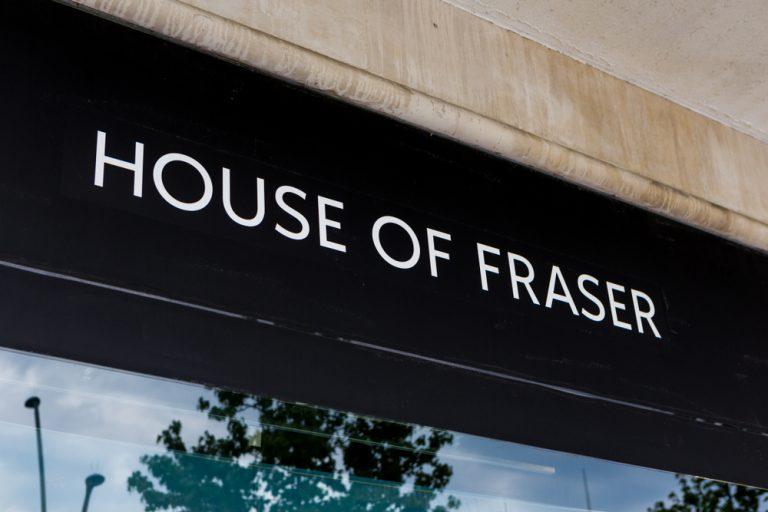
Sports Direct (LON: SPD) has bought the House of Fraser building in Glasgow, in a move that saves 800 jobs. The 350,000 sq ft site cost Mike Ashley £95 million, who has vowed to “further elevate and enhance this iconic department store”. The deal will be completed by January 2020 when the building will be transformed into the “Harrods of the north,” with luxury brands including Hermes (EPA: RMS), Christian Louboutin and Prada (FRA: PRP). “We are overwhelmed and proud to own such an iconic destination,” said Michael Murray, the head of elevation at Sports Direct. “Acquiring the freehold enables us to elevate and invest in the store in order to partner with a broad range of luxury brands in future. This is fantastic news for all parties.” Susan Aitken, the leader of Glasgow city council, said: “A major investment on this kind of scale is a clear vote of confidence in Glasgow, and credit must also go to hundreds of Frasers staff who are absolutely integral to the business’s success and its enduring popularity with city shoppers. “With the future of this iconic retailer’s Glasgow presence secured, we look forward to the new owners building on its cherished relationship with shoppers and reputation as a valued city employer for almost 170 years.” Sports Direct bought House of Fraser earlier this year in a £90 million rescue deal, acquiring 59 stores across the UK. Ashley has vowed to turn House of Fraser into the “Harrods of the high street”. He has promised to keep as many stores open as possible but jobs losses will be inevitable. The Sports Direct boss has blamed “greedy” landlords for the closure of three House of Fraser department stores.
Stores in Edinburgh, Hull and Swindon will close after landlords refused to cut rents. The store in Bath is also at risk of closure.
   

RBS pays first dividend since financial crisis

0
The Royal Bank of Scotland (RBS) has paid its first dividend since it was rescued from collapse ten years ago. The dividend is worth around £240 million to 190,000 shareholders including the state vehicle UK Government Investments (UKGI). “I’m pleased to be able to pay a dividend to our shareholders; a small return after their many years of patience and a testament to the hard work of everyone at this bank,” said chief executive, Ross McEwan. “This is another important milestone in our turnaround, almost 10 years to the day that RBS was rescued by the British taxpayer.” “We have created a smaller, safer bank that is generating more sustainable profits. Our capital position is above our target and we are also looking to return any excess capital as soon as possible to shareholders,” he added. The bank is still 62% owned by the government, which bought a £45 billion stake in the group when it was on the brink of collapse. The government began selling shares in the bank earlier this year and reduced its holding from over 80% to 62%. Shares were sold below the 502p-a-share price, the price the government originally bought the stake. “I would love it if we could sell the shares at a much higher price. Obviously, that is what everyone would like to do, but we need to be realistic and look at the market conditions,” said Treasury Economic Secretary John Glen on the reduction in price. On Friday morning, campaigners stood at the RBS branch in Angel, North London and gave passers-by a card that read: “10 years since the global financial crash, happy anniversary” on its front. Inside, it said: “10 years on and none the wiser! A decade on and you haven’t changed a bit! How come you still look exactly the same?” Shares in RBS (LON: RBS) are trading up 1.97% at 249,00 (1252GMT).    

Chinese exports rise despite Trump tariffs

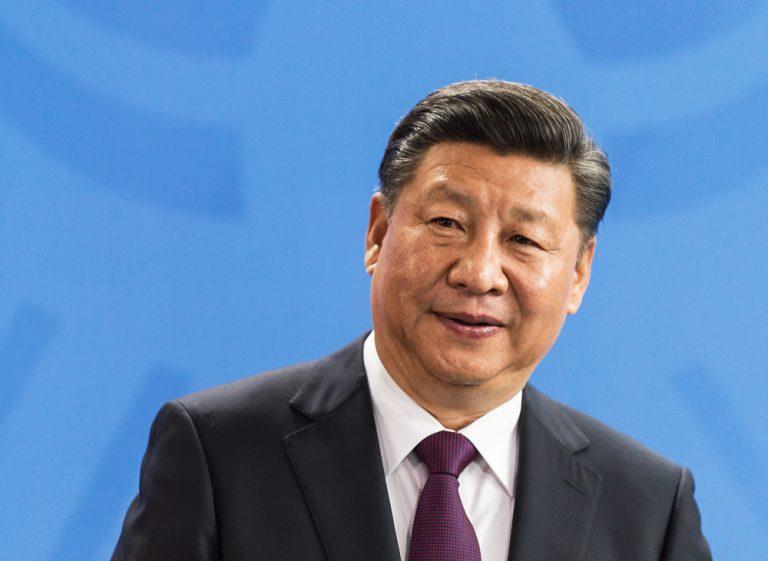
Chinese exports rose in September, despite the increasing pressure from the United States tariffs amid the continued trade war between the two powers. According to government data published on Friday, Chinese exports rose 15% last month – an increase in August’s surplus of $27.89 billion and significantly better than predicted by analysts. China achieved a surplus of $31.69 billion for September, compared with Reuters forecasts of $19.4 billion.

Unlikely surge

In a note to clients, Julian Evans-Pritchard, senior China economist at Capital Economics said: “The big picture is Chinese exports have so far held up well in the face of escalating tensions.” Mr Evans-Pritchard suggested that a rise in competitiveness due to a weaker renminbi may have caused the exports surge. Mr Evans-Pritchard also predicted that this performance would not endure: “With global growth likely to cool further in the coming quarters and US tariffs set to become more punishing, the recent resilience of exports is unlikely to be sustained.” These figures emerge after the US imposed new 10% tariffs on a further $200 billion of Chinese goods on 24th September. These accelerated numbers indicate that China is buffeting the first effects of new tariffs that the Trump administration imposed on $50 billion of Chinese exports this summer.

Midterms tension

Li Kuiwen, the spokesman for China’s customs agency, said: “There are many uncertain and unstable factors in the international environment, and the China-US trade friction is constantly escalating.” The data, announced by China’s custom’s agency, is the last to be released before the 6th November US midterm elections and may exacerbate tensions with Washington. Last month, Donald Trump accused China of meddling in the midterm elections at the UN, declaring: “They don’t want me or us to win because I am the first president to ever challenge China on trade.” Trump threatened in September to place tariffs on all Chinese exports altogether, representing $267 billion of exports, with tensions continuing to rise and China matching existing tariffs dollar for dollar.

Cheese company Ornua begins stockpiling in case of hard Brexit

3
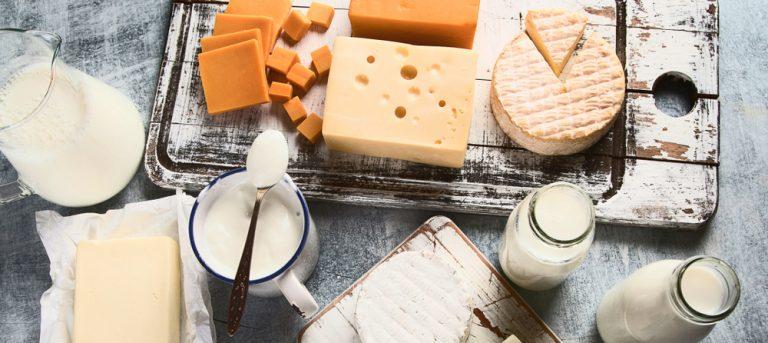
Dairy company Ornua has begun stockpiling cheddar in the UK to avoid the effects of price-hikes post-Brexit. The Irish company behind brands such as Kerrygold and Pilgrims Choice have expressed fears that sales will plummet in British supermarkets if tariffs are implemented. In a statement, the group said: “As the full implications of Brexit are unclear, Ornua is managing downsides and preparing for uncertainty. As such, Ornua has increased its storage capacity in the UK to facilitate increased storage of Irish cheddar. This is to ensure a consistent and secure supply to meet the needs of Ornua’s strategic customers in the UK market.” The company is stockpiling cheddar in Britain and Ireland to beat any shock price hikes post-Brexit. This year the group posted record sales of about £2 billion. Ornua is not the first company to announce plans to begin stockpiling before the UK leaves the EU. Cadburys owner, Mondelez International (NASDAQ: MDLZ), is stockpiling ingredients in case of a no-deal Brexit. “Like the whole of the food and drink industry in the UK, we would prefer a good deal that allows the free flow of products as that would have less of an impact to the UK consumer,” said Hubert Weber, president of Mondelez Europe. “However, we are also preparing for a hard Brexit and, from a buffering perspective for Mondelez, we are stocking higher levels of ingredients and finished products, although you can only do so much because of the shelf life of our products. We have a contingency plan in place to manage [a hard Brexit], as the UK is not self-sufficient in terms of food ingredients, so that could be a challenge.” The Office for Budget Responsibility warned on Thursday that a no-deal Brexit is likely to lead to the shortage and hoarding of imported products. “In a scenario where the UK and EU are unable to agree to the continued mutual recognition (‘grandfathering’) of existing product standards and professional qualifications, all existing goods may need to be re-approved before sale and services trade would be severely restricted by the loss of market access,” said the watchdog.

Ikea opens central London ‘planning studio’

0
Ikea has opened a mini spin-off store in central London, which opened on Thursday. The UK boss has said the new high street outlets are the “tip of the iceberg,” as the group hopes to change its business model. Javier Quiñones, Ikea’s UK and Ireland country retail manager, said: “This is part of the transformation of Ikea.” “This is only the tip of the iceberg. We are looking for other city centre stores … we expect to open more like this but also other formats [with] home furnishing accessories and a food offer.” “What we are doing is looking at the future and how we can be where the consumer wants us to be. We know 50% of people do not have a car today which makes the accessibility of some of our units not extremely easy.” “The big units are the most important assets we have. The biggest part of the growth is online but the stores themselves are also growing,” he added. Last year, Ikea blamed its 40% fall in profits on higher wages and the cost of investments online and in-store. The central London store is Tottenham Court Road and is called a “Planning Studio”. It will allow customers to receive advice from staff members. Ikea’s London city centre market leader Jane Bisset said: “Our new city centre approach brings IKEA into the heart of London and is designed to complement our larger stores and digital offering, so customers have a wide range of choices that suit their needs and lifestyles.” “The Ikea Planning Studio on Tottenham Court Road will give Londoners a relaxed and professional experience to get the advice and inspiration they need to plan more complex or large-scale home projects, with the expertise and specialist support of our co-workers, alongside a great service package,” she added.  

Patisserie Valerie: Finance director arrested

1
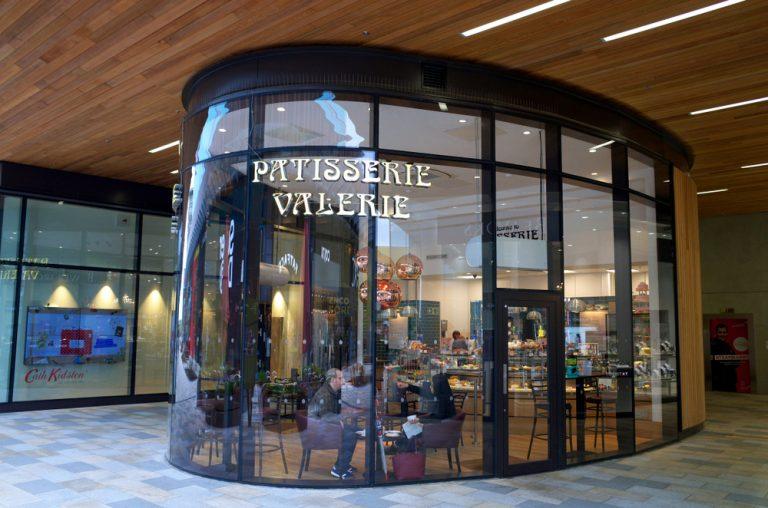
The finance director of Patisserie Valerie (LON: CAKE) has been arrested. In a statement to the London Stock Exchange, the cafe chain said that Chris Marsh had been arrested on Thursday night and been released on bail. The arrest comes after Patisserie Valerie uncovered “significant, and potentially fraudulent, accounting irregularities,” and suspended Marsh. On Wednesday, the bakery chain found gaps in its accounts that had “significantly impacted the company’s cash position and may lead to a material change in its overall financial position”. Shares in the group have been suspended since Wednesday. On Thursday, the group said it would be forced to close down if it did not get an “an immediate injection of capital”. Patisserie Valerie has almost 3,000 members of staff, which may not get paid this week. HMRC has filed a winding-up petition against its main trading subsidiary, Stonebeach, over an unpaid £1.14 million tax bill.

Julie Palmer, from the accounting firm Begbies Traynor, said on Friday that the winding-up petition was issued last month, and Patisserie Valerie has 21 days to deal with the issue.

“”There is a whole sequence of events here where we’re talking about a listed company which until Wednesday was worth over £400 million,” she said.

“It is actually quite staggering that [the winding-up petition] has happened without any notification to the stock market and I believe even the board said they weren’t even aware this had been served on the company.”

The chain was valued at £450 million on the stock exchange before the crisis emerged.

Luke Johnson, the chairman and owner of a 37% stake in the group, said on Wednesday: “We are all deeply concerned about this news and the potential impact on the business. We are determined to understand the full details of what has happened and will communicate these to investors and stakeholders as soon as possible.”

Apple hires 300 engineers from British supplier Dialog

0
Apple will employ 300 computer chip engineers following a deal with Dialog Semiconductor. The company is paying one of its suppliers, Dialog Semiconductor, $300 million (£227 million) for the engineers. In addition to the acquisition of new engineers, Apple will also gain some of Dialog’s patents and facilities in Reading. The staff involved in the acquisition are based in Swindon, Livorno (Italy), Nabern (Germany) and Neuaubing (Germany). The company’s hardware technologies chief, Johny Srouji, said: “Dialog has deep expertise in chip development and we are thrilled to have this talented group of engineers who have long supported our products now working directly for Apple.”

Apple has also announced that it has pre-paid Dialog in order to secure supplies.

Indeed, the company paid an additional $300 million to its supplier in order to secure products for the next three years. Senior editor at the engineering news site AnandTech commented: “In the industry this kind of move is known as being more vertically integrated,” “It’s something that’s already true of Samsung and its smartphones – for example it also makes its own displays.” “The benefits for Apple having full control at the component level should be lower overheads and therefore reduced costs.” “But a downside could be there’s less fallback if something goes wrong.” The deal with Dialog is set to be completed within the first six months of next year. Moreover, Chief Executive of Dialog, Jalal Bagherli, said that he hoped that the deal would allow Dialog to become less dependent on Apple. “For us to change in any other way would be more painful,” “They wanted to create their own solutions in-house. And we could accelerate that, but in the process monetise some of our intellectual property assets and also find a home for many of our employees in a good company – I think it’s a win-win situation.” At 11:21 GMT-4 today, shares in Apple Inc. (NASDAQ:AAPL) were trading at -0.38%. At 17:07 CEST today, shares in Dialog Semiconductor PLC (ETR:DLG) were trading at +25.67%.

Young people prefer casual employment

0
A survey has revealed that only 23% of young people have a once a week job, such as a Saturday job. This is significantly lower than their parents, of which 43% worked once a week. Financial services provider OneFamily revealed the disparity between generations. Rather than working for a business with set number of contracted hours, teenagers are opting for more relaxed work. This includes occasional shifts in dog walking, cleaning and babysitting. Indeed, 45% of young people are earning money by picking up occasional employment which better suits their schedule. Interestingly, 25% of young people in full-time education have said that weekend roles cease to exist. In addition, it has also become apparent that one in six businesses no longer desire to employ young people. Another reason for the percentage drop between generations is the creation of employment apps and technology. Today, young people can pick up shifts for occasional jobs through services such as HireHand, allowing them to earn cash fast. For example, HireHand is a company that puts young people working in hospitality in contact with outlets seeking last minute assistance. These developments would not have been available to their parents and account for a change in working habits between generations. But, often these jobs are not always the most sociable hours if they are to be completed around a young person’s studies.

4 in ten young people seek employment in order to fund big expenses, like a holiday or an expensive gadget.

Whereas 50% seek to spend their money as they wish. Additionally, some have decided not to work at all because of concerns of being distracted from their education. Out of those who do work, 40% have revealed that working part-time alongside studying has taught them to manage money. Managing director of children’s savings at OneFamily, Steve Ferrari, has said: “We would encourage parents to see the benefits of their children working while studying”. “The lessons that part-time employment can instil, from a good work ethic to earning and budgeting, is invaluable.”