
Renold hikes prices and profits jump 71%
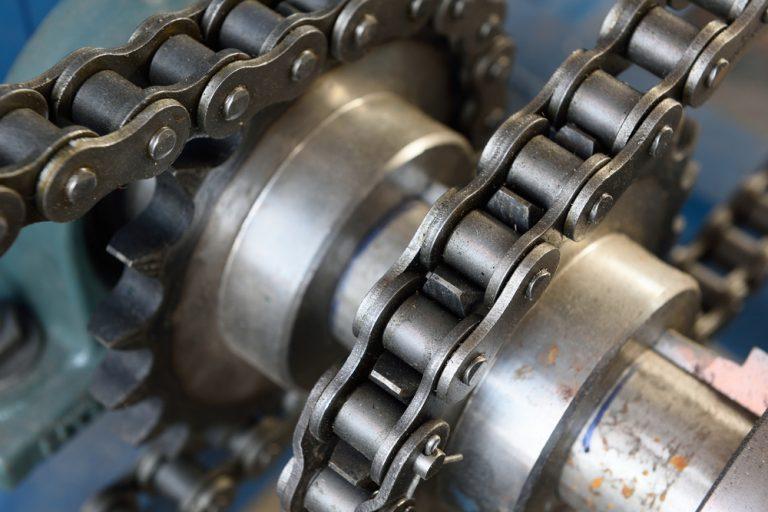
Industrial machinery manufacturer Renold Plc (LON:RNO) has seen its profits spike after passing through increased raw material costs and boost revenues with higher prices. This represents another positive boost for engineering firms listed in the capital.
Pre-tax profit for the first half through September was up 71% on-year to £4.1 million, up from £2.4 million for the same period last year.
Similarly, the firm are enjoying a boost in revenues, which are up 4.5% percent between 2017 Q1 compared to Q1 2018.
“I am pleased to report that we have made good progress in addressing the short-term issues encountered last year,” Renold Chief Executive Officer Robert Purcell said.
“The improvement is most pronounced in the Chain division, where we are seeing benefits from the many actions implemented.”
“Our strategy is delivering a more robust, higher margin business and we look forward to continuing current momentum into the second half of the year.”
The company are in the midst of a strategic overhaul, with the recent build of a new factory in the Jiangsu region of China. The firm are also considering a switch the AIM market in London, which it believes will give it the “ability to execute transactions with greater efficiency and certainty.”
Renold shares are currently trading up 6.35% or 2.2p, up to 38.8p a share 13:59 GMT.
Peel Hunt have initiated their first rating of Renold stock, with a ‘Buy’ stance as of today.
Galileo Resources shares rise after exploration target announcement

Galileo Resources shares (LON:GLR) rose during Wednesday trading after the company announced an exploration target at its Star Zinc Project in Zambia.
The resource and development company said that the target had been located at the Star Zinc project, which it owns a 80.75% stake in.
According to the update, the exploration target is estimated to be between 600,000 and 900,000 tonnes, and expected to have a grade of 10-12 % Zn.
Colin Bird, Chief Executive Officer of Galileo Resources, issued the following statement on the results:
“The result of this programme and the Model is extremely pleasing with a significant increase in conceptual tonnage and metal, which confirmed our belief in the project’s potential. We believe Star Zinc now has the drilling density and necessary confidence to convert the CGT to a maiden JORC Mineral Resource Estimate, planned for Q1/Q2 2019 once all the chemical assays have been received. Past comparison of pXRF results with chemical assays suggest that pXRF is biased towards lower values than chemical assays. We will modify the Model and report accordingly as the chemical assays are received.
He continued: “We have instructed our consultants to expedite required work with a view to applying for a mining license when this is completed. To this end we intend to commission further refinement of the Model to delineate the body into high grade and low grade Willemite components and to develop an open pit design/mine plan with a view to selective mining of a high grade component for direct ore feed and a lower grade Willemite component for possible physical upgrading also as ore feed. This is a major advantage for the project, pursuant to the Term Sheet agreement to acquire Star Zinc, in that a dedicated process plant would not be necessary. Negotiations continue with Kabwe for an offtake agreement for Star zinc ore.”
Alongside the Star Zinc project in Zambia, the company has three other assets. These include two in South Africa, and one in Nevada in the US.
Shares in Galileo Resources are currently up 4.40% as of 14.13PM (GMT).
TfL set to lose £200m from Crossrail delays

Transport for London (TfL) is set to lose £200 million next year due to Crossrail delays, the London Assembly has concluded.
Earlier this month, Crossrail’s chief executive Simon Wright announced his resignation amid continual delays to construction of the project.
The Elizabeth line was initially due to be completed in December of this year, however, it was revealed back in August that the project would now require another year until it would be up and running.
Last month the government agreed to provide a £350 million loan to the Crossrail development, to help speed up the process.
The former transport secretary, Jo Johnson, announced the interim measure in parliament in late October.
Since the announcement, Johnson tendered his resignation amid disagreements over how the Prime Minister is handling Brexit negotiations.
Gareth Bacon, chairman of the London Assembly’s budget committee said: “We now have fresh information about what the Crossrail delay will cost TfL – almost £200 million in 2019-20 in lost passenger fares and advertising revenue. But the capital costs are still unknown and current estimates are subject to change. We won’t have a real figure until next summer.
“What we do know is that TfL has already maxed out its corporate credit card just to keep the project going to March 2019. Uncertainty about how much Crossrail might end up costing means TfL must do everything it can elsewhere.”
The London Mayor, Sadiq Khan has been criticised for his overseeing of the project, in light of continued delays and a mounting deficit. Notably, as Mayor, Khan is chair of the TFL board.
Alongside delays to completion of the Elizabeth line, Sadiq Khan’s decision to freeze rail fares has also been blamed for racking up a deficit.
Some estimates have suggested that the initiative has cost TfL as much as £640 million.
Nevertheless, Khan has defended the fare freeze as a necessary move to ensure the capital is more affordable for its inhabitants.
Eurostat apprises dip in Industrial Production

Eurostat – the EU’s in-house statistics body – have today released figures that lay out the woes of September industrial output in the ‘euro area’.
After promising output in August, which saw 1.1% production growth within the EU28, September production in the EU as a whole dropped by 0.3%.
“In the euro area in September 2018, compared with August 2018, production of energy fell by 1.7%, non-durable
consumer goods by 1.3%, durable consumer goods by 0.7% and intermediate goods by 0.3%, while production of
capital goods rose by 0.3%.” said the monthly comparison in the Eurostat news release.
The worst culprits for falling production were Latvia, Lithuania and Portugal, with production output faltering by 3.3%, 3.1% and 2.8% respectively.
Conversely, success stories included Denmark (+2.8%), Ireland (+2.2%) and the Netherlands (+1.2%).
On-year, Ireland and Denmark have been the marked success stories, with industrial production rising 9.4% and 4.3% respectively.
As a whole, on-year production output across the board has been a story of two halves,
“In the euro area in September 2018, compared with September 2017, production of capital goods rose by 2.5%
and non-durable consumer goods by 1.6%, while production of intermediate goods fell by 0.3%, energy by 1.4%
and durable consumer goods by 2.5%.”
Going forwards, output will be subject to market fragility in the midst of trade tensions, Brexit negotiations and the political and monetary situations within Italy and Germany.
GDP woes realised with figures for Q3

With institutes such as the EMU releasing their Q3 performance figures, it has been apparent this morning that even the most reliable large economies have seen their GDP growth hit a period of friction in 2018.
Alongside the UK; Japan, Germany and China have all seen disappointing GDP performance. Trade tensions, turbulent exchange rates and speculative over-extension by developing economies have created volatile market conditions and left pundits feeling bearish.
Japan continues its underwhelming 2018:
Japan has suffered an on-year GDP contraction of 1.2% on-year, with a dip of 0.3% from last quarter’s impressive figures. This was on target following expansion in the prior quarter, but represents a GDP contraction in two of the three quarters in 2018, which follows eight consecutive quarters of growth prior to this financial year.Germany slows amid exports slow-down:
Similarly but perhaps more worrying is the German manufacturing industry pumping the brakes. After what seemed like an almost decade-long period in the ascension, the 2018 Q3 represents the first GDP dip for the German economy since 2015, with an on-quarter drop of 0.2%. Growth per annum now stands at 1.1%, which sits behind Reuters polled forecasts of 1.3%. Weakened performance comes amid domestic political tensions and international trade conflicts, but experts have also pointed out the damaging effects of new emissions policies on the profit margins of the auto export sector. “The slight decline in GDP compared to the previous quarter was mainly due to foreign trade developments: provisional calculations show there were fewer exports but more imports in the third quarter than in the second,” said the Federal Statistics Office. “The poor export performance, despite a weak euro exchange rate, suggests that trade tensions and weaknesses in emerging markets could continue to weigh on Germany’s growth performance”, said ING economist Carston Brzeski.China continues to slow with tariff tensions:
On a similar note, China’s GDP growth has dropped to its lowest level since the first quarter of 2009, with trade tensions compiling its previous GDP slowdown. While an on-year growth of 6.5% is not to be scoffed at, it pales in comparison to China’s past trends, and evidences just how deeply rooted the pressures of the Sino-US tariff tensions are seated. The growth for the quarter lags behind the 6.7% growth of the last quarter, and the 6.6% growth forecast by Reuters. Kelvin Tay of UBS Global Wealth Management told CNBC that the slow-down was unsurprising, “China cannot be growing at 6.6-6.7 percent every quarter because of the fact that they’re starting to deleverage and also for the fact that you’ve got a trade dispute going on with the Americans,”
“It’s very clear that China’s economy is on a very soft footing at this moment and in the meantime, we do see there are a lot of bearish sentiments towards China’s economic outlook, as well as the financial market outlook,” said Hao Zhou, senior emerging market economist for Asia at Commerzbank.
SSE half-year profits tumble 40%
SSE profits (LON:SSE) tumbled 40% for the half-year, with the company blaming higher gas prices.
Company chairman Richard Gillingwater commented on the figures:
The energy firm reported that adjusted earnings per share is 19.6 pence, down 39.9%. Adjusted profit before tax came in at £246.4 million.
The statement added that loss per share would 22.6 pence, on a reported pre-loss of £265.3 million.
Moreover, the company said that its proposed merger with Npower would also face delays.
The merger has already been the energy regulator, and once completed, will create the UK’s second-largest energy supplier.
“Although our half-year results are slightly ahead of the position we set out in September, they fall well short of what we hoped to achieve at the start of the year. This is disappointing and regrettable, but important changes are now being made to the way SSE manages its exposure to energy commodities.”
“The commercial terms of the proposed combination of SSE Energy Services and npower are the subject of ongoing discussions, and creating a new independent energy supplier remains our objective. The Board believes that the best future for SSE Energy Services, including its customers and employees, lies outside the SSE group.”
With regards to future outlook, Gillingwater added:
“Looking ahead, we are taking forward the strategy we set out in May to position SSE as a leading energy company in a low carbon world, with a focus on regulated networks and renewables, complemented by flexible thermal generation and business energy sales. Material progress is being achieved in these businesses, which make up most of the value in SSE.”
Meanwhile, rival supplier British Gas, which is owned by Centrica, has also been struggling amid rising prices.
In 2017, British Gas lost 1.3 million energy accounts, as customers opted to switch suppliers amid continued hikes to bills.
Losses only continued into 2018, with British Gas losing 70,000 customers during the first four months of the year.
Flybe up for sale following profit warning

Flybe (LON:FLYB) is set it to put itself up for sale, a mere few weeks after issuing a profit warning.
The low-cost airline has been struggling for a host of reasons in recent years.
Namely, higher fuel prices, continued Brexit negotiations and pound sterling volatility had all impacted profits.
Back in October, the Exeter-based air carrier warned on softer trading, expecting pre-tax losses to total £12 million.
At the time of the warning, Chief executive Christine Ourmieres-Widener commented:
“There has been a recent softening in growth in the short-haul market, as well as continued headwinds from higher fuel and currency costs. We are responding to this by reviewing every aspect of our business especially further capacity reduction, cash management and cost savings.”
Christine Ourmieres-Widener took over as Chief Executive at Flybe in January 2017. Prior to her role at Fybe, she also held positions at CityJet and AirFrance.
Flybe is one of many airlines struggling to turn profits amid increasingly turbulent trading conditions.
Last year low-cost airline Monarch fell into administration after a series of difficult quarters.
Most recently, Ryanair (LON:RYA) issued a profit warning, blaming both strike action and rising fuel costs for the weaker performance.
Shares in Flybe are currently trading +4.49% as of 11:08AM (GMT).
UK inflation remains at 2.4% in October

UK inflation in October held steady at 2.4%, below analyst expectations of 2.5%.
The Office for National Statistics (ONS) noted declines in food and clothing prices, however these were partially offset by petrol, diesel and gas prices.
ONS head of inflation Michael Hardie said: “Prices paid by consumers continued to rise at a steady rate with falls in food and clothing offset by rising utility bills and petrol, as crude prices continued to rise.”
Last month, inflation levels fell to 2.4%, dropping from the 2.7% recorded for August.
The fall was attributed to lower prices of food and non-alcoholic drinks. Back in 2017, UK inflation reached a six-year high of 3.1%.
Earlier in November, the Bank of England opted to hold interest rates at 0.75%, in light of continued uncertainty regarding Brexit negotiations.
Nevertheless, officials from the Bank recently stated that they believe that a deal will be the most likely outcome.
“I still think it’s the most likely outcome, but obviously over time, every day there are headlines – positive, negative – which will send the currency in particular one direction or the other,” deputy governor Ben Broadbent said in comments to CNBC.
“But for our part we have to make a particular assumption on which to condition our forecasts, that seems to me still to be the most likely outcome and that’s the one we choose.”
The latest inflation figures come amid news that UK and EU negotiations have agreed upon a Brexit deal.
The cabinet are set to meet later this morning to approve the draft agreement.
FirstGroup announces new director and half-year results
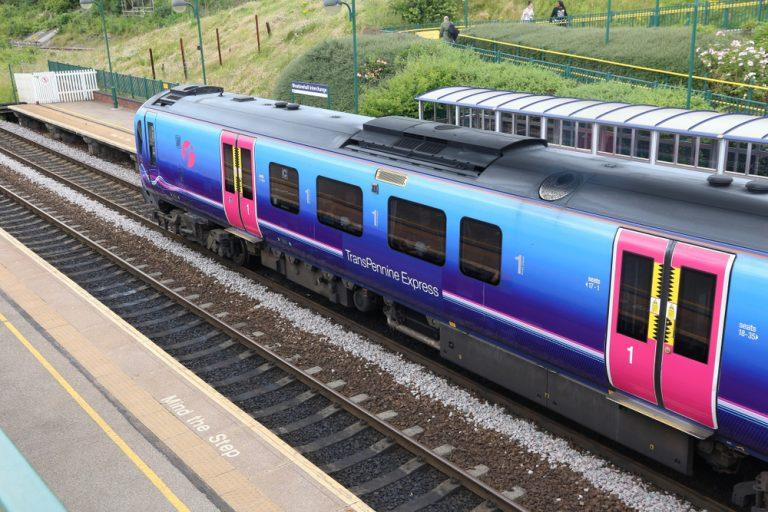
FirstGroup plc announced on Tuesday that it had appointed Matthew Gregory as Chief Executive with immediate effect. Matthew Gregory was previously the group’s Chief Financial Officer and also performed the role of Interim Chief Operating Officer.
The appointment is following the departure of Tim O’Toole after the transportation operator reported substantial losses over the year.
FirstGroup Chairman, Wolfhart Hauser, commented on the appointment:
“Having conducted a thorough selection process, which considered external and internal candidates, the Board unanimously concluded that Matthew is the right person to take on the role of Chief Executive. Matthew’s comprehensive knowledge of the Group, his experience in previous roles and leadership capabilities are precisely the qualities needed to drive the Group’s value mobilisation strategy at pace, and I look forward to the Group making further progress under Matthew’s leadership.”
The group has also announced that Steve Gunning has been appointed to the Board as an independent Non-Executive Director.
In addition to the directorate changes announced, FirstGroup has also published its half-year report.
Trading in the first half is in line with the objectives outlined at the beginning of the financial year. As a result, the full year outlook remains unchanged. For the six months to September 30, adjusted profit before tax increased 37.7% to £42 million. Equally, revenues rose 19.2% to £3.3 billion. Revenue growth was assisted by First Rail’s strong performance. Like-for-like passenger revenue increased by 5.5%. Great Western Rail provided a strong financial contribution, despite recent rail chaos. The results did reveal that South Western Rail had experienced “challenging” trading in this period. This is as a result of infrastructure reliability issues and problems with industrial relations. The group revealed that it was working with industry partners to resolve these problems. First Rail revenues increased by 80.7% to £1.22 billion during this period.However, FirstGroup’s statutory loss before tax grew to £4.6 million from £1.9 million the previous year.
Newly appointed Chief Executive of FirstGroup, Matthew Gregory, commented on the results: “We have made good progress in the first half delivering on our plans to strengthen the Group, generating sustained cash flow to further reduce leverage and deploy to targeted growth. First Student’s bid season success will see our largest business return to growth as planned, while maintaining our disciplined approach to pricing. In September, First Bus completed the rollout of contactless payment across the UK on schedule, becoming the first of the UK’s principal bus operators to do so. Together with other revenue and cost actions this helped First Bus to achieve strong margin improvement in the period. Meanwhile our First Rail operations continued to focus on improving services for our passengers while maintaining overall profitability in a more challenging industry environment during the period.” “We completed our review of Greyhound and have launched a plan to optimise our smallest business for the challenges it is facing. Having recently addressed our loss-making activities in Western Canada, these further actions will assist in improving Greyhound’s performance going forward. “In summary, we are getting on with delivering our plans to improve performance in our divisions. Although conditions in our markets remain challenging, our performance to date underpins the confidence we have in our unchanged outlook for the full year.” At 10:56 GMT today, shares in FirstGroup plc (LON:FGP) were trading at +8.98%.Coty shares edge up as chief executive resigns

Camillo Pane, the chief executive of Coty, has announced that she will step down with immediate effect due to family reasons.
Pierre Laubies, who is the former chief executive of coffee giant Jacobs Douwe Egberts (JDE), will replace Pane.
“We are very grateful for Camillo’s many contributions to Coty during his time as chief executive,” said Chairman Bart Becht.
“We are all very thankful for Camillo’s valued service, his exemplary leadership and his passion for beauty and Coty’s brands and people over the last years.”
The news comes soon after the company revealed supply chain problems from strikes in Brazil anda 7.7% decline in its first-quarter like-for-like sales, which caused shares to drop 22%.
Chairman Bart Becht will also step down and be replaced by board member Peter Harf. Becht will remain on the board.
D.A. Davidson analyst Linda Bolton Weiser said: “(The changes are) not that surprising given the poor performance of the company and the additional supply chain issues that have come about.”
Shares in the group (NYSE: COTY) were up 3% on Monday morning.