
Three House of Fraser stores to close, says Ashley
Three House of Fraser stores are set to close, said Sports Direct (LON: SPD) tycoon Mike Ashley.
After failing to agree on terms with the store’s landlords, the department stores in Edinburgh, Hull and Swindon will close.
Ashley was understood to be demanding low or even zero in rent, yet called landlords greedy.
“I am disappointed that in my opinion a small number of greedy landlords still refuse to be reasonable,” he said.
After buying House of Fraser in August, Ashley hoped that most of the department stores would remain open.
A fourth store in Bath is also at risk of closure but 20 House of Frasers are to remain open, saving 3,500 jobs.
Some of the stores to remain open are based in Altrincham, Aylesbury, Camberley, Carlisle, Darlington, Doncaster and Plymouth.
The hundreds of staff based at the three closing outlets are to now go through redundancy consultation.
“We’ve shown what we can achieve on the British high street when we work together with landlords,” said Ashley.
“I would like to thank those landlords who have helped us to rescue approximately 3,500 jobs at the stores we have saved to date.”
“I am calling on everybody to pull together, including landlords and local authorities in order to help to save as many House of Fraser stores and jobs as possible on the great British high street,” he added.
Chief executive of the British Property Federation, which represents landlords, said: “What has been taking place is negotiations between House of Fraser and its landlords – a two-party process – where each party will have its own interests and one party simply can’t cry ‘unfair’ in the media when it doesn’t get what it wants.”
“There will be a range of factors to consider on a store-by-store basis but what property owners won’t be doing is simply leaving stores empty for the sake of it, that would be in no one’s interests.”
Osirium Technologies plc contract win

Osirium Technologies plc has announced a contract win with a major British multinational clothing, footwear and home products retailer.
Osirium Technologies is one of the fastest growing parts of the cyber-security market. Additionally, it is a leading vendor of the Privileged Access Management software. By using cloud-based products, the company prevents cyber-attacks of IT assets, infrastructure and devices.
Indeed, the retailer has appointed Osirium to deliver its full product offering, initially supporting 100 devices.
Chief Executive Officer, David Guyatt, commented on the win:
“We are delighted to have won another contract with a leading retailer.”
“Our role is to provide solutions to protect the retailer’s critical core infrastructure from third party and international cyber-attacks and we look forward to working with them.”
At 10:12 GMT today, shares in Osirium Technologies plc (LON:OSI) were up 0.7%.
Xeros Technology Group plc shares up 66% following contract win

Xeros Technology Group plc has signed a 10-year contract with Le Farc SA de CV. As a result, the contract will convert Le Farc’s re-tanning operations in León, Mexico to use Xeros’ patented polymer technology.
Xeros Technology is a platform technology company that reinvents water intensive industrial and commercial processes. Currently, Xeros has three divisions working in the garment finishing, tanning and laundry markets.
Additionally, Le Farc is a leading global tannery that produces leather for shoes, supplying brands such as Timberland and Wolverine.
Le Farc’s leather will incorporate Xeros’ technology in consumer products after March 2019.
Mark Nichols, Chief Executive of Xeros, commented:
“This contract with Le Farc confirms that our tanning technologies are viable and play a valuable role in the production of leather. In partnership with our customers, we can radically improve sustainability whilst sharing in the value our innovative technology creates.”
“We have successfully validated our technology through re-tanning trials for over 40 different recipes with multiple tanneries in Europe and Mexico.”
Moreover, he said:“The considerable interest we are seeing from leading tanneries is a strong indication of the potential to increase rapidly the deployment of our technology in what is a global scale industry – we expect to secure further contracts into the future.”
At 14:59 GMT, shares in Xeros Technology Group (LON:XSG) were trading at +66.27%.
No-deal Brexit fears return, pound drops
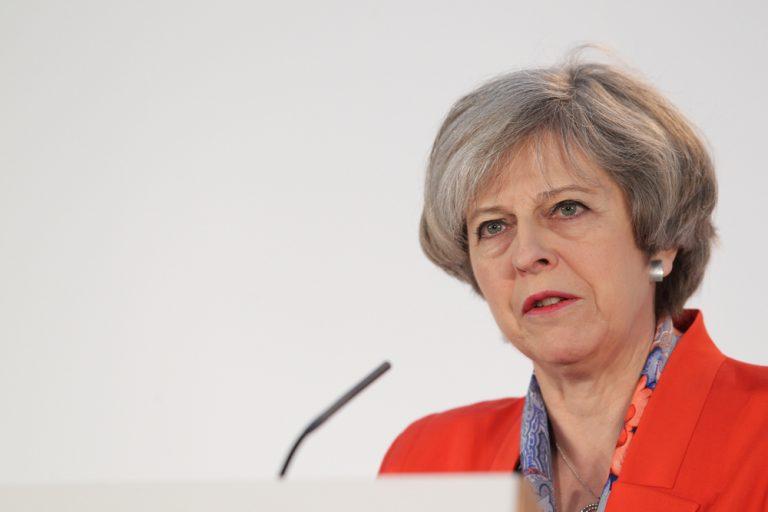
The UK’s ability to secure an exit deal from the EU is dwindling. The informal EU summit in Austria has humiliated Theresa May as EU leaders rejected her Brexit proposals.
EU leaders said they would push for a Brexit deal next month. However, they warned May that she must compromise on trade and the Irish boarder.
European Council president Donald Tusk did highlight some positive elements to the Chequers plan. But, he fundamentally deemed it unacceptable in its present form.
That said, all sides have emphasised their determination to reach a deal before the Brexit focused summit in November.
Dominic Raab, the Brexit secretary, told the BBC’s Politics Live:
“We’ve revved up the motor of these negotiations, I’ve been out there a lot more frequently to get motoring, to make progress and the EU have just yanked up the handbrake.”
“For the negotiations to go forward they’re going to have to take their hand off the handbrake.”
The Times has set out the five options that May can now pursue. The most likely of these options is for the PM to keep going and persist. But they also include walking away with a no-deal and the least likely option of resigning.
The PM has released a statement on the Brexit talks:
“Yesterday Donald Tusk said our proposals would undermine the single market. He didn’t explain how in any detail or make any counter-proposal. So we are at an impasse.”
“At this late stage in the negotiations, it is not acceptable to simply reject the other side’s proposals without a detailed explanation and counter proposals.”
“So we now need to hear from the EU what the real issues are and what their alternative is so that we can discuss them. Until we do, we cannot make progress.”
“In the meantime, we must and will continue the work of preparing ourselves for no deal.”
The pound is now on course for its biggest one day drop this year against the dollar.
Uber in talks to buy Deliveroo, Just East shares fall

Uber is reportedly in talks to buy Deliveroo in a £1.5 billion deal.
Bloomberg reported the news on Thursday, citing people familiar with the matter.
Following the news, shares in rival food delivery service Just Eat fell six percent to a 2018 low of 664p.
Russ Mould, investment director at stockbroker AJ Bell, said: “They say strength in numbers can be a powerful force and so it is no surprise that Just Eat’s shares have taken a big hit on speculation that Uber is going to buy Deliveroo.”
“The combination of two competitors is the last thing Just Eat wants to hear, particularly when it is already trying to play catch up on the delivery side of its business,” he added.
Last year, Deliveroo was valued at over $2 billion after raising $98 million from private investors. It is one of Europe’s best-funded start-ups.
Uber and Deliveroo have not commented on the deal, however, talks are at an early stage and could still fail due to Deliveroo’s reluctance to lose independence.
Deliveroo has said that “as a matter of policy we do not comment on rumour or speculation”.
Uber chief executive, Dara Khosrowshahi, plans to keep heavily investing in Uber Eats.
“That’s a business that at this point has such a large addressable market and is growing so fast that it makes lots of sense to invest,” he said last month.
Shares in Just Eat are currently trading down 5.20 percent at 671,20 (1357GMT).
UK government to launch a review into obstacles for women in business

The UK government will launch a review into the barriers female entrepreneurs face. With just one in five British businesses female-run, the government will assess the obstacles impeding women from starting a business.
Leading commercial and private banker at RBS, Alison Rose, will overlook the initiative. The government appointed Alison Rose to report on the challenges women face in the business world.
The review is following a drive by ministers to encourage a better representation of women at senior levels of corporate life. In fact, the government has set a target to promote women to senior roles of FTSE 350 companies. Indeed, by 2020, women must make up one-third of boards and executive committees.
Earlier in May, the government revealed a list of the most outrageous excuses used for not appointing women to FTSE company boards.
Below are a list of ten shocking explanations given by a range of FTSE 350 Chairs and CEOs:
- “I don’t think women fit comfortably into the board environment”
- “There aren’t that many women with the right credentials and depth of experience to sit on the boards – the issues covered are extremely complex”
- “Most women don’t want the hassle or pressure of sitting on a board”
- “Shareholders just aren’t interested in the make-up of the board, so why should we be?”
- “My other board colleagues wouldn’t want to appoint a woman on our board”
- “All the ‘good’ women have already bee snapped up”
- “We have one woman already on the board, so we are done – it is someone elses’s turn”
- “There aren’t any vacancies at the moment – if there were I would think about appointing a woman”
- “We need to build the pipeline from the bottom – there just aren’t enough senior women in this sector”
- “I can’t just appoint a woman because I want to”
In fact, research has shown that 2.7 million women in the UK want to start a business, but face persistent impediment.
The government’s review of these obstacles aims increase the representation of women at senior business levels. In order to help women start and grow a business, the review will consider several points. First, the drivers of the disparity in male and female entrepreneurship. Next, the actions that could reduce barriers to female engagement in entrepreneurship. Additionally, it will assess any disparities between female-led and male-led firms seeking external finance, and what drives this. The findings of the review will be published next Spring. Once published, the government will consider and respond to its findings.Filtronic plc contract announcement

Filtronic plc has entered into a multi-year supply agreement with a major European defense contractor. The contract will allow Filtronic to provide state of the art microwave modules for use in aerospace radar systems.
With this intention, the agreement will allow Filtronic to manufacture and test the modules at its advanced center in Sedgefield, UK.
The contract has an anticipated potential value of £3.0 million to £5.7 million. However, the final volumes delivered over the duration of the contract will determine this figure.
Filtronic is a leading designer and manufacturer of a range of customised RF, microwave and millimeter wave components and subsystems. Additionally, wireless communication equipment, point-to-point communication systems and adjacent security sectors use the company’s products.
CEO Rob Smith commented:
“We are delighted to have been selected as a supplier of these modules to this prestigious customer. We have worked hard to develop opportunities in the defense and aerospace market and this contract flows from the successful ramp of our other defense contracts. This further underwrites our growing credibility in this important market.”
That said, the company has mentioned that the agreement is subject to a production process qualification.
At 11:16 GMT today, shares in Filtronic plc (LON:FTC) were trading at +11.08%.
Gfinity announces partnership to design the most advanced eSports facility yet

Gfinity plc and Ove Arup & Partners have announced a partnership to design the world’s most advanced integrated eSports facility.
Both companies aim to combine their expertise to develop a blueprint for a specialist playing, watching, training, learning and broadcast facility. Additionally, the companies hope to unite gamers of all levels as they share experiences and compete.
If the blueprint succeeds, this will become the world’s most advanced integrated eSports facility.
Also known as electronic sports or competitive gaming, eSports is a form of competition using video games. The most common form of eSports is through multiplayer video game competitions. There has been an increased interest among game publishers, rights holders and sports franchises for dedicated eSports facilities. Indeed, this reflects the continued growth of the gaming market. From amateur level through to professional eSports, participation has soared. In fact, the global gaming and eSports community total 1.93 billion and 368 million respectively. Additionally, the number of people competing and watching eSports is growing by roughly 17% each year. Executive Chairman of Gfinity, Garry Cook, commented: “We are delighted to be working with Arup to design the world’s most advanced integrated eSports facility. The eSports professional and aspiring amateur learning their craft have similar needs to their counterparts in a host of other sports. Environments that optimise their ability to play and train to their highest potential is the difference between winning and losing.” Moreover, he added: “We will draw on our experiences of owning and managing Europe’s first eSports arena in London and engage with our community, which numbers tens of millions of passionate eSports players and fans, to hear what they have to say. The final design will be informed from the ground up. This is another example that the eSports industry is exciting, growing, full of opportunity and is now.” At 10:38 GMT, shares in Gfinity plc (LON:GFIN) were trading at -2.27%.Lloyd’s of London returns to profit

Lloyd’s of London has returned to profit, posting a pre-tax profit of £600 million.
Last year, the insurance market posted a loss of £2 billion following losses from a series of natural disasters.
Bruce Carnegie-Brown, the Lloyd’s chairman, said at the time: “To date, the market has paid more than 50 percent by value of the claims notified in relation to Harvey, Irma and Maria, and is in the process of paying the rest.”
The series of catastrophes such as hurricanes and wildfires seen in 2017 led the group cutting costs and improve its underwriting performance. Last year was Lloyd’s first loss in six years.
Chief executive Inga Beale said: “These results and return to profit demonstrate the strength of the Lloyd’s market following one of the costliest years for natural catastrophes in the past decade.”
“Whilst these results are welcome, Lloyd’s continues to concentrate on improving the Lloyd’s market’s long-term performance by taking action to address underperforming areas of the market.”
Beale also commented on the group’s Brexit plans, with hopes to continue operating in the UK after it leaves the EU.
“We have also worked tirelessly to secure the Lloyd’s market’s access to the EU27 and our Lloyd’s Brussels subsidiary will start writing business in the European Economic Area from 1 January 2019,” she said.
Beale will be replaced by QBE Insurance Group (ASX: QBE) boss John Neal, who is set to start on October 15.
Moss Bros shares plunge 29pc as group swings to loss
Shares in Moss Bros plunged 29 percent in early trading as the group swung into a loss in the first half of the year.
The group reported pre-tax losses of £1.7 million compared to the profit of £3.9 million a year earlier.
The retailer blamed the hot weather, supply chain issues and “the distraction of England’s success at the World Cup” for the drop in revenues.
“As the extended period of hot weather arrived, coupled with the distraction of England’s success at the World Cup, customer footfall reduced in Q2 on average by -7 percent year on year and in the worst affected stores by up to -14 percent,” said Moss Bros.
“Having assessed the quarter on quarter decline in footfall, we estimate that we were negatively impacted by around £2.7 million of retail store sales, which would have delivered c. £1.4 million of gross profit.”
Analysts at City broker Peel Hunt wrote in a note to clients: “Trading levels have improved over the first seven weeks of H2, especially online, although this is still not enough to catch up to forecasts.”
The broker has cut its full-year pre-tax profit forecast from £1.8 million to £0.5 million.
The group’s chief executive, Brian Brick, said that while current trading was “showing a steady and improving trend”, the group is still likely to deliver an operating profit that was “materially lower” than the current market expectation of £2.3 million.
Shares in Moss Bros (LON: MOSB) are currently trading down 15.89 percent at 39,11.