
Shares in Sky soar on Comcast offer

Sky has recommended its shareholders accept Comcast’s (NASDAQ: CMCSA) $40 billion takeover offer.
In a statement released on Monday, the UK broadcaster advised shareholders to accept the offer by the October 11 deadline.
“As the price of the Comcast Offer is materially superior, it is in the best interests of all Sky shareholders to accept the Comcast Offer,” the company said.
“Accordingly, the Independent Committee unanimously recommends that Sky shareholders accept the Comcast Offer, and in order to ensure the successful closing of the Comcast Offer, and given the possibility of a delisting of Sky in the near future, urges shareholders to accept immediately.”
Comcast outbid Twenty-First Century Fox (NASDAQ: FOXA) for Sky on Saturday by $3.6 billion. The deal is worth £17.28 per share, higher than Fox’s of £15.67 per share.
Martin Gilbert, chairman of the Independent Committee of Sky, said: “We consider the Comcast Offer to be an excellent outcome for Sky shareholders, and we are recommending it as it represents materially superior value. We are focused on drawing this process to a successful and swift close and therefore urge shareholders to accept the recommended Comcast Offer,”
Fox now has to decide what to do with the 39 percent of Sky it owns, which it agreed to sell to Disney (NYSE: DIS) along with its entertainment assets in a deal that was approved by both sides in July.
The group said it would “make a further announcement in due course.”
Shares in Sky (LON: SKY) jumped nine percent to £17.22 in Monday’s early trading. Shares are currently trading up 8.74 percent 1141GMT).
Randgold & Barrick confirm $18bn merger

Randgold Resources (LON: RRS) and Barrick Gold Corporation (NYSE: ABX) confirmed on Monday an $18 billion (£14 billion) merger.
The gold mining companies will combine to create the world’s largest group, with Barrick shareholders owning 66.6 percent of the new group and Randgold shareholders owning 33.4 percent.
Randgold Resources is based in London and operates mines in Africa whilst Barrick, based in Canada, has mines in the US, Peru, Chile and Argentina.
Mark Bristow, the chief executive officer of Randgold, said: “Our industry has been criticised for its short-term focus, undisciplined growth and poor returns on invested capital.”
“The merged company will be very different. Its goal will be to deliver sector leading returns, and in order to achieve this, we will need to take a very critical view of our asset base and how we run our business, and be prepared to make tough decisions.”
“By employing a strategy similar to the one that proved very successful at Randgold, but on a larger scale, the New Barrick Group will leverage some of the world’s best mines and talent to create real value for all stakeholders.”
John L. Thornton, executive chairman of Barrick, said: “Our overriding measure of success will be the returns we generate and not the number of ounces we produce, balancing boldness and prudence to deliver consistent and growing returns to our fellow owners, a truly simple but radical and achievable concept.”
“There are no premiums in the merger because we strongly believe in the opportunity to add significant value for our shareholders from the disciplined management of our combined asset base and a focus on truly profitable growth.”
The new group will be listed in Toronto and New York, whilst being delisted from the London Stock Exchange.
As part of the deal, China’s Shandong Gold (SHA: 600547) has agreed to buy $300 million of shares in Barrick.
Thomas Cook shares plunge following profit warning
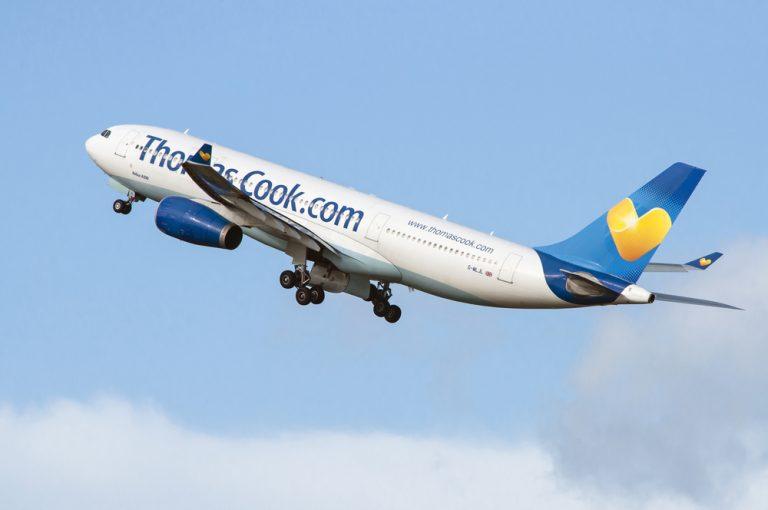
Shares in Thomas Cook plunged as the holiday firm downgraded annual profit forecasts.
The company has blamed the heatwave for the drop in full-year profit forecast, as many customers put off holiday bookings to enjoy the warmer weather in the UK.
“Summer 2018 has seen a return to popularity of destinations such as Turkey and Tunisia,” said Peter Fankhauser, Thomas Cook’s chief executive.
“However, it has also been marked by a prolonged period of hot weather across Europe. This meant many customers spent June and July enjoying the sunshine at home and put off booking their holidays abroad, leading to even tougher competition and higher than usual levels of discounting in the ‘lates’ market of August and September.”
“Our recent trading performance is clearly disappointing. However, despite the recent challenges, we continue to make good strategic progress which positions us well to drive further performance improvement; this includes the launch of our Expedia alliance in the UK and Scandinavia, signing our first own-brand hotel in China and lining up a pipeline of 10 new Cook’s Clubs in some of our key destinations for Summer 2019.”
The group is now expecting full-year earnings of £280 million, below the previous forecast of £323 million, which the company made in July.
The warmer than usual temperatures are also expected to hurt bookings over winter.
In a separate statement, the group said its chief financial officer Bill Scott would leave the company at the end of November.
Shares fell 18 percent after the warning to 64p.
Thomas Cook will report its full-year results on 29 November.
Shares in the group (LON: TCG) are currently trading down 23.15 percent at 59,82p (0852GMT).
China/US trade war: latest tariffs take effect

The new tariffs imposed by the US and China have gone into effect.
The US has imposed tariffs on $200 billion (£152 billion) worth of Chinese goods, whilst China retaliated with $60 billion of US goods.
Soon after the tariffs went into effect, Beijing accused Washington of engaging in “trade bullyism”.
Beijing also said it could restart trade negotiations if the talks are “based on mutual respect and equality”.
Matthew Goodman, senior vice president at the Asian economics at The Center for Strategic and International Studies, said: “It’s hardly surprising the Chinese have called off these talks, they don’t really know who to talk to or what to talk about since the Trump administration has sent very mixed signals about what they want.”
In total, the US has introduced three rounds of tariffs on Chinese products this year, which totals $250 billion worth of goods. This is half of all Chinese imports to the US.
The new taxes will affect handbags, rice and textiles. Some items including smart watches and high chairs are exempt.
Donald Trump has threatened further tariffs on Chinese goods. He said that taxes on another $267 billion of goods were “ready to go on short notice”
Steven Yue, the sales manager at Hebei Huayang Steel Pipe (HHSP), told the BBC: “The Chinese government will not just sit back.”
“The US has many big enterprises with a lot of vested interests and investments in China. If the US begins to attack the Chinese, then it will have a big impact on American businesses operating here – not just against China.”
“Whoever has the will win. But for now, I still believe China has the ability to keep things under control,” he added.
Three House of Fraser stores to close, says Ashley
Three House of Fraser stores are set to close, said Sports Direct (LON: SPD) tycoon Mike Ashley.
After failing to agree on terms with the store’s landlords, the department stores in Edinburgh, Hull and Swindon will close.
Ashley was understood to be demanding low or even zero in rent, yet called landlords greedy.
“I am disappointed that in my opinion a small number of greedy landlords still refuse to be reasonable,” he said.
After buying House of Fraser in August, Ashley hoped that most of the department stores would remain open.
A fourth store in Bath is also at risk of closure but 20 House of Frasers are to remain open, saving 3,500 jobs.
Some of the stores to remain open are based in Altrincham, Aylesbury, Camberley, Carlisle, Darlington, Doncaster and Plymouth.
The hundreds of staff based at the three closing outlets are to now go through redundancy consultation.
“We’ve shown what we can achieve on the British high street when we work together with landlords,” said Ashley.
“I would like to thank those landlords who have helped us to rescue approximately 3,500 jobs at the stores we have saved to date.”
“I am calling on everybody to pull together, including landlords and local authorities in order to help to save as many House of Fraser stores and jobs as possible on the great British high street,” he added.
Chief executive of the British Property Federation, which represents landlords, said: “What has been taking place is negotiations between House of Fraser and its landlords – a two-party process – where each party will have its own interests and one party simply can’t cry ‘unfair’ in the media when it doesn’t get what it wants.”
“There will be a range of factors to consider on a store-by-store basis but what property owners won’t be doing is simply leaving stores empty for the sake of it, that would be in no one’s interests.”
Osirium Technologies plc contract win

Osirium Technologies plc has announced a contract win with a major British multinational clothing, footwear and home products retailer.
Osirium Technologies is one of the fastest growing parts of the cyber-security market. Additionally, it is a leading vendor of the Privileged Access Management software. By using cloud-based products, the company prevents cyber-attacks of IT assets, infrastructure and devices.
Indeed, the retailer has appointed Osirium to deliver its full product offering, initially supporting 100 devices.
Chief Executive Officer, David Guyatt, commented on the win:
“We are delighted to have won another contract with a leading retailer.”
“Our role is to provide solutions to protect the retailer’s critical core infrastructure from third party and international cyber-attacks and we look forward to working with them.”
At 10:12 GMT today, shares in Osirium Technologies plc (LON:OSI) were up 0.7%.
Xeros Technology Group plc shares up 66% following contract win

Xeros Technology Group plc has signed a 10-year contract with Le Farc SA de CV. As a result, the contract will convert Le Farc’s re-tanning operations in León, Mexico to use Xeros’ patented polymer technology.
Xeros Technology is a platform technology company that reinvents water intensive industrial and commercial processes. Currently, Xeros has three divisions working in the garment finishing, tanning and laundry markets.
Additionally, Le Farc is a leading global tannery that produces leather for shoes, supplying brands such as Timberland and Wolverine.
Le Farc’s leather will incorporate Xeros’ technology in consumer products after March 2019.
Mark Nichols, Chief Executive of Xeros, commented:
“This contract with Le Farc confirms that our tanning technologies are viable and play a valuable role in the production of leather. In partnership with our customers, we can radically improve sustainability whilst sharing in the value our innovative technology creates.”
“We have successfully validated our technology through re-tanning trials for over 40 different recipes with multiple tanneries in Europe and Mexico.”
Moreover, he said:“The considerable interest we are seeing from leading tanneries is a strong indication of the potential to increase rapidly the deployment of our technology in what is a global scale industry – we expect to secure further contracts into the future.”
At 14:59 GMT, shares in Xeros Technology Group (LON:XSG) were trading at +66.27%.
No-deal Brexit fears return, pound drops
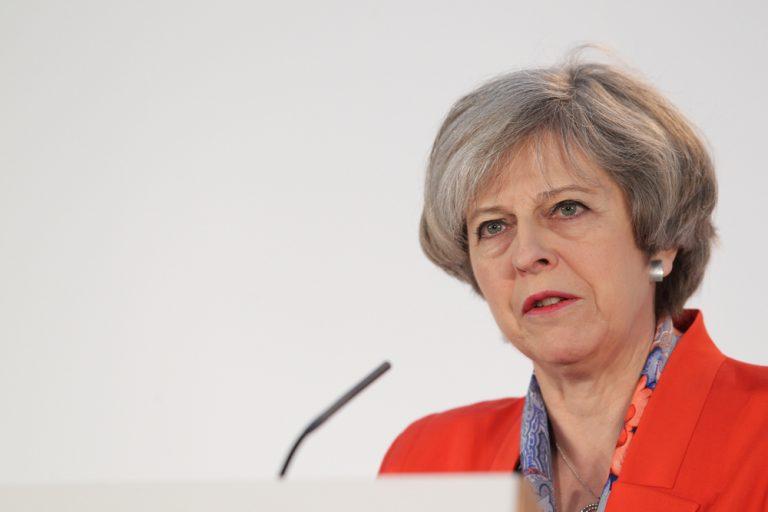
The UK’s ability to secure an exit deal from the EU is dwindling. The informal EU summit in Austria has humiliated Theresa May as EU leaders rejected her Brexit proposals.
EU leaders said they would push for a Brexit deal next month. However, they warned May that she must compromise on trade and the Irish boarder.
European Council president Donald Tusk did highlight some positive elements to the Chequers plan. But, he fundamentally deemed it unacceptable in its present form.
That said, all sides have emphasised their determination to reach a deal before the Brexit focused summit in November.
Dominic Raab, the Brexit secretary, told the BBC’s Politics Live:
“We’ve revved up the motor of these negotiations, I’ve been out there a lot more frequently to get motoring, to make progress and the EU have just yanked up the handbrake.”
“For the negotiations to go forward they’re going to have to take their hand off the handbrake.”
The Times has set out the five options that May can now pursue. The most likely of these options is for the PM to keep going and persist. But they also include walking away with a no-deal and the least likely option of resigning.
The PM has released a statement on the Brexit talks:
“Yesterday Donald Tusk said our proposals would undermine the single market. He didn’t explain how in any detail or make any counter-proposal. So we are at an impasse.”
“At this late stage in the negotiations, it is not acceptable to simply reject the other side’s proposals without a detailed explanation and counter proposals.”
“So we now need to hear from the EU what the real issues are and what their alternative is so that we can discuss them. Until we do, we cannot make progress.”
“In the meantime, we must and will continue the work of preparing ourselves for no deal.”
The pound is now on course for its biggest one day drop this year against the dollar.
Uber in talks to buy Deliveroo, Just East shares fall

Uber is reportedly in talks to buy Deliveroo in a £1.5 billion deal.
Bloomberg reported the news on Thursday, citing people familiar with the matter.
Following the news, shares in rival food delivery service Just Eat fell six percent to a 2018 low of 664p.
Russ Mould, investment director at stockbroker AJ Bell, said: “They say strength in numbers can be a powerful force and so it is no surprise that Just Eat’s shares have taken a big hit on speculation that Uber is going to buy Deliveroo.”
“The combination of two competitors is the last thing Just Eat wants to hear, particularly when it is already trying to play catch up on the delivery side of its business,” he added.
Last year, Deliveroo was valued at over $2 billion after raising $98 million from private investors. It is one of Europe’s best-funded start-ups.
Uber and Deliveroo have not commented on the deal, however, talks are at an early stage and could still fail due to Deliveroo’s reluctance to lose independence.
Deliveroo has said that “as a matter of policy we do not comment on rumour or speculation”.
Uber chief executive, Dara Khosrowshahi, plans to keep heavily investing in Uber Eats.
“That’s a business that at this point has such a large addressable market and is growing so fast that it makes lots of sense to invest,” he said last month.
Shares in Just Eat are currently trading down 5.20 percent at 671,20 (1357GMT).
UK government to launch a review into obstacles for women in business

The UK government will launch a review into the barriers female entrepreneurs face. With just one in five British businesses female-run, the government will assess the obstacles impeding women from starting a business.
Leading commercial and private banker at RBS, Alison Rose, will overlook the initiative. The government appointed Alison Rose to report on the challenges women face in the business world.
The review is following a drive by ministers to encourage a better representation of women at senior levels of corporate life. In fact, the government has set a target to promote women to senior roles of FTSE 350 companies. Indeed, by 2020, women must make up one-third of boards and executive committees.
Earlier in May, the government revealed a list of the most outrageous excuses used for not appointing women to FTSE company boards.
Below are a list of ten shocking explanations given by a range of FTSE 350 Chairs and CEOs:
- “I don’t think women fit comfortably into the board environment”
- “There aren’t that many women with the right credentials and depth of experience to sit on the boards – the issues covered are extremely complex”
- “Most women don’t want the hassle or pressure of sitting on a board”
- “Shareholders just aren’t interested in the make-up of the board, so why should we be?”
- “My other board colleagues wouldn’t want to appoint a woman on our board”
- “All the ‘good’ women have already bee snapped up”
- “We have one woman already on the board, so we are done – it is someone elses’s turn”
- “There aren’t any vacancies at the moment – if there were I would think about appointing a woman”
- “We need to build the pipeline from the bottom – there just aren’t enough senior women in this sector”
- “I can’t just appoint a woman because I want to”