
Gold prices fall to lowest level since 2010

The price of gold fell 4% to as low as $1,088.05 (£697) an ounce in Asian trade, its lowest price since March 2010, after China indicated that its gold reserves were at half the level expected.
The price of platinum also fell 5% to its weakest since the global financial crisis.
According to Gnanasekar Thiagarajan, director of Commtrendz Risk Management, the drop in price is a sign of a large fund selling its gold holdings: “This kind of sharp drop during early Asian hours is a strong indication that a big fund is selling their holdings of gold.”
Investors generally buy gold during times of uncertainty, but the bullion’s safe-haven status has also taken a fresh knock from mounting expectations of a US rate hike.
“The market looks very technically weak and the biggest buyer of all, China, is now selling gold as opposed to buying it on price dips. That’s a recipe for weaker prices,” said Victor Thianpiriya, an analyst at ANZ Bank in Singapore.
Travelodge seek advice on sale

The owners of Travelodge have reportedly appoint Deutsche Bank to advise them on a £1 billion sale or stock market flotation of the hotel chain.
Investment bank Goldman Sachs and hedge funds GoldenTree Asset Management and Avenue Capital have owned Travelodge since rescuing the business in 2012, when it had £500m in debts.
This morning, the hotel chain reported an 18% rise in half-year revenues to £261m after the completion of an £100 million investment programme. They also saw a 63.5% surge in underlying profits to £66.2m in 2014, with revenues up 14.9% to £497.2m.
Travelodge chief executive Peter Gowers told BBC Radio 4’s Today programme the hotel chain’s owners were “not natural long-term holders” of the business, pointing out that when they took over the company in 2012 they restructured its debts and invested in the business to get it back on track.
AVEVA Group up 30% after aquisition agreement with Schneider

AVEVA Group are one of the biggest movers this morning, after it was announced that a non-binding agreement had been reached on the key terms and conditions of an acquisition of selected Schneider Electric industrial software assets.
If the plans go ahead, AVEVA will acquire Schneider Electric on a debt-free cash-free basis and receive from Schneider Electric upon completion £550 million for consideration of new AVEVA shares to be issued to Schneider Electric. The Transaction will be classified as a reverse takeover of AVEVA under the Listing Rules of the UK Listing Authority.
Commenting on the Transaction, Jean-Pascal Tricoire, Chairman and CEO of Schneider Electric said:
“Working on a combination of AVEVA and selected Schneider Electric industrial software assets represents a promising opportunity for the stakeholders of both companies. The combination will create a global leader in industrial software, with a unique portfolio of asset management solutions from design & build to operations and will address customers’ requirements along the full asset life cycle in key industrial and infrastructure markets. It will also create the right environment for the software teams to develop aggressively their business, while benefiting from the multiple commercial access of Schneider around the world.
We believe that through increased scale, complementary footprint and joint R&D capabilities, the transaction will generate synergies that will benefit customers and shareholders alike.”
AVEVA have been the world’s leading engineering software provider to the plant, power and marine industries for over 45 years. Schneider Electric SE are a European multinational corporation that specializes in electricity distribution, automation management and produces installation components for energy management.
Varoufakis condemns Greek bailout package, says reforms are bound to fail
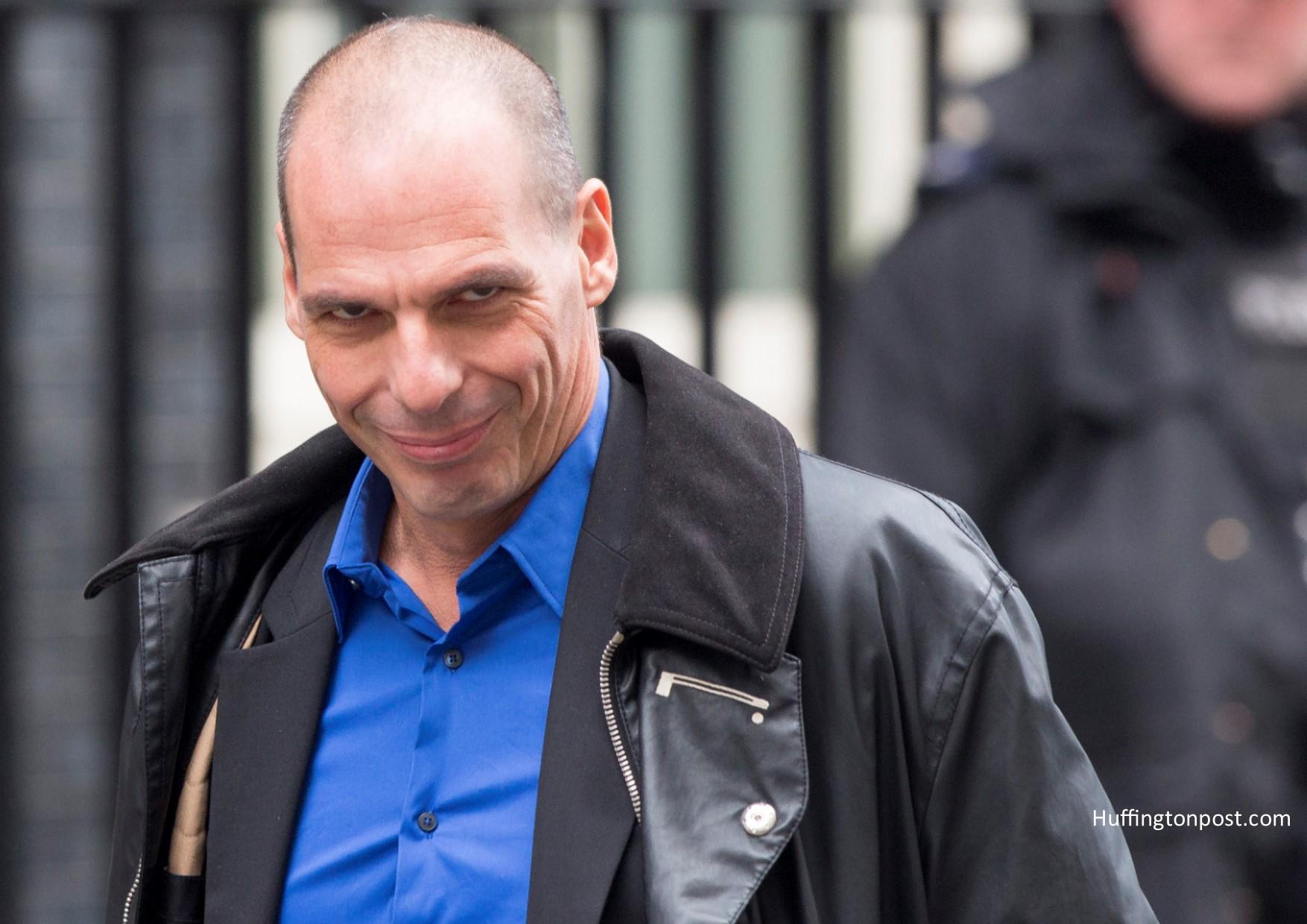
In an interview with the BBC, former Greek Finance Minister Varoufakis said the latest Greek deal will “go down in history as the greatest disaster of macroeconomic management ever”.
Varoufakis made a surprise departure from the Syriza government following the ‘No’ victory in the referendum on whether to accept harsh austerity measures.
Many of these economy destroying reforms were accepted a few days later in what many see as a complete capitulation by the Greek PM.
Varoufakis, the game theory expert, has been vocal in his continued distrust of the so-called ‘Troika’ since his departure. His latest comments are echoed by some of his recent replacements, some of whom are showing the first signs that the latest deal may not be as watertight as some would hope.
“Our aim is to negotiate hard for the terms of the agreement, not just to seal it, but on how it will be implemented. There are many vague terms in the text,” said newly-appointed Labour Minister George Katrougalos.
Greek banks have been closed for a number of weeks but are set to reopen on Monday after being order to do so by the government.
It will be a tense time for the whole of Europe, if Greeks continue to pull their money from the banks as they had been prior to capital controls, the last three weeks of talks, counter offers and humiliation may have been for nothing.
Broker ratings: upgrades, downgrades & reiterations 17/7/15

Today’s Analyst Ratings
UBS: Ocado Neutral (Buy)Deutsche Bank:
SKF Hold (Buy)
Credit Suisse Hold(Buy)
Goldman Sachs:
Fresenius Neutral (Buy)
HSBC:
Terna Reduce (Hold)
Altice Buy (Hold)
Centrica Buy (Hold)
Investec:
ARM Holdings Buy (Hold)
JP Morgan Cazenove:
Millicom International
Cellular Overweight (Neutral)
CGG France Overweight (Underweight)
Jefferies:
Henderson Group Hold (Underperform)
Nomura:
Restaurant Group Neutral (Buy)
J.D. Whetherspoon Reduce (Neutral)
Chinese P2P lending increases with volatile markets

The online peer to peer lending sector is growing in China as much as anywhere else, however enticements to get involved may spell bad news for naive investors.
China’s alternative finance platforms are marketing themselves as a haven from the volatile stock market, encouraging people to invest in the midst of an unpredictable market; the Shanghai Composite Index surged 150% from July last year, before tumbling 25% last week. The government have recently put into place measures designed to stimulate and control the markets.
Online platform Jimubox.com sent a message to clients saying that equities are going “insane” and offering cash incentives for investment, describing the alternative market as a safe investment.
However, the peer-to-peer lending sector is very lightly regulated and the Yingcan Group estimates 1,500 of the platforms may go bankrupt or have difficulty paying dues, up from 275 in 2014. They estimate that an unprecedented 275,000 people put money into online lending firms in June, bringing the number of total users to 1.5 million.
Shao Yifei, a finance-industry worker in Shanghai, bought into the haven argument, cashing out of the equity market halfway through its crash on June 26 and investing 50,000 yuan in a Web finance product funding small companies.
“The online platform I use promises an annual return of as much as 9 percent,” said Shao. “I wasn’t confident the government would be able to stem the stock rout.”
However, these online lending platforms come with risks that may not be sufficiently advertised, tempting thousands of people into investments that will ultimately tank.
“The P2P industry is unhealthy and one can’t say investing in online lending products is safe,” said Ma Jun, chief researcher of Internet finance at Yingcan’s consulting unit. “Some irresponsible companies use high returns as a lure but don’t inform investors of the high risks. That forces some good firms to start providing similar risky products.”
Royal Mail shares tank after Ofcom announcement
Royal Mail share prices tanked this morning after Ofcom revealed the scope of its review of regulation for the business, including whether any price controls should be imposed on the company given the lessening of competition in the postal services market.
Ofcom said there had been a number of changes since the regulatory framework was set in 2012, not least the “significant improvement in the financial position of the universal service” and “an intensification in the level of competition and innovation in parcels service”.
“The review will incorporate our existing work to assess Royal Mail’s efficiency, consider its position within the parcels sector, and assess the company’s potential ability to set wholesale prices in a way that might harm competition,” it said.
“In addition, the review will address the implications of Whistl’s withdrawal, which represents a significant change in the potential level of competition for end-to-end letter delivery.
The FTSE 100 was down 0.2% at 6,783.20 this morning, led by big fallers including M&S and GlaxoSmithKline.
M&S down after clothing boss quits
Marks and Spencer was one of the biggest fallers on the FTSE 100, down 16.16 points after it was announced that the head of its clothing business was quitting.
John Dixon is leaving after 26 years at the retailer, having started on the shop floor and worked his way up. Mr Dixon led the general merchandise division, which has struggled in recent years to update its image. Most recent figures showed like-for-like sales down 0.4% in the quarter.
Retail analyst Nick Bubb said: “It is a shame that John is leaving, but it looks as if he was moving down the internal pecking order at M&S, having been given the thankless task of running M&S clothing.”
Mr Dixon he had “thoroughly enjoyed” his time at M&S. “I now have the opportunity to become a chief executive and have therefore resigned from this great company,” he said.
Pound rises against the euro

The pound rose to its highest rate against the euro since November 2007 this morning, climbing to €1.4350 at its highest point.
In a statement today Mario Draghi confirmed that the European Central Bank is expected to maintain its loose monetary policy in the near-distant future.
However, both the UK and the US are set to raise rates before the end of this year. Governor of the Bank of England Mark Carney said on Tuesday that the point at which UK interest rates may begin to rise was “moving closer”. On Wednesday, Chair of the US Rederal Reserve Janet Yellen said much the same thing for the US. The euro fell 0.5% against the dollar on Thursday to $1.0891.
Crowdfunding: explained

Crowdfunding seems to be everywhere at the moment, but when you start looking into it, it’s easy to be confused by the option. It’s hard to tell who’s offering what, how much you’ll get as a return, sort the good from the bad and find out which one is best for your investment.
To make things simpler, we’ve split the generic topic of ‘crowdfunding’ into five separate categories. Essentially, the first three are ideal for an investment – there is the possibility of making a little – or a lot – of money. However, the last two categories offer no financial returns, so it’s worth looking out for the difference when considering where to put your cash.
1. Equity
Equity-based crowdfunding offers people the chance to invest in an unlisted company, in return for shares. If the company does well, their share will be worth more and they stand to profit. The opposite is also true; if the company fails investors can lose some, or all, of their investment.
Examples: The Link app, Cake app, Seedrs, SyndicateRoom, Crowdcube
2. Debt
Debt based crowdfunding, or ‘lending based’, is where the people give money to the business in the form of a loan. They will then eventually get their money back, plus interest accrued. Mini bonds are a form of debt based crowdfunding, where investors wil receive their money back at a set time when the bond matures.
Examples: Hotcha bond, Square Pie bond, Perception Bi, Crowdcube, FundingTree
3. Revenue
Revenue based crowdfunding is less common in the UK, and is really a branch of debt based. With a revenue loan, investors lend the company money which is then repaid as a percentage of company revenue. This is a more flexible option; there are no set repayment dates. If the company performs better than expected, the loan is paid back faster – if they underperform, there’s no pressure to pay back the debt by a certain date. So far, Crowd2Fund are the only platform offering revenue based loans in the UK.
Examples: Ruroc, Crowd2Fund
4. Rewards
Rewards-based crowdfunding offers people rewards in return for the money they give. This is often for projects or enterprises, rather than businesses in needs of finance. There are usually several tiers, whereby the more money they give the better the reward they receive.
Examples: The Crystal Maze experience, on Indiegogo, Shenmue 3 game on Kickstarter
5. Donation
Donation based crowdfunding is more like a form of charity, rather than an investment. There are many online platforms offering this, where people can ask for money for anything from college tuition to a project helping children in Africa.
Examples: Gofundme.com, Justgiving