
Apple launches streaming service

Apple have launched their music streaming service, Apple Music, in a bid to enter the competitive music market.
Whilst Spotify makes up 85% of the music on-demand market, other companies have recently tried to cut in on the trend, including Jay-Z’s new Tidal service.
Both Spotify and Apple Music have huge catalogues, but Apple Music is likely to have more. It is likely to have 35 million tracks, compared to Spotify’s 30; Apple’s service will include artists like the Beatles, who have so far held out against streaming companies.
Because Apple can integrate its music service with iOS, the new service will be easier to use on iPhones and other Apple devices; for instance, Siri can control what’s playing, and the new proactive Intelligence assistant can bring up music that it thinks you’ll like. More than 800 million people use Apple to some extent, so they have the benefit of a ready audience and a huge market to tap into.
by Miranda Wadham
The death of the bond proxy stocks?

Those companies that offer low stable growth, steady dividends and low volatility have been used by investors and fund managers as ‘bond proxies’.
Low interest rate environment companies, typically in the utilities, consumer staple, pharmaceuticals and property sectors, were added to portfolios to replace near zero yielding bonds.
Over the past 5 years these sectors have enjoyed strong gains and valuations now look stretched; if you introduce a rate hike and slower growth these sectors could be hit particularly hard.
The P/E ratios of bond proxies are a real source of concern. Since the financial crisis and the subsequent extended period of record low interest rates investors piled into dividend paying stocks in a desperate quest to attain yielding assets. The FTSE 100 Utility sector now has a higher average forward PE than the Life Insurance and Banking sectors; this is fine if growth remains steady and interest rates low, however as anyone who follows financial news knows, rates are not going to remain low forever. In fact, rates are looking likely to rise this year, particularly in the US.
A rate rise and the impact on the stock market is a well-researched topic – generally the initial aftermath of a rate hike is negative for equities. The kneejerk sell off is usually followed by a rally as the first rate hike is almost always the result of a strengthening economy. which in turn supports corporate earnings.
From an investors point of view, it is always important to be mindful that certain sectors underperform and outperform given the economic and political backdrop. The problem going forward for bond proxies boils down to risk; in particular, the risk investors take to obtain a yield.
In a low interest environment with bond yields below 2%, investors are forced towards risky assets such as equities that may yield upwards of 3%. This paradigm has been observed since the 2007-2008 financial crisis and bond proxy sectors have gained substantially.
However, the US 10 year treasury yield has been rising for a number of months after hitting lows in early 2015 and is trending towards yields in excess of 3%. The same is true of UK 10 year gilts, albeit with a slightly lower yield.
If yields continue to rise, investors are given the luxury of asking themselves; why am I risking my money in relative risky companies when I can give it to the US or UK government and receive the same yield?
Although the prospect of capital appreciation is limited with bonds, so is the risk of a capital loss. The same cannot be said of companies like Unilever, Centrica and AstraZeneca.
Stocks are notoriously volatile when compared to bonds, and volatility in bond proxy stocks is only likely to increase as bonds begin to become a viable option for investors as they dispose of their proxy stocks.
There may also be a snowball effect as the share prices of bond proxies drop, further unnerving an increasing amount of investors who look at the high valuation and question their medium term prospects.
As previously mentioned, classic bond proxy sectors are trading at higher valuations than those sectors that typically benefit from rising rates, such as the financial sector. In addition, banks tend to perform better when interest rates rise; a rotation out of bond proxies into financial stocks will also add to the potential downside pressure.
There are also other sectors than tend to rise with interest rates, but this is more down to the underlying improvements in economic activity as opposed to direct benefits of higher interest rates. The timing of any change to the current investment environment is inextricably linked to the Federal Reserve and Bank of England and their judgement of when rates should rise.
As both institutions have said, a rate hike is dependent on economic indicators; ultimately it is likely the share prices of bond proxies will be negatively correlated to economic strength for a period in the next 12 months.
The new ‘class ceiling’

It seems that the glass ceiling is being replaced by a class ceiling, as findings report that the UK’s most elite financial services and legal firms operate a “poshness test” when hiring.
According to a report published today, as many as 70 percent of the jobs offered in 2014 were to graduates educated in selective state and fee-paying schools, said the report from the government-appointed Social Mobility and Child Poverty Commission.
“This research shows that young people with working-class backgrounds are being systematically locked out of top jobs,” said commission chairman Alan Milburn.
Interview questions often ask about holidays the applicant has been on, places visited and languages known, belittling or cutting those who come from disadvantaged backgrounds who cannot afford to take “gap years”. Very occasionally, the report said, a person’s accent can be an obstacle to obtaining a job.
The report has caused high-profile figures to speak out against its findings; the City of London Corporation has called for greater social mobility, with Boris Johnson that saying firms should focus on the “skills, talent and energy” of applicants. In an article for The Independent, journalist Janet Street Porter agreed, writing:“I were a boss, I’d be less likely to employ someone who’d spent a gap year travelling and doing voluntary work abroad”, advocating getting a part time job instead of travelling to gain valuable experience in the real world.
By Miranda Wadham
When will Janet Yellen raise rates?
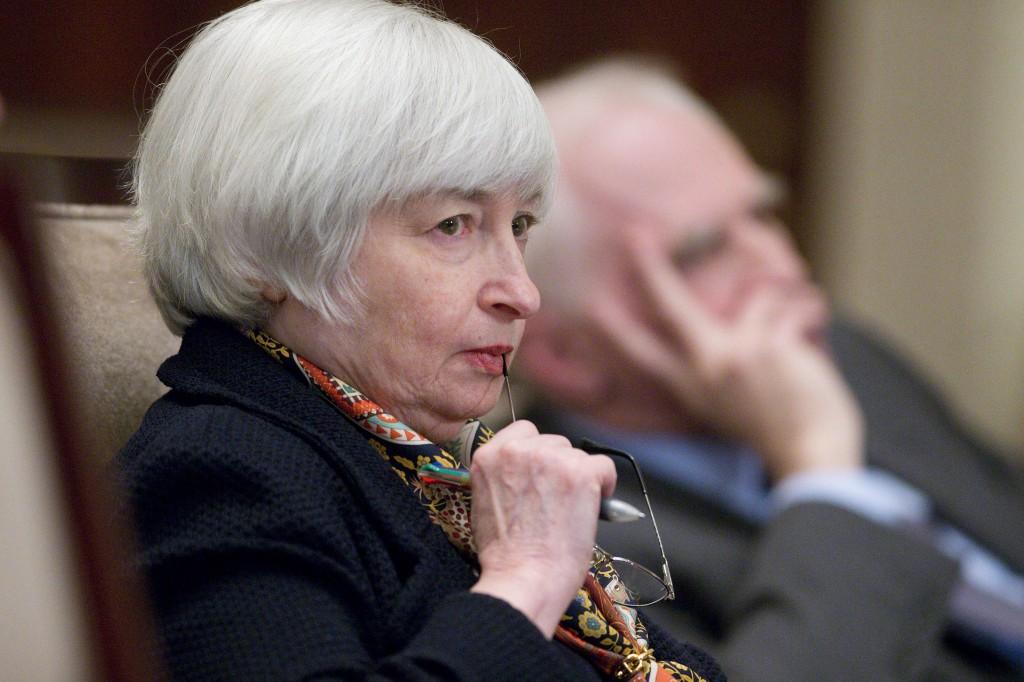
As expectations of an interest rate hike by the Federal Reserve continue to rise, Investor Magazine examines the approaches of Alan Greenspan, arguably the most influential Chair of the Federal Reserve, and the current Chairman Janet Yellen. The Fed are legally obligated to pursue two potentially conflicting targets: “stable prices” and “maximum employment.” Those who focus primarily on squashing inflation are known as hawks, and those that give a higher weight to boosting employment and G.D.P. growth are known as doves.
Alan Greenspan is perhaps one of the most well-known Chairmen of the Board of Governors of the Fed Reserve, serving an unprecedented 5 terms as Chairman between 1987 – 2006 during Reagan, Clinton and Bush’s presidencies.
Traditionally seen as a hawk; Greenspan was criticized for strongly pursuing inflation when instead he might have turned his considerable power towards attaining full employment or economic growth. In fact, Greenspan broke away from his hawk stance in 2000, when the dotcoms burned out, and again in 2001, after the World Trade Center was attacked.
Perhaps a better view is that Greenspan was hawkish to begin with then became dovish as his reign went on; his dovish approach to Federal policy lasted well into the 1990s.
The past two chairmen of the Fed, Alan Greenspan and Ben Bernanke, both fit the description of doves disguised as hawks. Aligned with conservative Republican Administrations, they both entered the job talking about the virtues of price stability and yet, for much of their time as Chair, they both pursued relaxed money policies, which consisted, in part, of keeping interest rates at very low levels and pumping money into the financial markets.
Janet Yellen, the current Chairman of the Federal Reserve, became vice-chair in 2010 and chair in 2014. In comparison to Alan Greenspan, upon ascending to her position she was seen as a dove by most on Wall Street; when President Obama nominated her last year to head the Fed, bond king Bill Gross told Bloomberg TV, “She’s a dove with a capital D” .
Her sympathetic attitude to unemployment led to the suggestions that she would be taking a more dovish approach; in a speech back in February, she noted that long-term unemployment, which has risen sharply since 2008, is “devastating to workers and their families …. The toll is simply terrible on the mental and physical health of workers, on their marriages, and on their children.”
However, it has more recently been argued that she is more of a “hawk in a dove’s clothing”
It is now becoming clear that Yellen may not be a true dove—that is, that she will consistently put fighting unemployment above keeping a lid on inflation: “I’ve said repeatedly, and I want to say again, that if events surprise us, and we’re moving more quickly toward our objectives … we have the flexibility to move”
Yellen pushed hard for rate rises in 1996 to choke inflation, and has made it clear that she may do so again when the moment comes. The element of flexibility is arguable her strongest quality – she is someone who is willing to change their mind when the facts change.
Strong jobs and spending data since the beginning of June are not expected to be enough to bring about a rate hike at the US central bank meeting this week, That leaves only four policy meetings remaining after this for a move: July, September, October and December.
by Miranda Wadham
Diamond prices fall after Las Vegas conference

Sales were low and demand generally weak at the JCK Las Vegas show.
Israel report that weak sentiment in Ramat Gan; many local dealers and manufacturers say that the JCK Las Vegas show met their low expectations, but no more. In Mumbai, large local manufacturers were satisfied with the show; however, smaller suppliers had more mixed reactions. In Hong Kong, demand from local retailers has not picked up amid a weak economy and lower tourist traffic from Chinese tourists.
However, in the US there is activity in the market with wholesale buyers looking for goods, and dealers are optimistic following the JCK Las Vegas show, despite lower sales than last year. Similarly in Belgium, trading has improved in Antwerp and sentiment is more positive than before the show.
Diamond prices have continued to fall recently, with both Tiffany & Co and Lucara reporting a disappointing results last week. Petra followed suit today, forecasting full year revenue below market expectations.
Petra Diamonds tumbles

Petra Diamond’s (LON:PDL) shares sank this morning after they said they expected revenue to be below consensus expectations.
The South African diamond miner said that the revenue miss would be caused by the lower grade of diamond their mines were now producing. They were confident that they would meet their 3.2 million carats production target but were disappointed that the grade of these carats would lead to lower revenue.
Their mines are old and the remaining stones are small. Petra is in desperate need of expansion and their plans to increase output to 5 million carats by 2019 cannot come soon enough for shareholders.
The falling price of diamonds will be of little comfort either.
Shares trade down 7.5% at 157.6p at 14:47 London time.
Supermarkets lose ground to independents

The latest grocery share figures from Kantar Worldpanel, published last week for the 12 weeks ending 24 May 2015, show continued slow growth in the supermarket sector with sales increasing by just 0.2% compared to a year ago. As performance of the Big Four supermarkets continue to drop, our team took to the streets to find out the underlying reasons behind it.
An overarching reason for the decline of supermarkets appears to be the resurgence of independent food stores. Between 2010 and 2014, the number of independent high street food stores has grown by 100%; which seems to align with the growing public disinterest in chain stores and their poor performance. 93.3% people in our survey said that they already do or would frequent independent stores such as bakeries, grocers and wine shops if they had one nearby.
We also correlated this information with the public’s biggest consideration when choosing where to shop. 35% of people surveyed who lived outside London chose convenience as the biggest factor when choosing their supermarket, compared to 29% living in London. The majority of those in London chose quality as the biggest factor – perhaps linking to the rise of good quality independent food stores. London has led the growth in food businesses by far, with 20 per cent of the new independent shops located in the capital. Jason Stockwood, CEO of Simply Business, says: ‘While we can see a national increase of small businesses making the most of the “foodie” revolution, it’s clear that London has seen the more concentrated side of this growth spurt as they positively emerge from our economy’s downturn faster than other regions.’
Another factor that should be taken into account when assessing the drop is the marketing strategies of the big four. In our survey, we asked people whether advertising and marketing affected their choice of supermarket – nearly 70% said that it did. Interestingly, 69% of people said that they shopped at discount supermarkets Lidl and Aldi, whose growth analysts attribute to the poor sales figures of the big chain supermarkets. Recently, both Aldi and Lidl have dramatically upped their advertising budget – in January 2015 alone, Aldi spent £4.5m on advertising, coming second only after Sainsbury’s. Lidl also increased their budget by 138% in 2014. Consumers are clearly influenced by advertising – it should be noted that Aldi and Lidl appear to have taken advantage of this, increasing their advertising presence and gaining positive results.
When compiling our survey, we were interested in assessing the effectiveness of self-checkout systems with view to determining whether they could be contributing to the drop in profit. Not only are the big four supermarkets lowering their prices, but when surveyed, 36% of people said that due to a malfunction of the self-checkout system, they have noticed that their scan wasn’t registered and they weren’t charged for the product. If over a third of people notice that they are not being charged for products, it is likely to impact on profits overall. Interestingly, Lidl and Aldi do not have self checkout systems – could this be another reason why they continually out-performing the Big Four?
All of the major supermarkets are finding growth difficult, and this trend looks set to continue. With the continuing growth of independent stores and increasing consumer apathy to chain supermarkets, it is clear that the Big Four will need to dramatically up their game to stay in the game.
by Miranda Wadham
Royal Mail FTSE 100 top riser after broker upgrade
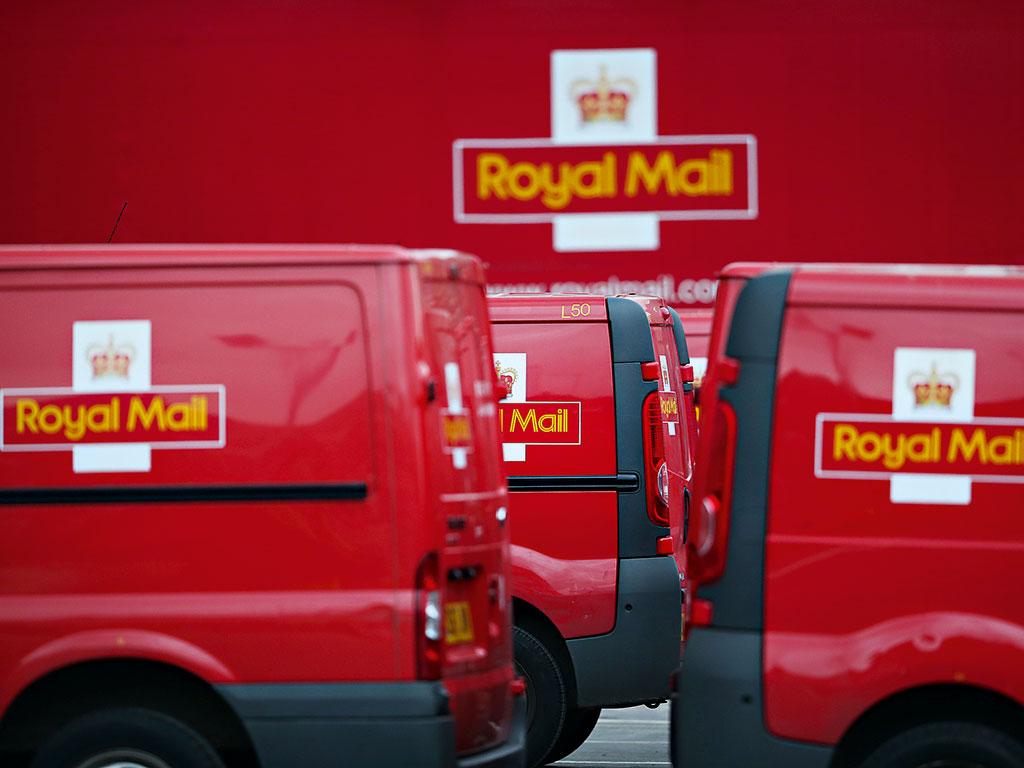
Shares in the Royal Mail rallied after they were moved to overweight from neutral a day after the government sold a 15% stake in the business.
The demise of rival Whistl will help to increase volumes at the Royal Mail, however it is not all plain sailing.
‘While uncertainty persists with respect to parcel market headwinds (overcapacity) and postal market uncertainty (competition, regulation), the withdrawal of PNL from the direct delivery market leaves us with a more compelling Royal Mail valuation’ JP Morgan said in a note.
JP Morgan have a 615p price target, shares trade 505.5p +2.52%
EUR/USD falls on Merkel comments

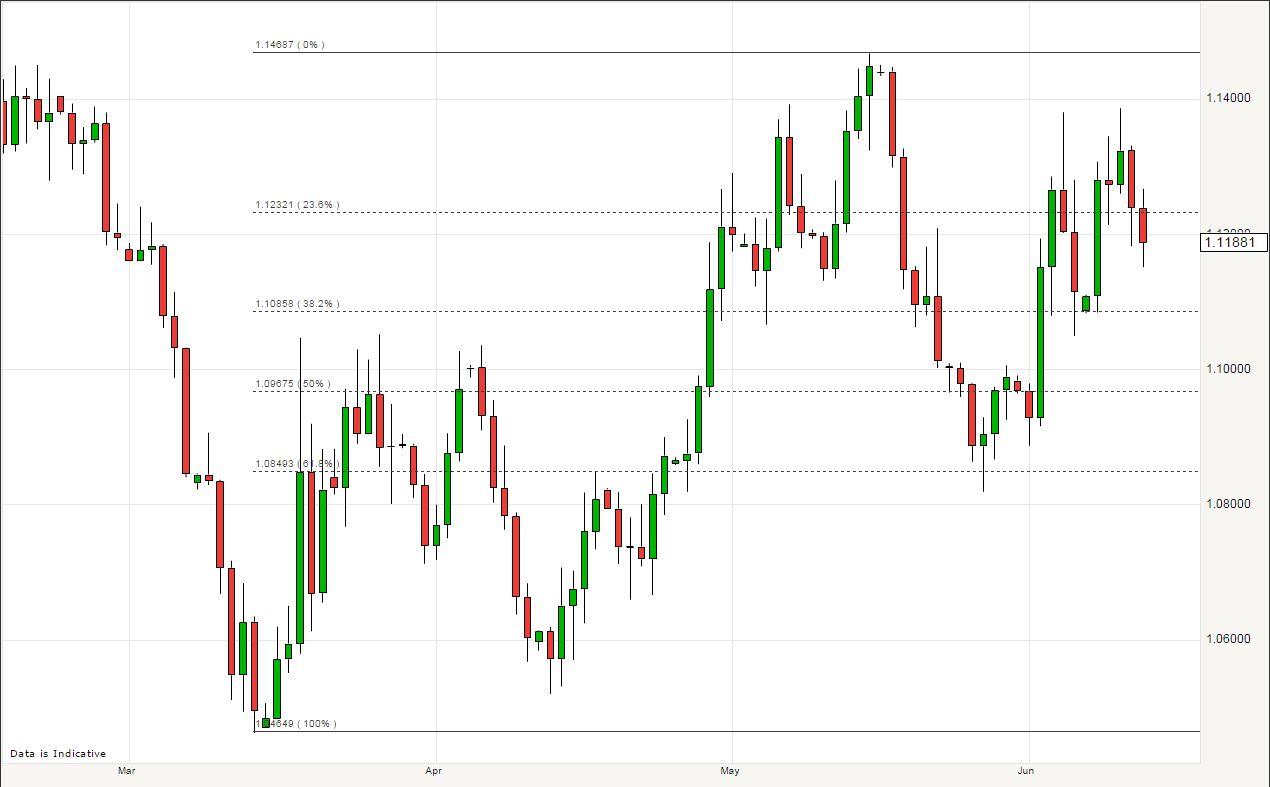
EUR/USD has seen further declines today, breaking through the 23.6% Fibonacci level. The incessant uncertainty surrounding Greece is hitting sentiment across the Eurozone pushing the pair lower.
Comments from Angela Merkel suggesting that the high Euro is ruining reform efforts in Spain and Ireland added to the downward pressure.

Iron ore continues push higher

Iron ore has continued to rally amid reports over lower Chinese stockpiles. Iron ore for immediate delivery in the port of Tianjin rose for the eight consecutive session to $65.40 a tonne.
“There’s not much cargo being offered by traders at the moment, particularly the mainstream grades being sought by mills,” an iron ore trader in Shanghai explained to a Reuters reporter.
Futures on the Dalian Commodity Exchange were also up, prices have been buoyed by an increase in demand for seaborne iron ore.
London listed miners Rio Tinto and Anglo American traded higher in tandem with iron ore. Rio Tinto has secured a cost of production around $16 a tonne, CEO Sam Walsh will be more than happy with the recent rally but has previously said Rio Tinto are able to deliver shareholder returns even at lower levels.
Iron ore has rallied over 30% from lows seen in April but some analysts still remain cautious on the outlook for iron ore prices.