
Government to sell RBS stake
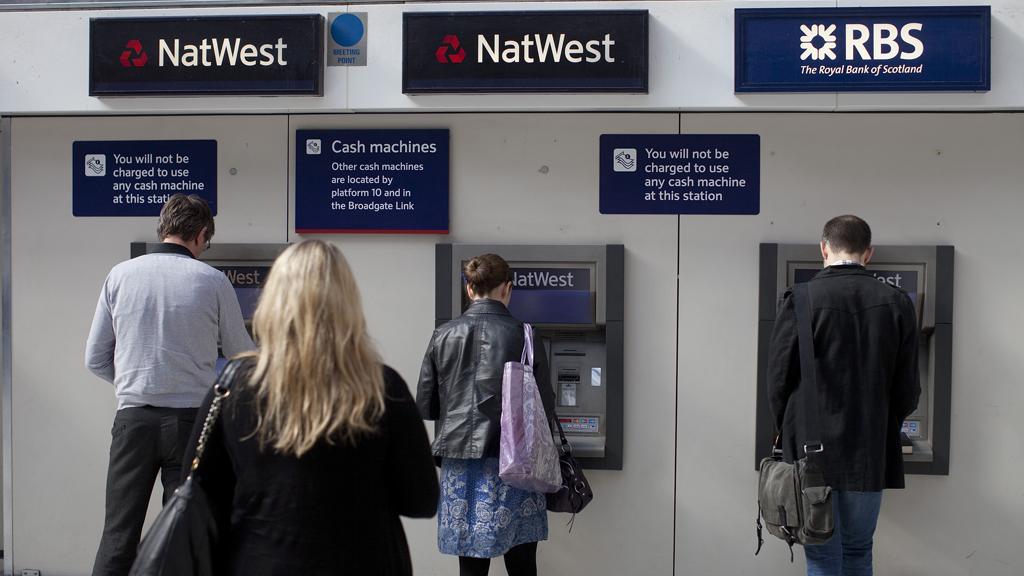
The UK government are initiating the sale of one of the worst investments on the last ten years. They will begin to dispose of its Royal Bank of Scotland shares and in the process crystallise a loss of £12.6 billion, if the shares are sold at today’s price of 362p.
The loss is roughly equal to the amount they plan to slash welfare payments by.
Whether the move is political, or simply the government is throwing the towel in on a basket case, remains to be seen. Whatever the motive, the RBS saga has been a disaster.
However, there may be a silver lining to this cloud. If RBS are able to rid the government as a majority shareholder, there is a possibility that RBS can begin behaving like a business again as opposed to a recovering alcohol under the close watch of their rehabilitation staff.
This will benefit all of us. If RBS are able to begin to lend more freely to the wider economy the trickle down impact to business and households will be felt up and down the country.
Now all the government have to do is find a buyer.
Ryanair ordered to reduce Aer Lingus Stake
Ryanair has been told to cut its 30% share in Aer Lingus down to 5%, in a final ruling by Britain’s competition watchdog.
British Airways-owned IAG has made a $1.36bn bid for Aer Lingus, but the deal is conditional on support from Ryanair; The Competition and Markets Authority said today that it was not good for competition when one airline could decide if a bid for its major competitor succeeded or failed.
“We need to ensure that, whatever happens in relation to this particular transaction, Ryanair’s ability to hold sway over Aer Lingus is removed,” the watchdog said.
However, Ryanair have said that they will appeal to the Competition Appeal Tribunal over the ‘ridiculous’ decision.
By Miranda Wadham
Three reasons to invest in Morocco

Despite the many instabilities that are affecting the majority of its neighbours, including some European ones, Morocco is fast becoming one of the best emerging markets for investment. Over the last decade, Morocco has witnessed an accelerated process of political, economic and social reforms, and its steady economic growth and strategic geographic position make it an investment opportunity well worth considering.
Stable economy
One of the country’s main attractions is its stable economy. Despite a decade of difficulties, including the global financial crisis, the 2011 Arab uprisings and prolonged weakness among its European trading partners, Morocco has maintained economic stability;
It was the only Arab country exposed to the Arab spring that qualified for a precautionary credit line from the IMF, a testament to its stability. Economic growth has averaged 4.9% in the past five years, while inflation has stayed below 2%, and in the World Bank’s 2012 Doing Business Report Morocco climbed 21 places to 94th, in the world, the highest improvement of any country.
As a testament to the country’s economic potential, several multinational companies have moved all or part of their production to Morocco. In 2012, Renault opened the biggest car factory in North Frica in Melloussa, a town near Tangier, producing cars under the Dacia brand for emerging markets. Similarly, in February 2013, Bombardier Aerospace announced that it was shifting production of components such as flight controls for its CRJ series airliner to a transitional facility at the Mohammed V International Aiport in Nouaceur, near Casablanca. Other international corporations including Delphi, Dell and GDF Suez have followed suit and undertaken major investments in Morocco. Reasons for this include the low minimum wage in Morocco, set at around $1.25USD an hour and banking benefits encouraging companies to do business in Morocco, including a relaxation of the strict convertibility regime of the Dirham for foreign investors.
Redevelopment and tourism
Morocco as a whole has undergone a huge redevelopment in the last decade, largely started by King Mohammed’s Vision 2020. This aims to double the size of the tourism sector and transform Morocco into one of the world’s top 20 tourism destinations by 2020. Two of its main ports, Agadir and Tangier, have already undergone major redevelopment; in March it was announced that this will continue with the Wessal Casablanca port project. This has been backed by five key shareholders that include the Moroccan Fund for Tourism Development and four sovereign wealth funds; as well as hugely enlarging and modernizing the port, the development will also focus on cultivating tourism, including improvements to passenger cruise terminal facilities and seafront upgrade work.
In 2008 Morocco invested nearly £9bn in improving its infrastructure, and now has one of the best road systems in North Africa.
Property
Traditionally, Marrakech has been the place for foreign property investment. However, Agadir’s redevelopment makes it an up-and-coming place to buy, as well as the benefits of being on the coast; similarly, new apartments are springing up in the surfing town of Taghazout.
In 2007, the Government of Morocco entered into a development agreement to develop Chbika, an integrated self-sufficient tourist destination in the south of Morocco. Among the planned components are 8 hotels with a capacity of 2,500 guest rooms, 1,166 apartments and 685 villas, and atmospheric riads.
Property investment in Morocco has great financial benefits; Morocco is one of the only countries that you can still expect to get between 15% and 25% return on investment and property prices are up to 50% lower than that of other European resorts. There is also 0% annual property tax for your first five years; Morocco is clearly starting to become a very attractive tourist destination and therefore a sound place for property investment.
By Miranda Wadham
Network Rail profits halve
Network Rail pre-tax profits halve to £506m, down from 1.04bn this time last year.
Network Rail felt moved to include a “Q&A” in its final results statement to explain the massive drop. The not-for-profit company that runs Britain’s railway lines, attributes the fall to the rail regulator’s decision to reduce its income by £246m this year. Network Rail stressed this had no effect on railway investment, and revenue for the year ended 31 March fell to £6.08bn from £6.3bn a year earlier.
The company has been in prominent in the news recently, due to rail strike threats strikes and and chaos caused by overrunning engineering works. Patrick Butcher, finance director at Network Rail, said: “With more than a million more trains on the network than 10 years ago, there are inevitable challenges. We are determined to do more to improve and action is being taken to quicken the pace of change.”
By Miranda Wadham
5 low-cost index tracking ETFs

The popularity of Exchange Traded Funds has exploded in recent years as investors seek cheaper ways of gaining diversity in broad based equity funds.
The tactical investor has also taken a shine to ETFs. The passive nature of ETFs mean investors gain exposure to a predefined basket of stocks such as the FTSE 100 or US Gold Miners. Holdings are amended to reflect the underlying index only.
The passive nature of ETFs mean that investors are able to benefit from low charges because active managers (who usually underperform the benchmark) are removed from the equation, thus avoiding punitive fees taken by funds such as OEICs and Unit Trusts.
Used widely by hedge funds, retail investors are now able to enjoy rock bottom fees when investing in ETFs.
We have scoured the market to bring you a selection of low cost index ETFs.
iShares Core FTSE 100 UCITS ETF
OCF/TER: 0.07%
Tracked Index: FTSE 100
Vanguard FTSE Emerging Markets UCITS ETF USD
OCF/TER: 0.25%
Tracked Index: FTSE Emerging Markets
Amundi ETF MSCI China EUR
OCF/TER: 0.55%
Tracked Index: MSCI China
ishares Core S&P 500 – B UCITS ETF USD
OCF/TER: 0.07%
Tracked Index: S&P 500
iShares STOXX Europe Small 200 (DE)
OCF/TER: 0.2%
Tracked Index: STOXX Europe Small (small cap European shares)
(OCF= ongoing charges figure, TER= Total Expense Ration)
Sainsbury’s sales fall for sixth consecutive quarter
Sainsbury have posted a sixth consecutive quarter of sales declines. Like-for-like Sales excluding fuel were down 2.1% in Q1.
However, shares in the in supermarket shrugged of the news and were up 4% in the first hour of trading as investors focused on higher sales volumes.
Food price deflation continued to be an issue and offset the higher volume of sales. This will give investors heart as when inflation picks up Sainsbury are well positioned for increased profitability.
Bryan Roberts, Director at Kantar Retail says “we continue to assert that the Sainsbury’s cloud has more silver lining than some.”
Major supermarkets have been forced into a price war to compete with budget competitors such as Lidl and Aldi who have snatched market share in recent years. The lower prices offered by Lidl and Aldi led to consumers voting with their feet, leaving the top four supermarkets scratching their heads as sales fell.
As the boards of Tesco and Sainsbury dawdled their share prices were destroyed. Sainsbury and Tesco shares were down 43% and 50% respectively over a year from October 2013.
Although there have been shake ups in both, questions still remain as to the future of the grocery behemoths as savvy consumers change their shopping habits in an increasingly fragmented grocery market.
Our team went back to basics last week and simply asked consumers their views of the supermarkets. We found the Sainsbury was the least disliked supermarket among our sample taken outside Kings Cross Station. Our survey results are supported by Sainsbury’s results but CEO Mike Coupe has his work cut out.
 Lidl and Aldi are planning more store openings and independent food stores are making a comeback, a factor that has been little covered. The results of our survey revealed that 95.4% of shoppers would use independent & specialist food stores if they were convenient and affordable.
The independent food store revival is most evident in London where consumers have a higher disposable income, if this trend continues outside of the M25 it could be the end of the supermarkets as we know them.
Lidl and Aldi are planning more store openings and independent food stores are making a comeback, a factor that has been little covered. The results of our survey revealed that 95.4% of shoppers would use independent & specialist food stores if they were convenient and affordable.
The independent food store revival is most evident in London where consumers have a higher disposable income, if this trend continues outside of the M25 it could be the end of the supermarkets as we know them.
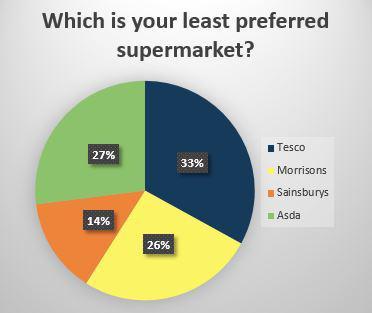 Lidl and Aldi are planning more store openings and independent food stores are making a comeback, a factor that has been little covered. The results of our survey revealed that 95.4% of shoppers would use independent & specialist food stores if they were convenient and affordable.
The independent food store revival is most evident in London where consumers have a higher disposable income, if this trend continues outside of the M25 it could be the end of the supermarkets as we know them.
Lidl and Aldi are planning more store openings and independent food stores are making a comeback, a factor that has been little covered. The results of our survey revealed that 95.4% of shoppers would use independent & specialist food stores if they were convenient and affordable.
The independent food store revival is most evident in London where consumers have a higher disposable income, if this trend continues outside of the M25 it could be the end of the supermarkets as we know them. How to protect your portfolio in an equity selloff

The Rally
You are probably quite pleased with yourself. The markets have rallied and no doubt your selection of stocks and funds have moved higher with it.
The introduction of quantitative easing in Europe and Japan alongside continued easy monetary policy in the US and UK has fuelled equity markets over the past three years. Most major equity indices have consistently broken to fresh highs and portfolios have grown.
Most major stock indexes are within 5% of all time highs and haven’t suffered a major correction for years.
The markets have been spoon fed liquidity by central banks leading to complacency among investors who have forgotten that stock markets can go down.
The Fed
The Federal Reserve is on the verge of hiking its base interest rate, the fallout could be extremely serious for equity markets if there is the perception that Janet Yellen is withdrawing easy monetary policy before the economy is strong enough.
Take the example of the ‘taper tantrum’ in 2013 when then Federal Reserve Chairman, Ben Bernanke, uttered the word ‘taper.’
Equity markets collapsed, the FTSE 100 fell over 850 points in the space of a month.
Bernanke was referring to a reduction in the amount of bonds that would be purchased through the Federal Reserve’s so called ‘QE3’ programme.
In 2013 the mere suggestion of reducing the stimulus caused a market rout, this time the move will be to tighten the supply of money.
The Federal Reserve raising rates may be the catalyst for a market correction but there are various other events, which if materialise, could lead to a correction. A Chinese stock bubble, failure of Eurozone QE, a war in the Middle East, a Black Swan event or the Bank of England raising rates could all trigger a sharp downturn in markets.
The Sell Off
Markets hate uncertainty and uncertainty is bred from a lack of clarity and knowledge.
It is highly likely that most have not even considered the factors that will cause the next crash. It is also likely that those currently lacking a strategy to protect their wealth will take a long time to react.
Unfortunately when markets fall, they fall faster and further than most expect.
A good way of understanding stock markets is to think of them in terms of elevators and stairs.
Markets rise like long flight of winding stairs, and they fall like an elevator crashing down a shaft; they go down much quicker than they come up.
Needless to say it pays to be prepared for such an event.
Move into cash
Cash is king. In times of volatility, sometimes the best option is to liquidate the portfolio and await cheaper prices and higher stability.
Exchange Traded Funds
There are numerous Exchange Traded Funds that offer investors the opportunity to profit from a plunge in equity prices. These can be focussed on whole indexes or a selected basket of stocks.
Deutsche Bank offer DB X-Trackers FTSE 100 Short Daily ICITS ETF (LON:XUKS), designed to reflect the opposite movements of the FTSE 100 on a daily basis. This means that the share price of this ETF will rise if the FTSE 100 falls.
Some ETFs enable investors to gain downside ‘short’ exposure on a specific sector.
ProShares Short Oil & Gas (NYSE:DDG) tracks the Dow Jones U.S. Oil & Gas index which contains around 95 companies such ExxonMobil, Chevron and ConocoPhillips. If this basket of 95 shares is to fall, the price of ProShares Short Oil & Gas will rise.
If you hold a selection of global oil companies and don’t wish to sell, trading this ETF will provide a hedge.
For further details on ETFs, visit our Tips & Guides section and select an Exchange Traded Funds trading guide.
Contracts for Difference
Contracts for Difference (CFDs) give investors the ability to go short on individual shares or entire indexes. A popular market to trade is the FTSE 100. Depending on the broker you are given the opportunity to trade in contracts or lots which give you exposure to the underlying market.
For example, a contract may give you exposure where you make or lose £10 per 1 point of the index. If you open 1 contract at 7050 and it falls to 6950, a difference of 100 points, you could make £1000, but if the market rises to 7150, you could lose that £1000.
You can also short sell individual shares. When the market falls there are stocks that tend to move more quickly than the rest of the market, these are known as higher ‘beta’ stocks. Moreover depending on the reason for the sell-off, certain sectors will also lead the way down.
The catalyst for a downturn could be attributable to China for instance, mining companies are highly impacted by Chinese demand and could see a sharp downturn in such an event. Shorting companies like Anglo American, Rio Tinto or BHP Billiton could be a prudent decision in this situation.
Generally CFDs do not have an expiry date so you can keep them open for as long as you wish. CFDs do incur a small overnight financing charge which is around 3% +/- Libor. Commissions and spreads vary from broker to broker, our comparison table will give you more information.
Options
Put Options give investors the ability to profit in the case of a market downturn. Similar to CFDs, options are traded in contracts, however they are fundamentally different as they have expiry dates and strike prices.
Buying a put option is considered as an insurance policy by investors as you pay a ‘premium’ to protect your portfolio. The premium paid plus commissions is the total risk the investor will take on.
Please visit our Tips & Guides section to access an Options trading guide.
Diversify
Diversification is always key when making investments and having a broad range of asset classes that aren’t highly correlated will protect your overall portfolio in the case of an equity sell off. A portfolio that is spread across Bonds, Forex, Commodities as well as Equities will be far better than one solely in equities.
IMF: Spain to grow 3.1% this year
The IMF has increased Spain’s growth estimate to 3.1% for 2015. This is the second time the International Monetary Fund has made a favourable change to Spain’s growth in three months.
Mariano Rajoy has faced pressures domestically but has been successful in reigniting Spain’s economy.
“The recovery has gathered speed and job creation has accelerated, but the level of unemployment is still high” said the IMF in its report.
Spain’s government have pushed through a number of reforms that have successfully enabled Spain to produce growth levels that are adequate enough to put a dent it their high unemployment figures and boost consumer confidence.
“The reforms are making a difference. Labour market reforms and moderate wage growth have supported employment and helped Spain regain competitiveness lost during the pre-crisis boom” explains the IMF.
Rajoy will have to tackle negative domestic sentiment later this year if he wants to remain in power, the IMF report will do much to garner support from the financial community, the general public may need a little more persuading.
HSBC plc slashes 25,000 jobs
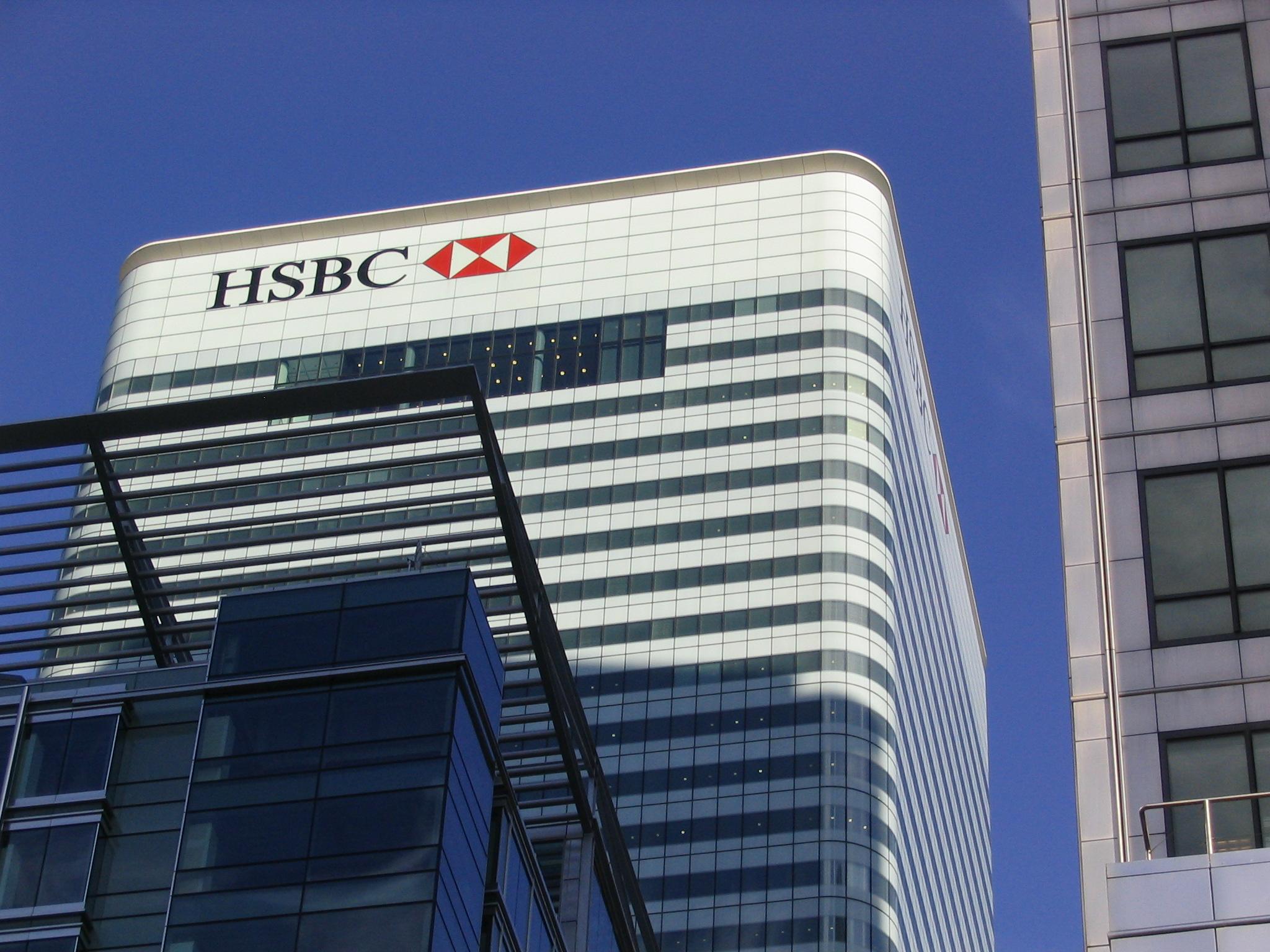
HSBC plc (LON:HSBA) has announced it will slash 25,000 jobs in an effort to cut costs and make the bank less complex. London’s largest listed bank who makes most of thier profit in Asia has said that it will also dispose of Turkish and Brazilian units.
HSBC has come under pressure from investors of late as it has been slow to streamline the business in the face of increased regulations and higher costs. Some say the move is too little too late.
“Slaughtering the staff is not necessarily the solution unless management makes the bank considerably less complex,” said James Antos, analyst at Mizuho Securities Asia.
Shares in HSBC initially trade lower in London but pushed higher after the first hour of trading.
The move aims to save $5 billion per year by 2017, however these savings will come with their own costs; it is expected that the savings exercise will require $4.5 billion over the next 3 years.
8,000 jobs will be cut from UK operations with many branches facing a lower level of staff. Much of the other cuts will come from global IT and back office functions.
Investment banking will also see job cuts, the cost of compliance is becoming cumbersome for global banks and many banks have already slashed investment banking units. HSBC has been slow to react to regulatory changes but today’s announcement is being welcome by some investors.
“The market is likely to respond positively on the move with investors having a much clearer idea of HSBC’s direction going forward,” said Steven Leung, a sales director at UOB Kay Hian in Hong Kong.
Shares in HSBC trade at 621.2p at 9:21am London time.
Turkey enters period of political instability

Turkey has been thrown into political instability following an indecisive general election. The current ruling AKP party suffered a plunge in support to 41% and now is being forced to cobble a coalition together.
The failure of AKP to secure a majority led to heavy losses in the Turkish Lira and caused a stock market rout. Turkey’s stock market was down over 8% at when it opened on Monday.
The uncertainty spilled over to European stock with the DAX, FTSE and CAC all suffering losses.
AKP have 45 days to form a coalition and are currently meeting in Ankara.
President Erdogan has been humbled by the losses and in an effort to avoid destabilising protests, has accepted the results.
“Our nation’s opinion is above everything else,” Erdogan said “I believe the results, which do not give the opportunity to any party to form a single-party government, will be assessed healthily and realistically by every party.”
Turkey suffered a number of blasts prior to the election which some say were meant to disrupt the democratic process. The explosions took place at a Kurdish rally who were campaigning for 10% of the votes to gain seats in parliament. The pro-Kurdish HDP party won 12% of votes and will have around 80 seats.
The shake up to Turkey’s political environment may be the source of investor woes for some time to come.
“In emerging markets, investors particularly like certainty and strong leadership and that is something that we are now really lacking in Turkey. Turkey is one of the fragile five and is in a difficult situation economically and so uncertainty like this is really the last thing it needs. The key question now is what the central bank will do in the light of this huge depreciation in the lira. There is certainly an argument for it to hike interest rates. In terms valuations, many assets indeed look very attractive now, especially as valuations have taken a beating. There will be a lot of investors picking through various companies trying to look for cheap opportunities” said David Stubbs, market strategist at JP Morgan Asset Management.