Adsure Services reports steady first half amid preparations for AI tool deployment

Adsure Services, the specialist business assurance provider, has reported steady half-year results for the six months ending 30th September as the firm prepares to launch its proprietary Large Language Model (LLM) AI tool.

With revenues and profits largely unchanged compared to the same period a year ago, the most interesting part of the group’s interim results is the operational improvement that set Adsure, and its operating subsidiary TIAA, up for a strong set of full-year results.

As noted in a recent trading update, TIAA has achieved strong business growth through targeted sector development, with its order book expanding by double digits. The impact on revenues from this growing order book will likely be felt in the second half.

The result of the company’s focus on sector-driven growth was evident in the Housing sector, where client numbers surged by more than 20% since January 2025, reaching 130 individual clients. In Education, TIAA secured three new University contracts collectively worth £160,000, reinforcing its push to win higher-value contracts.

Innovation remains central to the firm’s strategy. Client testing has begun on ‘TIAA Insight’, a proprietary Large Language Model AI tool funded by Innovate UK, with full deployment planned for H1 2026. The K10 Vision ICT system launched in November, advancing the company’s ‘Fit for the Future’ strategic initiative.

The company continued its recognition of shareholders by declaring a dividend of 0.29p, payable in January.

“The Board is pleased to report that Adsure Services PLC has consolidated its growth during the first half of the financial year, delivering a robust and profitable interim performance,” said Kevin Limn, Chief Executive Officer of Adsure Services.

“This achievement reflects the ongoing commitment of our staff, strategic investments in technology, and the expansion of our service portfolio. Cash is consistent at £0.61m on 30 September 2025 (2024: £0.78m). This, coupled with £6m to 30 September 2025 revenue stabilising at £4.89m and net assets rising by 52% to £1.18m in the 12 month period to 30 September 2025, means that the Group is well-positioned for continued momentum in the second half of the year.

“Our focus on innovation, operational efficiency, and sector-driven business development has laid a strong foundation for future opportunities, and we remain confident in our ability to drive organic growth, create greater efficiencies and deliver value to all stakeholders”

UK Market Dynamics in Gold, Sterling & Cryptocurrency  

Sterling weakness, shifting inflation expectations, and heightened macroeconomic uncertainty have prompted UK investors to reassess the role of alternative assets in diversified portfolios. Gold and cryptocurrency now sit alongside traditional foreign exchange hedges as tools to manage the complex interplay between currency risk, global market volatility, and domestic political events. As these dynamics converge, the question is no longer whether to hold gold or crypto, but how their combined behaviour interacts with Sterling’s movements to influence real returns. 

How Sterling Movements Reshape Gold Returns 

For UK investors, the performance of gold is closely tied to the GBP/USD exchange rate. Gold is priced in dollars, meaning any fall in Sterling automatically increases the value of gold in GBP terms. Periods of political stress or monetary divergence with the U.S., such as fiscal event missteps, shifts in interest rate expectations, or widening yield differentials, can therefore amplify gold returns even when global bullion markets are relatively stable. Real portfolio risk is often driven more by Sterling’s behaviour than by the underlying gold market. 

Gold’s Hedging Role in UK-Specific Shocks 

Gold retains its defensive reputation, but domestic events uniquely influence its function for UK investors. During moments of Sterling instability, such as the post-Brexit adjustment period or the sharp repricing following the 2022 mini-budget, gold has reasserted itself as a hedge against rapid changes in currency confidence. At the same time, its volatility tends to rise when UK inflation expectations move sharply or when markets question the Bank of England’s ability to control price pressures. 

For investors concerned about the UK’s fiscal direction, rising gilt yields, or an uneven growth outlook, gold offers a form of insulation. Yet the hedge is not absolute. When Sterling strengthens, or global risk appetite improves, gold’s relative value for GBP holders can compress quickly, reinforcing the need for careful portfolio sizing. 

Crypto as a Speculative Hedge and Alternative Diversifier 

Crypto’s role has expanded beyond pure speculation. Younger UK investors in particular increasingly treat Bitcoin and Ethereum as alternative stores of value, albeit with far higher volatility and shorter investment horizons than gold. Crypto reacts to global liquidity conditions more rapidly than traditional assets, making it sensitive to expectations of central bank easing or tightening across major economies. This shifting behaviour has also encouraged some investors to consider modest allocations within broader diversification strategies, often including the selective exploration of a particular crypto investment alongside more established, defensive assets.  

Where gold’s volatility tends to coincide with macroeconomic stress and inflation uncertainty, crypto’s volatility often reflects structural factors, including market leverage, liquidity imbalances, protocol developments, and shifts in international regulatory stance. This makes crypto less predictable as a hedge against UK-specific shocks, but potentially valuable as a diversifier when macro catalysts differ across asset classes. 

FCA Regulation and Its Influence on Behaviour 

UK crypto participation is heavily shaped by the FCA’s tightening framework, which includes mandatory risk warnings, restrictions on marketing, and stricter oversight of promotions. These measures moderate speculative inflows but encourage a more measured approach among UK investors who incorporate digital assets into diversified portfolios, rather than treating them as standalone bets. 

Unlike gold, where the regulatory environment is stable and well understood, crypto remains subject to evolving policy. This distinction directly affects portfolio construction, as investors must weigh not only market volatility but also the operational and compliance risks that arise from regulatory change within the UK. 

Bank of England Policy as a Cross-Asset Driver 

When policy tightens, and rate differentials move in Sterling’s favour, the pound tends to appreciate, reducing GBP-denominated gold gains and often cooling defensive flows. Conversely, when forward guidance signals pressures on growth or limited room for further hikes, investors frequently rotate toward hedges that protect against weakening Sterling or rising inflation uncertainty. 

Crypto responds differently. While UK rate decisions have an indirect impact, digital assets primarily respond to global liquidity cycles. A shift in sentiment about future Federal Reserve or ECB policy, rather than BoE decisions, often drives short-term volatility, creating a divergence in how crypto and gold respond to the same macro backdrop. 

Political Volatility and the Search for Stability 

The UK’s political landscape remains a meaningful source of market friction. Fiscal events, Budget announcements, general elections, and ongoing Brexit-related adjustments can create rapid shifts in Sterling confidence. These periods historically trigger renewed interest in gold as a stabiliser when currency markets price in heightened risk. 

Crypto may also attract attention during political volatility, but for different reasons. Investors view it less as a safe haven and more as an uncorrelated or high-beta asset capable of making outsized moves when uncertainty rises. Understanding this behavioural split is critical, as it determines whether gold or crypto serves the intended role within a portfolio. 

Strategic Allocation: When Investors Favour Gold, Crypto or FX Hedges 

Portfolio decisions increasingly centre on identifying which risk is most relevant: 

  • Investors concerned about Sterling weakness or domestic inflation often turn to gold, aware that GBP/USD dynamics can amplify its impact. 
  • Those seeking exposure to innovation or looking for uncorrelated, high-volatility opportunities may allocate modest portions to crypto, accepting the larger drawdown risk. 
  • FX hedges, such as forwards or currency overlays, are employed when investors want gold exposure without inheriting full Sterling risk. 

Rather than competing for the same role, gold and crypto are now viewed as complementary tools, each addressing different categories of uncertainty within a UK context.  

The persistently strong US dollar has highlighted how currency translation can boost gold returns in Sterling terms even during flat global conditions. Meanwhile, gold volatility tends to rise when UK inflation expectations shift or when confidence in fiscal policy wavers. 

Crypto markets continue to respond swiftly to global liquidity signals, attracting active traders who embrace higher volatility in search of outsized gains. In portfolios designed to manage Sterling exposure and macro risk, crypto is increasingly treated as a satellite allocation rather than a direct substitute for gold. 

The Inside Scoop on Gold, Sterling & Crypto Market Dynamics 

Gold, Sterling, and crypto sit at a crossroads of currency risk, macroeconomic uncertainty, and technological change. For UK investors, the challenge is not just choosing the best hedge but also understanding how each asset reacts to different drivers, including BoE policy, fiscal signals, political developments, and global liquidity. Gold offers stability when Sterling wobbles, crypto provides asymmetric potential in an evolving regulatory environment, and FX hedges give investors control over currency exposure. 

Rightmove expects bigger Boxing Day bounce and house prices to rise 2% next year

Rightmove is expecting a strong start to 2026 for the UK housing market and sees buyers and sellers resuming their moving plans in a ‘Boxing Day bounce’.

The UK property market needs it.

Average new seller asking prices fell by 1.8% this month to £358,138, marking a larger-than-usual December decline. This brings prices 0.6% lower at year-end compared to 2024.

The impact of the Budget and higher interest rates has been well-documented but these constraints are thought to start easing in the early stages of 2026.

Rightmove anticipates a stronger than usual Boxing Day Bounce, with early signs of recovery emerging as uncertainty fades. The number of top-end London sellers rising 24% week-on-week is evidence of this.

“Lower price growth supported buyer affordability and drove activity in the first half of the year, even after the April stamp duty deadline in England,” said Colleen Babcock, property expert at Rightmove.

“In the second half of 2025, uncertainty caused by rumours of property tax changes in November’s Budget swirled, some from as early as August. This had an impact on pricing and activity, as sellers tried to entice nervous buyers. The market will soon benefit from the traditional boost in home-moving activity from Boxing Day. Rightmove’s Boxing Day Bounce is an annual event where we see many begin or resume their plans to move after the distraction of Christmas. With the turkey and trimmings barely off the table, each year we see people heading straight to Rightmove to browse the fresh listings for sale and imagine how different next Christmas could look.

“With market conditions supporting higher levels of activity and a hopefully more certain economic environment, we forecast a better year for price growth in 2026 with a strong rebound in activity to kick start the year.”

Rightmove sees house price growth of 2% in 2026.

Helium One nears first gas at Colorado Galactica project

Helium One Global shares rose on Monday after announcing that its Galactica production facility in Colorado is ready for commissioning, keeping the project on track for first gas production before year-end.

The gathering system has been successfully pressure-tested and connected to the production facility, and the facility has now reached substantial completion. Commissioning work is set to begin this week.

Helium One holds a 50% working interest in the Galactica-Pegasus helium development project in Colorado, alongside partner Blue Star Helium. The company also maintains helium exploration activities in Tanzania.

“I am pleased to announce that we are approaching the commencement of production at the Galactica project in partnership with Blue Star. This achievement marks a significant milestone for both the Joint Venture and our respective organisations,” said Lorna Blaisse, Chief Executive Officer.

“I would like to commend the commitment of the onsite teams, whose efforts have ensured we remain on track to deliver first gas before year-end. We very much look forward to entering the next phase as a producer.”

Helium One has also recently provided an encouraging update on its Tanzanian project, which, combined with today’s announcement, suggests that 2026 could be a very interesting year for the firm.

Filtronic wins £11m defence contract

New orders and contract wins are coming thick and fast for Filtronic. The firm’s most recent contract has come in the form of an authorisation to proceed on an £11 million contract to supply high-performance active components for a major European defence programme.

The designer and manufacturer of advanced RF solutions has been awarded an initial £7 million authorisation to proceed from a major European defence prime for the next phase of a long-standing electronic sensor programme.

The ATP enables Filtronic to begin work immediately, with full purchase order conversion expected in Q1 2026. The two-year programme will be manufactured at the company’s new secure, automated microelectronics facility in Sedgefield.

The deal follows a string of new wins from aerospace and space companies this year. SpaceX is now one of Filtronic’s major partners.

“This latest win deepens our engagement with a key European defence customer and strengthens Filtronic’s position in the defence sector, a growing market for the Group,” said Nat Edington, Chief Executive Officer.

“As we invest in capability and capacity, Filtronic is increasingly well positioned to support long-term demand for advanced RF solutions in the defence market.”

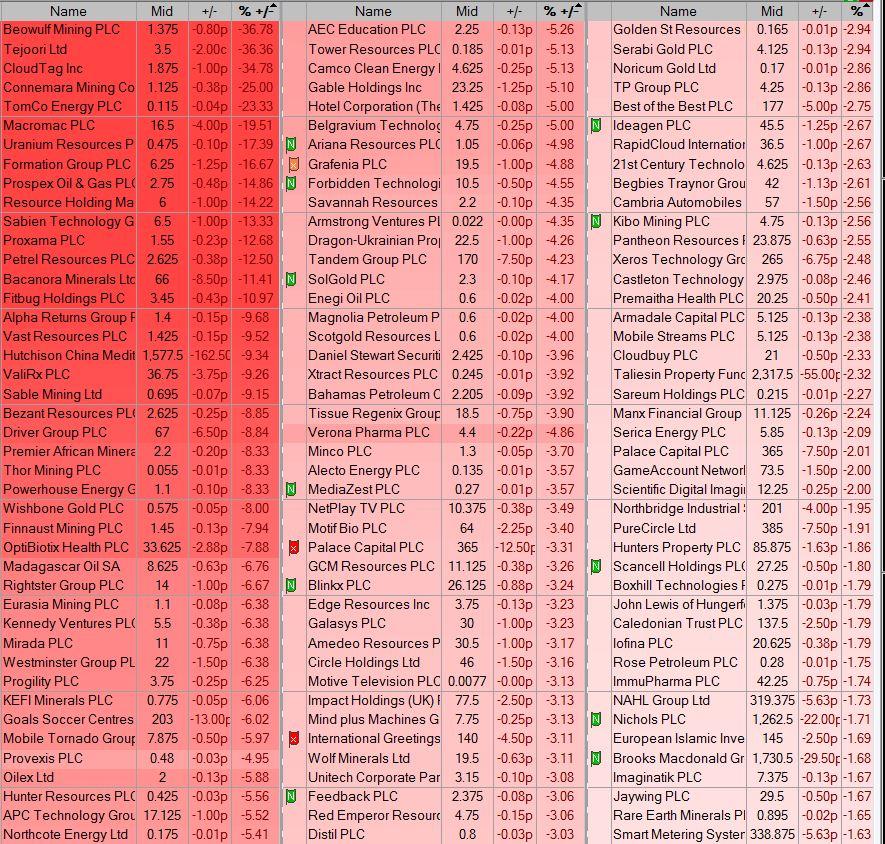
AIM weekly movers: 1Spatial bid approach

10

Avanza Bank Holding has reduced its shareholding in Eco (Atlantic) Oil and Gas (LON: ECO) from 4% to 2.71%, which perked up the share price by 77.2% to 18.25p.

Geospatial software and services provider 1Spatial (LON: SPA) has reached agreement in principle to a 73p/share offer by VertiGIS, whose products it already distributes. That values 1Spatial at £87.1m. Shareholders owning one-third of the shares are in favour of this level of offer. Management believes that VertiGIS will help to accelerate growth. A further announcement will be made about the progress towards a recommendation. The share price increased 45.2% to 67.5p.

Oil and gas company Empyrean Energy (LON: EME) had a cash outflow from operating activities of £440,000 in the six months to September 2025. There was cash of £3.06m at the end of September 2025. There are convertible loan notes valued at £9.84m. The interest rate is 20% and the conversion price is 2.5p/share. The share price rose 36.4% to 0.0375p.

Petro Matad (LON: MATD) has received a farm-in proposal that would help to further develop Block XX in Mongolia. Due diligence has been caried out. Production averaged 350 barrels of oil per day in November. Petro Matad is still in discussion with PetroChina concerning the oil sales agreement. The share price improved 35.1% to 1.25p.

FALLERS

Premier African Minerals (LON: PREM) says J Goddard Contracting has demanded immediate payment of $2.3m. Total group liabilities are $62.1m. More cash needs to be raised. The share price dived 51.9% to 0.0325p.

Ghana-focused Alliance Lithium (LON: ALL) says that the Ghana parliament has temporarily withdrawn the mining lease for the Ewoyaa lithium project. This relates to the consultation on the mining code and royalties. The share price fell 27.6% to 7.2p.

Haydale Graphene (LON: HAYD) has agreed to acquire Intelligent Resource Management, which trades as SMCC for an initial £12m in shares at a notional price of 0.645p each. This deal will add consultancy and project installation to Haydale Graphene’s energy transition technologies and provide access to potential customers. A placing will raise £5.91m at 0.5p/share and a retail offer could add up to £500,000. Octopus is converting £500,000 of convertible loan notes into 417.88 million shares. The share price declined 27.5% to 0.5p.

Cinemas operator Everyman Media Group (LON: EMAN) has been hit by disappointing box office for films in the second half of the year. UK admissions have declined in recent months. Forecast revenues have been reduced to £114.5m, while EBITDA has been cut to £16.8m, which is slightly higher than last year. The share price slipped 22.5% to 27.5p.

Aquis weekly movers: Ajax Resources buying Brazilian gold project

In the second week of share trading quantum computing technology developer Delta Gold Technologies (LON: DQG) shares rose a further 21.3% to 18.5p. It raised £2.5m at 10p/share.

Pete Allaway increased his stake in Evrima (LON: EVA) from 3.13% to 6.28% and Ventura Finance raised its shareholding from 6.15% to 7.42%. The share price increased by one-fifth to 0.45p.

Public services provider Mears (LON: MER), which is also listed on the Main Market, released a trading statement revealing that underling 2025 pre-tax profit will be at the top end of guidance. The share price edged up 0.9% to 338.75p.

FALLERS

Wishbone Gold (LON: WSBN) plans to release assay results for the Red Setter gold dome project in Australia over the next few months. It will then formulate a plan for 2026. An application has been made to build a new access road, and this will make it easier to undertake drilling. The shares, which are also quoted on AIM, slumped 30.1% to 46.5p.  

Ajax Resources (LON: AJAX) is raising £1.2m at 5.5p/share and acquiring the Pereira Velho gold project in Brazil from Appian Capital Advisory, which will receive in $200,000 in cash and $400,000 in shares. Appian estimates that there is a resource of 110,000 ounces of gold having drilled 10% of the area. Ajax Resources has also signed a conditional Option-to-Purchase Agreement for the Leon copper and silver project in Argentina. The EIS for the Eureka project in northern Argentina has been approved and exploration activities can commence. Chief executive Ippolito Cattaneo bought 106,000 shares at 7.75p each and executive director Richard Heywood 144,754 shares at 6.9p each. The share price dipped 20.7% to 5.75p.

The WeShop share price has fallen to $116 over the past week, having fallen below $100 at one point. WeCap (LON: WCAP) has an 11.8% stake and the share price slipped 15% to 1.7p.

Dermatology treatments developer Incanthera (LON: INC) generated revenues of £6,000 in the six months to September 2025. Cash used in operating activities was £313,000. Cash was £215,000 at the end of September 2025. The share price declined 14.3% to 3p.

Bitcoin mining company Sterling Digital (LON: ASIC) has bought natural gas generators for Bitcoin mining operations. The next step is a gas purchase agreement. It raised £5m at 5p/share when it joined Aquis last week. The share price fell 10% to 4.5p.

The new board of Eight Capital Partners (LON: ECP) has reviewed strategy and intends to launch a mid-market merchant banking advisory and investment business for Europe. Middle East and Asia. The first investment fund should be launched in 2026. Digital asset investment products will be developed. D4R is taking a 29% stake and Monfor SA a 29.2% shareholding. Trumar Capital’s stake is reducing to 31.5%. The share price is 6.25% lower at 82.5p.

Capital for Colleagues (LON: CFCP) had net assets of 72.86p/share at the end of August 2025, which is down from 75.18p/share at the end of May. There was £821,582 in the bank. The share price fell 5.56% to 42.5p.

Greengage and Co Group plans to join the Access segment of Aquis in mid-December. It has developed a fintech platform that provides business-to-business introductions which generates subscriptions and fees. There are more than 40 active clients. The strategy is to expand this part of the business and buy Bitcoin to establish a Bitcoin Yield Reserve strategy. Greengage will borrow on a non-recourse basis using Bitcoin as collateral and uses the cash to invest in high-yield private credit portfolios. The returns from this will be put into the business and buying more Bitcoin. There will be a placing and retail offer. Coinsilium Group Ltd (COIN) owns 27,133 shares in Greengage. In August 2021, Coinsilium bought up to 15,000 A shares for £300,000 and invested £200,000 in convertible loan notes. Greengage was valued at £27.3m. In June 2023, the loan notes were converted and Coinsilium invested a further £25,000. The current investment is valued at £652,537. The Coinsilium share price declined 5% to 2.85p.

Falconedge (LON: EDGE) has spent a significant amount of its Bitcoin treasury into fully regulated yield generation platform operated by FIM. The share price slid 2.33% to 1.05p.

AIM movers: Potential 1Spatial bid and Haydale acquisition

13

Geospatial software and services provider 1Spatial (LON: SPA) has reached agreement in principle to a 73p/share offer by VertiGIS, whose products it already distributes. That values 1Spatial at £87.1m. Shareholders owning one-third of the shares are in favour of this level of offer. Management believes that VertiGIS will help to accelerate growth. A further announcement will be made about the progress towards a recommendation. The share price jumped 41.9% to 66p.

Mindflair (LON: MFAI) investee company Vizguard has been selected by NATO for the Defence Innovation Accelerator for the North Atlantic. Vizgard is developing AI technology to enable defence and security systems to adapt and collaborate in real-time. It will receive €100,000 in non-dilutive funding and have access to NATO expertise. The Mindflair share price improved 12% to 0.7p.

CriSeren Investments has increased its shareholding in Transense Technology (LON: TRT) from 9.56% to 11.1%. The share price gained 12.2% to 137.5p.

Education software and services provider Tribal Group (LON: TRB) had a strong second half. Revenues are in line with expectations, but EBITDA is higher than the previous forecast of £15.5m. Net cash will be at least £5m at the end of the year. That will enable a special dividend of 1.5p/share and the shares go ex-dividend on 2 January. The share price increased 7.2% to 67p.

FALLERS

Syngas technology developer Eqtec (LON: EQT) says Global Investment Strategy UK is converting £75,000 of loan notes int 116.1 million at 0.0646p each. The share price slipped 29.6% to 0.1p.

Haydale Graphene (LON: HAYD) has agreed to acquire Intelligent Resource Management, which trades as SMCC for an initial £12m in shares at a notional price of 0.645p each. This deal will add consultancy and project installation to Haydale Graphene’s energy transition technologies and provide access to potential customers. A placing will raise £5.91m at 0.5p/share and a retail offer could add up to £500,000. Octopus is converting £500,000 of convertible loan notes into 417.88 million shares. The share price declined 8.33% to 0.55p.

Frasers Group has reduced its stake in online clothing retailer Boohoo (LON: DEBS) from 29% to 27.9%. The share price fell 6% to 23.5p.

Allergy Therapeutics (LON: AGY) is considering a share issue and a listing on the Hong Kong Stock Exchange in the first half of 2026. It is holding a general meeting on 29 December to gain shareholder approval to enable the issue of up to 610 million shares. The share price slid 4.65% to 10.25p.

FTSE 100 gains as UK GDP contracts

The FTSE 100 gained on Friday as investors reacted to poor UK GDP figures and another record high for US stocks overnight.

London’s leading index was up 0.3% at 9,732 at the time of writing.

Bad news for the UK economy was proving to be good news for UK stocks on Friday, with contracting GDP 0.1% in October giving the Bank of England all the ammunition it needs to cut interest rates next week.

“For markets and policymakers, such data typically heighten expectations for further Bank of England easing,” explained Daniela Hathorn, Senior Market Analyst, Capital.com.

“Market data suggests that they are now more confidently pricing at least a 25-bp rate cut at the next BoE decision, with further easing more likely to come in 2026 given the downside risks to growth and rising unemployment trends flagged by other indicators.”

The FTSE 100 was also given a boost from US equities. A stronger session in London followed a record high for the S&P 500 overnight, driven by banking shares.

“The S&P 500 has hit yet another all-time high to 6,901, as the VIX – the index that measures volatility – fell to a welcome three month low,” said Emma Wall, Chief Investment Strategist, Hargreaves Lansdown.

“The US index hitting a new high is nothing new – but what has driven the market up is a change for the theme that has dominated this year. AI stocks have been the most successful sector of 2025 – and remain so – but sentiment has cooled in the last 48 hours. Instead, financials and materials have boosted market valuations overnight.”

Concerns around AI are unwelcome, but investors will be encouraged to see a little more breadth in US equity gains.

In London, it was more of the same, with Fesnillo and Endeavour Mining topping the leaderboard. Fresnillo is up a whopping 380% so far in 2025, and it’s the FTSE 100’s best performer of the year by far.

Ashtead continued to attract bargain-hunting traders as its rebound from a recent sell-off gathered pace.

Standard Chartered and HSBC rose as the good mood around US banks rubbed off on the pair of globally focused institutions. HSBC, interestingly, is trading at an all-time high.

Card Factory tumbles after revealing slow Christmas trading period

Card Factory shares tumbled on Friday after it lowered its profit expectations, as challenging conditions on the high street continue to weigh on performance during its crucial Christmas trading period.

The UK’s leading specialist retailer of greeting cards and gifts now anticipates adjusted profit before tax of between £55m and £60m for the full financial year. This would be materially lower than the £66m recorded in the year to 31st July 2025.

The downgrade reflects softer store sales amid heightened pressures on UK consumers, which the company says have dampened confidence and reduced footfall.

The company acknowledged that these headwinds have persisted into its most important trading weeks, which will be a blow to investors.

The acquisition of Funkypigeon will help diversify the company’s revenue channels, but its footprint on the UK high street is expansive, and a continued slowdown will be felt by the firm.

Card Factory shares were down 22% at the time of writing and are at the lowest levels since 2023.