Close Brothers Group reports £8.8bn banking loan book

0

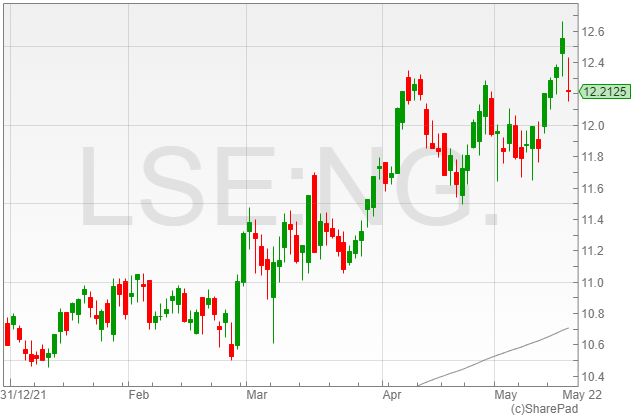
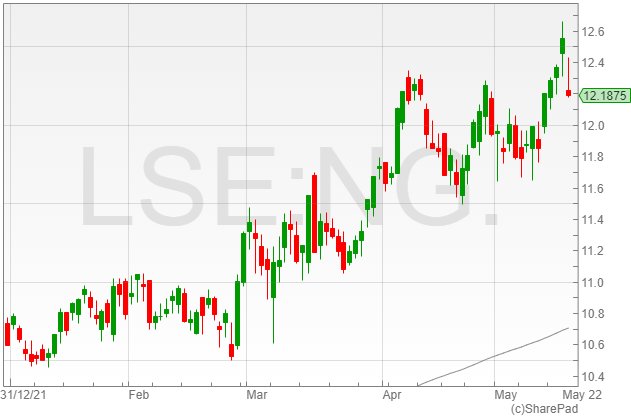
Close Brothers Group shares increased 2% to 1,093p in early morning trading on Friday, after the company reported a Banking loan book growth of 1.8% to £8.8 in correspondence to a 3.7% rise year-to-date.

The banking firm attributed its positive results to strong new business volumes in Commercial and Motor Finance, with resumed trading in Property linked to increased drawdowns from the group’s pipeline.

Close Brothers said its Close Brothers Asset Management (CBAM) assets fell as a result of negative market movements, with a slide to £15.4 billion against £15.8 billion and a decline in total client assets to £16.7 billion from £17.2 billion on 31 January 2022.

However, the group’s Winterflood sector saw an improvement in trading over the term, with a reported single loss day despite incredible market volatility.

The company highlighted its CBAM year-to-date annualised net inflows of 5% against 8% in HY1 2022, along with a strong pipeline of new business in progress.

Close Brothers noted a CET1 ratio of 14.9% on 30 April 2022, compared to 15.1% on 31 January 2022.

Meanwhile, the company confirmed an annualised year-to-date net interest margin of 7.8% against 7.9% in HY1 2022, which reportedly reflected the group’s continued focus on pricing discipline and a reduction in its cost of funds.

Additionally, Close Brothers commented that it expected the impact of interest rates floors of 1% in certain businesses to gradually drop away on the back of recent rises in interest rates, with the firm expecting no further impact from the floors once the UK base rates exceeds 1%.

The banking group caveated its results with a warning that the impact of the deteriorating economic condition was starting to encroach on its business, with its year-to-date bad debt ratio rising marginally to 1.2%, reflecting higher IFRS 9 provisions to account for a cautious outlook linked to external performance.

“Even at a time when consumer confidence is hitting 40-year lows, Close Brothers is running a highly profitable lending business, with high levels of capital reserves,” said Hargreaves Lansdown fund manager Steve Clayton.

“The bad debt provision has edged up, but aside from an already known issue in their former litigation lending business, now in run-down, bad debts remain incredibly low at just 0.5%.”

“The group’s strong margins make it an excellent cash generator, which has allowed them to grow the dividend significantly over time. This year we expect the group to pay out 66p per share, which is the same level that the group paid in 2019 before the pandemic. At that level, the shares will be yielding an attractive 6.1%, covered almost 2x.”

Close Brothers added that its Internal Ratings Based (IRB) application had received confirmation from the Prudential Regulation Authority (PRA) and was transitioned to Phase 2 during the period.

The institution said its outlook maintained a backdrop of inflationary pressure and macroeconomic uncertainty, however Close Brothers commented that its strong financial position and business model left the company in a decent position to support its clients and grow its sectors.

“We have performed well in the quarter, with continued good momentum across our lending businesses and robust demand in our core markets,” said Close Brothers CEO Adrian Sainsbury.

“We continue to support our customers and clients and maintain our strategic discipline against a backdrop of rising inflation and heightened uncertainty.”

“We are confident that our proven and resilient business model will allow us to continue delivering on our long-term track record of growth and profitability.”


Knights share prices recovers as chief executive invests £1m

Regional legal firm consolidator Knights (LON: KGH) reassured investors that there has been no further deterioration in trading since a profit warning in March. The chief executive invested £1m and other directors have also bought shares following the statement.
That has helped the share price recover by nearly one-third to 125p, although it is still well below the level it was before the disappointing trading statement. That is less than eight times forecast earnings and the prospective yield is 2.7%.
In the year to April 2022, underlying pre-tax profit should be at least £18.1 million, down ...

IDOX expects 7% revenue growth to £33m

0

IDOX shares increased 0.6% to 62.8p in early afternoon trading on Thursday, following an expected revenue growth of 7% to £33 million reported in its HY1 2022 trading upate.

The software company announced an anticipated adjusted EBITDA uptick of 8% to £11 million, alongside a net debt reduction of over 50% to £4 million from £8.1 million on 31 October 2021.

IDOX confirmed that its robust performance was currently in line with executive expectations, with a selection of operational highlights driving its positive growth.

The group commented that its order intake increased 7% year-on-year, with a strong pipeline underpinning its confidence over the medium term.

The firm also mentioned a series of contract wins and extensions with increased average tenure across its Public Sector Software and Engineering Information Management sectors.

IDOX further reported the successful integration of its 2021 acquisitions and the continued upscaling of its Pune, India centre of excellence to boost efficiency, capability and knowledge-sharing.

“Following the disposal of the Content businesses in 2021 Idox entered 2022 as a focused software and related services business. As a result of the focus on our core strengths and attention to operational excellence, we have delivered another solid financial performance for the first half of our financial year,” said IDOX CEO David Meaden.

“Idox benefits from an extensive customer base, a healthy orderbook, and a strong pipeline. In addition, we continue to explore a number of attractive M&A opportunities and maintain a strong balance sheet to execute upon the ‘fly’ phase of our journey.”

“Whilst we continue to be cognisant of ongoing challenges in the wider macro environment, we remain focused on, and are on track to deliver on our plans for the remainder of 2022.”

IDOX is reportedly scheduled to announce its HY1 2022 full results on Wednesday 15 June 2022.

Fever Tree trading reaches pre-pandemic levels

0

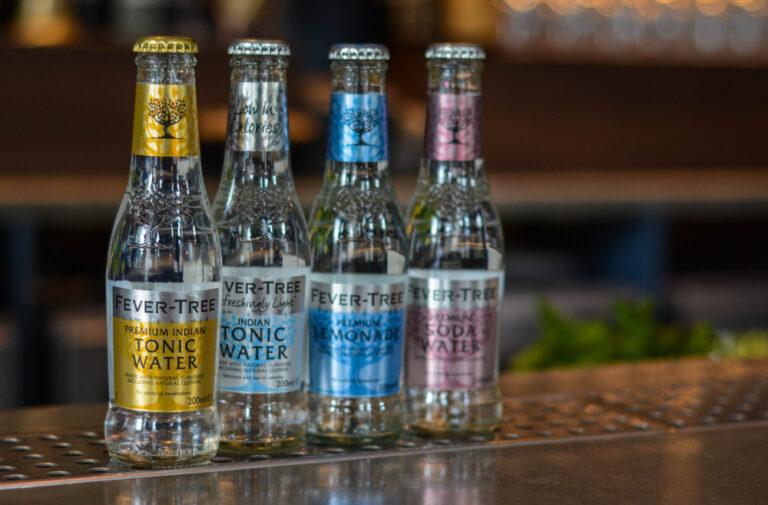
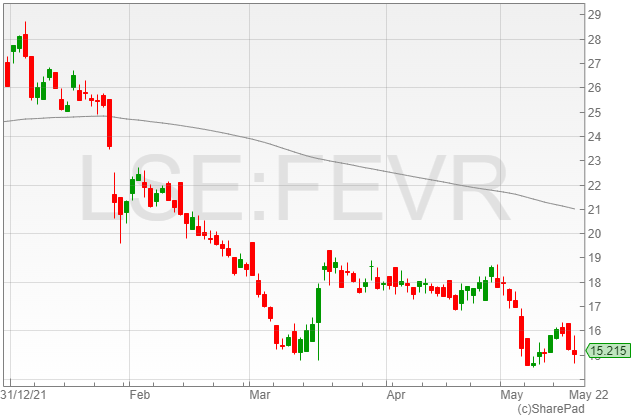
Fever Tree shares were up 0.3% to 1,528p in early afternoon trading on Thursday, following a reported 150% surge in off-trade sales compared to 2019 levels and strong momentum across its on-trade sales in its trading update.

The drinks firm announced that trading was in-line with expectations laid out in March, with US, Europe and international markets enjoying pre-pandemic rates of momentum.

The company highlighted several recent launches, including its limited-edition Passionfruit & Lime Tonic in the UK, which boosted off-trade sales, along with its Sparkling Pink Grapefruit Soda in on-trade sales across the UK and European markets, on the back of a positive reception in the US.

Fever Tree commented that its innovation pipeline remained strong, with a series of new product launches scheduled for the coming 18 months.

The drinks group added that it was scaling down its shipping costs and delays with the operation of its West Coast bottling line in the US, alongside its East Coast line, which is ramping up production over HY1 2022 and is set to add further flexibility to Fever Tree’s network once fully operational.

“One of the main issues called out for rising costs is shipping to the US, it’s a key growth area for the group so servicing that demand is essential,” said Hargreaves Lansdown equity analyst Matt Britzman.

“Positive steps are underway to bottle directly in the US and therefore avoid a lot of freight costs, that partnership with a local bottling company is well underway and ramping up production this year.”

The company said the addition of its two bottling lines would also reduce the carbon emissions associated with its supply chain.

The firm highlighted an expected FY 2022 revenue in the range of £355 million to £365 million and an EBITDA between £63 million to £66 million.

“Management described trading so far as ‘solid’ and it’s certainly nice to see the group on track for guidance, but we must not forget that was downgraded in March which was met with a nasty market reaction,” said Britzman.

“The main issue this year, is that little to none of the 16% forecast rise in revenue is expected to drop into cash profits and whilst that’s hardly unusual, given the wider macro conditions meaning costs are rising for pretty much everyone, some of Fevertree’s operations should be getting more efficient.”

Fever Tree cautioned that it faced an industry-wide backdrop of inflationary pressures and logistics complications, most critically related to US shipping.

The drinks producer said its short-term remained uncertain, however the acceleration of its East-Coast bottling line would serve to mitigate some of the pressure from cost inflation.

“There are some positives for the longer-term investment case, growth outside of the saturated UK market looks promising and increased demand for premium alcohol and mixers looks to be stickier than first anticipated,” said Britzman.

“However, when investors are expected to pay 36 times earnings for a slice of the pie, in today’s world, those margins need to start moving in the right direction”

FTSE 100 falls 2% as US stocks tumble 4%

0

The FTSE 100 was down 2.2% to 7,268.4 in midday trading on Thursday, as 40-year high inflation of 9% and the rising cost of living continued to erode investor confidence across the UK.

However, the market was sheltered from the worst of the dramatic fall across the Atlantic, as the NASDAQ fell 4.7% to 11,418.1 and the S&P 500 dropped 4% 3,923.6 after retailer Target’s shares lost 25% on rising costs and supply chain problems, and wiped almost $25 billion off its market cap.

“Against this backdrop the FTSE 100’s fall this morning looked pretty modest, the combination of commodity producers, stocks on lower valuations and generous dividends helping it to outperform other global markets,” said AJ Bell investment director Russ Mould.

The FTSE 100 was anchored by generous dividends, lower valuations and positive commodities performance, pulling the market up from the worst of the sell-off storm.

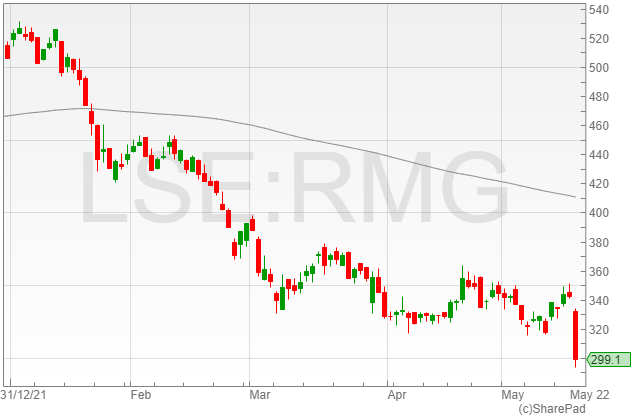
Royal Mail shares tumbled 12.8%, as the company plummeted on an 8.8% drop in annual pre-profit to £662 million, and warned investors of a “downside risk” to expectations for the coming year.

The beleaguered firm has been facing internal pressure as well, with nationwide strikes threatened as executive measures to shake up the company backfired.

“Royal Mail had been making real progress with its turnaround plans … now inflationary pressures are threatening to unpick that progress and have reignited troubles with its work force as talks continue to avert a potential nationwide strike,” said Mould.

“Pay increases can’t hope to keep pace with rising prices and demands for more flexibility from staff, including working Sundays, are unsurprisingly going down like a lead balloon.”

The group unveiled a full-year dividend of 20p per share, however, bringing its shareholder payment to twice its 10p dividend year-on-year.

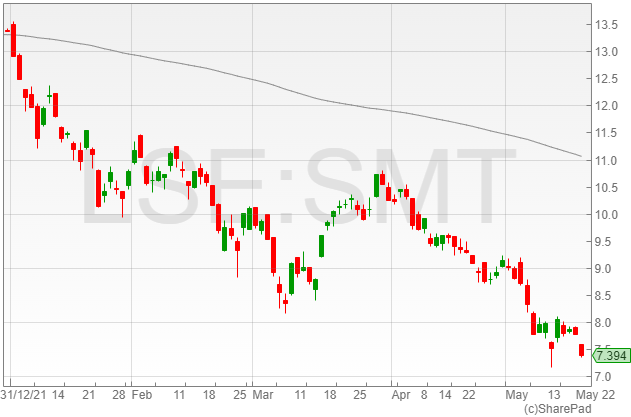
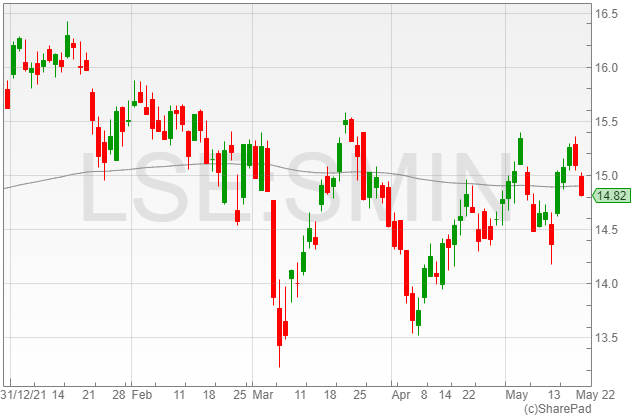
Scottish Mortgage Investment Trust shares fell 5% to 739.4p following a NAV total return over the 12 months to 31 March of negative 13%, falling dramatically below the FTSE All-World index benchmark, which gained 13%.

“Investors in Chinese companies have suffered from President Xi’s regulatory crackdowns in the name of ‘common prosperity’. In retrospect, it has been a mistake to reduce our holdings in western online platform companies rather than their Chinese counterparts,” said a spokesperson for the firm.

However, the company announced an uptick in its total dividend to 3.5p compared to 3.4p the previous year.

National Grid shares fell 1.9%, after the utilities group announced an 82% operating profit growth to £4.3 billion, alongside the acceleration of its transition to net-zero with 70% of its five-year investment aligned with EU taxonomy principles.

“National Grid remains focused on positioning our business, through acquisitions and investment, to deliver net zero while continuing to safely ensure security of supply at the lowest possible cost to consumers. And our results today reflect the strength of this strategy,” said National Grid CEO John Pettigrew.

The company estimated broadly flat earnings over 2022-2023, and reported a dividend rise of 4% to 50.9p from 49.1p, marking a 3.7% uptick in line with executive policy.

National Grid delivers 82% operating profit growth to £4.3 billion, accelerates net-zero transition

0

National Grid shares were down 1.2% to 1,229.9p in late morning trading on Thursday, after the utilities firm announced a positive series of results for its FY 2021-2022 including an 82% growth in operating profit to £4.3 billion compared to £2.4 billion the last year.

The company reported a pre-tax profit increase of 107% to £3.4 billion against £1.6 billion, alongside a capital investment rise of 39% to £6.7 billion from £4.8 billion.

National Grid has experienced a few complications in light of the group’s transition to an increased green energy portfolio.

The group confirmed that 70% of its five-year investment was aligned to EU taxonomy principles, which would make it one of the FTSE 100’s biggest net-zero investors.

The National grid added that it had made strong progress on its £400 million cost efficiency programme as it continued to focus on affordability for its customers, with £140 million delivered to date.

The company poured £24 billion of investment into its five-year financial framework aligned with the EU taxonomy legislation principles, with its extensive programme in progress to deliver the UK government’s 50GW offshore wind goal by 2030, alongside the launch of its clean energy strategy in the US to replace fossil fuels by 2050.

“The UK and US communities we serve are facing significant cost of living challenges, at a time when further urgency is needed to address climate change,” said National Grid CEO John Pettigrew.

“Against this backdrop, National Grid remains focused on positioning our business, through acquisitions and investment, to deliver net zero while continuing to safely ensure security of supply at the lowest possible cost to consumers. And our results today reflect the strength of this strategy.”

Analysts noted that under regular circumstances, advancement into green energy would be cause for celebration. However, with the energy price cap set to rise again in October and utilities bills shooting into the stratosphere, the group has apparently picked a poor time to make the switch.

“The group argues that it must spend to keep up with the UK’s ambitious climate change targets, the current grid simply isn’t strong enough to cope with a ballooning number of new connection requests,” said Hargreaves Lansdown equity analyst Laura Hoy.

“In normal times this wouldn’t be much of an issue, utilities are constantly negotiating with regulators on how they’ll be compensated for infrastructure investment. But with energy prices soaring uncomfortably higher, price hikes for customers are inevitable.”

“Together with the investment needed to shift to an all-electric future, it leaves regulators stuck between a rock and a hard place.”

The National Grid reported that its outlook between 2020-2021 to 2025-2026 remained unchanged, with a projected total cumulative capex of £30-35 billion, asset growth CAGR of 6%-8% supported by a strong balance sheet.

The firm commented that it expected earnings for 2022-2023 to remain broadly flat at an exchange rate anticipated at £1 to $1.30.

The energy group announced an EPS growth of 64% to 60.6p against 37p year-on-year, alongside a 4% dividend rise to 50.9p per share from 49.1 the previous year, representing a 3.7% uptick in line with executive policy.

Crossword Cybersecurity and Physiomics with Hybridan

The UK Investor Magazine Podcast was thrilled to welcome members of the Hybridan team Niall Pearson, Head of Corporate Broking & Sales, and Derren Nathan, Head of Research.

In this episode, we focus on Crossword Cybersecurity and Physiomics.

Crossword Cybersecurity has a portfolio of five cyber security products and earns significant revenue from consulting activities. Niall outlines their product mix and how this provides synergies across the portfolio. Crossword has made acquisitions recently and question whether will growth be M&A driven, or will we see organic growth from the current portfolio?

Physiomics is leading oncology consultancy using proprietary Virtual TumourTM technology to provide personalised oncology treatments. Their technology enables treatments suited to each individual by mapping tumour growth and adjusting treatments accordingly. Physiomics sees record contract revenue in the six months to June with significant contracts wins demonstrating the stability of their treatments.

Applied Graphene Materials: A step closer Break-even

Applied Graphene Materials (LSE: AGM) were unchanged at 16.5p and a Mkt Cap of £11m.  In February 2021 management supported a £6m fund raise a 41p to commercialize its graphene materials to be used by a  wide range of products. It improves the clients  eco-friendliness and sustainability of product  in formulations of paints, coatings, and composite materials.  Current revenues are tiny for the six months to January 2022 revenue was £46k with a loss £1.7m.  The Net Proceeds of the over-subscribed 2021 funding  was to provide sufficient  working capi...

easyJet takes off on narrowed £545m loss, leisure bookings soar

0

easyJet shares were up 0.4% to 502.3p in early morning trading on Thursday, after the budget airline reported a narrowed pre-tax loss of £545 million in its HY1 2022 results compared to £701 million in HY1 2021.

The travel company struck an upbeat tone with a revenue growth of 524% to £1,498 million against £240 million year-on-year on the back of its increase in capacity flows and ancillary products, which delivered continuous incremental revenue.

easyJet noted a 117% increase in group headline costs to £2 billion compared to £941 million the last year, as a result of the firm’s increase in flown capacity.

Passenger Recovery

easyJet commented that it had allocated aircraft to markets where it experienced the strongest demand, alongside measures to transform its ancillary offering to deliver a growth in revenue without cannibalising its ticket sales.

“easyJet has reduced its losses year on year, at the better end of guidance. The pent-up demand and removal of travel restrictions provided for a strong and sustained recovery in trading which has been further boosted as result of our actions,” said easyJet CEO Johan Lundgren.

“These include the radical reallocation of aircraft which has seen more than 1.5m seats moved to the best performing markets and the step-change in our ancillary products delivering increased revenue – both of which have contributed to our total yield increasing by 9% compared to the same period in FY19.”

“All of this is not only delivering now but with more to come in the future as even more passengers take to the skies.”

The company announced that forward bookings for Q3 were 76% sold, with 36% booked for Q4 along with ticket yields for the quarter 15% above 2019, and load factors estimated above 90%.

easyJet said Q3 capacity was anticipated to be 90% of FY2019, alongside a 97% capacity of pre-pandemic levels across Q4 2022.

The airline firm also noted a 6% growth in bookings over the past 10 weeks compared to the same term in 2019, with load factors of 90% across the Easter holidays this year.

easyJet announced that leisure travel demand picked up alongside domestic capacities, with HY1 2022 leisure at 113% of FY 2019 capacity and domestic at 104% of FY 2019 levels.

Meanwhile, the company reported a 70% rate of sale in its holidays business, with the sector on track to deliver a medium-term goal of £100 million.

“Since Easter we have been flying up to a quarter of a million customers and 1600 flights every day and in the second half leisure and domestic capacity will be above 2019 levels,” said Lundgren.

“It has been well documented that the industry is experiencing some operational issues so, as you would expect, we have been absolutely focused on taking action to ensure we have strengthened our operational resilience for this summer so we can deliver a great, reliable operation to our customers.”

“We expect to operate 90% of FY19 capacity in Q3 and we have capacity on sale of around 97% of FY19 flying in Q4 with easyJet holidays now on track to carry over 1.1 million customers this financial year.”

Fuel

The budget travel group confirmed its fuel was 71% hedged for HY2 2022 at $619 per metric tonne, 49% hedged for HY1 2023 at $701 and 20% hedged for HY2 2023 at $807.

The spot price was approximately $1,225 per metric tonne on 17 May 2022.

easyJet highlighted that its carbon obligation for calendar year 2022 was 100% covered at €19 per metric tonne.

Inflation sees gloomy skies

However, easyJet caveated its positive report with a nod to the short-term uncertainty of the global economic situation, which has seen inflation sweep the UK and bite chunks out of consumers’ wallets, especially the potential cost of travel plans.

The firm commented that it had some level of uncertainty concerning its summer earnings, and said it would not provide any further financial guidance for the year, as a result of continued levels of unpredictability in the coming months.

“The group’s also confident that the cost-of-living crisis isn’t touching performance,” said Hargreaves Lansdown equity analyst Sophie Lund-Yates.

“It was quick to point out that holidays are more important to people these days, after two years without travel abroad.”

“This idea does ring true to some extent, but there’s no getting away from the fact that if faced with a recession, a holiday – whether a hop down the road or a city break to Prague, simply isn’t going to happen for millions of people. This isn’t a flashing red indicator at this juncture, but it’s something to keep one eye on.”

Smiths Group announces 4.2% organic revenue growth

0

Smiths Group shares were down 1.9% to 1,482.5p in early morning trading on Thursday, after the company announced its fourth quarter of consecutive growth in its Q3 trading update.

The UK engineering firm reported a 4.2% rise in organic revenue from a 3.4% growth in HY1 2022.

However, Smiths Group mentioned a slight decline in some business sales linked to supply chain disruptions and cost inflation reported in its Q3 trading update.

The group commented that its John Crane sector saw modest growth and strong order intake in its Industrials and Energy segments, however, performance was negatively impacted by supply chain issues and elevated input costs, which dented the group’s margins.

The company mentioned that its Smiths Detection segment declined on the challenging Aviation OE market.

Meanwhile, Smiths Group experienced growth in Other Security Systems OE and in aftermath across both sectors, alongside strong growth recorded in Smiths Interconnect driven by positive demand for its products across its end markets.

The engineering group highlighted accelerated growth in its Flek-Tek business over Q3, with demand for Industrials and recovery in its Aerospace sector reportedly in progress.

The company maintained its FY2022 guidance of 3% organic revenue growth, and noted that it is currently on track to deliver a strong comparator in Q4, despite international inflationary challenges and macroeconomic uncertainty across its supply chain.

Smith Group commented that its executive leadership appointments announced on 14 April 2022 were currently in place, with the company reportedly responding well to the new executive shuffle.

The firm added that its £742 million share buyback programme announced on 11 November 2021 was on schedule, with £310 million already repurchased, and the remainder scheduled for delivery in early 2023.

“We delivered our fourth consecutive quarter of growth, demonstrating further progress against our strategy, towards our medium-term target of 4-6% organic revenue growth,” said Smith Group CEO Paul Keel.

“As we enter the final quarter of FY2022, macro uncertainty remains high and supply chain and inflationary challenges continue. We are leveraging the Smiths Excellence System to help manage these headwinds, and confirm our full year organic revenue growth guidance of 3%.”

“We are laser focused on our top priorities of accelerating growth, improving execution and supporting our great people, whose hard work and ingenuity make this progress possible.”