




Alien Metals boasts multiple opportunities for value creation

Alien Metals is diversified metals explorer with projects across Australia, Mexico, and Greenland. Their broad portfolio of assets hold deposits of iron ore, platinum group metals (PGE), palladium, gold, copper and Zinc.
The nature of their portfolio means the company not only has exposure to battery metals and the growth in demand for EVs and renewable energy, but also the safe haven characteristics of gold, and silver’s manufacturing applications.
The Alien has recently acquiring the remaining stake in what is thought to be one of Australia’s largest platinum group metals (PGE) deposits and has enjoyed bumper results from scoping studies at the Hamersley Iron Ore project.
Having such a broad range of asset means there are plentiful opportunities to de-risk the portfolio and Alien may start to see revenue from production in the not too distant future.
Alien Metals is undertaking a series of concurrent studies across their portfolio of assets and promises a steady flow of market updates throughout 2022.
Alien Metals currently has a market cap of £28m which one may argue doesn’t fairly reflect the strength of their portfolio of assets, when compared to other junior miners of a similar valuation. Indeed, analysts at WH Ireland gave Alien Metals a 2.7p price target in April.
Alien Metals in Australia
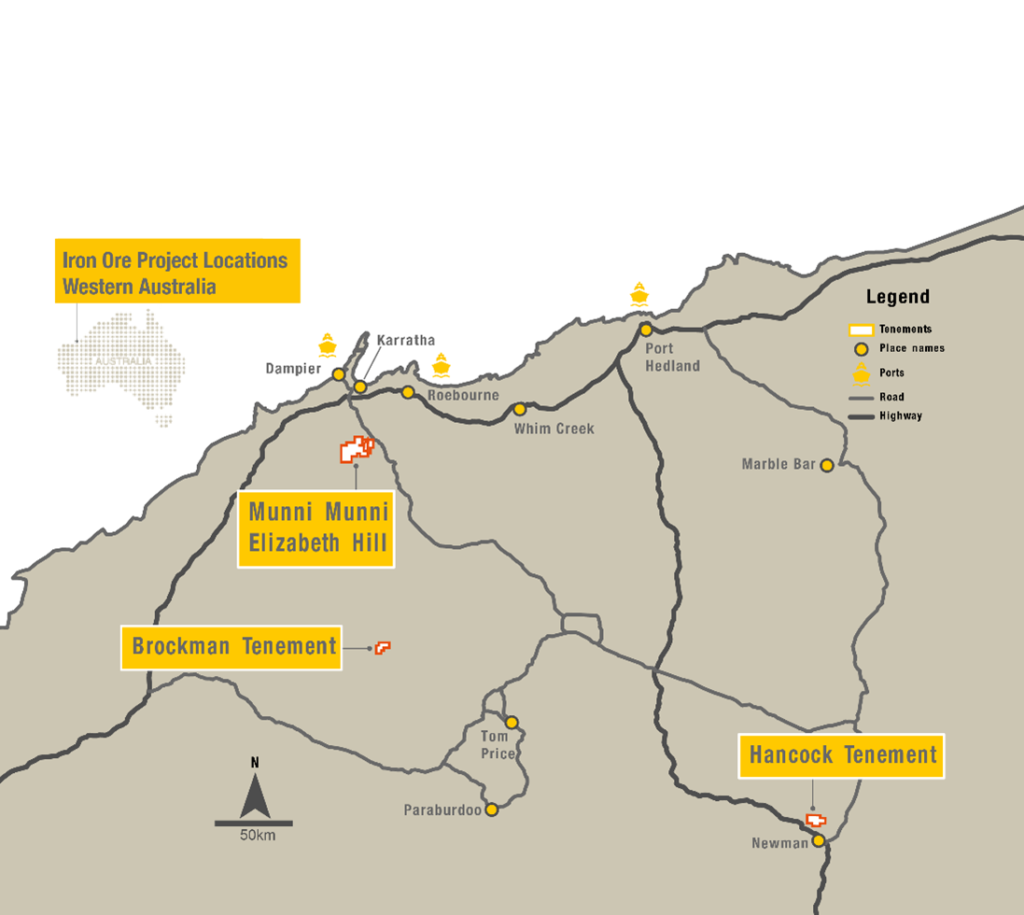
In March 2022 Alien Metals deepened their exposure in Australia with the acquisition of 100% interest in Munni Munni Platinum Group Metals and Gold Project in the West Pilbara, Western Australia. The Munni Munni project is held in high esteem and thought to be one of the most significant PGE resources in Australia.
The Munni Munni non-JORC resource points to 24Mt @ 2.9g/t Platinum Group Element (PGE) and gold for 2.2Moz PGM3. In term’s of PGEs, Munni Munni includes 1.14Moz of palladium, 0.83Moz of platinum, 152koz gold and 76koz of rhodium.
This resource was revealed using the now non-compliant 2004 JORC standards, so one of the first jobs at Munni Munni will be to conduct a JORC 2012 compliant study.
Iron ore
Australia is also home to the Hamersley Iron Ore asset that borders licences held by Fortescue Metals Group, Hancock Prospecting, BHP Billiton, Hope Downs and Brockman Mining.
A recent study found the project to hold 10m/t of “high-quality product with very little adverse deleterious minerals’. The costs associated with bringing the asset into production are also highly attractive. Hamersley benefits from low capital requirements aided by adequate infrastructure and access to the Port Hedland Public Ore Terminal.
The ability to employ surface mining techniques helped to achieve low estimates of $60 per tonne Free on Board costs for Alien’s iron ore offtake. Spot prices for Dalian 62%-grade iron ore have been having around $130 per tonne.
Bill Brodie Good, Alien Metals CEO, said they were working to ‘get this project into production within a very short timeframe.’
Elizabeth Hill
The high-grade Elizabeth Hill Silver Project has ben undergoing evaluation and recently received the final results from the 15 RC drill holes that included 8m @ 4,233 g/t Ag (149oz/t Ag) in one drill hole and 2m @ 1,550 g/t Ag (55oz/t Ag) in another.
The campaign also revealed encouraging assay results for copper, cobalt, lead and zinc.
Mexico
Alien Metal’s Mexican assets focus on silver with the Los Campos and San Celso projects. In addition, Alien is set to begin a drill campaign at Donovan Copper/Gold project.
Los Campos and San Celso projects are located in areas that have seen significant levels of past silver mining activity and San Celso is home to two historic silver mines.
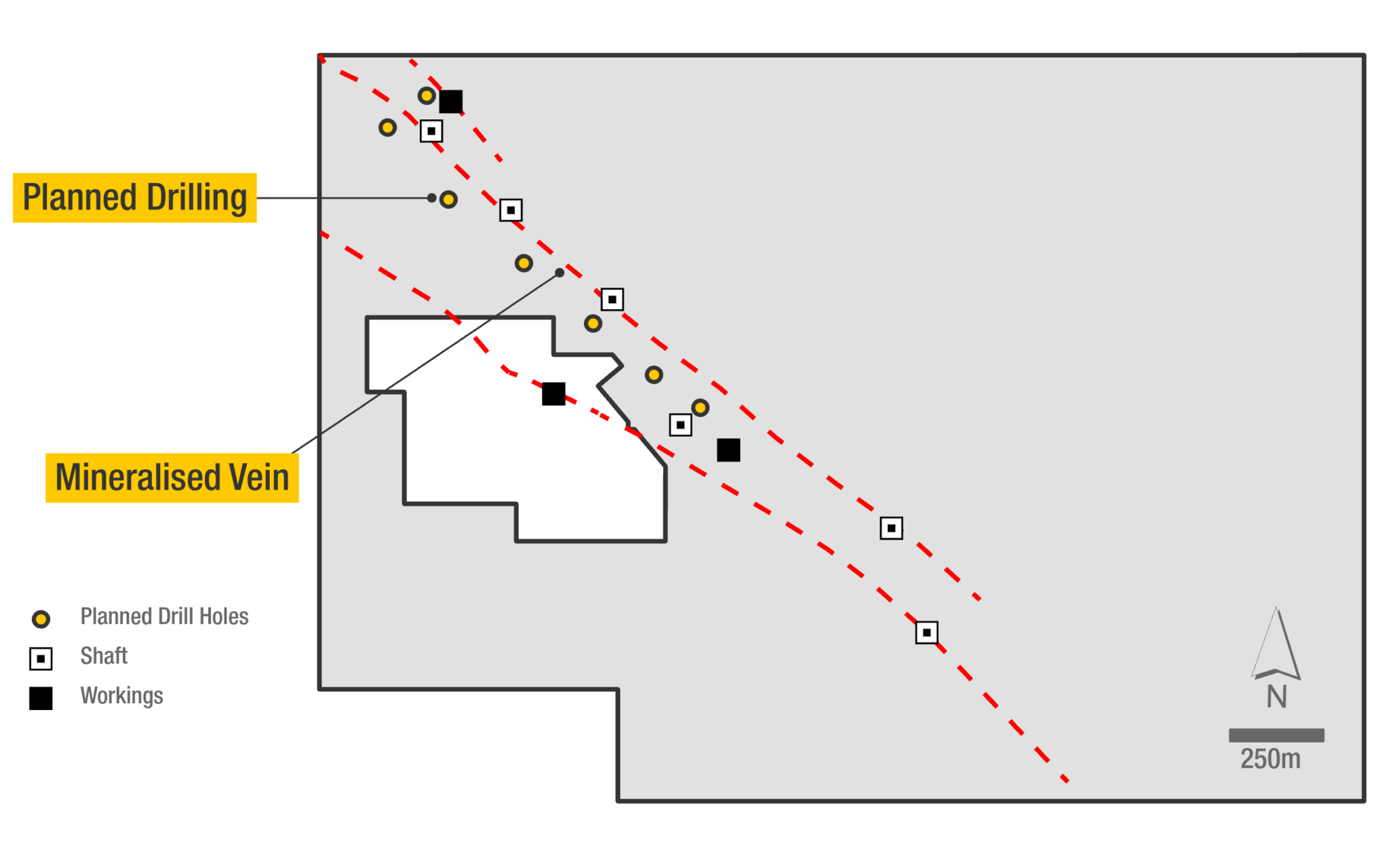
The Los Campos project is located in Mexico’s largest silver-producing region and holds two high grade epithermal silver veins that were previously found to have grades of 14g/t Au Equivalent.
Greenland
Alien Metals obtained a license to begin exploration in Greenland in a 208 km2 exploration area in the close vicinity of what is thought to be one of the largest lead/zinc deposits in Greenland.
The Citronen zinc-lead project owned by Ironbark Zinc Limited has a JORC Resources of 131.1 m/t @ 4.5% Zn + Pb.
The Alien Metals share price was 0.61p at the time of writing.
FTSE 100 recovers as retail sales grow 1.4%

The FTSE 100 closed at 7,387.8 on Friday, after the index recovered on a positive slate of results from the Office of National Statistics (ONS), which reported that UK retail sales grew 1.4% in April despite a crushing 9% rate of inflation.
Non-store and online retailers experienced a 3.7% surge as a result of stronger clothing sales, which might serve to assuage investor fears over retail group stocks, which have seen dramatic falls in light of inflation fears over the last few months.
“Clothing sales have been more resilient than expected, according to the new ONS data. Boohoo and ASOS both enjoyed a share price jump on the news as investors were taken aback by the sales trends,” said AJ Bell investment director Russ Mould.
“Recent months have seen shares decline in both companies as the market feared casual spending on tops, dresses and shirts would fall given that buying fewer non-essential clothes would be an easy way to save a bit of money now needed to pay for gas and electricity.”
The index appears to be one of the stronger markets to weather the economic storm, as the FTSE 100 was dragged back up from its gloomy Thursday depths.
“Investors may feel as if they’ve been soaked by a torrential shower given the state of the markets this year. Look closer and it’s clear that the FTSE 100 is the one with the best umbrella,” said Mould.
Royal Mail shares gained 3.8% to 311.5p after its shaky results on Thursday, which reported some positives, including a 0.6% rise in revenue to £12.7 billion compared to £12.6 billion the last year.
The company announced a doubled dividend payout, with a full-year payment of 20p per share against 10p year-on-year.
Meanwhile, investor moods were further lifted as Chinese measures to lift the struggling economy rolled in, with the Hang Seng rising 3% as China’s central bank announced a reduction in a key lending rate.
Insurance giant Prudential, which shifted its focus to Asia in 2021, benefited from the recovering Chinese market, with shares in the group closing 2.5% higher at 1,000p.
The rally in China also pulled a range of miners up the FTSE 100, with Croda closing 2.3% higher at 6,706p, Anglo American gaining 1.7% to 3,526p, Rio Tinto increasing 2% to 5,454p, Endeavor up 1.4% to 1,844p and Fresnillo rising 1.1% to 783p.
“Boring old commodity producers, utility providers and tobacco stocks have come to the UK market’s rescue, proving that successful investing is not all about backing the next big go-go growth stock,” said Mould.
Venture capital needs women for female-led businesses to thrive

Female representation in venture capital investment is crucial for female-led businesses to thrive, according to a recent report from Slip founder Tash Grossman.
The retail technology app CEO said increased female representation in the venture capital sector was the key to unlocking the potential of businesses started by women, and to narrowing the gap between male and female-founded companies.
The survey found that for every dollar invested in female-led start-ups, twice that amount of revenue was invested in male start-ups, which Grossman linked to a lack of women in venture capital positions.
According to the report, female business founders were three-times more likely to receive funding from venture capital companies headed by women. However, women currently make up a mere 13% of senior leadership roles in the industry, with many firms discovered to have zero women on their investment teams.
“Around the world, venture capital has always seemed like a ‘boys’ club’ and as we look to the future, investors need to show that they are willing to adapt if we are to encourage the creation of more female-founded businesses and reap the economic rewards of this,” said Grossman.
Grossman’s Slip app recently gained £750,000 in a fundraise supported by a slate of female investors, including Dr Pamela Walker, who pointed out the emerging body of research in support of the impact gender and racial diversity have as a major driver of financial performance in companies across the international spectrum.
“From my perspective as an investor, I believe everyone should have equal access to capital and diverse teams are able to think both critically and creatively with an instinct to align, decide, and act quickly which in turn helps them to become more successful,” said Walker.
“Diversification is a core tenet of investment. Having a diverse portfolio means targeting more diverse markets with a different lens and unlocking access to innovation.”
“Investors that pull this mindset through to funding will out-perform the rest.”
UK Oil & Gas BB-1z wins two-year planning extension

UK Oil & Gas shares were up 3.1% to 0.1p in early afternoon trading on Friday after the West Sussex County Council granted a two-year planning permission extension for the group’s Broadford Bridge-1z (BB-1z) Kimmeridge oil discovery.
The extension for the discovery, located in the company’s wholly owned licence PEDL234, reportedly passed with a majority vote of seven against two in favour of the motion.
UK Oil & Gas confirmed that the new date of the planning grant is scheduled to run out on 31 March 2024.
The energy firm commented that the additional two years would allow any information acquired from future Kimmeridge drilling at the company’s Loxley conventional gas and Horse Hill oil fields to be factored into the group’s upcoming Broadford Bridge plans.
The fossil fuels explorer also said it was still waiting for the final decision on its appeal against the Surrey County Council’s refused planning consent for the firm’s Loxley gas project.
The decision is currently under consideration by the Secretary of State for Levelling Up, Housing and Communities, with the decision reportedly due on 7 June 2022.
Meanwhile, in line with UK Oil & Gas’ green energy plans, the extension is also set to allow conceptual plans for the supply of heat energy from the project to a potential large-scale greenhouse end-user which is scheduled for further development.
The early-stage concept reportedly includes use of the operation’s drilling pad to accommodate a series of new stand-alone deep geothermal wells.
Technology Minerals sell 10% interest in US copper-cobalt projects

Technology Minerals shares were up 8.7% to 3.1p in late morning trading on Friday, following the company’s reported sale of an initial 10% interest in its registered claims in the group’s wholly-owned US copper-cobalt projects.
The battery metals firm said the interest in its Blackbird Creek Project and Empirium Project in Lemhi Country, Idaho had been sold to Canadian precious metals firm BlueBird Metals for a cash consideration of £900,000.
The Blackbird Creek operation is set within the 60km Idaho Cobalt Belt, which is categorised by stratiform/tabular copper-cobalt deposits, and is hosted in the Mesoproterozoic Belt Supergroup juxtaposed between later Proterozoic quartz monzonitic intrusions.
The group’s Emperium Project covers an estimated 55km in east-central Idaho and represents one of the largest land positions in the Idaho Cobalt Belt.
Technology Minerals confirmed that the sale agreement further included a proposed option for Bluebird Metals to acquire an additional 20% interest in the two projects for another cash consideration of £1.8 million.
The company mentioned that the option would be exercisable within a six-month period from the date of signature on the detailed Purchase Agreement linked to the proposed sale.
“We are delighted to complete the sale of a minority interest in our US cobalt/copper assets which is a strong endorsement of the potential of the Blackbird Creek and Emperium Projects,” said Technology Minerals CEO Alex Stanbury.
“The agreement validates our strategy of advancing our junior mining assets up the value curve to attract partners and unlock significant potential value that can be added to the Company’s portfolio.”
Lloyds shares and the looming spectre of inflation: What next for the banking group?
Llyods has long been an established giant of the banking industry, however as investors grow more cautious of gloomy 9% inflation and shrinking household budgets, what comes next on the horizon for the financial institution?
The Bank of England hiked interest rates 0.25% to 1% earlier in May, with experts predicting an additional rise to 1.25% at its next meeting in June, which would add value to Lloyd’s investments through higher net interest margins.
However, the recent surge in inflation to 9% is set to potentially see a significant decline in their customer’s financial health which could be exacerbated by more interest rate increases.
Huw Pill talks about what we’re doing to bring inflation down. And he gives his view on the outlook for the UK’s economy. https://t.co/ca20IS02Ad pic.twitter.com/7SLM1CcMqz
— Bank of England (@bankofengland) May 20, 2022
Lloyds’ share price has fallen 7.7% year-to-date, and with the prospect of rising macroeconomic complications, the share price could be set to drop lower in the coming months as inflationary pressures hits the banking sector.
However, it might be the right time to invest, as Lloyds has a record of bouncing back from economic disruption with strength.
The company beat management expectations in its Q1 2022 results with a profit of £1.6 billion, surging ahead following the Covid-19 pandemic downturn.
Lloyds shares valuation
The banking giant currently has a PE ratio of 5.6, representing value when compared to peers, with HSBC Holdings at 8.6, NatWest at 8.8 and Standard Chartered at 9.8.
Lloyds pays an attractive 4.6% dividend and has a robust dividend cover of 3.9, indicating that the company’s payouts are set to remain covered despite the looming inflationary pressure.
Lloyds shares may dip in the short-term, however the banking mainstay is in strong financial health for future growth.
Retail sales grow 1.4% in April as inflation spikes to 9%

Retail sales grew 1.4% in April despite the crushing weight of 9% inflation, as UK consumers spent on alcohol and clothing in the countdown to the summer season, according to the latest report from the Office of National Statistics (ONS).
“The unexpected upturn in retail sales could be viewed as a positive sign that the consumer isn’t as bruised as other data suggests,” said AJ Bell financial analyst Danni Hewson.
Food sales rose 2.8% as a result of increased spending on luxury items including tobacco and alcohol, with supermarket food sales remaining flat.
“But digging into April’s figures the big uptick in food and drink spend in supermarkets might indicate that people are choosing their kitchen tables over pubs and restaurants as they look to save money,” said Hewson.
“Whilst food spend has been largely unchanged, which suggests people are still being cautious, spend on alcohol and tobacco has soared.”
“Life’s little luxuries, the things that help us get by when times are tough, will have to come in under budget as those budgets are tested.”
Meanwhile, online and non-store retailers saw a 3.7% surge in light of stronger clothing sales.
“Summer 2022 will still be a time for postponed events and much anticipated holidays. After a couple of years where only the top half was visible to most of the world people are updating their wardrobes,” continued Hewson.
Online retail sales accounted for approximately 27% of total UK retail sales, representing an uptick from 25.9% in March and marking a significant rise from pre-pandemic levels of 19.9% in February 2020.
Vehicle fuel sales saw an uptick of 1.4% following a 4.2% fall the previous month, as consumers adjusted to the shock of spiking petrol prices.
The ONS commented that non-food store sales volumes dropped by 0.6% on the back of a decline in other non-food stores, which fell 3.3% alongside a 0.5% slide in household good stores, such as furniture outlets.
“When you look at other non-food retail, that has dropped back. People can only spend a pound once and when that pound is worth significantly less than a year ago people have to make choices,” said Hewson.
“DIY projects are being parked; home improvements slipped to the back of the queue as people prioritise the way they look over their living spaces.”
The unexpected increase in retail sales has been caveated with a note of caution, as the trend for the past three months has actually been in decline, alongside the latest consumer confidence survey, which indicates that despite the retail sales jump, the big picture is bleak.
“If you look at the last three months as a whole, the trend is a downward one and when you add in the latest consumer confidence survey by GFK, optimism seems a bit out of place,” said Hewson.
“Consumers are terrified about how they’ll weather the next few months, every month they are finding that their personal financial situation is deteriorating and most believe the worst is still to come.”
Meanwhile, Target’s shocking 25% stock sink earlier in the week served as a warning across the Atlantic that customers have already started paring back on former staples in their shopping cart in a move to save cash, as inflationary pressures loom in the macroeconomic sphere.
“Retailers are already feeling the pinch and outlooks from a number of big American names over the last week have sent shockwaves through global financial markets,” said Hewson.
“Big ticket items will gather dust on shelves and shoppers will become increasingly cut-throat when it comes to value.”
The ONS report might have given retailers cause for relief, however the odds are stacked against them as the summer months peel away to autumn and inflation hits a projected high of 10% in October.
The cold snap of the cost of living is already eating into consumer wallets.
“It’s all about priorities. This month people have prioritised preparing for future good times, next month they might have to save any spare cash to actually pay for those good times,” said Hewson.
“Retailers know they’re in hot water and can do little to turn down the heat.”