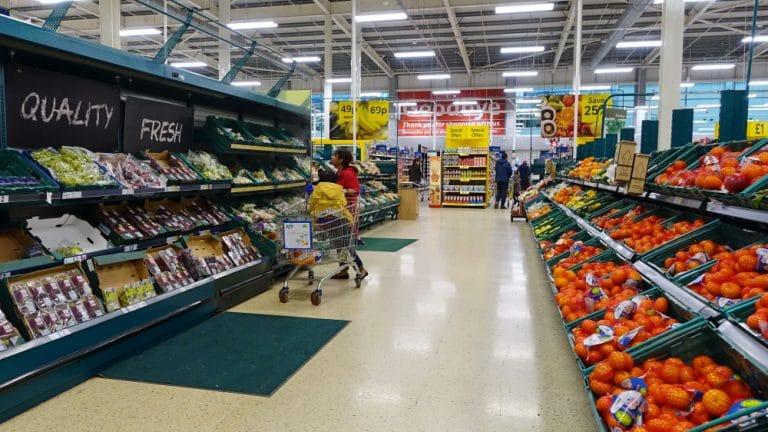
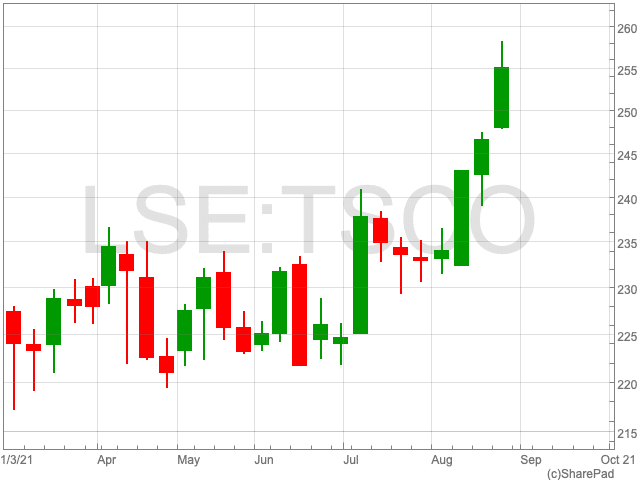
The Tesco share price (LON:TSCO), up by 0.79% on Friday, is set to close out its fourth consecutive week in the green. The supermarket chain has now added 8.79% in the past month. However, it remains some way off its level in February, when Tesco paid out £5bn to shareholders via a special dividend with the proceeds of the sale of its business arms in Malaysia and Thailand. On 12 February, the Tesco share price was at 304.76p, while today it stands at 255p per share. With close attention being paid to UK supermarkets by American private equity firms, investors will be keeping a close eye on the Tesco share price.
Takeover Talk
The Morrisons buyout has brought eyes to the sector, with both Tesco and Sainsbury’s seeing their stock values rise in recent weeks. However, while US private equity firms are keen on Morrisons, Tesco is a different proposition entirely. Over the past two years, Morrisons has been underperforming vs Tesco, meaning it represents better value for Clayton, Dubilier & Rice et al.
Analysts
A range of analysts, as reported by Stockopedia, have a positive outlook on the FTSE 100 company. Among seven analysts currently covering Tesco, seven have given a ‘buy’ recommendation, three a ‘hold’ and zero a ‘sell’. This may come as encouraging news to those holding the stock, although it must be noted that analysts are susceptible to fallibility just like investors.
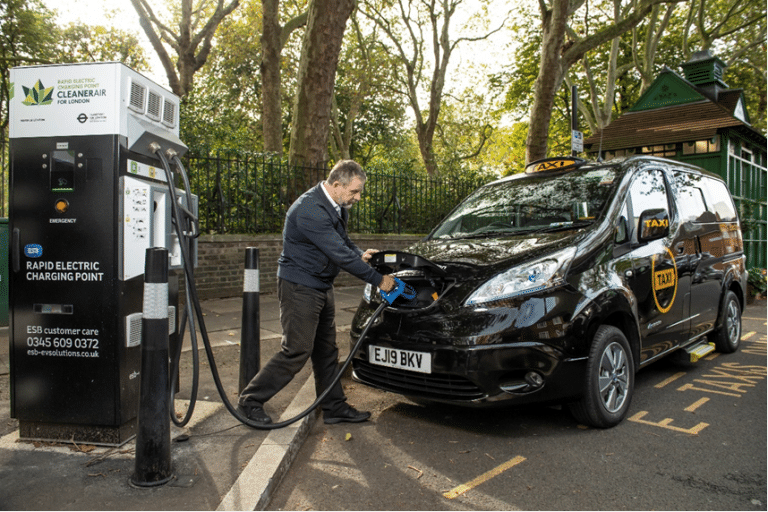
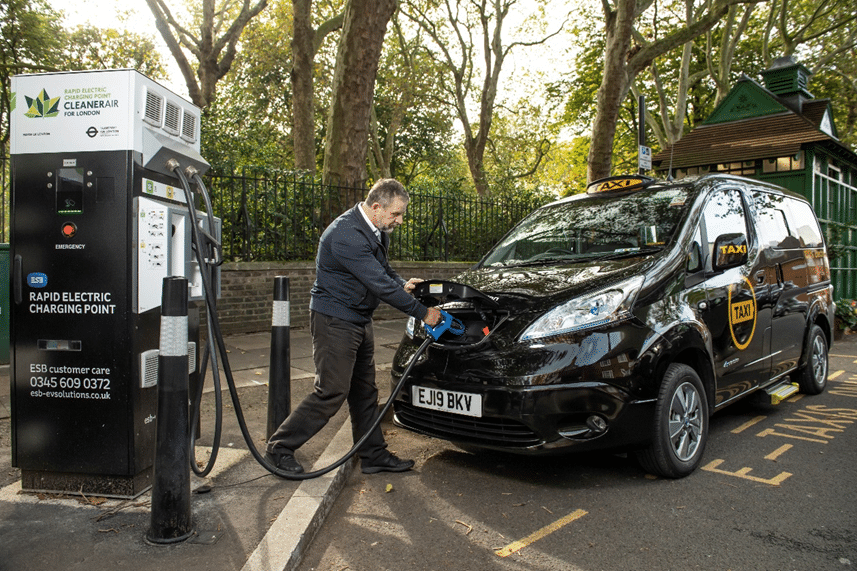
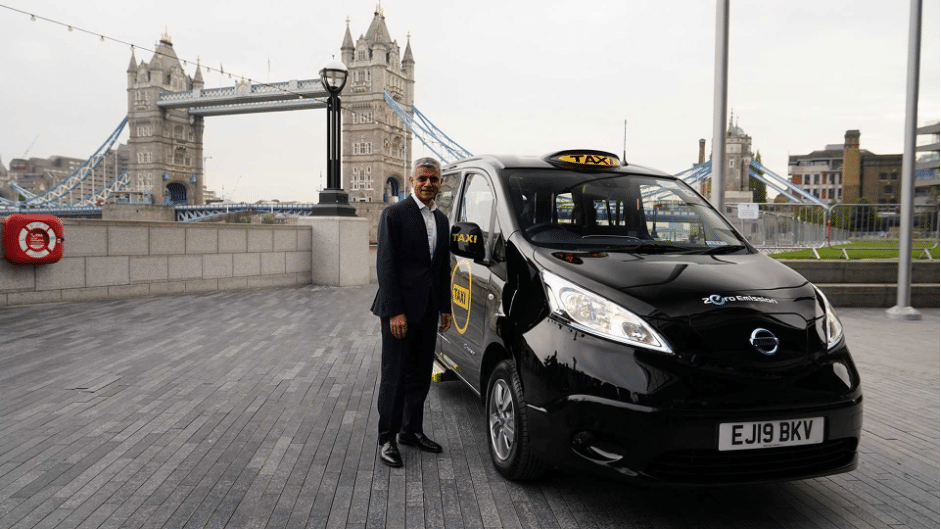
Dynamo Motor Company manufacture The Dynamo Taxi, according to GOV.UK, the world’s only 100% electric zero emissions London black cab.
We are based in the automotive heartland that is Coventry.
Working in association with Nissan and in view of a legislation change on January 1st 2018, whereby Taxis could only be licensed in London if they were capable of travelling more than 30 miles with zero emissions, Dynamo created a first to market vehicle which currently only has one competitor, this being LEVC, which is a range extended vehicle i.e petrol and battery.
In the UK there are nearly 70,000 taxis of which some 4,000 have already converted to electric. Dynamo is competing for the other 66,000, worth around £4 billion, who over the next 10 years, driven by financial gain and a growing desire to improve the environment, will opt for an electric taxi.
Our Taxi uses Nissan’s fully electric eNV200 Evalia MPV as a donor vehicle that Dynamo converts to a fully certified and compliant London Black Cab.
FUNDRAISING –Limited Time to Invest
Dynamo is currently fundraising through Seedrs and has hit over 85% of target with over 600 investors. With the campaign closing on September 8th, now is the time to join us before it is too late and play an active part in reducing pollution whilst investing into an exciting EV company. To find out more and make your investment please visit www.seedrs.com/.dynamotaxi
AUTOMOTIVE TREND – Green Economy
The EV market is expected to grow at a CAGR of 33.6% from 2020 to reach $2,495.4 billion by 2027.
By volume, the EV market is expected to reach 233.9 million units by 2027, at a CAGR of 21.7%.
Global EV sales skyrocketed 43% to a total of 3.24 million vehicles sold compared to 2.26 million in the year 2019.
Compound Annual Growth Rate – (CAGR).
SECOND PRODUCT– Don’t go long, go up!
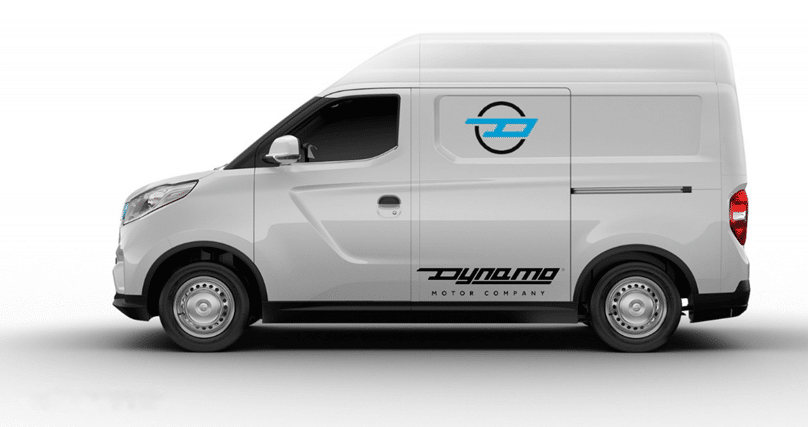
With £1.5 million investment secured from our partner Gluon Mobility Ventures (formed by Max Delamain and Per Regnarsson, owners of Gluon Capital and long-term investors and advisors in the sustainable energy markets), Dynamo have accelerated strategic diversification development plans and brought forward our second product, working with Maxus, a fully electric increased cargo volume (m³) last mile delivery van for launch August 2021.
Dynamo has entered this market with an innovative product whereby cargo volume increases to 6 cubic metres on a Short Wheelbase Van enabling better ease of use in congested traffic, better parking attributes and of course an option for couriers to load larger volume parcels.
Coronavirus accelerated the transition to an increased level of purchases online, which is something we believe will be maintained and as such, last mile delivery vehicles will therefore increase in numbers on the road.
Working with our experienced engineers we have developed an option for fleet owners that offers them greater flexibility and brings forth our slogan, don’t go long, go up!
SUBSTANTIAL ACCOMPLISHMENTS TO DATE– Keeping Pace in the EV Era
Dynamo attained international converter status within Nissan Motors in 2017 meaning that Dynamo could officially convert and sell Nissan products.
Whole vehicle type approval (M1 Certification) was attained in August 2019.
Transport for London Taxi Approval was attained in August 2019.
The Dynamo Taxi was launched with Nissan at City Hall October 2019 and is still the world’s only certified 100% electric zero emission black cab.
The Mayor of London who attended the launch said this of The Dynamo Taxi “London’s black cabs are known around the world, which is why I am pleased to launch the first all-electric London black cab by Dynamo. Working with cabbies to go electric is a key part of our plans to improve London’s air quality. The Dynamo Taxi will accelerate the retirement of polluting diesel taxis from city streets across the UK, improving air quality, helping to tackle the climate emergency and to create a green economy”.
The product has so far had over £10,000,000 spent on its development.
In September 2020 after €560,000 investment at Nissan’s Barcelona Plant, the first vehicle built specifically for Dynamo, whereby Nissan completed some of the conversion steps was delivered to Dynamo. This collaborative working enabled Dynamo to speed up production.
Dynamo has to date sold 250 vehicles with sales being in London, Liverpool, Coventry, Sheffield and Nottingham. Dynamo now has a waiting list for future deliveries.
March 2021, Dynamo received an order from the Welsh Government for 50 ‘try before you buy’ Taxis. The last of these taxis were delivered in May 2021 and Dynamo have now received subsequent orders from Wales.
The launch of Dynamo’s second product, working with Maxus, a fully electric increased cargo volume (m³) last mile delivery van in August 2021.
USE OF PROCEEDS– Putting your money to work
Acquisition of donor vehicles from Nissan.
Acquisition of additional parts and equipment from a localised supply chain.
Dynamo will increase its workforce, therefore incur recruitment costs.
The launch and productionization of Dynamo’s second product, the fully electric Maxus increased cargo volume (m³) last mile delivery van.
Dynamo is currently working with the Nissan / Renault Alliance to develop a second Taxi product.
Dynamo will fund its diversification strategy and will increase its relationships with large automotive manufacturers as well as operate in other market sectors.
You have the opportunity to play an active part in a changing automotive world, where carbon neutral targets for 2030 have created huge business opportunities for companies like Dynamo that manufacture electric vehicle solutions. Change is not coming, it is here, so join us as together we play a part in reducing pollution and build a sustainable U.K. manufacturing company that embodies what the green economy is all about.
If you would like to invest now or find more information, then please use the following link.
“Tap-and-go spending limit for cards was raised from £30 to £45
UK shoppers will now be able to spend up to £100 using contactless card payments from 15 October, more than doubling the limit on spending.
The cap placed on “tap-and-go” spending for cards was increased from £30 to £45 following the pandemic’s arrival as concerns grew over the virus being spread.
A number of outlets stopped taking cash payments, while some retailers decreased their prices in an effort to ensure that people would use their cards more often.
The fears have settled but, as with many things, the pandemic has introduced a permanent change, as Rishi Sunak confirmed the limit would double.
While the roll-out will begin on 15 October, some retailers will be accepting higher payments immediately.
“Around half of all credit card transactions and two-thirds of all debit card transactions are contactless and this number will leap from October as people can use contactless for bigger items, like the weekly shop or filling up the car with petrol.”
“However, while the move brings more convenience for some it also carries two big warnings. First, it is a thief’s dream, as they can take far more of your money in each transaction if you card is lost or stolen. By spending £100 at a pop without having to put in a PIN, it would be very easy for thieves to blitz through money quickly before you even spotted the card had been nicked,” Suter added.
“Second, there is a risk for those who are in debt getting further into debt. The easier a card transaction is the less the consumer is actively thinking about how much they are spending, meaning it’s easier to rack up larger bills on a credit card.”
Super suggests that people should be able to set their own card limits if they want to, either to scupper thieves or for their own financial management.
Despite a global pandemic ravaging the world economy, UK house prices are up by 79.4% in the last 10 years, and across the OECD more broadly.
Research from money.co.uk analysed the average price of homes across OECD countries over the last decade.
It was revealed that the UK ranked 10th for property price increases.
Countries with the Greatest Property Price Increases
Rank
Country
Average house price per sq metre (2010)
Average house price per sq metre (2020)
Price increase (%)
Difference in average annual wage 2010 to 2020 (%)
Average inflation rate 2010-20
1
Israel
£1,553
£6,920
345.7%
17.5%
0.92%
2
Switzerland
£3,197
£8,489
165.5%
2.4%
-0.04%
3
Germany
£1,781
£4,666
162.0%
14.2%
1.25%
4
United States
£1,081
£2,738
153.3%
13.7%
1.72%
5
Hungary
£838
£1,993
137.8%
17.3%
2.56%
6
Slovakia
£997
£2,111
111.8%
18.9%
1.58%
7
France
£3,459
£6,934
100.5%
2.8%
1.06%
8
Portugal
£1,228
£2,290
86.5%
-1.3%
1.06%
9
Japan
£3,235
£5,664
75.1%
1.1%
0.42%
10
United Kingdom
£2,469
£4,318
74.9%
0.6%
1.97%
Israel has seen its average property prices go up the most over the last ten years, with average prices having increased by 345.7%. However, the average wage in the country has only gone up by 17.5%, in comparison to inflation rates over the decade which stood at just 0.92%.
Switzerland ranked second place with property prices increasing by 165.5% since 2021. Switzerland is well-known for having a high cost of living, which has clearly increased dramatically over the last ten years, compared to average wages which have only risen by 2.4%. Closely following Switzerland was Germany where property prices increased by 162%, whilst wages rose by 14.2%.
Deniz Igan, deputy chief of the macro-financial division in the IMF’s research department, said there was “strong house price growth over the past year in most parts of the northern hemisphere”.
Some countries are displaying signs of “housing fever”, according to Enrique Martínez-García, senior research economist at the Federal Reserve Bank of Dallas. He attributed this to fiscal and monetary stimulus during the pandemic.
The FTSE 100 is waiting patiently early on Friday with the US Fed chair set to address the Jackson Hole summit of economic policymakers later on today.
“Whether Powell will say anything of substance remains to be seen, although the slightest hint in the direction of tapering could prompt an outsized market response,” says AJ Bell financial analyst Danni Hewson.
“The resources sector provided some support to the UK’s flagship index as mining stocks followed commodity prices higher on a quiet day for corporate news ahead of the August Bank Holiday.”
In other news, British Airways is reported to be planning the launch of a budget airline to take on EasyJet and Ryanair after the collapse in business travel hit its flagship routes – particularly flights from London to New York.
The airline confirmed it was working with unions on the proposals but said it would not add any further information.
FTSE 100 Top Movers
Tesco (1.46%), AngloAmerican (1.41%) and Burberry (1.4%) are leading the way on the FTSE 100 on Friday.
While at the other end, Just Eat (-4.49%), Sainsbury’s (-1.66%) and Rolls-Royce (-1.44%), are the bottom three on the UK index as the week draws to a close.
CEO speaks of ‘extremely challenging situation facing Amigo’
Amigo Holdings confirmed on Friday that its Q1 pre-tax profits rose as a break in lending allowed the firm to be cash generative.
The loans provider in the UK recorded a pre-tax profit of £15m for the quarter ending in June, well up from the £1.4m figure from a year prior.
However, the firm taking a break in lending resulted in a 41% fall in customer levels, in addition to a near 50% drop in the net loan book. This caused overall revenue to fall by 33% to £32.5m from £48.8m in the corresponding quarter of 2020.
“Within this context, the performance of the business in the first quarter has been better than anticipated. As Amigo is not currently lending, the business is cash generative and our cost-reduction program has been effective,” Chief Financial Officer Mike Corcoran said.
However, the CFO questioned the ability of his company to keep on operating.
Net liabilities as of the final day in June were £105.2m compared with net assets of £170.5m a year prior.
“The extremely challenging situation facing Amigo, resulting from the significant liability for compensation payments for historical lending, provides the context for our first quarter results,” said Corcoran.
“Within this context, the performance of the business in the first quarter has been better than anticipated. As Amigo is not currently lending, the business is cash generative and our cost reduction programme has been effective. The level of collections remains robust with the impact of Covid-19 less than originally projected,” he added.
Peloton, the maker of exercise bikes, has cut the price of its products as people are returning to gyms over doing exercise at home.
As of Thursday the American company will cut the price of its less expensive machine to $1,495, a reduction of around 20%.
This change will come into effect across all of the markets it operates in, including Australia, Canada, Germany and the UK.
Peloton’s decision came after its losses widened in Q4 and it saw a slowdown in its revenue growth.
The bike maker made a Q4 loss of $313.2m, or around $1.05 per share, which surpassed expectations, with the original forecast at around 44 cents per share.
“In the near term, our profitability will be impacted by the price decrease in our original Bike, significant increases in commodity costs and freight rate increases, a sales mix shift to Tread, investments in marketing to broaden our appeal, accelerated investments in new products and features, investments to scale our member support and logistics operations, and significant investments in systems to support our growth,” the company said in a letter to shareholders.
Demand for the Peloton’s goods surged during the lockdowns, as many sought an escape from the stresses of being lockdown for hours at a time.
It even reached a point whereby the company struggled to keep up, such were demand levels.
Cook has previously committed to giving most of his wealth away
The head of Apple Tim Cook has collected more than 5m shares in the US tech company after spending a decade in the role.
A filing by the company with the US Securities and Exchange Commission (SEC) shows that Cook cashed in on most of the shares for more than $750m (£550m).
The payout was dependent in part on the tech giant’s share price outperforming at least two thirds of other companies listed on the S&P 500. Apple surpassed the marker by some distance.
Apple’s surging share price has allowed Cook to profit from massive payouts, bringing the CEO’s wealth to around $1.5bn, as reported by the Bloomberg Billionaires Index.
Since Cook became CEO in August 2011, the Apple share price has risen by 1,200%.
The iPhone manufacturer’s total market valuation now stands at a hefty $2.5tn.
Cooks said back in 2015 that he planned to give the majority of his wealth away and has since donated his shares in the company worth millions of dollars.
The European Central Bank’s (ECB) Monetary Policy Meeting, which took place in July, saw policymakers draw attention to the need to revise the forward guidance on interest rates.
There was reported concern among those making decisions at the ECB about a potential overshoot off its 2% inflation target, or the possibility of making long-term commitments which could damage its credibility.
Senior officials at the bank agreed on a compromise proposal that commits to an extended period of unchanged or lower interest rates. The first hike in rates will be tied to a stronger, sustained rise in inflation.
“A large majority of members indicated that they could support the revised forward guidance proposal,” the accounts showed. “At the same time, a few members upheld their reservations, as the amended formulation did not sufficiently address their concerns.”
Commenting on the ECB meeting and revised forward guidance on interest rates, Shane O’Neill, Head of Interest Rates at Validus Risk Management, said: “There was increased anticipation for today’s meeting minutes release. The ECB’s chief economist, Philip Lane, downplayed the economic threat posed by the delta variant and committed to the PEPP program continuing until at least March 2022, and the ECB’s role in QE continuing beyond that – the result, somewhat counter-intuitively, was a large move higher in yields. German yields have their largest one day move since March.”
There was one key take away for the markets, and this was the revised forward guidance on interest rates.
“ECB members, led by Lane, have reformulated the forward guidance on interest rates to include three main points: inflation should reach target well in advance of projection horizon; the governing council should be confident that inflation is present on a durable basis; and rates should not be hiked unless underlying inflation was also judged to have made satisfactory progress towards 2%,” said O’Neill.
Immediate market reaction was very subdued – EURUSD and 10y yields virtually unchanged on the release.
“This does, however, seem like positive news for risk assets – the ECB has in effect built in a buffer to allow them to keep conditions extremely accommodative even in the face of rising inflation, as long as they perceive it as transitory. Assets negatively effected by rising inflation could come under pressure due to this rewording but as that seems a long way off in Europe, as opposed to the US for example, the accommodative nature of the change should win out and provide support to EUR risk assets.”
Attention will now switch to the September ECB meeting for any further developments on the PEPP programme and its future.
Business owners have warned of inflationary pressures
Construction firms will raise their wages eight times quicker than other industries, a report has revealed, as per The Times.
Acute labour shortages mean employers face little choice but to offer improved rates.
Research by Indeed, the online jobs board, shows that advertised salaries are up by 6.7% over the last five months.
Wages across other sectors have risen by 0.8% over the same period.
The issue is pronounced in sectors which previously saw high employment among people from European Union nations, many of whom returned to their home countries since the pandemic.
Firms that generally employ young people are also struggling, as many are now opting to remain in education.
Bosses at restaurants across the UK have warned that prices on menus will increase in the following months as businesses raise wages in response to the staffing crisis.
Pub and restaurant wages, which have generally been low, are now on the rise.
While staff are unsurprisingly happy, small business owners, who may struggle to handle the increase, may be concerned about rising costs.
David Moore, owner or Fitzrovia’s Michelin-starred Pied à Terre said: “This [wage rise] has to be passed on with price increases, no business can absorb that kind of increase without passing it on.”