FTSE 100 stages recovery despite nervousness over inflation

0

The FTSE 100 is up by 0.49% during the morning session on Friday to 7,046.11 as concerns over inflation are spreading across the world.

“It feels like fears over inflation have returned with a vengeance this week as central bankers increasingly struggle to mask their own nervousness about rising prices,” says Danni Hewson, financial analyst at AJ Bell.

Nonetheless stocks appear to be in a good mood this morning.

“Travel and hotel stocks trading firmly higher as traditional holiday destinations Ibiza, Majorca, Menorca and Formentera are added to the UK’s amber list and demand for staycations continues to surge,” said Hewson.

“Investors may be hoping for a number which is neither too hot nor too cold when the US reports retail sales figures later. If the reading is a lot higher than expected then there will be concern that the world’s largest economy is overheating but if the data is much weaker then there will be fears the recovery from the pandemic is being knocked off course amid mounting infection rates linked to the Delta variant.”

US reporting season is underway and the UK is soon to follow. This will help to give the markets some sense of direction as they continues to navigate the threats of inflation and Covid-19.

FTSE 100 Top Movers

Whitbread (3.9%), Intercontinental Hotels Group (3.53%) and DCC (3.23%) are leading the way with strong gains on the FTSE 100 as the weekend draws to a close.

Burberry (-4.12%), Just Eat (-3.43%) and Rio Tinto (-1.43%) have seen the biggest fall in the value of their shares this morning.

Rio Tinto

Rio Tinto is struggling to reach its full-year guidance for its iron ore operations as a weather conditions, a shortage of labour and ongoing cultural heritage management issues dragged on the miner’s performance.

The FTSE 100 miner confirmed in its quarterly update on Friday that it exported 76.3m tonnes of iron ore, a fall of 12% compared to the same quarter twelve months ago.

Burberry

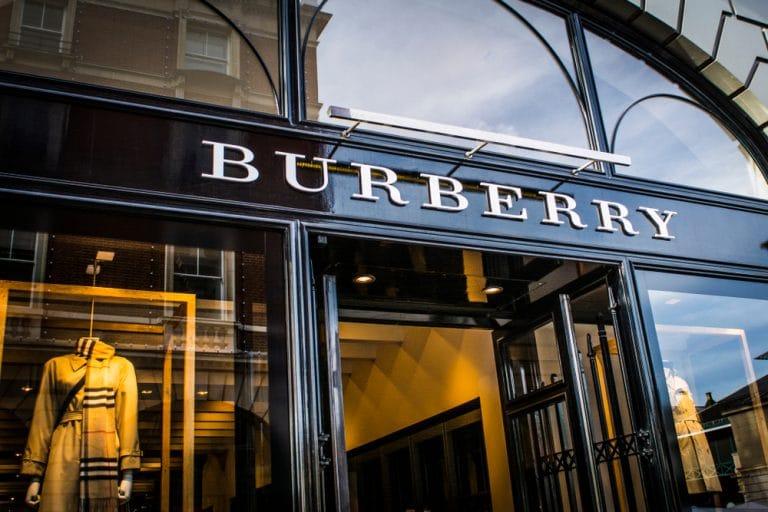
Burberry sales surged back during Q1 of its financial year as its locations opened back up on the easing of restrictions.

The luxury fashion brand also noted that it is attracting younger customers, thanks in part to its collaboration with model Kendall Jenner.

GSK

GSK has set out plans to construct a new life sciences campus in the UK, one of the largest in Europe, as the pharmaceutical company attracted £400m of private investment.

The FTSE 100 company will raise the money by selling land in Hertfordshire and then turning it into a biotechnology campus.

GSK sets out plans for new UK life sciences campus

0

The projected is expected to commence in 2022

GSK (LON:GSK) has set out plans to construct a new life sciences campus in the UK, one of the largest in Europe, as the pharmaceutical company attracted £400m of private investment.

The FTSE 100 company will raise the money by selling land in Hertfordshire and then turning it into a biotechnology campus.
The projected is expected to commence in 2022 having received backing from the UK government.

Cushman & Wakefield, the real estate services firm, said the site has the potential to be the UK’s second-largest sector cluster for specialist commercial life sciences. It would follow Cambridge, where AstraZeneca is constructing a £1bn global headquarters and research centre.

“Our goal is for Stevenage to emerge as a top destination for medical and scientific research by the end of the decade,” said Tony Wood, senior vice-president of medicinal science and technology at GSK.

“The past 18 months has shown the UK life sciences sector at its best,” he added.

Depending on planning permission, the site could offer a potential 2.5m sq ft of space.

GSK is aiming to create up to 5,000 jobs in the next five to 10 years by building the new campus.

The GSK share price is up by 0.57% during the morning session on Friday.

Rio Tinto struggling to reach iron ore guidance due to production issues

0

Aboriginal traditional owners continue to put pressure on Rio Tinto over their conduct on previous mining expeditions

Rio Tinto (LON:RIO) is struggling to reach its full-year guidance for its iron ore operations as a weather conditions, a shortage of labour and ongoing cultural heritage management issues dragged on the miner’s performance.

The FTSE 100 miner confirmed in its quarterly update on Friday that it exported 76.3m tonnes of iron ore, a fall of 12% compared to the same quarter twelve months ago.

The largest iron ore producer in the world is now expecting to deliver close to the lower end of its 325m-340m tonnes range in 2021.

Production for the quarter was held back by rainfall in the West Pilbara region, in addition to Covid-induced labour shortages.

Rio Tinto also lost 2m tonnes of iron ore production as it moved buffers and exclusion zones in order to protect areas of “cultural significance”.

Aboriginal traditional owners continue to put pressure on Rio Tinto over their conduct on previous mining expeditions.

The Financial Times reported that analysts believe Rio will announce a large dividend payment of about $8bn when it reports H1 results this month.

Rio Tinto Chief Executive Jakob Stausholm, commented: “The global economy, in particular China, recovered strongly and we are intensely focused on servicing our customers with as much product as we can. However, we faced some challenges in the first half notably at our Pilbara operations, which were impacted by replacement mine tie-ins and materially higher rainfall.”

“Heightened COVID-19 constraints, which resulted in numerous travel restrictions, added further pressure on the business and limited our ability to access additional people, particularly in Western Australia and Mongolia, in order to deliver operational improvements or maintenance initiatives and accelerate projects.”

Stausholm believes that despite some concerns over performance, the FTSE 100 company’s priorities will serve to benefit shareholder returns over the long-run.

“Our first half performance has reaffirmed my belief that we have identified the right priorities to strengthen the business: to become the best operator, strive for impeccable ESG credentials, excel in development and secure a strong social licence,” Stausholm said.

“We have made initial progress against our priorities, but a large volume of work remains to make Rio Tinto even stronger, so we can continue to deliver superior returns to shareholders, invest in sustaining and growing our portfolio, and make a broader contribution to society.”

The Rio Tinto share price is down by 1.42% during the morning session on the London Stock Exchange.

Burberry sales boosted by demand from young shoppers

0

The board dismissed concerns over Burberry’s performance in China

Burberry (LON:BRBY) sales surged back during Q1 of its financial year as its locations opened back up on the easing of restrictions.

The luxury fashion brand also noted that it is attracting younger customers, thanks in part to its collaboration with model Kendall Jenner.

Burberry’s revenue, which felt the impact of the news that trusted CEO Marco Gobbetti would be leaving, stands at £479m for the quarter ending in June.

The board dismissed concerns over Burberry’s performance in China, as it, along with other western brands, found itself under pressure having condemned methods within the country to support the fashion industry.

In mainland China, Burberry said sales rose by more than 55% while sales in Korea are up more than 90% against pre-pandemic levels.

“This was driven by new, local, young customers buying across our core categories,” Burberry said in its trading update.

Chief executive Marco Gobbetti, who confirmed he will be leaving Burberry last month, said: “We saw strong growth across our strategic categories, in particular leather goods and outerwear, and exited markdowns in digital and mainline stores.”

“We continued to roll out our new store concept that will transform how customers experience our brand and product in a uniquely British luxury setting.”

“Despite the continuing challenging external environment, we are very pleased with the progress against our strategy. With the company firmly set on a path of growth and acceleration, we are confident of achieving our medium-term goals.”

“There’s a lot to like about today’s trading update from fashion label Burberry but perhaps the biggest plus point is the fact it is attracting new younger customers. This has positive implications of the long-term prospects of the business,” says Danni Hewson, financial analyst at AJ Bell.

“With this, plus good growth in traditionally strong areas like trench coats and handbags powering first quarter sales to pre-pandemic levels it’s a wonder investors aren’t more enthused.”

“The performance of the European part of the business is also disappointing when compared with a strong showing in the Americas and Asia,” Hewson added.

“Burberry will be hoping that the return of international tourism provides a renewed catalyst for sales growth given its traditional reliance on Asian tourists buying from flagship stores in Europe.”

Risk of soaring inflation might force the BoE’s hand says deputy governor

0

Ramsden also said the UK economy could get back to its pre-pandemic level during the current quarter

Inflation could reach by the end of 2021 according to the deputy governor of the Bank of England, who also said the central bank may have to consider ending its stimulus earlier than anticipated.

In a speech about the UK economy Sir David Ramsden last night said that the recovery remained unbalanced, which could lead to inflation far exceeding the BoE’s target level of 2%.

This comes soon after data showed that UK inflation soared to 2.5% in June.

“I wouldn’t be surprised to see the whole inflation rate potentially rising as high as 4 per cent for a period later this year,” Ramsden said.

“Based on the rapid pace of developments since we published our May forecasts and the shift in the balance of risks, I can envisage those conditions for considering tightening being met sooner than I had previously expected,” he added.

The governor of the Bank of England also said that the UK economy could get back to its pre-pandemic level during the current quarter. This, he added, was in part down to low interest rates and fiscal stimulus.

This is quicker than previous expectations of the British economy getting back to its pre-coronavirus level during the final three months of the year.

“Based on the rapid pace of developments since we published our May forecasts and the shift in the balance of risks, I can envisage those conditions for considering tightening being met somewhat sooner than I had previously expected,” Ramsden said.

“That reflects my current assessment that on balance I put more weight on my inflationary than my disinflationary scenario,” he added.

PureGym considers stock market float to raise money for expansion

0

PureGym has all but regained its membership levels from before the pandemic

PureGym, the leading gym chain in the UK, is weighing up an IPO as it seeks to expand its operations further.

With the support of Leonard Green & Partners, the American private equity company, PureGym is examining the best ways for the company to raise funds, including in the “public markets”.

In an update, PureGym says it is in a strong position to capitalise on the recovery from the pandemic, while some of its competitors have struggled through the demands presented by the pandemic. Its ambition is to open new locations across the UK, as well as investing in new sites.

Demand for gym memberships has seen a mini-resurgence during the pandemic, which has encouraged PureGym to take such a positive outlook.

PureGym has all but regained all of its membership levels from before the pandemic, while the total number of people who visited in June were at 91% of the level seen during the same month two years ago.

A spokeswoman for the company said: “The Covid-19 pandemic has heightened the importance that people place on their health and well-being and both member response to reopening and new joiner rates have demonstrated that underlying demand for gyms remains strong.”

Asos share price tumbles as online fashion retailer loses momentum

0

Asos Share Price

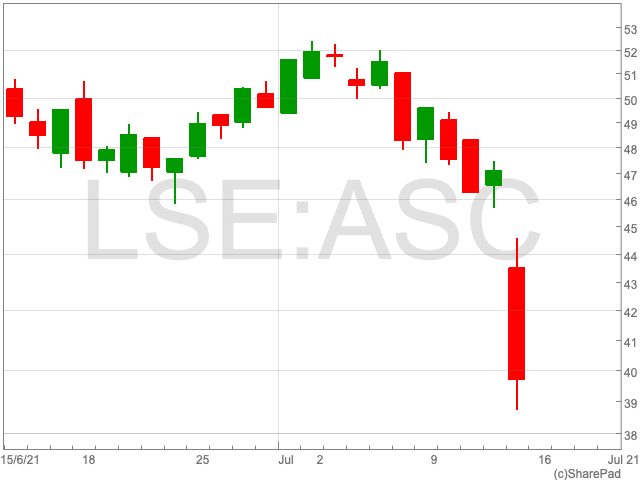
The Asos share price (LON:ASC) dived by 16.7% (at the time of writing) on Thursday as the online fashion giant warned of uncertainty over its sales as the pandemic continues. Prior to today, the Asos share price moved sideways for the past few months, as it was unphased by the company’s H2 results. Taking into account today’s fall, it is now down by 18.92% over the last six months. However, with today’s reaction to its Q3 results, investors will be curious about what the implications are for the fast fashion retailer’s future.

Q3 Results

Asos confirmed a 27% increase in its revenue, up to £1.29bn during the quarter ending in June. The company described the figures as “strong” considering the effect of lockdowns and travel restrictions on demand for clothes, in addition to supply chain issues.

Asos said it saw a dip in sales over recent weeks as young people, who make up a significant amount of its customer base, found it difficult to socialise in big groups or go on holiday. “Many young people will spend as much on their holiday wardrobe as they do on the holiday itself,” said chief executive Nick Beighton.

While the lives of young people continue to be disrupted, so will Asos’ sales, as it will be more difficult for young people to make plans.

For the final quarter of the year, Asos is expecting to grow at a similar rate, of 15%, to the same period in 2020.

“The retail sector seems to be following one of two paths. Trading has either remained strong following the initial consumer spending splurge post-lockdown, as witnessed by Dixons and Dunelm; or it has started to lose momentum. Sadly, ASOS falls into the latter camp,” says Danni Hewson, financial analyst at AJ Bell.

Hewson also said that the weather was not to blame for the company’s recent downturn: “Plenty of people were still able to get out and enjoy the Euro football championships, so ASOS is clutching at straws with its excuses. In fact, if it was digging around for excuses, it missed a trick by not blaming the Euros for distracting shoppers.”

“People’s social lives continue to be disrupted; for example, music festivals scheduled for after Boris Johnson’s Freedom Day continue to be cancelled as organisers feel there is too much uncertainty to hold a big event. If plans to meet up with friends and family are suddenly scrapped, is there any point in splashing out on new outfits?”

Hewson suggests that perhaps Asos has lost its touch a bit in terms of catering to the demands of its target market.

“Well, that didn’t stop people during the height of the pandemic, eager to show off their new looks on social media, so perhaps ASOS has temporarily lost its magic touch in terms of selling the clothes people want,” Hewson said.

Lockdowns, travel restrictions and weather conditions are all, hopefully, temporary constraints on the economy. However, if Asos has lost its touch, then investors may become concerned over the future prospects of the Asos share price.

Bower Collective raises £2.1m in seed stage funding

Oxford Capital and Doehler Ventures led round

Bower Collective, the sustainable consumer goods business, confirmed on Thursday that it has raised £2.1m in seed stage fundraising.

The round led by Oxford Capital and Doehler Ventures is aimed at accelerating the growth of the business, the company said in a statement, allowing packaging innovation and new product development to increase market share.

Bower offers a range of sustainable home and personal care products as part of its mission to eliminate plastics.

The company has developed a new approach to ecommerce by providing a closed loop, plastic waste-free solution.

Users of the service subscribe to a range of products that are supplied in refill packages. Customers return the empty packages in pre-paid envelopes to Bower for reuse and recycling, ensuring zero plastic waste in their supply chain.

Since its launch in January 2020, Bower has seen rapid growth, building a community of over 60,000 consumers and delivering 30% month-on-month growth in revenues.

Backed by funding from Innovate UK, Bower is currently working on a next generation reusable packaging system, which will allow the business to reuse and refill at significant scale. It aims to launch this new packaging in Autumn 2021.

While Oxford Capital and Doehler Ventures are the first institutional investors into the business, a number of prominent angel investors also participated in the round including Dharmash Mistry.

Nick Torday, Co-Founder and CEO, Bower Collective commented: “At Bower we are passionate about creating a transformative sustainable solution within the home and personal care market and are really proud of the exceptional talent that we’ve attracted to build the brand going forwards.”

“This fundraising round will enable us to accelerate the growth of the business, continue driving innovation across product and packaging while taking advantage of the rapid growth of subscription services.”

UK unemployment falls to 4.8% ahead of final stages of reopening the economy

0

According to the ONS there were 862,000 job vacancies between April-June

The UK unemployment rate fell in the past quarter as the continued easing of lockdown restrictions is helping to bring on an economic recovery.

The unemployment rate fell by 0.2% between March and May to 4.8%, while the rate of employment increased over the same time period to 74.8%.

Additionally, there has been an increase in the number of job vacancies, as companies in the UK seek to manage the increased demand brought about by the economy reopening.

Vacancies are now back to levels last seen before the pandemic. According to the ONS, there were 862,000 job vacancies between April-June.

It is just under a 10% increase fro myths previous quarter.

“As we approach the final stages of reopening the economy, I look forward to seeing more people back at work and the economy continuing to rebound,” said chancellor Rishi Sunak.

“We are bouncing back – the number of employees on payrolls is at its highest level since last April and the number of people on furlough halved in the three months to May.”

“Vacancies exceeding pre-COVID levels is a further sign of demand returning and employers creating jobs,” Matthew Percival, director for people and skills at CBI, told Sky News.

“Yet businesses’ ability to meet this demand, and support the recovery, is being challenged by staff shortages. As COVID cases rise, firms are facing the double difficulty of hiring workers and more employees self-isolating,” Percival added.

While the figures show a positive reflection of how the UK economy has recovered so far, eyes will now be on the continued progress or lack thereof.

What is buy-and-hold investing? Is it the right strategy for you?

In life, there is typically an easy or a hard way to do something.

When it comes to investing in stocks and assets, that sentiment is definitely true. Some traders spend hours and invest their hard-earned money trying to uncover the secrets of the market, hoping to find that ‘silver bullet’ that guarantees profits.

As seasoned investors could tell those naïve but well-intentioned individuals, no such thing exists.

Utilizing trading strategies that need volatility, such as swing and day trading, is fraught with risk and complications. So it’s easy to see why – in the end – so many choose a more relaxed, passive form of investment.

A buy-and-hold strategy may not sound that exciting to some, but it can eliminate many of the complications that can trip up even more experienced traders. The premise could not be simpler, and in the fullness of time, the results can be just as effective as for those who take a more hands-on approach.

You can probably guess what buy-and-hold investing is, but is it the right strategy for you?

What is buy-and-hold investing?

Yes, you guessed it, buy-and-hold investing is where you purchase a stock or other form of asset and simply sit on your hands for the medium or long term, riding out the market fluctuations until a pre-determined price is reached.

There’s not much more to it than that – buy-and-hold is a passive form of investment that allows you to profit from an open position without the rigmarole of daily interaction with the market. Buy-and-hold requires no technical expertise in reading charts or signals either. 

It is no wonder the likes of Warren Buffett have opted for this approach in their investment portfolios.

Advantages and downsides of buy-and-hold investing

If you chart the long-term progress of the stock market, you will note that – despite many bumps in the road – the overall trajectory is one of growth and sustainability.

Indeed, with the emergence of new technologies and some rather large companies facilitating those, new highs are being reached all the time.

And so, in theory, buy-and-hold investments feel like a no-brainer.

Of course, it’s not as simple as that, and investing in the right brands from the get-go is essential for success with this particular strategy.

The advantages of buying and holding a position speak for themselves. You invest minimal time and effort, and that should – all being well – ensure that your returns are, pound for pound, more valuable than those who spend countless hours of the day scalping for small profits or taking their chances with swing trading.

There are tax perks to long-term investing too, and again these can yield benefits that active investors can’t take advantage of.

Naturally, there are some downsides to passive investing. Are you getting the most out of the market? Is your capital working as hard for you as it could be?

The phenomenon of ‘FOMO’ – the Fear of Missing Out – can be real for buy-and-hold investors, and so you will need to be disciplined and patient in securing the profit margin you seek.

Note also that some brokers charge overnight and weekend fees for holding open positions, and these will – over time – eat into your margin. Do your homework to find the brokers that offer the most agreeable conditions for long-term investments – Plus500 was reviewed at Ask Traders, and that’s a helpful starting point. 

Is buy-and-hold investing for you?

The type of investing that is right for you will ultimately depend on your personality type.

Some people simply aren’t cut out for passive, buy-and-hold investing – it simply goes against the grain of their psyche.

Alternatively, some investors simply don’t have the time or inclination to study the charts and patterns, perform technical analysis, and dip in and out of the market on an hourly basis when the opportunity arises.

Passive investing *should* yield returns if the stocks and assets you buy grow in line with the overall market, and of course, they can far outperform the market baseline. If you had purchased stock in Apple ten years ago, you are probably reading this article somewhere exotic and hot, with outstanding air conditioning.

When you invest for the long term, you kiss goodbye to that money for months or even years, so as ever, you should only invest a) what you can afford to lose and b) what you can afford not to have for a prolonged period.

But when the moment is right, you should hopefully be able to sell at a handy profit without any of the blood, sweat, and tears that go into more active forms of investment.