Hargreaves Lansdown six ISA strategies for volatile times

0

Worry about market volatility due to the Brexit process was the reason 29% of people chose not to put money into their stocks and shares ISA this year. This was the second most common reason after not having the money to spare.

The FTSE All Share index has dropped by 9% from pre-pandemic February last year. However, in the meantime, it has dropped 31%, before climbing 27%, dropping and then rising again.

Sarah Coles, personal finance analyst at Hargreaves and Lansdown, outlined the behaviour of investors during the pandemic. “When markets plummeted at the outset of the pandemic, some investors were worried into selling up and retreating into cash. Others held back from investing this year’s ISA allowance. However, being put off by volatility means missing out on potential long-term growth. The FTSE 100 is down less than 10% from the pre-pandemic levels, plenty of funds and markets are up over this period, and we’re only a year down the line.”

Below, Coles outlines six strategies for investors during volatile times.

Diversification

Diversification allows an investor to manage risk and reduce the overall volatility of an asset’s price movement. Coles advises to “ensure you have a diverse portfolio that matches your objectives, and then hold on through the volatility for the long-term growth.”

“However, don’t assume your portfolio is diverse: revisit it. Over time, growth in some areas and falls in others can unbalance it, so check you’re comfortable with your holdings,” Coles adds.

Buy Into Long-term Growth at a Good Price

When there is a market-wide dip, even high quality businesses are likely to experience a drag. This can be a good opportunity to purchase undervalued stocks.

“Some will have had their prospects fundamentally altered by the course of the pandemic, but those with sound fundamentals offer a potential buying opportunity,” Coles argues.

Protect Your Allowance

Even if you don’t want to invest any or all of your money right away, you can secure your ISA immediately. Coles adds: “You can open a stocks and shares ISA and park the money in cash, then gradually drip feed it into stockmarket investments when it suits you best.”

Drip Feed

If you are only able to contribute a certain amount per month, Hargreaves and Lansdown offers a regular savings plan. “You can make payments from £25 a month, and then top up with lump sums throughout the tax year when it makes most sense for your finances,” says Coles.

Open a Lifetime ISA to Bag the Bonus

Even if you invest a minimum amount, opening a LISA (Lifetime ISA) can help you to keep your options open, according to Sarah Coles. “If you’re 39, open a LISA and put a small sum of cash in it. You may not have plans to buy a first property, you may own a home, you may already be saving in a pension, and you may be worried by market movements – and all of those things may have put you off. However, taking out a LISA now protects your right to have one, and pay into it any time before the age of 50. It keeps your options open in case your plans change and you want to take advantage of the government bonus. Failing to take one out before the age of 40 means you have lost the opportunity altogether.”

Consider ISA Income Alternatives to Pension

Dividends from pension funds have dropped over the past year, therefore it could be wise to look for an alternative source of income. Drawing money from one’s pension every month could be risky, says Cole: “You’re eating into a larger percentage of your pot when prices fall, and this will continue to have an impact even when it recovers. If you have ISAs alongside your pension, it gives you far more flexibility. You can draw the income tax free from stocks and shares ISAs to boost your income, or you could dip into cash ISAs to make up the shortfall, and refill the coffers when better times return.”

FTSE 100 holds steady as investors breathe a sigh of relief

0

FTSE 100 edged up on Tuesday by 0.37%, sitting at 6,744.03. Today’s steady rise followed an attack on a facility in Saudi Arabia which propped up the index yesterday.

“The FTSE 100 made a steady but unspectacular start to trading on Tuesday – likely a relief to investors who have seen some big gains and substantial losses in recent days as levels of panic over rising inflation have ebbed and flowed,” says AJ Bell investment director Russ Mould.

“Monday’s significant rally suggested that noises from central bankers aimed at calming fears about spiralling bond yields and rising prices had succeeded in giving investors the comfort blanket they needed to start buying again.”

FTSE 100 Top Movers

M&G (5.14%), Kingfisher (4.03%) and JD Sports (3.37%) are the day’s top risers on the index so far.

At the bottom of the FTSE 100 during morning trading is Pearson (-4.77%) along with mining companies BHP Group (-2.11%) and Rio Tinto (-1.65%).

M&G

M&G the UK insurance company and asset manager, confirmed a 31% fall in its operating profit to £788m. The results, which came on Tuesday, were M&G’s first since becoming a stand alone company and were ahead of expectations. 

Having split from Prudential in 2019, the FTSE 100 firm said the results were a reflection of its first full year as a listed company, including head office and debt interest costs. The company confirmed a dividend of 12.23p per share, in line with its policy of a stable or increasing dividend.

Standard Life Aberdeen

Standard Life Aberdeen has cut its dividend by a third following a dip in profits last year, while its chief executive has promised a return to growth. Standard Life Aberdeen confirmed a profit before tax of £487m for 2020, down 16.6% on the year before, while its fee-based revenue fell by £0.2bn to £1.4bn.

The FTSE 100 company reduced its full-year dividend by one third to 14.6p per share, a move that was in line with analysts’ expectations.

Greatland Gold secures $50m of development funding

0

Greatland Gold well capitalised to push forward with further exploration

Greatland Gold (AIM:GGP), the precious and base metals mineral exploration and development company, today announced its interim results for the six months ended 31 December 2020.

At the Havieron project, the company delivered its initial Mineral Resource estimate and secured $50m of development funding.

Greatland’s upcoming 2021 exploration season will focus on a “three-pronged strategy” in the Peterson region, according to a statement released by the company on Monday.

The company also confirmed it is well capitalised to push forward with exploration programmes in 2021 with cash equivalents of £5.9m.

Greatland Gold is finalising plans to conduct further exploration across the company’s 100% owned licences (Scallywag, Rudall, Canning) in the highly prospective Paterson region.

Shaun Day, chief executive of Greatland Gold, commented on the company’s results and outlook:

“We are very pleased with developments in the first six months as we worked with our partners to reach key milestones at Havieron – delivering the initial Inferred Mineral Resource estimate and securing US$50 million of development funding via a Loan Agreement with Newcrest.”

“At Havieron, additional mineralised zones were identified and further drilling returned the best intercept recorded to date. This gives us great excitement for the significant, 65,000m growth drilling programme now underway. It is an affirmation of the quality of our projects and our team that Newcrest agreed to a second joint venture with us, the Juri JV, in the Paterson region.”

“Looking ahead, Greatland has three elements it is actively progressing in the Paterson region and these will be the focus as we enter the 2021 exploration season. Alongside the potential for rapid development at Havieron, Newcrest and Greatland are preparing for the imminent launch of the exploration programme at the Juri JV which will initially focus on drilling several high-priority targets. Additionally, we will be ramping up exploration activities across our multiple 100% owned targets in the Paterson. The goal for both these campaigns will be to map out large intrusive structures similar to the Havieron discovery.”

M&G profit drops during first year as standalone company

1

M&G confirms dividend at 12.23p per share

M&G (LON:MNG), the UK insurance company and asset manager, confirmed a 31% fall in its operating profit to £788m.

The results, which came on Tuesday, were M&G’s first since becoming a stand alone company and were ahead of expectations.

Having split from Prudential in 2019, M&G said the results were a reflection of its first full year as a listed company, including head office and debt interest costs.

The company confirmed a dividend of 12.23p per share, in line with its policy of a stable or increasing dividend.

The FTSE 100 company’s IFRS profit after tax rose to £1.14bn, while its total capital generation was confirmed at £995m.

M&G’s share price rose by 5% on early morning trading to 215.5p.

John Foley, chief executive of M&G, commented on the company’s results:

“In our first year as an independent company, we have delivered a strong and resilient performance in one of the most challenging operating environments ever. This demonstrates the value of our diversified and integrated business model, both to customers and clients, and to shareholders,” said Foley.

“We laid the foundations for M&G’s return to growth, including actions to fix Retail Asset Management and the creation of M&G Wealth following the acquisition of Ascentric. As responsible stewards of £367.2 billion in Assets Under Management and Administration (AUMA), we are also pivoting the entire company to sustainable investing – a shift which we believe will benefit customers, clients and shareholders, as well as wider society and the planet.”

“As responsible stewards of £367.2 billion in Assets Under Management and Administration (AUMA), we are also pivoting the entire company to sustainable investing – a shift which we believe will benefit customers, clients and shareholders, as well as wider society and the planet.”

“Our balance sheet has remained robust throughout the COVID-19 pandemic and capital generation was strong at £995 million for the year.”

Standard Life Aberdeen slashes dividend after profits fall

0

Standard Life Aberdeen pre-tax profit at £487m

Standard Life Aberdeen (LON:SLA) has cut its dividend by a third following a dip in profits last year, while its chief executive has promised a return to growth.

The FTSE 100 company reduced its full-year dividend by one third to 14.6p per share, a move that was in line with analysts’ expectations.

Standard Life Aberdeen confirmed a profit before tax of £487m for 2020, down 16.6% on the year before, while its fee-based revenue fell by £0.2bn to £1.4bn.

The group is currently in the middle of a restructuring programme that saw the Standard Life name sold to Phoenix recently. A new name for the business will be announced later in 2021.

Stephen Bird, chief executive at Standard Life, commented on the results:

“We have seen growing momentum in the second half of 2020 with improved investment performance and flows which represent an inflection point as we pull out of the post-merger era. We remain on track to deliver targeted synergies and have identified more that we can deliver. We have exited some non-core businesses and made an acquisition that has extended our capabilities in private markets. We have simplified and clarified leadership structures across the business and placed a refreshed focus on Asia,” said Bird.

“We have a clear vision; we will focus on the future to enable our clients to be better investors. To do this we will pursue efficient, sustainable growth by ensuring that our product capabilities, technology and performance are first class. Our pursuit of client led growth, combined with focus on efficiency and careful deployment of capital, will enable us to generate sustainable value for our shareholders.”

“We have three growth vectors – Investments, Adviser and Personal. Thanks to our strong capital position, we have strategic flexibility around how we grow these businesses and we have set out clear ambitions.”

Two funds set to benefit from China’s growth in 2021

Growth Expected in 2021

China was the only major global economy to post gains during 2020, as it recovered quicker than the rest from the pandemic-induced slowdown. China recorded a growth rate of 2.3% last year, albeit its weakest performance in 44 years. Having scrapped its target for 2020, the country is aiming for a growth rate in excess of 6% for 2021.

With China set to overtake America as the largest economy in the world, foreign investors are increasingly keen to get a share of the pie.

Will Hobbs, chief investment officer at Barclays Wealth Management & Investments said Chinese equities are an important part of diversified multi asset class funds and portfolios. 

“At the most basic level, in investing in a diversified mix of assets investors are trying to harvest the gains from future innovative breakthroughs,” Hobbs said.

“The lesson from history is that there is no requirement for such breakthroughs, or indeed their primary beneficiaries, to come from a particular country or political creed.”

“In this context, exposure to Asian companies is a vital part of the design of this net – focusing all your efforts on one particular country or other means you risk missing important parts of the catch.”

Fidelity China Special Situations PLC and Matthews China Small Companies are newly established funds with exposure to the Chinese economy. Both performed well during 2020 and could be of interest to investors seeking to gain from the inexorable rise of the Chinese economy.

Fidelity China Special Situations PLC

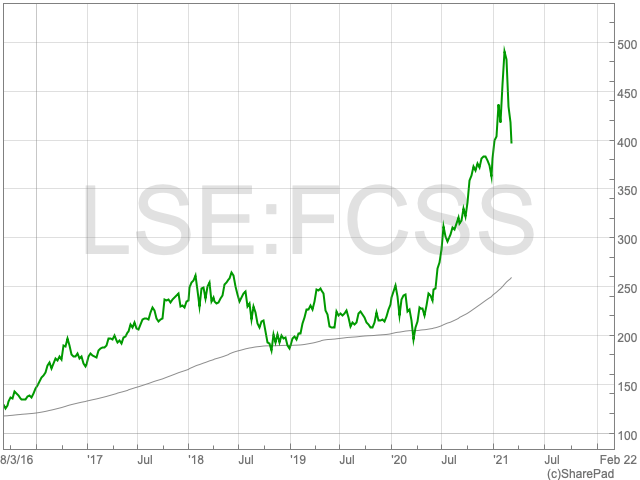
Fidelity China Special Situations PLC consists of an actively managed portfolio made up primarily of securities issued by companies listed in China and Chinese companies listed elsewhere. Over the 12 months to 31st January 2021, the trust’s NAV recorded a 75.9% return, outperforming its reference index, MSCI China Index, which delivered 40.2%. The trust’s share price rose by 92.7% over the same period. Over a five-year period the trust’s share price is up by 270.6%.

Fidelity China Special Situations PLC

The top 10 asset holdings make up 46.07% of the fund’s total, with Alibaba (8.09%), Tencent (8.09%) and Hang Seng China Enterprises Index Future (4.72%) forming the top three. However, one of the trust’s key aims is to seek out companies which are not well understood by the market, and are therefore undervalued. 25.3% of the trust’s holdings are in the consumer cyclical sector while 16.93% and 11.51% are in communications services and industrials respectively. The Fidelity China Special Situations PLC paid out a dividend of 4.3p for 2020, up slightly from 4.25p the year before.

Matthews China Small Companies

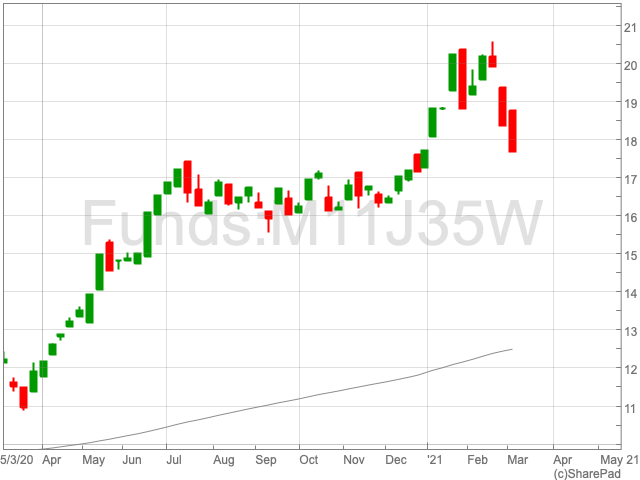
The fund seeks to achieve its investment objective by actively investing, directly or indirectly, at least 65% of its total net assets, in equities of small companies located in China. Over the past 12 months, the Matthews China Small Companies Fund (GBP) has seen a 53.11% gain, outperforming the MSCI China Small Cap Index (GBP), its benchmark index, which grew by 43.39%. The fund began operating on 30 January 2020, just over a year ago. Since then it is up by 45.65%.

Matthews China Small Companies

The fund’s top three holdings are KWG Group (real estate), Weimob (IT) and Alchip Technologies (IT) at 3.3%, 3.2% and 3% respectively. The Matthews China Small Companies is most heavily weighted to IT (27.9%), industrials (21.6%) and healthcare (12.1%). In fact it is more heavily weighted in each of these sectors than the benchmark MSCI China Small Cap Index by 5.3%, 10.1% and 3.1% respectively. Finally, money is reinvested into the fund rather than paying a dividend.

Carnival Share Price: Steadily rising in 2021

0

Carnival Share Price

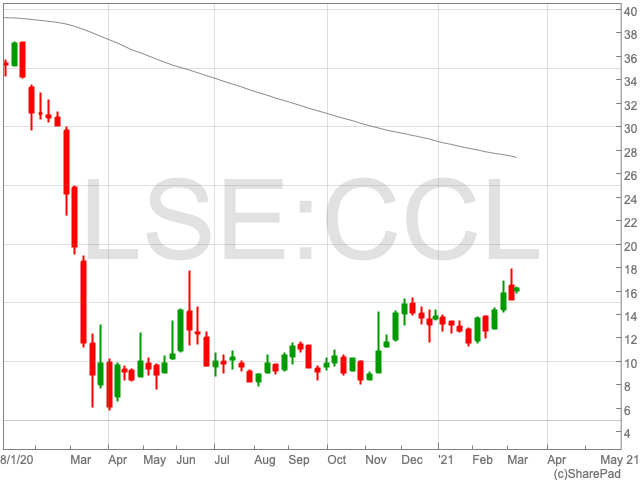
On 17 January 2020, the London-listed Carnival (LON:CCL) share price was at 3,708p per share. However, by April, the British-American cruise operator’s stock value plummeted to 614.8p per share as the extent of the ongoing travel restrictions became clear. Since then, the company’s share price has seen a mini-resurgence, climbing up to 1,620.85p. With the economic outlook around the world gradually becoming more optimistic, and restrictions being lifted over the coming weeks, now could be an opportune time for investors to capitalise.

Carnival share price

Financial Performance

Similar to the airlines, Carnival took a beating last year. In January the cruise operator disclosed an adjusted net loss of $1.9bn for Q4 of 2020. However, the airline has said its cash burn rate was slightly better than expected due to the timing of capital expenditures. Carnival also confirmed that it ended Q4 of 2020 with $9.5 billion of cash and cash equivalents.

Carnival’s chief financial officer David Bernstein outlined the company’s plan to use the cash to get through the coming year, even in the event of no revenue coming in.

“We ended the year with $9.5 billion in cash and have the liquidity in place to sustain ourselves throughout 2021, even in a zero-revenue environment.”

“While we raised capital mainly through debt this year, in the last few months we opportunistically strengthened our capital structure by raising $2.5 billion through at-the-market equity offering programs and by the early conversion of $1.5 billion of convertible debt.”

“As we return to full operations, our cash flow will be the primary driver to return to investment grade credit over time, creating greater shareholder value,” Bernstein said.

Getting Back to Business

Carnival confirmed its cumulative advanced bookings received for the first half of 2022 exceeded bookings for 2019. While bookings for the second half of 2021 are within “the historical range”.

Carnival Corporation & plc President and Chief Executive Officer Arnold Donald noted in the company’s annual report: “The booking trends that we have consistently experienced throughout this period affirm the strong fundamental demand for our brands which will facilitate our staggered resumption and support the long-term growth of our company.”

However, while demand is there, the powers that be are taking a cautious approach. The UK Prime Minister will finalise the plan to resume international travel no earlier than May 17, 2021. In addition, Carnival has outlined its intention to resume cruises in June 2021.

Deliveroo losses narrow ahead of London listing

0

Deliveroo to give top riders £10,000 each following the IPO

Deliveroo has revealed plans for its initial public offering (IPO), while confirming a 54% growth in sales and £224m of losses in 2020.

The online food retailer announced its intention to float on Monday with shares expected to begin trading by early April.

Deliveroo’s public announcement comes days after the UK government committed to altering a ruling so that founders would be able maintain control of their companies despite selling shares to investors on the stock market.

Will Shu, co-founder of Deliveroo and chief executive, will have 20 votes per share, while every other shareholder will have one vote per share, in line with the dual-class share structure included in Monday’s filing.

Shu has confirmed he will offer the company’s top riders £10,000 each following the IPO, which is expected to earn the founder a significant payday.

Deliveroo has its sights set on a $10bn valuation ahead of its initial public offering, which would be the highest valued new listing in London for a number of years.

Russ Mould, investment director at AJ Bell, refocused attention on the company’s loss during the pandemic, despite favourable market conditions.

“After the fanfare of how Deliveroo is going to reward drivers with bonuses and give customers a chance to buy the shares, here comes the hard facts. The most important point is how the company remains loss-making despite experiencing a surge in business going through its platform during the pandemic.

“It’s hard to see it’ll have another year when market factors were so much in its favour. Lockdowns kept people at home for months at a time and online grocery slots were hard to come by, so demand for takeaways shot up. A cynic might ask, if Deliveroo couldn’t deliver a profit against that backdrop, when will it?”

“Fans of the business will point out that it has narrowed its losses by nearly 30% and that its underlying gross profit has shot up, both in absolute terms and as a percentage of the gross transaction value. That’s likely to be enough to fuel interest for many people in the shares when they come to the London market.”

FTSE 100 makes early gains following attack on oil facility in Saudi Arabia

0

Following an early rise to 6,673.21, the FTSE 100 retreate below Friday’s close to 6,626.95, down 0.0.54%. The index has so far been propped up by oil prices following an attack on a facility in Saudi Arabia.

“The FTSE 100 made a solid start to the week underpinned by renewed gains for oil off the back of attacks on facilities in Saudi Arabia over the weekend,” said AJ Bell investment director Russ Mould.

“This lifted index heavyweights BP and Royal Dutch Shell as the black stuff traded above $70 per barrel for the first time since January 2020 when tensions between Iran and the US were rapidly escalating.”

“The only problem is the rise in oil will only add to the key concern which is dogging markets – namely the risk of runaway inflation and a resulting increase in interest rates,” said Mould.

“The other key driver for positive sentiment this morning is also a double-edged sword with the news that the US has signed off its long-awaited $1.9 trillion stimulus package. This is also seen as a major catalyst for rising prices,” Mould said.

FTSE 100 Top Movers

Pearson (3.32%), Lloyds (2.64%) and Pershing Square Holdings (2.47%) are Monday’s top movers on the FTSE 100 so far.

London Stock Exchange Group (-5.15%), Ocado Group (-4.24%) and BT Group (-3.59%) are the day’s biggest fallers.

Phoenix Group

Phoenix Group reported a substantial increase in operating profit for 2020, and said it is in a strong position to leverage the key industry drivers of growth. 

The FTSE 100 company confirmed an operating profit of £1.2bn, up from £810m the year before.

Pearson

Pearson confirmed on Monday that it will maintain its dividend for the year as the education company expects a recovery after its sales took a hit during the pandemic. 

The FTSE 100 firm has proposed a final dividend of 13.5p per share. This brings the full-year figure to 19.5p, in line with 2019.

Shoe Zone scraps dividend as stores remain closed

0

Shoe Zone posts pre-tax loss of £14.6m

Shoe Zone (LON:SHOE), the footwear seller, swung to a loss in 2020 and scrapped its dividend, as nationwide lockdowns took a toll on the company’s sales.

The AIM-listed company also announced the appointment of a new finance director, Terry Boot, as Peter Foot stepped aside after seven months.

Shoe Zone made a loss before tax for the year which amounted to £14.6m, down from £6.7m the year before. The company’s revenue also fell by 24% to £122.6m.

Shoe Zone’s gross margin contracted to 61.4% from 62.7%.

The shoe seller confirmed its stores remained closed and said it was unable to forecast accurately due to ongoing uncertainties.

Anthony Smith, chief executive at Shoe Zone, commented on the the results, as well as looking ahead.

“In my second year back as Chief Executive, it is disappointing I am reporting on a year impacted by COVID-19. Despite this, there are positives such as the continued growth of digital and the commitment and focus of our loyal employees. The financial pressure caused by COVID-19 has meant we now have debt on the balance sheet for the first time in over 15 years.”

“The business model of digital, big box, hybrid and town centre stores remains the same although the percentage contributions of each area are changing fast due to lockdown restrictions, some of which will be a permanent shift.”