Mortgage approvals hit record highs in 2020

UK mortgage approvals hit the highest level since 2007 last year, as people took advantage of the stamp duty holiday.

Over the course of 2020, mortgage approvals reached 818,500, which is up from the 789,100 approvals made in the year previously.

New data from the Bank of England showed a surge in mortgage applications in the second half of the year as the stamp duty holiday was introduced. The stamp duty holiday is set to end at the end of next month and will likely lead to a cooling down in the housing market.

May 2020 saw record lows in mortgage approvals, which were down to 9,400.

Laith Khalaf, financial analyst at AJ Bell, commented on the data released today: “You wouldn’t guess there was a devastating international crisis in 2020 simply by looking at consumer banking activity. All the dials suggest it was a great year for personal finances in the UK. Mortgage approvals were at their highest level since 2007, consumers paid down a record amount of debt, and at the same time saved almost £100 billion more in cash than last year.

“The reality is, for many people, the pandemic has seen their financial position improve, thanks to spending options being decimated by lockdown. Of course that’s not universally the case, and with unemployment at 5% and rising, there is clearly financial hardship at play as well. However an overall reduction in consumer debt, combined with high levels of cash savings, and pent up demand for holidays, meals out and other leisure activities, could prove to be an explosive powder keg that will help drive the economy when it finally opens up again.

“There are some warning signs in the data too though. The fact mortgage approvals are at their highest level since 2007 sets alarm bells ringing given what happened in 2008. The expiry of the stamp duty holiday at the end of March will likely take some steam out of the housing market, and many would view that as a positive thing, particularly those saving for a house deposit. The good news is that mortgage lending is much more responsible today than before the financial crisis, which means there should be no systemic problem with the banking sector as a result of a slowdown in the property market,” he added.

Nintendo profits almost double in 2020

0

Nintendo profits almost doubled last year as the group emerged as a winner of the pandemic.

As more people are staying at home and playing games, the Video game giant saw profits surge from 196bn yen in 2019 to 376.6bn yen ($3.6bn) in 2020.

Nine month sales increased by 37% to $13bn whilst sales of the Switch games console rose over 10% to 26.5m.

“In the video gaming business, Nintendo is the clear corona winner,” said Serkan Toto, who is the founder of game industry consultancy Kantan Games. “Its titles are not only blockbusters but also Switch-exclusive system sellers.”

The Nintendo full-year forecast rose 24% to 560bn yen and shares in the group closed over 3% higher.

Ryanair on track for record losses

0

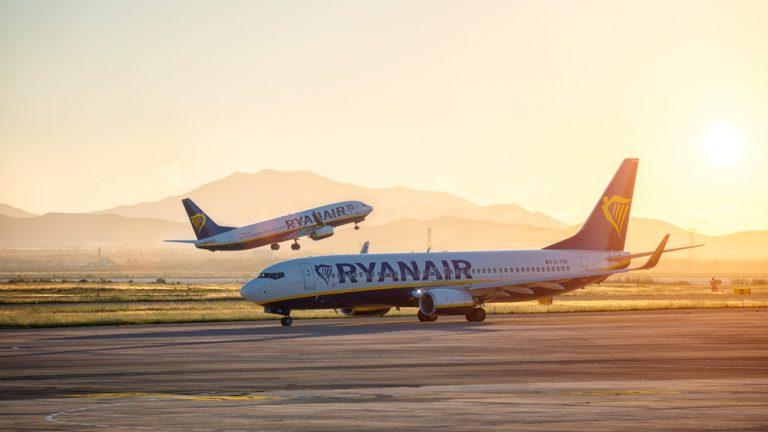
Ryanair has posted a €306m (£222.6m) loss for the last three months of 2020.

In what the airline referred to as “the most challenging year in its history”, Ryanair saw passenger numbers plunge almost 80% to eight million.

The €306m loss is compared to the €88m profits the group saw for the same period a year earlier. Revenues at the group fell 82% from €1.91bn (£1.7bn) to €340m (£302m).

As the pandemic continues to impact travel, Ryanair has said it was on course for a record loss of €850m and €950m.

A spokesperson for the group said: “As soon as the Covid-19 virus recedes – and it will over the coming months as EU Govts accelerate vaccine rollouts – Ryanair and its partner airports will rapidly restore schedules, recover lost traffic, help the nations of Europe to reboot their tourism industry, and create jobs for young people across the cities and beaches of the EU.

“We take some comfort from the success of the UK vaccine programme which is on target to vaccinate almost 50 per cent of the UK population (30m) by the end of March. The EU now needs to step up the slow pace of its rollout programme to match the UK’s performance.”

In the full financial year to the end of March 2021, Ryanair has said that it expects to fly 30 million passengers. This is down from 152 million.

Michael O’Leary, chief executive of the group told BBC Breakfast: “There’s extraordinary pent-up demand. People are fed up. Everyone is looking forward to the summer. The vaccine is the way forward here. Lockdowns aren’t.”

Ryanair shares (LON: RYA) are trading +0.14% at 14,22 (0835GMT). In the year-to-date, shares have fallen from highs of 17,10.

More to come from Fonix Media

Mobile payments and messaging services company Fonix Mobile (LON: FNX) has been quoted for more than three months and there has been an upward trend to the share price.
London-based Fonix was founded in 2006. Last October, shareholders in Fonix raised £45min a placing at 90p a share. The company did not raise any cash. Clients include Bauer Media, BBC, ITV and BT and it has a good track record of hanging onto these clients.
The cash figure in the balance sheet appears high but that is due to the payments going through Fonix. That is why creditors tend to exceed debtors – depending on the timin...

Yew Grove dividend preview

Ireland-based property investor Yew Grove REIT (LON: YEW) will announce its fourth quarter dividend for 2020 in the middle of February. So far, each quarterly dividend has been higher than the previous one and, with good levels of occupancy and rent payments there is no reason to think that will not be the case this time.
The third quarter dividend was 1.3 cents a share, taking the total for the year so far to 3.75 cents a share. Hardman suggests a total dividend for the year of 5.5 cents a share. That suggests a fourth quarter dividend of 1.75 cents a share.
The total dividend is less than la...

Shell share price: buy for a green energy transition?

Royal Dutch Shell shares (LON:RDSB) suffered a turbulent 2020 with COVID-19 ravaging the global oil market leading to the phenomenon of negative oil prices and sharp downside in oil companies shares.

The severe volatility led to Shell cutting their dividend, a move that was seen as unthinkable in late 2019 before the global pandemic.

Royal Dutch Shell Share Price

The Shell share price trades at 1,300p and is down 34% over the past 52-week period. However, the current share price does represent a major improvement on the lows around 860p touched in October 2020.

Shell shares staged a significant rally inline with global equity market on the news of successful vaccine trials that breathed hope back into risk assets, including the Shell shares and the price of oil.

With shares now trading just below the highest level since the start of the pandemic, investors will undoubtedly be questioning the outlook for Shell with most of the positive news around an economic reopening largely priced in.

Oil Price

The price of oil will undoubtedly be in the biggest influencer of the Royal Dutch Shell share price in the immediate future.
If oil prices rally sharply the additional liquidity flowing into Shell’s coffers will speed up the progression of their dividend and bring back an army of income investors.

Conversely, if oil prices begin to slip, Shells profitability will once again be put under pressure, leading investors to likely shun the shares.

Indeed, any negativity in the price of oil could be particularly bad for Shell because oil is hovering around $50, unable to fully recover to prices seem at the beginning of 2020. Yet this concern will likely be seen as secondary to the fact that oil consumption is oil is thought to have already peaked by Shell’s competitor BP.

BP has run a number of models on the consumption of oil with one such forecast showing oil demand peaking in 2019. If this plays out in the real world, it would mean we have already passed ‘peak oil’ and oil demand will never surpass the level of demand.

This will have a far greater impact on the Shell share price over the next decade than what the price of oil does. That is, if Shell do not pivot their business model towards the green energy revolution in a big way.

Green energy

Shell’s revenue generation channels are still dominated by oil and gas. Despite the oil giant making the right sounds in terms of investments in green energy, it is yet to become a significant part of their income.

Indeed, there is no mention of clean or renewable energy in their last quarterly trading update which suggests significant revenue from clean energy is still along way off.

This will need to change as investors will likely soon become uneasy with the substantial PR effort dedicated to renewable energy and lack of activity on the income statement.

Shell has made a number investments in green energy, including the recent acquisition of EV charging provider Ubitricity, but much of these seem to be in the pursuit of becoming Net-Zero by 2050, as opposed to delivering shareholder value in the face of a declining oil business.

Investment in green energy will certainly help the Shell share price over long term but the market will punish Shell shares in the short term if the oil price falters.

UK Property: Key market drivers and opportunities with Monta Capital

Thomas Balashev, Managing Partner of Monta Capital, joins the Podcast to discuss the key drivers of the UK property market in 2021 and where his fund is planning to deploy capital.

The UK property market has faced a number of pressures due to COVID-19 and Brexit, but this has presented a number of opportunities and will continue to through 2021.

However, certain areas of the market need to be paid particular attention as the economic downturn is causing shifts that may be long lasting and cause certain sectors to lag the overall market.

GKN announces factory closure – 500 jobs at risk

0

GKN has announced plans to close a car parts factory in Birmingham, putting over 500 jobs at risk.

The company has owned the site since the 1960s and the news of the closure comes following figures from the Society of Motor Manufacturers and Traders (SMMT) showing car production last year to be the lowest level since 1984.

“These figures, the worst in a generation, reflect the devastating impact of the pandemic… The industry faces 2021 with more optimism, however, with a vaccine being rolled out and clarity on how we trade with Europe, which remains by far our biggest market,” said Mike Hawes, chief executive of the SMMT.

GKN has blamed the closure on the “increasingly competitive” global market. The factory in Birmingham produces components to Nissan and Jaguar Land Rover.

A spokesman from the group said: “Proposing this closure is a difficult decision which has been made despite significant effort and investment over the past 10 years to reduce the high operating costs at the Birmingham assembly site. Sadly, an increasingly competitive global market means that the site is no longer viable.”

Unite, the trade union, has said the factory is expected to close in 18 months. “The workforce have been left shocked and angry to learn that management is looking to close this highly viable site,” said Des Quinn, the national officer.

“Unite is now seeking urgent meetings with senior management at GKN to understand the business case and the logic behind this decision,” he added.

GKN was bought by turnaround specialist Melrose in an £8bn takeover in 2018.

Diageo shares strong trading despite pub closures

0

Diageo shared a resilient performance in the six months to December, despite pub and bar closures.

The Guinness and Smirnoff maker saw a slight decline in sales by just 5% in the period to £6.9bn, whilst global pre-tax profits were 10% lower at £2.2bn.

Despite the Coronavirus restrictions and pub closures, Diageo said that strong sales of Don Julio and Casamigos tequilas and Bulleit bourbon in US retail stores, as well as recovery in China, led to strong sales.

In North America, the group saw sales of tequila rise by 80% – leading to an overall increase in sales by 12.3%.

Diageo is continuing annual increases in its dividend, which rose 2% to 27.96p a share.

Commenting on the results, chief executive Ivan Menezes said: “There are new habits developing, including making cocktails at home. Some of that will stick. But the consumer orientation to return to socialising outside the home is very high so as conditions get back to normal we expect consumers returning to pubs, bars, restaurants and sporting events, so our business will rebalance.”

“We expect ongoing volatility and disruption in the second half of the year, particularly in the [hospitality] channel, which will make performance more challenging,” he added.

Russ Mould, investment director at AJ Bell, commented on the latest results: “Under the circumstances, Diageo’s results could have been a lot worse given the ongoing disruption to the hospitality and travel sectors as fewer people have been able to go to bars, hotels, pubs and restaurants as well as shop for spirits at airports.

“Working in its favour is a rise in alcohol sales during lockdown as people are forced to entertain themselves at home. Notably, spirit sales have held up well and pre-mixed drinks have been very popular. But longer-term Diageo really needs all the leisure establishments to reopen as they are also key drivers of premium spirit product sales.

“There are several comforting signs in its results which show the hallmarks of a well-run business. Its ability to continue to invest in marketing and product innovation will stand it well as markets reopen. It has been fast to curb discretionary spending, which is quite an achievement for a business of its size. And it is still able to generate strong enough amounts of cash to grow dividends,” added Mould.

Diageo shares (LON: DGE) rose 2.9% to £29.26 following the trading update. They closed Thursday’s trading at £29.43.

Novavax vaccine is 89% effective

0

The Novavax has shown a 89.3% effectiveness against Covid-19.

Following phase three trials in the UK, the new vaccine also is found to be effective against the new variant of the virus discovered in the UK.

The UK has ordered 60 million doses of the vaccine and it is expected to be distributed over the second half of the year. First, the vaccine will need to be approved by the Medicines and Healthcare products Regulatory Agency.

Stan Erck, chief executive of Novavax, said the results from the UK trial were “spectacular”. The vaccine will be produced in Stockton-on-Tees.

 “The results from the UK trial of Novavax’s vaccine look extremely promising, and I welcome the news that the company is planning to submit its data to the regulators,” said Business secretary Kwasi Kwarteng. “The UK moved quickly to procure 60 million doses from Novavax and I’m pleased to confirm the bulk of the vaccine will be manufactured on Teesside and delivered during this year, if approved for use.”

Health secretary Matt Hancock said: “This is positive news and, if approved by the medicines regulator, the Novavax vaccine will be a significant boost to our vaccination programme and another weapon in our arsenal to beat this awful virus. I’m proud the UK is at the forefront of another medical breakthrough and I want to thank the brilliant scientists and researchers, as well as the tens of thousands of selfless volunteers who took park in clinical trials.”

Already, the UK has been rolling out doses of the vaccine from Oxford University and AstraZeneca, another by Pfizer and BioNTech, and a final vaccine from drug firm Moderna. The prime minister has said that by mid-February, 15 million people in the UK would have had their first injection.