Alan Green joins the Podcast as news filters through Burberry has been the first British luxury brand to feel the wrath of China over pressure on their human rights abuses. This follows similar action against Nike which sent the sports brand share price spiralling.
In a Podcast packed full of commodities companies we look at the potential for China to damage the business model’s of FTSE 100 miners who export commodities from Australia to China. China has recently put restrictions on Australian exports and has managed to find alternatives from other neighbours.
If they decide to ramp up restrictions as part of a backlash against the West, the impact for the FTSE 100 could be devastating.
We discuss Echo Energy (LON:ECHO), Union Jack Oil (LON:UJO) and Caerus Mineral Resources (LON:CMRS)
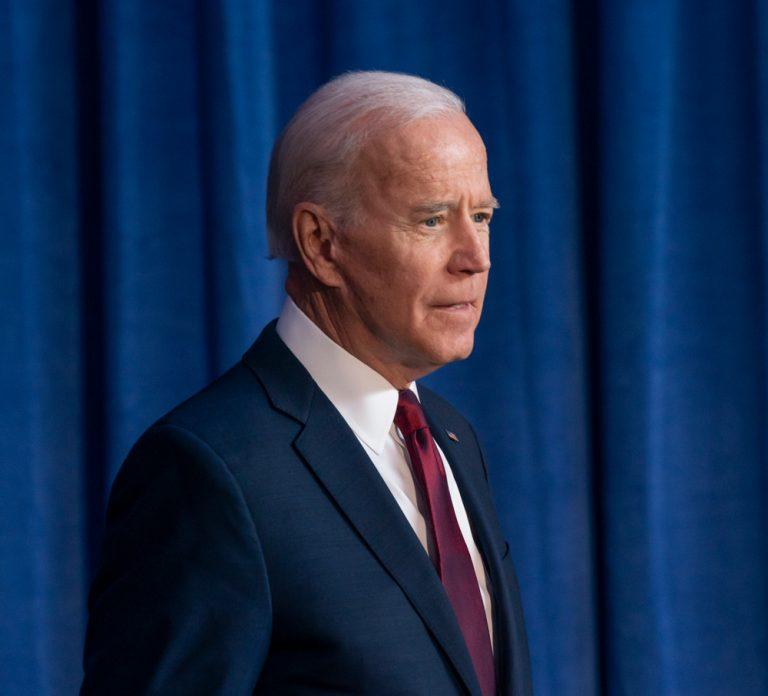
Biden also confirmed intention to run again in 2024
Joe Biden announced in his first press conference as president that he had doubled his administration’s vaccination target to 200m during his first 100 days in office.
“I know it’s ambitious, twice our original goal, but no other country in the world has even come close to what we are doing,” Biden said.
In December Biden announced a goal of 100m jabs which he surpassed earlier in March prior to his 60th day in the Oval Office.
The new target equates to a continuation of America’s current rate – 2.5m per day – of vaccinations up until the end of next month.
Biden also confirmed that $10bn (£7.2bn) would be allocated to expanding access to vaccinations for higher-risk communities.
Over 545,000 Americans have died since the beginning of the pandemic with more than 30m Americans catching the disease at some point.
The federal government has struck a deal with Johnson & Johnson for the delivery of 200m doses, with the first 100m expected before the end of June.
Chinese actress Zhou Dongyu terminated her contract as a Burberry ambassador because the company had not “clearly and publicly stated its stance on cotton from Xinjiang”, while the fashion brand’s famous tartan design was removed from a popular video game.
Burberry, a member of the Better Cotton Initiative, said in October that it was discontinuing its approval of cotton sourced from Xinjiang on concerns over human rights abuses.
The luxury fashion brand’s share price is down by 1.84% on Friday as its long-term prospects look under threat.
Burberry are not the only ones. Nike, H&M and Adidas are also facing the possibility of a boycott as the brands voiced concerns over the alleged use of forced labour in producing cotton in the Xinjiang.
While the relationship between China and some of the more established US brands is fractious, Elon Musk appeared to curry favour with the most populous country on earth in an effort to secure Tesla’s market position for the long-term.
“I’m very confident about Tesla’s future in China,” Musk told CCTV during an interview. “The Chinese economy I think can do extremely well over the next decade and will become the biggest economy in the world. And it’s also committed to a sustainable energy future,” he added.
The Tesla chief also heaped praise on the Chinese government’s plans to dominate economically over the coming years, as well as its climate targets.
Xi Jinping said last year that China will achieve carbon neutrality by 2060, while aiming to hit peak emissions by 2030.
China is the second largest market for Tesla behind America, accounting for 20% of the company’s revenue, according to a recent filing.
AVI Global Trust (LON:AGT) is a global investment fund that seeks long-term capital growth by investing in listed equities across the world. The AVI Global Trust has a unique approach to portfolio management with an unconstrained investment strategy that focuses on undervalued listed entities such as family controlled holding companies, other closed-end funds and a range of special situations.
Buying at a Discount
The companies that AVI Global Trust (AGT) invests in are typically listed and own a series of other companies as well. The fund looks for firms that are “under-researched, over-looked and inefficiently priced”, said CEO & CIO of AGT, Joe Bauernfreund at the March UK Investor Magazine conference. “Our job is to measure the true value of assets,” Bauernfreund added.
AVI Global Trust has been able to secure a significant discount to NAV as a result of the sell-off that occurred during the coronavirus pandemic. The fund’s weighted average portfolio discount reached 46%, exceeding both the financial crisis and the eurozone crisis. “Changes in the portfolio discount do provide tailwinds and headwinds to our performance. At times when discounts are widening, that is a headwind,” said Joe Bauernfreund.
AVI Global Trust Performance
This played out over the past year as the global economy experienced a significant period of stress. As fear gripped markets, discounts widened materially. This allowed AGT to outperform its benchmark, the MSCI AWI Index Ex US, in the second half of 2020, and into 2021, as discounts have begun to narrow.
The fund has a market capitalisation of £988m with net assets of £1,070m, while its ongoing charge is 0.89%. AGT paid a total dividend of 16.5p for the past two years, which it has maintained or increased every year going back to 1985. The company remains committed to maintaining or increasing its total annual dividend each year, and has used revenue and capital reserves in the past to do so.
AVI Global Trust Portfolio
“It is helpful to think about AVI Global Trust in terms of themes,” said Bauernfreund. The themes AGT is focusing on at present can be broken down into four separate themes: digitally-enabled growth, quality category leaders, Japanese corporate governance and cyclical recovery. “We believe the companies we own in each of these themes are well positioned to deliver strong NAV growth over the coming years,” Bauernfreund added.
AVI Global Trust has a diverse geographic portfolio evenly spread between Europe, Japan, Asia and North America. Its exposure to different sectors is also diversified, while AGT adapts to specific sectors as opportunities arise. Currently consumer discretionary is its most weighted sector, followed by communication services and financials.
Temple Bar Investment Trust (LON:TMPL) seeks to provide investors with a growing income combined with growth in capital. Nick Purves and Ian lance, the trust managers, aim to meet this objective by investing primarily in UK equities, across different sectors, maintaining a balance of larger and smaller/medium-sized companies, and with a bias towards FTSE 350 companies.
Purves and Lance believe that now is an opportune time for their strategy as value stocks look set to outperform growth stocks as the UK embarks on an economic recovery. The managers aim to rotate the trust’s portfolio into those companies which they believe are available at a significant discount to value, buying and holding out-of-favour companies until share prices have recovered, at which point they will sell the stock.
UK Economy
The outlook for the UK economy is improving as the so far successful vaccine roll-out has led the governor of the Bank of England to hint at stronger than anticipated growth in the coming months. With the Brexit deal completed and the end of lockdown in sight, the UK-focused Temple Bar Investment Trust could be an attractive proposition for investors.
UK equities are trading at the greatest discount to global equities for 50 years, while UK value stocks remain at the greatest ever discount to growth stocks, which “represents a great opportunity for value”, said Ian Lance at the UK Investor Magazine Conference. “With the next two years likely to see a recovery, the outlook for value is going to continue to be good,” Lance added.
Performance
Since 2 November, when RWC Asset Management took over the Temple Bar Investment Trust, the trust is up by 65%. Within the portfolio a number of companies have performed particularly well. Royal Mail is the trust’s top performer since November, with growth of 99.4%. Closely followed by Capita, up 83.2%, and HP Inc, up 61.3% over the same time period.
“The sectors that were performing the worst before the vaccine announcements in November are now performing the best. Specifically we can see it’s the more cyclically orientated investments, that performed badly at the beginning of the pandemic, leading the recovery, and continuing to do so this year,” Lance said.
The trust has outperformed its benchmark, the FTSE All-Share index, by 27.3% over the past six months.
Temple Bar Investment Trust Portfolio
By sector the portfolio is most weighted towards financials (18.4%), communications services (14%) and energy (13%). “The portfolio is well positioned to benefit from a pick up in activity as well as reflation in the UK economy,” Nick Purves said at the UK Investor Magazine conference. The companies most represented by the trust are Royal Mail (6.6%), BP (5.4%) and Anglo American (5.2%).
Vietnam Holding (LON:VNH) is a closed-ended fund that invests in high-growth companies in Vietnam, focusing on domestic consumption, industrialisation and urbanisation. The London-listed investment trust, launched in 2006, offers nimble stock selection with integrated ESG.
“We have a team of 12 people on the ground in Vietnam actively managing the fairly concentrated portfolio”, said Craig Martin, chairman of Dynam Capital, the manager of Vietnam Holding.
Vietnam
Vietnam has liberalised its economy over the past few decades and has recorded high economic growth in the process. With the country’s ideal location for manufacturing and established trade deals, in addition to a young and increasingly literate population, this phenomenon shows no sign of letting up. Vietnam was one of the highest growing economies in the world last year at just under 3%.
“Many of you will think of Vietnam through the lens of the 50s, 60s and 70s when it was a country at war. However, the country has evolved into a stable centre for foreign direct investment and is a pre-eminent export player,” Martin said.
Emerging Consumer Market
Vietnam is seeing the emergence of a consumer market with increasing disposable income. While car ownership in the country has doubled over the past five years, there are still only 23 cars per 1,000 people in Vietnam, compared to 205 across ASEAN (Association of Southeast Asian Nations), and 200 in China. This is due to the high level of motorbike use, suggesting there is still room to grow for an automotive industry, typically associated with higher living standards.
Vietnam is also a fast-growing consumer market in terms of modern trade as swathes of convenience stores are popping up across the country’s major cities. The growth of its modern grocery stores is outpacing other ASEAN (Association of Southeast Asian Nations) nations.
Global Trade
Vietnam is playing an increasingly important role in the global supply chain. Having established trade partnerships with the WTO, ASEAN and the USA, Vietnam has been exporting progressively more goods to the rest of the world.
From just over 0.4% in 2010, Vietnam’s market share of global exports now stands at 1.5%, as it benefitted from recent trade tensions between America and China. Its exports to the US are valued at $83bn. Vietnam has also shifted from its reliance on agricultural products (rice, coffee and fruit) to include high-tech products such as smartphones, tablets, computers and accessories.
Public Investment
Vietnam’s government has plans in motion to turn the country into a modern industrialised economy. Over the next five years the government plans to mobilise $120bn in public investment projects. In addition, the government is implementing a new Law on Public Investment (2019) to encourage private investors to join via Public-Private-Partnership (PPP) initiatives. Craig Martin suggests that these policies will have a multiplier effect on economic growth which will benefit Vietnam Holding in the long-term.
Vietnam Holding Portfolio
The fund’s portfolio is concentrated with two thirds of its holdings in its top ten companies. Banks, the top sector, makes up 27% of the fund’s portfolio, closely followed by industrial goods and real estate at 22% and 15%. Its weighting towards industrial goods and real estate play towards the aforementioned processes of industrialisation and urbanisation in Vietnam, Martin explained during the March UK Investor Magazine conference.
Vietnam Holding is up by 9.2% since the turn of the year, and 59.1% over the past 12 months. The fund also trades at a discount to NAV at approximately 18%.
FTSE 100 rose by 0.8% to 6,731 as a strong end to the week helped to lift investors’ spirits.
“Japan’s Nikkei 225 rising 1.6% and pre-market indicative prices suggesting the core US markets will open 0.4% higher. The key issue is how long markets remain upbeat,” says Russ Mould, investment director at AJ Bell.
“Miners and oil producers drove the FTSE higher despite growing concerns about parts of the world failing to get Covid under control and what that might mean for economic recovery,” Mould added.
“What’s important is how that might affect global trade and the fact it is already causing shipping rates to rise, which in turn could fuel inflation as extra costs are passed on to the consumer,” says Mould.
“This all suggests we remain at a fragile point for markets and one that could lead to heightened volatility.”
FTSE 100 Top Movers
Leading the way on Friday at the top of the FTSE 100 is Smiths Group (5.12%), Antofagasta (4.13%) and Glencore (3.49%).
While at the bottom, Imperial Brands (-1.77%), Burberry (-1.26%) and Ocado (-1.11%) are the day’s biggest fallers so far.
Retail Sales
The retail sector was handed a boost in February as people spent money on garden furniture and improving their homes ahead of the return of outdoor socialising. Retail sales rose by 2.1% last month while the rest of the sector continued to struggle as non-essential stores remained shut.
The Office for National Statistics (ONS) said that despite the recovery, the 8.2% dip in January kept retail sales below the figure of 12 months ago, and said that they would have fallen again if not for online sales at department stores.
The retail sector was handed a boost in February as people spent money on garden furniture and improving their homes ahead of the return of outdoor socialising.
The Office for National Statistics (ONS) said that despite the recovery, the 8.2% dip in January kept retail sales below the figure of 12 months ago, and said that they would have fallen again if not for online sales at department stores.
Economists had predicted a more modest annual fall of 3.5%.
Jonathan Athow, the deputy national statistician for economic statistics at the ONS, said: “Despite national restrictions, retail sales partially recovered from the hit they took in January.”
“Food and department stores benefited from essential retail remaining open, with budget-end department stores seeing increased sales.”
“Household goods also fared well, with feedback suggesting spending on home improvement and outdoor products boosted sales as consumers prepared for an easing of lockdown restrictions.”
“However, clothing stores continue to struggle with sales down more than half on their pre-pandemic level.”
While Danni Hewson, financial analyst at AJ Bell, commented on the mood of the country as well as the wider economic outlook:
“The tantalising prospect of being able to share a garden with friends and family has helped bump retail sales up slightly after the January slump,” Hewson said.
“Household goods sales were up 16% mainly thanks to purchases of outdoor products as gardens get a makeover ahead of lockdown restrictions easing. Unsurprisingly online sales from those retailers received the biggest boost, a record monthly bump for the sector of almost 36%.”
“And that’s repeated across the board with the amount people are spending online at a record high of 36.1%. Compare that share with the 20% enjoyed the previous February and it reinforces what all retailers know in their bones, lockdown has sped up already changing habits.”
“The decision by John Lewis to close a further eight stores indicates they don’t expect that trend to reverse. But all retailers will take comfort in these figures. Consumers clearly want to spend, they just need the right conditions; a fine sunny spring would undoubtedly help that along.”
LV=’s retirement and protections arms negatively impacted by the pandemic
LV=, formerly known as Liverpool Victoria, confirmed an operating profit of £40m in 2020, up from a £16m loss in 2019, despite challenging trading conditions.
Such challenges, that came about due to the coronavirus pandemic, negatively impacted LV=’s retirement and protections arms.
New business sales in savings and retirement came in at £1.039bn this year, down from £1.143bn in 2019. While the pension provider’s new protection sales also fell to £263m.
In better news for LV=, the company increased its market share for the first time since 2016. While its pre-tax profit came in at £37m for 2020, its Solvency II capital surplus fell by £254m to £690m.
Mark Hartigan, LV= Chief Executive, said: “Despite the unprecedented challenges presented by the pandemic, LV= has delivered a good financial performance in 2020. Through the year we have created significant momentum in our trading businesses and I am particularly pleased that we increased market share in both Savings & Retirement and Protection. By taking quick and positive actions in response to Covid-19, as well as delivery of planned change initiatives, we continue to improve service for customers and have strengthened the propositions we offer the market.”
“We are reporting a strong Solvency II capital surplus of £690 million and an increased operating profit of £40 million. I am pleased that we have again been able to share some of the financial benefits with our With-profits members through the allocation of a £28 million pounds mutual bonus. This has been applied by uplifting the asset share of relevant With-profits policies by up to 1%.”
“The vast majority of our people have been working from home since the first lockdown in March 2020. I was impressed with how quickly our teams were able to adapt to home based working. It is thanks to the hard work and dedication of our people that we maintained good levels of service and didn’t need to close our phone lines at any stage. Over the course of the year we managed to increase our Net Promoter Score among financial advisers.”
Recent news emerged over talks of a sale of LV= to Bain Capital, the American private investment firm.
Octopus Energy (LON:OOA) confirmed its intention to acquire Octopus Renewables on Friday in a deal worth up £3bn.
The agreement with its sister company means the energy startup will become one of the biggest renewable energy investors in Europe, bringing green energy to 50m homes in the next six years.
While the acquisition remains subject to regulatory approval, it would see the formation of a new business area from June and beyond called Octopus Energy Generation. This arm will manage Octopus Renewables’ European portfolio of more than 300 clean energy assets with a combined capacity of 2.8GW across six countries, according to the company.
The rapidly expanding energy company is aiming to grow its international business to 50m customers by 2027, as well as plans to scale-up its renewable energy division to generate as much clean electricity as it distributes.
After its launch in 2015 by the asset manager Octopus Group, which also owns Octopus Renewables, Octopus Energy saw rapid growth over the past couple of years, including a number of acquisitions helping to push its valuation above $2bn.
Greg Jackson, CEO and founder of the energy startup, said: “We are absolutely thrilled to join forces with Octopus Renewables, bringing the supply and the generation side of energy together under one roof.”
“This move will allow us to create a business that is unrivalled on the global stage; by combining our tech and consumer-led approach with the fund management expertise of Octopus Renewables, we can change the entire energy lifecycle, make every green electron matter, and deliver the green energy transition faster and cheaper for everyone,” Jackson added.
Jackson owns a 7.4% stake in in the company and became one of the most successful green energy entrepreneurs in UK history after earning a paper fortune of around £115m following the company’s £2bn valuation last year.