AstraZeneca shares rise as vaccine is approved

AstraZeneca shares (LON: AZN) jumped on the news that the vaccine developed with the University of Oxford has been approved for use.

Shares in AstraZeneca were up 4% at 7,507.97 on Tuesday and are currently up almost 1% at 7,526.84 (1024GMT).

First doses of the vaccine will be given as soon as Monday 4th. The UK has ordered 100 million doses.

The news comes as 53,135 new Covid cases were recorded in the UK this week and millions of more people are expected to placed in Tier 4 restrictions.

“The vaccine is our way out of this,” Matt Hancock told the BBC. “Whereas previously I’ve I hoped we’d be out of this by spring, I now have a high degree of confidence we’ll be out of this by spring.”

A Department of Health and Social Care spokesperson said: “The priority should be to give as many people in at-risk groups their first dose, rather than providing the required two doses in as short a time as possible.

“Everyone will still receive their second dose and this will be within 12 weeks of their first. The second dose completes the course and is important for longer term protection.”

Analysts from AJ Bell commented on what the rollout of the vaccine would mean for markets, saying: “Buoyed by news of mass inoculation on the UK and other countries, as well as ongoing fiscal and monetary support for economies from governments and central banks, markets seem to be leaning toward this scenario right now, with some investors openly debating the return of inflation.”


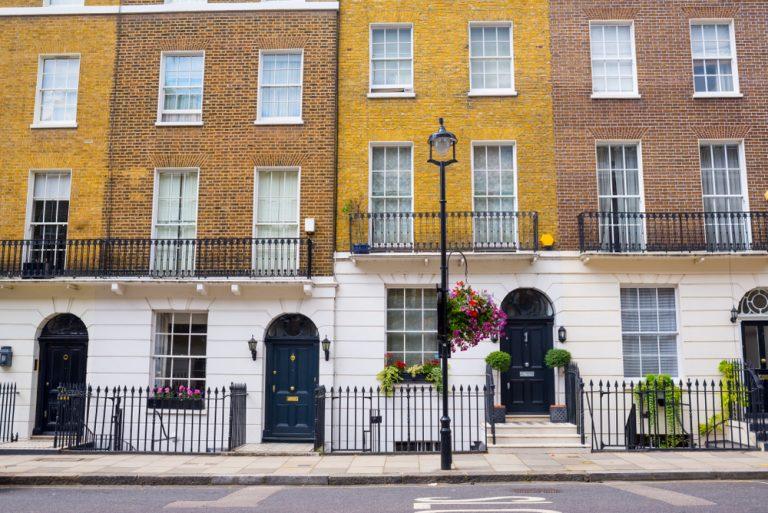
Nationwide: House prices hit six-year high

According to the Nationwide House Price Index, house prices in 2020 grew at the fastest rate in six years.

In December alone, the average price of a home increased by 0.8% and now costs £230,920 in the UK and £486,562 in London.

Whilst the first lockdown stalled the housing market as viewings were banned, the market boomed this year as Rishi Sunak introduced the stamp duty holiday.

Robert Gardner, the Nationwide Chief Economist said: “Housing market conditions have remained robust in recent months, even as the wider economic recovery lost momentum and the UK economy faced the prospect of further lockdowns and continued uncertainty about the UK’s future international trading relationships.”

“The furlough and Self Employment Income Support schemes provided vital support for the labour market, while a host of measures helped to keep down the cost of borrowing and keep the supply of credit flowing.”

As people want more space and are rushing to complete deals before the end of the stamp duty holiday, Mark Harris, chief executive of mortgage broker SPF Private Clients, said that the rush will continue for some time yet.

“There are several tailwinds and the housing market is making the most of them. Competitive mortgage rates show no sign of disappearing anytime soon, with lenders most notably returning to the 90% loan-to-value space, providing a further boost for first-time buyers,” he said.

The Nationwide chief economist, however, says that the outlook is uncertain.

“Much will depend on how the pandemic and the measures to contain it evolve as well as the efficacy of policy measures implemented to limit the damage to the wider economy,” he said.

Following the stamp duty holiday, prices are likely to cool off but may again gain traction as people continue to work remotely and want more space.

“After a strong first quarter of 2021, prices are likely to cool in the wake of the Stamp Duty deadline but could then start to increase again towards the end of the year,” said George Franks, co-founder of Radstock Property.

Bitcoin surges to record high as US dollar slides

Bitcoin has surged to a record high, surpassing $28,500.

The cryptocurrency has gained over 5% today and 46% since the start of the month. The increase in Bitcoin comes as the US dollar slides to its lowest level since April 2018.

Jeffrey Halley of OANDA commented: “It is clear that currency markets are pricing in a potentially powerful move lower by the US Dollar as soon as the new trading year begins next week. I agree with the overall view but not that the unidirectional move in the US Dollar lower this week, suggests that positioning is heavily one-way.

“Markets face a heavy data week next week, and a significant risk event in the shape of the Georgia Senate runoff elections.”

Meanwhile, gold has remained flat at $1,878 per ounce.

Brad Bechtel of Jefferies said: “Gold continues to languish around $1,875 and although that is still the market’s preferred store of value, the ancient relic is indeed looking a little behind the times.

“Will be interesting to watch these two assets duke it out in the new year with each fighting for dominance as the alternative store of wealth for the rapid fiat currency debasement going on in the financial system.”

In 2020, performed ten times better than gold. Simon Peters, an analyst at the online investment platform eToro said on Bitcoins surge: “Demand continues to outstrip supply and institutional investors continue to seek exposure to bitcoin hedge against inflation, both of which have helped to keep the price above $20,000.

“Investors are recognising that, despite the rapid price rise grabbing headlines recently, bitcoin’s real potential remains as a long-term investment to be held for months if not years.”

However, the Biden administration has said that they will introduce regulations that could restrict bitcoin’s growth.

Jesse Cohen, a senior analyst at Investing.com, explains: “While many expect the bitcoin rally to continue in 2021, I’m more concerned with what the Biden administration could mean for crypto.

“Incoming Treasury Secretary Janet Yellen has previously warned investors about bitcoin during her time as Fed Chair, calling it a highly speculative asset and not a stable store of value.

“I expect bitcoin to remain highly volatile to the downside in the new year, given the potential for more scrutiny and tighter regulation. That should see prices fall back from their record highs,” added Cohen.

China & EU on the brink of a trade deal

According to reports, the EU and China are on a brink of agreeing to a trade and investment pact.

The agreement will give EU firms improved access to the Chinese market. The deal comes soon after the UK’s post-Brexit trade agreement.

An unnamed EU official told Reuters: “The talks are about to be concluded. It’s looking good. There are only some minor details left which need to be hammered out. “As things stand now, the political agreement between the EU and China will be sealed on Wednesday.”

“We get much better market access and the protection of our investments in China. Better market access is something we have been working for for many years, and the Chinese have made quite a big step towards us.”

The talks started in 2014 but have not made progress over the claims that China was not coming through on promises to lift curbs on EU investment.

The European Commission said there has been progress made on the talks with Beijing, including the core issue of workers’ rights. This is particularly important amid the reports that China is detaining Uighur Muslims in the Xinjiang province and using as forced labour. This has been denied by Beijing.

Wang Wenbin, a Chinese foreign ministry spokesman said on Tuesday that talks had made progress and that a deal can be confirmed “at an early date”.

The deal between the EU and China will have to be ratified and this process is unlikely to take place before the second half of 2021.

The Hut Group shares rise on continued expansion

0

The Hut Group has spent over £300m on acquisitions as it continues expansion plans.

The group bought US online skincare retailer Dermstore in a £259m deal as well as Claremont Ingredients and David Berryman for £59.5m.

The Hut Group floated shares on the stock exchange in September and was valued at £6.8bn on Christmas Eve.

Matthew Moulding, the chief executive, said: “A key driver behind the decision to list THG on the London Stock Exchange just over three months ago was to enable the group to make major global investments, such as Dermstore.com.

“Accessing capital through a London listing has enabled us to accelerate our growth plans and build out a global leadership position within the exciting beauty industry.”

In October, the group posted a +38.6% year-on-year revenue growth for Q3 with a +51.3%, year-on-year growth in online revenues to £320.2m. The Hut Group raised full-year 2020 revenue guidance to between £1.48bn and £1.52bn.

Moulding said: “I am pleased to report a strong period of trading in our first quarterly update as a public company, including an upgrade to revenue growth guidance for 2020. I would like to thank all our colleagues for their huge contribution to date. Our strong organic revenue growth across all divisions, numerous THG Ingenuity partnership deals, and the recent acquisition of luxury skincare brand Perricone MD, demonstrates our strategic direction and progress in the period.

“Our decision to list on the London Stock Exchange provides us with a strong platform to raise the profile of both Ingenuity and our Brands, and further supports their strong organic growth. Our acquisition strategy remains unchanged, with a focus to complement organic growth with brand IP and Ingenuity infrastructure additions.”

The Hut Group shares are trading +5.29% at 737.00 (1149GMT).

House prices: the biggest risers & fallers in 2020

New figures from Halifax have revealed the UK areas with the biggest rise in house prices.

The average property in the London borough on Islington now costs £727,922, which is a rise of 13.4% in 2020. Of the top 20 risers in the UK, nine were in Greater London.

House prices in Hounslow rose 9.1% to £523,659, whilst the average cost of a home in Croydon is up 10.9% rise to £397,538. Not all houses in London saw growth, however. Homes in Hackney were the second-biggest faller and prices declined by 1.5%.

Outside of London, Leeds saw house prices soar by 11.3% for an average of £247,116.

Russell Galley, Halifax’s managing director, said: “Much like many other things about 2020, it would have been hard to predict which areas would see the greatest movement in average house prices this year. For example, depending on the borough, you could be looking at the biggest price rise or the biggest falls in the capital.

“House prices have leapt by more than 11% in Yorkshire’s great cosmopolitan city of Leeds and almost 10% in Wolverhampton at the heart of the Black Country.

“Further north, Doncaster and Inverness have also seen healthy growth and whilst the overall house price trend this year has been upward, anyone looking to buy in Paisley, Hackney or Aberdeen will find homes cost a little bit less than last year.”

In Scotland, Edinburgh, saw house prices climb by 6% for an average price of £274,246. In Glasgow, house prices were down by 1.7%.

The top 10 risers in 2020 are as follows:

1. Islington – 13.4% to £727,922
2. Leeds – 11.3% to £247,115
3. Croydon – 10.9% to £397,538
4. Wolverhampton – 9.5% to £217,837
5. Hounslow – 9.1% to £523,659
6. Doncaster – 8.8% to £176,728
7. Inverness – 8.1% to 195,534
8. Bournemouth – 7.7% to £310,205
9. Watford – 7.7% to £460,102
10. Romford – 7.6% to £391,000

Confused.com sold to Uswitch in £500m deal

0

Admiral has announced plans to sell Confused.com to Uswitch in a £500m deal.

The deal is expected to be closed in the first half of 2021 and is subject to approval.

David Stevens, the chief executive of Admiral Group, commented on the deal: “The purchase of the UK and European comparison businesses by RVU offers a positive outcome for our customers and our employees, and also provides good value for our shareholders.

“The combination of Penguin’s strengths, notably in insurance comparison across much of Europe, with RVU’s strengths beyond insurance and experience in growth through acquisition provides a solid foundation for the combined businesses to grow and prosper.

“Admiral will continue to focus on what Admiral has consistently done well, namely designing and underwriting good value mass market financial service products,” he added.

Tariq Syed, the chief executive of RVU, said: “Penguin Portals offers an exciting opportunity for us to expand our comparison brand portfolio and geographic reach. With its strong brand heritage and focus on insurance, Confused.com perfectly complements Uswitch’s expertise in the home services category.”

Earlier this year, Admiral posted pre-tax profits for the six months of 2020 up by 30% to £286.7m, helped by a fall in motor insurance claims as people stayed at home over lockdown.

Admiral’s chief executive, David Stevens, said on the results: “Our response to that pandemic highlighted two of Admiral’s key strengths – competent execution in the short term and sustainable values for the long term.”

Shares in Admiral Group are trading +3.29% at 3,019.12 (1020GMT).

FTSE rallies following Brexit deal relief

0

In the first trading session since the Brexit deal was confirmed, the FTSE 100 rose by 1.48% minutes after opening.

Following the festive break, the blue-chip index went onto hit a 9-month high as it was up 160 points, or nearly 2.5%, at 6662 points.

The FTSE 250 also rallied on opening and was 1.6% at 20,874 points. Biggest riser was Holiday operator, TUI, which jumped over 9%.

Germany’s DAX was also up this morning 0.7%. This year in total, it is now up 4.8% whilst the FTSE is down 12%.

Leading the FTSE’s growth is AstraZeneca, up 4.7%. Intercontinental Hotels, Compass and Diageo were also up in this morning’s trading.

Banks, however, opened lower as concerns grew over the impact of the pandemic on the economy. Four of the five top fallers on this morning’s opening were banks.

Shanti Keleman from Brown Shipley said UK bank shares were down to “no agreement on financial services equivalency in the Brexit deal”.

Last night also saw Wall Street hit record highs as Donald Trump has signed a $900 billion economic aid package, which he had previously refused to sign. The relief was also shown on the Asia-Pacific markets and Japan’s Nikkei closed on a 30-year high.

Mitt Romney, US senator, said that he was “relieved” that the US President had signed the emergency legislation. He tweeted: “Help is now on the way to workers, families, and small businesses across the country who are desperately in need.”

Raffi Boyadjian, a senior investment analyst at XM, commented: “Now that the uncertainty has ended over the US stimulus package and Brexit deal, there’s nothing stopping stock markets from heading into record territory in the run up to the New Year.”

Russ Mould, AJ Bell Investment Director, said: “The FTSE 100 and FTSE 250 are both up nicely in the early exchanges and sterling is holding on to the $1.35 and €1.10 marks, so markets seem to be welcoming the Brexit deal that was announced on Christmas Eve.

“However, the agreement struck between London and Brussels is yet to win universal acclaim, even if that is the inevitable result of the compromises that the Prime Minister had to make to get the deal over the line before the end of the transition period and confirmation of the UK’s departure from the economic bloc,” added Boyadijian.

UK car production depends on Brexit deal

0

Car production fell by 1.4% in November.

According to the Society of Motor Manufacturers and Traders, the number of cars made in November fell to 106,243.

The trade body has said that the situation could worsen depending on the Brexit deal.

In the 11 months to November, UK car production was down by 31% compared to the same period a year earlier.

Mike Hawes, SMMT chief executive, said: “Yet another decline for UK car production is of course concerning, but not nearly as concerning as the New Year nightmare facing the automotive industry if we do not get a Brexit deal that works for the sector.

“With just nine days to go, the threat of no deal is palpable and the sector, now also reeling from the latest coronavirus resurgence, Tier 4 showroom lockdowns and disruption at critical UK ports, needs more than ever the tariff-free trading arrangements on which our competitiveness is founded.

“It is finally make or break time, as being forced to trade on WTO terms would be a hammer blow for many automotive businesses, workers and their families, so we must get a deal, and one that avoids the devastation of punitive tariffs for all automotive products, from day one.

“For the long-term survival of UK Automotive, there is quite simply no other option,” he added.

Lufthansa airlifts fruit & vegetables into the UK

0

Lufthansa chartered a special cargo flight to airlift fruit and vegetables to the UK.

The airline said it would fly 80 tonnes of food to Sheffield airport, where food would be distributed to supermarkets.

“Lufthansa Cargo is currently examining whether additional special cargo flights can be offered during the next days. We are also checking if a regular flight might be possible,” a spokesperson told the BBC.

“This could be with a freighter, but we are also examining if we could use passenger aircraft for freight flights only.”

The goods include lettuce, cauliflower, broccoli, strawberries and citrus fruits. Lufthansa is considering more special cargo flights this week.

France shut the border on Sunday for 48 hours. The border has reopened but lorry drivers must have a negative Covid-19 test.

Supermarkets including Sainsbury’s and Tesco warned earlier this week that if the chaos around ports and borders was to continue, the UK could see shortages of lettuce, broccoli, cauliflower and some citrus fruits.

A spokesman for the airport at Sheffield said that the number of Lufthansa flights a week would increase over January for perishable goods to avoid any more holdups over the border.

“We are currently experiencing a large volume of enquiries for flights as a result of border closures and we are handling additional flights, such as today’s, where possible.

“Naturally, this is already a busy period for the airfreight sector as a result of Christmas and COVID.”

“This planned increase is related to anticipated Brexit congestion, rather than the current issues effecting cargo waiting to cross the Dover Ferry. These flights are largely non-EU freight that usually travel through the continent.

“We have seen a general increase in freight traffic in the period since the pandemic began in March by around 40% year on year, up to 30,000 increased from circa 20,000 tonnes in 2019,” the spokesperson added.