
Landsec posts £835m loss – CEO remains confident

Landsec (LON: LAND) has said that the demand for London office space remains strong despite more people working from home.
The property company wrote almost £1bn a billion off the value of its portfolio to £11.8bn – but chief executive Mark Allan remains confident of demand.
In the six months to 30 September, Landsec made a pre-tax loss of £835m, which is an increase from last year’s £147m.
The group will pay a dividend of 12p a share in January.
Landsec said earlier this month that it plans to sell almost a third of its £12.8bn property portfolio over the next four to five years.
The property group behind Trinity Leeds shopping centre and Bluewater in Kent said that it will reinvest the money in new developments.
Landsec shares (LON: LAND) are trading +4.69% at 673,60 (1544GMT).
Interview with Mode Banking Executive Chairman, Jonathan Rowland

Mode Banking Executive Chairman Jonathan Rowland joins the UK Investor Magazine Podcast to discuss recent progress at Mode and their plans for the future.
Mode Group Holdings (LON:MODE) has recently listed on the LSE Standard List raising £7.5m to fund the growth of their Digital Asset Banking App that harnesses Open Banking systems.
Classic Motorcycles or Classic Cars? Which offers better returns?

In a recently recorded interview, Brand Communications CEO Alan Green and The Motorcycle Broker Paul Jayson look at the investment returns from some of the great classic motorcycles and cars over recent years.
Average investment returns for classic cars over 15 years from the Coutts Passion Index are discussed, before Alan and Paul look at some examples of investment returns from rarer machines, including the Ferrari 250 GTO, Alfa Romeo 8C and 6C, Aston Martin DB4, Ducati 916 Carl Fogarty race bike, Ducati 750SS Green Frame, Brough Superior, Vincent Black Lightning and Honda CBX 1000. Paul looks at some of the pitfalls for prospective classic motorcycle purchasers, and emphasises the importance of machine provenance and originality before the purchase.
Ahead of the next episode covering potential dark horse classic motorcycle investments for the coming decade, Paul talks about the amazing Allen Millyard Kawasaki 1000 four cylinder two stroke.
Arena Events remains in strong financial position, despite Corona impact

Arena Events Group Plc shares (LON: ARE) opened 24.55% higher after the group released a trading update for the six months ended 30 September 2020.
Due to Corona restrictions and the ban on mass gatherings, revenue fell from £88.3m in 2019 to £42.8m. Gross profit fell from £24.9m to £14.8m.
Despite the tough trading environment, Arena Events Group Plc protected significant overhead cost reductions, which was 10.3%.
In the UK and Europe, the group delivered numerous structures for temporary Corona medical facilities and testing centres.
The group has also signed a multi-million pound contract extension for the rental of 26,000 seats to the Tokyo 2020 Olympics, which will now be held in 2021.
Greg Lawless, the chief executive of Arena Events Group Plc, commented:
“We are at the epicentre of the economic destruction that the COVID-19 pandemic is causing to the hospitality sector worldwide with virtually no live audience participation at any event over the last six months. However we have been proactively working to reduce the impact on our business as much as possible by securing extensive non-event revenues, reducing our cost base and raising funds from both our bank, HSBC, and shareholders to be able to put the Group in a solid financial position to trade through these very difficult times and emerge in a stronger, more cost efficient position.
“The fact that we have delivered a positive EBITDA out-turn for these first six months, taking everything into consideration, reflects a robust performance that demonstrates the benefits of a global platform and, in particular, the tremendous tenacity, agility and positive attitude of the senior executives and their teams across all of our business units.
“No dividend will be paid in relation to FY21 as the Board prioritises the optimisation of cash resources. Audited full year results are expected to be released in early July 2021.”
Arena Events Group Plc shares (LON: ARE) are trading +30.25% at 7,16 (1014GMT).
Persimmon reveals plans to pay extra dividend

Persimmon (LON: PSN) revealed in its latest trading update that it plans to a second interim dividend thanks to strong trading.
The housebuilder plans to pay an interim dividend of 70p per share in December after the group resilient demand for new homes and secured £1.4bn of sales for future years.
In the period between July 1 and November 9, the group average private weekly sales rates per site was 38% higher than the year previously.
Chief executive Dean Finch said: “Persimmon continues to perform robustly despite the significant challenges presented by the Covid-19 pandemic and we are currently on course to deliver a good result for 2020.”
Head of Markets at Interactive Investor, Richard Hunter, said: “Persimmon is playing the hand which it has been dealt prudently and profitably.
“Returning demand meant that during the summer, the company was indeed able to make hay while the sun shone.
“The summer surge, partially driven by some pent-up demand, has resulted in a strengthening of the company’s financial position, with net cash of £960 million comparing to £829 million at the half-year results.”
On Monday, rival housebuilder Taylor Wimpey also said that it expects this year’s financial results to be at the upper end of expectations and remains confident about next year.
Shares surged on Monday morning as the housing market continues to be resilient after reopening after the second quarter shutdown.
Persimmon shares (LON: PSN) are down 3.14% to 2.694,40 (0949GMT).
ONS: Unemployment reaches four-year high

New figures from the Office for National Statistics (ONS) have shown unemployment levels to reach a four-year high.
As redundancies hit record highs, the UK’s unemployment level has jumped to 4.8% in the three months to September – the highest level since 2016.
The ONS said:
“For July to September 2020, an estimated 1.62 million people were unemployed, up 318,000 on the year and up 243,000 on the quarter.
“The annual increase was the largest since December 2009 to February 2010 and the quarterly increase was the largest since March to May 2009. The quarterly increase was mainly driven by men (up 178,000) and there were increases across all age groups.”
In the same period, 314,000 people were made redundant.
“Redundancies increased in July to September 2020 by 195,000 on the year, and a record 181,000 on the quarter, to a record high of 314,000m,” said the ONS.
“The annual increase was the largest since February to April 2009.”
The sharpest fall was among part-time and self-employed workers. the ONS explained:
“Looking more closely at the quarterly decrease in employment, it can be seen that this is driven by decreases in the number of part-time workers (down 158,000 on the quarter to 8.11 million) and self-employed people (down 174,000 to 4.53 million, with a record 99,000 decrease for women).”
“The quarterly decrease was partly offset by an increase in full-time employees, up by 113,000 on the quarter to a record high of 21.17 million. The increase in full-time employees was driven by women (up a record 165,000 on the quarter to 8.72 million), while men decreased by 53,000 to 12.45 million, the first quarterly decrease since March to May 2019.”
Suren Thiru, the British Chambers of Commerce head of economics, said: “The rise in the unemployment rate and redundancies is further evidence that the damage being done to the UK jobs market by the coronavirus pandemic is intensifying.”
“The extension to the furlough scheme will safeguard a significant number of jobs in the near term. However, with firms facing another wave of severely diminished cashflow and revenue and with gaps in government support persisting, further substantial rises in unemployment remain likely in the coming months.”
Premier Foods raises profit outlook on strong demand
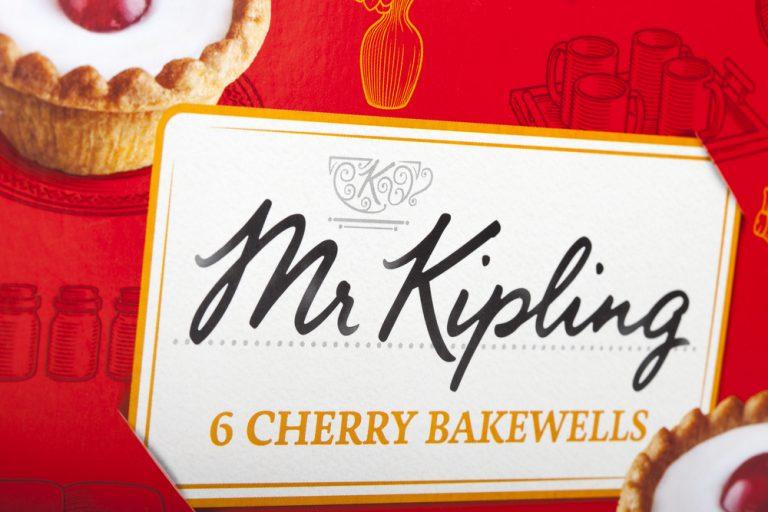
Premier Foods (LON: PFD) has raised its profit outlook for the full year as it expects higher demand amid new restrictions.
The food manufacturer, which owns brands including Mr Kipling and Bisto, reported a pre-tax profit of 35.5% to £50.5m and a 15% increase in revenue. to £421.5m.
The jump in profits in revenue was due to the stronger demand for products as more people are eating at home. The higher demand is expected to continue over the next four weeks and the group has raised its profit outlook.
Premier Foods is also driving new products and television marketing.
Chief executive Alex Whitehouse said: “We have seen many more meal occasions being consumed at home, particularly in the first quarter, followed by a transition towards more normal levels of demand through quarter two. During this entire time, we have continued to drive our branded growth model, launching insightful new products and supporting our three biggest brands with above the line advertising.
“Consequently, we have continued to grow faster than all our categories, increasing market share in each one; a reflection not only of our strong brands but also the amazing performance of our supply chain colleagues to ensure product availability.
“Looking to the second half of the financial year, we expect to see continued revenue growth driven by further new product innovation, strong commercial plans and increased marketing investment for our brands, with six major brands planned to be advertised on TV. We also now expect to see an increase in demand for our brands due to the impact of recently increased government restrictions on eating out. The longevity of this increased demand is likely to be linked to the duration of these new measures, and although we have tougher comparatives in the fourth quarter, we anticipate that Trading profit for the full year will be ahead of current market expectations.”
Premier Foods shares (LON: PFD) are trading at 102,73 (0833GMT).
UK house sales enquiries dropped by 32% in 2020

A new report by WeBuyAnyHome has outlined the impact of the coronavirus pandemic on the UK housing market, revealing that house sales enquiries have plummeted by 32% on average compared to 2019 as widespread lockdowns and market turbulence dampen appetites to buy.
The data compares house sales enquiries from January to September 2019 to the same period in 2020, as well as analysing the fluctuation in sales demand during the pandemic by comparing figures from Q1 to Q2 across this year.
According to the report, house sales enquiries in Scotland have also dropped by a whopping 48% in Q2 2020, although the few UK regions which have actually seen an increase in enquiries over recent months were all located in Scotland: Edinburgh (+53.50%), Clackmannanshire (+40.00%) and Dunbartonshire (+11.80%).
In the North, however, the housing market has essentially stagnated due to the pandemic. Lancashire saw enquiries plunge by 38.4% compared to last year, while North Yorkshire suffered a 39.2% blow as predominantly low-income families have struggled to sell.
As could be expected, London appears to have performed better than the rest of the UK, with sales enquiries down a meagre – but still significant – 14.2% in the last year.
Some of the capital’s surrounding counties have seen a major drop in demand, however, with enquiries down 32.7% in Essex and 25.5% in Kent.
Despite the apparent apprehension to buy, mortgage approvals reportedly hit a new 13-year high in September – with banks signing off on 91,500 mortgages – and the Bank of England citing the stamp duty holiday and the demand for more space during lockdown as driving the desire to move.
Strict lockdown measures which came into force in the Spring essentially ground the housing market to a halt, but in recent months a “housing boom” has made up for lost time, although some are sceptical that the trend has much longevity.
Andrew Montlake, managing director of mortgage broker Coreco, warned last month that the market boom is likely to lose steam:
“The post-lockdown bull run is already over. Lenders have been pulling down the shutters due to ongoing struggles with capacity and concerns over rising unemployment levels, specifically the impact on house price growth”.
So the figures are confusing. Sales enquiries have clearly taken a hit this year – particularly in the North of England – and even with a couple of months of new-found growth in the sector, investors would be right to view the recent trend with some caution.
Once the stamp duty holiday comes to an end in March next year, and with a Brexit decision (deal or no-deal style) on the horizon leaving markets suspended in a seemingly permanent state of confusion, the momentum may well drain from the housing market on the other side of the New Year – or possibly even before.
Sunak announces ‘green gilts’ to bolster government’s low-carbon investment
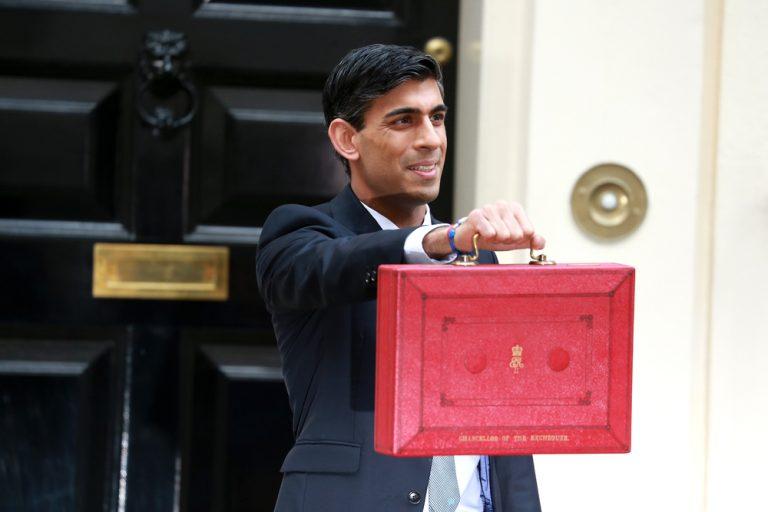
Chancellor Rishi Sunak is set to announce the launch of the UK governments first ‘green gilts’, which will be used to boost its low-carbon investment capabilities.
These targeted bond mechanisms follow the lead of 16 other countries, including Sweden and Germany, and will aid in government efforts to invest in green infrastructure projects – including the Boris administration’s commitment to scaling up Britain’s offshore wind capabilities.
The move towards green gilts, or ‘green sovereign bonds’, also follows moves by the Bank of England and European Central Bank, to adjust their respective asset-purchasing strategies towards being geared more specifically towards low-carbon emitting companies. It likely also pre-empts a change in tone over the pond, with president-elect, Joe Biden, being vocal about his intentions to put his weight behind a low-carbon shift in US energy.
It will also follow a move by the Financial Conduct Authority, which, from January 1 2021, will require all ‘premium listed companies’ to make ‘better’ disclosures about how climate change will impact their business – with the potential for these climate risk disclosures to be extended to cover asset managers, life insurers and pension providers.
Commenting on Sunak’s green gilts, and what is at the very least a symbolic next stage in the green transition, Fran Boait, executive director of Positive Money, said:
“Markets are currently rife with ‘greenwashing’, and we’ve seen the farce of high-carbon corporations such as oil companies and airports issuing supposedly ‘green’ bonds. We need to make sure that these green government bonds are actually used for ambitious investment in a just green transition.”
“The Bank of England could also help support a fair green recovery by buying up green gilts through its quantitative easing programme, which is currently skewed towards high-carbon companies, including the likes of Shell and BP. Although there is high demand from private investors for sovereign green bonds, the Bank could divest from polluting companies and reinvest funds in these new green government bonds.”
Bounce Back Loan contributes to Financial Ombudsman complaints rising 20%

Posting its figures for the Q2, between July and September, the Financial Ombudsman Service revealed that complaint volumes were up 20% on the same period last year, following the introduction of business loans such as the Bounce Back Loan Scheme and Coronavirus Business Interruption Loan.
The Financial Ombudsman said that it had seen a ‘significant’ increase in complaints about travel insurance, business protection insurance and complaints from SMEs relating to the government’s business interruption and bounce back loan schemes.
The latest figures show that the service had received more than 68,700 complaints during the three month period, which it said was up 19% on the previous quarter, and around 20% higher than Q2 2019.
The Financial Ombudsman added that consumer enquiries were up 10% on the previous quarter, at more than 119,200, while referrals were up 17%, to over 9,200. The service added that PPI claims lost their top spot as the most complained-about financial product, and was replaced by complaints about guarantor loans, which had a notably high uphold rate of 88%.
Similarly, credit card-related complaints increased by 26% quarter-on-quarter, and up by 66% year-on-year for the second quarter.
With the introduction of new schemes such as the bounce back loan, the Financial Ombudsman urged businesses to ‘preserve humanness and compassion’, and to ensure customers get the right care during these difficult times. It added that customer support staff, along with technology, should work together to provide a faster and more empathetic customer experience.
Speaking on the data, Mamta Rodrigues, finance expert and Divisional President at Teleperformance comments:
“Banks now have an opportunity to support their customers by creating solutions for the troubled economic times. Better known as workout specialists or remediation managers, these individuals can work with customers to find better payment solutions and alternatives which drive results for the bank whilst also appeasing the immediate strains from credit card, mortgage and loan bills.”
“New payment solutions are “worked out” as the customer comes first and providing an extended payment scheme results in higher repayment overall. This has the benefit of reducing collection costs and increasing much needed revenues while increasing customer loyalty.”