
Tristel shares increase on “solid performance”

Tristel shares (LON: TSTL) were up on Monday morning after the group shared results for the year ending 30 June 2020.
The group delivered a “solid performance” with a 21% increase in turnover to £31.7m – up from £26.2m in the year previous.
Overseas sales at the manufacturer of infection prevention and contamination control products grew 32% to £19m whilst dividend per share for the full year increased by 12% to 6.18p.
Operational highlights for the year ending 30 June include progress towards North American market entry, regulatory approval received in India for Tristel Duo for Ultrasound, and an additional 23,000 square foot warehouse and office building completed and occupied.
Pre-tax profit at Tristel before share-based payments surged 27% from £5.6m to £7.1m.
Paul Swinney, Chief Executive of Tristel plc, said: “We delivered another very sound performance in a year turned on its head by COVID-19, the impact of which was a reduction of GBP0.5m in medical device decontamination sales and an increase of GBP2m in hospital surface disinfectant sales.
“During the first quarter of the current financial year we have experienced a gradual recovery in demand for our medical device products in all our markets as hospitals resume levels of non-COVID care. Since February, we have acquired a significant number of hospital customers for our surface disinfectant products. We expect this build-up of our hospital surface disinfection business to continue throughout this and future years. It is a key strategic focus of the Company.
“All our twelve overseas subsidiaries had record years. Together with the contribution of our 35 international distributors, 60% of global revenue was generated outside of the United Kingdom – the highest level ever. Our Malaysian subsidiary started trading in July and we will commence sales in India this year. We have made our first submission for regulatory approval to Health Canada, and we are progressing well with our FDA submission. International expansion will continue to be a key growth driver for the Group.”
Tristel shares (LON: TSTL) opened 3.14% higher and are currently trading +3.01% at 513,00 (0939GMT).
Housing market: Average asking price hits record high

The average asking price for homes in the UK hit a record high in October, according to new figures from Rightmove.
The average price for a home in Britain has increased by 1.1% last month to £323,530. The cost of a house on the website is a 5.5% increase from a year ago – the equivalent of £16,818.
The new data from Rightmove comes amid a booming housing market, where the temporary stamp duty holiday and people wanting more space has led to higher asking prices.
“Prospective buyers are seeing properties selling fast and prices rising as they search for their next home adding to momentum and spurring them on to act quickly,” said Tim Bannister, Rightmove’s director of property data.
“With the number of buyers contacting agents still up by two-thirds on a year ago, there is plenty of fuel left in the tank to drive further activity in the run-up to Christmas and into next year.”
“Agents are commenting that some owners’ price expectations are now getting too optimistic, and not all properties fit the must-have template that buyers are now seeking,” added Bannister.
“Not only is the time left to sell and legally complete before the March 31 stamp duty deadline being eaten away by the calendar, but more time is also needed because the sheer volume of sales is making it take longer for sales that have been agreed to complete the process.
“Sellers and their agents should therefore be wary of being too optimistic on their initial asking price, as whilst activity levels continue to amaze, there are some signs of momentum easing off from these unprecedented levels.”
The high activity in the housing market, however, may be tailing off. September saw the number of sales surge by 70% compared to the same period a year ago but October sales fell to 58%.
in addition to the higher number of sales at higher prices, Rightmove also confirmed in new data that the amount of time it takes to complete a sale has also fallen.
The number of days it took to sell an average home in October was a record 50 days – 12 days faster than the same period a year ago.
China: Economy grows 4.9% in Q3

The latest figures from China have shown the country’s economy to have grown 4.9% between July and September.
It is the second consecutive quarter of growth and whilst it is lower than analyst expectations of 5.2%, the figures suggest economic recovery from the pandemic.
In the first three months of the year, China’s economy fell by 6.8% when the country closed factories and manufacturing plants.
The chief market analyst at CMC Markets UK, Michael Hewson, said: “While Europe appears to be battling a slowing economy, and the prospect of a surging second wave, the Chinese economy finally appears to be gaining traction, after months of sub-par consumer spending.
“This outperformance raised expectations that retail sales in September would finally start to show signs of life after months of weak readings.
“The performance of the Chinese consumer hasn’t been the same since the country came out of lockdown at the end of February, though optimism in the summer started to improve as a result of positive data from the auto sector, with reports from the likes of Daimler, as well as Apple talking of some decent rebounds in their Chinese markets,” added Hewson.
Compared to the same period a year ago, the industrial sector grew by 5.8%, the service sector was up by 4.3%, and the retil sector grew by 0.9%.
Liu Aihua, a spokeswoman for China’s National Bureau of Statistics, commented: “So far we can say consumption has already climbed out from the pandemic’s deep shock. The recovery is underway.”
China’s Shanghai Composite rose slightly before the announcement, however, it fell 0.3% lower afterwards.



British Airways fined record £20m from ICO
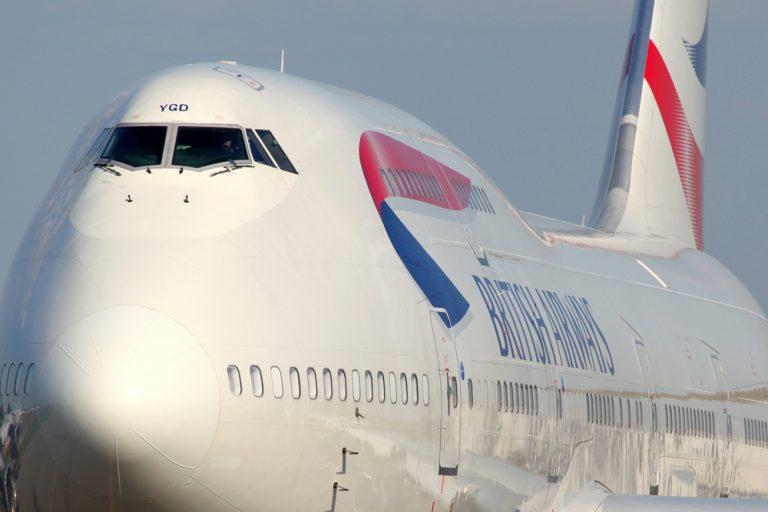
British Airways has been issued a £20m fine by the Information Commissioner’s Office (ICO).
The fine has been reduced from £183m as investigators took into account the airline’s financial difficulties amid the pandemic. Despite the reduction, it is still the largest fine issued by the ICO.
The fine is after the 2018 incident where over 400,000 customers’ personal details were compromised by hackers.
Elizabeth Denham, the information commissioner, said: “People entrusted their personal details to BA and BA failed to take adequate measures to keep those details secure.
“Their failure to act was unacceptable and affected hundreds of thousands of people, which may have caused some anxiety and distress as a result. That’s why we have issued BA with a £20 million fine – our biggest to date.
“When organisations take poor decisions around people’s personal data, that can have a real impact on people’s lives. The law now gives us the tools to encourage businesses to make better decisions about data, including investing in up-to-date security,” Denham added.
A spokesman from British Airways said: “We alerted customers as soon as we became aware of the criminal attack on our systems in 2018 and are sorry we fell short of our customers’ expectations.
“We are pleased the ICO recognises that we have made considerable improvements to the security of our systems since the attack and that we fully cooperated with its investigation.”
Shares in British Airways owner IAG (LON: IAG) are steady on Friday, trading at 96,02 (1610GMT).
Pret A Manger announces plans to axe 400 jobs
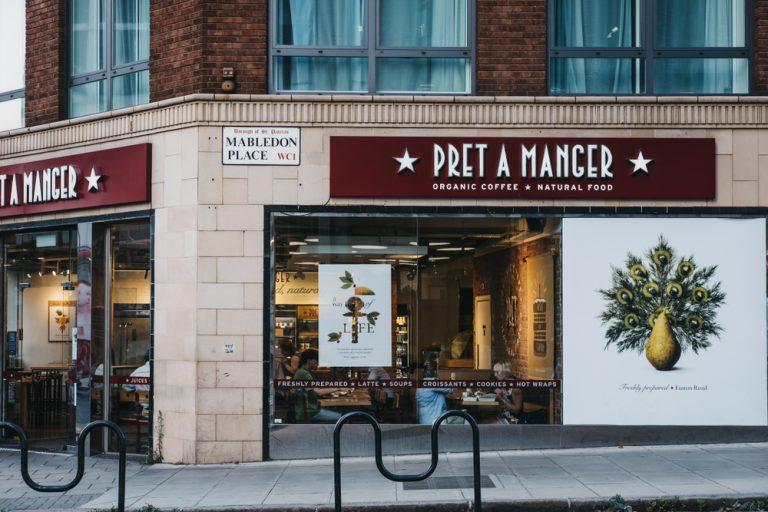
Pret a Manger has revealed plans to axe 400 jobs and close 6 London stores after a slump in sales.
The sandwich chain has struggled since people have switched to homeworking and city centres have seen a reduction in footfall.
Sales at Pret A Manger have fallen to their lowest in a decade due to the pandemic. The group has not specified which London branches will close but they will add to the 30 shop closures announced in August.
Clare Clough, who is the UK managing director of the chain, said: “It’s absolutely right that we take steps to stop the spread of the virus and tackle the new wave of infections. Sadly, the result of the rise in infections and the necessary shift in public health guidance mean that our recovery has slowed.
“We’ve said all along that it’s up to Pret to decide our own future and that we must adapt to the new situation we find ourselves in. That’s why we have to make these further changes as we continue to transform our business model and prepare for the six months ahead.”
The 30 closures announced in August led to the loss of 2,900 jobs.
Pret A Manger has launched a new coffee subscription service offering up to five drinks a day for £20 a month.
Pano Christou, the chief executive at Pret, said: “There’s no doubt that workers will come into the office less often than beforehand. Pret needs to adapt itself to the changes of customer patterns and that’s where we’ve been very focused.”
Bank of England seeks to incorporate climate risk into bond purchases
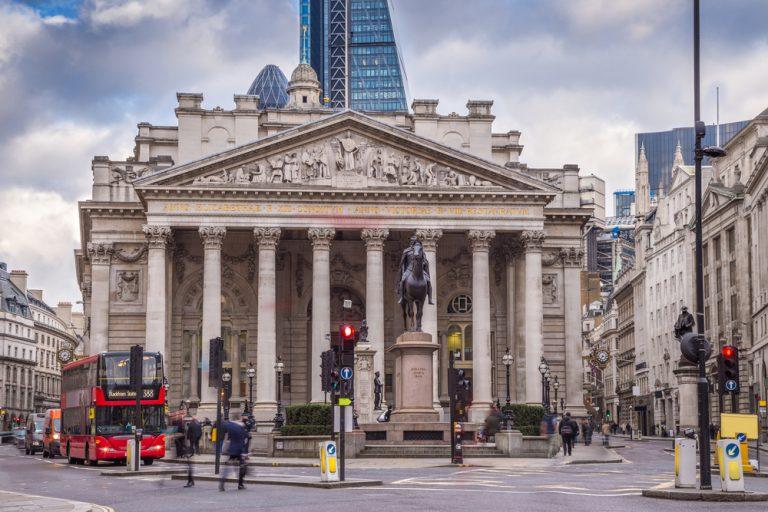
On Friday, the Executive Director for Markets at the Bank of England, Andrew Hauser, announced the central bank’s intention to seek Treasury backing for incorporating climate risk into its asset purchasing methodology over the coming year.
In a speech to the Investment Association, Mr Hauser said:
“2% of the Bank’s Asset Purchase Facility consists of sterling corporate bonds, acquired as part of the MPC’s quantitative easing programme. As we stated in our TCFD disclosure, the framework for the MPC’s asset purchases is determined by the Committee’s remit given to it by the Chancellor. But, subject to the Government indicating a willingness to update this remit, we will over the coming year be considering how to incorporate climate factors into decisions on the mix of financial assets, whilst still achieving our policy aims.”
This move follows a similar approach taken by ECB President, Christine Lagarde, just two days earlier, and the Chancellor is now being urged by climate campaigners to align the bank’s Quantitative Easing programme with the government’s own climate commitments, alongside the next budget.
Having been slow off the mark, today’s move represents the first statement of intent since Andrew Bailey pledged to make the decarbonisation of corporate bond purchases ‘a priority’ back in March. Since then, in April, fossil fuel-producing companies featured in the updated list of eligible bonds for further rounds of corporate QE.
In June, the premier Bank of England climate-related financial disclosure showed that if the projected emissions performance of the Bank’s corporate bond portfolio was representative of the emissions performance of corporates globally, the world would experience 3.5 degrees celcius of heating by 2100.
The bad year suffered by fossil fuel giants looks set to get even tougher, between the BoE’s new strategy proposal, and pressure from campaigners for the bank to stop including BP and Shell in its bond-buying programme.
Speaking on the update, Executive Director of Positive Money, Fran Boait, said:
“It’s positive to hear the Bank of England is finally taking forward proposals to ensure its asset purchases aren’t fuelling the climate crisis, though progress seems worryingly slow. The Bank says it will consider incorporating climate over the coming year, more than six months since Andrew Bailey told MPs he would make it a priority in March.”
“Action needs to happen more urgently, especially with the prospect of more corporate quantitative easing as the Bank of England responds to the worsening economic outlook. The Bank’s own disclosure suggests its corporate bond purchases are currently fuelling 3.5C global heating, more than double the 1.5C limit the government is committed to pursuing through the Paris Agreement.”
“The Bank of England and the Treasury should work to ensure the central bank’s remit is updated to allow it to support the government’s net zero strategy by the next Budget.”
Lockdown will see more distressed M&A deals in hospitality sector

With the prime minister leaving most of the country in Tiers about the prospect of further lockdown restrictions, sectors of the economy, such as hospitality, will be asking what they can expect in the coming months, and whether the situation will be even worse than the first time around.
Speaking on the impact another lockdown would likely have on hospitality, Mark Lynch, Partner at consumer industries specialist, Oghma Partners, said: “The lockdown restrictions that are currently being imposed by the Government are likely to re-emphasise the earlier trends that we saw around Spring time which showed positive sales growth for direct to consumer and supermarket companies.”
“Indeed we have already seen a significant shift in consumer behaviour which has boosted growth for those companies in Q2 and to a lesser extent in Q3 but which now look to boost growth again in Q4. However on the other hand this does mean we are likely to see more long term problems for Food to Go and food service providers that are unable to service clients as per normal – the sad fact is that the longer the restrictions are imposed the more end user businesses will go bust.”
“This includes pubs, restaurants and the more food service manufacturing capacity and, to a lesser extent, Food to Go capacity we will see taken out of the market. These may be seminal changes that we are seeing.’’
It will be interesting to see to what extent these trends come to fruition, given that support for lockdown restrictions – while still favoured by most – is slowly waning, and whether more local representatives will outright refuse to impose the government’s new measures on their constituents.
For those who do abide by the government’s rules, and businesses in struggling sectors such as hospitality, the top Tier of restrictions may be even less hospitable than the first lockdown. Indeed, not only is government support for businesses far less generous than it was earlier in the year, but support for staff, and what might considered ‘viable jobs’, could leave many in difficult situations should stringent restrictions remain in place for more than a short time.
Another interesting trend to watch will be activity in Mergers and Acquisitions, with Lynch saying that: “Oghma Partners’ latest UK Food and Beverage Sector M&A report highlighted that in the months May – August of this year, there was a 59.5% decline in overall M&A deal volume but the number of distressed deals increased to 27% of the total within the sector.”
“Looking through to the rest of the year we expect this trend to continue. 2021 could see a mixed picture however, with distressed deals a continued feature of activity and in addition we may see businesses that have come to market in the final third of 2020 from owners hoping to avoid any increase in capital gains tax help improve activity levels and reverse the negative deal volume trends of the last three quarters of 2020. Overall our expectation remains that it won’t be until Q2 2021 that we will see year on year increases in M&A activity.’’
Serco Group upgrades profit guidance, shares rise

Serco Group shares (LON: SRP) soared by 18% after strong Q3 trading across all regions worldwide.
The international provider of services to governments provided an unscheduled trading update, which shared an upgrade of guidance for 2020.
The group is currently running much of the UK government’s coronavirus test-and-trace and virus testing services.
Serco Group expects full-year revenue of around £3.9bn and an underlying trading profit of £160m-£165m.
“All of our regions worldwide are performing better than we expected and have increased their forecasts for 2020. In both Group and in the divisions, effective cost control and the ability of our systems to respond efficiently to increased demand has helped increase margins,” said the FTSE 250-listed group in its update.
In the UK, Serco Group has been awarded extensions to contracts to provide test sites and call handlers for NHS Test & Trace, “which is an indication of our customer’s satisfaction with the quality of work we have delivered.”
In Australia, restrictions on movement as a result of the pandemic has meant additional work for both the immigration services and the Citizens Services businesses. In the Middle East, there has been an increase in project-related work on rail and facilities management contracts for the group.
On the company’s outlook for 2021, the group said: “as we noted in our half year results, and as this unscheduled trading update underlines, the current crisis makes forecasting extremely difficult. We expect the uncertainties of 2020 will persist into 2021 as the world grapples with recurring outbreaks of infection.”
Serco Group shares (LON: SRP) are currently trading 18.16% at 139,90 (1211GMT).