
Barnier ready to compromise on fishing in return for state subsidies concessions
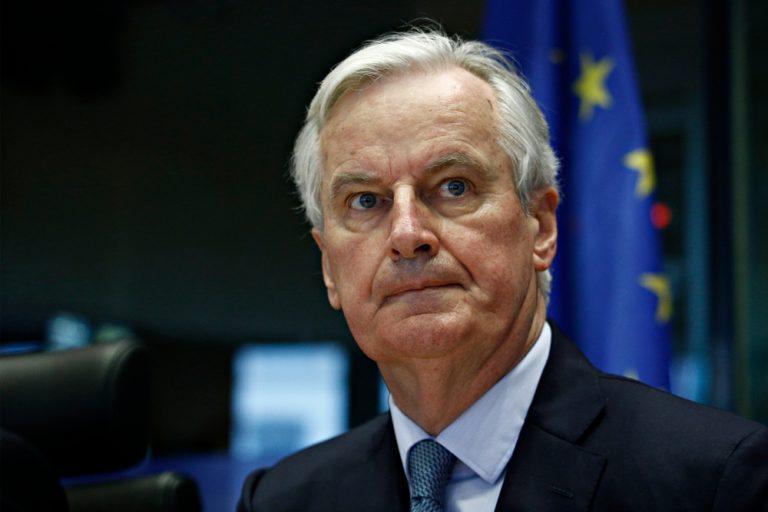
Having stated that negotiations might surpass Boris Johnson’s October 15 deadline, EU Chief Negotiator, Michel Barnier, has said he is ready to “move away” from the demands that the bloc retain the same access to Britain’s coastal waters and fishing rights, in exchange for concessions in the UK’s state subsidies policies.
One senior source to the Express: “It’s one of the realities of Brexit, let’s say an unpleasant change for us, but we understand how the British fishermen on the other side of the Channel think.”
European Council President, Charles Michel, added that: “We need significant steps to be made by our British friends in the coming days, not only on fisheries but also on the level playing field and governance.”
“Nothing is agreed until everything is agreed, the coming days are crucial – this is the moment of truth.”
In return for offering wiggle room on British fishing rights, Barnier has said he requires the UK’s Brexit envoy, Lord Frost, to offer reassurances about the future of the UK’s state subsidies policy.
Charles Michel echoed this sentiment, hinting at compromise by saying a fair fisheries deal is “important”, but that the level playing field is “key” for EU member states.
Nasdaq at five-week high with Fed stimulus likely to extend beyond airlines

American indices led global equities optimism at the end of the week, with the Nasdaq, Dow Jones and S&P 500 all hitting five-week highs, as Speaker Nancy Pelosi tried to pressure Donald Trump into committing to a more comprehensive stimulus package.
Pelosi’s spokesperson, Drew Hammill, stated that Mnuchin had “made clear the President’s interest in reaching” an agreement on a comprehensive stimulus for the US economy, following Pelosi’s declaration on Thursday afternoon, that she would not support a standalone proposal offering aid only to airlines.
https://platform.twitter.com/widgets.js There is still no guarantee that a comprehensive stimulus package will be delivered, with Trump and White House spokespeople seeming offering contradictory suggestions in favour and opposing comprehensive support. However, for today, the mere insinuation of generous stimulus on the horizon was enough to keep the ball rolling on Friday. Speaking on the likelihood of generous support, LPL Financial Equity Strategist, Jeffrey Buchbinder, told Yahoo Finance: “A compromise on a big stimulus package in Washington could potentially deliver another October surprise, but the odds are against it as Election Day approaches,” “The optics of getting nothing done aren’t great on either side, and there are a lot of close Senate races right now, suggesting there still may be a glimmer of hope for a deal by November 3.” And this glimmer was enough to see US indexes put the other segments of global equities to shame on Friday. The Dow Jones and S&P 500 were up to their highest points since the start of September, up 0.83% and 0.96%, to 28,662 and 3,480 points respectively. Leading the charge, though, was the Nasdaq composite, up 1.24% to 11,562 points. With the Nasdaq being a big tech-laden index, a 1.92% rally from Microsoft, 1.10% gain from Apple, and a 2.72% rally by Amazon, all served its cause well. Speaking on next week’s outlook, Spreadex Financial Analyst, Connor Campbell, said: “Looking ahead to next week, and investors will likely remain preoccupied with the state of play regarding US stimulus and, somewhat related, any election headlines. Complicating matters is the October 15 Brexit ‘deadline’, a potential source of anxiety for the pound and FTSE.”The Speaker pointed out that, unfortunately, the White House Communications Director contradicted that assertion during their call. The Speaker trusts that the Secretary speaks for the President. (2/2)
— Drew Hammill (@Drew_Hammill) October 8, 2020
Peacocks owner on brink of collapse, risking 24,000 jobs
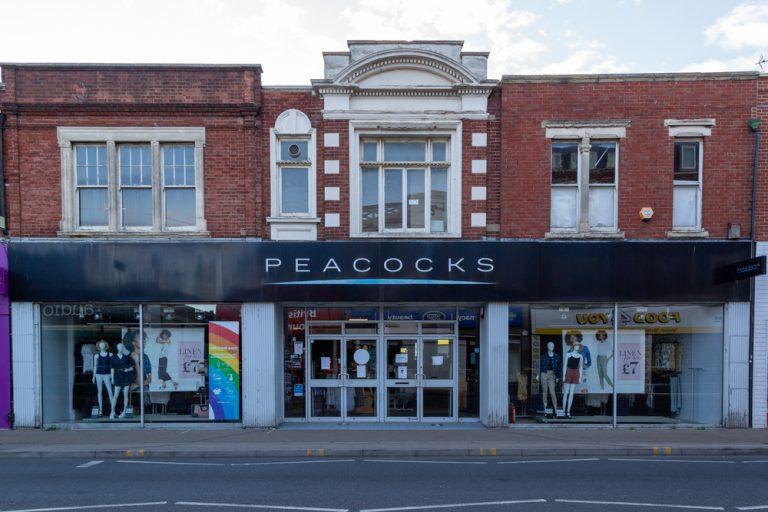
Peacocks owner, Edinburgh Woollen Mill, is on the brink of collapse.
The group has appointed administrators in an attempt to rescue the struggling business, which has been hit by the “brutal” trading conditions.
Over 24,000 jobs are at risk if the owner of the Peacocks brand goes under.
Edinburgh Woollen Mill (EWM) has 1,100 stores for brands including Peacocks, Bonmarché and Austin Reed.
“Like every retailer, we have found the past seven months extremely difficult,” said chief executive, Steve Simpson.
“This situation has grown worse in recent weeks as we have had to deal with a series of false rumours about our payments and trading which have impacted our credit insurance.
“Traditionally, the group has always traded with strong cash reserves and a conservative balance sheet but these stories, the reduction in credit insurance – against the backdrop of the lockdown – and now this second wave of Covid-19 and all the local lockdowns, have made normal trading impossible.
“As directors, we have a duty to the business, our staff, our customers and our creditors to find the very best solution in this brutal environment.”
“So we have applied to court today for a short breathing space to assess our options before moving to appoint administrators,” Simpson added.
Edinburgh Woollen Mill is owned by billionaire businessman Philip Day, who has a £1.14bn fortune.
The group has hired FRP to review the business. A spokesperson from FRP said: “Our team is working with the directors of a number of the Edinburgh Woollen Mill Group subsidiaries to explore all options for the future of its retail brands, including Edinburgh Woollen Mill, Jaeger, Ponden Mill and Peacocks.”
With hospitality facing another lockdown, how can the industry survive?

The hospitality sector is again in dire straits, with the slow creep of targeted lockdowns being implemented across the UK.
The most notable of these shutdowns has been in the central belt of Scotland, where Nicola Sturgeon has kiboshed evening trading for hospitality venues for more than two weeks.
Scotland’s first minister said that new measures were being implemented to reduce the R rate in Scotland, with new cases rising throughout the last fortnight. They include all bars and restaurants being closed to visitors for the next sixteen days, while cafes will only be allowed to open until 6pm, and not sell alcohol.
In return, the Scottish government announced a £40 million support package to get hospitality businesses through the tough fortnight ahead, and also said that businesses would be allowed to continue takeaway services.
Further, with regional lockdowns firmly in place and likely only to escalate in Northern England, it would appear the hospitality industry’s plight is set to worsen. As pressure mounts on the prime minister to enforce new lockdown measures to contain the spread of the virus, it begs the question of how many bar and restaurant staff will be considered viable work? And how many will be informal workers, and thus not entitled to any support?
For now, the government’s ‘traffic light’ system prevails as a yardstick for regional lockdowns. However, despite strong resistance, it would be prudent for hospitality businesses to ready themselves for lockdown part two, and that means making the most of their takeaway offering.
This will mean not just devising a takeaway-suitable set of products, but marketing and packaging these products in such a way that they don’t appear like last-minute, desperate attempts to hawk off wares. Further, it will involve implementing the necessary infrastructure to put products in front of consumers’ eyes – and this means tech.
Enlisting with a takeaway and delivery service, offering discounts and deals, these are all vital and tried-and-tested ways of drumming up support in what could be a frigid lockdown trading environment.
Commenting on the need for pubs and restaurants to implement tech solutions in order to remain a viable option for customers, the CEO of online food ordering service NOMM, Will Broome, states:
“The Coronavirus pandemic has undoubtedly left a lasting impact on every sector of British business, and the hospitality industry stands to be one of the hardest hit sectors, with the possible closure of bars, pubs and restaurants once again.”
“As Covid cases surge, it is of paramount importance that these hospitality businesses are able to continue to trade, whilst still maintaining hygiene and safety standards and offering a quality customer experience. Mobile technology represents a key solution to a number of the challenges posed by increased safety and hygiene measures, by enabling features such as in-app payments and remote ordering which can dramatically cut down on person-to-person contact, overcrowding and potentially dangerous interactions in the venue. “Ultimately, tech-based solutions such as NOMM will help bars, pubs and other hospitality venues to dramatically improve the convenience, speed and safety of their customer experience, leading to increased popularity, success and growth beyond the Coronavirus crisis.”
Stagecoach shares fall as pandemic hits demand
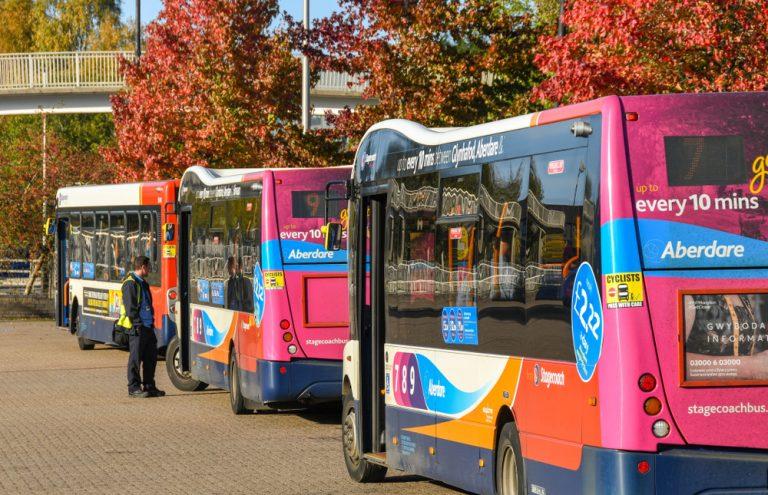
Stagecoach shares (LON: SGC) fell almost 4% on Friday morning.
The bus and rail company said in a trading update that the pandemic had impacted demand.
Stagecoach said that passenger demand had been steadily recovering since April, however, the continuing uncertainty around the pandemic means it is difficult to predict financial performance.
The group said in a statement: “The recent government announcements to impose further restrictions may discourage public transport use in the short-term. We are grateful for the measures put in place by the respective governments in England, Scotland and Wales, and by our local authority partners, to protect the continuity of local bus services throughout this period.
“In August, the Department for Transport confirmed that payments for the provision of these essential services by regional bus operators in England would continue until no longer required. These COVID-19 Bus Services Support Grant Restart payments are continuing, with an eight week notice period. While this and similar arrangements are in place, we expect to continue to generate positive EBITDA and avoid significant operating losses.”
Since full-year results in July, Stagecoach has seen further positive cash flow and is in a financially strong position.
Chief Executive, Martin Griffiths, said:
“The safety and well-being of customers and our people remains our absolute priority as we continue to navigate the uncertainty from COVID-19. While the situation remains fluid, we have made progress in the restoration of our networks to close to pre-COVID levels and in growing passenger volumes safely within the current restricted environment.
“We have a strong business, with good liquidity, devolved operating companies closely focused on our customers and local communities, good financial discipline and a supportive relationship with government and our local authority partners. As well as continuing to provide vital connections to jobs and public services during the current pandemic, our sustainable public transport services are central to long-term plans for a greener, smarter, safer, healthier and fairer country.”
Stagecoach’s next update will be interim results for the half-year ended 31 October 2020 on 9 December 2020.
Stagecoach shares (LON: SGC) are trading -2.43% at 40,92 (1036GMT).
Gfinity shares surge 20% on progress review

Gfinity shares (LON: GFIN) soared on Friday’s opening bell as the group embarked on a strategic review that may include a sale of the business.
The company released a progress update where Gfinity said it was well-positioned considerable corporate and strategic development.
“The board of Gfinity remains highly confident in the prospects and position of the company, especially as market dynamics are rapidly, and permanently, changing in favour of the group’s offering,” said the media group in a statement.
“Given this, while the board believes that the company can continue on its current pathway towards profitability it believes, at this point in time, that it is important to all its stakeholders to ensure that it has explored all strategic options to capitalise on the potential market opportunity and to deliver shareholder value, including options for making acquisitions, forming partnerships, separating the activities of the Group or a potential sale of the company,” added Gfinity.
Gfinity shares (LON: GFIN) are currently trading 20.90% higher at 4,05 (1014GMT).
FTSE rises despite economy’s slowed growth
The FTSE 100 rose 0.5% on Friday’s opening, despite the new figures showing GDP to rise at a slower rate than expected.
Instead, investors focused on the idea of more stimulus in the US after Donald Trump initially cancelled talks on Tuesday.
The blue-chip index rose to 6,009 points, whilst the FTSE 250 increased by 0.3%.
The economy grew by 2.1% over August, lower than the 4% predicted by analysts. Jonathan Athow, the ONS deputy national statistician for economic statistics, said: “The economy continued to recover in August but by less than in recent months.
“There was strong growth in restaurants and accommodation due to the easing of lockdown rules, the Eat Out to Help Out scheme and people choosing summer ‘staycations’. However, many other parts of the service sector recorded muted growth.”
Following the new GDP figures, Rishi Sunak is expected to announce a new phase of the job support programme.
Britain’s GDP through August was 9.2% lower than it was during pre-pandemic levels in March.
Commenting on this morning’s market, Connor Campbell from Spreadex, said:
“Taking their lead from the Dow Jones last night, the European indices rose at the start of Thursday – but with the FTSE looking in from the outside.
“By the end of Wednesday night, the Dow had reclaimed all of Tuesday’s losses and then some, surging 530 points to cross 28,300 for the first time in a month. This as investors banked on Trump signing off on some kind of stimulus if he wins in November, with Joe Biden likely to do the same if he comes out of the election victorious.”
Marston’s shares surge as CMA clears Carlsberg merger

Marston’s shares (LON: MARS) surged 5.92% on Friday as the group the UK Competition and Markets Authority (CMA) gave the go-ahead for a £780m merger with Carlsberg.
The transaction will be completed by the end of October 2020.
“While the establishment of the joint venture means that the 2 businesses are likely to distribute each other’s products more frequently, potentially leaving less room to take on other brands, the CMA found that brewers will continue to have sufficient alternative wholesalers to choose from after the merger,” it was said in a statement.
The combined groups will value Martson’s at £580m and Carlsberg at £200m.
Analysts at Peel Hunt commented: “The deal should now complete at the end of this month, resulting in an immediate cash windfall of £239mln (close to the company’s market capitalisation) without any detrimental impact on the company’s cash flow.”
Marston’s shares (LON: MARS) are trading +3.80% at 43,10 (0846GMT).
Economy’s growth slows to just 2.1%
The UK economy’s growth slowed down over August to just 2.1%.
City forecasts were expecting a 4.4% growth despite the government’s efforts through the Eat Out to Help Out scheme.
According to the Office for National Statistics, the new figure means that Britain’s Gross Domestic Product through August was 9.2% lower than it was during pre-pandemic levels in March.
Jonathan Athow, the ONS deputy national statistician for economic statistics, said: “The economy continued to recover in August but by less than in recent months.
“There was strong growth in restaurants and accommodation due to the easing of lockdown rules, the Eat Out to Help Out scheme and people choosing summer ‘staycations’. However, many other parts of the service sector recorded muted growth.”
UK chancellor Rishi Sunak commented on the latest data, saying: “Today’s figures show our economy has grown for 4 consecutive months, but I know that many people are worried about the coming winter months.
“Throughout this crisis, my single-focus has been jobs – protecting as many jobs as possible, and providing support for people to find other opportunities where this isn’t possible. This goal remains unchanged.
“That’s why we’re investing billions to help people back to work and provide fresh opportunities to those that have sadly lost their jobs so that nobody is left without hope,” he added.
Other key economic sectors also grew at slower rates. Services grew by 2.4%, production grew by just 0.3%, and manufacturing and construction grew by 0.7% and 3%.
The slowing of the economy’s growth comes as coronavirus cases are increasing.
Saxo Bank says US Presidential Election is ‘biggest political risk’ in decades
Online trading and investment specialist, Saxo Bank, published its fourth quarter outlook for equities, FX, currencies, commodities and bonds, in which it assessed forward-going risks, such as the impact of the upcoming US presidential election.
Speaking on the unsettling effect the 2020 election might have on markets, Saxo Bank Chief Economist, Steen Jakobsen, said: “We fear that the U.S. election is the biggest political risk we have seen in several decades, as the end of the economic cycle meets inequality, social unrest and a market feeding frenzy driven by the policy response to this deep economic crisis: zero interest rates, infinite government and central bank support.”
Saxo Bank have identified probabilities for three different paths between now and Inauguration Day, with a contested election and a Biden clean sweep both coming in at 40% apiece, while a Trump victory lagged behind at 20%.
The view of the Bank’s Chief Economist is that both candidates are the ‘diametric opposite’ of what the US needs, with both aiming for high spending, both looking to rely on fed support, and both, according the the Bank, not seeking ‘deep reform’.Which election result would be the best for equities?
According to Saxo Bank, equities have adjusted to Trump’s erratic character, and have done ‘quite well’ despite ongoing US-China tensions causing friction for US companies’ supply chains. They add that large corporations have benefitted from lower taxes and less government oversight.
Further, they believe a Biden statutory tax rate hike from 21% to 28% on corporate income, an increase in Global Intangibles Low-Tax Income tax from 10.5% to 21%, and a hike in corporation tax, from 10% to 15%, could create significant headwinds for high-cap equities. The company’s Head of Equity Strategy, Peter Garney, commented on the effects of these tax increases: “Combined, it is estimated that these tax changes would create a 9% drag on S&P 500 earnings – and that is before second-order effects, including change in investor sentiment, potentially hit valuations. These would hit communication services, healthcare and information technology the hardest, as those companies have the lowest tax rates in general and are big users of intangible assets. The open question is whether Biden dares implement the tax changes during a weak economic backdrop.” On the other hand, blue chip investment management firm, BlackRock (NYSE:BLK), said that investors should reject over-simplistic ‘tax-centric’ election logic, which states that a Democrat clean sweep would be seen as market negative. Instead, in such an instance, BlackRock believes that investors would have to deal with higher taxes and tighter regulation, but that this would be balanced out by predictable foreign policy and greater fiscal support. The main implications, they say, will be in fixed income and leadership in equity markets, with long-term rates being pushed high and leading to a ‘modest steepening’ of the Treasury yield curve. Also, while additional tax and regulations might pressure high cap companies, domestically-oriented small cap firms might benefit the most. Blackrock finishes by saying that:“This scenario would add to reasons to prepare for a higher inflation regime and reinforces our strategic underweight of developed market nominal government bonds. The tectonic shift to sustainable investing will likely persist regardless of the result, but could be supercharged under a Democratic sweep scenario.”
Further, we ought to note that tax rises don’t necessarily mean companies pay more tax. Indeed, even when Trump lowered the corporation tax rate from 16% to 10%, the average tax actually paid by S&P 500 companies in the US has consistently remained between 3-4%. Thus, while a company might price in a dip in shares, this shouldn’t be reflected as clearly on the balance sheet, as most of their tax structures are far more sophisticated than the services attempting to collect tax from them. Third, it is historically noted that Democrat presidencies often coincide with economic downturns. And, as such, often preside over strong recoveries in equities, which would offset the negative impact of new taxes on share prices (see below):https://platform.twitter.com/widgets.jsStock market performance under different presidents: pic.twitter.com/5VFVqwq2Oj
— Steve Burns (@SJosephBurns) October 4, 2020