Zopa – what is the Innovative Finance ISA?

With new offerings entering the field of play each year, it can be difficult to know which financial vehicle to choose as the home for your money. Today, loan and investment services company Zopa provided news on their Innovative Finance ISA, which it believes could offer a viable alternative to the traditional stocks and shares ISA. The company says that for individuals willing to take risks in order to make ‘good’ returns, the Innovative Finance ISA is a valuable option. “Unlike the Stocks and Shares ISA, it isn’t linked to the stock market so doesn’t carry the risk of an investment going up or down in line with the equity market, nor does it carry the complicated charges and fees levied by the major investment platforms.” The company’s statement read.

What is it Zopa’s IFISA and what does it offer?

The IFISA enables customers to earn tax-free interest on peer-to-peer investments. Essentially, Zopa will use its clients’ ISA funds to fund personal loans to low-risk UK borrowers, much like any non-ISA Zopa investment. The key difference the company points out is the tax free nature of the IFISA.

In terms of returns, Zopa says that unlike a Stocks and Shares ISA, their offering has target rates of return, with its Core IFISA forecasting 5% growth and its Plus IFISA hoping for 6% growth per annum.

What about the risks?

The company say they are completely transparent with their loan book, and has a 15 year record to back up their risk management acumen.

They also noted that new FCA rules mean that all P2P platforms now ask potential investors a series of questions about their specific investments to determine the appropriateness of the mechanism for each user.

Zopa add that while their ISA is meant for users wanted to avoid the volatility of the stock market, people could potentially invest in an IFISA, a Stocks and Shares ISA and a Cash ISA, and be completely diversified across asset classes.

And where is the Innovative Finance ISA fine print?

The company said you can transfer existing or previous years’ ISAs into an IFISA for free, even if these aren’t held with Zopa. They also add that as soon as you start, you’ll be able to earn the market rate immediately and there are no introductory rates. In terms of transferring out, the company said that you can sell your loans to other investors for a 1% sale fee. A customer can only contribute your annual allowance to one IFISA per tax year, but you can transfer existing ISA balances to multiple Innovative Finance ISA accounts. The company finished by warning users that they should transfer existing ISA balances by using the transfer process, simply withdrawing funds or closing an existing ISA will mean you lose its ‘wrapped up’ status.

Zopa comments on their Innovative Finance ISA

Natasha Wear, Zopa’s P2P CEO, states:

“Combining robust returns with well-managed risk, the Zopa IFISA is a reliable and stable alternative to investing in the stock market.”

“It’s designed for investors who want to diversify their portfolio or for those people who are worried about the volatility and risks involved in investing in equities but are still happy to take some risk with their money for a good return.”

“Zopa’s IFISA offers retail investors a well-diversified portfolio of low risk loans, and a predictable, stable, and attractive return on their investment. We have over 15 years’ experience of lending and risk management helping individuals financially in both little and life changing ways – like fixing homes, tying the knot, or getting a car.”

Bank of England keeps powder dry, GBP/USD spikes

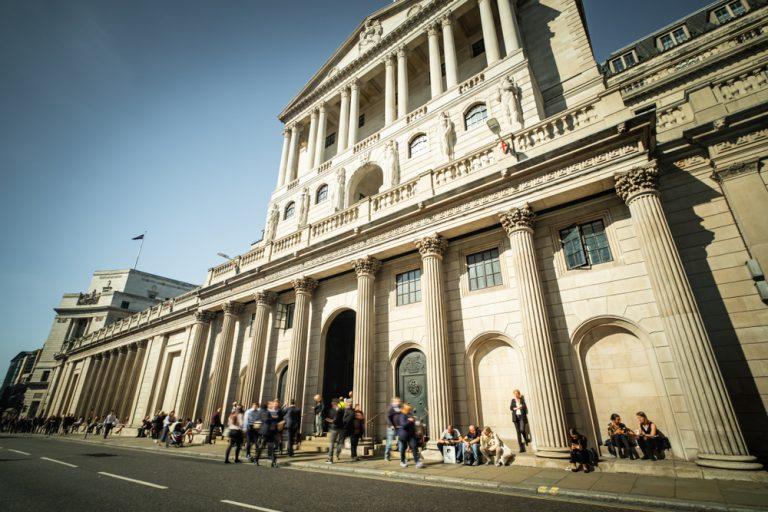
The Bank of England kept rates on hold on Thursday despite pressure to cut rates to provide support for the economy through Brexit. Despite speculation rates could be cut, it was widely expected that the Bank of England would keep rates on hold. GBP/USD spiked nearly 100 pips in the immediate reaction before fading back down to around 1.3050. The FTSE 100 fell in response to the rate decision, dipping beneath 7,400 for the first time in 2020. The Monetary Policy Committee also voted to keep asset purchases steady. In the release accompanying the rate decision, the Bank of England said “UK GDP growth slowed last year, reflecting weaker global growth and elevated Brexit uncertainties. Output is expected to have been flat in 2019 Q4. Growth in regular pay has fallen back to around 3½%, though unit labour costs have continued to grow at rates above those consistent with meeting the inflation target in the medium term.” There had been speculation mounting that the Bank of England would preempt any economic slowdown induced by Brexit with a rate cut but have instead opted to survey the data for a little longer. With rates already at 0.75%, the Bank of England doesn’t have much room for manoeuvre in case of a significant drop in economic activity. “There is no need to do anything to interest rates right now. There is enough dynamic coming out of the real economy to get out of the stasis that we have had over the last three and a half years,” said Dr Kerstin Braun, President of Stenn Group. “With momentum finally coming out of business, the best way for the government to support the turnaround is to go-ahead with large infrastructure projects that have been dangled before the voting public. “We expect the Bank of England to hold rates for a while longer, whilst the UK adapts to post Brexit.”  

Royal Dutch Shell profits dive, blames lower energy prices

Royal Dutch Shell (LON:RDSB) has seen its shares fall to an 18-month flow after the oil giant’s profit fell 32%. Cash flow from operations were also down 21%, but this isn’t thought to have any impact on the dividend. The company blamed lower energy prices as reason for the decline, this is despite Brent oil spending much of 2019 above $60. Royal Dutch Shell Chief Executive Officer Ben van Beurden said: “the strength of Shell’s strategy and portfolio has enabled delivery of competitive cash flow performance in 2019 despite challenging macroeconomic conditions in refining and chemicals, as well as lower oil and gas prices. We generated $47 billion in cash flow from operating activities excluding working capital movements and distributed over $25 billion in dividends and share buybacks to our shareholders. We remain committed to prudent capital discipline supported by world-class project delivery and are looking to further strengthen our balance sheet while we continue with share buybacks. Our intention to complete the $25 billion share buyback programme is unchanged, but the pace remains subject to macro conditions and further debt reduction.” Shares in Royal Dutch Shell (LON:RDSB) were down 2.6% in lunch time trade on Thursday.

Rank Group enjoy strong digital sales and a jump in profits

Gaming company Rank Group (LON:RNK) released interim results for the six months ending 31st December that revealed a bumper increase in underlying operating profits. Underlying operating profit pre IFRS jumped 70% helped by stronger digital revenues, cost savings and the acquisition of Stride. Rank group said the Stride acquisition contributed £1.4m of operating in the period. Like for like sales were also strong with the Grosvenor brand up 21% and Mecca seeing revenue rise by 13%. “Rank Group figures look strong, as does the share price. Although, despite a bumper increase in underlying profit before tax of £52.9m vs 30.5m, they have remained cautious over the post-transition relationship with the EU,” said John Woolfitt, Director of Trading at Atlantic Capital Markets.m “Generally Rank Group are in a very healthy position, and with the share price up in a market that is down today, it certainly looks like investors agree.” “The market is pleased to see steady growth in their digital revenues driving a 70% increase in underlying operating profits. Today’s results pay testament to the confidence in the Rank Group share price over the past 12 months.” “Despite reservations from the board over Brexit, investors are certainly betting Rank Group can continue their strong performance through 2020.”

John O’Reilly, Chief Executive of The Rank Group was also upbeat on the results saying “we are pleased with The Group’s first half performance which demonstrates that the transformation programme is delivering the right results. The revenue growth in our digital business and across our Grosvenor and Enracha venues shows that we are moving in the right direction in key areas of our business. We remain on track and are confident in our ability to deliver operational and financial improvements underscored by a relentless commitment to delivering exciting, entertaining and safe gambling environments and experiences for our customers.

The successful integration of Stride into our business will ensure that we benefit from strong synergies, proprietary technology and a first-class digital team, all of which will position us well for the second half of the year. These are a good set of numbers and are a testament to our committed and talented colleagues across the Group who have worked hard to deliver them.”

Shares in Rank Group (LON:RNK) were up 1.4% in Thursday morning trade.

Dividend cut would not be problem for Saga

Saga (LON: SAGA) is considering whether to reduce its dividend, but this is not necessarily a bad thing. The debt burden is significant, and this does not help the share price.
Saga talks in its recent trading statement about capital allocation. This is financial speak for considering whether to maintain the dividend.
The insurance, travel and cruising company is keen to reduce the debt on its balance sheet and cutting the dividend will certainly help. The current yield is 8.9%.
Dividend
The 2018-19 dividend was 4p a share and it has been assumed that this would be maintained for 2019-20 and ...

Coronavirus: reactions

News emerged on Wednesday that British Airways (LON:IAG) has suspended all of its direct flights to and from China. American Airlines (NASDAQ:AAL) has also cancelled routes. Indeed, fears over the deadly coronavirus are rising as cases have been reported outside of China. The virus outbreak has killed 132 people in China, with almost 6,000 people infected. We took a look at some reactions to the coronavirus on Twitter: https://platform.twitter.com/widgets.js https://platform.twitter.com/widgets.js https://platform.twitter.com/widgets.js The World Health Organisation tweeted a live video from Geneva on the outbreak of the virus: https://platform.twitter.com/widgets.js The World Health Organisation also answered some questions on the coronavirus: https://platform.twitter.com/widgets.js Meanwhile, the Department of Health and Social Care provided an update on the situation in the UK: https://platform.twitter.com/widgets.js UK Investor Magazine will provide updates as more news emerges.

Boeing posts annual loss following 737 MAX crash

1

Boeing (LON:BOE) posted an annual loss on Wednesday as its results continue to be significantly hit by the grounding of its 737 MAX planes.

Shares in the company were trading over 3% higher on Wednesday afternoon. Boeing said that net loss for 2019 amounted to $636 million, compared to a profit of $10.5 billion recorded in 2018. This is the company’s first annual loss in over two decades. Meanwhile, the company recorded a full year revenue of $76.6 billion, down 24% from the $101.1 billion figure recorded the year prior. The company’s reputation has been plagued by two deadly crashes of its 737 MAX planes, occurring only five months apart. This lead to the grounding of the 737 MAX model, as fears over the safety of the plane increased. “We recognise we have a lot of work to do,” David Calhoun, the company’s President and Chief Executive Officer, said in a statement. “We are focused on returning the 737 MAX to service safely and restoring the long-standing trust that the Boeing brand represents with the flying public,” David Calhoun said. “We are committed to transparency and excellence in everything we do. Safety will underwrite every decision, every action and every step we take as we move forward. Fortunately, the strength of our overall Boeing portfolio of businesses provides the financial liquidity to follow a thorough and disciplined recovery process.” Boeing is not alone in feeling the effects of the grounding of its planes. American Airlines (NASDAQ:AAL) revealed a $350 million blow last year from the Boeing 737 MAX grounding. Shares in Boeing Co (LON:BOE) were up on Wednesday, trading at +2.40% as of 16:12 GMT.

Apple continue to break records, as festive trading sales surge

2

Apple (NASDAQ:AAPL) have seen a strong period of festive trading, as the firm has reported a surge in demand for its iPhone 11 mobile device and other accessory products.

The technology giant told the market that it had seen record sales and profits over the recently ended Christmas period.

Tim Cook CEO did have his say on the current crisis with the vast spread of the Coronavirus, which has been hitting the globe with a shock.

Having sourced many of their products and materials from China, this has led to worries and concerns about the risk of the Coronavirus spreading outside of China.

Apple boss Tim Cook also said it was “closely monitoring” the coronavirus outbreak, which has made forecasting for the next quarter difficult.

The company has limited travel and reduced store hours in China, while its suppliers’ factories remain closed longer than expected. “The situation is emerging and we’re still gathering data,” Mr Cook said.

Looking at their trading however, the picture is nothing but impressive to say the least.

At a time where competitors have really ramped the pressure on Apple. With Samsung releasing a new set off in ear wireless headphones and a new Fold device, which seems to have changed the nature of how consumers understand technology, Apple have not been phased.

The firm said sales in the last three months of 2019 rose 8% year-on-year to $91.8 billion, while net profits increased 11% to reach $22.2 billion.

The tech titan praised the strong demand for its iPhone 11 device, whilst sustained strong demand for the watch tied in with a recent release of AirPods drove consumer spending.

In the quarterly update, Apple said that iPhone sales had climbed 8% with sales of wearables such as watches and AirPods surging 44%.

The demand was simply so high that the iPhone retailer said that they experienced shortages of stock in areas, and this is something which certainly sends a statement out to the market.

Overall, Apple said it made about $79 billion from products and $12.7 billion from services, which includes Apple Pay, new streaming service Apple TV+, game service Apple Arcade and the App store.

Shares in Apple trade at $317 (+2.83%). 29/1/20 12:38BST.

Travis Perkins praise strong Wickes performance ahead of propsed demerger

0
Travis Perkins PLC (LON:TPK) have said that their Wickes home improvement firm have seen a strong fourth quarter performance. In the quarterly period, which ended on December 31 Wickes saw sales rise by 3.4% on a year on year basis, whilst sales also jumped 4.5% on a like for like basis. For the whole of 2019, Wickes had 7.7% sales growth, or 8.7% like-for-like, Travis Perkins said. Notably, the Core unit, meaning the DIY stores, had a 5.7% sales rise in 2019, or 6.5% like-for-like. The Do-It-For-Me division, which gives customers a tailored service, had a 13% sales climb in 2019. On a like-for-like basis, DIFM sales were 14% higher in 2019.

Travis Perkins delighted with Wickes

David Wood, Wickes CEO, commented: “I am delighted to report a strong sales performance for Wickes in Q4 and for the full year, setting us up well for the intended demerger from Travis Perkins, which remains on track for Q2 2020. “I would like to thank all my colleagues for their hard work, dedication and focus on delivering for our customers, which has driven excellent performance across the year. We are looking forward to our future as a standalone business, building towards our vision of a Wickes project in every home, allowing us to create long-term value for all our stakeholders. “We have great confidence in our strategy, which is centred around our strong brand, a distinctive and hard to replicate customer proposition, a uniquely balanced business and a low cost and efficient operating model. We are pleased with the growth Wickes is delivering and confident in our ability to continue to grow. We look forward to providing more detail on this at today’s Capital Markets Day.”

Travis Perkins demerger deal with Wickes

In December, Travis Perkins updated the market by saying that the proposed demerger with Wickes was ‘progressing well’. The demerger was announced in July 2019, and a few weeks back the Company said it is ‘progressing well’, and would be completed during the second quarter of 2020. The decision to emerge from Wickes came as a result of Travis Perkins wanting to focus on trade customers to simplify its business. Certainly, Wickes is a brand which holds reputation and status among the British high street mainstays. The decision to demerge with Wickes, could be costly for Travis Perkins looking at the strong trading update today. Shares in Travis Perkins trade at 1,600p (+1.91%). 29/1/20 12:19BST.

Brewin Dolphin see 7.8% quarterly rise in funds, as Chief Executive announces retirement

Brewin Dolphin (LON:BRW) have told the market about two updates to operations on Wednesday.

The first update comes in the form of a trading statement, and has reported progress for the wealth and asset manager.

Brewin Dolphin said that they have seen their total funds rise 7.8% over its first quarter period, which ended in September.

Total funds rose to £48.5 billion, and without new acquisitions funds rose 1.8%. Notably, discretionary funds rose 4.2% in the quarterly period to £41.8 billion.

The wealth and asset manager said that total quarterly income was 15% higher year-on-year at £89.6 million.

Discretionary income also rose 15% from a year before to £76.5 million due to growth in funds and higher commission income, while financial planning income jumped 37% to £8.5 million, helped by acquisitions.

The firm said that total quarterly income amounted to £89.6m seeing an increase of 15.3%, including £4.0m as a result of recent acquisitions.

Another statistic to take was that financial planning income grew 37.1% to £8.5m assisted by recent acquisitions and growth in 1762 from Brewin Dolphin.

David Nicol, Chief Executive said:

“I am pleased with our performance in the quarter, particularly our positive organic net inflows in challenging market conditions. We have diversified our business mix through building more client choice and client-centric propositions, which is supporting our growth. We remain on-track with the implementation of both our new client management system and core custody and settlement system. The integration of our acquisition in Ireland is progressing well and we remain confident about the long-term growth opportunities. Market sentiment appears to be improving and we look forward to capitalising on this as the year progresses.”

Brewin Dolphin announce Chief Executive retirement

The second update on Wednesday told shareholders that Chief Executive, David Nicol would be retiring later this year.

Nicol has been head of Brewin Dolphin since 2012. He will step down on June 14, but will stay on until July 29 to help with the transition.

The firm have said that Robert Beer will step in his place, as Beer currently serves as head of the company’s intermediaries, charity, professional services, and digital businesses.

Beer originally joined Brewin Dolphin in 2008, having previously worked at National Australia Bank Ltd, Gerrards, and Barclays PLC.

Simon Miller, Chairman, said: “On behalf of the Board, I would like to thank David for his outstanding contribution to Brewin Dolphin’s success. He has demonstrated great professionalism, re-focused the Group’s strategy, improved the quality of the organisation and built a strong team. Under his leadership, Brewin Dolphin has seen funds under management almost double from £26.0bn to £48.5bn. Our client proposition has deepened, we have invested in our office network, and both client satisfaction and employee engagement are at record levels.

“At the same time, we are delighted to announce Robin’s appointment as David’s successor. Robin understands both the broad landscape in which we operate and has a deep knowledge of our business and culture. Since joining the Executive Committee in 2016, he has been a key member of the executive team and is the ideal person to continue the execution of our successful strategy, while sustaining and nurturing our well-established client-focused approach.”

David Nicol said: “It has been a great privilege to lead Brewin Dolphin. After seven years as Chief Executive, and with the business well positioned for the future, I feel that now is the time for me to hand over to my successor. I am very pleased with the selection of Robin and I have every confidence in his future leadership.”

Robin Beer said: “I am delighted to be chosen to lead the business at this juncture and I look forward to continuing to build on David’s achievements to drive the business through its next phase of development.”

Shares in Brewin Dolphin trade at 360p (+0.24%). 29/1/20 11:58BST.