Bank of England interest rate hold – should we fear or cheer?

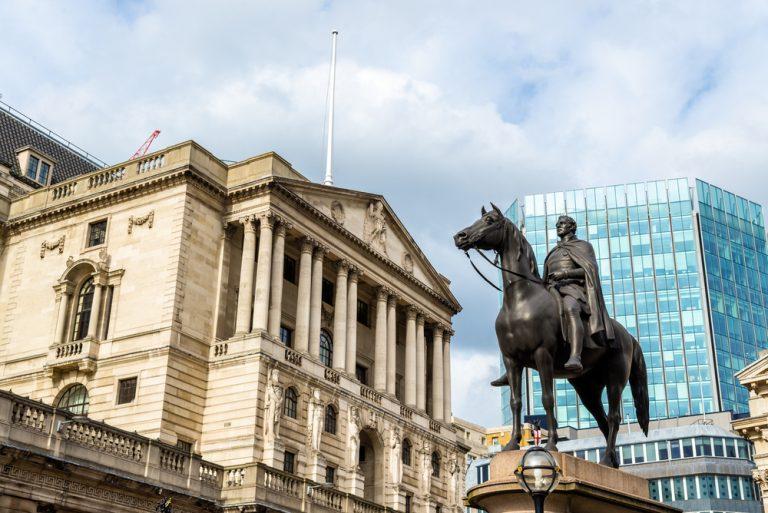
Mark Carney gave the Bank of England a gentle goodbye kiss on Thursday, opting for the widely anticipated interest rate hold ahead of the UK’s exit from the EU.

Bank of England taking the popular path

The BoE’s release following the announcement read: “UK GDP growth slowed last year, reflecting weaker global growth and elevated Brexit uncertainties. Output is expected to have been flat in 2019 Q4. Growth in regular pay has fallen back to around 3½%, though unit labour costs have continued to grow at rates above those consistent with meeting the inflation target in the medium term.” Some pundits praised the move, with Sterling letting loose following the announcement, and a general demand for the BoE not to take any drastic steps with the Brexit suckerpunch incoming. “There is no need to do anything to interest rates right now. There is enough dynamic coming out of the real economy to get out of the stasis that we have had over the last three and a half years,” said Dr Kerstin Braun, President of Stenn Group. “With momentum finally coming out of business, the best way for the government to support the turnaround is to go-ahead with large infrastructure projects that have been dangled before the voting public. “We expect the Bank of England to hold rates for a while longer, whilst the UK adapts to post Brexit.”

The easy but less prudent route

On the contrary, others have lamented the Bank’s move for not supporting the economy through Brexit with a rate cut. Stuart Law, CEO at P2P lender Assetz Capital, criticised the BoE:

“With inflation at a three-year low and details of the UK’s withdrawal from the EU still uncertain, the Bank of England has taken the easy but incorrect choice to keep interest rates on hold.”

“Depending on how things unfold immediately following January 31, there’s still a high probability in our view that we could see interest rates go down shortly – even to the point of eventually introducing negative interest rates – to attempt to stimulate the economy further and address the global slowdown that is partly due to trade wars.”

“Traditional bank savings would then represent a guaranteed loss versus inflation for businesses and consumers alike, which would drive people to alternative sources of finance like P2P and marketplace lending.”

Aston Martin shares race 25% on £182 million cash injection and F1 entry

Ailing motor company Aston Martin Lagonda (LON:AML) reported on Friday that it had accepted a helping hand from Formula 1 magnate Lawrence Stroll, with the billionaire injecting £182 million into the company as part of a £500 million rescue package. ‘Yew Tree Overseas Limited’ will receive a 16.7% stake in the company, at a price of £4 per share, via a placing of 45.6 million shares. In return, Mr Stroll will provide £182 million in funding, which includes £55.5 million in short-term working capital support. Mr Stroll will also replace Penny Hughes as Aston Martin Executive Chairman. The company will raise the remaining £318 million via a rights placing, with Prestige/Strategic European Investment Group and Adeem/Primewagon (who together own around 61% of the group’s share capital) agreeing to vote in favour of the placing and rights issue post publication of Aston’s full-year results next month. The two largest stakeholders’ joint holding will fall to 50.5% after Yew Tree takes its stake. The company added that it planned to use the proceeds of the rescue package to improve liquidity and support the programme of its DBX model. It also said that it planned to make £10 million of annualised savings through changes to its operating structure, and expected to delay its investment in electric cars from 2022 until at least 2025.

Aston Martin profit warning

The company has grossly underperformed since listing, with the failure of its plans to boost volumes evidenced by the profit warning it issued earlier this month. The group admitted that its full-year cash profits would land between £130-140 million, which represents only two thirds of market expectations. A glint of light in the profit warning came from the news that its DBX SUV programme had gained impressive traction. Its success qualified Aston to draw on £76 million of April 2022 notes, at a coupon of 15% – this raise will be abandoned with the implementation of the company’s ‘reset’ plan. Speaking on the company’s challenging year, group CEO Dr Andy Palmer commented,

“As we announced on 7 January 2020, the past year has been a regrettably disappointing and challenging time for the Company. Despite our continued efforts, the difficult trading conditions and resulting poor performance in 2019 has put the Company in a stressed position with severe pressure on liquidity and affected our ability to deliver against our original plan. Today’s fundraising is necessary and provides a platform to support the long-term future of the Company. Mr. Stroll brings strong and proven expertise in both automotive and luxury brands more widely which we believe will be of significant benefit to Aston Martin Lagonda. Following a comprehensive review, today we announce a series of immediate actions to reset, stabilise and de-risk the business, positioning it for controlled, long-term profitable growth. These include rebalancing supply-demand dynamics, reducing capital expenditure and the re-phasing of some future product launches, together with cost-efficiency initiatives.”

“We are focused on turning around performance, restoring price positioning and delivering a more efficient operational footprint. We will deliver some exciting new products this year with the much-anticipated DBX during Q2, Vantage Roadster in the spring and Aston Martin Valkyrie deliveries starting in H2.”

“We have also announced plans to leverage a new motorsport collaboration with Racing Point to enhance the execution of the plan. I would like to thank Red Bull Racing, who we will continue to sponsor this year, for their partnership and support in us being able to say this today.”

“The actions announced today will allow us to implement and deliver on our reset plan and provide Aston Martin Lagonda with a sustainable platform for the future.”

Responding to confirmation of the deal, Mr Stroll said,

“I am very pleased that I, and my partners in the Consortium, have reached agreement with the Board and major shareholders to make this significant long-term investment. Aston Martin Lagonda makes some of the world’s most iconic luxury cars, designed and built by very talented people. Our investment announced today underpins the Company’s financial security and ensures it will be operating from a position of financial strength.”

“On completion of the £500m of fundraising I look forward to working with the Board and management team in Aston Martin Lagonda to review and improve each aspect of the company’s operations and marketing; to continue to invest in the development of new models and technologies and to start to rebalance production to prioritise demand over supply.”

“I, and my partners, firmly believe that Aston Martin is one of the great global luxury car brands. I believe that this combination of capital and my experience of both the motor industry and building highly successful.”

Aston returning to F1

The company added that it would be re-entering the F1 roster after a 60 year hiatus. The Racing Point team will be rebranded as ‘Aston Martin’ on the F1 grid, effective from 2021. Following Friday’s announcements, the group’s shares soared 24.91% or 100.30p to 503.00p per share 31/01/20 12:59 GMT. The company’s p/e ratio is 12.93, their market cap stands at £1.13 billion and Citi initiated a ‘Buy’ stance on Aston Martin stock.

‘Traves-tea’ – Unilever could sell out-of-fashion brands PG Tips and Lipton

Never was there a more shocking millennial-induced horror story than this – the traditional brew is suffering because herbal alternatives are in fashion. The shift in consumer behaviour could see household goods giant Unilever (LON:ULVR) attempting to offload its PG Tips and Lipton brands. The news came following the company posting its slowest quarterly growth in a decade, which has prompted CEO Alan Jope to adjust the ship’s course: streamline and focus the company on fewer brands. The company said it would consider a partial or full sale of its tea business – with demand for black tea falling 2.7% in the last two years – but said would consider “all options”. This came after lacklustre growth of just 1.5%, though the company said it expected performance to improve in 2020. Unilever owns a host of household names – Dove, Knorr, Persil, Hellman’s and Wall’s – to name a few. It added that in addition to streamlining its less productive operations, CEO Alan Jope is also targeting “brands with purpose”. Those lacking clear social or environmental purpose could be removed from the Unilever roster. Speaking last year, he said the company would be taking a close look at Marmite, Magnum and Pot Noodle.

Unilever comments on their performance

Speaking on the company’s 2019 results, Jope said,

“In 2019 we delivered underlying sales growth of 2.9%, balanced between price and volume, a further year of good margin and earnings progression, and strong free cash flow. We saw strong growth from emerging markets and our Home Care division. Overall growth was slightly below our guided range for the year due to the slowdown we saw in the fourth quarter.”

“We are now stepping up execution against our fundamental drivers of growth. These are to: increase penetration by improving brand awareness and availability; implement a more impactful innovation programme; improve our performance in faster growing channels; drive purpose into all our brands; and fuel growth through cost savings.”

“We are continuing to evaluate our portfolio and have initiated a strategic review of our global tea business.”

“In 2020, our underlying sales growth is expected to be in the lower half of the multi-year 3-5% range and will be second-half weighted. While we expect an improvement from the fourth quarter of 2019 into the first half of 2020, first half underlying sales growth will be below 3%. The impact of the coronavirus outbreak is unknown at this time. As we near the completion of our three-year strategic plan, we expect continued improvement in underlying operating margin and another year of strong free cash flow, remaining on track for our 2020 goals.”

Investor notes

Following the update, Unilever shares rallied 2.02% or 89.50p to 4,527.50p per share 30/01/20 16:36 GMT. Analysts from Liberum retained their ‘Buy’ stance on Unilever stock. The Group’s p/e ratio is 22.23, their dividend yield is modest at 2.99%.

Bank of England interest hold could help Sterling ignore the costly Brexit goodbye

The Bank of England top brass voted without unanimity to hold interest rates, in what will likely be Mark Carney’s last roll of the dice before handing over the reigns to his successor, Andrew Bailey. Despite what appeared to be mounting pressure to cut rates to support the UK economy through Brexit, today’s news reflects a widely predicted outcome. The hope is that that Sterling’s good news hunting and rally on Thursday will give it a running start, and hopefully enough momentum to pass through what will likely be a very costly Friday session. Speaking on Thursday’s Bank of England announcement, Spreadex Financial Analyst Connor Campbell stated,

“It wasn’t a unanimous decision – Jonathan Haskel and Michael Saunders voted for a cut – and the central bank did downgrade the UK’s growth forecasts, now expecting a meagre 0.8% increase in 2020 against its previous estimate of 1.2%. There were similarly stark revisions for 2021, where GDP is now forecast to come in at 1.4%, with an average increase of 1.1% predicated for the next 3 years.”

“However, the pound decided to focus on the positives. Cable climbed more than half a percent, shooting back to $1.3095 having opened at a one-month, sub-$1.298 low, while against the euro it rose 0.4% to €1.187.”

“This had the side effect of forcing upon the FTSE the kind of losses already being suffered by its Eurozone peers. The UK index dropped 1.6%, plummeting to 7370 for the first time since mid-December. The DAX tumbled by 200 points to 13150, with the CAC dropping 1.7% to 5850.”

“Curiously resilient in the face of the same coronavirus concerns driving Europe lower, the Dow Jones only lost half a percent after the bell. That’s partially thanks to Microsoft (NASDAQ:MSFT), which rose 2.3% following a better than forecast 14% jump in sales and 36% surge in adjusted net income.”

“Sterling faces an interesting test tomorrow. Friday sees the UK finally withdraw from the EU, a momentous occasion that feels, at this point, more like a formality. The goodwill generated by the BoE’s interest rate hold could keep the currency’s spirits up, helping it ignore Britain’s potentially costly goodbye.”

Zopa – what is the Innovative Finance ISA?

With new offerings entering the field of play each year, it can be difficult to know which financial vehicle to choose as the home for your money. Today, loan and investment services company Zopa provided news on their Innovative Finance ISA, which it believes could offer a viable alternative to the traditional stocks and shares ISA. The company says that for individuals willing to take risks in order to make ‘good’ returns, the Innovative Finance ISA is a valuable option. “Unlike the Stocks and Shares ISA, it isn’t linked to the stock market so doesn’t carry the risk of an investment going up or down in line with the equity market, nor does it carry the complicated charges and fees levied by the major investment platforms.” The company’s statement read.

What is it Zopa’s IFISA and what does it offer?

The IFISA enables customers to earn tax-free interest on peer-to-peer investments. Essentially, Zopa will use its clients’ ISA funds to fund personal loans to low-risk UK borrowers, much like any non-ISA Zopa investment. The key difference the company points out is the tax free nature of the IFISA.

In terms of returns, Zopa says that unlike a Stocks and Shares ISA, their offering has target rates of return, with its Core IFISA forecasting 5% growth and its Plus IFISA hoping for 6% growth per annum.

What about the risks?

The company say they are completely transparent with their loan book, and has a 15 year record to back up their risk management acumen.

They also noted that new FCA rules mean that all P2P platforms now ask potential investors a series of questions about their specific investments to determine the appropriateness of the mechanism for each user.

Zopa add that while their ISA is meant for users wanted to avoid the volatility of the stock market, people could potentially invest in an IFISA, a Stocks and Shares ISA and a Cash ISA, and be completely diversified across asset classes.

And where is the Innovative Finance ISA fine print?

The company said you can transfer existing or previous years’ ISAs into an IFISA for free, even if these aren’t held with Zopa. They also add that as soon as you start, you’ll be able to earn the market rate immediately and there are no introductory rates. In terms of transferring out, the company said that you can sell your loans to other investors for a 1% sale fee. A customer can only contribute your annual allowance to one IFISA per tax year, but you can transfer existing ISA balances to multiple Innovative Finance ISA accounts. The company finished by warning users that they should transfer existing ISA balances by using the transfer process, simply withdrawing funds or closing an existing ISA will mean you lose its ‘wrapped up’ status.

Zopa comments on their Innovative Finance ISA

Natasha Wear, Zopa’s P2P CEO, states:

“Combining robust returns with well-managed risk, the Zopa IFISA is a reliable and stable alternative to investing in the stock market.”

“It’s designed for investors who want to diversify their portfolio or for those people who are worried about the volatility and risks involved in investing in equities but are still happy to take some risk with their money for a good return.”

“Zopa’s IFISA offers retail investors a well-diversified portfolio of low risk loans, and a predictable, stable, and attractive return on their investment. We have over 15 years’ experience of lending and risk management helping individuals financially in both little and life changing ways – like fixing homes, tying the knot, or getting a car.”

Bank of England keeps powder dry, GBP/USD spikes

The Bank of England kept rates on hold on Thursday despite pressure to cut rates to provide support for the economy through Brexit. Despite speculation rates could be cut, it was widely expected that the Bank of England would keep rates on hold. GBP/USD spiked nearly 100 pips in the immediate reaction before fading back down to around 1.3050. The FTSE 100 fell in response to the rate decision, dipping beneath 7,400 for the first time in 2020. The Monetary Policy Committee also voted to keep asset purchases steady. In the release accompanying the rate decision, the Bank of England said “UK GDP growth slowed last year, reflecting weaker global growth and elevated Brexit uncertainties. Output is expected to have been flat in 2019 Q4. Growth in regular pay has fallen back to around 3½%, though unit labour costs have continued to grow at rates above those consistent with meeting the inflation target in the medium term.” There had been speculation mounting that the Bank of England would preempt any economic slowdown induced by Brexit with a rate cut but have instead opted to survey the data for a little longer. With rates already at 0.75%, the Bank of England doesn’t have much room for manoeuvre in case of a significant drop in economic activity. “There is no need to do anything to interest rates right now. There is enough dynamic coming out of the real economy to get out of the stasis that we have had over the last three and a half years,” said Dr Kerstin Braun, President of Stenn Group. “With momentum finally coming out of business, the best way for the government to support the turnaround is to go-ahead with large infrastructure projects that have been dangled before the voting public. “We expect the Bank of England to hold rates for a while longer, whilst the UK adapts to post Brexit.”  

Royal Dutch Shell profits dive, blames lower energy prices

Royal Dutch Shell (LON:RDSB) has seen its shares fall to an 18-month flow after the oil giant’s profit fell 32%. Cash flow from operations were also down 21%, but this isn’t thought to have any impact on the dividend. The company blamed lower energy prices as reason for the decline, this is despite Brent oil spending much of 2019 above $60. Royal Dutch Shell Chief Executive Officer Ben van Beurden said: “the strength of Shell’s strategy and portfolio has enabled delivery of competitive cash flow performance in 2019 despite challenging macroeconomic conditions in refining and chemicals, as well as lower oil and gas prices. We generated $47 billion in cash flow from operating activities excluding working capital movements and distributed over $25 billion in dividends and share buybacks to our shareholders. We remain committed to prudent capital discipline supported by world-class project delivery and are looking to further strengthen our balance sheet while we continue with share buybacks. Our intention to complete the $25 billion share buyback programme is unchanged, but the pace remains subject to macro conditions and further debt reduction.” Shares in Royal Dutch Shell (LON:RDSB) were down 2.6% in lunch time trade on Thursday.

Rank Group enjoy strong digital sales and a jump in profits

Gaming company Rank Group (LON:RNK) released interim results for the six months ending 31st December that revealed a bumper increase in underlying operating profits. Underlying operating profit pre IFRS jumped 70% helped by stronger digital revenues, cost savings and the acquisition of Stride. Rank group said the Stride acquisition contributed £1.4m of operating in the period. Like for like sales were also strong with the Grosvenor brand up 21% and Mecca seeing revenue rise by 13%. “Rank Group figures look strong, as does the share price. Although, despite a bumper increase in underlying profit before tax of £52.9m vs 30.5m, they have remained cautious over the post-transition relationship with the EU,” said John Woolfitt, Director of Trading at Atlantic Capital Markets.m “Generally Rank Group are in a very healthy position, and with the share price up in a market that is down today, it certainly looks like investors agree.” “The market is pleased to see steady growth in their digital revenues driving a 70% increase in underlying operating profits. Today’s results pay testament to the confidence in the Rank Group share price over the past 12 months.” “Despite reservations from the board over Brexit, investors are certainly betting Rank Group can continue their strong performance through 2020.”

John O’Reilly, Chief Executive of The Rank Group was also upbeat on the results saying “we are pleased with The Group’s first half performance which demonstrates that the transformation programme is delivering the right results. The revenue growth in our digital business and across our Grosvenor and Enracha venues shows that we are moving in the right direction in key areas of our business. We remain on track and are confident in our ability to deliver operational and financial improvements underscored by a relentless commitment to delivering exciting, entertaining and safe gambling environments and experiences for our customers.

The successful integration of Stride into our business will ensure that we benefit from strong synergies, proprietary technology and a first-class digital team, all of which will position us well for the second half of the year. These are a good set of numbers and are a testament to our committed and talented colleagues across the Group who have worked hard to deliver them.”

Shares in Rank Group (LON:RNK) were up 1.4% in Thursday morning trade.

Dividend cut would not be problem for Saga

Saga (LON: SAGA) is considering whether to reduce its dividend, but this is not necessarily a bad thing. The debt burden is significant, and this does not help the share price.
Saga talks in its recent trading statement about capital allocation. This is financial speak for considering whether to maintain the dividend.
The insurance, travel and cruising company is keen to reduce the debt on its balance sheet and cutting the dividend will certainly help. The current yield is 8.9%.
Dividend
The 2018-19 dividend was 4p a share and it has been assumed that this would be maintained for 2019-20 and ...

Coronavirus: reactions

News emerged on Wednesday that British Airways (LON:IAG) has suspended all of its direct flights to and from China. American Airlines (NASDAQ:AAL) has also cancelled routes. Indeed, fears over the deadly coronavirus are rising as cases have been reported outside of China. The virus outbreak has killed 132 people in China, with almost 6,000 people infected. We took a look at some reactions to the coronavirus on Twitter: https://platform.twitter.com/widgets.js https://platform.twitter.com/widgets.js https://platform.twitter.com/widgets.js The World Health Organisation tweeted a live video from Geneva on the outbreak of the virus: https://platform.twitter.com/widgets.js The World Health Organisation also answered some questions on the coronavirus: https://platform.twitter.com/widgets.js Meanwhile, the Department of Health and Social Care provided an update on the situation in the UK: https://platform.twitter.com/widgets.js UK Investor Magazine will provide updates as more news emerges.