
Barclays set to cut investment bankers’ bonuses
Barclays is set to cut bonuses for investment bankers as it looks to keep activist investor Edward Bramson at bay.
The British bank is set to cut bonuses at its investment banking division in a bid to streamline costs, ahead of its upcoming annual meeting.
This will mean that pay will be more closely tied with performance, in light of the divisions underwhelming performance.
The financial institution is also set to adopt a tougher stance on promotions. In 2018, 85 bankers were promoted in Barclays International compared with 74 the year before.
The reported decision comes amid increased pressure from Bramson, who has a 5.5% stake in the bank through his company Sherborne Investors.
This makes Bramson the bank’s third largest investor.
Bramson is seeking a seat on the board, and is also proposing that the bank streamlines its investment unit.
Nevertheless, according to reports, Barclays Chief Executive Jes Staley has opposed the move, remaining committed to maintaining the bank’s investment banking presence.
Barclays’ annual meeting is set to take place on May 2nd.
In its most recent annual results, Barclays reported profits of £3.5 billion, sending shares upwards.
Shares in the bank (LON:BARC) are currently down -2.55% as of 11:01AM (GMT).
Samsung’s Galaxy Fold samples retrieved following test issues
Samsung (KRX:005930) is retrieving all of its Galaxy Fold samples just a day after it postponed the new gadget’s launch, according to Reuters.
A person with direct knowledge of the situation has said that Samsung Electronics Co Ltd is reclaiming samples that it had sent to reviewers. This is to investigate the reports of its broken screens.
The Galaxy Fold was set to be launched in the US on the 26 April, and the 3 May in the UK. However, the launch has been delayed in order to allow the tech giant to revaluate its product. It is now unknown when the foldable device, valued at £1,800, will go on sale, and a new launch date is due to be revealed in the upcoming weeks.
A variety of technology journalists had issues with the device, such as breaks, bulges and screen problems, just after a single day’s usage.
Some people even mistakenly peeled off a layer of film from the screen’s coating, thinking that it was a disposable screen protector.
“We will also enhance the guidance on care and use of the display including the protective layer,” Samsung commented on the issue.
Though it was said that the folding screens could be opened and closed again for over 100,000 times without causing any damage, in practice the device did not live up to its laboratory trials.
Elsewhere in the tech industry, Samsung rival Apple (NASDAQQ:AAPL) recently announced that it would cut its iPhone production by 10% across the three months from January. It said it would produce between 40-43 million iPhones, a downgrade from its previous plans to produce 47-48 million devices.
At 15:30 GMT +9, shares in Samsung Electronics Co Ltd (KRX:005930) were trading at -0.33%.
Shares in Apple Inc. (NASDAQ:AAPL) were last trading at +0.33%.
British Land set to sell £429 million of Sainsbury’s superstores
One of the UK’s largest property development and investment companies, British Land (LON:BLND), said that it had exchanged on the sale of 12 superstores from its joint venture with Sainsbury’s for £429 million, to Realty Income Corporation.
The company said that its share of the proceeds will be £193.5 million.
The sale will reduce its retail business from roughly 50% to a third of its total assets.
In an aim to deliver its long-term strategy to build a mixed-use business, British Land is focusing on three core elements – campus focused London offices, a smaller, refocused, Retail business, and Residential, primarily build to rent.
Moreover, the company said that it was progressing unique development opportunities, such as Canada Water, in addition to the investment into its campuses.
British Land said that it will focus on the additional sale of retail assets which do not align with its strategy.
The transaction is expected to be completed by the end of May. It follows the sale of its last four freestanding Debenhams stores in December as it moves its estate away from the gloomy British high street.
“We have a clear view of the value of our assets and despite the clear challenges currently in the retail market, we remain opportunistic and proactive,” the company said in a press release.
Many retailers have fallen victim to the tough trading conditions to hit the UK high street. It was recently reported that almost 2,500 high street stores closed in 2018, according to PwC research compiled by the Local Data Company (LDC). Research shows that Banks and financial services lead the way with 291 net closures, closely followed by fashion retailers with 269 closures.
Headquartered in London, British Land is listed on the London Stock Exchange and is a constituent of the FTSE 100.



Brexit party lead EU election polls, says YouGov
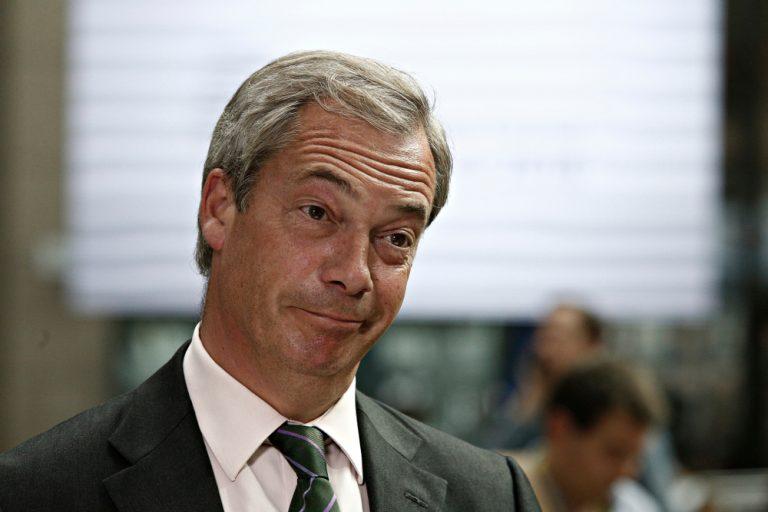
Nigel Farage’s Brexit Party is leading European election polls in the UK, according to a survey by YouGov.
YouGov said that the former UKIP leader’s new party leads polls with 27% of the vote.
This was followed by Labour with 22% of the vote, with the Conservative’s trailing behind with 15%.
Meanwhile, the newly formed Change UK party, formerly known as The Independent Group, secured 6%, behind UKIP’s 7% and the Green Party with a 10% share of the vote.
Whilst the Conservative’s and Labour will not doubt be concerned about the surge in support for the Brexit party, YouGov said that the UKIP vote felt the biggest tremor.
Whilst support for Farage’s new political venture surged 12 points since last week, support for his former party, UKIP, halved.
Farage was a founding member and the leader of UKIP party.
He has been viewed as a key architect of Brexit, having campaigned alongside the VoteLeave campaign in the run-up to the 2016 referendum.
In 2016 he stood down as leader, claiming that he “wanted his life back”.
Despite being a fervent pro-leave supporter, as of currently Farage is still an MEP for the European Parliament for the South of England.
The prospect of the UK’s involvement in forthcoming EU elections has been widely contested by the EU and those within Westminster.
This proves particularly troubling given the fact that the UK voted to leave more than two years ago.
Initially, Prime Minister Theresa May had pledged for Article 50 to be initiated on March 29th.
However, she ultimately failed to secure sufficient support in parliament for her withdrawal deal.
As a result, Westminster remains in somewhat of a political deadlock, with no clarity on the path forward for delivering Brexit.
In a bid to avoid a no-deal scenario, The UK and EU have thus agreed upon a flexible 6-month extension to Brexit until October.
As it stands, this means that the UK will indeed most likely participate in upcoming EU elections.
Nevertheless, this may be avoided if parliament decides on how best to proceed with Brexit, ahead of May 23rd.
Funding Circle revenue jumps 40%

Funding Circle (LON:FCH) updated the market on its first quarter on Thursday, sending shares upwards.
The peer-to-peer lending platform said that growth was driven by a 44% increase in loans under management, totalling £3.4 billion.
Revenues were also boosted by higher transaction yield, largely as a result of new policies in the US, alongside growth in other revenue streams.
As a result, the company reported year-on-year growth of 40%.
Samir Desai CBE, CEO and co-founder, said: “Q1 was a period where Funding Circle reinforced its leadership position across each of its markets, reaching a new high of loans under management of GBP3.4 billion. We continue to implement our strategy of diversifying funding sources with a new commitment from the European Investment Bank, as well as launching two new institutional investor products.”
The company which was launched in the UK in 2010, floated on the London Stock Exchange in September 2018.
It was initially valued at £1.5 billion at 440p, however, it has since traded below this level.
Thursday’s company update sent Funding Circle shares up during trading, as investors took stock of the details.
Shares are currently trading +3.54% as of 13:29PM (GMT).
Rentokil Initial enjoys ‘good start’ to 2019, shares rise

Rentokil Initial (LON:RTO) said it enjoyed a ‘good start’ the year, with acquisitions boosting revenues during the first few months of 2019.
The FTSE-100 pest control company said that ongoing revenue rose by 8.9%.
Rentokil Initial said that 4% of revenue was derived from organic Revenue growth, whilst 4.9% was from acquisitions.
Ongoing revenue at its pest control business increased by 12%,on the back of strong performances in core and emerging markets, up 12.1% and 11.5% respectively.
Its hygiene business also enjoyed a strong performance, with ongoing revenue growth of 7.2%.
Meanwhile, ongoing revenue in its Protect and Enhance markets proved in line with the previous year.
The group signed a raft of acquisitions during the first three months of 2019.
Four of these were in Pest Control, in particularly in North America and Latin America, whilst an additional four were in Hygiene.
Commenting on the trading update Andy Ransom, Chief Executive, said:
“We have had a good start to 2019 and I’m pleased with our performance in the first three months of this year. I am confident of another year of successful growth for the Company, in line with market expectations.”
Rentokil Initial has been the subject of an investigation by the UK’s competition regulator, the competitions and markets authority (CMA), regarding to its takeover of MITIE’s pest control unit.
The CMA concluded that the firm must address concerns relating to the merger by April 23, or it will face further investigation.
Earlier this month, The CMA said: “Having considered a wide range of evidence, it (CMA) has found there could be a substantial reduction in competition, which may lead to higher prices or reduced quality for customers.”
Shares in the company are currently trading +1.77% as of 12:42PM (GMT), as investors react to the trading update.
UK retail sales rise 1.1% in March, ONS says
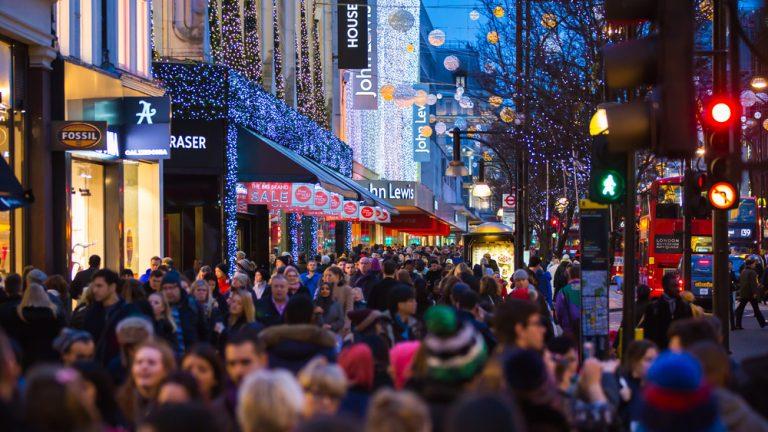
UK retail sales rose 1.1% in March, as milder weather encouraged shoppers to take to the high street.
Retail sales rose in March according to the latest figures from the Office for National Statistics (ONS), despite an increasingly difficult trading environment for the high street in the last few months.
This proved ahead of economist expectations, who had forecast a contraction of 0.3% during the month.
Overall, quantity of retail sales in the three months to March increased by 1.6%, compared to the last quarter of 2018.
The growth suggests that shoppers had thus far not been deterred from spending despite persistent Brexit-related uncertainty.
The year-on-year rise in retail sales between March of last year this year was 6.7%, proving the highest increase since October 2016.
However, this figure proved particularly high due to unseasonably colder weather in March 2018, with the “Beast of the East” heavily impacting sales.
Head of retail sales at the ONS, Rhian Murphy, commented:
“Retail sales increased in the three months to March, following sustained growth throughout the first three months of the year. March’s mild weather boosted sales, with food shops also recovering after a weak February.”
Despite the stronger UK retail sales figures, the high street is still struggling amid falling footfall levels, rising costs and subdued spending.
2,481 stores closed in the UK in 2018, according to PwC research compiled by the Local Data Company (LDC).