Churchill China raises dividend amid strong 2018 results
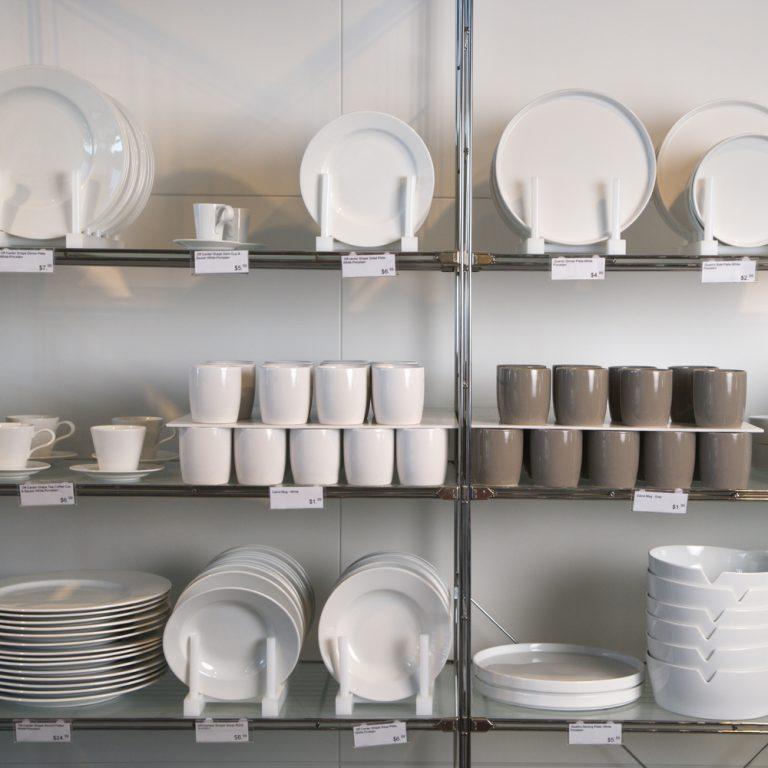
Churchill China (LON:CHH) raised its final dividend after a strong set of results for 2018, sending shares up during Wednesday morning trading.
The hospitality ceramic manufacturer said that group revenue for the year to December-end was up 7% to £57.5 million, compared to £53.5 million reported a year ago.
Meanwhile, profit before tax and exceptional items rose 26% to £9.4 million, up from £7.5 million in 2017.
Adjusted earnings per share jumped 26% to 69.6p.
As a result, the company proposed a final dividend of 20.3p, up 18%
Churchill China said that overall its hospitality revenue growth increase by 10%, up 2% from a year ago.
In addition, group export revenues rose 17%, with exports now representing 60% of total group revenue.
Alan McWalter, Chairman of Churchill China, commented on the results:
‘2018 has been a very successful year for Churchill, we have exceeded our expectations in relation to business and financial performance. 2019 has started well and we believe that we can make further progress.’
Churchill China has been listed on the London Stock Exchange as of 1994. It is a constituent of the junior aim market.
Shares in the company are currently trading +4.59% as investors react to the latest results.
Brexit: uncertainty prevails two days before original departure date
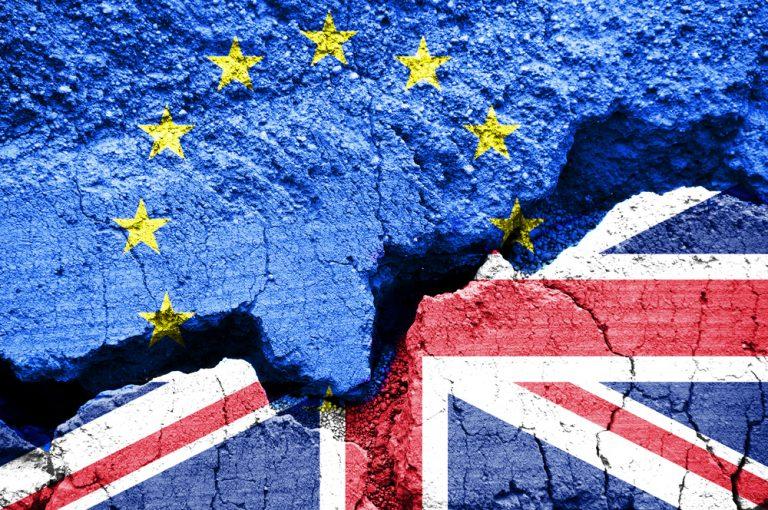
With only two days until the official Brexit departure date, the outcome of Brexit still remains uncertain.
Theresa May is expected on Wednesday to reveal her own departure date from her position, paying the price for the approval of her formerly twice-rejected Brexit deal.
Jacob Rees-Mogg has now suggested that he will back Theresa May’s Brexit deal, after he admitted that “the choice seems to be Mrs May’s deal or no Brexit.”
The British government has, however, rejected the online petition which demanded the revocation of Article 50, collecting over 5.8 million signatures.
“It remains the Government’s firm policy not to revoke Article 50. We will honour the outcome of the 2016 referendum and work to deliver an exit which benefits everyone, whether they voted to Leave or to Remain,” the department for exiting the EU said in a response to the petition.
“Revoking Article 50, and thereby remaining in the European Union, would undermine both our democracy and the trust that millions of voters have placed in government.”
Today the Commons will hold a debate and vote on up to 16 alternative Brexit options.
“The prime minister might get a deal over the line on Thursday or Friday,” said the Conservative former cabinet minister Oliver Letwin. “If she does, no one would be happier that I am,” he continued.
“If, however, that doesn’t happen and if we do go forward to Monday, and if on Monday one or more propositions get a majority backing in the House of Commons, then we will have to work with the government to get the government to implement them.”
Last Friday the Prime Minister was granted a Brexit delay until 22 May only if MPs approve the negotiated deal this week. If the negotiated deal with the EU is not approved by MPs, Britain will have until 12 April to offer a new plan or crash out of the EU without a deal.
The GBP/USD has stabilised around 1.3200 ahead of Parliament’s vote on the 16 Brexit alternatives.
As how, when or if the nation will even leave in the first place all remain unanswered questions, uncertainty prevails.
Sports Direct announces potential £61.4 million Debenhams bid
Sports Direct (LON:SPD) announced on Wednesday that it was considering taking full control of Debenhams (LON:DEB) in a £61.4 million bid for the struggling department store.
Shares in Debenhams plc surged over 50% following the announcement.
The announcement comes after weeks of back and forth moves between the two businesses.
Currently, Mike Ashley’s Sports Direct owns almost 30% of Debenhams. However, last week Debenhams revealed potential restructuring plans that could wipe out its existing shareholders, threatening Sports Direct’s stake in the business.
Brandes Investment Partners, Odey Asset Management and Landmark Group also hold significant stakes in the business.
Last week the department store chain saw its fifth-largest investor call it quits after Invesco Asset Management confirmed it had sold its almost 5% stake in the business.
Sports Direct said on Wednesday that it was now considering making an offer of 5p per share for the department store. This is more than double its closing share price on Tuesday of 2.2p.
“The terms of the possible firm offer are that Sports Direct would offer 5p in cash per ordinary share for the entire issued and to be issued share capital of Debenhams which would value the total currently issued share capital of Debenhams (excluding treasury shares) at approximately £61.4 million,” the company said in a statement.
The potential offer, however, is condition upon the immediate appointment of Sports Direct boss Mike Ashley as CEO of Debenhams. Debenhams said only yesterday that Mike Ashley’s takeover plans will not provide immediate relief to its funding problems.
The department store chain has previously questioned whether a conflict of interest would occur if Mike Ashley was appointed CEO. This is because Sports Direct also owns Debenhams’ largest rival – House of Fraser. Sports Direct has reaffirmed, however, that Mike Ashley is prepared to leave his current Sports Direct role if he were to gain control of Debenhams.
“In addition, the Possible Offer is pre-conditional upon the Debenhams group agreeing not to enter into any third party funding arrangements (including those outlined in Debenhams statement of 22 March 2019), granting any new security over any of its assets or entering into any administration, CVA or other insolvency process,” Sports Direct continued.
At 09:55 GMT Wednesday, shares in Debenhams plc (LON:DEB) were trading at +50.32%.
Shares in Sports Direct International plc (LON:SPD) were trading at +0.07% as of 09:44 GMT.
Crest Nicholson announces new chief executive
Crest Nicholson (LON:CRST) announced Peter Truscott as its new chief executive, sending shares soaring on Tuesday.
The FTSE 250 house builder said that Truscott would assume the role following the end of his current contract with Galliford Try later in September this year.
Mr Truscott is set to replace Patrick Bergin at Crest Nicholson, who has agreed to step down.
The company said that Chris Tinker, who is currently Chairman of Major Projects and Strategic Partnerships and Board director, will become interim Chief Executive.
He is set to be also helped by Stephen Stone, Chairman in the meantime.
Stephen Stone, Chairman, commented on the announcement:
“We are delighted to welcome Peter to Crest Nicholson. We announced last year that we were shifting strategy from growth to cash generation with a strong emphasis on partnerships and other joint ventures, to de-risk the portfolio while delivering more homes.
Peter is highly experienced at delivering a broad range of housing needs to customers working with Local Authorities, Housing Associations as well as private homebuyers. This, together with his operational and public company experience, will bring strong additional expertise to our team.”
He also thanked outgoing chief executive Patrick Bergin for his work for the company of the years. He added:
“We are extremely grateful to Patrick Bergin for his dedication, time and commitment to Crest Nicholson over the last 13 years both as Group Finance Director and latterly as Chief Operating Officer and Group Chief Executive and wish him well for the future.”
The house builder posted its final results for the year back in January, reporting a 15% decline in profits as Brexit uncertainty weighed.
Crest Nicholson is listed on the London Stock Exchange. It was founded back in 1963 and is headquartered in Surrey in the UK.
Shares in the firm are currently trading +6.22% as of 13:20PM (GMT).
Moss Bros posts £4.2 million loss and axes dividend
Moss Bros swung to a £4.2 million loss for the year in its latest annual results, blaming warmer weather and a “volatile” trading environment.
The mens suit retailer said that total group revenue (excluding VAT) for the 52 week period to 26 January, fell 2.1% on the previous year at £129.0 million.
In addition, group like-for-like sales totalled £140.2 million during the period, declining 4.3% compared to a 1.6% rise a year ago.
Meanwhile, Like-for-like retail sales including e-commerce also fell 3.6%, whilst Like-for-like hire sales also dipped by 9.3%.
Moss Bros said that e-commerce had grown by 19.6%, now representing 14.5% of total sales as shoppers increasingly turn to online mediums.
Overall, the company reported an adjusted loss before tax of £0.4 million, compared to a £6.7 million profit the year before.
Moss Bros posted a loss before tax of £4.2 million after adjusting items of £3.8 million.
As a result, the company said that the board had not recommended a final dividend payment, citing a ‘volatile trading environment’.
Brian Brick, Chief Executive Officer, commented on the figures:
“It has been an extremely challenging year for the business on many fronts, but I am confident that we have made significant progress in a number of areas of the business.
He added that this was the first time since 2010/11 that Moss Bros had reported an adjusted loss ahead of tax.
He continued:
“As previously reported, we suffered from a combination of a significant stock shortage and extremes of weather, alongside sporting distraction in the first half, which impacted footfall into our stores. Whilst we were able to improve our performance in the second half of the year, this was in part as a result of adopting a more aggressive trading stance in reaction to competitor activity.”
With respect to future outlook, Brick said:
“we continue to anticipate an extremely challenging retail landscape, particularly within our physical stores, as a result of reduced footfall and rising costs. Alongside the macro trend of more retail transactions moving online, we expect the uncertain consumer environment and significant cost headwinds to continue.”
Shares in Moss Bros (LON:MOSB) are currently down -5.93% as of 11:08AM (GMT).
Fever-Tree boosted by UK’s unquenchable thirst for gin
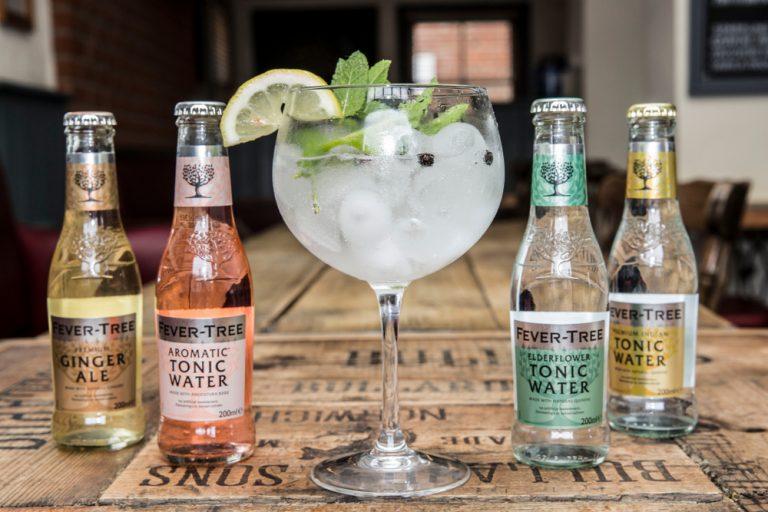
Fever-Tree Drinks plc (LON:FEVR) revealed a 34% increase in its annual adjusted core earnings on Tuesday, boosted by the prevailing UK gin craze.
The company said that its annual adjusted core earnings grew 34% to £78.6 million, compared to 2017’s £58.7 million figure.
Events such as the World Cup and the Royal Wedding boosted the company’s UK growth last year.
“Performance over the summer was exceptional, aided by the prolonged period of hot weather as well as a number of significant national events including the Football World Cup and Royal Wedding all of which contributed to the continued growth and popularity of the gin category,” the company said in a statement.
It added that more gin had been sold during the three summer months in 2018 alone than the summers of 2014 and 2015 combined.
The nation’s love of gin saw 66 million bottles purchased last year, an annual rise of 41%. Fever-Tree benefits from the UK’s growing thirst for gin because its premium tonic water is increasingly being paired with the alcohol.
In January Fever-Tree said it anticipated an increase in its full-year revenue as a result of strong UK trading over the summer months and the Christmas period.
On Tuesday the premium tonic water maker, which in fact posted a 40% increase in revenue, said that it has consolidated its position as number one mixer by brand value in the UK.
It said that it has continued to focus on innovation and product development as its extended its ‘Refreshingly Light’ low-calorie range in addition to successful new flavour launches such as Cucumber Tonic and Citrus Tonic.
Fever-Tree also revealed that it has been named the top best-selling and trending tonic water in the Drinks International’s survey for the fifth year running. The survey includes the world’s top 250 bars.
“2018 was a significant year for Fever-Tree. In the UK, we strengthened our position as the leading mixer brand in the Off Trade. In the US, we successfully established our own operations and the business made real progress in deepening and widening its presence in multiple European regions,” Co-founder and CEO of Fever-Tree Tim Warrillow commented on the results.
“At this early stage in the year, the Group is trading in line with Board expectations and we remain excited about the size of the opportunity that lies ahead,” he said.
Shares in Fever-Tree Drinks plc (LON:FEVR) were trading at -1.26% as of 09:26 GMT Tuesday.
Irn-Bru maker has less sugar in its soft drinks
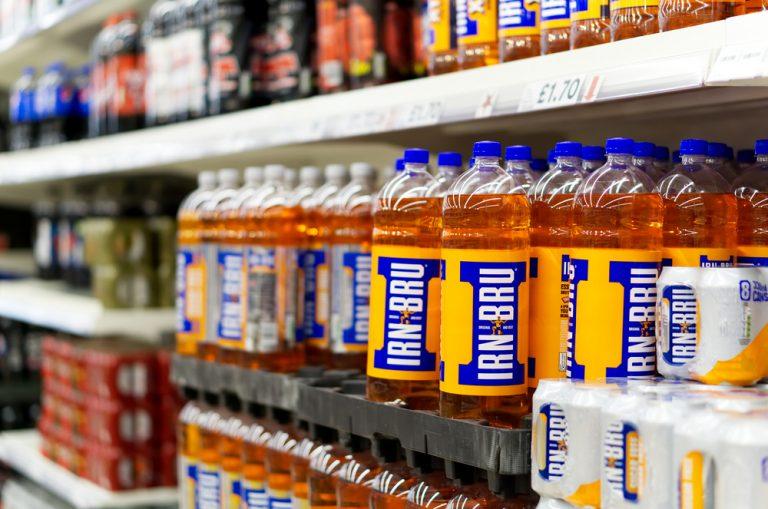
A.G Barr plc (LON:BAG), the maker of the Irn-Bru brand, revealed on Tuesday that 99% of its soft drinks are sugared down in order to exempt the products from Britain’s soft drinks industry levy.
The UK’s sugar tax on soft drinks was introduced last April in order to positively impact the health of individuals in Britain. Excess sugar consumption is linked to obesity and weight gain which increases the likelihood of the development of a wide range of health issues.
This measure now charges drinks with over 5 grams of sugar per 100 millimetres.
A.G Barr said on Tuesday that 99% of its drinks have been reformulated in a way that avoids them being taxed by the government measure.
Additionally, the company added that Irn-Bru’s sugar free variants now account for 40% of the total Irn-Bru brand.
It reported a 2.5% rise in pre-tax profits, rising to £45.2 million as opposed to the £44.1 million figure from 2018.
A.G Barr said that it had incurred £1.4 million of costs as part of its ongoing sugar reduction and reformulation plan.
The maker of Irn-Bru is not the only company to move its portfolio towards healthier products. As more consumers embark on a healthier lifestyle, food and beverage producers have had to shift their products to meet this growing demand.
Greggs (LON:GRG) revealed earlier this month the success of its Vegan sausage roll, created to cater for a vegan diet. Hundreds of thousands of vegan sausage rolls were sold in the first week of the product’s launch.
Elsewhere, Pepsi (NASDAQ:PEP) announced last year that it would buy the drink-machine maker SodaStream for $3.2 billion in a bid to compete against its rival Coca-Cola (NYSE:KO) for healthy beverages.
In confectionary, Nestle (SWX:NESN) announced last year that it was set to make additional cuts to sugar, salt and saturated fat quantities in its products in an attempt to draw in more health-conscious consumers.
At 08:27 GMT Tuesday, shares in A.G Barr plc (LON:BAG) were trading at -1.62%.
Majestic Wine to close stores and focus on Naked brand

Majestic Wine (LON:WINE) revealed on Monday that it would close stores amid plans to concentrate on its Naked Wines online division.
Shares in Majestic Wine dropped over 12% on the announcement.
Founded in 2008 by Rowan Gormley, Naked Wines was purchased by Majestic Wines in 2015 for £70 million.
Following the acquisition of Naked, the company pursued a transformation plan to broaden its sales outside of Britain, invest in customer relationships and increase its digital capability.
As a result of this, the company benefits from almost 45% online and over 20% international and it has identified significant growth potential driven by the US. The next phase of this transformation, the company said, is focusing on the significant growth opportunity that Naked offers.
Since the acquisition of Naked, it has built a 200 strong winemaker portfolio. This includes the makers of Grange, Tignanello, Solaia, Stags’ Leap Winery and Ruinart Champagne, producing over 1,000 wined in 18 different countries.
As the company moves towards the next phase of its evolution, it will announce a “Group Transformation Plan” in June 2019. Under this plan, the UK’s largest specialist wine retailer will focus on accelerating growth in Naked. Consequentially, the group will review the dividend in June 2019 in light of increased investment levels and transformation.
Additionally, the group transformation plan is expected to be funded by releasing capital from Majestic through “migrating customers and stores to the Naked brand”, the sale of assets and the closure of some of its 200 stores.
Finally, the change will come with a group rebrand to “Naked Wines plc”, reflecting its focus on a single brand and model.
“It is clear that Naked Wines has the potential for strong sustainable growth, and we will deliver the best results for our shareholders, customers, people and suppliers by focusing all our energies on delivering that potential,” Group Chief Executive Rowan Gormley commented on the announcement.
“We also believe that a transformed Majestic business does have the potential to be a long-term winner, but that we risk not maximising the potential of Naked if we try to do both,” he said.
“Where we have no choice but to close stores we will aim to minimise job losses by migration into Naked.”
Though it has not specified how many stores are set to close, the group plans to minimize job losses.
Plans are expected to be fully revealed in June.
At 10:51 GMT Monday, shares in Majestic Wine plc (LON:WINE) were trading at -12.36%.
Sports Direct demands Debenhams reconsiders its offers
Sports Direct (LON:SPD) released a statement on Monday calling on Debenhams (LON:DEB) to reconsider its offers made to save the struggling department store chain.
The latest offer made by Sports Direct is the acquisition of Magasin Du Nord, Debenhams’ Danish operation, for £100 million, but this has been rejected by the department store chain.
Sports Direct said that it believes its offer for Magasin Du Nord “represents in excess of fair value and addresses Debenhams’ immediate liquidity concerns”.
“Sports Direct notes that it did not receive a response to its invitation to Debenhams to provide further details of its valuation should Debenhams believe Magasin to be worth more than the £100m offered,” it continued.
“The offer for Magasin is one of several offers that Sports Direct has made to provide the board of Debenhams with a valid alternative to its apparent view that that multiple insolvency processes are required to address Debenhams’ current liquidity concerns and to facilitate a wider balance sheet restructuring.”
Mike Ashley has made several attempts to snatch control of Debenhams, offering a £150 million loan earlier in March. Debenhams had said it was negotiating funding of the same amount with banks and so Sports Direct offered to fund the entire loan itself, with one of the conditions being that Mike Ashley be made a director and CEO of the business.
Just a few days ago Debenhams announced that it was seeking a £200 million lifeline from its existing lenders. If Debenhams is able to secure the £200 million in alternative funds, it can commence restructuring without Mike Ashley, and potentially dislodge its current shareholders – such as Sports Direct.
The company statement regarding the rejected Magasin offer concluded with the reaffirmation that if Mike Ashley were to become CEO of the department store chain, he would step down from his Sports Direct role.
“Sports Direct would strongly recommend that the Debenhams board reconsiders the offers made by Sports Direct to date and their own duties as directors of Debenham,” the company said.
Numerous UK high street retailers have revealed their struggles as they battle against tough trading conditions, with House of Fraser and HMV only just avoiding administration following recent takeovers.
At 10:00 GMT Monday, shares in Sports Direct International plc (LON:SPD) were trading at +0.035%, whilst Debenhams plc (LON:DEB) shares were trading -1.89% as of 10:06 GMT.