
Analysis of the unwashed area is yielding energy values of 6,200kcal/kg and up to 6,800kcal/kg – up from previous areas with an average of 5,000kcal/kg. Further, average daily coal production is increasing with 730 tonnes produced between 1 July and 15 July 2019; this included production of 102 tonnes of washed coal produced on 15 July 2019 in a single shaft.
Edenville Energy shares rally with record coal production

Tanzania-focused coal production company Edenville Energy (LON: EDL) reported improved output at its flagship Rukwa Coal Project in its latest operational update.
Following the overburden stripping and exposing of coal announced on June 27 2019, coal mining has now commenced in the Northern Mining Area. The coal in this area measures collectively at approximately 20 metres thick and up to 40 metres thick in some areas, which is dense compared to previously mined areas with approximately 3.5 metre thickness.
Anglo American “broadly” on track to meet annual targets
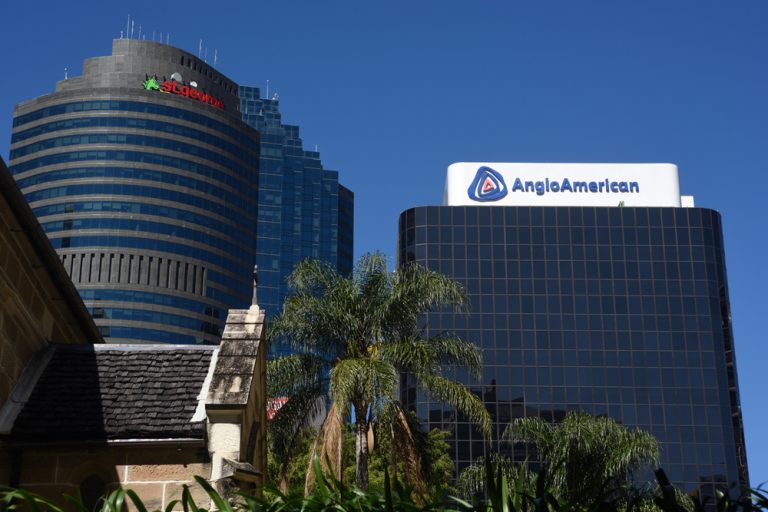
Anglo American (LON:AAL) said on Thursday in its second quarter production report that it remains “broadly” on track to deliver its full year production targets.
Shares in the multinational mining company were down almost 1% on Thursday afternoon.
For the company’s second quarter ended 30 June, copper production was up 1% to 159,100 tonnes driven by a strong performance at Los Bronces and Collahuasi.
De Beers’ diamond production dropped by 14% to 7.7 million carats as Anglo American continues to produce to market demand and Venetia transitions from open pit to underground.
Platinum production increased by 3% to 520,300 ounces and palladium decreased by 1% to 347,200 ounces, due to a change in mix of production from each operation.
“Production is up 2% for the quarter, due to the successful ramp-up at Minas-Rio and strong performance at Metallurgical Coal following the longwall moves and plant upgrade work in Q1,” Mark Cutifani, Chief Executive of Anglo American, commented in the results.
“Kumba Iron Ore continues to improve following Q1 production challenges. De Beers, in view of prevailing market conditions, will continue to produce to demand for the year.”
“We remain broadly on track overall to deliver this full year’s production targets, with an increase to Minas-Rio guidance offsetting two reductions at De Beers and Kumba Iron Ore.”
Earlier in May, Anglo American saw its share price rally following an announcement that its plans to construct a new diamond recovery vessel had been approved.
It also kick-started the year announcing that it expected copper and diamond production to decline in 2019.
Shares in Anglo American plc (LON:AAL) were down 0.59% as of 14:41 BST Thursday.
Boku growth in mobile payment volumes pushes up revenue

Continuing the growing shift to financial tech solutions, Mobile payment platform Boku Inc (LON: BOKU) posted its results for the first half of FY19, and reported growth in revenues alongside spikes in payment volumes and active usership.
The Group stated that their Total Payment Volume was up 49% on a year-on-year basis for H1, up from $1.5 billion to $2.3 billion. Further, Monthly Active Users of the Boku platform in June 2019 were 48% higher than in June 2018, at 15.3 million compared to 10.3 million.
Regarding Boku Identity, monitoring activity increased more than sixfold during the quarter, with 74 million numberrs monitored in June 2019, compared to 12 million monitored in June 2018. Processed transactions were also doubled on-year on a proforma basis, up from 70.6 million in H1 2018, to 140.9 during H1 2019.
As a result, Group Revenue for H1 was expected to finish at between $22.5 million and $23 million, up by over 33% from $16.9 million for H1 2018. The Company added that it expected Mobile Identity to represent between 14% and 16% of total reveneus for the period. Adjusted EBITDA was also noted to be on track to meet full year expectations.
However, the Group’s cash at 30 June 2019 was $27.8 million, down from $32.3 million at 30 June 2018. Moreover cahs balance was $22.2 million in June 2019, down from $24.4 million for December 2018.
Boku comments
Jon Prideaux, Boku’s CEO, commented,
“I am delighted with our first half results which show Boku maturing into a multi-product company, without missing a step in our Payments business.”
“With Monthly Active Users continuing to grow strongly, we are proving once again the value that Boku brings to our global digital clients. Of course, the law of large numbers dictates that Payments volumes will not continue to grow at such high percentages indefinitely, but with our significant scale driving operational gearing, the incremental revenues we generate from Payments will continue to drop straight through to EBITDA, affording us the opportunity to make ongoing investments in future growth.”
“Our first such investment, Boku Identity, is off to a flying start and yet we have barely begun to realise the full potential of this new venture. Having acquired Danal Inc, now fully integrated as Boku Identity, at the beginning of the year, the first half of 2019 has been focused on setting ourselves up for sustainable global expansion in what is a new and emerging market. We expect this progress on Identity to continue and accelerate in the second half.”
“Identity is not the only innovation we are pursuing. Our recently announced partnership with Grab in South East Asia demonstrates that there is plenty of potential to grow our Payments business through partnerships with mobile wallets and other alternative payment methods.”
“I am hugely excited by the pipeline of opportunities that we have created in both Payments and Identity and I look forward to providing further updates as the year progresses.”
“We maintain our full year guidance for revenues and adjusted EBITDA, with the normal seasonal bias and further scale up in identity revenues expected in H2 2019.”
Investor notes
The Company’s share price dipped 5.12% or 6.6p following the update, down to 122.40p a share 18/07/19 14:27 BST. Peel Hunt analysts reiterated their ‘Buy’ stance on Boku stock. Elsewhere in the tech sector, there were updates from; Telit Communications Plc (LON: TCM), TP Group PLC (LON: TPG), Mobile Streams Plc (LON: MOS), Sophos Group plc (LON: SOPH), MiriAd Advertising plc (LON: MIRI), Zoo Digital Group plc (LON: ZOO) and Vela Technologies Plc (LON: VELA).Water companies to invest £12 billion in five years under regulator plans
Water companies in England and Wales face pressure to increase investment under the regulator Ofwat’s latest price review.
Ofwat unveiled proposals on Thursday that involve water companies investing an additional £6 million each day, every day, for the next five years.
Equating to £12 billion collectively, the additional investment will be used to improve services for future generations, including by building reservoirs, moving water to where its needed most and protecting the environment.
The price review also includes ambitious new targets to drive water companies to cut pollution incidents by more than a third, reduce supply interruptions by almost two-thirds, help 1.5 million customers who are struggling to pay their bills and cut leakage to save enough water equivalent to the needs of the population of Manchester, Leeds, Leicester and Cardiff.
At the same time, Ofwat expects customers to see their water bills cut by £50, the regulator said in its price review.
“The package we are unveiling today signals a brighter future for customers, with better services, a healthier natural environment and lower bills,” Ofwat Chief Executive, Rachel Fletcher, commented.
“To get there we are calling for extra investment of £6 million each and every day to improve the environment and provide services for a growing population. At the same time we expect to see customers’ bills cut by an average of £50,” the Chief Executive continued.
“These are seriously stretching goals for the sector, but we know they can be achieved. We have seen three water companies leading the way and we now want the rest to show the ambition and drive to deliver this new era for customers and the environment.”
Earlier this year, Severn Trent (LON:SVT) warned on the future of the water sector in its annual results.
Profits at Thames Water dropped at the end of last year following regulatory penalties and extreme weather.
UK retail sales up in June

UK retail sales were up for the month of June, new data from the Office for National Statistics revealed on Thursday.
The quantity bought in June was up 1% when compared with May, and growth was particularly driven by non-food stores.
In the three months to June, the quantity bought was up 0.7%. Growth occurred across all sectors apart from food stores and department stores.
The Office for National Statistics said, however, that this was a slowdown compared to the stronger growth of 1.6% in the three months to May.
The data also reveals that online sales as a proportion of all retailing fell to 18.9% in June, down from the 19.3% reported in May.
Whilst department stores continued to struggle, second-hand stores such as charity shops and antique dealers were among some of the largest contributors to the growth.
Department stores were the only sector to reveal a decline in the non-food stores category at -0.2% for the amount spent and -0.4% for the quantity bought. June was the sixth consecutive month-on-month decline for department stores, according to the data.
As the UK high street crises takes its toll on stores, businesses have been struggling amid store closes and staff cuts.
The British department store House of Fraser was saved last year by Mike Ashley’s Sports Direct in a £90 million deal.
Before the deal, the department store had announced that it was going into administration.
Elsewhere in retail, online company ASOS (LON:ASC) also made headlines on Thursday after it issued its third profit warning in the past seven months, sending shares down.
SSE remains steady and retains full-year outlook
Perth-based energy company SSE PLC (LON: SSE) remained stable in the first quarter as it prepares for its AGM.
The Company noted that renewable energy output was lower than the forecast volume for the three month period but despite this, the Group said they would retain their previous outlook provided for the financial year 2019-2020 given in May 2019.
SSE also repeated their commitment to recommending a full-year dividend of 80p per share for 2019-2020, which is in line with their five-year dividend plan.
SSE comments
Company Chief Executive, Alistair Phillips-Davies, said,
“The early months of our financial year have brought some short-term challenges and some encouraging longer-term developments, but the key months of our financial year lie ahead. I am confident we will make good progress in delivering against our strategic priorities, including the five- year dividend plan out to 2023.”
“The fact the UK has become the first major economy to legislate for net zero emissions by 2050 is a key development in the fight against climate change and reinforces SSE’s strategic focus on regulated electricity networks and renewable energy, and our commitment to creating value through the low carbon transition.”
The Company’s outlook read as follows, “The key months in SSE’s financial year are still to come, but the overall outlook provided in May 2019 in relation to adjusted operating profit across a number of SSE’s business units in 2019/20 remains unchanged. This is despite lower than expected output of renewable energy in the three months to 30 June, with the shortfall in output equivalent to less than 4% of the annual forecast total. As stated in May, the outlook for adjusted operating profit includes suspended Capacity Market payments totalling £148m. Group adjusted net finance costs and group capital and investment expenditure in 2019/20 continue to be in line with that set out in May.”Investor notes
Following the update, the Company’s shares rallied 1.00% or 11.50p to 1,164.50p per share 18/07/19 12:10 BST. Morgan Stanley reiterated their ‘Equal Weight’ stance, while Deutsche Bank reiterated their ‘Hold’ rating on SSE stock. Preluding the Company’s disappointing renewables performance, other updates from the renewable energy sector, there have been recent updates from; SIMEC Atlantis Energy (LON: SAE), Aquila European Renewables Income Fund (LON: AERI) PowerHouse Energy Group (LON: PHE), The Renewables Infrastructure Group Ltd (LON: TRIG) and Tekmar Group Plc (LON: TGP).Kavango Resources announces Ditau assay and shares dip

Botswana-focused mineral exploration group Kavango Resources PLC (LON: KAV) has seen its share price dip in morning trading, following the results from its assay of their Ditau Project.
The assay analysis was carried out by Genalysis Laboratories in Australia. 65 elements were assayed for, using aqua regia digest with ICP finish on a sample of 489 core samples prepared by Intertek Laboratories in Johannesburg. Genalysis performed 12 duplicate check assays, 14 control standards and 14 blanks during the assay.
The Company said it would undertake its own independent checks and duplicates.
Kavango Resources comments
Company Chief Executive Officer, Michael Foster, attached the following to the update,
“We are pleased to have received the assay results from the two drill holes at Ditau. Kavango is now completing its own check assays at an independent laboratory in South Africa, which is normal industry practice. We will then be in a position to fully check, assess and interpret the results so as to formulate our plans for Ditau.”
“Currently Kavango’s preferred option would be to farm-out this project to an industry partner, mainly due to its’ size, plus the fact that our main focus remains the Kalahari Suture Zone (“KSZ”) structure in southwest Botswana where drilling is expected to commence later this quarter”.
Following the Company’s update on receiving its Ditau prospecting licence, the Group’s CEO commented, “Extending our land position at Ditau following an assessment of the Company’s recent work provides Kavango with an important strategic ground holding in this prospective area.”Investor notes
The Company’s shares dipped 6.31% or 0.25p to 3.75p a share 18/07/19 10:21 BST. Elsewhere in the mining and minerals sector, recent updates have come from; Ariana Resources plc (LON: AUU), Rio Tinto plc (LON: RIO), Bushveld Minerals Limited (LON: BMN), Anglo Asian Mining plc (LON: AAZ), Anglo Asian Mining plc (LON: AAZ) Pan African Resources (LON: PAF) and Keras Resources PLC (LON: KRS).Stranger things are happening as Netflix loses subscribers

Netflix has been hit with its first major loss in subscribers in eight years, the video streaming service revealed in its second quarter results.
Paid memberships grew by 2.7 million worldwide, which is less than the 5.5 million subscribers it experienced its second quarter a year prior.
The 2.7 million figure is also significantly below the company’s 5 million new subscriber forecast.
Additionally, the company lost 130,000 subscribers in the US from the last quarter.
Netflix said that its missed forecast was across all regions but, in particular, slightly more in regions which saw an increase in prices.
The world’s largest video streaming service said that it does not believe competition played a part in its missed forecasts. It has, however, acknowledged the competition it will soon face.
Earlier this year, ITV and BBC announced that they were set to take on Netflix with the launch of a joint video streaming service named BritBox.
“Even though we expected slowing user growth in the US, a negative paid net additions number is shocking,” Clement Thibault, analyst at financial markets platform Investing.com, said according to Sky News.
“The problem is that with intensifying competition, there is no guarantee Netflix has the pricing power needed to raise prices without massively bleeding users.”
Netflix added that, in its third quarter, it expects to grow by 7 million paid memberships, above the 6.1 million figure from the same period last year.
It also said that the rate in which consumers world-wide continue to switch from linear television to internet entertainment is “remarkable”.
Netflix kick-started its third quarter with the season 3 of its popular show, Stranger Things, and its first two weeks of the quarter have been “strong”.
Shares in Netflix, Inc. (NASDAQ:NFLX) were trading at -0.97% as of 06:18 GMT -4 Thursday.
OBR: UK economy will plunge into recession in no-deal scenario

The UK’s economy will plunge into a recession if the nation departs from the European Union without a deal, the Office for Budget Responsibility said on Thursday.
The announcement was made in the independent body’s yearly fiscal risks report as the nation’s new EU exit deadline approaches.
The Office for Budget Responsibility said that real GDP will fall by 2% by the end of 2020 and is 4% below its March forecasts by that point.
“Heightened uncertainty and declining confidence deter investment, while higher trade barriers with the EU weigh on exports. Together, these push the economy into recession, with asset prices and the pound falling sharply,” the Office for Budget Responsibility said in its report.
“Higher trade barriers also slow growth in potential productivity, while lower net inward migration reduces labour force growth, so potential output is lower than the baseline throughout the scenario (and beyond),” it continued.
Earlier in April the UK was given yet another life line by the EU as it agreed to postpone Brexit for an additional six months until 31 October, a somewhat poetic ending to the UK’s time in the union.
Reactions to the possibility of a no-deal departure have been mixed. The Bank of England said earlier this month that the UK’s financial system is strong enough to cope with a “worst-case” disorderly Brexit in its Financial Stability Report.
However, 150,000 companies are “not fully ready” for the advent of a no-deal Brexit, Mark Carney said in June.
As the Halloween deadline approaches, the race to leadership of the Conservative Party is reaching its final lap as Boris Johnson and Jeremy Hunt battle for the position of Prime Minister.
ASOS shares plunge after yet another profit warning

ASOS (LON:ASC) issued yet another profit warning on Thursday, sending shares crashing during early trading.
Shares in the online fashion retailer were trading almost 14% lower after recovering from the initial plunge following the announcement.
This is the third profit warning issued by ASOS in the past seven months after those posted in March and December.
ASOS said that, for the four months to 30 June, though sales in the UK and ROW remained robust, European and US sales were held back by operational issues associated with the business’ transformational warehouse programmes.
The online fashion retailer said that it now expects overall profit to be in the range of £30 million – £35 million.
“Whilst we are making good progress in improving customer engagement, our recent performance in the EU and US was held back by operational issues associated with our transformational warehouse programmes,” said Nick Beighton, CEO of ASOS.
“Embedding the change from the major overhaul of infrastructure and technology in our US and European warehouses has taken longer than we had anticipated, impacting our stock availability, sales and cost base in these regions,” the CEO added.
“We are clear on the root causes of the operational challenges we have had, are making progress on resolving them, and now expect to complete these projects by the end of September.”
“Despite these short-term challenges, the move to a multi-site logistics infrastructure will enable us to offer customers across the world our market leading proposition, facilitate our future growth, as well as leading to longer-term efficiency benefits.”
Back in December, ASOS issued an unexpected profit warning in the run-up to Christmas, sending shares down over 40%.
As the UK high street crisis takes its toll on brick-and-mortar stores, online retailers were considered to be safe from the difficult trading conditions.
However, the trading updates issued by ASOS suggest that this is a wider issue, having an impact on more than just physical stores.
Shares in ASOS plc (LON:ASC) were trading at -12.87% as of 09:50 BST Thursday.