
Metro Bank shares tumble on missed expectations

Shares in Metro Bank fell on Wednesday morning after underlying profits in 2018 missed analyst expectations.
The lender reported a 138% rise in profits to £50 million in the year to 31 December 2018, however, profits were £9 million lower than expectations.
Following the news, shares in Metro Bank tumbled over 28% to 1,581p – the lowest since the company was listed in 2016.
The chief executive Craig Donaldson said: “2018 was another strong year of growth for Metro Bank as we continued to invest in both new stores and digital capabilities to win customers, deposits, assets and to create fans.”
“Metro Bank remains well positioned to support our growth strategy as we navigate an uncertain period for the UK,” he added.
In the fourth quarter of 2018, the lender saw 100,000 new customers and opened six new branches.
The group said that in the past year, loans grew 48% to £14.2 billion. Assets grew 32% to £21.7 billion and deposits in the bank increased 34% to £15.7 billion.
Shares in Metro Bank (LON: MTRO) are currently trading down 30.59% at 1.528,50 (1135GMT).
AJ Bell blames “negative market movements” as assets fall

AJ Bell (LON:AJB) said assets fell in the three months to December 31, according to a trading update published on Wednesday.
The online investment platform said that ‘negative market movements’ of £2.7 billion led to a 4% decline in assets to £44.2 billion since 30 September 2018.
Meanwhile, platform customer numbers rose by 7,285 to 190,498, marking an increase of 4%. Underlying Platform inflows increased 20% to £1.2 billion, compared to £1.0 billion during the same period a year before.
The update is the first since AJ Bell floated on the London Stock Exchange in December, valuing the firm at £651 million.
Chief executive Andy Bell commented:
“Trading in the first quarter of our financial year continued in line with the growth story we outlined ahead of our IPO and remains on track. We continued to attract new customers and inflows to the platform in the face of volatile investment markets, which demonstrates the strength and resilience of our business model as we approach our busiest period of the year. Our low-cost and easy-to-use investment platform continues to appeal to both retail customers and financial advisers, and providing high quality service to them remains our top priority.”
Looking ahead, Mr Bell said that platforms are set to remain “one of the main beneficiaries of defined pension transfers.”
He added: “Our competitive pricing model and service proposition means we are well positioned to benefit from anticipated developments in these areas.”
AJ Bell is an online investment and broker platform. The firm was founded in 1995 and is headquartered in Manchester.
Shares in AJ Bell remain flat as of 11:00AM (GMT).
Santander to close 140 branches
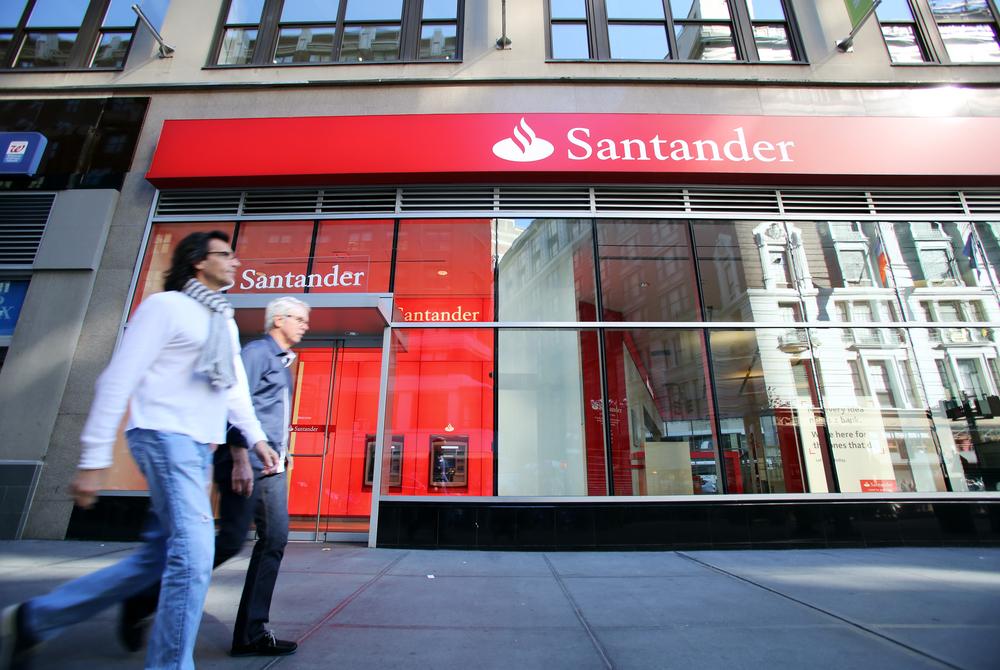
Santander (BME:SAN) is set to close 140 branches in the UK, placing 1,270 jobs in the firing line.
The Spanish bank said that this was in response to changes in how customers bank, with the number of transactions carried out via branches falling by 23% over the past three years.
Conversely, transactions via digital channels have grown by 99% over the same period, with customers increasingly turning to the ease of online banking.
Susan Allen, Head of Retail and Business Banking, said:
“The way our customers are choosing to bank with us has changed dramatically in recent years, with more and more customers using online and mobile channels. As a result, we have had to take some very difficult decisions over our less visited branches, and those where we have other branches in close proximity.
“We will support customers of closing branches to find alternative ways to bank with us that best suit their individual needs. We are also working alongside our unions to support colleagues through these changes and to find alternative roles for those impacted wherever possible.”
In addition, Santander said 100 branches will be refurbished over the course of the next two years with an investment of £55 million.
Santander is not the only bank moving towards branch closures.
Last year, HSBC (LON:HSBA) announced the closure of 62 of its UK branches, citing changes in customer banking habits.
Similarly, in September, RBS (LON:RBS) revealed plans to cut 54 branches, resulting in the loss of 258 jobs.
Shares in Santander are currently trading +0.78% as of 10:45AM (GMT).
Sony to move Europe HQ out of London

Sony (TYO: 6758) is set to move its Europe headquarters out of the UK to the Netherlands, in light of Brexit.
The electronics firm said the move will help the company avoid any issues involving customs once the UK officially leaves the European Union.
However, Sony have said the move will have a limited impact on existing operations in the UK.
In a statement, the company said that the relocation will ensure that “we can continue our business as usual without disruption once the UK leaves the EU. All our existing European business functions, facilities, departments, sites and location of our people will remain unchanged from today.”
News of Sony’s move comes after Dyson also announced a move out of the UK to Singapore.
On Tuesday, the company announced it is shifting its headquarters out of Malmesbury in Wiltshire to Asia.
Chief Executive Jim Rowan was keen to emphasise that the move had nothing to do with ongoing Brexit negotiations.
He said: “It’s to make us future-proof for where we see the biggest opportunities.”
He continued: “We have seen an acceleration of opportunities to grow the company from a revenue perspective in Asia. We have always had a revenue stream there and will be putting up our best efforts as well as keeping an eye on investments.
“We would describe ourselves as a global technology company and in fact we have been a global company for some time. Most successful companies these days are global.”
Founder Sir James Dyson has been a vocal advocate of Brexit, thus, the company’s pivot towards Asia may raise questions in the UK.
The UK is set to formally leave the EU in March, however, as it stands Parliament have yet to have agreed upon a deal.
Various companies have expressed concern over the possibility of a no-deal and the chaos it could create for business.
Sony is just the latest company to announce a move in light of continued Brexit uncertainty.
Shares in the Japanese firm are currently trading -0.056% as of 10:14AM (GMT).
ZOO Digital shares plummet on profit warning

ZOO Digital shares (LON:ZOO) plunged on Tuesday after the company warned that its annual earnings would fall behind expectations.
The company said that revenues associated with DVD and Blu-ray titles in the second half of the year would prove “significantly lower than anticipated” as “the overall market decline in this area has accelerated more quickly than envisaged.”
As a result, the firm said it expects revenues for the second-half of the year to be 10% below expectations.
Stuart Green, Chief Executive of ZOO Digital, commented:
“Whilst we are disappointed to fall short of expectations, albeit primarily due to one off occurrences, we are encouraged that we have seen year on year growth across our key service lines being dubbing and subtitling, as well as having successfully delivered projects for a number of new clients. We remain confident that the Company’s strategy is correct and will enable us to capitalise on the long-term opportunity. We are now enjoying a growth in orders from our largest clients and expect to add significant new accounts during the remainder of the second half.
“With several major media companies recently announcing their intention to launch OTT services, there is no doubt that the market will continue to expand significantly and with it the growing demand for the premium services offered by ZOO. Our excitement for the future remains undiminished.”
ZOO Digital is a provider of subtitling and digital distribution. The company was founded back in 2001 in Sheffield.
It has production facilities in El Segundo, Los Angeles, London and Sheffield as well as in Dubai.
Shares in ZOO Digital are currently -46.59% as of 14:14PM (GMT).
Elsewhere across the markets, shares in cyber security provider ECSC (LON:ECSC) rallied on the back of a promising trading update.
In the retail sector, Pets at Home shares (LON:PETS) ticked up after the company posted a promising set of results for the Christmas period.
Conversely, embattled department store chain House of Fraser revealed a sharp fall in sales in the run up to Christmas, down 60%, as the UK high street continues to suffer.
Google fined record £44m by French data watchdog

Google (NASDAQ:GOOGL) has been fined £44 million (€50 million) by the French data regulator CNIL for breaching European privacy laws.
CNIL dealt Google with the record fine after finding that Google had breached the rules of the recently passed GDPR regulations.
This is the first fine that the regulator has dealt a penalty since the enforcement of new EU privacy laws in 2018.
Firstly, the French watchdog found that the tech company did not make information on data collection clearly accessible for its users.
Specifically, CNIL said information on data storage or data processing often took several steps for users to reach, sometimes involving as many as 5 or 6 clicks.
Secondly, CNIL concluded that Google also violated EU restrictions regarding personalised ads.
Whilst Google obtains consent from its users, CNIL said this was not valid as users were not sufficiently informed with information often proving ‘diluted’ and not ‘unambiguous’.
In a statement, Google said: “People expect high standards of transparency and control from us. We’re deeply committed to meeting those expectations and the consent requirements of the GDPR. We’re studying the decision to determine our next steps.”
The European Parliament passed GDPR last year after a string of controversies hit the headlines, involving data collection and the misuse of user information by social media platforms.
Specifically, incidents such as the exposure of the Cambridge Analytica Facebook scandal, led to the enforcement of the more stringent restrictions upon businesses and their respective data collection procedures.
As such, GDPR is one of the most far reaching privacy reforms ever passed by the EU, with the 99 articles legally binding and applicable to all member states.
Back in October, Facebook (NASDAQ:FB) was dealt the maximum fine of £500,000 by the UK’s data protection watchdog, the Information Commissioner’s Office (ICO) for the data breach.
ECSC shares soar after promising trading update

Shares in ECSC were up more than 40% on Tuesday, after the company updated the market with a promising trading update for the year.
The cyber security services provider said it enjoyed revenue growth of over 30% to £5.4 million for the 2018 financial year.
The company also said that managed services revenue growth was up 50%. Consulting services revenue growth was also up over 25%.
Ultimately, the security firm said q4 trading remained strong, with results set to be in line with market expectations.
With regards to artificial intelligence technology, 95 new consulting clients were secured during the period.
As a result, the ECSC said its final cash balance came in at £650,000, alongside debts of £869,000.
Ian Mann, CEO of ECSC, commented:
“We are delighted to report such strong organic growth for the full year, and moving back into profit, with continued emphasis on our Managed Services recurring revenue. The team continues to acquire new clients, deliver quality service, and build a solid base for ongoing growth.”
David Mathewson, Non-Executive Chairman, commented:
“The performance reflects a focussed and motivated team delivering strong growth, whilst keeping tight control over costs and cash management.
Our programme of cost reductions in late 2017 and early 2018 improved our efficiency, whilst maintaining our service quality and growth capability.”
ECSC was founded back in 2000 and is headquartered in the UK. In 2018, the company received its second PCI Award for Excellence.
The company was also listed within SC Magazines’ Global top 50 companies in the cyber security market.
Shares in ECSC (LON:ECSC) are currently trading +41.88% as of 12:15PM (GMT).
Shefa Yamim secures new permit in pursuit of mine-to-market strategy

Shefa Yamim (LON:SEFA), the precious stone exploration and prospecting pursing a mine-market strategy in Northern Israel has announced two of its permits have been renewed by the Ministry of Energy, Natural Resources Administration.
The permits cover a total of 44,045 hectares and are valid for a year for the prospecting of diamonds, gold, gems and other precious stones.
Avi Taub, CEO of Shefa Yamim, said:
“The renewal of these two permits is another step for the Company moving to the advanced stages of exploring the permitted areas, including the magmatic bodies on Mount Carmel and Ramot Menashe, which are the primary sources of the unique and rare gemstones discovered by Shefa Yamim at the Kishon Mid Reach project. The Company continues to progress towards trial mining in Zone 1 of the Kishon Mid Reach.”
Shefa Yamim recently announced they had discovered a new mineral in their Carmel Sapphire™ and it had been officially recognised by the International Mineralogical Association.
Shefa Yamim’s operations are prospecting for a wide range of stones including diamonds, sapphires, rubies, garnets, spinel and their Carmel Sapphire™.
The new permit designated 837A12 for Mount Carmel covers an area of 32,755 hectares and another site 899A7 for the Ramot Menashe area is 11,290 hectares.
The permits bring the number of permits attached to Shefa Yamim to a total of four.
The permits are located in Northern Israel focussed on volcanic geological areas in the the Zevulun and Yizre’el valleys, Mount Carmel and the Kishon River.
Shefa Yamim are pursuing a mine-to-market strategy similar to that of De Beers that would see Shefa Yamim produce jewellery for the end user as opposed to selling their stones to intermediaries such as brokers.
Shefa Yamim are operating in gemstone market that is expecting to grow to be worth $10 billion in the next ten years, according to UN Trade data.
UK employment hits record high, says ONS
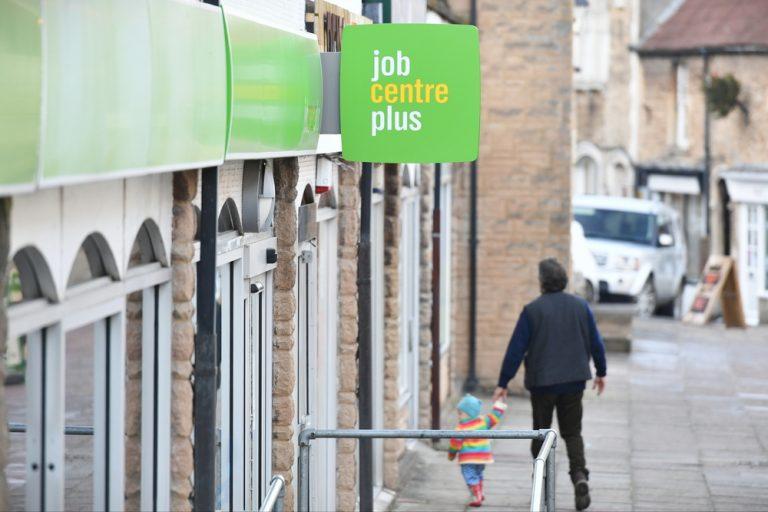
The number of people in employment in the UK hit a record of 32.54 million, according to the latest figures from the Office for National Statistics (ONS).
According to the figures, UK unemployment saw a small increase of 8,000 between September and November to 1.37 million. Average earnings, not including bonuses was up 3.3% in the year to November, with wage increases offsetting inflation levels. Last week, the latest official figures reveal inflation fell to 2.1% in December, driven largely by a fall in petrol prices. Moreover, there was a record number of job vacancies during the three months to November, helping to push unemployment to its lowest level since 1975. ONS head of labour market David Freeman commented: “The number of people working grew again, with the share of the population in work now the highest on record. “Meanwhile, the share of the workforce looking for work and unable to find it remains at its lowest for over 40 years, helped by a record number of job vacancies. “Wage growth continues to outpace inflation, which fell back slightly in the latest month.” Employment Minister Alok Sharma said of the latest figures: “Our pro-business policies have helped boost private sector employment by 3.8 million since 2010, and as the Resolution Foundation’s latest report shows, the ‘jobs-boom has helped some of the most disadvantaged groups find employment’, providing opportunities across society.”Dixons Carphone Christmas sales rise for q3
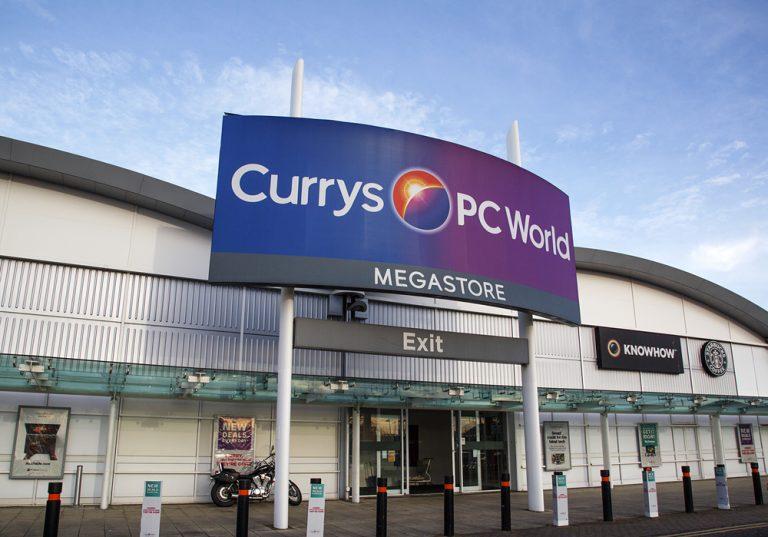
Dixons Carphone reported an increase in third quarter sales, despite a fall in mobile sales.
The group said group like-for-like revenue up were up 1% during the Christmas period. In the UK and Ireland, electrical like-for-like were up 2%.
The company said it enjoyed share gains across all categories online and in store, despite a general decline in the market.
Nevertheless, like-for-like mobile sales in the UK and Ireland down 7%.
Across international markets, like-for-like were up 5%, with the Nordics up 3% and Greece up substantially at 19%.
As a result, Dixons Carphone said that its headline guidance of approximately £300 million remains unchanged.
Alex Baldock, Dixons Carphone Group Chief Executive, said:
“Peak trading was solid and in line with expectations, producing record sales against a tough backdrop. We continued to grow our leading electrical market positions in all territories, online and instore. In UK mobile, performance was as expected. Overall, our Peak trading was disciplined and well-executed, with stable gross margins.”
He added: “We continue to make good early progress with our long term plans to deliver more engaged colleagues, more satisfied customers and a more valuable business for shareholders. It will take time and much hard work to unleash the true potential of this business, but we’re on with it. I owe a big thank you to 42,000 capable and committed colleagues for all their tremendous hard work to deliver this resilient Peak performance while getting our transformation underway.”
Back in December, shares in the electrical consumer company tumbled after reporting a £440 million loss for the half-year to 27 October.
Dixons Carphone was formed in August of 2014, as a result of a merger between mobile phone retailer Carphone Warehouse and Dixons Retail.
Shares in Dixons Carphone (LON:DC) are up +3.49% as of 10:29AM (GMT).