
Energy price cap to begin on 01 January 2019
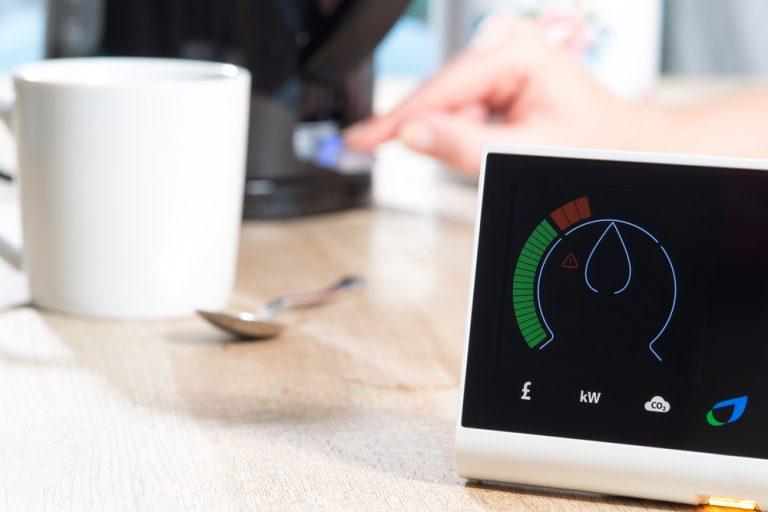
A price cap on default energy tariffs is set to begin on 01 January next year. Moreover, the price cap is expected to save 11 million households as much as £120 each.
The industry regulator has announced the price cap is expected to collectively remove roughly £1 billion from customer bills. These customers are said to be overcharged for their energy prices.
Co-operative Bank reports nine-month loss
The UK’s Co-operative Bank has reported a nine-month loss before tax of £87 million. The bank has struggled to improve performance following a restructuring and recapitalisation in June last year.
As a result of the restructuring and recapitalisation of the bank, a new incorporated holding company was created, which owns 100% of its shares.
The bank reported this morning that it made an operating profit of £14.3 million for the year. This is an improvement of £40 million assisted by lower costs.
Last year, the Co-operative Bank approved a rescue plan with U.S hedge fund creditors. Indeed, it secured a £700 million rescue deal, allowing the bank to continue as a standalone entity after it abandoned efforts to secure a buyer. This is as a result of its capital base falling to levels unacceptable to regulators as it was hit by restructuring costs and weak income.
Chief Executive Andrew Bester commented:
“We are looking to build on our strong heritage in the SME market in the year ahead and as part of that we are considering our options regarding the RBS alternative remedies fund.”
Andrew Bester is the newly appointed Chief Executive of the Co-operative Bank.
He was hired early in July following the resignation of Liam Coleman after less than two years in the position. Andrew Bester joined the Co-operative Bank after being director and chief executive of Lloyds Banking Group, leading it since 2012. Additionally, he said that the bank was considering moving into small business banking through an application of a funding scheme. The funding scheme is set to be supported by the Royal Bank of Scotland as a part of the terms of its state bailout. Back in 2013, the Co-operative Bank almost collapsed. It had to list shares on the stock market for the first time in order to raise £1.5 billion shortfall of capital and avoid nationalisation.Morrisons reports sales growth below forecast
Morrisons has reported a drop in its sales this morning. Indeed, the supermarket group reported that growth has slowed down from the previous quarter. Morrisons is the fourth largest supermarket group in the UK.
The drop in growth is below analysts’ forecasts for the group.
Total like-for-like sales, excluding fuel, rose by 5.6% in its third quarter. This figure came in lower than analysts’ average forecast of 6.1% growth. Growth in the previous quarter came in at 6.3%, making it the best sales performance in nine years. However, this was driven by the UK’s scorching weather and World Cup success.
Morrisons said in a trading statement:
“As expected, retail LFL sales growth eased slightly quarter on quarter without the impact of the favorable weather and World Cup which benefitted Q2.”
“Sales growth was again strong, with a better and broader offer for customers across the whole store. Morrisons now has almost 1,000 year-round ‘Best’ products, and over 250 exclusively for Christmas.”
Additionally, Chief Executive David Potts commented on the results:
“After another period of strong growth, and with more customers enjoying shopping at Morrisons, we have now completed three years of positive like for like.”
“Our exceptional team of food makers and shopkeepers are providing good quality food at great prices, and building a broader offer in-store, online and for our wholesale customers.”
David Potts joined Morrisons in order to lead a recovery following damage caused by Aldi and Lidl as well as previous management mistakes.
The supermarket group currently has over 500 UK stores. Morrisons’ shares have increased by 18.5% this year as David Potts has overseen a steady trading improvement for the group. This was achieved by offering more competitive prices, improved product ranges and availability and improved customer service. Earlier in October, we reported that retail sales dropped in September following a successful UK summer of hot weather and football. At 08:45 GMT today, shares in Morrison Supermarkets plc (LON:MRW) were trading at -3.83%.Adecco reports slowdown in revenue

Adecco Group announced on Tuesday that revenue growth shrunk to 2% in the three months to the end of September.
Falling from 4% in the previous three months, the staffing giant said the fall was amid economic uncertainty that is affecting hiring.
Despite the slowing in revenue, the group managed to beat third-quarter expectations for net profit.
Adeco posted a net profit of €270 million, beating the analysts’ estimate of €221 million.
Alain Dehaze, the chief executive, said in a statement: “As we communicated during our September investor seminar, trading in Q3 2018 was challenging, with growth slowing in a number of European markets. Against this backdrop, overall the Group delivered a solid performance. Organic revenue growth was 2%, including improved performances in Japan and Rest of World, and another quarter of significant outperformance in France, our largest market.”
“Our businesses responded decisively to the slowdown in market growth, making the appropriate cost adjustments to protect our margin. And while ongoing strategic investments and the transformation of our German business impacted the headline EBITA margin, we made good progress in improving underlying profitability.”
“GrowTogether is now scaling up and delivering real results in the markets where it is most progressed, such as the US, UK and France. We will deliver the €50 million productivity savings target in 2018, on the way to €250 million in 2020. And as we do so, we are further differentiating our solutions, building a digitally-enabled offering that will support future growth.”
“As the Group’s digital transformation builds momentum, it is the passion and commitment of our colleagues around the world that is making it a reality. Creating a positive and inspiring work environment is vital to our success. I am therefore delighted to report that the Adecco Group ranked in the top five ‘World’s Best Workplaces’, for the second year running, according to the recently published 2018 Great Place to Work survey,” he added.
GAM Holding chief executive resigns

The chief executive of GAM Holding resigned on Tuesday morning.
Alexander Friedman stepped down as the Swiss asset manager to stabilize after outflows accelerated in July.
David Jacob, a member of the Board of Directors, will temporarily replace Friedman during the search for a new CEO.
“The Group is facing some important decisions as we seek to position the business for future growth,” said Hugh Scott-Barrett, Chairman of GAM Holding AG.
“Alex and the Board of Directors jointly agreed that new leadership will better enable us to take the action necessary to support profitability and drive forward the Group’s strategy. David Jacob is the ideal person to lead the company, given both his detailed understanding of the Group and his successful track record leading asset management businesses.”
“There is a huge amount of talent in this business and there is much to be proud of in the way in which we serve our clients, our differentiated range of product offerings and the skill of our portfolio management teams in delivering excellent investment performance. David’s expertise and experience will give those teams the leadership and support they need as we focus on delivering for our clients,” he said, in a statement.
“Alex has ably led the business during a time of unprecedented challenges for the active asset management and hedge funds industry. Alex had the full support of the Board in the decision to suspend a portfolio manager in July. During his tenure as CEO he has driven a significant programme of change that has made us a more modern, diversified and cost-effective business. We would like to thank Alex for his significant efforts over the last four years and wish him well for the future,” he added.
GAM shares (SWX: GAM) have fallen as much 22% over the past nine months.
‘Racist’ Trump ad refused by major networks

Tuesday will see the US midterms take place, where the Donald Trump presidency may be at stake.
In a final effort to ramp up gain support using racial anxiety and fear, the US President has continually warned of an “invasion” by a caravan of migrants approaching the southern border.
Trump used his Twitter to release his reelection campaign ads, which have been viewed by Facebook and major cable news networks as a racist attack on immigrants and therefore have refused to carry it.
Jesse Ferguson, a Democratic strategist and former spokesman for Hillary Clinton, said: “No one [should] be surprised that the guy who fueled his rise to power on the birther movement is now deploying the next phase of white nationalism to fuel the election of his most loyal Republicans.”
CNN has refused to run the campaign ad, calling it racist. NBC and Fox soon followed.
An NBC spokesman said: “After further review we recognize the insensitive nature of the ad and have decided to cease airing it across our properties as soon as possible.”
When critics asked Trump about the offensive ad, he replied: “A lot of things are offensive. Your questions are offensive a lot of times so, you know.”
The US President has made the caravan a central campaign theme and has described it as an “invasion of our country”.
Barack Obama also made closing arguments on Monday, telling people in Virginia that “the character of this country is on the ballot, who we are is on the ballot”.
There is a lot at stake at the midterms on Tuesday.
“America is at a crossroads. In two days, you get to vote in what I believe will be the most important election of our lifetimes. I know politicians always say that, but this time it’s really true,” said Obama.
“Change is gonna happen. Hope is gonna happen. With each new step we take, hope will spread. Goodness will spread. And you will be the ones who will have done it. It starts with you. Let’s go vote. Let’s go make change. Let’s go make hope.”
Lloyds Banking Group to create 2,000 new roles
Lloyds Banking Group is expected to announce plans to create 2,000 new jobs in order to overhaul its tech service.
The high street lender is expected to cut 6,000 roles, whilst adding 8,000 new ones. Unions have been briefed of the job losses spread across the bank.
“Unite will scrutinise the detail of the announcement when it is made. Our priority will be to press the company to ensure there are no compulsory redundancies,” said a Unite spokesperson.
It has been understood that Lloyds will offer employees whose jobs have been axed the chance to apply for the new roles, with a re-training drive.
Lloyds, which announced 15 branch closures in September, hopes to cut operating costs from 8.2 billion in 2017 to £8 billion in 2020.
High street banks have been reducing branch numbers as they adjust to a rise of mobile and online banking in the UK.
The group will be opening “micro-branches”.
“We will continue to test these new formats and expect to open a small number in early 2018,” said a spokesperson.
“The majority of these branches may not have been upgraded for a number of years, so this does represent an investment for the community,” they added.
Customers will be able to withdraw and deposit cash, open and close accounts, however, will not be able to carry out actions including pay in cash or cheques to credit card, loan or mortgage accounts.
Following a cyber attack over the past month, the group will be replacing debit cards to customers.
Shares in the group (LON: LLOY) closed -1.55% on Monday.
FTSE 100 creeps up, despite falls in retail
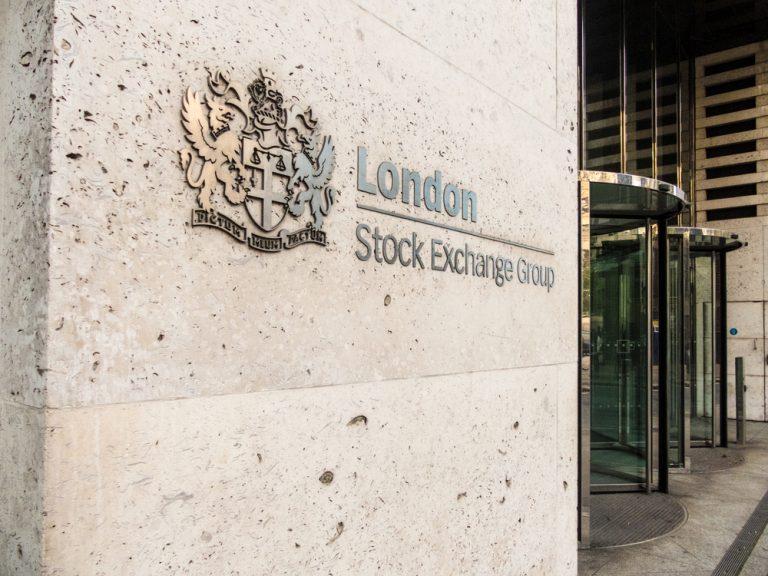
The FTSE 100 opened on Monday up 44 points thanks to resource stocks and pharmaceutical companies.
One of Monday’s biggest gainers was the mining giant BHP Billiton plc (LON:BLT), which edged up 1.7% to 1,639.2p.
UK retailers struggled, with Kingfisher PLC (LON:KGF) and Burberry Group PLC (LON:BRBY) falling 3.8% and 3.3% respectively.
Shares in Micro Focus (LON: MCRO) are performing strongly and were up by 5.1% at £12.94 on Monday after the software developer said that full-year sales would be at the top end of forecasts.
Whilst remaining in the green today, analysts expect the FTSE 100 to remain fairly subdued until Tuesday’s midterm elections.
Neil Wilson, of Markets.com, said: “The question here is does a loss of Republican power tie Trump’s hands-on issues like trade, or does it embolden him further to strike executive orders?”
“Is a weakened Trump positive or negative for the US dollar? Got to look at being a negative, ie weaker dollar if the Democrats do well. For equities, we are also still digesting Friday’s nonfarm payrolls print, which indicated further strong jobs and wage growth.”
“The 3.1% print on wages will do nothing to tell the Fed to take its foot off the tightening pedal,” he added.
In the FTSE 250, Hiscox (LON: HSX) was one of the biggest fallers, with shares falling by 6.2%.
Russ Mould, the investment director at AJ Bell, said: “Lloyd’s of London underwriter Hiscox is the latest company to feel the wrath of disappointed investors as it says growth in insurance premiums could moderate. It also reports an up-tick in claims activity and warns that its full-year investment return will be subdued as a result of ongoing economic and global political tensions.”
“One could argue that this part of the insurance market regularly goes through ups and downs and that panicking about short-term issues is not the right thing to do.”
“Higher claims levels from hurricanes, earthquakes and wildfires, for example, often lead to higher insurance premiums, which gives a boost to future earnings; however, the industry has been slightly disappointed with the scale of recent price hikes,” Mould continued.”
The big unknown is how long it will take for Hiscox’s situation to improve,” he added.
Midterms: Obama & Trump continue to campaign
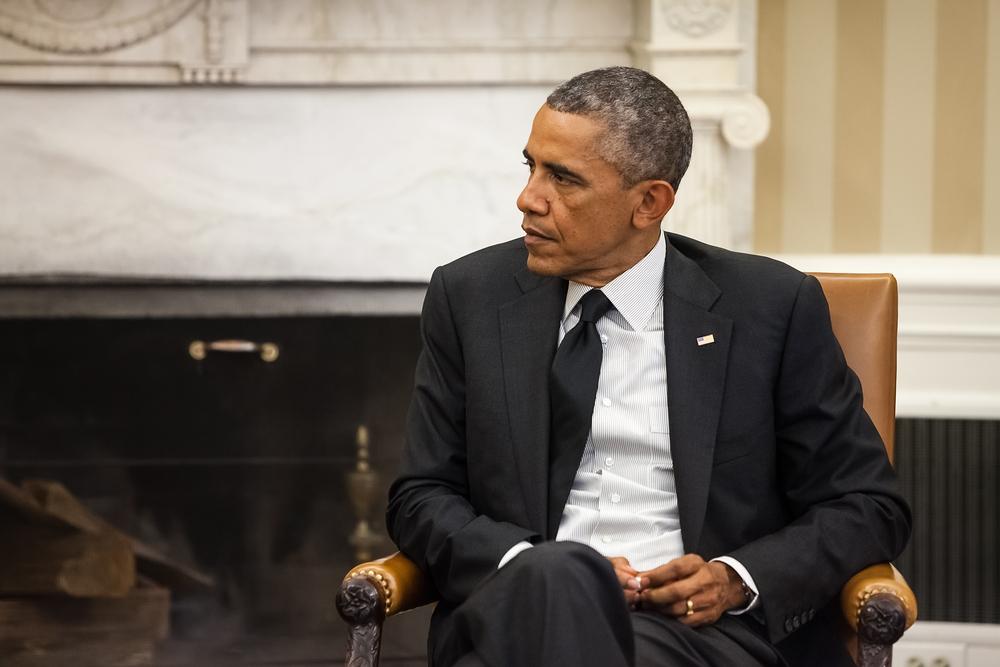
Monday is the last day of campaigning before the US midterms.
With a high turnout expected, the pressure is on as the Republicans hope to tighten control over the Senate.
Donald Trump and Barack Obama campaigned on Sunday, rallying voters.
Speaking to a crowd in Georgia on Sunday, Trump said: “You put Stacey in there and you are going to get Georgia turn into Venezuela. Stacey Abrams wants to turn your wonderful state into a giant sanctuary city for criminal aliens, putting innocent Georgia families at the mercy of hardened criminals and predators.”
Obama spoke in Indiana over the weekend and whilst he did not mention Trump by name, suggested that Trump has no issues on playing on people’s fears.
“What kind of politics do we want. What we have not seen at least in my memory is where, right now, you’ve got politicians blatantly, repeatedly, baldly, shamelessly lying. Just making up stuff.”
“Two weeks before the election they are telling us that the single greatest threat to America is a bunch of poor, impoverished, broken, hungry refugees 1,000 miles away.”
“Sometimes these tactics of scaring people and making stuff up work,” he warned.
“There have got to be consequences when people don’t tell the truth. When words stop meaning anything, when people can just lie with abandon, democracy can’t work. Nothing works… Society doesn’t work unless there are consequences.”
Around 34 million Americans have already voted in the midterms. The figure in 2014 was just 27.5 million.
In October, singer Taylor Swift broke her political silence and revealed plans to vote for the Democrats in the midterms.
“I always have and always will cast my vote based on which candidate will protect and fight for the human rights I believe we all deserve in this country. I believe in the fight for LGBTQ rights, and that any form of discrimination based on sexual orientation or gender is WRONG. I believe that the systemic racism we still see in this country towards people of color is terrifying, sickening and prevalent,” wrote the singer on social media.
“As much as I have in the past and would like to continue voting for women in office, I cannot support Marsha Blackburn,” she added in the post.
Polls are indicating that Democrats have a significant lead.
The first polls will close at 23:00 GMT (18:00 EST) on Tuesday.
UK service sector growth falls to seven-month low
The UK service sector saw sharp slowdown in October, according to a survey of executives.
The IHS Market services purchasing managers’ index revealed the slowest pace of growth since the beginning of the year.
The survey for the sector, which includes hotels, restaurants, transport and finance, showed more cautious spending patterns, as Brexit uncertainty continues to bite.
The monthly purchasing managers’ index from IHS Markit/CIPS dipped to 52.2 in October from 53.9 in September, marking the weakest growth since March.
“The disappointing service sector numbers bring mounting evidence that Brexit worries are taking an increasing toll on the economy,” said Chris Williamson, chief business economist at IHS Markit.
Commenting on the latest services sector figures, Andrew Wishart of Capital Economics says: “Based on past form, the all-sector PMI in October is consistent with GDP growth of about 0.2%. If sustained over the remainder of the year, that would leave annual growth in 2018 at 1.3%, the weakest since the financial crisis.
“But we are optimistic on the outlook for growth next year. So long as a Brexit deal is agreed, we think that a rebound in investment, sustained growth in real wages, and supportive fiscal policy could see growth accelerate to just over 2%.”
The UK services sector makes up about 80% of the nation’s economy, including everything from restaurants, hotels to banking.