
Debenhams attempts to snatch back control with £150 million loan
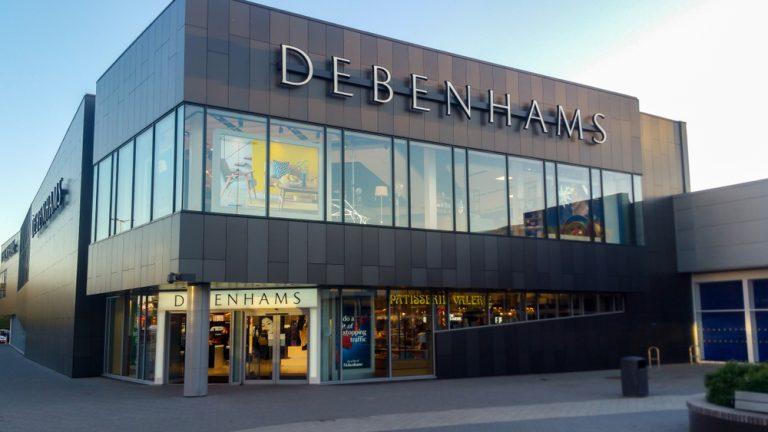
Struggling department store Debenhams (LON:DEB) has confirmed that it is in “advanced” talks with banks to borrow £150 million in order to snatch back control from Mike Ashley.
£40 million of the sum would refinance a £40 million bridging loan. The loan was secured last month in a wider recovery attempt that aims to assist trading though the Easter period.
The fund also aims to ensure that credit insurers restore cover for the department store’s suppliers, as well as enabling the business to restructure its store portfolio, according to the Guardian.
This drive for control comes after Mike Ashley, the Sports Direct boss (LON:SPD), moved forward with attempts to control the department store last week. Sports Direct owns almost 30% of Debenhams.
In an attempt to add to his empire, Mike Ashley said he wanted to eject all but one of the department store’s directors in addition to appointing himself as chief executive.
In a stock market announcement on Thursday, the Sports Direct Boss said that he would step down from his Sports Direct position if appointed to the Debenhams’s board.
Mike Ashley’s move comes just a few days after Debenhams announced a new profit warning, where it warned that it was no longer on track to deliver results in line with market expectations.
“Taken together with macroeconomic uncertainties and increased financing costs as a result of additional working capital needs, this means that the group’s statement made on 10 January that we were ‘on track to deliver current year profits in line with market expectations’ is no longer valid,” Debenhams said.
Debenhams has been struggling amid a tough trading climate that has hit the UK high street.
Securing the £150 million fund is a fundamental move for the retailer as Mike Ashley seeks to oust the majority of its board.
At 08:55 GMT Monday, shares in Sports Direct International plc (LON:SPD) were trading at -0.15%.
Shares in Debenhams (LON:DEB) were trading at +0.74% as of 08:58 GMT Monday.
Norwegian Air’s February capacity expansion falls short of expectations

Norwegian Air’s (OCTCMKTS:NWARF) traffic report revealed a smaller-than-expected increase in capacity expansion for the month of February.
Total number of passengers flown over the month was 2,517,335, an 8% increase from 2,330,006 last year. Additionally, total passenger traffic increased by 11%.
The budget airline’s capacity expansion – which is measured by available seat kilometres (ASK), hit 51% last June, and has been declining since then. The 15% figure in February is 19.2% less than analysts expected.
Its load factor, taken as a measurement of how many seats are sold per flight, dropped to 81.5%. This figure has come in higher than the 80.6% prediction, though it is a decrease compared to the 84.3% the year prior.
Over the month-long period, the airline operated 99.3% of its scheduled flights, with 83.5% departing on time.
Low-budget airline Ryanair (LON:RYA) recently posted a 13% on-year rise in its passengers for the month of February. Its passenger volumes over the period reached 9.6 million flyers, with a 96% load factor.
Wizz Air (LON:WIZZ), the largest low-cost airline in Central and Eastern Europe, also announced its passenger volumes statistics, flying roughly 2.4 million customers in February. The airline suffered last year as rising fuel and staff costs impacted its earnings.
Several airlines have been struggling recently, with Ryanair posting a loss for its third quarter.
External factors such as the Gatwick Drone Sighting have also hit airlines, with EasyJet (LON:EZJ) announcing that it cost the airline £15 million.
Uncertainty looms over the aviation industry as Brexit draws closer. The CEO of Heathrow has said that a no-deal Brexit could be beneficial for air transport if other modes of transport become blocked by additional congestion.
Flights are guaranteed to operate, but there is no doubting that the potential passport rules could complicate air travel if the UK departs without a deal.


GVC holdings shares plunge as bosses sell £20m in shares
GVC holdings shares plunged more than 10% on Friday after its chief executive and chairman offloaded almost £20 million in shares.
CEO Kenneth Alexander sold £13.7 million of stock, whilst chairman Lee Feldman offloaded £6 million.
The company, which owns the Ladbrokes betting chain, reported its 2018 full-year results earlier this week.
According to the results, the firm generated 2,979.5 million in net gaming revenue in 2018, up from 815.9 million a year previously.
Meanwhile on a proforma basis, it climbed 9% to £3,571.4 million, up from £3,288.1 million.
In addition, reported underlying earnings soared to £640.8 million, compared to £211.3 million reported in 2017. On a proforma basis, earnings jumped 13% to £755.3 million.
At the time of the results, CEO Kenneth Alexander commented:
“The Group’s full year results reflect a very strong performance with proforma net gaming revenue 9% ahead of last year and proforma underlying EBITDA 13% ahead. 2018 was a transformational year for the Group with the completion of the Ladbrokes Coral acquisition in March making the Group the largest online-led sports-betting and gaming operator in the world. Excellent operational execution, effective marketing and a good World Cup helped both the legacy GVC and the acquired Ladbrokes Coral businesses perform ahead of expectations and materially ahead of the market, delivering market share gains in all our major territories.”
Given the strong set of results for the year, the decision of Alexander and Feldman to sell-off the majority of their holdings came as a surprise for the markets.
Alongside Ladbrokes, GVC holdings owns Sportingbet, partycasino and the Foxy Bingo and Foxy Casino brands.
It is listed on the London Stock Exchange and is a constituent of the FTSE-100 Index. The firm was founded back in 2004 in Luxembourg.
GVC holdings shares (LON:GVC) are currently trading -15.86% as of 12:55PM (GMT), on the back of the news.


Goals Soccer Centres shares fall after downgrading guidance

Goals Soccer Centres shares (LON:GOAL) fell on Friday after the company downgraded its guidance for the year.
The soccer centre operator said it had conducted a review of its full-year results for December-end to resolve accounting errors alongside its auditors KPMG.
As a result, it said it would be taking a more ‘prudent’ approach going ahead.
As a result, the company said that the board now expects full year results to be “materially below expectations”.
In addition, Goal Soccer Centres said the previously scheduled reporting date of the 12 March would be delayed.
Despite this, the company said trading during the first two months of the year has been ‘strong’ with an increase in like-for-like sales, in both the UK and US markets.
The firm operates 50 soccer sites including four in California in the USA.
Billionaire Mike Ashley’s Sports Direct holds an 18% stake in the company.
Sports Direct hit the headlines today after it launched a bid to take control of high street department store Debenhams (LON:DEB).
Alongside stakes in Goal Soccer Centres and Debenhams, Mike Ashley owns House of Fraser (LON:HOF) and Newcastle United Football Club.
Shares in Goal Soccer Centres are currently trading -31.25% as of 12:08PM (GMT).
Debenhams shares jump amid Mike Ashley takeover attempt
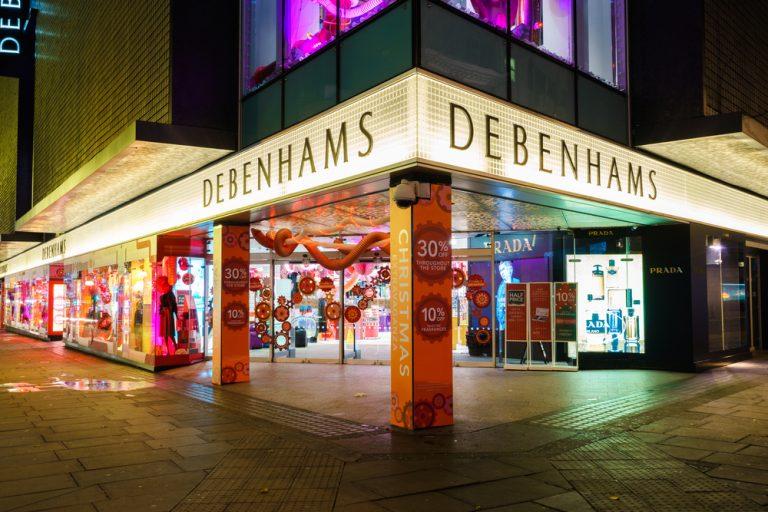
Debenhams shares (LON:DEB) soared on Friday after Sports Direct launched a bid to take control of the embattled retailer.
According to a statement, the board of Debenhams received notice that Sports Direct wanted to requisition a meeting to propose Mike Ashley to the board and to removal all over members.
The retailer said that any shareholder holding more than 5% of shares reserves the right to call a shareholder meeting. As it stands, Mike Ashley’s Sports Direct holds a 30% stake in the firm.
In the statement, Debenhams said it was “disappointed that Sports Direct has taken this action.”
Meanwhile, Sports Direct commented in its own respective statement:
“If Mr Ashley were to be appointed to the board of directors of Debenhams during this business critical period for Debenhams, Mr Ashley would carry out an executive role, and would focus on the Debenhams business, including building a strong board and management team.
It continued: “If appointed, Mr Ashley would step down from his current roles as a director and chief executive of Sports Direct. He would be replaced as acting chief executive by Chris Wootton, currently Sports Direct’s deputy chief financial officer.”
The news follows the issuing of a profit warning earlier this week, after the retailer concluded that its profit projects “were no longer valid”.
However, Debenhams is not the only retailer feeling the strain of a difficult trading environment.
On Thursday, The John Lewis Partnership announced it was cutting staff bonuses to 3%, after a 45.4% fall in profits.
In addition, John Lewis announced the closure of a further five stores, having already closed five towards the end of 2018.
Shares in Debenhams are currently +15.03% as of 11:14AM (GMT), as investors react to the announcement.
LK Bennett collapses putting 500 jobs at risk

The high-end fashion retailer LK Bennett has collapsed, with 500 jobs put at risk.
Last week, the chain lined up EY as administrator if it was unable to source new financing.
In the year to the end of July 2017, the business faced an operating loss of almost £6 million.
LK Bennett has 39 shops, 500 staff and trades out of 37 concessions in stores across the UK.
Administrators have said that jobs have already been cut at the chain’s London head office, and five stores have already been closed. As a result, roughly 55 jobs have already been lost.
“Amidst tough trading conditions for retailers, the Company has been further impacted by significant rent increases and business rate rises,” joint administrator Dan Hurd said.
“Linda and the management team therefore made the difficult decision to place the Company into Administration, to protect the future of the business,” he continued.
Over Christmas, the tough trading conditions to hit the UK high street were well publicised. This difficult climate was not just the case of a decreasing footfall, as online trader ASOS (LON:ASC) announced a shock profit warning in the lead up to Christmas, bringing its shares crashing.
LK Bennett was founded by Linda Bennett in 1990. The Duchess of Cambridge has been known to be a customer among a variety of celebrities to also shop at the chain.
“If you have recently bought anything from LK Bennett, you may not be able to claim a refund or exchange the item if the company ceases trading,” Eleanor Snow, the consumer rights editor at Which?, said.
“If you have gift vouchers you should try to spend these in-store as soon as possible,” she continued.
In-store trading is expected to continue as normal, but online sales have temporarily come to a halt.
Vegan sausage roll boosts Greggs sales
Greggs (LON:GRG) has said that the launch of its vegan sausage roll helped boost an exceptional sales performance.
In the seven weeks to 16 February, like-for-like sales surged 9.6%. The launch of its vegan sausage roll and the subsequent publicity surrounding it, helped boost sales as the baked goods company delivered a very strong start to the year.
The vegan-friendly sausage roll is made from meat substitute quorn. It was launched at the start of the year as part of the Veganuary campaign.
Greggs has said that social media channels played a fundamental role in driving its brand awareness strategy. The recent vegan-friendly sausage roll campaign had a strong online presence and was boosted by engagement on social media.
Veganuary is a campaign that encourages consumers to lead a vegan-lifestyle for one month. In this month, consumers are able to observe the health benefits that come with the lifestyle for themselves. Restaurants up and down the country added special vegan-friendly products to their menu for the month as part of the campaign in order to cater for the consumers taking on the challenge.
Hundreds of thousands of vegan sausage rolls were sold in the first week of the product’s launch.
“Whilst there are significant uncertainties in the months ahead, Greggs has started 2019 in great form, helped in part by the publicity surrounding the launch of our vegan-friendly sausage roll,” Chief Executive Roger Whiteside said.
The retailer outlined the growing consumer interest in healthy food choices and the environment which, as a result, is driving the demand for on-the-go snacks that suit different dietary requirements, such as veganism.
The company has said that it has a key role to play in encouraging the turn to healthier food options. It is widening its range of products as gluten-free and vegan-friendly snacks hit its shelves. These products sit alongside Greggs’ Balanced Choice range that offers snacks with less than 400 calories and have strong nutritional values.
Greggs is not the only food retailer to alter its product portfolio to meet the growing health consciousness of consumers.
Last year, the food confectionary business Nestle (SWX:NESN) announced that it was set to make additional cut to sugar, salt and saturated fat quantities in its products, in an attempt to draw in more health-conscious customers. Pepsi also announced that it would purchase the drink-machine maker SodaStream for $3.2 billion to compete against rival Coca-Cola for healthy beverages.
Despite the success of its vegan sausage roll, Greggs has warned of the potential disturbance Brexit could have on its business. The company is stockpiling materials with a long shelf life in case a no-deal disrupts imports.