
UK retail sales pick up in January

UK retail sales picked up in January, offering some respite to ailing high street shops, according to the latest official figures.
UK retail sales rose 1% in January, the Office for National Statistics (ONS) said. This proved ahead of market expectations of 0.2%.
Rhian Murphy, head of retail sales at the ONS said this was the result of clothing discounts:
“Retail sales returned to growth, with increases across most sectors.
Clothing stores saw strong sales, luring consumers with price reductions with food sales also growing after a slight dip over Christmas.”
Samuel Tombs, chief UK economist at Pantheon Macroeconomics, commented: “January’s jump in retail sales shows that most households have maintained a happy-go-lucky mentality, despite the fraught political situation. While consumers’ confidence is down, this reflects rather fuzzy expectations that Brexit might be costly eventually.”
The better-than-expected retail figures follow the most recent inflation figures. According to January’s Consumer Price Index, UK inflation fell to 1.8%, below the Bank of England’s target of 2%.
This was attributed to falls in electric and gas prices, with an Ofgem imposed price cap taking effect over the period.
Despite easing inflation and retail somewhat rebounding, the UK high street continues to suffer, with various well-known brands closing stores.
Retailers such as New Look, HMV and restaurant chains such as Prezzo and Jamie’s Italian all announcing site closures in 2018.
Lloyds announces William Chalmers as new CFO
Lloyds Bank (LON:LLOY) has announced former Morgan Stanley banker William Chalmers as its new Chief Financial Officer.
Chalmers is set to join the bank in June to take up his new role. Prior to his new position at Lloyds, Chalmers was co-head at Morgan Stanley’s Global Financial Institutions Group.
Lloyds is set to pay around £4.4 million in deferred cash and shares which he will lose out on once he leaves his current role. His fixed pay will be around £1.3m per year, plus benefits and performance-based bonuses.
António Horta-Osório, Lloyds Chief executive, commented: “William has a proven track record in financial services and will be a great addition to the executive team. We will be sad to see George go, but are pleased to have had him in the team for the past seven years and to be able to have George and William working together to ensure a smooth transition.”
Incoming Chief Financial Officer Chalmers also added: “I very much look forward to joining the executive team at Lloyds Banking Group. It is a tremendous company that is going through an impressive transformation. I look forward to getting started and making a contribution.”
Lloyds is set to announce its 2018 annual results next Wednesday.
Shares in Lloyds are currently +1.67% as of 13:50PM (GMT).
Premier Foods retracts Ambrosia sale
Premier Foods (LON:PFD) announced on Friday that it is no longer putting up its Ambrosia business for sale.
The company said that whilst ‘a number of parties had expressed interest’, the board concluded that ‘the present business climate the process will not result in a satisfactory financial outcome’.
Its Ambrosia business produces dried milk for infants as well as custard and rice pudding.
Premier Foods is a food manufacturer. Alongside Ambrosia, its brands include Mr Kipling, Ambrosia, Angel Delight, Homepride, as well as Sharwood’s and Lloyd Grossman sauces.
Last month, the company reported a 2.2% fall in sales across the Christmas period.
At the time of the results, Gavin Darby, Premier Foods Chief Executive commented:
“We faced into two sets of challenges in the quarter – lower International sales and our logistics programme, which as expected, affected cake sales volumes early in the quarter,”
“As we look to the fourth quarter, we expect to see a good performance from branded sweet treats, we have a good innovation plan lined up and our
Darby departed the role as CEO at the end of January. The company confirmed that Darby would receive at least £1 million as part of the exit.
Premier Foods shares are currently -3.64% as of 12:37PM (GMT).
RBS reveals special dividend but warns of Brexit uncertainty
Royal Bank of Scotland (LON:RBS) released its annual results on the Friday for the year ended 31 December 2018. Annual profit has more than doubled, driving the bank to reveal a special dividend. RBS also warned of the economic and political Brexit-induced uncertainty that lies ahead.
Pre-tax profit for the financial year was £1.62 billion, compared to the £752 million on-year figure.
Operating profit increased 50% to £3.36 billion.
Final ordinary dividend per share is 3.5p. Additionally, the bank has also announced a special dividend of 7.5p per share.
Chief Executive, Ross McEwan, commented on the results:
“2018 was a year of strong progress on our strategy – we settled our remaining major legacy issues, paid our first dividend in ten years and delivered another full year bottom line profit. However, while our financial performance is more assured, we know that a significant gap remains to achieving our ambition to be the best bank for customers. We are fully focused on closing this gap.”
“Today we are reporting a pre-tax operating profit of £3.4 billion and a bottom line attributable profit of £1.6 billion for 2018. In addition, we are pleased to propose a full year ordinary dividend of 3.5 pence per share, and a special dividend of 7.5 pence per share. These are in addition to the ordinary dividend we paid at our interim results. Together, we will have returned £1.6 billion to shareholders, and around £1 billion to the UK taxpayer in dividends. We also have shareholder approval to participate in a directed buyback should the government seek to dispose of a portion of its shares.”
RBS has emphasised the uncertain economic outlook that lies ahead of the UK’s planned departure date from the European Union.
In December, RBS applied for a German banking license amid concerns surrounding Brexit. The Chief Executive has warned of the economic and political Brexit uncertainties in the past, claiming it has the potential to lead to a recession. “Our central economic forecast, which supports our corporate plan, is in line with consensus as at the end of December 2018 and shows average UK GDP growth of around 1.0-2.0% from 2019 to 2023 and continued low interest rates. Given the current uncertainties we will continue to actively monitor and react to market conditions,” the bank said. The Chief Executive continued: “The UK economy faces a heightened level of uncertainty related to the ongoing Brexit negotiations. We have continued to support our customers, providing £30.4 billion in gross new UK mortgage lending in 2018, and Commercial Banking made or renewed commitments of around £30 billion of term lending facilities to mainly UK businesses. Our Commercial and Business Banking businesses supported total lending of more than £100 billion in 2018.” Last year, RBS paid its first dividend since it was rescued from collapse ten years ago. At 09:25 GMT Friday, Royal Bank of Scotland Group plc (LON:RBS) shares were trading at +1.08%.Nostra Terra Oil & Gas shares up on ‘threefold increase in reserves’

Nostra Terra Oil & Gas shares (LON:NTOG) were up on Thursday after the company announced an increase in reserves at its Texas assets.
The oil and gas exploration company announced a 276% increase in oil reserves to 2,429,660 barrels of oil, at its assets at Pine Mills in East Texas and its Permian Basin assets in West Texas. This also included the firm’s Mesquite asset.
As a result, Nostra Terra Oil & Gas said it expects future net income of $58.65 million.
Back in September, the company reported its interim results for the six months to June 30.
Nostra posted a 50% increase in revenue for the period to £823,000, compared to £549,000 in 2017. In addition, average net oil production totalled 101bopd during H1.
Nostra Terra Oil & Gas is an AIM-listed company. It was founded back in 2005. It has operations in the US and Egypt.
Shares ticked up more than 4% in the immediate aftermath of the announcement. Shares are currently trading flat as of 3:55PM (GMT).
Elsewhere in the oil and gas sector, UK Oil and Gas shares (LON:UKOG) rallied after announcing the acquisition of a further interest in Horse Hill.
Similarly, Wentworth Resources shares (LON:WEN) were up during Thursday trading, after the company issued an update to investors.
Patisserie Valerie rescued by Irish private equity firm
Patisserie Valerie has been rescued by private equity firm Causeway Capital, saving 2,000 jobs.
Ireland’s Causeway Capital agreed to buy the struggling bakery chain from administration, valuing the firm at £13 million.
Causeway Capital’s Matt Scaife said: “Patisserie Valerie is a heritage brand, much loved by its loyal customers. This investment should mark the end of a turbulent period for customers and suppliers alike. We are delighted to partner with the team and look forward to helping the business return to growth.”
Patisserie Valerie’s new chief executive Steve Francis also commented: “We are delighted to welcome Causeway Capital as our partners in Patisserie Valerie, ending a disruptive period of uncertainty for the business. The affection and loyalty for the brand among our customers and employees, and Causeway Capital’s enthusiasm and support for the business, creates for us the foundations for an exciting future for the business. ”
Last year proved a turbulent year for Patisserie Valerie, after the uncovering of a series of “accounting irregularities” plunged the chain into disarray.
The chain fell into administration in January after it failed to reach an agreement with lenders.
KPMG had been appointed to handle the process, announcing the closure of 71 locations and the loss of 902 jobs.
Mike Ashley’s Sports Direct had originally tabled an offer of £15 million for the chain, but KPMG rejected it.
The Serious Fraud Office is currently investigating Patisserie Valerie’s former finance director Chris Marsh over the allegations of “accounting irregularities”.
Patisserie Valerie was founded back in 1926, making it almost 100-years old.
The Restaurant Group CEO announces departure

The Restaurant Group (LON:RTN) Chief Executive Andy McCue announced is departure on Thursday, causing shares to fall.
The group, which owns the Frankie and Benny’s and Garfunkels’ chains, said that Mr McCue would be leaving the role due to “extenuating personal circumstances”.
Andy McCue, CEO, commented on his decision:
“In recent years, we have achieved much in a challenging market. I’m confident The Restaurant Group is well positioned with the scale, talent and levers to drive profitable growth. While I recognise that this decision is untimely, it is the right one for me and my family. We have a strong team in the business and a clear plan which we are focused on delivering.”
“Whilst we are clearly disappointed that he will not be able to provide the long-term leadership for the business, we understand and respect the decision he has made purely on personal grounds,” commented company chair Debbie Hewitt. McCue has been chief executive of the group since 2016, having joined from PaddyPower. Back in November, shareholders approved the company’s acquisition of Wagamama, as part of a £559 million takeover deal. McCue was a key proponent of the move, amid shareholders reservations over the deal. However, the acquisition has been a tipped as a way for the Group to diversify its food offerings and to target a more health-conscious customer. The restaurant industry has been struggling as of late, with many rival chains such as Prezzo (LON:PRZ) and Jamie’s Italian’s suffering from high rents and weak consumer demand. Both chains announced the closure of various sites in 2018 as a result of a tough trading climate. Shares in the company are currently -12.33% as of 12:13PM (GMT).3 Cannabis Start-ups To Watch In 2019

Back in October, Canada became the first G7 nation to legalise the recreational use of marijuana.
In the aftermath of Canada’s decision, cannabis is increasingly commanding attention from the Investment world.
However, with its entering into the mainstream, it is often difficult to ascertain which Cannabis companies may present the most investment potential.
So, we’ve collated 3 start-ups, including two UK-based cannabis companies, which may prove particularly interesting to watch in 2019.
- Oxford Cannabinoid Technologies (OCT)
Coca-Cola HBC results at top of guidance, shares remain low
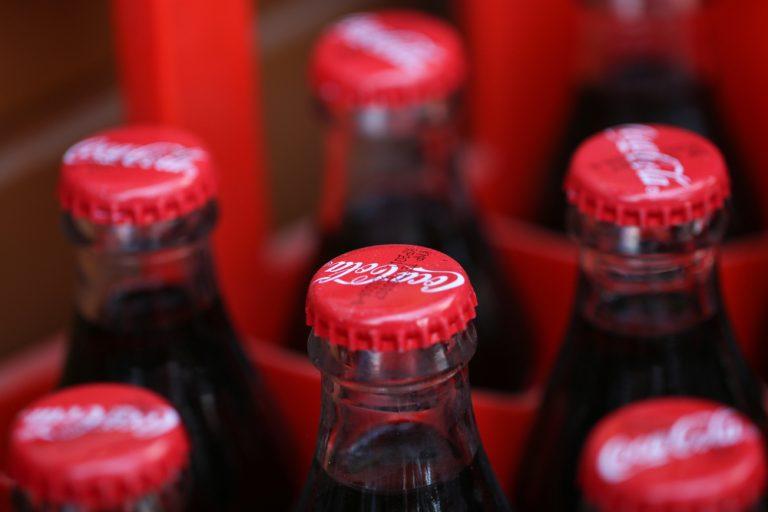
Leading bottler of The Coca-Cola Company, Coca-Cola HBC AG (LON:CCH), has revealed its full-year financial results ended 31 December. Annual performance was at the top of its guidance range, driven by strong volume growth. However, shares in the company were trading over 5% lower on Thursday morning.
This was the second year of FX-neutral revenue growth above the company’s 4-5% target range, allowing Coca-Cola HBC to make good progress towards its 2020 margin targets.
Volume growth accelerated to 4.2%. All segments experienced growth, but it was particularly driven by sparkling beverages.
Net sales revenue was up 6% on an FX-neutral basis and reported net sales increased by 2.1%.
Earnings (EBIT) were up 9.6% to €680.7 million when compared to the year prior. EBIT margin was up 70 basis points to 10.2%, and reported margin was up 60 basis points to 9.6%.
Free cash flow was €370.0 million. Moreover, final dividend was proposed at €0.57 per share, a 5.6% increase compared to the 2017 dividend.
Coca-Cola HBC has, however, forecasted 2019 economic growth to slow down in a variety of its markets.
It does expect volume to continue to grow across all three segments. Chief Executive Officer of Coca-Cola HBC AG, Zoran Bogdanovic, commented on the results: “In 2018 we delivered another very good performance with revenue growth above our target range and another step up in margins. Strong volume growth in all our segments was helped by a record number of new product launches, whilst price/mix improved for the eighth consecutive year. This growth supported margin progress, which we delivered while increasing our investment in marketing.” “Our sharp focus on cost efficiencies continues while we invest in the business for growth. The shape of the business, capabilities and commitment of our people and our overall commercial proposition give us confidence in our ability to continue to grow revenues and margins.” Last year, The Coca-Cola company set its eyes on the cannabis market, closely watching the cannabis-infused drinks market. Additionally, it purchased the Costa Coffee chain from Whitbread in a £3.9 billion deal, following the announcement from Whitbread earlier in the year that it wanted to spin off its Costa Coffee branch. At 10:22 GMT Thursday, shares in Coca-Cola HBC AG (LON:CCH) were trading at -5.63%. Trading is yet to open in the US, but shares in The Coca-Cola Co (NYSE:KO) closed on Wednesday trading 0.26% higher.EasyJet, Delta and Italy’s state controlled railway discuss Alitalia rescue deal
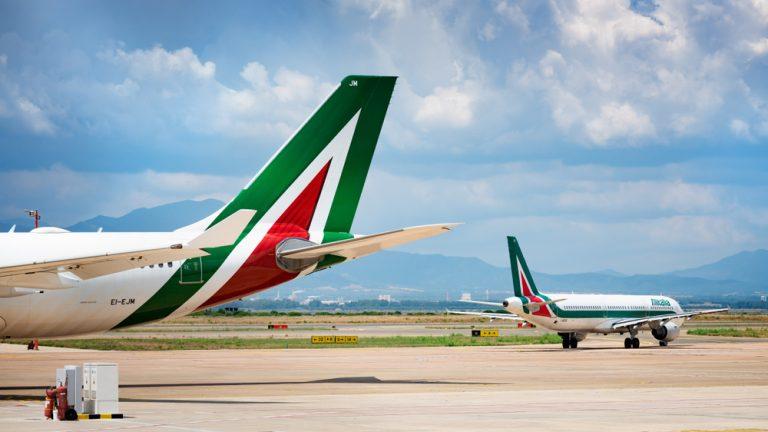
EasyJet (LON:EZJ) announced on Thursday that it has entered in discussion with Delta Air Lines and Ferrovie dello Stato Italiane to form a consortium to rescue carrier Alitalia.
Ferrovie dello Stato is Italy’s state controlled railway. It will start negotiating with the two airlines to form a rescue plan for struggling Italian carrier, Alitalia.
Alitalia has been under special administration since 2017. This is following the rejection of a rescue plan by workers, preventing the airline from raising new financing from its shareholders. The Italian airline currently has a £789 million state loan, but it is seeking international partnerships in order to survive.
Italy’s Ferrovie dello Stato announced a statement outlining that both Delta and EasyJet had confirmed their interest in forming a rescue deal with the railway group. Delta confirmed that it has submitted a “general and non-binding letter of interest” to Ferrovie dello Stato. Though EasyJet did release a statement confirming its interest, it has emphasised that there was “no certainty at this stage that a transaction will proceed”.
German airlines group Lufthansa also expressed interest in rescuing Alitalia in January. It held talks to acquire a majority stale in the airline, expressing interest to fully take over the company long-term.
Last November, EasyJet revealed that it had seen a successful year, with annual profits growing in-line with expectations. Equally, results indicated that 88.5 million passengers flew with the low-cost airline throughout the year. It was heavily hit, however, by the recent drone-induced chaos at Gatwick. The Gatwick drone sightings cost the airline £15 million. This is split between £10 million in customer welfare costs and a £5 million loss in revenue. Despite the financial hit of the drone sightings, EasyJet’s trading update expressed positive news and confidence amid the UK’s uncertain departure from the European Union.
At 09:56 GMT Thursday, shares in EasyJet plc (LON:EZJ) were trading at +0.62%.
Though the market is still closed in the US, shares in Delta Air Lines Inc. (NYSE:DAL) closed yesterday trading at +1.04%.