Patisserie Valerie (LON: CAKE) has warned that it is on the brink of collapse.
In a statement to investors, the owner of the cafe chain said that it needs “an immediate injection of capital” to continue trading.
The statement released on Thursday said that in the past 24 hours it had “undertaken further investigation into the financial status of the company”.
The board has found “a material shortfall between the reported financial status and the current financial status of the business”.
“Without an immediate injection of capital, the directors are of the view that that is no scope for the business to continue trading in its current form.”
The group has said that its “professional advisers are assessing all options available to the business to keep it trading and will update the market in due course”.
Shares in Patisserie Valerie were suspended from trading on Wednesday after the discovery of potential fraud.
Luke Johnson, the chairman and owner of a 37% stake in the group, said on Wednesday: “We are all deeply concerned about this news and the potential impact on the business. We are determined to understand the full details of what has happened and will communicate these to investors and stakeholders as soon as possible.”
After the news, the group’s finance chief of the business, Chris Marsh, was suspended from his role.
In the group’s most recent results statement that was released in May, the firm said it had cash reserves of £28.8 million.
Patisserie Holdings has said it will update the market in due course.
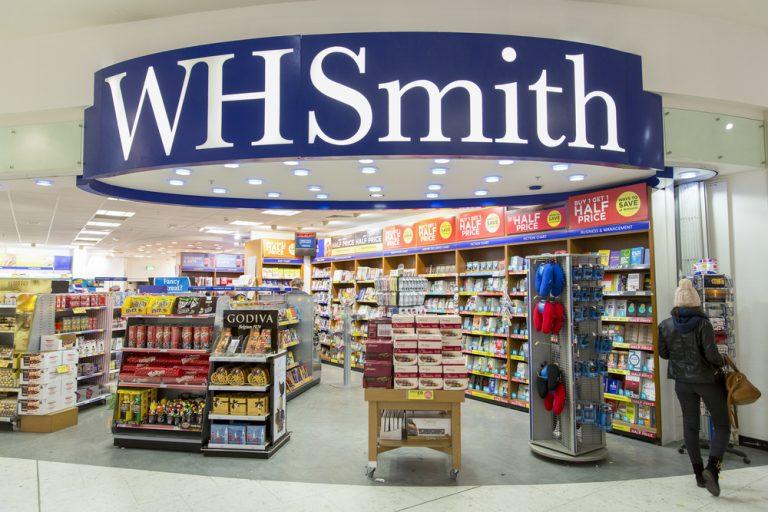
WH Smith is to close six shops following a “detailed review” of the business.
Instead of previous plans to revitalise its high street arm, the group “wind down” operations and focus more on travel outlets in airports and railway stations.
“We had a good year in High Street despite the well documented challenges of the UK high street. During an encouraging second half, the business traded well and we quickly identified the latest trend in the market, becoming a one-stop-shop for all slime related products,” said the WH Smith chief executive Stephen Clarke.
“Despite this good performance, we are not ignoring the broader challenges on the UK high street and, during the second half, we conducted a business review to ensure our High Street business is fit for purpose now and for the future.”
“While there is some uncertainty in the economic environment, we are pleased with the start to the new year in both businesses, and will continue to focus on profitable growth, cash generation and new opportunities to profitably invest for the future. We are well positioned for the current year and beyond,” he added.
High street losses led to a 3% decrease year-on-year, whilst the group’s revenue increased by 2% overall to £1.26 billion.
Group profit before tax jumped 7% from £96 million to £103 million in 2017 whilst total profit fell 4%.
Travel now represents 63% of the group’s trading profit and the group hopes to continue investing in this arm.
Fidelity Personal Investment associate director, Ed Monk, said: “Among struggling traditional retail names, WH Smith has stood apart.”
“Preliminary numbers today confirm again its change of direction from a business driven by large High Street stores to one driven by small outlets in airports and train stations.”
“Improving trading hasn’t been reflected in the shares in the past year, which have trended lower since a peak at the turn of the year. Whether shares look cheap or expensive – trading at 19 times earnings ahead of the results – depends on how you view the company. It’s expensive versus the High Street retail sector but is cheaper than other pure travel retailers, which it increasingly sees itself as,” he added.
Shares in WH Smith (LON: SMWH) are trading down 11.41% at 1.802,00 (1424GMT).
A new report has found that the UK’s biggest energy firms profits fell by 10% last year.
Ofgem has found that growing competition in the market led to a decline in collective profit for the first time in four years.
Profits at the big six firms fell from £1 billion to £900 million, thanks to the growth of energy start-ups.
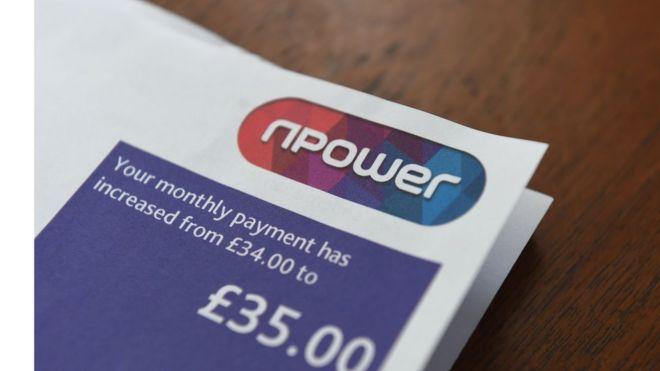
The big six (British Gas (LON: CNA), EDF Energy (EPA: EDF), npower, E.On (ETR: EOAN), Scottish Power and SSE (LON: SSE)) will also face a difficult winter as the Government’s controversial cap on standard energy prices will affect around 11 million accounts who will save an average of £75 a year.
Greg Clark, the business secretary, said on the price cap: “This government is delivering on its promise to end that injustice and protect households across the country from unjustified price rises.”
Gillian Guy, the head of Citizens Advice, said the growth of people approaching new energy suppliers “underlines why it’s so important that Ofgem tightens up its licensing rules”.
“We know that some suppliers entering the market aren’t prepared to provide adequate customer service, or aren’t financially robust enough to survive.”
“Poor customer service often hits vulnerable customers the hardest. It needs to stop poorly prepared companies from entering the market, and take badly performing suppliers out of the market quicker,” she added.
Ofgem has expressed concern about vulnerable people who use energy companies. The watchdog found evidence that switching for the 5 million vulnerable households protected by an existing cap had declined between March 2017 and March 2018.
Dermot Nolan, the chief executive of Ofgem, said: “We have witnessed many positive developments in energy over the last year, but the market is still not delivering good outcomes for all, especially the vulnerable.”
Claire Perry, the energy and clean growth minister said: “We’re determined to protect vulnerable consumers when it comes to their energy costs.”
Following an audit last year, businesses may be forced to publish their ethnicity pay gap. This is as a result of the audit demonstrating large differences in pay and promotion opportunities for ethnic minorities.
Theresa May announced the compulsory disclosure of pay:
“Every employee deserves the opportunity to progress and fulfil their potential in their chosen field, regardless of which background they are from, but too often ethnic minority employees feel they’re hitting a brick wall when it comes to career progression.”
The planned consultation is set to last until January next year, giving businesses the opportunity to express their opinions.
Several of the UK’s most well-known companies have already expressed interest. Indeed, KPMG, Saatchi & Saatchi, the NHS and the Civil Service have already signed up. Moreover, public sector companies must disclose their intentions to increase the number of senior roles filled by ethnic minorities.
The mandatory reporting of the ethnicity pay gap aims to promote a diverse workforce.
Theresa May continued:
“Our focus is now on making sure the UK’s organisations, boardrooms and senior management teams are truly reflective of the workplaces they manage, and the measures we are taking today will help employers identify the actions needed to create a fairer and more diverse workforce.”
In addition to the announcement, the PM also revealed a ‘Race to Work Charter’. It aims to drive the recruitment and career progression of ethnic minorities.
In September, we reported that the UK government was set to launch a review into obstacles for women in business. The review aims to explore the barriers female entrepreneurs face. This is due to the fact that only one in five British businesses being female run. As a result, the government set a target to promote women to senior roles of FTSE 350 companies. Indeed, by 2020 women must make up one-third of boards and executive committees.
As the future of business remains uncertain amid Brexit, one thing that is certain is the desire to diversify senior working environments. The report of obstacles to female entrepreneurs and the disclosure of the ethnicity pay gap aim to drive employment diversity. Every employee, regardless of their ethnic background or gender, deserves to excel in their career.
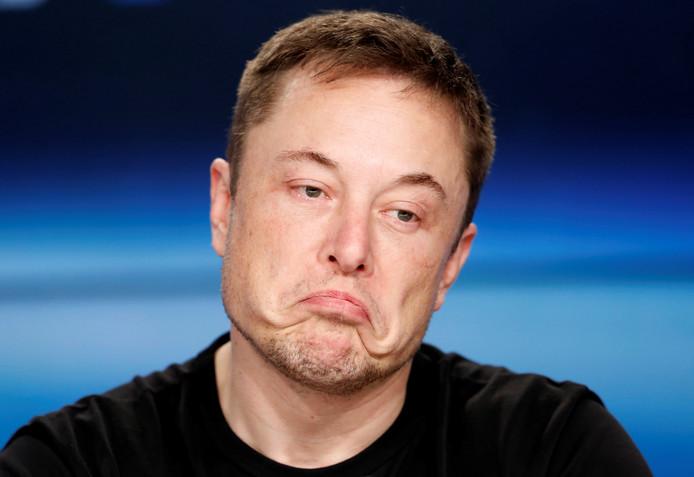
Elon Musk has had an interesting year and has by no means kept his distance from the headlines.
With the help of Twitter, the chief executive of Tesla (NASDAQ: TSLA) has sparked controversies that have resulted in lawsuits, fines, stock price dips and most recently, had him resign as chairman.
The tech billionaire is erratic, hardworking and outspoken. Has his newsworthy presence over the year been welcome or, as University of Michigan business professor Erik Gordon says, had Musk “gone from looking like the visionary genius to looking like the out-of-control guy who probably is on the borderline of a breakdown.”
Musk has a turbulent relationship with investors and has made many remarks about short sellers.
Most recently, the Tesla chief executive mocked the US Securities and Exchange Commission (SEC), labelling them on Twitter as the “Shortseller Enrichment Commission” and claiming that short selling “should be illegal”.
Short sellers hope to gain from a company’s share price falling by “borrowing” shares, selling them on and buying them back in order to return them. If they buy them back at a lower price than what they sold for, they will make a profit.
More than a quarter of Tesla’s publicly traded shares are on loan to short sellers, which Musk has expressed frustration over.
In 2012, he wrote a revised tweet which suggested that short sellers were “often unreasonably maligned”.
British Diver Tweet
Perhaps his most controversial use of Twitter was Musk’s tweet accusing British diver, Vern Unsworth, of being a paedophile.
After Unsworth hit out at Musk’s mini-submarine that he had commissioned to rescue the 12 trapped Thai boys as a PR stunt, Musk wrote on Twitter: “Sorry pedo guy, you really did ask for it.”
The tweet was later deleted but Unsworth went onto seek a lawsuit and sue Musk for $75,000 (£57,000) in compensation and an injunction against Musk to stop further allegations.
$420 – “Funding Secured”
On August 7, the Tesla chief executive sent shares up on his tweet suggesting plans to take Tesla private.
“Am considering taking Tesla private at $420. Funding secured,” he tweeted.
After it was revealed that he did not actually have the “funding secured,” shares plummeted and short-sellers were thought to have lost millions thanks to his comments.
It was this tweet, that recently led the SES to carry out an investigation and give Tesla and the chief executive a $20 million fine each, whilst also making Musk resign as chairman.
Joint On Live Web Show
Last but not least, we remember Musk’s questionable decision to smoke marijuana on a live web show, causing shares to fall 6%.
He spent two-and-half hours on the streamed podcast and took a puff from the joint.
He later added that he “almost never” smoked marijuana, saying, “I don’t find that it is very good for productivity”.
The FTSE 100 is down nearly 500 points in October alone with sharp declines being recorded in the past few days.
Many FTSE 100 companies are testing 52-week lows and heading towards key technical supports, while the overall index is set to test the psychological level of 7000.
Here are some of the reasons why.
US Bond Yields are rising
Investors have two options when investing in securities; to invest in the equity of companies or invest in fixed income debt, either in the form of corporate bonds or governments bonds.
Listed equities can provide potentially higher capital appreciation returns in the long term but can be extremely volatile in the short term and are considered higher risk than bonds, especially benchmark government issued bonds of the UK, US and Japan.
US government debt is seen as the safest asset in the world as you are ineffective lending to the US government. If they weren’t to pay you back there would be a global economic meltdown worse than the 2008 financial crisis.
Those lending to the US government today can lock in yields above 3% and this has been slowly rising for some time leading investors to shun risky listed equities in favour of low risk government debt, which now has an attractive yield higher than the average dividend you’d receive for a leading equity index.
Why would a fund manager hold Whitbread or Experian near all time highs for a 2-2.5% yield when they can invest in 10-year government bonds and receive 3%?
Oil is retreating
Oil futures sank on Thursday morning following a rise in US crude inventories. The FTSE 100 is highly weighted towards commodities with constituents such as BP and Shell accounting for a large proportion of the index.
The American Petroleum Institute reported a 907k jump in oil inventories suggesting supply was again starting to exceed demand. This hit both Brent and WTI oil prices heavily despite the Hurricane Michael making land fall in Florida.
BP and Shell are down 7.2% and 6.3% respectively in October representing a major drag on the wider FTSE 100 index.
With Iran oil sanctions largely priced in there aren’t any major geopolitical risks on the horizon to keep the bulls in the game, exacerbating the recent decline.
Italy are playing chicken with Brussels
The Italian administration is testing the nerve of Brussels with budget plans for a deficit representing 2.4% of GDP.
The market have reacted with the selling of Italian bonds se ding the spread between 10 year Italian bonds and benchmark German Bunds to around 300 basis points (3%).
Rising bond yields mean the Italian government’s payments will rise putting further pressure on their finances.
This has spooked investors in Europe leading to a broad-based selling in European equities, including the FTSE 100.
Johnston Press (LON: JPR) has put itself up for sale.
The owner of titles including the i newspaper, the Scotsman and the Yorkshire Post has £220 million of borrowing due for repayment in June next year.
“Since commencing the strategic review of financing options first announced in March 2017, the company has focused on exploring all options available,” said the group in a statement to shareholders.
“In order to assess all strategic options to maximise value to its stakeholders, the board of Johnston Press announces that it has decided to seek offers for the company.”
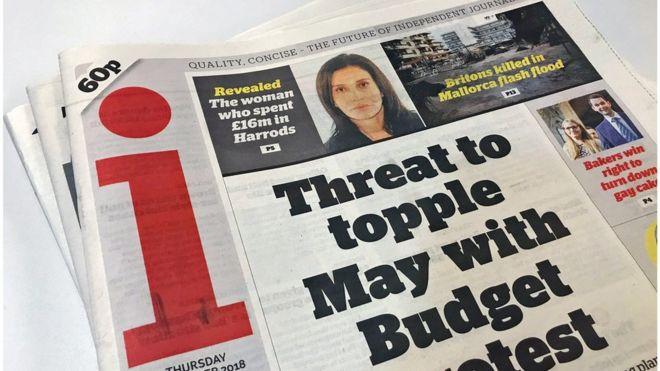
The i newspaper is the group’s most valuable title, which Johnston Press bought in 2016 for £24 million from the Independent and the Evening Standard owner, Evgeny Lebedev.
The i newspaper sells about 275,000 copies a day.
Instead of selling titles individually, the publishing group hopes to sell the business as a whole entity.
Johnston Press owns almost 200 regional newspapers and has seen the value of newspaper titles fall due to a decline in traditional and digital advertising revenues.
In May, Ashley Highfield stepped down as the chief executive of Johnston Press. The group is being run by David King, who was previously the chief financial officer.
Shares in the group, which has seen a 10% fall in revenue to £93 million in the six months to end-June, have fallen 78% over the past 12 months.
Shares closed on Wednesday at 3.2p, valuing the company at £3.4 million pounds.
According to reports, James Murdoch is the favourite to replace Elon Musk as the Tesla chairman.
The Financial Times reported on Wednesday that the son of Rupert Murdoch is likely to report Musk after he is forced to step down as the group’s chairman.
After reaching a settlement with the US financial watchdog the Securities and Exchange Commission (SEC), Musk and Tesla had to pay $20 million in fines each, whilst Musk also had to step down as chairman.
A person briefed on the discussions told the Financial Times: “The Tesla chairman job is perfect for James. He’s working on this fund and will be sitting next to Elon … he’s going to get access to so much deal flow.”
Murdoch is currently chief executive of 21st Century Fox however, will soon leave the role and will be succeeded by his brother. He is a non-executive director of Tesla and has reportedly said he wants the job of the chair.
Musk responded to the report published in the Financial Times writing: “This is incorrect.”
Tesla has until mid-November to find a replacement for Musk, who’s turbulent behaviour has led to shares crash 27% since he tweeted his intention to take the firm private at $420 a share.
Musk abandoned the plan just weeks later after it emerged he had, in fact, not secured funding. This led an investigation by the SES, who accused Musk of fraud.
Musk has faced many controversies this past year, including calling the British diver who was involved in saving the trapped Thai boys a “pedo” and smoking marijuana on a live video podcast.
Shares in Tesla (NASDAQ: TSLA) closed on Wednesday down 2.25% at 256,88.
British luxury car and engine manufacturer Rolls-Royce Holding Plc (LON:RR) have announced that they will be recruiting 200 new staff following an impressive round of second half sales to-date.
The company has enjoyed success with their Phantom model and the black badge range of their Wraith, Ghost and Dawn variants. Subsequently, sales for the second half through October are up 13% on-year. In addition, the firm are set for continued liquidity into 2019, with order books for the new Rolls-Royce Cullinan filled for the entirety of the coming year.
With the positive retail feedback, the company’s management have deemed it necessary to take on new personnel at their Goodwood Headquarters in West Sussex – the new staff taking its total occupancy to a sixfold increase of its opening number in 2003.
Torsten Müller-Ötvös, Rolls-Royce Motor Cars chief executive, said: “I am delighted to announce our new recruitment programme. This reflects not only the success of Rolls-Royce Motor Cars to date, but also our confidence in the future of our business. Rolls-Royce continues to strive for long-term sustainable growth and we remain fully committed to luxury manufacturing at our Home here in Great Britain.”
Further good news followed today as the firm’s civil aerospace division announced the launch of a new aircraft engine, which the firm view as a major strategic advantage – with 37,000 aircraft set to be built over the next decade expected to need the engine that Rolls-Royce specialise in.
The company’s shares are currently trading down 41.8p or 4.5% at 888p. Citigroup Analysts have reiterated their ‘Buy’ stance on Rolls-Royce stock.
After stating its commitment to the UK in 2016, it will be interesting to see if the firm keeps its word in the wake of city jobs being put in jeopardy by Brexit uncertainty.
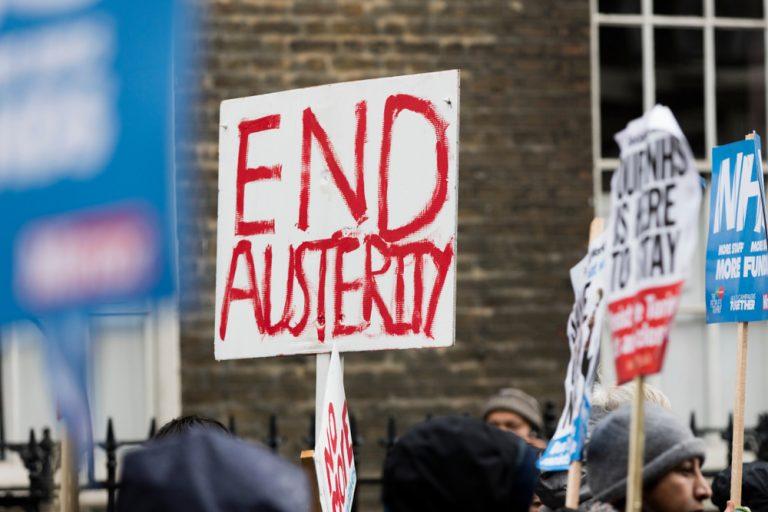
Prime minister Theresa May has once again faced a day of little solace, with her pragmatic approach to political struggles making for an amenable speech last week, but doing little to tackle the macro-political dilemmas that have proliferated her time in office. Aside from struggling to cater to all parties in drawn-out Brexit negotiations, the prime minister suffered today during PMQs due to a self-prescribed ailment – the promise to end austerity.
This issue presents a trifecta of challenges. Firstly, can the political agenda really afford to take on this kind of burden amidst the Brexit negotiations? Secondly, in a time of financial uncertainty, can the Tory party realistically hope to end fiscal retrenchment in a time when their greatest claim to electoral legitimacy is their stake as the party of fiscal responsibility? Thirdly, the £35-40 billion per year ballpark figure will merely mitigate the need for cuts to public services in the near future, and will do little to reverse the past measures of austerity, such as the hike in tuition fees or the challenge of achieving parity between mental and physical healthcare services.
On the latter issue, concerted effort and meaningful action is required, not symbolic actions or political euphemism. Secretary of State for Health and Social Care, Matt Hancock, has admitted that mental health services are failing six years after a commitment was made to improve the standard and provision of care. Similarly, the SNP Leader in Commons, Ian Blackford, pointed to a piece of research that indicated that one-in-two women taking part in the ‘work capability programme’ -introduced by the Tory party – had considered suicide. Incidentally, there is a double-edged sword. The Conservative party have failed to deliver on their promise to improve mental health services, and the combination of cuts to welfare and compulsory work skills workshops have if anything exacerbated the pre-existing problem.
In response, May says that efforts will be made to give the sector “the attention it needs”, she announces a new Minister for Suicide Prevention and then notes that the work capability programme was introduced by a previous Tory government, not hers.
With that kind of lacklustre response, it is perhaps little surprise that the public and the prime minister’s Commons opposition are both highly sceptical about how and when the promise to end austerity will come into fruition.
In response, opposition leader Jeremy Corbyn questioned, “The prime minister declared she is ending austerity. But unless the budget halts the cuts, increases funding to public services, gives our public servants a decent pay rise, then isn’t the claim that austerity is over simply a great big Conservative con?”
In rebuttal, the prime minister stated, “I’ve been very clear that there are better times ahead for people, we will see debt falling and we will see support for our public services going up. Austerity is being brought to an end. What is not being brought to an end is fiscal responsibility.”
So, without making any concrete commitments during today’s PMQs – other than continuing the fuel duty freeze – the prime minister was challenged again by Corbyn. The Labour leader asked when the public could expect to see the return of some of the 5,000 mental health nurses cut since 2010, or when tuition fees would be frozen, when benefits for large families would stop being cut and when would pension and pay for public servants would stop being chopped into by cuts? He continued by asking if austerity is over, why then is the police federation taking the government to court over issues of funding? And why has the Education Secretary been rebuked four times by the statistics watchdog this year if austerity is over for teachers?
In response, May said that fiscal responsibility is still of paramount importance, education spending is at a record high and that Conservative terms in office since 2010 were left with the thankless task of having to revamp the economy in the wake of the crisis presided over by Labour.
Overall, many could envisage this kind of point-scoring ping-pong continuing in the chamber for eternity – even outside of PMQs. But while the prime minister could be right about the costly nature of Corbyn’s proposed policy package, the general public’s immediate concern will be focused on whether May will fulfil the promises she made during her party conference speech last week.