
Patisserie Valerie boss describes past week as “nightmare”

The Patisserie Valerie (LON: CAKE) boss has spoken out after lending the near-collapsed bakery chain £20 million of his own money.
Luke Johnson called the past week the “most harrowing week of my life”, adding that it felt like a “nightmare that I’d wake up from”.
In an interview with the Sunday Times, Johnson spoke about the £10 million in secret overdrafts that the company had built up.
“There were 2,800 jobs at stake, there was 12 years of effort that I and colleagues had put into the business and the board were determined not to allow the business to go into administration,” he said.
The group’s finance director, Chris Marsh, was arrested last week.
“The company has been made aware that Chris Marsh, who is currently suspended from his role as company finance director, was arrested by the police last night and has been released on bail. Further updates will be released in due course as appropriate,” said the company to the stock market on Friday.
Johnson has predicted that the rescue package will be sufficient in order to save the bakery chain.
“At certain points in the week I was thinking, ‘I can’t carry on with this’, but I don’t feel like that this evening. I think we are coming out the other side,” he said.
Johnson will lend £10 million for three years to owners Patisserie Holdings plc, which the company said would provide “immediate liquidity”.
The boss also provided a further bridging loan facility of up to £10 million.
Half of the loan will be interest-free and should be paid back in three years. The Second half will be repaid when the share placings have been completed.
Johnson is known for taking control of many companies. He bought Pizza Express in 1993 before selling out in 1999.
May faces Commons revolt after McVey comments
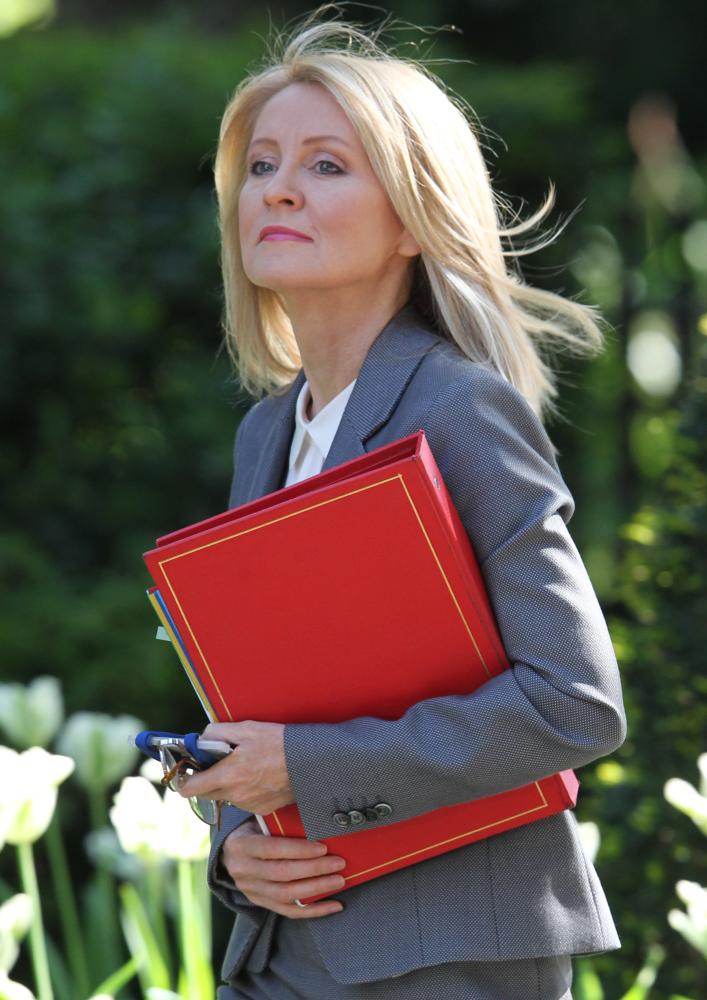
Theresa May is facing backlash and a potential House of Commons revolt after the Work and Pensions Secretary admitted her universal credit policy would disadvantage some families.
Esther McVey commented yesterday that some people will be made poorer under the new benefits system, directly contradicting the government’s line on the policy.
The Resolution Foundation think-tank predicts that three million people would be about £1,800 a year worse-off.
Ms McVey told the BBC: “I have said we made tough decisions and some people will be worse off”.
Major intervention with poll-tax comparison
Yesterday, Sir John Major, Margaret Thatcher’s successor as Prime Minister, intervened in the row over the policy, asserting that it was being rushed, and it could be as damaging as poll-tax, the policy which ended Thatcher’s premiership. With McVey’s admission contradicting the Prime Minister’s rhetoric, Mrs May’s spokeswoman said: “The PM made it really clear that when people move across on to UC as part of managed migration there is not going to be a reduction in their benefits. “At the same time, there are people who are making a new claim or who have had a change in their circumstances and their payment will reflect their new circumstances as you would expect.”Conservative divisions
Party divisions over universal credit spilled onto Twitter, as Conservative MP for Plymouth Johnny Mercer declared: “Stop the tax-free allowance rise and reinvest into UC, or I can’t support it. Not politically deliverable in Plymouth I’m afraid.” In the way of Sir Major’s comparisons, Mr Mercer also criticised the policy on Twitter for the “bad press” it will garner for the party.Labour have announced that if elected they will scrap the policy altogether. Speaking in Bristol on Thursday, Jeremy Corbyn said: “The experience of universal credit has been that the majority of people are considerably worse off”. Universal credit describes a newly introduced benefit for working-age people representing one monthy payment of six separate benefits, including income support, jobseeker’s allowance, housing benefit, child tax credit, working tax credit, and employment allowance. The new system has been criticised for overspending, for cuts to the amount of benefits handed out, and for a failure to hand out benefits on time.Why is this so unhelpful? Biggest challenge with UC is the bad press it gets, (some self inflicted obvs) and therefore some of our hardest to reach communities (eg disabled) don’t come forward, and go for longer on less money than they are entitled to. https://t.co/nMsdV3tIx4
— Johnny Mercer MP (@JohnnyMercerUK) 11 October 2018
Coast collapses, 300 jobs at risk
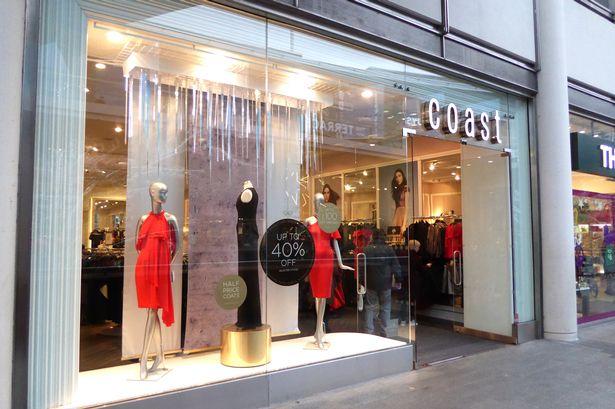
The fashion retailer Coast has collapsed into administration, risking 300 jobs.
Karen Millen owns parts of Coast, protecting the website and department store concessions, however, the 24 stand-alone stores will close immediately.
An estimated 300 employees are at risk of unemployment, whilst 600 will be transferred to Karen Millen.
The retailer was hit badly by the collapse of House of Fraser, which fell into administration owing Coast millions in debt.
“The businesses had been facing financial difficulties due to structural challenges in the retail space and specifically the concession partner market, as well as a softening of demand for occasion wear,” said Mike Denny, joint administrator and PwC director.
“This sale puts the ongoing business on a firmer financial footing. Karen Millen will be working with the existing management team to continue to grow and develop the new business.”
“Regrettably, other parts of the business including 24 retail stores were not included in the transaction. We will make every effort to help those employees in parts of the business that were not included in the sale and will support those affected at this difficult time by liaising with the Redundancy Payments Service and Job Centre Plus.”
Karen Millen’s chief executive, Beth Butterwick, said she was confident she would be able to boost sales in Coast items.
“With its beautiful fabrics, stunning colours and signature designs, Coast is a much-loved fashion brand that has dressed women for all occasions since 1996,” she said.
“Our expertise and infrastructure puts us in a unique position to create a lean and profitable business, ensuring it remains a thriving destination in department stores and online.”
A string of retailers have collapsed in that past year including Toys R Us, Maplins. Many other retailers including Homebase and Carpetright (LON: CPR) have had to close dozens of outlets to remain profitable amid the difficult trading conditions.
Financial Times pulls out of Saudi investment conference
The Financial Times declared today that it will pull out of Saudi Arabia’s Future Investment Initiative amid pressure after a Saudi journalist went missing this week.
The newspaper followed CNN’s move to withdraw its participation from the FII, along with Viacom CEO Bob Bakish and Uber CEO Dara Khosrowshahi, after journalist Jamal Khashoggi went missing after visiting the Saudi consulate in Istanbul.
The event, scheduled to take place in Riyadh between 23rd and 25th October and dubbed ‘Davos in the Desert’, had named CNBC, Bloomberg, and Fox Business Network as partners.
In a statement today, Lionel Barber, editor of the FT, said: “The Financial Times will not be partnering with the FII conference in Riyadh while the disappearance of journalist Jamal Khashoggi remains unexplained.”
Alleged murder
Khashoggi has been missing since 2nd October after entering Turkey’s Saudi consulate, with Turkish authorities alleging that the journalist was assassinated inside its walls by a Saudi hit-squad. The FT’s decision follows the New York Times’ withdrawal as media partner on Wednesday, with columnist Andrew Ross Sorkin, who was to moderate a panel at the conference, declaring on Twitter that he was “terribly distressed” by the journalist’s disappearance.Official statement: The Financial Times will not be partnering with the FII conference in Riyadh while the disappearance of journalist Jamal Khashoggi remains unexplained
— Lionel Barber (@lionelbarber) 12 October 2018
Uber Boycott
On Friday, Khosrowshahi announced in a statement: “I’m very troubled by the reports to date about Jamal Khashoggi. We are following the situation closely, and unless a substantially different set of facts emerges, I won’t be attending the FII conference in Riyadh.” The Uber CEO’s concerns are striking, since the kingdom’s sovereign wealth fund, the Saudi Arabian Public Investment Fund, invested $3.5 billion in the company in 2016, while Uber’s largest shareholder Softbank gains much of its investment capital from Saudi Arabia. Concerns about Khashoggi’s welfare escalated after Turkish authorities revealed today that audio recordings exist documenting the journalist’s murder and dismemberment.Tweet of the Week: 12th October 2018

A week on from Theresa May’s ABBA-themed riposte to those who mocked her dancing, tensions surrounding Brexit negotiations have spiralled into a bizarre dance-off between the Prime Minister and her opponent in the exit talks, President of the European Commission, Jean-Claude Juncker.
After a Daily Telegraph journalist accused Juncker of mocking the Prime Minister by doing his own jig on stage before a speech in Brussels on Monday, a commission spokesperson tweeted the reporter to “relax”, and reminded him that “Without a song or a dance what would our life be?” echoing ABBA’s ‘Thank You For the Music’.
If Juncker’s ‘Maybot’ was a sly attack at May’s performance last week or simply a harmless bit of fun, it was probably not what the PM had in mind when she demanded “respect” from the EU last month after her humiliation at Salzburg. Moreover, as the Article 50 deadline fast approaches, what might Juncker’s moves mean for a successful Brexit? As the tweet exchange between the Telegraph writer and the EU spokesperson came to head, here is how Twitter reacted:Relax James. Without a song or a dance what would our life be ? Not directed at anyone, improvisation on the moment as the music kept playing before he could start his speech. Great respect for @theresa_may repeatedly stated in public and demonstrated in practice. https://t.co/Jr9hzS9dQu
— Margaritis Schinas (@MargSchinas) 8 October 2018
*Boris compares EU to Nazis* “Anyone who is offended is a virtue-signaling fucking snowflake”
*Juncker does a little dance* “I am sad because the bad man mock Theresa dance. Anyone who isn’t offended is a traitor.” pic.twitter.com/JS3DjFRmmF — James Felton (@JimMFelton) 9 October 2018
May vs Juncker [Shooting Stars Dance off remix] pic.twitter.com/0gUlXlx3Ih
— RT (@RT_com) 10 October 2018
Sports Direct buys Glasgow House of Fraser in £95m deal
Sports Direct (LON: SPD) has bought the House of Fraser building in Glasgow, in a move that saves 800 jobs.
The 350,000 sq ft site cost Mike Ashley £95 million, who has vowed to “further elevate and enhance this iconic department store”.
The deal will be completed by January 2020 when the building will be transformed into the “Harrods of the north,” with luxury brands including Hermes (EPA: RMS), Christian Louboutin and Prada (FRA: PRP).
“We are overwhelmed and proud to own such an iconic destination,” said Michael Murray, the head of elevation at Sports Direct.
“Acquiring the freehold enables us to elevate and invest in the store in order to partner with a broad range of luxury brands in future. This is fantastic news for all parties.”
Susan Aitken, the leader of Glasgow city council, said: “A major investment on this kind of scale is a clear vote of confidence in Glasgow, and credit must also go to hundreds of Frasers staff who are absolutely integral to the business’s success and its enduring popularity with city shoppers.
“With the future of this iconic retailer’s Glasgow presence secured, we look forward to the new owners building on its cherished relationship with shoppers and reputation as a valued city employer for almost 170 years.”
Sports Direct bought House of Fraser earlier this year in a £90 million rescue deal, acquiring 59 stores across the UK.
Ashley has vowed to turn House of Fraser into the “Harrods of the high street”. He has promised to keep as many stores open as possible but jobs losses will be inevitable.
The Sports Direct boss has blamed “greedy” landlords for the closure of three House of Fraser department stores.
Stores in Edinburgh, Hull and Swindon will close after landlords refused to cut rents. The store in Bath is also at risk of closure.
RBS pays first dividend since financial crisis

The Royal Bank of Scotland (RBS) has paid its first dividend since it was rescued from collapse ten years ago.
The dividend is worth around £240 million to 190,000 shareholders including the state vehicle UK Government Investments (UKGI).
“I’m pleased to be able to pay a dividend to our shareholders; a small return after their many years of patience and a testament to the hard work of everyone at this bank,” said chief executive, Ross McEwan.
“This is another important milestone in our turnaround, almost 10 years to the day that RBS was rescued by the British taxpayer.”
“We have created a smaller, safer bank that is generating more sustainable profits. Our capital position is above our target and we are also looking to return any excess capital as soon as possible to shareholders,” he added.
The bank is still 62% owned by the government, which bought a £45 billion stake in the group when it was on the brink of collapse.
The government began selling shares in the bank earlier this year and reduced its holding from over 80% to 62%. Shares were sold below the 502p-a-share price, the price the government originally bought the stake.
“I would love it if we could sell the shares at a much higher price. Obviously, that is what everyone would like to do, but we need to be realistic and look at the market conditions,” said Treasury Economic Secretary John Glen on the reduction in price.
On Friday morning, campaigners stood at the RBS branch in Angel, North London and gave passers-by a card that read: “10 years since the global financial crash, happy anniversary” on its front. Inside, it said: “10 years on and none the wiser! A decade on and you haven’t changed a bit! How come you still look exactly the same?”
Shares in RBS (LON: RBS) are trading up 1.97% at 249,00 (1252GMT).
Chinese exports rise despite Trump tariffs
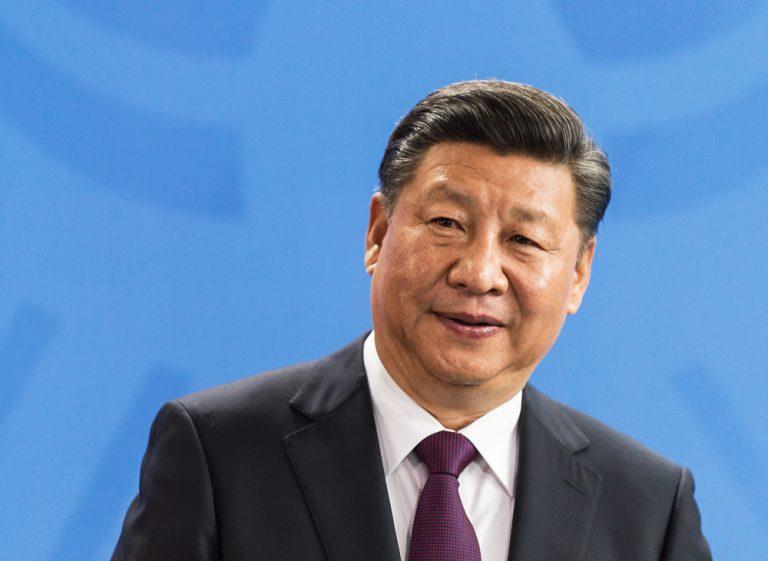
Chinese exports rose in September, despite the increasing pressure from the United States tariffs amid the continued trade war between the two powers.
According to government data published on Friday, Chinese exports rose 15% last month – an increase in August’s surplus of $27.89 billion and significantly better than predicted by analysts.
China achieved a surplus of $31.69 billion for September, compared with Reuters forecasts of $19.4 billion.
Unlikely surge
In a note to clients, Julian Evans-Pritchard, senior China economist at Capital Economics said: “The big picture is Chinese exports have so far held up well in the face of escalating tensions.” Mr Evans-Pritchard suggested that a rise in competitiveness due to a weaker renminbi may have caused the exports surge. Mr Evans-Pritchard also predicted that this performance would not endure: “With global growth likely to cool further in the coming quarters and US tariffs set to become more punishing, the recent resilience of exports is unlikely to be sustained.” These figures emerge after the US imposed new 10% tariffs on a further $200 billion of Chinese goods on 24th September. These accelerated numbers indicate that China is buffeting the first effects of new tariffs that the Trump administration imposed on $50 billion of Chinese exports this summer.Midterms tension
Li Kuiwen, the spokesman for China’s customs agency, said: “There are many uncertain and unstable factors in the international environment, and the China-US trade friction is constantly escalating.” The data, announced by China’s custom’s agency, is the last to be released before the 6th November US midterm elections and may exacerbate tensions with Washington. Last month, Donald Trump accused China of meddling in the midterm elections at the UN, declaring: “They don’t want me or us to win because I am the first president to ever challenge China on trade.” Trump threatened in September to place tariffs on all Chinese exports altogether, representing $267 billion of exports, with tensions continuing to rise and China matching existing tariffs dollar for dollar.Cheese company Ornua begins stockpiling in case of hard Brexit
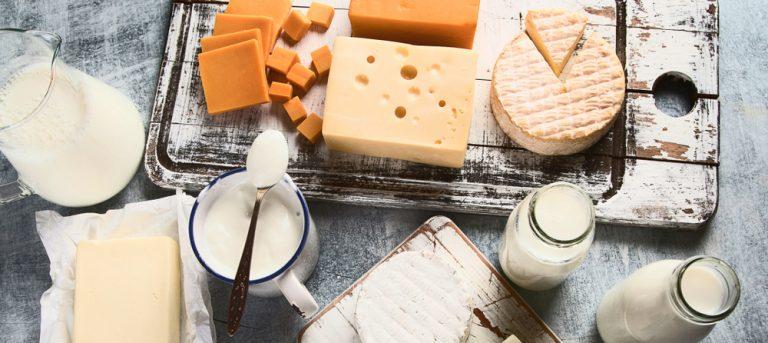
Dairy company Ornua has begun stockpiling cheddar in the UK to avoid the effects of price-hikes post-Brexit.
The Irish company behind brands such as Kerrygold and Pilgrims Choice have expressed fears that sales will plummet in British supermarkets if tariffs are implemented.
In a statement, the group said: “As the full implications of Brexit are unclear, Ornua is managing downsides and preparing for uncertainty. As such, Ornua has increased its storage capacity in the UK to facilitate increased storage of Irish cheddar. This is to ensure a consistent and secure supply to meet the needs of Ornua’s strategic customers in the UK market.”
The company is stockpiling cheddar in Britain and Ireland to beat any shock price hikes post-Brexit.
This year the group posted record sales of about £2 billion.
Ornua is not the first company to announce plans to begin stockpiling before the UK leaves the EU.
Cadburys owner, Mondelez International (NASDAQ: MDLZ), is stockpiling ingredients in case of a no-deal Brexit.
“Like the whole of the food and drink industry in the UK, we would prefer a good deal that allows the free flow of products as that would have less of an impact to the UK consumer,” said Hubert Weber, president of Mondelez Europe.
“However, we are also preparing for a hard Brexit and, from a buffering perspective for Mondelez, we are stocking higher levels of ingredients and finished products, although you can only do so much because of the shelf life of our products. We have a contingency plan in place to manage [a hard Brexit], as the UK is not self-sufficient in terms of food ingredients, so that could be a challenge.”
The Office for Budget Responsibility warned on Thursday that a no-deal Brexit is likely to lead to the shortage and hoarding of imported products.
“In a scenario where the UK and EU are unable to agree to the continued mutual recognition (‘grandfathering’) of existing product standards and professional qualifications, all existing goods may need to be re-approved before sale and services trade would be severely restricted by the loss of market access,” said the watchdog.
Ikea opens central London ‘planning studio’
Ikea has opened a mini spin-off store in central London, which opened on Thursday.
The UK boss has said the new high street outlets are the “tip of the iceberg,” as the group hopes to change its business model.
Javier Quiñones, Ikea’s UK and Ireland country retail manager, said: “This is part of the transformation of Ikea.”
“This is only the tip of the iceberg. We are looking for other city centre stores … we expect to open more like this but also other formats [with] home furnishing accessories and a food offer.”
“What we are doing is looking at the future and how we can be where the consumer wants us to be. We know 50% of people do not have a car today which makes the accessibility of some of our units not extremely easy.”
“The big units are the most important assets we have. The biggest part of the growth is online but the stores themselves are also growing,” he added.
Last year, Ikea blamed its 40% fall in profits on higher wages and the cost of investments online and in-store.
The central London store is Tottenham Court Road and is called a “Planning Studio”.
It will allow customers to receive advice from staff members.
Ikea’s London city centre market leader Jane Bisset said: “Our new city centre approach brings IKEA into the heart of London and is designed to complement our larger stores and digital offering, so customers have a wide range of choices that suit their needs and lifestyles.”
“The Ikea Planning Studio on Tottenham Court Road will give Londoners a relaxed and professional experience to get the advice and inspiration they need to plan more complex or large-scale home projects, with the expertise and specialist support of our co-workers, alongside a great service package,” she added.