
AstraZeneca’s hairy cell leukaemia treatment approved by FDA

AstraZeneca (LON:AZN) has announced that the US Food and Drug Administration has approved its cell leukaemia treatment.
Hairy cell leukaemia (HCL) is a rare, chronic and slow-growing leukaemia where bone marrow overproduces abnormal B cell lymphocytes. This can result in life-threatening conditions such as infections, bleeding and anaemia. HCL is diagnosed in roughly 1,000 people in the US each year.
The treatment, named Lumoxiti, has been approved following a successful clinical trial. Fundamentally, the treatment successfully cleared bone marrow of hairy cells. Moreover, it has shown a haematologic remission in patients for a duration of more than 180 days.
75% of patients receiving Lumoxiti achieved an overall response. Additionally, 30% had a durable complete response.
Dave Fredrickson, Executive Vice-President, commented:
“Today’s FDA approval of Lumoxiti represents a significant milestone for people living with hairy cell leukaemia, a rare blood cancer that can result in serious and life-threatening conditions. For patients, this approval provides the first FDA-approved medicine for this condition in more than 20 years.”
At 14:27 BST today, shares in AstraZeneca dropped by 0.28%.
Sports Direct shareholders have “stabbed” the company in the back, founder says
Sports Direct (LON:SPD) has released a statement in which the founder accuses shareholders of stabbing the company in the back.
The statement demonstrates founder Mike Ashley’s anger at shareholders for not supporting ex-chairman Keith Hellawell. Hellawell quit earlier this week as a result of criticism over the company’s corporate governance.
Today, Ashley has erupted with an incredibly direct statement:
“It is blatantly apparent that true entrepreneurs will never be accepted in the public arena. The media circus surrounding Sports Direct […] only proves that whatever progress Sports Direct makes, it will always be subject to disproportionate scrutiny and misrepresentation.”
“In light of the above, and despite the substantial progress made over the last few years, the shareholders have now made it extremely challenging for future engagement to take place. On the one hand they are delighted with our performance and progress, yet with the other hand they have stabbed Sports Direct and myself in the back by repeatedly hounding Keith Hellawell”
At 13:40 BST today, Sports Direct shares were trading at +1.15%.
British Steel cuts 400 roles blaming weak pound
British Steel has announced it will be “streamlining” its workforce in order to secure a “sustainable future”.
Plans include slashing 400 managerial, professional and administrative roles. These will be across its operations in the UK, Ireland, France and the Netherlands. In addition, the company will continue to improve manufacturing performance and increasing turnover through strong sales.
British Steel’s Executive Chairman, Roland Junck, has blamed the “weakening” pound because raw materials are traded in US dollars.
“We’ve already committed £120 million to capital expenditure projects and are pressing ahead with the £50 million upgrade to our Scunthorpe Rod Mill, which we announced in July. However, the pace of change we need in this challenging industry requires further and continued investment along with more agile and efficient operations.”
“To help us achieve this, we have to make difficult decisions and our plans unfortunately include the proposed reduction of 400 roles across our global workforce.”
“We’re sad to be making this announcement, particularly for our colleagues who could be affected. The skill and dedication of our employees has helped us come a long way in a short period of time. However, it’s vital our transformation continues so we can build a sustainable future for the whole business,”
“We’re confident these proposals will help achieve this.”
A no-deal Brexit could have a harrowing economic impact, Mark Carney warns
Mark Carney has warned the cabinet that a no-deal Brexit could have an equally disastrous impact as the 2008 financial crash, the Guardian reports.
On Thursday, at a special cabinet meeting, Mark Carney discussed the economic consequences of leaving the EU without a deal. He warned Theresa May and her senior ministers of the harrowing economic effects a disorderly exit could cause.
Cabinet sources said that unemployment levels could reach double figures in percentage terms. Furthermore, Carney’s worst case scenario was that house prices could face a drop of 25-35% over three years. Not to mention the impediment to EU transport links such as air travel and the Eurostar.
The Guardian have reported that a cabinet minister said: “The government wouldn’t just stand by. It didn’t in 2008. He wasn’t saying it was all going to happen but I think there is a recognition that you do have to contemplate the worst-case scenario.”
Following the meeting, the government released further issues of what a no-deal Brexit may entail. First, the occasional traveller will have to provide an international driving permit in the event of a no-deal as UK licenses may not be valid. However, holders of an EU driving licence will be able to drive in the UK without any extra paperwork.
Next, the EU-wide ban on roaming charges will be dropped for UK citizens. When roaming charges apply once again, UK holidaymakers and business travellers can expect to see the return of large bills. But, the government said it would try to cap mobile data at £45 a month.
With the March 2019 exit date becoming closer and closer, we can only wait and see what lies ahead for Britain’s future.
Arrow Global Group PLC completes acquisition of Europa Investimenti

Arrow Global Group PLC (LON:ARW) has completed the acquisition of of Europa Investimenti.
Since 2005, Arrow Global has specialised in the purchase, collection and servicing of non-performing and non-core assets. It identifies, acquires and manages secured and unsecured loans as well as real estate portfolios from financial companies. Arrow Global manages over £49.3 billion assets with over 1,800 employees across its European markets.
Earlier this March, Arrow Global announced the proposed acquisition of Europa Invetimenti. Today, Arrow Global has completed the acquisition of the leading originator and manger of Italian distressed debt investments.
CEO of Arrow Global, Lee Rochford, commented:
“The acquisition of Europa Investimenti represents another logical step of our considered entry into the Italian market.”
“When combined with our diverse institutional fund client base and our strategy to continue to raise third-party funds to invest in high-return assets”
“We remain excited by Europa Investimenti’s potential to grow income from the Group’s capital-light Asset Management and Servicing business.”
At 10.14 BST today, shares in Arrow Global were trading at +1.97%.
Volkswagen to end Beetle production next year
Volkswagen has announced plans to stop production of the group’s iconic Beetle car next year.
After almost seventy years of production, the car manufacturer’s plant in Puebla, Mexico, will make the last Beetle in July 2019.
Volkswagen US CEO Hinrich J. Woebcken said in a statement: “The loss of the Beetle after three generations, over the past seven decades, will evoke a host of emotions from the Beetle’s many devoted fans.”
Whilst the group does not have immediate plans to revive the model, the company have not ruled it out.
“I would say ‘never say never,” said Woebcken.
The car was introduced in 1938 during the Nazi era and was introduced to the US 11 years later.
Volkswagen sold 11,151 Beetles in the US in the first eight months of 2018, which is 2.2 percent less than the same period a year earlier.
The car manufacturer now plans to launch a wave of electric vehicles.
Volkswagen CEO Herbert Diess warned of the higher than expected costs of the electric car production.
“The burden for our company, such as the cost of bringing to market electric cars, will be higher than expected,” he said in the group’s internal newsletter. “This is particularly so since some of our competitors have been making more progress.”
“We need higher profits to finance our future,” said Diess. “Four percent is a minimum, five percent to six percent allow for some future investments and with seven percent to eight percent we’re crisis-ready.”
The automaker is still dealing with consequences following the from emissions scandal caused by its admitted cheating on diesel emissions tests.
Shares in the group (ETR: VOW) are trading at 139,90 (0937GMT).
Morrisons reports best quarterly performance in 9 years
Morrisons has reported its best quarterly performance in nine years.
The supermarket chain reported a rise in pre-tax profits by nine percent, reaching £193 million.
Chief executive David Potts said: “Morrisons continues to become broader, stronger and a more popular and accessible brand, and I am confident that our exceptional team of food makers and shopkeepers can keep driving the turnaround at pace.”
Potts is carrying out a turnaround plan where the boss is introducing a “Fresh Look” programme to over half its 500 stores, improving the product range and customer service.
Sales in the group have risen for the past 11 consecutive quarters.
Regarding Brexit, Morrisons has been given permission for streamlined customs checks to avoid border delays in the event of a no-trade deal.
“In our case it means that we are considered by the authorities to be a company who has policies and procedures that are thorough and wholly trusted and therefore any hold-ups at customs are, to some extent, simplified,” said Potts.
“I think it also avoids some fairly complex tariff refunds as well, so it’s not a big investment but it just felt like a sensible thing to do.”
Nicholas Hyett, equity analyst at Hargreaves Lansdown, said the retailer still has room to improve.
“Retail sales are growing steadily, while its wholesale division is turbo-charging the group’s topline.”
“Flat margins could be a touch disappointing, but given the presumably lower margin in the wholesale business, it still suggests an improvement in the performance on the retail side.
“With a high proportion of freehold stores and debt falling, the group’s balance sheet looks robust, and that means cash is available to return to shareholders despite ongoing investment,” he added.
“Longer term, the group needs to strengthen its online offering, and convenience has also been a weak spot. However, management are taking steps to improve both areas and initial signs are good.”
Shares in the group (LON: MRW) are trading at 259,10 (0857GMT).
Trump calls JP Morgan boss a “nervous mess”
Donald Trump has called JP Morgan (NYSE: JPM) boss Jamie Morgan a “nervous mess”.
After Morgan attacked Trump and claimed he was “smarter than he is”, Trump responded over Twitter.
“The problem with banker Jamie Dimon running for President is that he doesn’t have the aptitude or ‘smarts’ & is a poor public speaker & nervous mess – otherwise he is wonderful,” Trump tweeted. “I’ve made a lot of bankers, and others, look much smarter than they are with my great economic policy!”
Trump’s tweet came Dimon told reporters at JPMorgan headquarters: “I think I could beat Trump.”
“Because I’m as tough as he is, I’m smarter than he is. I would be fine,” Dimon said. “He could punch me all he wants, it wouldn’t work with me. I’d fight right back.”
The JP Morgan boss clarified he was not planning on running for President.
“I should not have said it. I’m not running for president,” Dimon, 62, said in a statement.
The pair have had a turbulent relationship. Last year, Dimon said it was “almost an embarrassment to be an American citizen travelling around the world and listening to the stupid shit we have to deal with in this country”.
In true Trump passion, the US President wrote on Twitter: “Sorry losers and haters, my I.Q. is one of the highest – and you all know it! Please don’t feel so stupid or insecure, it’s not your fault.”
Morgan has supported and criticized Trump’s actions since becoming President. The banking boss supported the President’s corporate tax cuts yet showed frustration over his positions on immigration and trade.
RBS boss McEwan accused withholding information from MPs
MPs have accused the Royal Bank of Scotland (LON: RBS) boss of withholding information about a police investigation.
Chief executive Ross McEwan was sent a letter by the Commons Treasury Committee in regards to the police investigation of the bank’s mistreatment of small businesses.
The scandal surrounding the Global Restructuring Group (GRG) was investigated for leading to widespread inappropriate treatment, which resulted in “material financial distress”.
McEwan wrote to the Treasury Committee and said why he had not mentioned the investigation, despite saying in January: “Not that we have seen or had reported, and certainly none that the police of Serious Fraud Office are looking at, to our knowledge.”
In the letter, McEwan said: “In relation to that article we would entirely reject the suggestion that the committee may have been in any way misled by the evidence that I gave during my appearance before you in January.”
Nicky Morgan, the chair of the Commons Treasury Committee, was not convinced.
The committee “expects clarity and openness from witnesses, and Mr McEwan’s evidence fell short of that standard,” she said.
“More generally, the committee is concerned by the pattern of defensiveness, and a failure to acknowledge mistakes, demonstrated by RBS throughout its handling of the GRG affair.”
“Mr McEwan’s letter to me is an example of this, and it casts doubt on his assurances that RBS’s culture has changed fundamentally since he took up his position five years ago.”
“If the committee decides to ask Mr McEwan to provide further oral evidence, it will expect him to tell the whole truth, not an edited version to suit him.”
FCA chief executive Andrew Bailey said: “Taking action was therefore always going to be difficult and challenging but after carefully considering all the evidence we have concluded that our powers to discipline for misconduct do not apply and that an action in relation to senior management for lack of fitness and propriety would not have reasonable prospects of success.”
Renewable energy: what is it and why the UK needs it
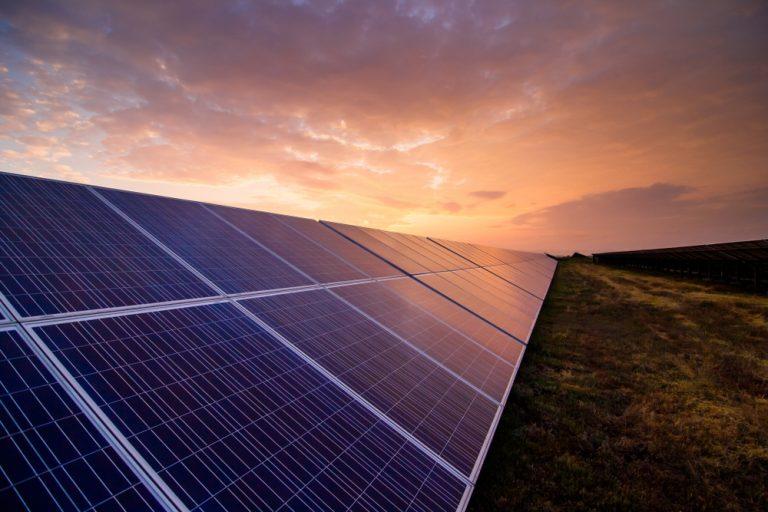
According to Ofgem, there are currently 71 active suppliers competing in the domestic energy market. A number of suppliers dominate the industry. But, how many of these focus on renewable energy? As we drown in a global environmental crisis, renewable energy is more important than ever.