
Dunelm Group PLC announces 2018 Preliminary Results
Dunelm Group PLC (LON:DNLM) has announced its Preliminary Results for the year to June 2018.
The report includes some noteworthy highlights. Firstly, the leading UK homewares retailer has seen an increase in its total revenue by 9.9%. In 2017, the figure was £955.6 million. This has increased to £1.1 billion. Next, it has reported a strong growth in LFL online, with home delivery sales up by 37.9%. Moreover, the company has reported the opening of ten new superstores in the year, adding 6.1% new space.
Full year dividend has increased by 1.9% to 26.5p per share. This reflects a strong cash generation and robust balance sheet.
Founded in 1979, Dunelm opened its first superstore in 1991. Currently, Dunelm is a multi-channel retailer with its online website launching in 2005.
The UK homewares market is currently valued at £13 billion and Dunelm is a leading company in this industry. Today, it operates 172 stores with 169 of these being out-of-town superstores. The company employs around 10,000 workers. In addition, it sells 30,000 products in store, increasing to roughly 55,000 online.
Chief Executive Officer, Nick Wilkinson, commented: “Following healthy sales growth over the past year, we are now taking steps to simplify the business under the core Dunelm brand, with one web platform and an integrated supply chain. This will allow us to respond more quickly to the changing consumer environment and drive future profitable growth.
“The UK retail environment remains challenging, but against this difficult background we have traded in line with expectations during the current financial year to date.”
At 12:18 BST Dunelm shares were trading at +5.59%.
FireAngel Technology Group PLC partners with Mears Limited

FireAngel Technology Group PLC (LON:FA) has announced a partnership with Mears Limited.
Cuurently, FireAngel is one of Europe’s leading developers and suppliers of home safety products. Additionally, the UK Housing and Care sectors receive support services by Mears Limited, a subsidiary of Mears PLC. Mears is responsible for the maintenance, repair and upgrade of over 700,000 UK properties. The agreement will see the two companies join in an exclusive partnership.
The agreement will see FireAngel supply Mears with an integrated home management system. As a result, Mears will introduce FireAngel’s UK Trade team to a number of clients effective immediately. Moreover, Mears will use FireAngel as its preferred safety product provider.
Consequently, Executive Chairman of FireAngel, Graham Whitworth, said: “Following significant R&D investment, I am pleased to announce our collaboration with Mears, which takes our smart, connected and existing products into the heart of the UK social housing sector.”
“By integrating our technological expertise in the home safety sector into Mears’ solution, FireAngel can significantly enhance the quality of service and support”
Pleased with the partnership, Chief Executive of Mears, David Miles, said: “There are real safety, commercial and financial benefits to optimising our interaction with tenants”
“We are witnessing a transition to integrated technologies and the FireAngel system will enable us to centralise those technologies into one central hub. We look forward to introducing the FireAngel solution to our clients across the footprint.”
As of 11:01 BST, FireAngel shares were trading at +35.47%.
MyCelx Technologies shares soar after promising update

MyCelx Technologies (LON:MYX) shares soared on Wednesday on the back of a strong set of half-year results.
The company, which specialises in clean water technology in the oil industry, reported a 107 percent increase in revenue for the year.
Revenue came in at $12.2 million compared to $5.9 million for the year before.
MyCelx Technologies added that it delivered a net profit of $1.5 million, up from the $0.5 million loss reported in 2017.
In particular, the firm attributed the promising performance to strong growth in Saudi Arabia amid the securing of several new contracts.
Chief Executive Connie Mixon commented on the results:
“The Company is pleased to report its strongest half year performance to date delivering $12.2 million in revenue”
She added:
“Momentum grew in Saudi Arabia with a series of contract wins adding to our existing installation base within SABIC, the leading petrochemical company.”
“Looking forward, our focus will be on sustaining momentum by converting our pipeline of opportunities in Saudi Arabia, Nigeria and North America which should keep us in line with current market expectations. ”
MyCelx Technologies corporation was founded back in 1994. The company opened a UK branch of its business in 2011.
It has been listed on the AIM section of the London Stock Exchange since 2011.
Shares in MyCelx Technologies are currently up +47.04 per cent as of 11.27AM (GMT).
Medica Group PLC more than triples its first-half profit as customer numbers grow

Medica Group PLC (LON:MGP) has announced that it has more than tripled its first-half profit as customer numbers grow.
The radiology services provider released its 2018 Interim Results today. Notably, revenue has increased by 18.2%. The figure has jumped from £15.7 million in 2017 to £18.6 million in 2018. In fact, adjusted operating profit increased by 15.4% to £5.0 million.
Moreover, Medica’s net debt has reduced significantly from £8.5 million in 2017 to £2.5 million.
Chief Executive Officer, John Graham, commented: “During the first six months of 2018, the Group has been investing in several medium- to long-term opportunities which will enable us to diversify our service offering and support growth.”
“We have continued to recruit radiologists to provide service to our customers and are confident that our capabilities can help our customers address the widely-reported radiologist shortage in the NHS.”
“Additionally, we continue to reduce net debt and expect this to be negligible by the year-end.”
“Overall, the Board expects the Company’s performance for the full year to be in line with market expectations.”
Correspondingly, at 10:46 BST Medica Group shares were trading at +1.45%.
Superdry PLC appoints former Tommy Hilfiger executive to new product officer role
Superdry PLC (LON:SDRY) has appointed former Tommy Hilfiger global head of womenswear to the new role of Chief Product Officer. The global fashion house has appointed Brigitte Danielmeyer in aim to further develop the creative innovation capabilities of the brand, it said.
In addition, it has announced the launch of a series of new disruptive fast-fashion ranges, Superdry Preview. The Superdry Preview launch aims to target a younger, more fashion-driven customer.
Superdry created Danielmeyer’s role to further develop the Global Digital Brand strategy. Equally, the role aims to deliver innovation and creativity to the brand’s in-house design team.
Superdry is a global digital brand which aims to deliver quality and innovation with every design. The premium high street brand operates in 55 countries, including their development markets of North America and China. It employs almost 5,000 workers globally.
Brigitte Danielmeyer commented: “I am thrilled to be joining Superdry, a global brand that I have admired for many years. Superdry creates amazing clothes for people around the world, through an obsession with design, quality, fit and value.”
“I am really excited about the opportunities ahead. There is real potential to build on the existing categories by extending the product offering as well as to expand into new markets.”
At 10:20 BST Superdry plc shares were trading at +1.57%.
SSE issues profit warning, shares fall 8pc
SSE has issued a profit warning, describing its performance so far as “disappointing” and “regrettable”.
The energy company blamed the upcoming price cap on the industry’s poor-value default tariffs, hot weather and higher gas prices for the poor trading update.
“Lower than expected output of renewable energy and higher than expected gas prices mean that SSE’s financial performance in the first five months has been disappointing and regrettable,” said Alistair Phillips-Davies, the group’s chief executive.
For the first five months of the year, the group took a £190 million hit on adjusted operating profit, sending shares down eight percent to £11.50.
Profits for the six months to 30 September will be around £293 million. This is half of the £586 million that was achieved last year.
“It is very rare to see a profit warning from a utility company as they are meant to have fairly predictable income streams. Yet SSE bucks the trend because of the wrong type of weather,” said Russ Mould, the investment director at stockbroker AJ Bell.
George Salmon, an equity analyst at Hargreaves Lansdown, said: “Hardly any rain or wind meant output from its hydro and wind assets wilted in the heat, and with nobody putting the heating on, customer meters just didn’t tick over. All the while, the price of gas in the wholesale market has kept on rising.”
”Investors should remember that SSE can’t control any of these factors and a business increasingly focused on renewable energy will have good years and bad. With that longer-term outlook in mind, the board says it intends to stick to pre-existing dividend plans.”
The energy company is currently in the process of merging with Npower.
“Reshaping and renewing the SSE group will support the delivery of our five-year dividend plan in the years ahead,” Phillips-Davies.
Shares in SSE (LON: SSE) are currently trading down 7.92 percent at 1.151,50 (1015GMT).
Brexit: JPMorgan plans for 4,000 jobs to leave UK
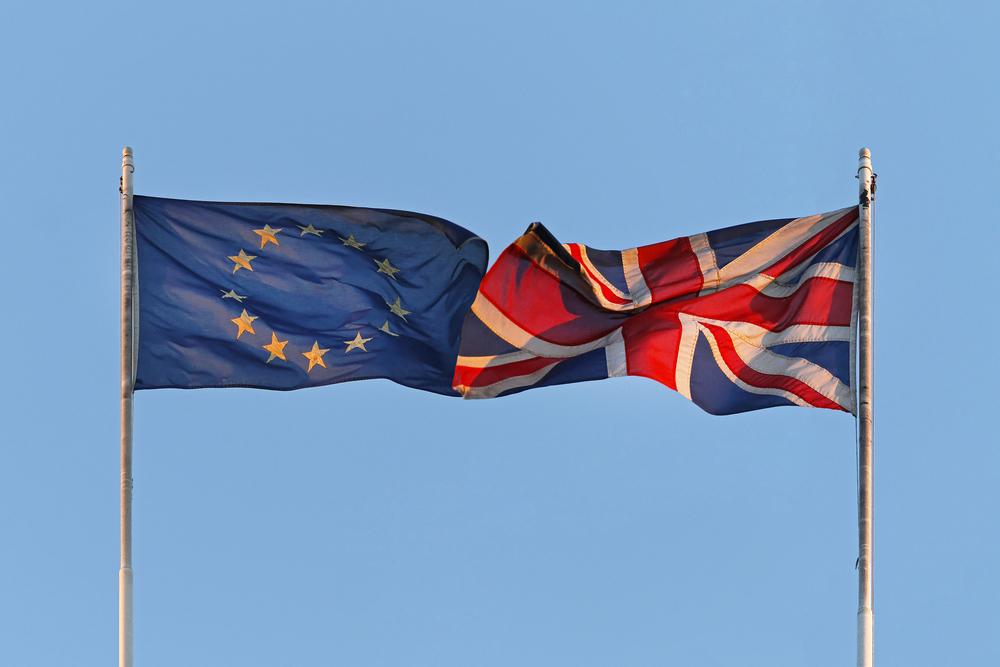
JPMorgan has warned that its Brexit plans are “past the point of no return”.
Mark Garvin, the vice chairman of the corporate and investment banking arm, said that 4,000 jobs could move from the UK if no deal has been agreed.
“We are now in full execution mode,” Garvin told MPs.
“We are in the very advanced phases of execution, in fact. A number of these initiatives are already in flight and in many cases we have passed the point of no return – they are happening.”
On the exact number of the 16,000 UK employees that are expected to move from the UK, Gavin said: “There is clearly a scenario where actually one does envisage that kind of outcome.”
“That is not a forecast, that is a scenario. It is a scenario that can be mitigated by a series of arrangements.”
“Our industry is in a constant state of flux and I can say personally we have been through far more significant tumult than this, so this is an event we can very well manage,” he added.
“Compared to what is happening as a result of digitisation and other types of disruption, this is not a massive challenge.”
JPMorgan is not the only bank preparing for a no-deal Brexit.
Citi (NYSE: C) has said that between 150-200 staff will be affected. Barclays (LON: BARC) expects around 150 to move from London to Dublin.
Share in JPMorgan (NYSE: JPM) are trading at 114,43 (0756GMT).
Tesco to launch discount chain Jack’s next week
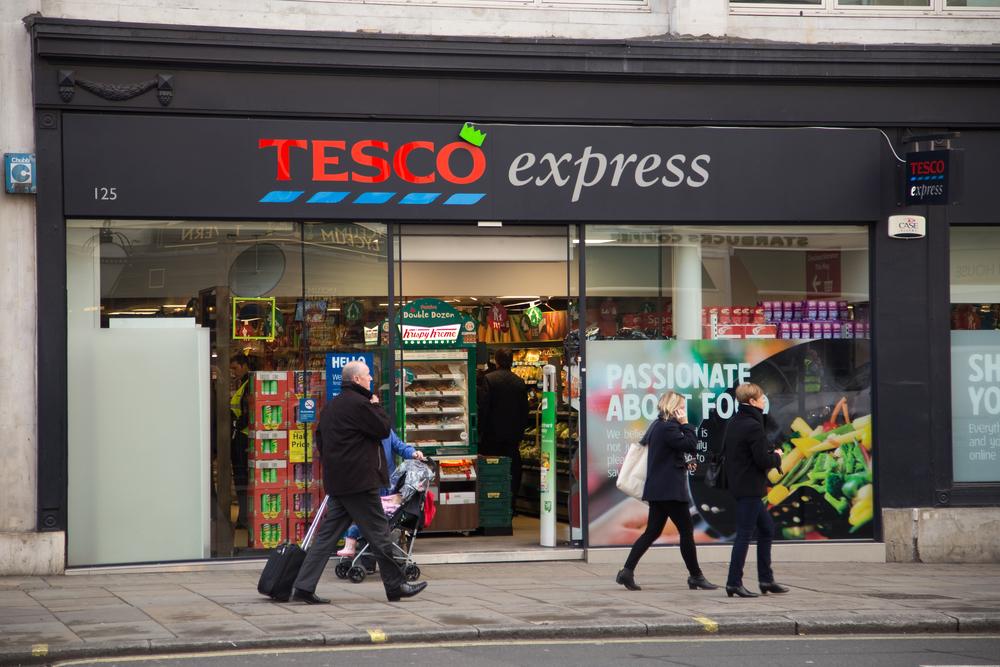
Tesco is expected to unveil its new discount chain next week.
The store, named Jack’s, will be unveiled by the supermarket’s chief executive, Dave Lewis, in Cambridgeshire, on Wednesday.
The store will compete with Aldi and Lidl, who have a combined 13.1 percent in the grocery market according to the latest Kantar Worldpanel data.
“Aldi and Lidl account for over 13 per cent of take-home grocery sales and are growing at 10 per cent each year,” said Fraser McKevitt, head of retail and consumer insight at Kantar Worldpanel.
“Strategically, it makes sense for Tesco to consider its own discount chain and try to capture some of that growth. The big four now make up less than 70 percent of grocery sales – down from 76 percent a decade ago. The proposed Sainsbury’s-Asda merger acknowledges this decline, as did Tesco’s own acquisition of Booker, which gave it access to wholesale and out-of-home sales.”
“The opening of a new discount chain would be further recognition of this shift,” he added.
Tescos has shared little about the new store, saying only that it would be “sharing some exciting news” on September 19.
The group advertised for staff for a “new store format” in Cambridgeshire and hoped to recruit retail assistants, retail customer service assistants and retail managers.
Clive Black, a Shore Capital analyst, expects the discount chain to soon represent 100 stores, including around 60 of the supermarket giant’s “Metro” stores, some of which are struggling.
“Tesco has a cohort of problem stores where the traditional Tesco offer is a square peg in a round hole,” he said.
“They have got low footfall and low income hinterlands and Aldi and Lidl are taking everyone’s legs away.”
The new discount store will be named after Jack Cohen, who founded Tesco in 1919.
Tesco shares (LON: TSCO) closed on Tuesday at 236,80.
Jaguar Land Rover boss: “tens of thousands” of jobs at risk over Brexit
Jaguar Land Rover’s boss has warned that “tens of thousands” of jobs are at risk if Theresa May fails to reach a Brexit deal.
Ralf Speth warned the prime minister that UK factories will grind to a halt if she does not “get the right deal” before leaving the EU.
Speaking at the government’s electric car summit in Birmingham on Tuesday, the Jaguar Land Rover boss said that the policies that have been “demonising” diesel had cost 1,000 jobs at the company and caused the “environment, industry, the consumer and the Exchequer to lose out”.
Moving on to Brexit, Speth said: “Those numbers will be in the tens of thousands if we do not get the right Brexit deal.”
“Six months from Brexit and uncertainty means that many companies are being forced to make decisions about their businesses that will not be reversed, whatever the outcome, just to survive,” he added.
“Brexit is due to happen on the March 29 next year,” Speth said. “Currently, I do not even know if any of our manufacturing facilities in the UK will be able to function on March 30.”
“Bluntly, we will not be able to build cars if the motorway to and from Dover becomes a car park, where the vehicle carrying parts is stationary.”
“Frictionless trade is not an aspiration, but a necessity for JLR,” he added.
Although Jaguar Land Rover is a British company, the chief describing the group as “quintessentially British”, the company is also moving production to a giant new plant in Slovakia, where production is “thousands of pounds” for each car.
“What decisions will I be forced to make, if Brexit means not merely that costs go up, but that we cannot physically build cars on time and on budget in the UK?” said Speth.
Debenhams reassures investors, shares rise 4pc
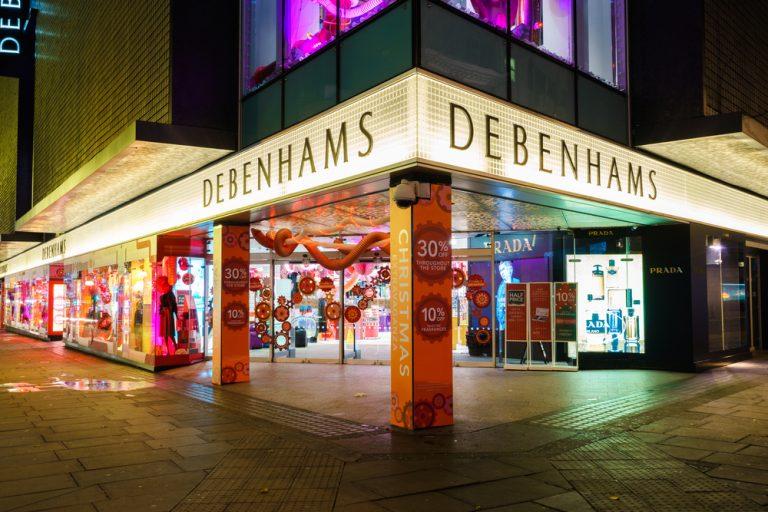
Debenhams has attempted to reassure investors after it was revealed the department store had appointed KPMG to help improve its performance.
After media reports said the group was considering a company voluntary arrangement (CVA) to allow store closures and cut rents, shares fell by 16 percent 11.5p.
Sergio Bucher, the chain’s chief executive, said: “The market environment remains challenging and underlying trends deteriorated through the summer months.”
The company is “well equipped to navigate these market conditions and take advantage of any trading opportunities that emerge,” he added.
Despite attempts to reassure investors, Debenhams has to admit low annual profits.
The retailer said that profit will be £33 million, compared with previous guidance of £35-40 million.
The new estimate is in line with the current market forecasts.
“As we stated in June, the board continues to work with its advisers on longer term options, which include strengthening our balance sheet and reviewing non-core assets. This activity is in order to maximise value for shareholders and protect other stakeholders, including our employees,” said Sir Ian Cheshire, the group’s Chairman.
Debenhams has issued three profit warnings just this year and has also lost two-thirds of its share price value since the start of this year.
The future of the department store is in question after fellow department store House of Fraser fell into administration last month and was rescued by Sports Direct’s Mike Ashley in a £90 million.
Ashley is in negotiations with landlords and suppliers to try and keep 80 percent of House of Fraser’s 59 stores open.
Shares in the group (LON: DEB) are up 4.17 percent at 11,98 (1424GMT).