
Numis profits sink 17% after hiring spree, shares fall

Profits at the stockbroker Numis dropped by 17% in the year until 30 September.
The group announced on Wednesday that pre-tax profit fell to £38.3 million due to increased investment in staff numbers.
Staff costs at the broker were up by 10.6% to £64.7 million. Additionally, non-staff costs on technology also increased to £31 million.
Despite the fall in profits, revenue for the year was up 4.6% at £136 million.
”Profits were down but that’s the result of a deliberate and significant investment during the period which we think is for the good of the company,” said Ross Mitchinson, Numis’ co-chief executive.
“It is always right to hire brilliant people,” he added.
Co-chief executive Alex Ham said: “In the 12-24 months post-Mifid II there will probably be some forced consolidation among our competitors but it is not something we worry about.”
“We are floating [investment platform] AJ Bell today and brilliant, first-class entrepreneur-led businesses like that will be well-received, but the market has become more selective.”
In September, the share price in the group plunged after the firm warned of a dent to future profits amid an increase in new employees.
“Investment in talented individuals across the business has been a key priority during the year as we seek to strengthen and diversify the business for the future,” said Numis co-chief executives Alex Ham and Ross Mitchinson.
“Our track record and reputation has been a significant factor in our ability to attract highly respected individuals to the business.”
On Brexit, the co-chief executive said it was “causing uncertainty right now, you can see there is less activity than there has been.”
Shares in Numis (LON: NUM) are trading down 1.99% (0846GMT)
Patisserie Valerie appoints new CFO

Nick Perrin has been appointed as the new interim CFO at Patisserie Valerie.
After the previous CFO, Chris Marsh, was suspended and then left the cake retail chain amid an accounting scandal, Patisserie Valerie continues to search for a permanent replacement.
“I am pleased to welcome Nick to Patisserie Holdings,” said Steve Francis, boss of the group.
“I am pleased to welcome Nick to Patisserie Holdings. He brings with him the necessary experience to help strengthen the team as the company works tirelessly to put the events of the past months behind it and look forward to the future.”
Perrin comes from the AIM-quoted vet services provider CVS.
Marsh left the chain after a £40 million black hole was discovered. He was arrested on bail and is under investigation by the Financial Reporting Council, who is also investigating audits provided by Grant Thornton.
A spokesperson for Grant Thornton said: “I can confirm we have received a letter from the Financial Reporting Council informing us of its decision to commence an investigation, and we will, of course, fully cooperate in this matter.”
The bakery chain is in talks to find a successor to Grant Thornton.
In the wake of the scandal, chief executive Paul May also stepped down from the group, who was replaced by Francis.
“I am delighted to welcome Steve Francis as new chief executive at Patisserie Holdings plc,” said Chairman Luke Johnson on Francis’s welcome.
“He has a strong track record of restoring value in turnaround situations, especially in the food industry, and the board looks forward to working with him in the revival of the business.”
Toyota boss: no-deal Brexit would be “disastrous”
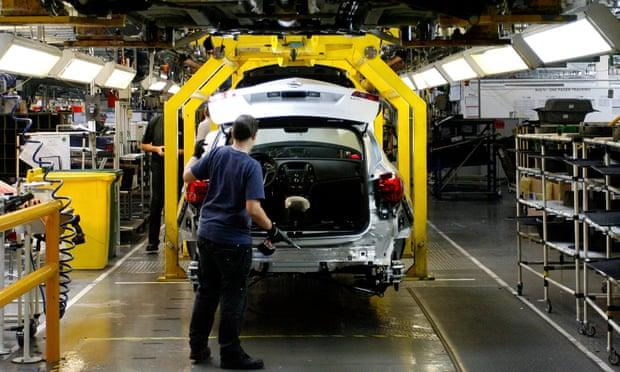
The deputy managing director of Toyota has warned against the effects that a no-deal Brexit would have on the car manufacturer.
Tony Walker told MPs on Tuesday that a disorderly Brexit would be “disastrous” to UK operations and would cost up to £10 million a day.
Speaking to a parliamentary select committee, Toyota’s deputy managing director said that Theresa May’s deal has provided more clarity for businesses and is “much better than the confusion we have had. I don’t think I am alone in business in saying that”.
“To say because it is not perfect we should go back to square one is not understandable to us as business people.”
If the UK is to crash out of the EU, it would create havoc to its supply chain.
“We do not just have the 50 trucks, we have to have them in sequence, it is no good if we have 49 trucks and truck 17 is missing. [Production] will then stop. So without the withdrawal agreement and withdrawing with a no deal, we would have stop-start production for weeks, possibly months. It would be very, very difficult for us to cope with,” he said.
“The value of the cars we make is £10 million a day. If we lose that sort of value it’s very, very challenging for us.”
Adding to MPs on the future of Brexit, Walker said: “We strongly ask that the transition period doesn’t become the negotiation period and we would strongly ask that we don’t end up three, four months to go, a bit like this time, with another cliff edge with a very short time to implement.”
Airbus has also supported the prime minister’s deal, with the group’s senior UK vice president calling it a “step forward”.
MPs will vote on May’s deal on 11 December.
Shares in Toyota (TYO: 7203) are trading -1.72% (1527GMT).
The Financial Crisis One Decade On: The Rise of FinTech

Ten years ago, our trust in legacy banking institutions was rocked by the 2008 financial crisis. This left the atmosphere ripe for a new finance sub-sector to emerge and flourish, making use of sophisticated technology– dubbed “fintech”. In the first part of this series, we explored the changes that occurred during this tumultuous decade; now in this second and final piece, we will explore the rise of fintech companies.
Humble beginnings
In 2008, the term fintech had not yet entered the mainstream lexicon, but a handful of platforms were already paving the way. These were niche platforms, such as MyFootballClub (2008), which allowed fans to come together to buy a football club, or Slice The Pie (2008), who paid music lovers for referring the best up and coming artists. Sadly, many of these fan-based platforms are no longer around but have left a legacy by sowing the seeds of a fintech revolution. From these humble beginnings, fintech in the UK is now estimated to generate £20 billion in annual revenueand employ over 60,000 people.Trust and transparency
While many established financial service companies were complicit in the financial crash, fintech in comparison is perceived as being fair and trustworthy by their customer base. Their low fees, quick, personal service and fresh, often informal, demeanour set them apart as companies to be trusted. Moreover, with their high levels of transparency, it is perceived as unlikely they would ever sell packaged subprime loans, often cited as the cause of the Financial Crisis.What are the different types of fintech companies?
One of the main differentiators between fintechs and legacy institutions is their level of customer service and fees. Fintech companies use technology to lower transaction costs between buyers and sellers of financial services, and in some instances act as marketplaces allowing individuals and/or companies to transact with one another directly– no middlemen required. Fintech covers a broad range of subcategories of financial services with notable groupings including the following: Payments:utilising smartphones and tablets, they provide quick and cheap transactions between customers and businesses with small start-up cost or for free between friends. Equity Crowdfunding:allowing retail investors to invest in early stage, high-growth companies, who are selling shares to raise equity. In 2017 total volumes in the UK reached £217.7 million. Peer to Peer Lending:these companies allow individuals to lend money to businesses seeking investment for growth. Without the slow bureaucracy of standard banking, the companies can access funding much more quickly and at cheaper rates. Meanwhile, individuals can access the high rates of return which were previously only enjoyed by the banks. Some platforms, such as Crowd2Fund, go one step further by allowing businesses and investors to communicate directly. This means the investors can choose the businesses they have a personal affinity with and the businesses not only gain investors but new customers and brand advocates. Challenger banks:with many offering an exclusively mobile service, enabling consumers to conduct transactions from their smart devices and receive real-time notifications related to their spending. Some companies even empower those in unbanked and economically deprived areas to transact in the digital economy by providing a prepaid debit card service. P2P Currency Transfer: by matchmaking individuals seeking to sell currency to those seeking to buy it, they fulfil orders within a few minutes and have very clear small fees. Insurtech:offering highly competitive prices to the end user, they make use of technologies to both reduce operating costs and reward lower risk behaviours such as safe driving, tracked by GPS, or healthy living, tracked by wearable activities monitors.Why has fintech thrived in the UK?
A history of world-class financial services Globally, there are a handful of hotspots for tech start-ups and London, in particular, has a reputation for financial tech. This is in part owed to the centuries-old tradition of finance in the capital. For example, one of the worlds first business insurers, Lloyds banking group, was founded in London just over 250 years ago. Recently, in the 1980s, London was once again at the forefront of financial services with the “Big Bang” dramatically deregulating financial markets. This led to London consolidating its position as a global innovator, making it an attractive place to start a fintech company. Access to talent The UK is fortunate to be home to some of the world’s leading universities. Imperial, Oxford, and Cambridge are ranked in the top 10 global universitiesand London’s fintechs benefit from a rich talent pool to build their team from. Moreover, the reputation of being a fintech-hub can be self-perpetuating. The to global talent and expertise in computer science and web development head to the UK to be part of this pioneering industry. Free movement within the EU has resulted in web developers and data scientists from Eastern Europe moving to UK fintech companies to fulfil their economic potential. Whilst freedom of movement is likely to end subsequent to Brexit, tier 1 visas for “exceptional talent” will allow fintechs to continue to access these talented and highly-skilled individuals. Government Support The UK Government recognised and nurtured the potential of the fintech industry by introducing various schemes and initiatives. In 2014 they backed a fintech membership trade body, called Innovate Finance, whose role is to advance the industry. At its launch, just a handful of companies were invited to apply for membership, with Crowd2Fund being the first to offer the Innovative Finance ISA. The government department of UK Trade & Investment regularly put on overseas trade missions and invite members of the innovative finance sector to promote themselves to new international markets. Additionally, in 2015 Eileen Burbidge, who has invested in a number of fintechs such as GoCardless and Monzo, was appointed as the UK Treasury’s special envoy for fintech.Her role is to promote the sector locally and internationally, as well as advising the government how best to support it. Government policies such as SEIS and EIS (mentioned in the first part in this series) have also made it easy for fintechs to access the capital they need to grow. These schemes helped to facilitate over £1.3bn investment into fintech during 2017.What’s next for fintech?
With new innovations such as Open Banking and the FinTech Bridge, the UK is still set to lead the industry globally. Open banking, a new directive, launched in January 2018, giving business and consumers the ability to share their banking data with third parties. This allows fintech companies to analyse the data to provide better lending decisions in less time while enhancing price comparison, to keep prices low for consumers. The FinTech Bridge is a partnership facilitated by the Australian and UK governments, aiming to encourage partnerships between their respective fintech industries, by recognising each other’s regulatory bodies. So, if a company is registered with an Australian regulator, a British company can treat it as if it were also registered in the UK, rather then go through a lengthy procedure of paperwork. Crowd2Fund was one of the first UK companies to take part in the initiative, partnering with the Australian based AI debt collection company, InDebted, to bolster their debt collection technologies. With Canada, the USA, China, and Singapore also establishing FinTech Bridges with the UK, the industry is set to scale even further. The fintech sector may have only been around a decade or so, but the pace of innovation and growth isn’t likely to slow down any time soon.Martin Sorrell announces a second acquisition in blow to WPP
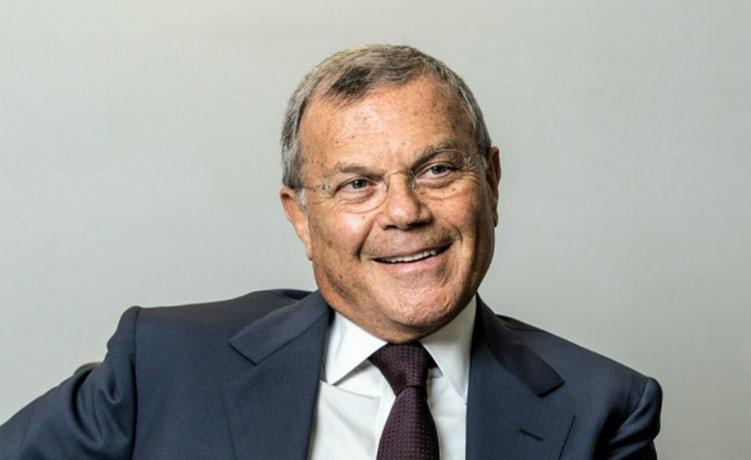
Sir Martin Sorrell ‘s S4 Capital has confirmed a second acquisition, agreeing to buy MightyHive in a $150 million (£117 million) deal.
After Sorrell was forced to leave advertising giant WPP (LON: WPP), he swiftly created his own venture that he said would be “the best form of revenge” against his former employer.
The first acquisition that S4 Capital carried out was in acquiring the Dutch agency, Media Monks.
“This represents a significant step in building a new age, new era, digital agency platform for clients,” said Sorrell about his first deal at S4 Capital.
“MediaMonks’ roots are totally in new media, and data, content and technology. Our next moves will be to build this platform further and to add meaningful data analytics and digital media buying. The company will be a unitary one with MediaMonks as its core.”
On his latest deal, he said: “The merger with MightyHive marks an important second strategic step for S4 Capital. The peanut has now morphed into a coconut, and is growing and ripening.”
“Clients of all kinds want services delivered faster, better and cheaper, by more agile and responsive organisations,” he added.
MightyHive made $41 million in revenue and $11 million in profits in the year ending 31 October.
Sorrell was forced out of WPP following an investigation into alleged personal misconduct. He was the longest-serving FTSE 100 chief executive.
WPP employs more than 200,000 staff in 400 businesses working in 112 countries. It is the world’s biggest advertising giant.
The Panoply lists on the AIM market

Having raised £5.4 million through fundraising, The Panoply is now listed on the AIM market of the London Stock Exchange.
The digital transformation services group is listed under the stock ticker TPX, where ordinary shares were priced at 74p, valuing the group at £30 million.
Founded in 2016, the group consults businesses across Europe, to them digitally transform businesses for the automation age. Clients include Unilever (LON: ULVR), BBC, National Trust, Funding Circle (LON: FCH) and DVLA.
According to the group, the key to the future success of the company is through a combination of an organic and acquisitive growth strategy. It will hope to acquire companies to build clusters across Europe and support them in achieving faster growth.
Target companies will be profitable, without debt and show potential for clear sales synergies with the Enlarged Group.
The Panoply offers a new decentralized, nonhierarchical, operating model as the 4th industrial revolution arrives.Neal Gandhi, The Panoply’s chief executive, said:
“The Panoply is a services company assembled to meet the demands created by the “fourth industrial revolution”, combining the very best talent to service the growing technical needs of clients with innovation, creativity and efficiency.”
“With digital transformation becoming more and more critical to companies’ success across many verticals, this is the right time for a digitally native business such as ours to come to the market and capitalise on that structural shift. The old consultancy model is dying, and our decentralised, agile operating model is here to take its place.”
“We have ambitious growth plans and are confident that AIM will be the right platform to support us in rapidly scaling the business. Admission to the exchange will bolster our brand and provide the capital necessary to pursue further sustainable growth,” he added.
Following admission, the group will have 40,601,642 Ordinary Shares in issue.Mike Ashley tells MPs: The internet is killing the high street

Mike Ashley appeared in front of parliament on Tuesday to discuss the future of the high street.
The chief executive of Sports Direct (LON: SPD) told MPs that a 20% retail tax was necessary on retailers that make more than a fifth of their sales online.
“It is not my fault the high street is dying; it’s not House of Fraser, not Marks & Spencer (LON: MKS) or Debenhams’ (LON: DEB) fault,” said Ashley.
“It is very simple why the high street is dying. It is the internet that is killing the high street. The vast majority of the high street has already died. In the bottom of the swimming pool, dead.”
Ashley’s suggested 20% tax would force retailers to invest in high streets. Sports Direct would be included in the tax.
Another proposal to save the high street given to MPs was a 50% reduction in base rent rates and free car parking for customers.
During his meeting in Parliament, the business tycoon slammed politicians for not doing more to save the high street.
“You have to grab the bull by the horns. You are in a cataclysmic event,” he told MPs.
Earlier this year, Ashley saved House of Fraser and Evans Cycles from collapse. He said that half of Evans’ 62 stores could close. Despite plans to save 80% of House of Fraser stores, 12 stores are to close after failing to agree on a deal with the landlords.
The Sports Direct boss said that it was not possible to keep every store open, saying: “I’m not sitting in my office stroking a white cat … I find it very frustrating: what benefit have I got of closing stores?”
Following the meeting, a spokesperson from the Treasury said on Ashley’s tax suggestion: “As the chancellor made clear in the Budget, an online sales tax would be passed onto consumers. That’s why we’re putting £675 million into a Future High Streets Fund instead to help high streets to evolve.”
Greencore shares drop despite 13% profit rise

Greencore has released its full-year results on Tuesday. The convenience food producer has reported a strong growth in its food to go business for the 12 months ending 28 September. Despite this announcement, shares in the business (LON:GNC) have dropped over 5%.
Over the period, pre-tax profit rose 12.7% to £17.8 million. Equally, revenue increased 4.2% to £1.5 billion. Adjusted earnings per share came in at 15.1p, which is in line with the 14.7p-15.7p guidance previously announced in October.
The company also highlighted its plan to return £509 million of capital to shareholders by way of a tender offer. Remaining proceeds are expected to be returned through a special dividend.
Additionally, net debt has been reduced by £18.1 million to £501.1 million. This has been driven by a £14.4 million increase in Free Cash Flow.
Greencore has said that it will continue to closely monitor the potential implications Brexit may have on the business.
Chief Executive Officer, Patrick Coveney, commented on the results: “2018 was a year of significant change for Greencore. We delivered good underlying growth in the UK, with favourable consumer and retailer trends helping drive our core food to go business. After the financial year-end, we took the decision to sell our US business having received a compelling offer for it. We will now focus all of our attention and resources on the significant growth opportunities that we see in the UK, both organic and inorganic. Despite the short-term uncertainties of Brexit, our scale, depth and expertise in attractive and structurally growing food categories mean that we are confident in the future growth prospects for Greencore.” Fundamentally, Greencore is well positioned to capitalise on its industry-leading position and maximise profitability and returns in the UK market. The company’s food to go categories drove 60% of revenue across the period, with an 11.1% reported revenue growth in these categories alone. Pro forma revenue was at 10.8% (excluding the acquisition of the Heathrow sandwich facility). Tuesday’s market headlines also include Travis Perkins’ plan to sell its plumbing division. Elsewhere, Coats has said it will invest in the technology start-up Twine Solutions, Rentokil Initial announced a £1.5 billion pension scheme deal and Wizz Air released its latest passenger statistics. At 10:16 GMT, shares in Greencore Group plc (LON:GNC) were trading at -5.29%.Travis Perkins to sell plumbing division

Travis Perkins announced on Tuesday that it planned to sell its plumbing and heating division. This move is part of a broader corporate restructure that involves “simplifying” the business to “improve” returns.
The business aims to focus on trade customers and drive returns from its advantaged trade businesses. Equally, it hopes to simplify the group and streamline costs in order to encourage a strong cash flow. The intention to sell its Plumbing and Heating Division comes following a successful transformation.
In addition, Travis Perkins hopes to improve the performance of its Wickes DIY chain.
On Tuesday, the Travis Perkins management team will host a capital markets update in the country’s capital. The event aims to cover the company’s immediate priorities and ambitions for its future. Travis Perkins is a UK based builders’ merchant and home improvement retailer in Northampton. It currently operates 1,900 outlets with over 27,000 employees across the UK and Ireland. Owner of the well known brand Wickes, Travis and Perkins is part of the FTSE 250. CEO John Carter commented on the announcement: “We have developed a clear plan to focus on delivering best-in-class service to our trade customers, and to simplify the Group to reduce complexity, speed up decision making and reduce costs. Our trade businesses hold strong positions in attractive markets, and these initiatives will enable us to concentrate our management time and capital in the highest returning areas.” “Our strong balance sheet and free cash flow generation, driven by growing earnings and lower capital expenditure, will underpin our commitment to drive shareholder value and a progressive dividend.” Its short term goal is to focus on strengthening the performance of Wickes and capitalise on its popularity in the DIY market. In the medium term, the board will also look to review the options for maximising its value. According to Sky News, one of these options could be a sale. The group also announced that it plans further annualised cost savings of £20-30 million, which it hopes to deliver over the next year and a half. Tuesday’s market news also includes the world’s leading industrial thread manufacturer, Coats, investing in tech start-up Twine Solutions. Elsewhere, Wizz Air reported an 11% jump in its passenger numbers. and Rentokil Initial announced a £1.5 billion pension scheme deal. At 09:52 today, shares in Travis Perkins plc (LON:TPK) were trading at 0.30%.Coats invests in tech start-up Twine Solutions

Coats has announced on Tuesday that it has become a strategic investor in Israeli based technology start-up Twine Solutions.
The world’s leading industrial thread manufacturer invested in the start-up due to its revolutionary digital thread dyeing system.
Twine Solutions was founded in 2015 in Israel by two brothers with an extensive digital printing expertise. It currently employs 40 full-time workers and is situated just outside of Tel Aviv.
Under the agreement, Coats will invest $5 million for a 9.5% share in the company and a seat on the Board. Coats’ Michael Schofer, the Chief Supply Chain Officer, will be taking the seat on the Twine Board. Both companies will now work together on an exclusive commercial partnership to market the technology and launch it next year.