
Amazon briefly surpasses $1tn valuation

Amazon has become the second company worldwide to surpass the $1 trillion status.
Just weeks after Apple, shares in the group rose almost two percent to a high of $2,050.50 in morning trade before slipping back.
Jeff Bezos founded Amazon is 1994 and in just 25 years, the group now has revenues of $178 billion (£139 billion).
“To reach a market capitalisation of over $ 1trillion is impressive. To do it in a little over 24 years is extraordinary,” said Neil Saunders, the managing director of GlobalData Retail.
“That Amazon has achieved this demonstrates its dramatic advancement in both the retail and technology sectors, as well as the influence it now wields over large parts of the consumer landscape.”
The tech giant first went public in 1997, when shares were worth just $18. On Tuesday shares hit $2,050, pushing the company’s valuation over $1 trillion. Shares closed slightly lower, valuing the company at $995 billion.
Amazon and Apple (NASDAQ: AAPL) have both been rivalling to reach the landmark $1 trillion valuations for months. Amazon lost the race when stock markets responded well to Apple’s financial results last month.
The trillion-dollar company has received criticism from all side on its journey to the top.
After Bezos bought the Washington Post, Trump did not respond well to the purchase.
“Is Fake News Washington Post being used as a lobbyist weapon against Congress to keep Politicians from looking into Amazon no-tax monopoly?” Trump said last year.
“Amazon Washington Post has gone crazy against me,” Trump also wrote on Twitter in July.
The group has also faced criticism over treatment of employees in UK warehouses and its tax payments.
Amazon only paid £4.5 million in corporation tax in 2017 despite UK sales of nearly £2 billion.
In May, the group was accused of treating workers in the UK warehouses like robots.
Amazon said it was “simply not correct to suggest that we have unsafe working conditions based on this data or on unsubstantiated anecdotes. Requests for ambulance services at our fulfilment centres are predominantly associated with personal health events and are not work related. Nevertheless, ambulance visits at our UK fulfilment centres last year was 0.00001 per worked hour, which is dramatically low.”
Shares in the group (NASDAQ: AMZN) closed on Tuesday up 1.33 percent at 2.039,51.
.
Smiths Group rallies with ICU bid
Smiths Group Plc (LON:SMIN) has seen its share price rally in trading today as US healthcare firm ICU Medical revived its failed bidding campaign for the medical arm of the British engineering firm.
It has been reported that the bid tabled on Monday – of between £2.5-£2.8 billion made up of cash and ICU shares – has since been rejected, though talks are set to continue with the absence of a stock exchange announcement to the contrary.
This latest round of talks comes after ICU, a healthcare company specialising in devices for infusion therapy and oncology, was about to completely pull out of talks with Smiths Group over a potential merger, which would have created a $7.5 billion giant.
Smith Medical accounts for just 30% of the group’s overall revenues, and is forecast to see a 2% revenue dip over the course of the year with new regulations meaning the loss of certifications and two contracts in the US.
Yesterday’s bid saw Smith’s share price rally 1.4%. It currently stands at 1,620p, up 2p or 0.12% since markets opened this morning. Analysts from Numis have reiterated their ‘Hold’ stance on Smith stock, while Deutsche Bank analysts have retained their ‘Buy’ stance.
Kefi Minerals PLC receives gold project approval
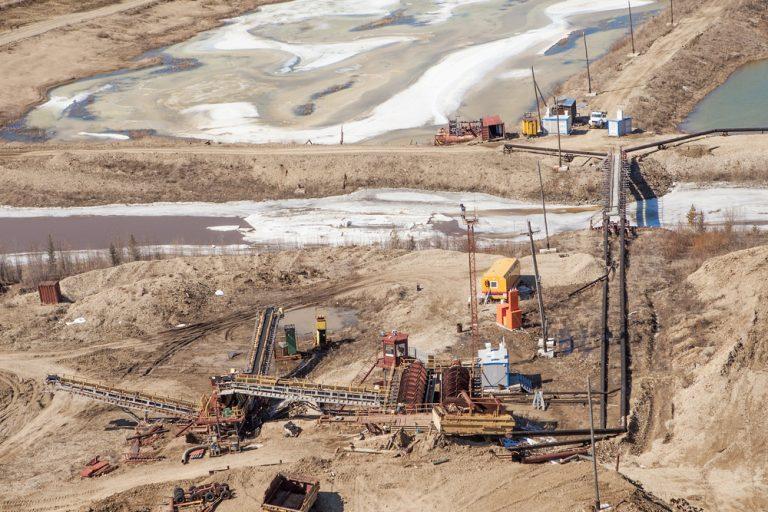
Kefi Minerals PLC (LON:KEFI) has announced that the Ethiopian Government has approved its Tulu Kapi Gold Project.
Moreover, the development has received approval from the Ethiopian central bank for its banking arrangements.
Fundamentally, the government consents are implementations of administrative matters. These include the registration of actual audited historical investment and approval of the finance-lease structure, among others.
Harry Anagnostaras-Adams, Managing Director, said “The Government has certainly accelerated the pace in recent times as regards the various regulatory processes for this, the first modern mine development in Ethiopia.
“All major policy matters are now resolved for the Project. There is every sign that the just-appointed Government leadership at the Federal, Oromia Regional and local levels is focused on making this happen very successfully and smoothly.
“KEFI and its partners in Project Company TKGM are very appreciative of the priority given to the Project at the same time when so many transformational changes are being made in Ethiopia generally. It is an exciting time to be establishing a new sector in Ethiopia.”
Kefi Minerals is a London-listed gold exploration and development company founded in 2006. It is primarily focused on the advanced Tulu Kapi Gold development project in Ethiopia.
JD.com shares dip following CEO being arrested
Beijing-based e-commerce outlet JD.com has seen its share price dip in trading today following the arrest and release of its CEO Richard Liu, over allegations of sexual misconduct in the US.
Though Liu’s lawyer is confident his client will not be charged, the JD.com boss returns to China with a degree of uncertainty that casts a shadow on the short-term success of his company. Though it is not clear whether he can cast decision-making votes without being physically present, Liu’s absence poses a practical dilemma as he holds an 80% stake in vote swing, in all the company’s decisions. Because of this, uncertainty over his future has made prospective investors more cautious, with this trend set to continue for China’s second largest e-commerce company, until a verdict is reached.
The company has since released a statement saying, “The local police quickly determined there was no substance to the claim against Mr Liu and he was subsequently able to resume his business activities as originally planned,” they added that legal action would be taken against “false reporting or rumors”.
John Elders, a spokesperson for Minneapolis police department stated, “We don’t know if there will be charges or not because we haven’t concluded an investigation.”
JD.com’s share price is down 25% since the start of the year, with shares currently trading $29.15, down $2.16 or 6.91% since markets opened
Mark Carney hints towards staying on as Bank of England governor
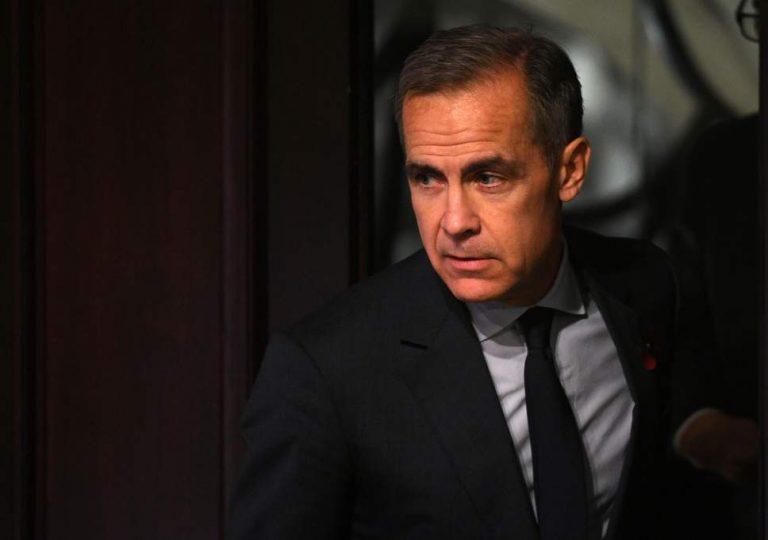
Mark Carney has said he is willing to remain the governor at the Bank of England if it will ensure a “smooth” Brexit transition.
Carney was scheduled to step down as the bank’s governor in June 2019 but has left hints he could plan to stay beyond this date.
“Even though I have already agreed to extend my time to support a smooth Brexit, I am willing to do whatever else I can in order to promote both a smooth Brexit and an effective transition at the Bank of England.”
“I am signalling a willingness to do whatever I can to support this process,” added Carney, talking to MPs on the Treasury committee.
The Governor at Threadneedle Street said nothing was yet confirmed but there would be an announcement in the near future.
“We (the Bank) have a very important supportive role to make sure whatever Brexit the government negotiates, that Parliament decides, that that is as much of a success as possible,” he said.
Carney has been with the Bank of England since 2013 when he was the first non-Brit to take the role in the lender’s 300-year history.
The government had initially played down the reports of his position and said the plan was still for him to leave in 2019.
Carney has had mixed reviews of his time at the Bank of England.
The governor has not gone down well with pro-Brexit campaigners, who have accused him of “crying wolf” before the EU Brexit referendum when he predicted that voting to leave could lead to a recession.
Last month, he was called the “high priest of Project Fear” by Conservative Brexiteer Jacob Rees-Mogg.
The former UKIP leader Nigel Farage even called on Carney to resign from the Bank of England.
Countrywide shares continue free-fall and major investor reduces stake
Countrywide’s (LON:CWD) woes continue as their share price continues to fall, and eventually hit its all-time low late in Monday trading. Following this news, Major Countrywide shareholder Oaktree Capital (NYSE:OAK) slashed its stake in the company from 30% to little over 18%.
Following the backing of a management bid for £140 million in additional funding, the floundering estate agency launched new shares at 10p per share. The £140 million goes some way to paying off the firm’s debt, which is believed to stand at around £200 million – though the recent share price dip means that the company’s market cap is only £190 million, and its 10.5p share price as of last night is only narrowly above the cut-price 10p shares launched during their funding call.
The recent share price dip represents a 10% fall, in addition to the 7% decrease last Friday. The stake slash of Oaktree Capital only serves for to reinforce doubts over the company’s future success.
An anonymous insider has also gone on to say,
“Countrywide is on life support. If the biggest investor is bailing out, why should anyone else have any faith in the business?”As a slight upshot, Investec Asset Management increased its stake in the firm from 5.75% to 12.50%.
Socially Responsible Investing market worth £48 billion by 2027

The Socially Responsible Investing (SRI) market is set to grow by 173% reaching £48 billion by 2027, Triodos Bank reports.
An increasing amount of investors want their money to contribute positively, causing the significant growth.
Triodos Bank’s latest Annual Impact Investing survey reports that 19% of UK investors hope to invest in an SRI fund.
Interestingly, almost half of investors aged 18-34 are driving this increase.
In fact, 56% of milennials investors have invested in an ethical fund after something bad happening in the news. The 18-34 age group have cited natural disasters and the 2008 financial crisis as motivation for investing, to name a few.
Managing director of Triodos Bank UK, Bevis Watts, commented: “Demographic changes, social media and awareness of the challenges facing our planet mean that investors are waking up to the fact that there really is no such thing as a neutral investment. Every investment has an impact on individuals, society and the economy.”
Interestingly, the survey cites the top five industries investors would not consider investing in:
- Manufacturing or selling of arms and weapons
- Worker / supply chain exploitation
- Environmental negligence
- Tobacco
- Gambling
Taptica shares surge 6.8pc following jump in profits

Shares in Taptica were up 6.8 percent in late-morning trading on Tuesday.
The marketing and advertising firm reported a jump in both income and profits for its half-year results.
The group reported adjusted underlying earnings of $21.6 million, up from $13.1 million for the same time the year previous.
Revenues in the first half jumped increased from $65.6 million last year to $144 million.
Taptica’s chief executive Hagai Tal said the group full-year adjusted underlying earnings would be ahead of market expectations.
Tal said that the Taptica’s revenue share balance between the company’s brand advertising and performance-based marketing businesses would remain the same “for at least the rest of the year.”
The group’s chief executive also said the following the Cambridge Analytica, which took place last year, financial investors and private equities were regaining confidence and “returning to the space”, leading to slight recovery.
“We’re starting a new period where the sector is becoming more attractive to investors,” Tal added.
“We are pleased to report another half of significant year-onyear growth resulting from increased usage of apps by consumers as well as increasing mobile internet access resulting in existing clients growing their ad spend accordingly,” said Tal.
“We also experienced good growth through our expanded global presence. Specifically, the Company saw increasing demand from the AsiaPacific region as well as first contributions from its offices in the UK and India.”
Analysts at City broker finnCap said Taptica’s plans for international expansion, the Tremor acquisition, and $30 million in funding meant that the group was in a good position for “further earnings-enhancing M&A and discussions are already underway with targets”.
Taptica also declared an interim dividend of $0.04 per share, up from no interim dividend in the first half of 2018. The group ended second half with a net cash balance of $42.1 million, which was compared to a net debt of $4 million towards the end of last year.
The firm’s brand advertising division generated $71.9 million in the first half of the year.
The group also reported that its performance-based marketing business had a 9.9 percent increase in revenues to $72.1 million.
This increase was helped by “significant” contributions from its growing international presence, particularly in Japan.
Shares in the group (LON: TAP) are currently trading 5.22 percent higher at 363,00 (1419GMT).
Muji become latest Japanese group planning to leave London post-Brexit
The Japanese retailer Muji is reportedly planning on moving its European headquarters from London to a site in Germany following Brexit.
According to a report by Bloomberg, Ryohin Keikaku Co., is considering Germany for the move but has not confirmed the number of employees based in the London offices that will move if the relocation takes place.
In an email, a spokesperson for Muji said: “As a company we’re reviewing the risks from Brexit and always considering all available options. We have not made a decision on moving our office since no new location has been decided on.”
The company has 12 stores in the UK and employees around 50 people in the London office.
Japanese company Panasonic (TYO: 6752) also announced plans to move its European headquarters from the UK to Amsterdam due to Brexit.
“We will move our European headquarters to the Netherlands,” a spokeswoman for the firm told Agence France-Presse.
Reports of Muji relocating follows Japan’s biggest business lobbyist sharing concerns of Japanese businesses that are “seriously concerned” about their future in the UK post-Brexit.
Hiroaki Nakanishi, chairman of Keidanren, the Japanese business federation, said in an interview with the Financial Times: “Everyone is seriously concerned. We can not do anything.”
Nakanishi said Japanese businesses operating in the EU are concerned by the lack of clarity surrounding Brexit.
“Various scenarios get discussed, from no Brexit to plunging into Brexit without any child or deal at all,” Nakanishi added. “We’re now in a situation where we have to consider what to do in all of them.”
Several Japanese financial institutions including Nomura (TYO: 8604), Sumitomo Mitsui (TYO: 8316), and Daiwa Securities (TYO: 8601), have all made plans to move staff and operations out of the UK.
Following Brexit, companies could be forced to pay tariffs to import and export goods between the UK and EU, leading to concern for many businesses operating in the UK and EU.
Shares in Muji (TYO: 7453) are trading up 0.76 at 33.050 (1348GMT).
Danske Bank shares dip amidst money laundering scandal
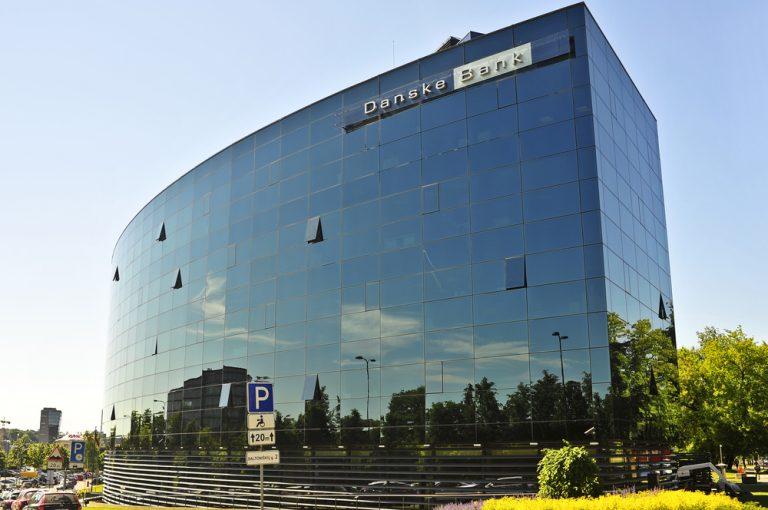
Danske Bank (CPH:DANSKE) have seen their share price fall in Tuesday morning trading following a media report, which uncovered additional information on an open investigation into malpractice. The report revealed that Danske’s Estonian branch was guilty of laundering far more money than had been previously uncovered.
Late on Monday night, the FT report announced that the Danish Bank had handled up to $30 billion of Russian and Ex-Soviet money in non-resident accounts in its Estonian branch in 2013 alone. This came in addition to an earlier investigation this July, in which a Danish newspaper reported that Danske had laundered up to $8.3 billion between 2007-2015.
Though unable to verify these reports, the reports of Danske’s in-house inquiry are expected to be published later this month.
“The matter is very complex, and no conclusion as to the number of suspicious customers or transactions – or indeed the extent of potential money laundering – can be drawn from any individual pieces of information taken out of context,” said a Danske spokesperson.
Danske’s share price currently stands at 176.75kr, down 12.4kr or 6.56% since markets opened.+