The US game company who produce World of Warcraft and Call of Duty, Activision Blizzard, have announced plans to buy Irish firm King Digital Entertainment in a deal worth $5.9 billion.
King Digital, the creators of popular app game Candy Crush, will widen the appeal and reach of Activision’s games, with the company hoping the acquisition would make it a global leader in interactive entertainment across mobile, console and PC platforms. After the deal, Activision will have more than half a billion monthly active users in nearly 200 countries.
Chief Executive Bobby Kotick told Reuters:
“You have such broad reach. This is a fantastic opportunity for us to create compelling content for new demographics.”
The deal is expected to be completed early next year and has not yet received approval from the Irish High Court. To fund the deal, Activision have said that it will use $3.6 billion of offshore cash and the rest will be lent by Bank of America Merrill Lynch and Goldman Sachs.
King Digital (NYSE:KING) are trading up 3.88 percent on the news.
Following Sunday’s win by the ruling Justice and Development Party (AKP), the Turkish lira was up 3% to 2.817, after falling 25% this year as one of the worst performing currencies in the world.
After months of political deadlock, the AKP won with 316 seats in the 550 seat parliament, extending the party’s rule to 2019.
Valeria Bednarik, FXstreet analyst said; “This election will end Turkey’s period of transition and should lead to a marked strengthening of the country’s economy.”
Suzan Sabanci Dincer, executive chairman of Akbank bank, believes that the results will return momentum to the Turkish economy stating; “This was clearly a vote for stability, and Turkey is an economy that does well under stable conditions. “No more elections, no more politics.”
The AKP have promised increases in minimum wages and increased payments for retired workers.
The main index in Istanbul jumped 5% in morning trading.
On Monday, Visa Inc announced it would buy Visa Europe Ltd in a deal worth 21.2bn Euros (£15.09bn).
Whilst Visa Inc and Visa Europe previously operated under the same company known as the Visa International Service Association, in 2007 most units merged to form Visa Inc, leaving Visa Europe as a separate entity.
The most active bank in the Visa Europe network is Barclays and is predicted to make up to 1.2bn Euros in total, sharing proceeds with over 3,000 companies.
The chief executive of Visa Inc, Charles Sharf, has said;
“We are very excited about unifying Visa into a single global company with unmatched scale, technology and services…Together we will bring the power of electronic payments to more people, in more places, than ever before.”
Chirantan Barua, from Bernstein Research is less optimistic about the merge stating;
“Now that the banks will be ‘external’ to the payment system they will see their fee income margin start to be squeezed and we wouldn’t be surprised if Visa tried to increase the margins in Europe at the expense of the banks. As well, given the nature of the deal, the banks will not be able to switch providers for at least the first few years.”
The deal, which is still subject to regulatory approval, was supported fully by the boards on both sides and is expected to close in the third quarter of 2016.
Shares, which have increased by 18% this year, slipped by 1.2% in premarket trading.
Since the 2011 crash, the fine wine market saw four years of decline however, since last summer there have been signs of recovery.
Considering the Angelus 2010, which has a current market price of £2,400 per 12×75, the 2010 vintage fell 7.7% behind the equally scored 2009 vintage – making it among the greatest differences between identically scored 2009 and 2010 vintages.
The 2010, which was upgraded to 98 points in February 2013 after a critic described it as “absolutely spectacular”, saw a decrease in price since its highest trade price at £2,400. However, since another boost in points to 99+ in August, the Angelus 2010 saw a steady increase to £2,300 at its last trade.
Angelus is increasing in popularity over the year, with Liv-ex logging it 7 places higher this year when rating the most popular wines on the platform.
Parker, who compared four of Angelus vintages in August 2015, stated;
“How much fun will it be to have the 2000, 2005, 2009 and 2010 in future tastings to see which vintage comes out on top? They are all candidates that will flirt with perfection, depending on the state of their evolution.”
The 2000 and 2005 Angelus vintages have been valued 38% higher than the 2009 and 50% higher than the 2010.
The Chancellor George Osborne travels to Germany on Monday to meet with Wolfgang Schäuble, Germany’s finance minister and Sigmar Gabriel, the vice-chancellor as part of the Conservative government’s plans to push changes with the UK’s relationship with the EU.
The demands proposed by David Cameron, which is expected to include a new “red card” system to allow national parliaments to stop and scrap unwanted EU directives, hopes to strengthen support of voters to back the continued membership of the UK within the EU in the upcoming referendum planned for the end of 2017.
Mr Osborne, who recently described the UK and German economies as “the beating heart of Europe”, hopes to counter fears that remaining in the EU will leave London neglected in financial policy making.
In a statement, the chancellor stated; “the future holds challenges for our economies. We must cut debt and boost productivity. To do this, we need a strong EU, fit for today’s challenges and working for the benefit of all 28 member states,”
Despite results of a recent survey suggesting Theresa May was the new public choice to take on the “Brexit” campaign, the Home Secretary has recently stated;
“There are some people who say you should be in at all costs, there are people who say you should be out at all costs. Actually I say let’s do this renegotiation, let’s see what reform we can bring about as a result of that renegotiation and then put it to the British people. That’s what we’ve promised people”.
Nigel Farage responded to the results of the Survation poll, where Farage followed May as most suited to back the official out campign, stating he would be “absolutely delighted” if the Home secretary took on the out campaign.
British support over the the UK’s membership of the 28 member party bloc has varied over the past year. Despite support for the UK withdrawing from the EU falling to one of its lowest levels in June of this year, the gap has significantly narrowed since September.
Oil prices fell during Asian trading hours on Monday as analysts have expected a weaker demand from China in the approaching months.
The lowering consumption from China has caused worry in the global energy sector, where oil prices have nearly halved from the same period a year earlier due to oversupply and reduced demand.
At 0751 GMT, Brent futures LCOc1 was down by 6 cents at $49.50 a barrel, whilst CLc1 fell by 15 cents to $46.44 per barrel.
Commodities analyst, Hong Sung Ki, at Samsung Futures Inc has said;
“China’s manufacturing sector, which is still in contraction, is adding downward pressure on oil as it’s closely related to demand for oil products,”.
Data from other Asian economies remains mixed with improved data from Japan, Asia’s second biggest oil consumer and economy. Data from South Korea and Taiwan looks to further slowdown.
Considering supply; Russia’s output has increased since September with an increase of 40,000 barrels per day. Iran also has plans to increase output by 500,000 barrels a day, however this will not affect decline due to the market already accounting for the added barrels.
Growth in German factory activity remained solid for the third quarter, according to figures from Markit, suggesting the German economy remains strong despite the catastrophic the Volkswagen scandal and volatilty in China over the last quarter.
Markit’s purchasing managers’ index (PMI) for manufacturing in Germany fell two points to 52.1 in October from 52.3 the previous month, with factory output increasing for the 30th month in a row. Any figure over 50 is considered to show growth.
However, some companies’ noted slightly weaker demand from Russia and China. Growth was led mainly by consumer goods companies, suggesting private consumption will continue to stay strong.
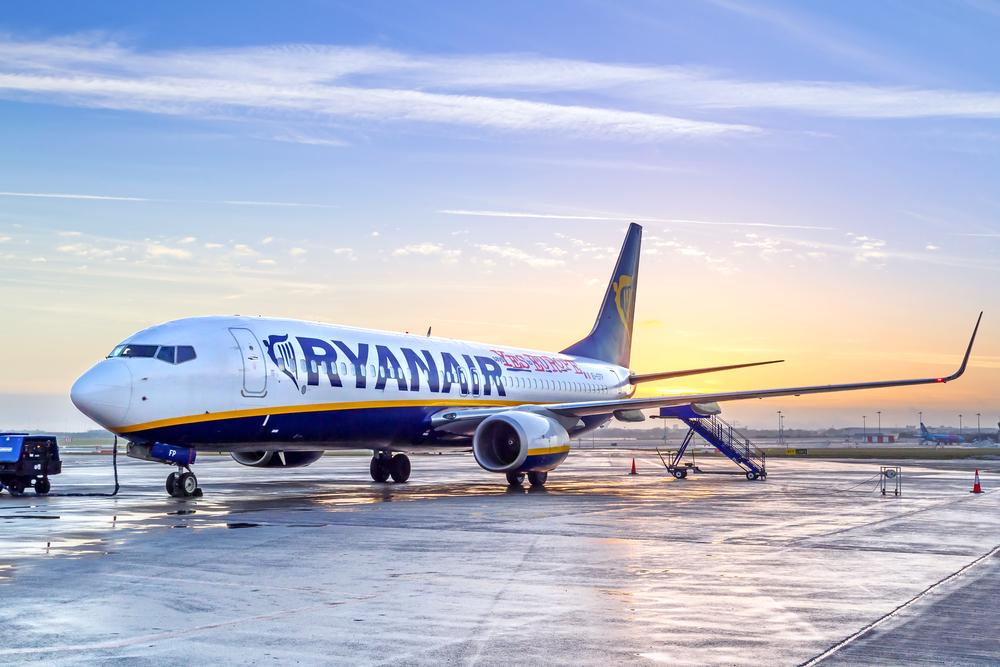
Budget airline Ryanair (LON:RYA) posted strong results this morning, disclosing a 37 percent rise in half-yearly pre-tax profit and a 13 percent jump in passenger numbers.
The company also upped its growth target, and now expects to have 180 million passengers a year within a decade; 20 million higher than its previous forecast.
Revenue also rose 14% to just over €4 billion in the six months to September, as Ryanair became the first EU airline to carry more than 10 million passengers in July.
Chief executive Michael O’Leary said in a statement:
“We have enjoyed a bumper summer due to a very rare confluence of favourable events including stronger sterling, adverse weather in northern Europe, reasonably flat industry capacity and further savings on our unhedged fuel.”
Cost-cutting measures in place include an agreement to buy 95% of its fuel at $62 a barrel, estimated to save around €430 million in 2017, and the addition of the new Boeing 737-800 aircraft to the fleet is hailed to cost less than most of its existing planes.
O’ Leary commented: “This combination of lower aircraft and fuel costs will enable Ryanair to continue to lower fares and grow market share.”
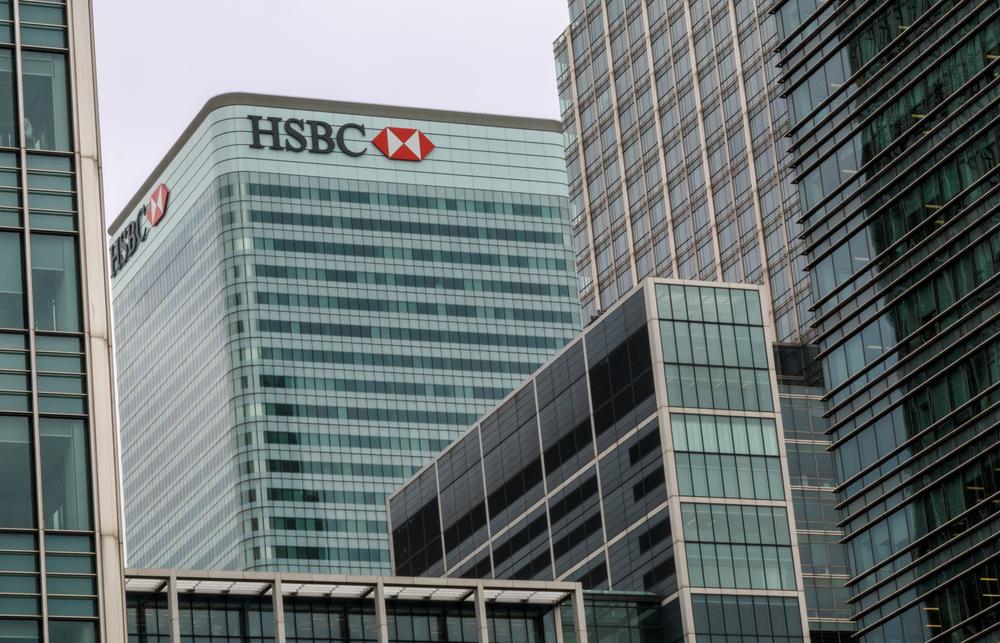
HSBC (HSBA) have reported a 32 percent rise in pretax profit for the third quarter, evidence that cost-cutting measures announced in June are having a positive effect on the bank’s finances.
In June, the bank announced thousands of job cuts and 10 strategic management goals in order to improve shareholder returns. Heavy spending on compliance has meant that there have been reduced costs from fines and settlements with regulators.
Chief executive Stuart Gulliver said in a statement:
“Our cost-reduction measures are beginning to have an impact on our cost base. However, there is more to achieve on costs and we expect the measures we have already taken to have a further impact in the fourth quarter.”
Quarterly pretax profit was $6.1 billion, up from $4.6 billion in the same period a year ago and above expectations by analysts.
However, underlying revenues fell 4 percent to $15.1 billion compared with the same quarter last year, as the effect of turbulent stock markets in Asia over the last quarter is felt.
Given the increase in non-traditional small business funding, it is surprising that website offering comparison and advice for small businesses has been missing from the sector for so long. Fortunately, Fundbird has recently been launched to fill the gap, operating an online platform matching SMEs with the right funding for them.
The company’s mission is to simplify the world of alternative finance for small businesses, helping them to navigate the range of non-bank funding options and find the best match for their individual requirements.
Fundbird’s co-founder and CEO, Sharon Argov, knows exactly the kind of problems that SMEs face when looking for funding and was driven to set up the platform in order to simplify the process:
“As an entrepreneur myself, I have first-hand experience of knowing how difficult it can be to secure a bank loan for a new business, and I know the stress and frustration it can cause. “Now that alternative finance is such a viable option for SMEs the frustration comes when trying to work out which option is best for your business – it’s a complex landscape to get your head around, which is precisely why we set up Fundbird – to help time pressed business owners navigate this area.”
Funded by FinTech Angel investors including Yuval Tal, founder of Borderfree and Payoneer, and Rhodium Venture Capital, Fundbird has a unique ability to pre-filter SME applications based on their individual requirements. This guides the business to understand the type of funding they need, and acts as a lead funnel for the alternative finance industry, creating reliable, high quality leads for lending partners.
The platform compares many alternative funding methods, including secured loans, property finance, equity crowdfunding, peer-to peer lending, and start-up loans. All the site’s partners have been carefully selected based on criteria including competitive interest rates and flexible payment plans.
For lending partners, working with Fundbird will deliver a pipeline of good quality, well-matched leads. These have the potential to be converted into valuable, long-term customers, as the businesses seek different forms of alternative finance at different stages of their business evolution and growth.
“The rise of alternative finance has opened so many doors for small businesses, that a “no” from the bank no longer means an inability to access finance altogether. Alternative finance empowers SMEs who previously thought they were unfundable”, Argov says.
Fundbird is the perfect example of a FinTech company that thriving in the UK, showing just how amenable London inparticular is to helping new Fintech businesses grow. However, in order for alternative finance Fintech companies to really integrate with mainstream finance, Argov feels it has to go further:
“Whilst initiatives such as Fintech 2020 are great, I think that there needs to be more collaboration between banks and start-ups in order to make a real difference and truly create FinTech products that customers need.“RBS working with Funding Circle is an example of this already happening, but it needs to continue and go further. The banks need to realise that FinTech is not here to extinguish traditional financial institutions, but has the ability to help make banking and finance better and more efficient.”
Whilst the process for obtaining alternative funding for businesses is usually simpler than the extensive checks required by banks, according to Argov “SMEs must make sure they get important documents in line to ensure a smooth journey. Meticulous planning – knowing exactly how much is needed, and how much can comfortably be paid back each month, is also important. Intermediaries such as Fundbird are a great way to compare options and make the right decision for your business.”
For further information on getting the right alternative finance for your business, visit fundbird.co.uk.