ECB sticks to key rates and pandemic policy

0

Following the first European Central Bank (ECB) meeting of 2021, the institution announced that it will be sticking to its current key rates and the scale of its Pandemic Emergency Purchase Programme (PEPP) for the foreseeable future, as the European economy continues to grapple with the impact of the Covid-19 pandemic.

In what The Telegraph described as a “pretty boring” press conference from Christine Lagarde, the ECB President confirmed that the bank will stick to its 0% interest rates until inflation at least “robustly converges” to the target of around 2%.

She warned, however, that upward pressure on inflation will take some time to emerge and is highly dependent on the progress of the Europe-wide vaccination programmes in tackling infection rates.

Lagarde emphasised that uncertainty remains very high, and the ECB will refrain from any significant changes while the economic landscape is still so murky.

She confirmed that the ECB’s near-term forecasts were supported by the newest data, stating: “Overall, the incoming data confirm our previous baseline assessment of pronounced near term impact on economy and protracted weakness in inflation”.

The ECB added in a statement: “The Governing Council continues to stand ready to adjust all of its instruments, as appropriate, to ensure that inflation moves toward its aim in a sustained manner, in line with its commitment to symmetry”.

Meanwhile, the ECB’s asset-purchasing PEPP project will remain at €1.85 trillion. The Governing Council commented: “If favourable financing conditions can be maintained with asset purchase flows that do not exhaust the envelope over the net purchase horizon of the PEPP, the envelope need not to be used in full”.

Crucially, it added: “Equally, the envelope can be recalibrated if required to maintain favourable financing conditions to help counter the negative pandemic shock to the path of inflation”.

Lagarde also said that the ECB’s Governing Council is continuing to monitor the euro exchange rates, echoing concerns raised in the bank’s last meeting in December. Policymakers appear to still be worried about the strength of the single currency. The GDP/EU rate is currently sitting at 1:1.13 as of GMT 14:57.

Reactions from market analysts are beginning to flow in, with global macro strategist Frederik Ducrozet stating simply:

Others, namely Danske Bank’s chief strategist, picked up on the ECB’s interesting choice of wording in their economic forecast:

Also commenting on the ECB’s announcement was Chris Beauchamp, Chief Market Analyst at IG, who weighed in:

“While the euro has weakened against the dollar from its highs earlier in the month, the overall direction of travel remains unchanged.

“The ECB had previously been keen to downplay any concerns about the strength of the euro, but if reduced stimulus expectations in the US take the heat out of the dollar bounce, then policymakers in Frankfurt might have to start worrying again about the euro’s rise”.
Electric batteries with 5 minute-charge produced

0

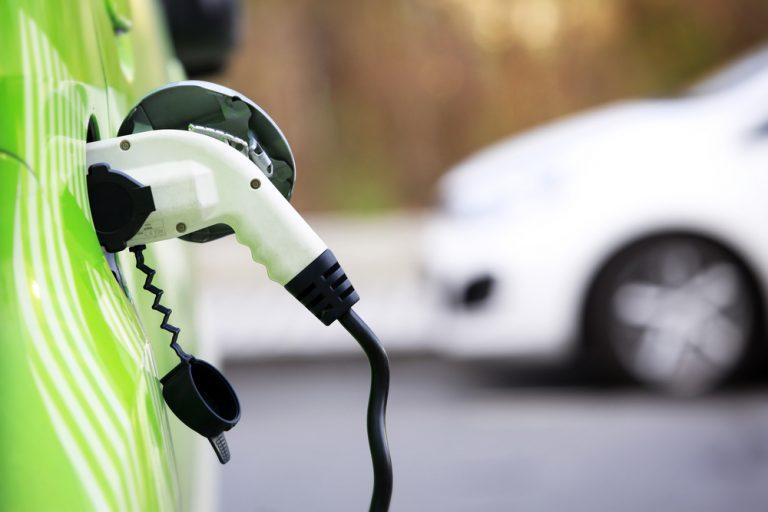
Electric car batteries capable of fully charging in just 5 minutes have been produced in a factory for the first time ever, marking a significant step forward for the electric car industry and tackling some long-held concerns about the lengthy charging times for electric vehicles making them ultimately unsuitable for consumer use.

The new lithium-ion powered batteries were developed by Israeli company StoreDot and manufactured by Eve Energy Co., Ltd (SHE:300014) in China. They are designed differently to standard lithium-ion batteries, replacing the graphite with semiconductor nanoparticles based on germanium, though StoreDot have stated that they hope to use silicon in the future instead.

Capable of fully charging in five minutes, the batteries are a huge improvement on the standard “fast charge” rates of between 30 minutes and 2 hours, although the new technology will require much higher-powered chargers than those stationed on city streets today.

Using already available charging infrastructure, StoreDot has said that it is aiming to deliver 100 miles of charge to a single car battery in five minutes in 2025.

StoreDot produced 1,000 sample batteries with its manufacturing partner Eve Energy to showcase the newly-developed technology to carmakers. A number of large companies are already invested in StoreDot, including Daimler, BP, Samsung and TDK, which have raised $130m to date. It was named a Bloomberg New Energy Finance Pioneer in 2020.

The samples – which are compliant with existent lithium-ion battery certifications – were manufactured on a standard construction line, meaning that no new infrastructure or machinery will be necessary as part of the production process. It could potentially save manufacturers millions on expensive renovations.

Electric vehicles are a crucial part of the effort to combat climate change, with the power to reduce toxic carbon emissions, although so-called “charge anxiety” is a major obstacle for the industry catching on with consumers.

Many worry that current charging technology only supports a short mileage range, and with charging stations still relatively sparse outside of city centres, owners are concerned that they might struggle to find somewhere to charge their vehicle in time. Or, even if they do, long charging times essentially leave drivers stranded while they wait for their vehicle to “refill”.

StoreDot’s new batteries, however, would take no longer to charge than a standard trip to a petrol station to replenish fuel, and so are less of a challenge for sceptics to get their head around than a 1hr+ wait at a charging station.

“A five-minute charging lithium-ion battery was considered to be impossible,” said StoreDot’s chief executive, Dr Doron Myersdorf.

“The number one barrier to the adoption of electric vehicles is no longer cost, it is range anxiety. You’re either afraid that you’re going to get stuck on the highway or you’re going to need to sit in a charging station for two hours. But if the experience of the driver is exactly like fuelling [a petrol car], this whole anxiety goes away”.

He added, “We are not releasing a lab prototype, we are releasing engineering samples from a mass production line. This demonstrates it is feasible and it’s commercially ready”.

StoreDot is not currently listed, although some are already touting its IPO credentials since its new battery technology was announced. Eve Energy, however, is listed in Shanghai, and has seen its shares climb significantly over the last few days. The stock is currently up +1.32% to 105.61 CNY on the market close at 4:29PM CST.

Furlough likely to continue into summer months

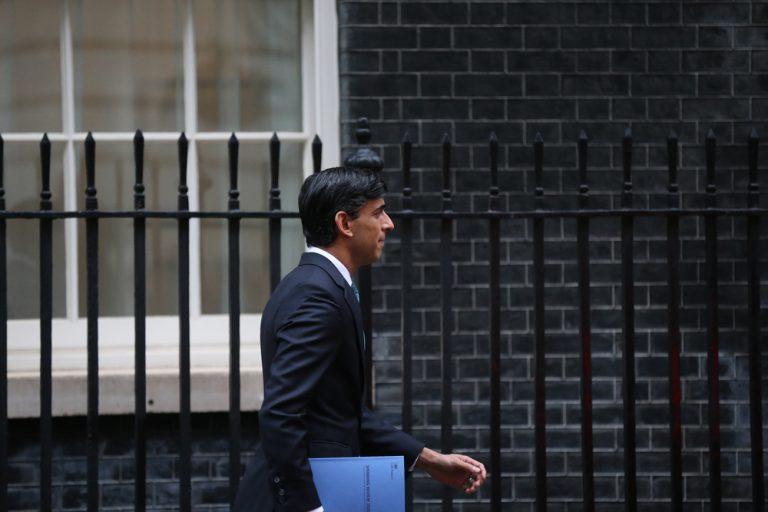
Rishi Sunak is set to extend the government’s furlough scheme past the end of April.

As the UK is likely to continue Covid restrictions into the summer months, Sunak is drawing up plans to continue the scheme. It was supposed to end October 2020. The chancellor is set to have a budget on 3 March where he may lay out the plans.

This comes just days after the CBI urged Sunak to extend the furlough scheme.

The furlough scheme sees the government pay up to 80% of wages up to £2,500 a month.

CBI director-general, Tony Danker, said: “Many tough decisions for business owners on jobs, or even whether to carry on, will be made in the next few weeks.

“If the government plans to continue its support then I urge them to take action before the budget which is still more than six weeks away.

“The government has done so much to support UK business through this crisis, we don’t want to let slip all the hard work from 2020 with hope on the horizon.

“The rule of thumb must be that business support remains in parallel to restrictions and that those measures do not come to a sudden stop, but tail off over time. Just as the lifting of restrictions will be gradual, so must changes to the government’s sterling support to businesses,” he said.

London Mayor, Sadiq Khan, has also called on the chancellor to extend the scheme past march, saying that “without the certainty that support will remain in place for as long as it is needed, many more businesses could decide to cut their losses and close permanently now.”

The CBI has estimated that extending the furlough scheme to the end of June could cost the government £6bn. It has so far cost a total of £82bn.

Daily Mail owner posts 15% plunge in revenue

0

Daily Mail & General Trust (DMGT) has posted a 15% fall in revenue in the three months to 31 December 2020.

The owner of the Daily Mail and the Metro said revenue fell to £304m. Advertising revenues decreased by 16% and the group saw print advertising fall by 38%.

Digital advertising increased by 8%.

Looking ahead, DMGT said: “The duration and severity of the Covid-19 pandemic remains unclear at this stage, despite the hope that vaccination programmes will enable lockdowns around the world to be eased over time. Consequently, the short-term outlook for the UK Property Information, Consumer Media and Events & Exhibitions businesses remains difficult to predict, albeit the dynamics outlined in DMGT’s FY 2020 results release on 23 November 2020 remain the same.

“The Board is confident that DMGT’s diversified portfolio is well-positioned to continue to withstand the present uncertainties and that its long-term approach will continue to create value for its shareholders.”

Shares were 0.9% lower at 813p during mid-morning trading on Thursday.

Pets at Home posts +18% Q3 revenue

0

Pets at Home has reported a 18% jump in revenue for the third quarter of 2020.

Revenue surged to £302m whilst like-for-like sales seeing a 17.6% over the the 12 week period from 9 October to 31 December 2020

Based on trading year to date, the group expects full-year underlying pre-tax profits of £77m.

Members of the VIP and Puppy and Kitten Clubs grew by 47%, with members spending around 25% more than non members.

Peter Pritchard, Pets at Home CEO, said: “Against a backdrop of continued uncertainty our pet care model remains robust, with our performance during the third quarter testament not only to the advantages of our scalable omnichannel pet care platform and unique joint venture veterinary model, but also the hard work and commitment of all our colleagues across the Group, to whom I express sincere thanks.

“We entered our final quarter facing renewed challenges in the form of higher COVID infection rates and restrictions on a national level, and our priority remains the health, safety and wellbeing of all of our colleagues, partners and customers.

I am very pleased with the progress we have made in this quarter, in particular how we have adapted to the changing environment in which we operate. We remain as determined as ever to create the best pet care platform in the world, and our strong liquidity gives us the capacity to make the right investments to support our ambition”.

Pets at Home shares are trading +1.58% at 409,58 (1002GMT).

Ross Hindle, retail sector analyst at Third Bridge, commented on the strong Q3 results: “Pets at Home is continuing to benefit from a rise in pet ownership during the pandemic and a growing trend of pet food premiumisation. Growth in high margin pet food has flowed through into pet accessories, as consumers look to humanize and spoil their new 4-legged friends.”

Stocks & commodities react to Biden inauguration

The pound has hit an 8-month high against the Euro, hitting €1.132 for the first time since last May. The pound also hit a 32-month high against the dollar – up almost a cent today at $1.374.

The markets are also trading at record highs today on anticipation of a major new US stimulus package. Stocks and commodities around the world rallied in the run-up to Biden’s inauguration.

Connor Campbell from SpreadEx said: “The 46th President of the United States was aggressive in first few hours after taking office, announcing 17 executive actions, with 15 of those executive orders. These include reversing Trump’s Muslim travel ban, halting the construction of the US-Mexico border wall, and putting things in motion for the States to re-join the Paris climate agreement. Biden has also mandated the wearing of masks and social distancing in federal buildings and lands.

“It appears that Biden isn’t messing around. And it is exactly this purposeful and robust approach the markets were hoping for – especially if it leads to his $1.9 trillion covid-19 stimulus package escaping the Senate unscathed. If lagging behind its peers in terms of where it is at overall, the FTSE still rode the morning’s momentum higher, climbing half a percent to a 6-day peak of 6,770.

“That the UK index rose to such an extent despite the pound rallying – sterling was up 0.4% and 0.3% against the dollar and euro respectively – reflects the underlying positive sentiment this Thursday,” he added.

The FTSE 100 gained 0.5% this morning to hit 6,770 points.The FTSE 250 also climbed, rising 0.3% to 20,941 points.

Susannah Streeter from Hargreaves Lansdown said: “Although fresh stimulus isn’t expected given that it announced a €500bn euro extension to its quantitative easing programme just last month, some idea about the direction of travel, if economies are forced to stay locked down for longer, would be welcome.”

Day one: Biden reverses key Trump policies

0

Just hours after being sworn in, Joe Biden is already hard at work reversing Donald Trump’s key policies.

President Biden signed executive orders on issues included halting the travel ban from Muslim-majority countries as well as issues regarding Covid-19, climate change and construction of the wall between the US and Mexico.

A statement from the White House said that Biden “will take action – not just to reverse the gravest damages of the Trump administration – but also to start moving our country forward.”

The President signed many orders around the virus, making it mandatory to social distance and wear masks in federal buildings.

Biden also revoked the permit for the Keystone XL pipeline and asked executives to review all policies that are “damaging to the environment, [or] unsupported by the best available science”.

Commenting on the orders that Biden immediately signed, Wade Henderson, the interim president and CEO of the Leadership Conference on Civil and Human Rights, said: “These executive actions will make an immediate impact in the lives of so many people in desperate need of help. Reversing Trump’s deeply discriminatory Muslim ban, addressing the Covid-19 crisis, preventing evictions and foreclosures, and advancing equity and support for communities of color and other underserved communities are significant early actions that represent an important first step in charting a new direction for our country.”

The inauguration was unlike any before it, with very few people present amid the pandemic. Barack Obama, Bill Clinton and George W Bush were all present at the event. Trump did not attend the event and was the first US President not to attend his successor’s inauguration since 1869.

In his farewell address, Trump said: “What we’ve done has been amazing by any standard.”

In his last few hours as President, Trump granted clemency to more than 140 people.

Saga will require vaccine from all passengers

0

Cruise operator Saga has said that all customers travelling this summer must be vaccinated.

The over-50s travel firm has seen a spike in bookings since the vaccine began being rolled out. The group will require passengers to have both shots of the vaccine at least 14 days before travel as well as provide a negative Covid test at departure.

“The health and safety of our customers has always been our number one priority at Saga, so we have taken the decision to require everyone travelling with us to be fully vaccinated against Covid-19,” said a Saga spokesperson. “Our customers want the reassurance of the vaccine and to know others travelling with them will be vaccinated too.”

Nick Stace, chief executive of Saga’s travel arm, commented: “Given that many of our customers are in the priority age range and we’ve done calculations based on what government has said, we think shortly after beginning of May almost all of customers will have received a second vaccination.”

The group has delayed tours until 4 May. Saga polled 2,000 customers and found 98% of them in favour of the move. The UK government has said that everyone over 70 in the UK would have had their first vaccination by mid-February.

The move comes as the global airline body Iata called on governments to allow those who had been vaccinated to freely travel. Alexandre de Juniac is the director general and said: “For travel and tourism, testing is the immediate solution to reopen borders. And eventually that will transition to vaccine requirements.”

Over the past six months, Saga has seen its share price fall by over 50%. In the six months to the end of July 2020, the group fell from a profit of £52.6m to a loss of £55m.

Markets buzz as Biden inauguration begins

0

Markets around the world are buzzing as Trump leaves the White House, paving the way for President-elect Joe Biden to take over in this evening’s long-awaited inauguration ceremony.

After days of subdued activity across global equities earlier in the week – partly hampered by the US’s national holiday in commemoration of Martin Luther King – it appears that all the pent-up excitement surrounding Biden’s big day has finally caught up.

The NASDAQ (INDEXNASDAQ:.IXIC) climbed to an all-time high – nudged by Netflix’s shares surging 13% – with the index currently up +1.76% to 13,429.33 points (GMT 15:49). The Dow Jones (INDEXDJX:.DJI) similarly enjoyed a +236.79 point surge to 31,167.31 (GMT 15:50), while the S&P 500 (INDEXSP:.INX) is basking in +1.12% increase to 3,841.46 points (GMT 15:51).

Catching the optimism from across the pond, European indices have also shrugged off their apprehension, with the DAX (INDEXDB:DAX) up +0.76% to 13,920.25 points (GMT 15:56) and the CAC (INDEXEURO:PX1) up +0.54% to 5,628.67 (GMT 15:57).

On the other hand, the FTSE (INDEXFTSE:UKX) evidently wasn’t feeling the same kind of jubilance. While contemplating a 3-year high from the pound following a better-than-forecast inflation reading, the blue chip index’s growth capped at just 0.31% (GMT 15:58).

Commenting on today’s near-synchronous market sentiment, Spreadex financial analyst Connor Campbell weighed in:

“Now that the Biden administration is a few hours way from being sworn in, investors seem more willing to look to the future. Most pressingly that includes a coherent effort to tackle coronavirus on both a fiscal and medical level – something wholly absent for a long time – alongside spending on green tech and, potentially, less fraught international relations between the States and the rest of the world”.

However, with Biden’s inauguration only just beginning and the sun rising on the new Democratic administration, the markets might need a bit longer to settle on a wholly coordinated response – perhaps, this time, with the FTSE in tow.

“The day isn’t over yet,” Campbell added, “And any trouble around the inauguration will come to weigh on the markets. However, it is the start of a new period in America, one that will hopefully help expedite the end of our current nightmare”.

Medical cannabis ETF celebrates anniversary on LSE

0

Europe’s first medical cannabis ETF, The Medical Cannabis and Wellness UCITS ETF (CBDX), has celebrated its first anniversary since being listed on Deutsche Boerse and the London Stock Exchange.

“Strong growth” over the past twelve months look set to tick over into 2021, boosted by a Democratic House, Senate and presidency which have previously flirted with legalising cannabis.

The CBDX Medical Cannabis ETF, which tracks the Medical Cannabis and Wellness Equity Index, has delivered a return of 39.47% over the past three months and 40.41% over the last twelve months. While past performance is no guarantee of future success, it has grown strongly “reflecting investor demand” to reach $28m of assets under management.

Investors are currently “pricing in an improved outlook” for the cannabis sector under the new Democratic House and presidency, with hopes that freshly-inaugurated Joe Biden might buckle under increasing pressure to reform federal cannabis policy. Two of his top picks to head the U.S. Department of Health and Human Services – Rachel Levine and Xavier Becerra – have well-established track records of defending and supporting state-legal marijuana programmes.

A spokesperson for the CBDX Medical Cannabis ETF says that US regulators are “increasingly focusing on the potential positive impact of cannabis legislation” on job creation, social inequality and tax revenues, and that any reforms will provide regulatory precedence for many other countries to follow in the US’s footsteps.

Many US lawmakers, at both the Federal and State levels, are pushing to relax laws around commercial cannabis usage, which is helping the market to grow exponentially. Supporters of the campaign to legalise cannabis have suggested this could be a sign that the new administration is looking to soften – or ideally scrap altogether – cannabis’s position on the federally-controlled substance list.

In addition, CBDX Medical Cannabis ETF says that a UK initiative called Project 2021 – which aims to develop “the biggest database in the world on the effectiveness and tolerability of medical cannabis on patients” – should be completed by the end of 2021, and it expects this to be a “huge boost” for the sector. Other pilot projects have also started in France, the Netherlands, and Ukraine.

Medical cannabis usage is already legalised in a number of countries including Australia, Germany and the United Kingdom. In Canada, cannabis is legal for both medical and recreational use following a landmark ruling in 2018 making it the first G7 country in the world to do so.