Travel restrictions tighten as corridors close

0

Everyone now arriving in the UK must have proof of a negative Covid-19 test to travel.

In addition, all UK travel corridors have closed and everyone must quarantine on arrival for up to 10 days.

The new measures were announced by Boris Johnson last week, in an attempt to control the spread of the virus. The Covid test must be taken three days before travel or travellers could risk a £500 fine. The new rules kicked in at 4am on Monday.

The new rules will be in place until at least 15 February. The government will also impose flight bans from countries where there are new varients. Last week, the UK banned all travel from South America and Portugal.

The travel sector has said that it understands the tighter restrictions, however, it would lead to deeper impacts on the sector.

Tim Alderslade, chief executive of Airlines UK, told the BBC: “We’ve had no revenue now effectively for 12 months, give or take a few months in the summer last year. If we’re going to have an aviation sector coming out of this we need to open up in the summer.”

The head of the Airport Operators Association has warned that some UK airports might be forced to close if restrictions continue.

“Airports are currently keeping their infrastructure open to support vital and critical services, such as post, freight, emergency services, military and Coastguard flights, as well as to help keep the lights in the UK on through supporting flights to offshore oil, gas and wind operations,” said AOA chief executive Karen Dee.

“Airports are doing so while running on empty – there is only so long they can run on fumes before having to close temporarily to preserve their business for the future.”

In response to the new rules, the UK government said that a financial support scheme for airports would open this month.

Dee said the measures would “provide much-needed support to many embattled airports, helping them through the challenging months ahead”.


Watkin Jones set to rebuild confidence

Residential and student accommodation developer Watkin Jones (LON: WJG) was hit hard by Covid-19 after-effects but the share price has started to recover. The full year figures have been well-flagged, but the trading statement on Tuesday 19 January should clarify the prospects for the operations.
Pre-tax profit is expected to decline from £50.2m to £45m. Net cash was £90m at the end of September 2020 and this will enable the company to pay a dividend twice covered by earnings. That suggests a 7p a share pay out for a normal full year. There was no interim dividend but the final dividend should...

Cautious response to N Brown trading

Retailer N Brown (LON: BWNG) traded slightly better than expected in the third quarter with strong gift and home sales. Costs savings, including lower marketing spend, have partly offset lower profit contribution due to a reduction in revenues. Even so, investors still need to be persuaded that the recovery will accelerate.
N Brown has an older customer base above 50 years old, and they are not buying as much clothing. There was growth in leisurewear and nightwear.
Product revenues were 9% lower year-on-year in the third quarter. That compares with 12% in the previous quarter and 28.8% in the...

Markets end week on subdued note

0

Western markets look set to end the week on a sour note, with the FTSE slipping to a 9 day-low as trading closed and both its US and European equivalents weathering similar drops.

The FTSE is among the worst casualties of the day, contemplating the new Office for National Statistics (ONS) data revealing that UK GDP shrank by 2.6% in November as swathes of the UK faced a second national lockdown, marking the end of a six month long period of growth for the struggling economy. The index closed the day down -1.18% at 6,721.95 points (GMT 16:18).

Despite all the buzz around President-elect Joe Biden’s $1.2tn economic relief package, the Dow Jones emerged unimpressed and still appears to be coming to terms with yesterday’s news that US jobless claims have risen to their highest levels since last August – and are ticking ever closer to the 1 million mark. The US index fell -0.70% to 30,774.03 points (GMT 16:19).

On the continent, the DAX has had an especially rough day – down 1.83% to 13,732.79 points (GMT 16:23) as German pharmaceutical firm Pfizer announced it will be reducing its vaccine deliveries to EU nations as it renovates its main production plant (much to the dismay of the German Health Ministry), while the CAC also slipped 1.51% to 5,595.21 (GMT 16:24).

Commenting on today’s market performances, Spreadex‘s Connor Campbell said:

“The markets suffered a sophomore slump in the 2nd week of the year, culminating in some rather ugly losses this Friday afternoon.

“Conscious of the difficulties in getting anything done in the American political system, let alone when you are trying to impeach the outgoing President, investors greeted Joe Biden’s $1.9 trillion covid-19 stimulus plan with a ‘we’ll see’. 

“Unfortunately that meant attention lingered on a rough couple of days for US data. Following on from Thursday’s sky high jobless claims figure – the worst since the end of August, and perilously close to the 1 million mark – investors had to deal with a pair of glum December retail sales readings suggestive of a tough Christmas across the country”.

And in regard to the European indices, it looks as if ongoing concern over the British, South African and Brazilian variants of Covid-19 is keeping investors feeling cautious, along with further teething issues with the UK’s newfound independence from the EU looking far from over.

“It’s not necessarily looking any easier for the markets next week,” Campbell said. “If they can pull themselves out of this New Year nosedive is arguably doing to be down to 2 things: how chaotic Biden’s inauguration ends up being, and how quickly the Democrats can get down to the dirty business of passing bills once the new POTUS takes office”.

Pfizer shares slide on vaccine delivery cuts

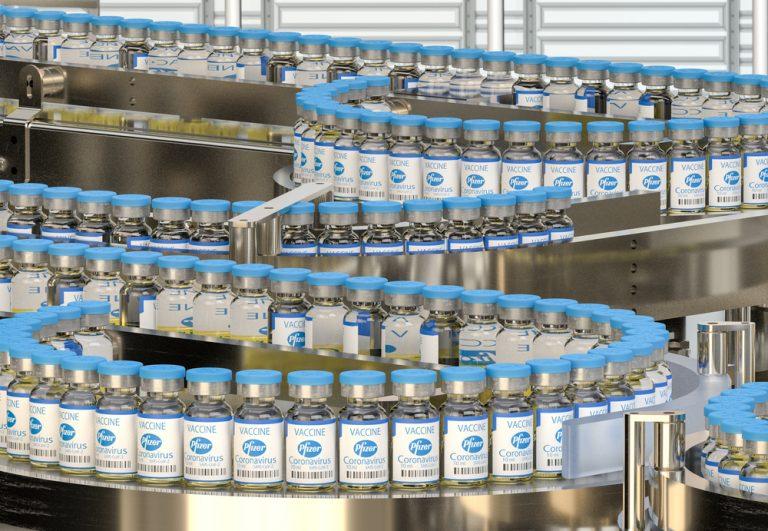
Shares at American pharmaceutical firm Pfizer (NYSE:PFE) have slipped after its announcement that it will be temporary reducing deliveries of its Covid-19 vaccine to Europe while it seeks to upgrade its production capacity to the target 2 billion doses per year.

“This temporary reduction will affect all European countries,” a spokeswoman for Pfizer Denmark said in a statement to The Associated Press. “It is as yet not precisely clear how long time it will take before Pfizer is up to maximum production capacity again”.

The decision was made so that Pfizer can focus on expanding its production at its plant in Belgium, which will require “adaptation of facilities and processes at the factory” in order to meet the new target, alongside “new quality tests and approvals from the authorities”.

“As a consequence, fewer doses will be available for European countries at the end of January and the beginning of February”.

Pfizer is currently producing vaccines at a rate of 1.3 billion per year, but is attempting to upscale in order to meet the ambitious vaccination goals of the UK, EU and USA.

According to The Independent, Germany’s Health Ministry said on Friday that Pfizer had informed the European Commission – which is responsible for ordering vaccines from the company – that it will not be able to fulfil all of the promised deliveries in the next three to four weeks.

The ministry reportedly said that German officials took note of the unexpected announcement by the Commission ”with regret”, because the company had previously made “binding delivery commitments by mid-February”.

“The federal and state governments expect the EU Commission to provide clarity and certainty as soon as possible in negotiations with Pfizer about further deliveries and delivery dates,” Germany’s Health Ministry said in their statement.

While the Commission helped to orchestrate the vaccine deals on behalf of all 27 EU member states, it is not directly responsible for the timetable and deliveries.

Asked on Friday whether Brussels had been informed by Pfizer about delays in the EU, Commission health policy spokesman Stefan de Keersmaecker told The Independent that all enquiries surrounding production capacity should be directed to Pfizer itself.

“The Commission stands ready to support and facilitate contacts between the company and member states whenever needed,” he added.

Pfizer’s shares quaked mildly in response to the news, down -0.59% to USD 36.54 at GMT 15:52 on Friday, although the stock has remained relatively steady around the $37 mark since mid-December.

Oil: An outlook for 2021

Oil had a stormy year in 2020, plummeting to record lows during the near-global lockdown in the spring, before rapidly climbing towards the latter end of the year as travel restrictions were gradually loosened and vaccine optimism sparked a jump in demand.

Earlier this week, oil rallied to an 11-month high with Brent Crude coming in at over $57 per barrel, responding to global vaccination efforts and Saudi Arabia’s announcement that it will be tapering production by 1m barrels a day in February and March.

The commodity’s upward trajectory has also been boosted by a decline in US shale production and stockpiles, and OPEC+’s early January decision to restrain production at least until the summer months.

As we settle into the new year, the outlook for oil prices in 2021 looks a lot rosier than it did twelve months ago. While national and regional lockdowns around the world are probably here to stay for some time, mass vaccination drives will gradually increase immunity to the point where “normal” business and lifestyle activities can resume.

A return in demand for oil when the travel industry is finally able to return to ordinary operational levels is inevitable, and it is widely expected that mass vaccination will afford greater travel freedoms by the end of the year at the latest.

The Energy Information Agency (EIA) projects that gasoline – the primary motor fuel used in the US – will climb in the second half of 2021 as travel restrictions slacken, although warns that the newfound “work from home” trend could send demand ticking down fairly quickly again as workers increasingly opt to avoid commuting. Gasoline, according to the EIA, will therefore most likely moderate in 2022 to just below 2019 levels.

On the other hand, jet fuel is expected to show modest growth throughout 2021, but the EIA’s projections rely heavily on the assumption that the bulk of Covid-19 disruption is behind us. Further lockdowns run the risk of dampening the travel industry once again – and with the UK and a bevy of European countries currently undergoing second and even third national lockdowns – jet fuel is stuck in a yet another trough.

Hopes that both gasoline and jet fuel can trend upwards are therefore heavily dependent on the success of Covid-19 vaccination.

In terms of politics – with Joe Biden’s inauguration marking the Democrats’ control of all three branches of US government – U.S. production increases are looking unlikely due to the party’s commitment to cleaner, alternative energy. More strict regulations on the industry are also likely to hamper production as the US is expected to re-enter the Paris Climate Agreement and faces its obligation to keep up with its own carbon-neutral ambitions by 2050.

The decline of U.S. supplies, OilPrice.com states, will “return pricing power firmly to OPEC+”, and the recently-obtained $50 price benchmark is “likely to be a floor price going forward”. While Western countries increasingly look away from fossil fuels to greener alternatives, OPEC+ members appear less concerned with climate change, and will continue to push for higher prices in the coming months and years.

Along with oil, the possibility of a commodity boom in 2021 is being increasingly touted by analysts, largely driven by growth in the Chinese market. Iron ore prices hiked to $176.90 a tonne shortly before Christmas – its highest point since May 2011 – and the market price for copper breached $8,000 a tonne for the first time in more than seven years at the start of January. Silver is also set to overtake gold’s performance in 2021, benefitting in a surge in interest in green technology products (which are largely made up of silver components) and the ongoing weakness of the US dollar keeping investors firm on their precious metal stocks.

Overall, it looks like 2021 is poised to be a good year for oil – so long as Covid vaccines live up to expectations – as well as other precious metals and commodities. Investors looking to make the most of this resurgence, however, should heed the growing trend towards alternative energy that will likely see fossil fuels take a hit in the coming years.

Babcock shares plummet after profitability review

0

Babcock shares plunged on Friday after the group reviewed its contract profitability.

Early indications of the review, carried out by PwC, suggest that the company could have “negative impacts on the balance sheet and/or income statement for current and/or future years”.

The review, which aims to be finished in time for full-year results, showed that the total order book for 2020 was down by nearly £1bn.

Operating profits fell from £320m to £202m. Underlying revenue was down by 3% to £3.4bn. Order intake year-to-date was £3.1bn. The group’s order book fell to £16.8bn from £17.6bn.

Chief executive David Lockwood said: “While trading in the third quarter has continued to reflect the challenges of the first half and there remain a number of near-term uncertainties, the fundamental strengths of the group and the opportunities ahead give us confidence for future years.”

Shore Capital analyst Robin Speakman said: “Whilst the trading picture and long-term outlook for Babcock appear as expected, immediate news flow remains challenging.”

Babcock shares are currently trading -15.96% at 221.44 (1204GMT). Shares have fallen 65% over the past 12 months.

Two Southeast Asia Funds for regional economic expansion

The Southeast Asian region encompasses some of the fastest growing frontier Asian economies, enjoying growth rates once only associated with China and longed for by India. Indeed, China’s success is now spilling over into these economies in the form of manufacturing migration and favourable demographics similar to India makes the Southeast Asia region ripe for growth.

The reinstatement of lockdowns in late 2020 will inevitably cause disruption to the growth trajectory in the very short term. However, this is likely to only be a blip in the longer-term expansion trend and heightened volatility could provide investors an entry to the sector.

The allocation of capital to Southeast Asian must be paid careful consideration as many products covering Southeast Asia have a large exposure to China and South Korea, which do not have same market dynamics as countries such as Vietnam, Thailand, Cambodia and Indonesia.

Barings ASEAN Frontier Fund

This fundamental bottom-up fund is one of the largest funds in this asset class with a NAV of some $352m.

The focus is on frontier Asian economies where they see favourable demographics such as Singapore, Thailand, the Philippines and Malaysia. 

Barings ASEAN Frontier’s largest holding is Singapore-based Sea Limited accounting for 8.8% of the fund. Sea Limited provides technology services across digital payments, gaming and e-commerce, and represents the wider adoption of technology in the region.

In the quarter to 30thSeptember, Sea Limited recorded a bumper 97% increase in revenue to $1.2bn, up from $610m a year prior.

The portfolio has a significant exposure to financials with 28% of the fund invested in the sector. The financial sector will act as a facilitator of growth in the region as well as being a major beneficiary as frontier economies expand. 

As the fund notes in its prospectus, the portfolio is set to benefit from a shift in manufacturing from China to the rest of Asia and the associated benefits in consumer spending.

Vietnam Holding

According to the World Bank, the Vietnamese economy is predicted to grow 6.8% in 2021, having grown 3% in 2020.

In addition to the expansion in GDP, Vietnam’s trade surplus is expanding driven by the increased manufacturing activity and exports that grew 7% in 2020.

This is bolstering the spending power of the Vietnamese consumer making the country an increasingly attractive destination for FDI.

Indeed, there have been numerous media reports suggesting Vietnam is beating India in the race to be Asia’s second major manufacturing hub behind China.

The strength of the Vietnamese economy makes London-listed Investment Trust Vietnam Holding (LON:VNH) an attractive option to capture growth in South East Asia. 

The trust, managed by Dynam Capital, focuses on high-growth Vietnamese companies well placed to benefit from Vietnam’s, and the entire Southeast Asian region’s, growth story.

Top holdings include Vietnam’s second largest bank by assets, Vietinbank, and leading industrial manufacturing Hoa Phat Group.

The impact of economic expansion is evident in these companies’ results after Vietinbank reported a 40% increase in profit before tax and Hoa Phat’s steel sales volume grew 22% year-on-year.

In addition to the healthy growth prospects of portfolio companies and Vietnam’s economy, Vietnam Holding trades at a 19% discount to NAV.

Leeds Group shares rally as group swings to profit

0

Leeds Group shares jumped 37.84% on Friday as the group share a trading update for the six months ended 30 November 2020.

Even though the pandemic continues to have impacts, sales in the first six months of the financial year were higher than expected. Sales at Hemmers jumped to £15.59m (2019: £14,52) and KMR sales climbed to £4,35m (2019: £4.07m).

In the second half of the year, tighter restrictions led to the closure of stores although online business is continuing.

Leeds Group made a pre-tax profit of £735,000, which is compared to the 2019 loss of £712,000.

“The effect of prior year cost cutting measures is now evident with a reduction in costs. Management is focused on aligning the business with sales demand and competing in markets where it can make acceptable margins,” said the group.

“Hemmers and KMR management will work hard to manage the situation and reduce all costs as far as possible given the reduced level of trading and both companies should benefit from any government financial support provided.”

Leeds Group are trading +48.11% at 27,40 (1040GMT).

Insurers to pay small firms for lockdown losses

0

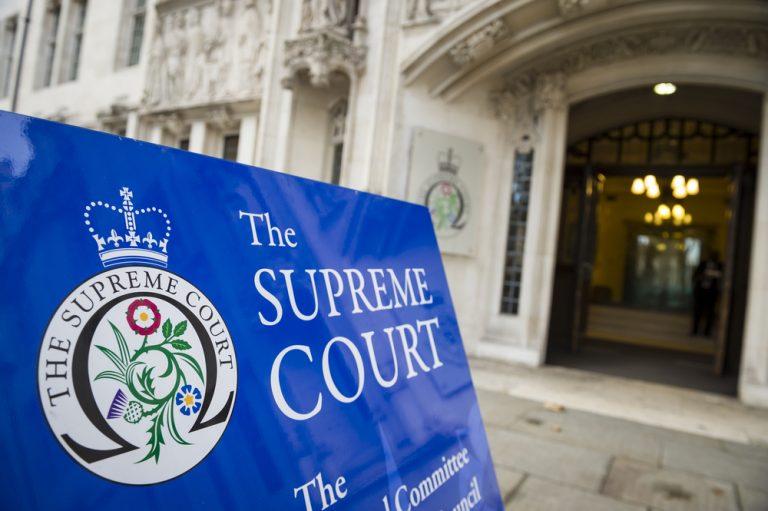
The UK Supreme Court has ruled in favour of small firms receiving insurance payouts to cover losses during the first national lockdown in the spring of last year. The ruling means insurance firms will have to pay out on previously-disputed coronavirus business interruption claims totalling at least £1.2bn.

Tens of thousands of businesses are expected to benefit, after the announcement on Friday morning following a court case launched by the Financial Conduct Authority (FCA), with 8 insurers taking part in the proceedings. The ruling is set to cost insurers hundreds of millions of pounds.

One of the insurers at the centre of the case is British-owned Hiscox, who were challenged by 30,000 policymakers on their mid-pandemic insurance policies. Other high-profile defendants included RSA, QBE, Argenta, Arch and MS Amlin.

In the 2020 spring lockdown – which lasted roughly from March until June – many small businesses made claims through business interruption insurance policies for loss of earnings when they had to close, but many insurers refused to pay out. They argued that there were few policies which were designed to cover such an unprecedented situation, and most cases were therefore ineligible.

The FCA took the matter to court, raising issue with a selection of policy wordings which had effectively ruled out small businesses receiving insurance payouts during the strict lockdown. The ruling has now redefined the parameters of what is considered a valid insurance claim in the context of the pandemic, and sets a precedent that could affect as many as 700 policies.

It now covers issues such as disease clauses – whether business were denied access to their properties – and the timing of lost earnings in respect to lockdown and tier restrictions.

One of the judges who presided over the case, Lord Briggs, said in the ruling: “On the insurers’ case, the cover apparently provided for business interruption caused by the effects of a national pandemic type of notifiable disease was in reality illusory, just when it might have been supposed to have been most needed by policyholders.

“That outcome seemed to me to be clearly contrary to the spirit and intent of the relevant provisions of the policies in issue”.

Huw Evans, director general of the Association of British Insurers, stated: “All valid claims will be settled as soon as possible and in many cases the process of settling claims has begun.

“We recognise this has been a particularly difficult time for many small businesses and naturally regret the Covid-19 restrictions have led to disputes with some customers”.

Celebrating the win, Richard Leedham – who represented the Hiscox Action Group – on behalf of small businesses, commented: “This is a landmark victory for a small group of businesses who took on a huge insurance player and have been fully vindicated”.